














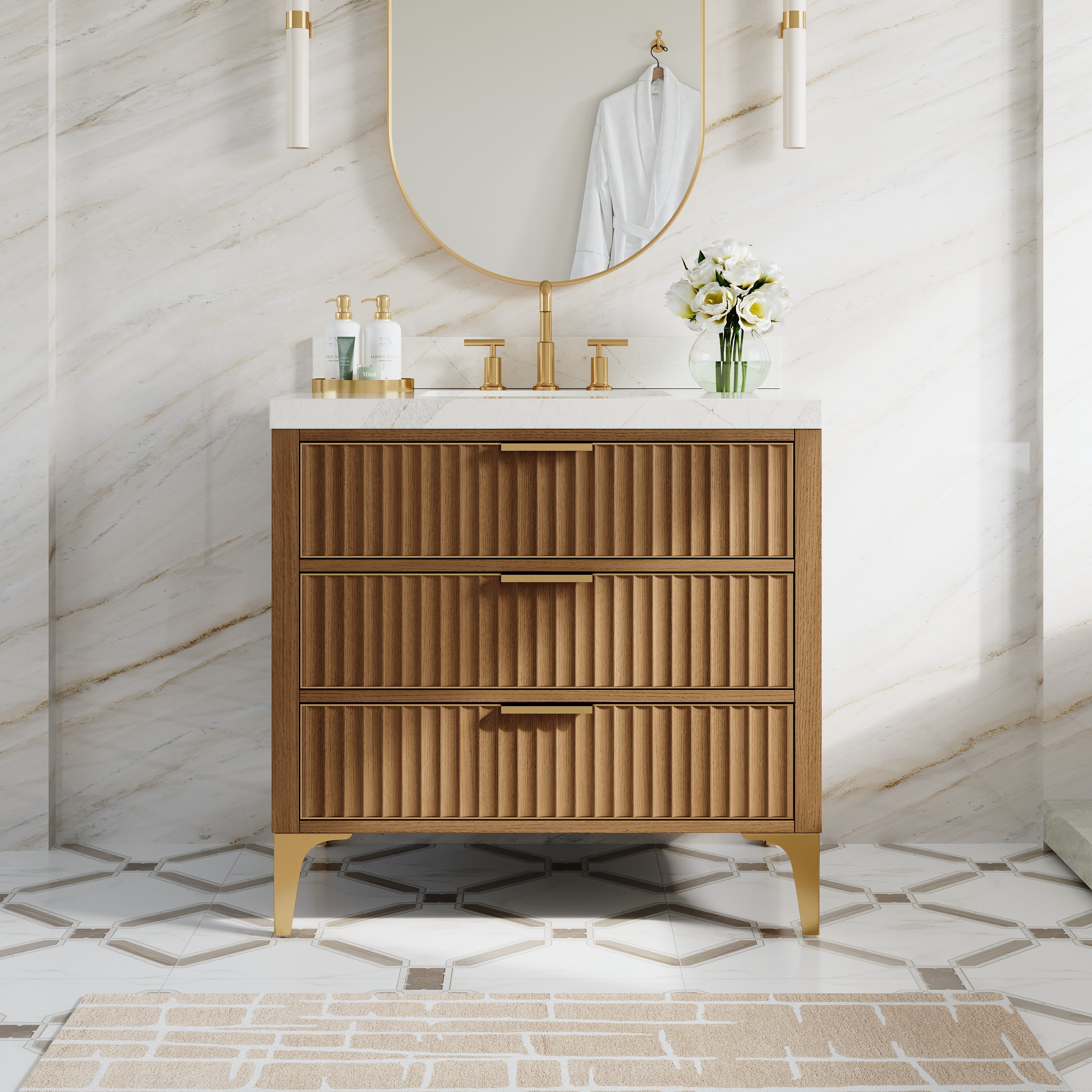
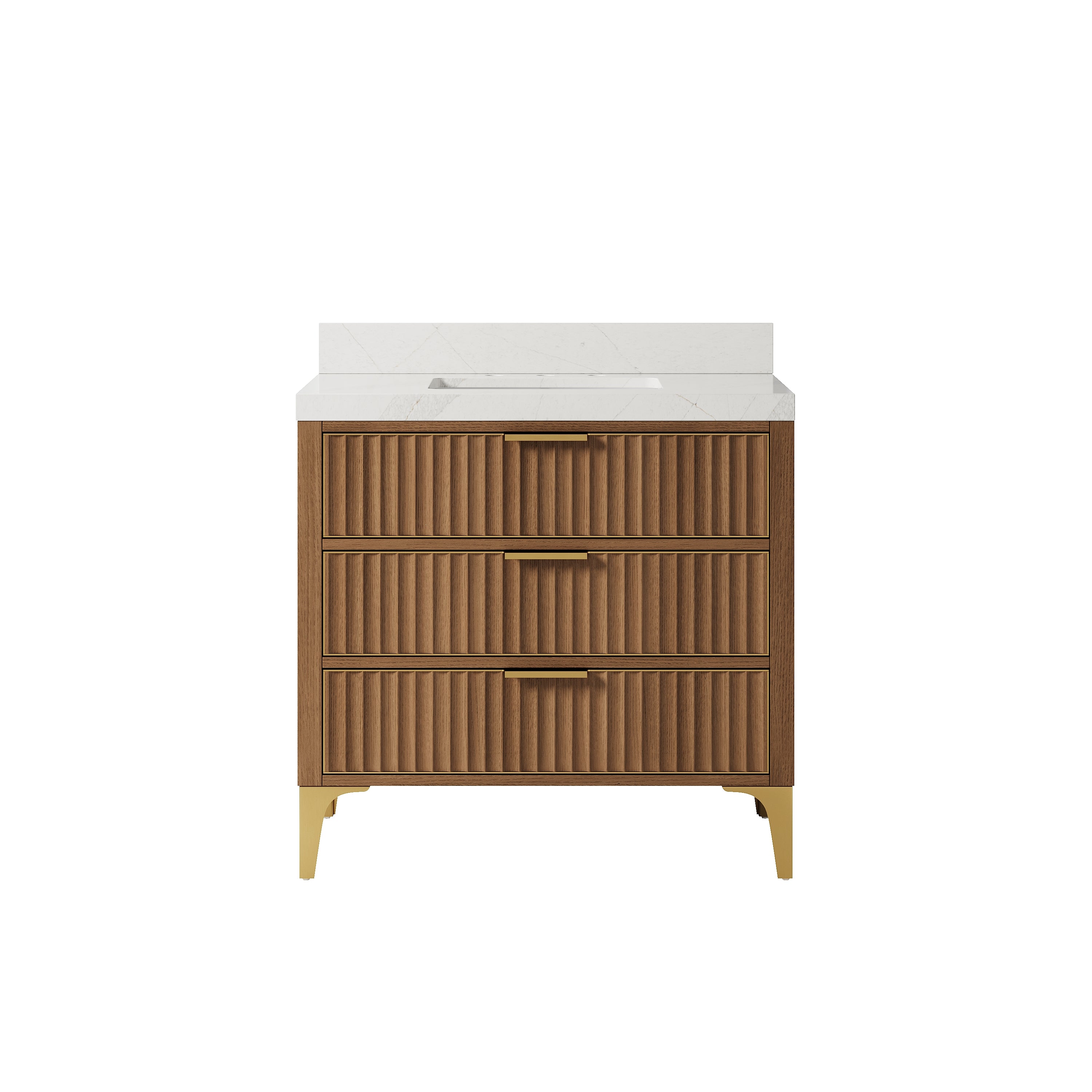
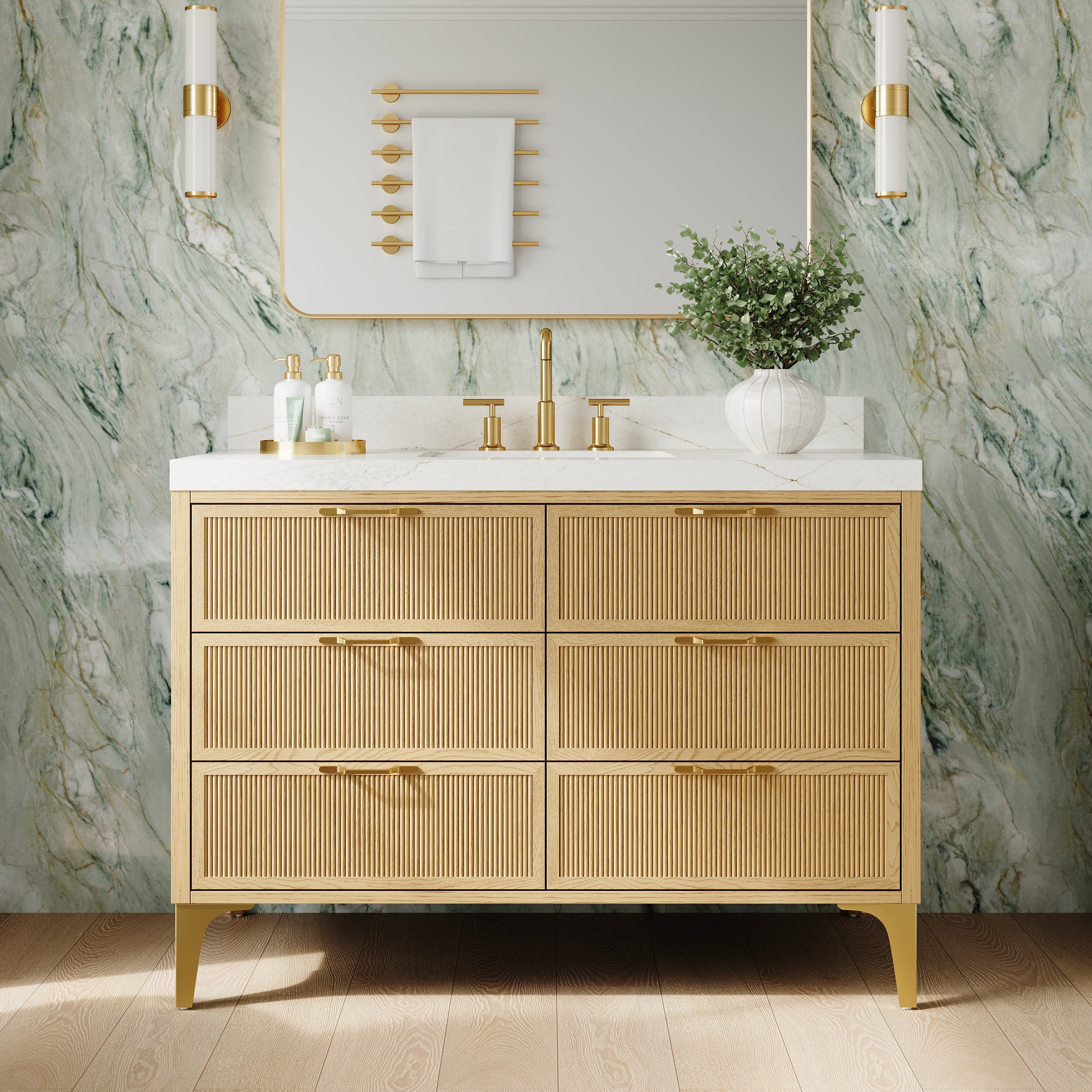
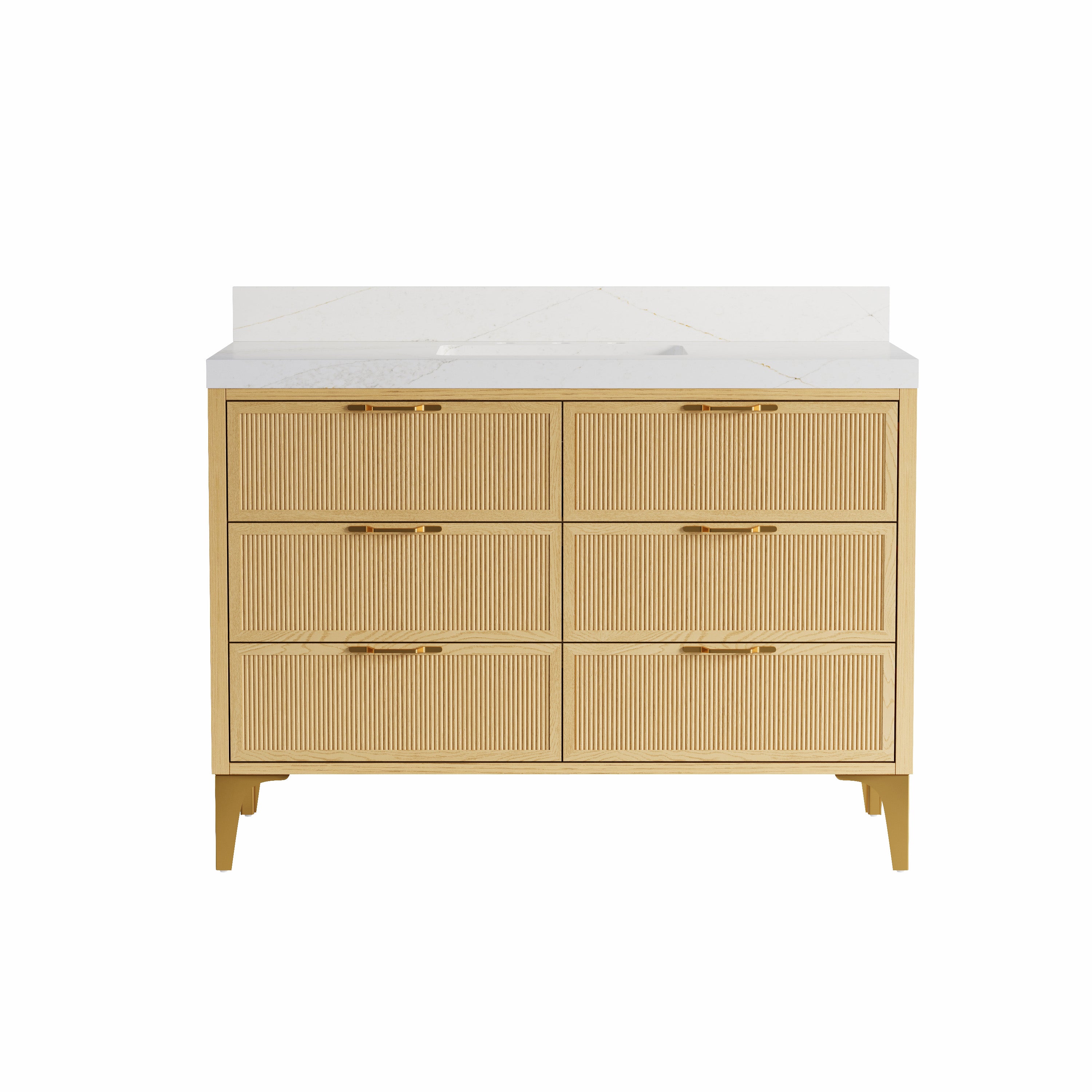


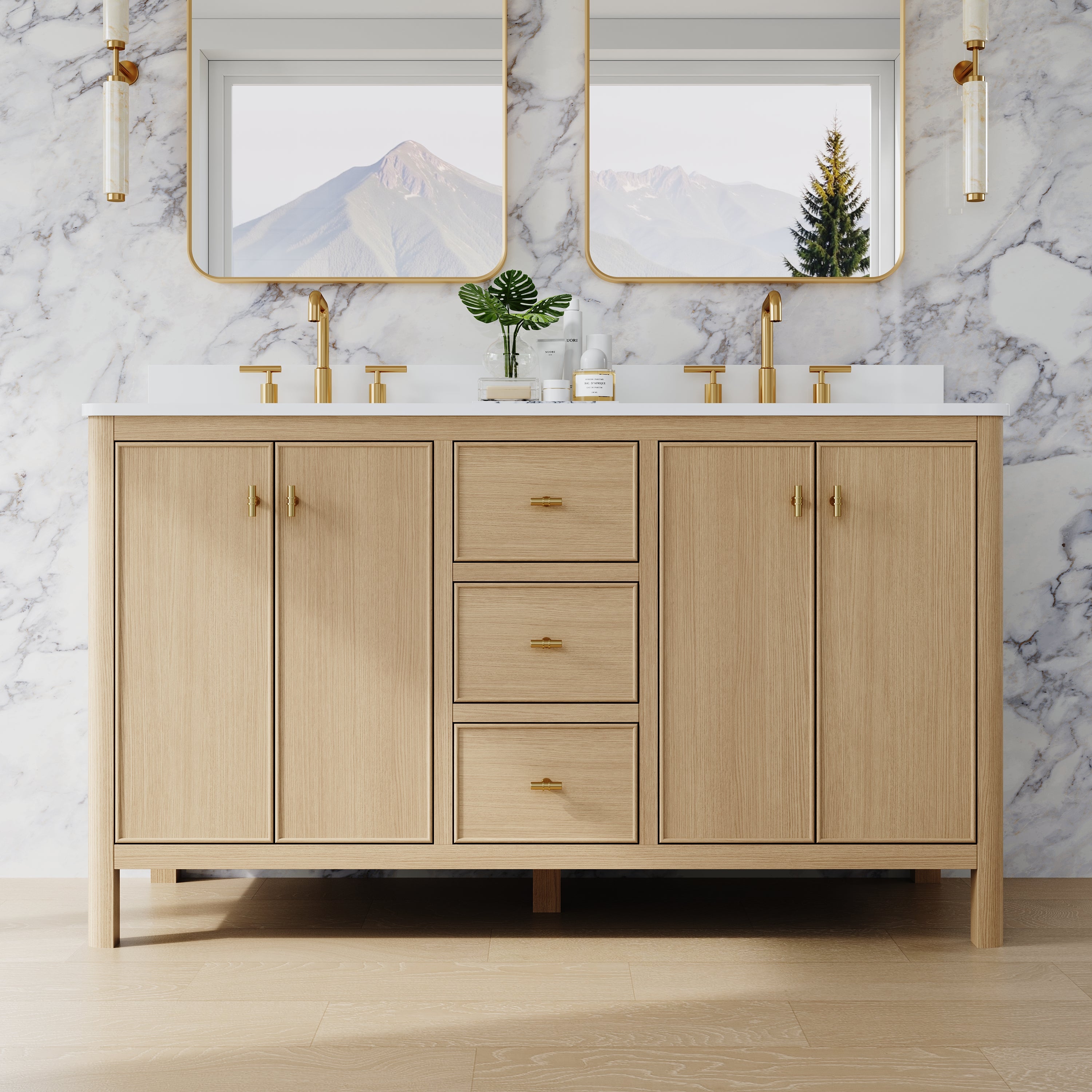
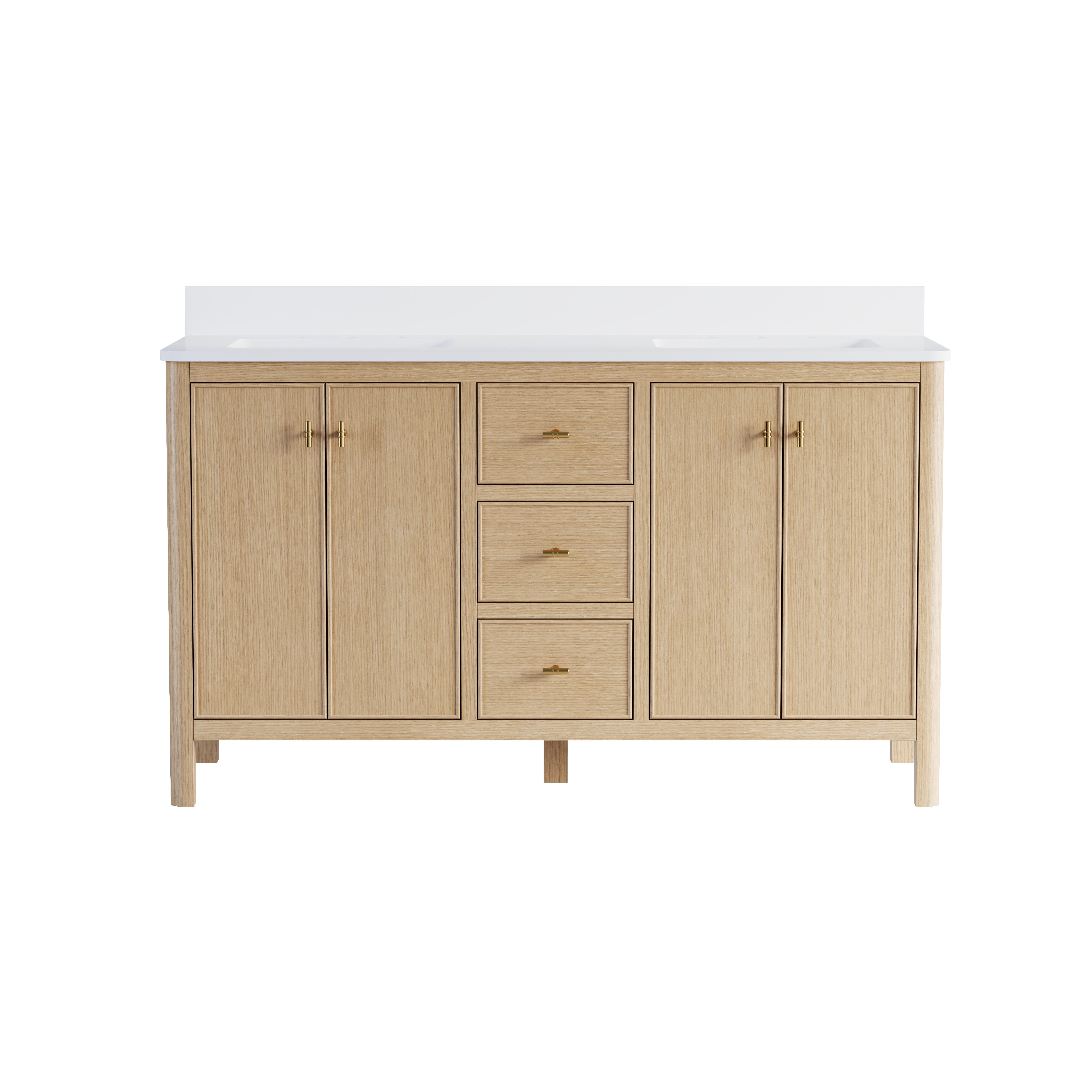
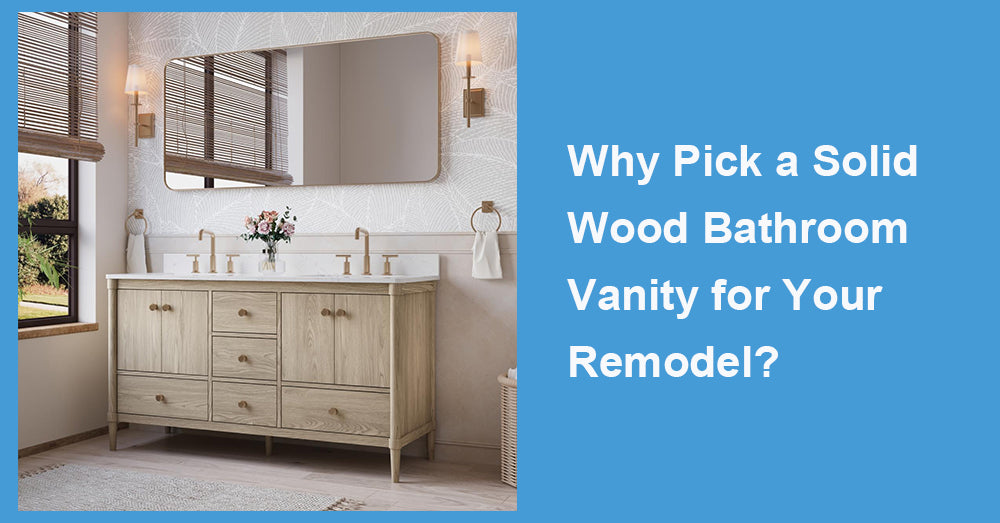
In bathroom renovation, the reason why a solid wood bathroom vanity has always been attractive is not that it sounds more expensive, but because it simultaneously solves three things: texture, durability, and structural stability. In public trend research, the proportion of people choosing solid wood for bathroom cabinet upgrades will reach 72% in 2024 and further increase to 74% by 2025. This indicates that solid wood is not the aesthetic preference of a few people, but a mainstream choice repeatedly verified by numerous renovation projects.
1. When choosing a solid wood bathroom cabinet, the first value is not "luxury", but a warmer and more natural feel in the space.
The bathroom itself has a large number of tiles, mirrors, stone, and metal, making it prone to overall coldness; wood can help mitigate this coldness. The trend data for 2025 shows that among the colors of new bathroom cabinets, wood ranks first at 28%, higher than white at 20%. In the solid wood category, the most common types of wood are Maple (29%) and White Oak (23%), followed by Birch, Walnut, Cherry, and Alder. This result is very direct: the market prefers wood with a clear texture, stability, and broad adaptability, rather than pursuing a brief visual impact.
2. The real difference between solid wood bathroom cabinets lies in how easy they are to use.
In the 2025 data, 78% of people will choose soft-close drawers and 75% will choose soft-close doors when upgrading bathroom cabinets; in contrast, those with built-in outlets account for 29%, drawer compartments for 22%, and styling tool storage for only 13%. This set of data illustrates a reality: the core factor affecting satisfaction is not the excessive stacking of functions, but rather the cabinet doors, drawers, opening and closing feel, and overall solidity. Solid wood cabinets are easier to produce, with this kind of "stability" and "thickness", which is also one of the reasons why they have been more popular in the long run.
3. However, solid wood does not necessarily mean that it must be made very large.
In the latest study, among those who upgraded their bathroom cabinets, 47% still chose 48 inches or less, only 19% chose 60 inches, 14% chose 72 inches, and 13% chose over 72 inches. Regarding installation type, 58% choose built-in, 30% choose freestanding, and 11% choose floating. The conclusion here is clear: the truly mainstream solution is not to make solid wood cabinets into huge display pieces, but to arrange storage and circulation in a reasonable width, combined with built-in or freestanding forms. The advantage of solid wood is first and foremost 'stability', not 'the bigger, the more prominent'.
4. From the perspective of circulation, the value of solid-wood bathroom cabinets cannot be discussed without considering available space.
NKBA's bathroom planning guidelines suggest that it is best to reserve 30 inches of clear activity space in front of the fixtures, with a minimum of 21 inches. For a more complete barrier-free use, it is commonly recommended to provide a clear operating area of 30 inches by 48 inches in front of each fixture. This means that when choosing a set of solid wood cabinets, the focus is not on the shape of the door panels first, but on whether people can stand, turn around, open drawers, grab towels, and clean the countertop smoothly after installation. Once the size is planned incorrectly, even the best material cannot save the experience.
5. Solid wood bathroom cabinets also have a practical advantage: they are very easy to match with mainstream countertop materials.
In the 2025 data, engineered quartz ranks first with 45% of bathroom countertop materials, followed by quartzite at 20%, granite at 14%, and marble at 13%. The reason why this combination is effective for a long time is that wood is responsible for the temperature and volume of the space, while stone is responsible for stain prevention, wear resistance, and wet area maintenance. The division of labor between the two is very clear. The most stable solution in renovation is often not whether a single material is the most expensive, but whether the materials complement each other. A solid wood cabinet with a stone countertop is a highly practical combination.
6. From the perspective of investment returns, solid-wood bathroom cabinets are also more in line with the logic of "spending money on core components".
The 2025 Cost vs. Value report shows that the average cost of a mid-range bath remodel is approximately $26138, with an average recovery rate of around 80%; The average cost of an upscale bath remodel is about $81612, with a recovery rate of only 42%. This set of data is very indicative of the problem: bathroom renovation is not about piling up expensive materials, but rather about allocating the budget to the core components that will truly be used every day and determine the quality of the space. Solid wood bathroom cabinets are an investment that can be seen and used for a long time.

7. Conclusion
To put it bluntly, if what you want for this renovation is not a short-term beautiful result in a rendering, but a set of bathroom cabinets that can be used stably for many years, then solid wood is usually worth considering first.
Its advantage lies not in the label itself, but in a more stable structural sense, a more natural visual temperature, greater flexibility in matching, and a budget allocation more in line with mainstream renovation priorities. What is truly suitable for renovation is not the fanciest vanity, but the set of solid wood cabinets that are the least likely to cause regret in terms of size, structure, countertop matching, and long-term use. This judgment is based on a comprehensive conclusion drawn from the mainstream dimensions, functional preferences, material proportions, and return data in current bathroom renovations.










Leave a comment
This site is protected by hCaptcha and the hCaptcha Privacy Policy and Terms of Service apply.