














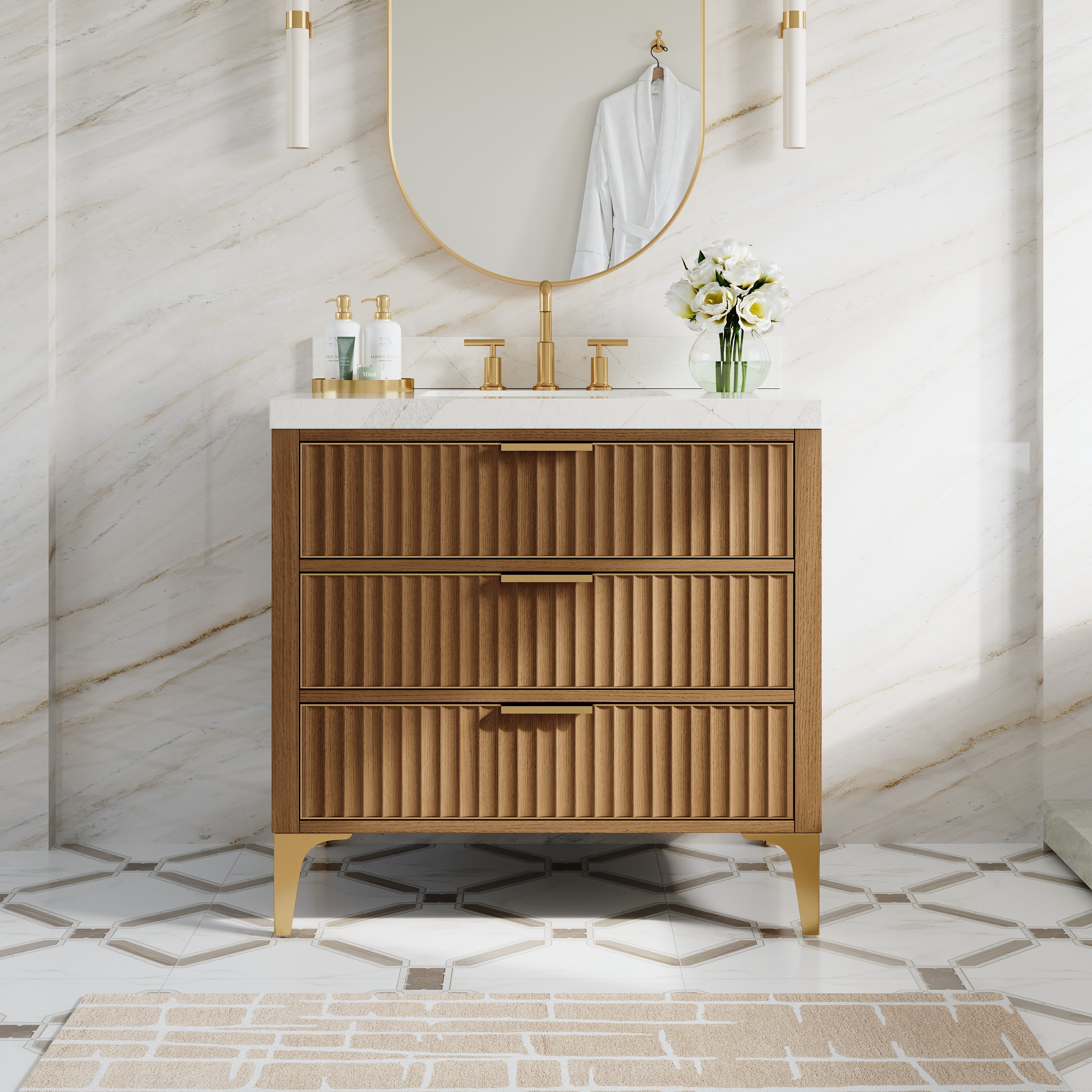
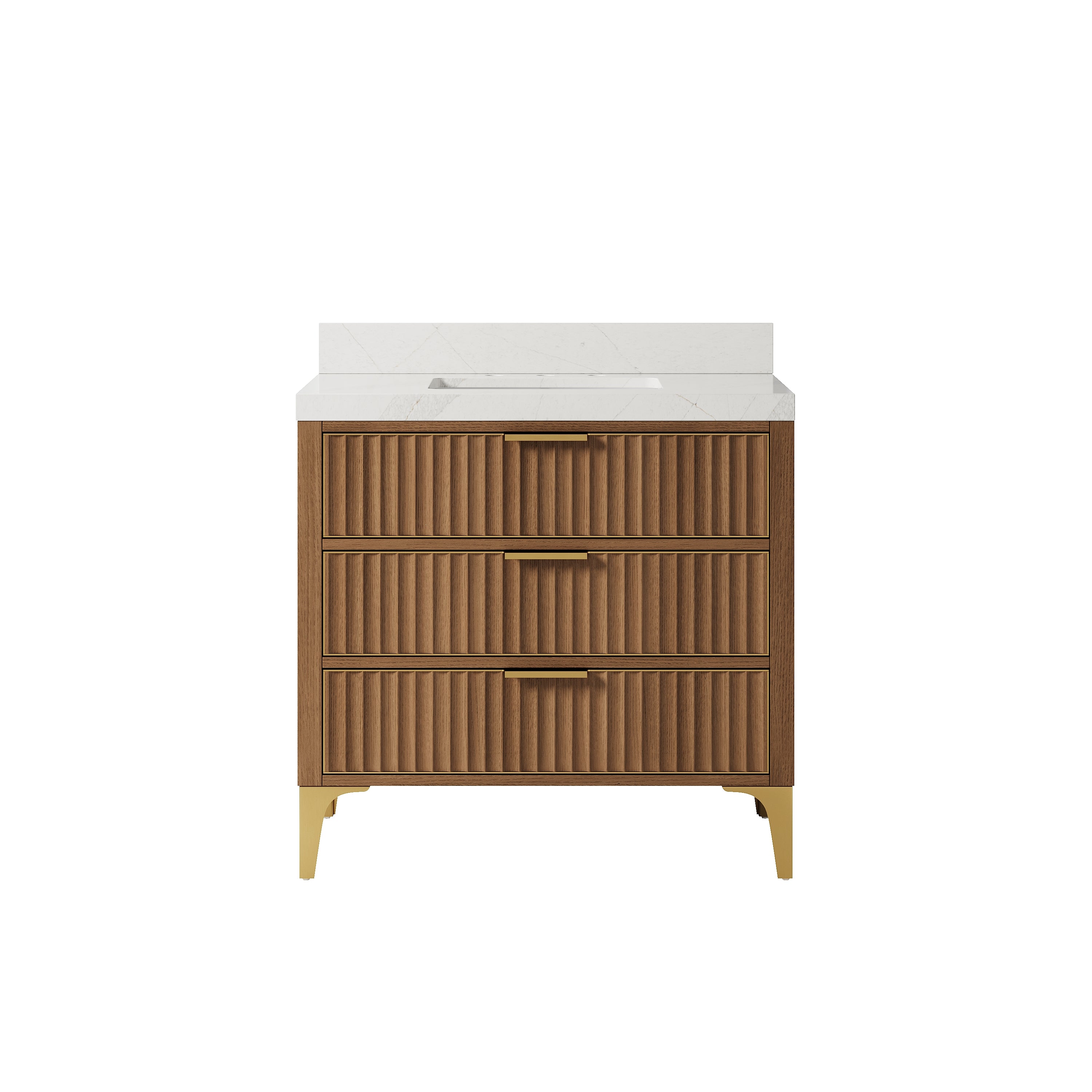
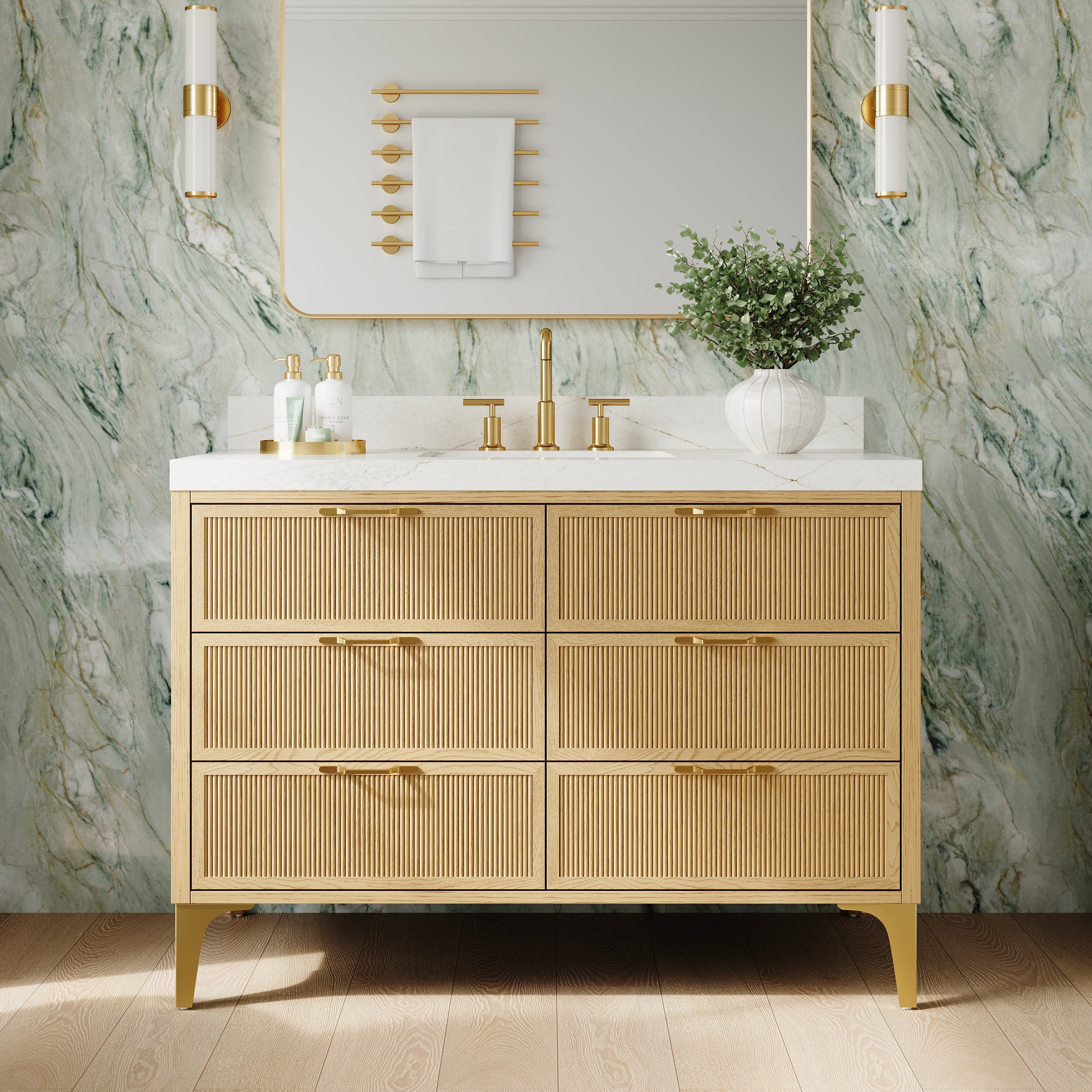
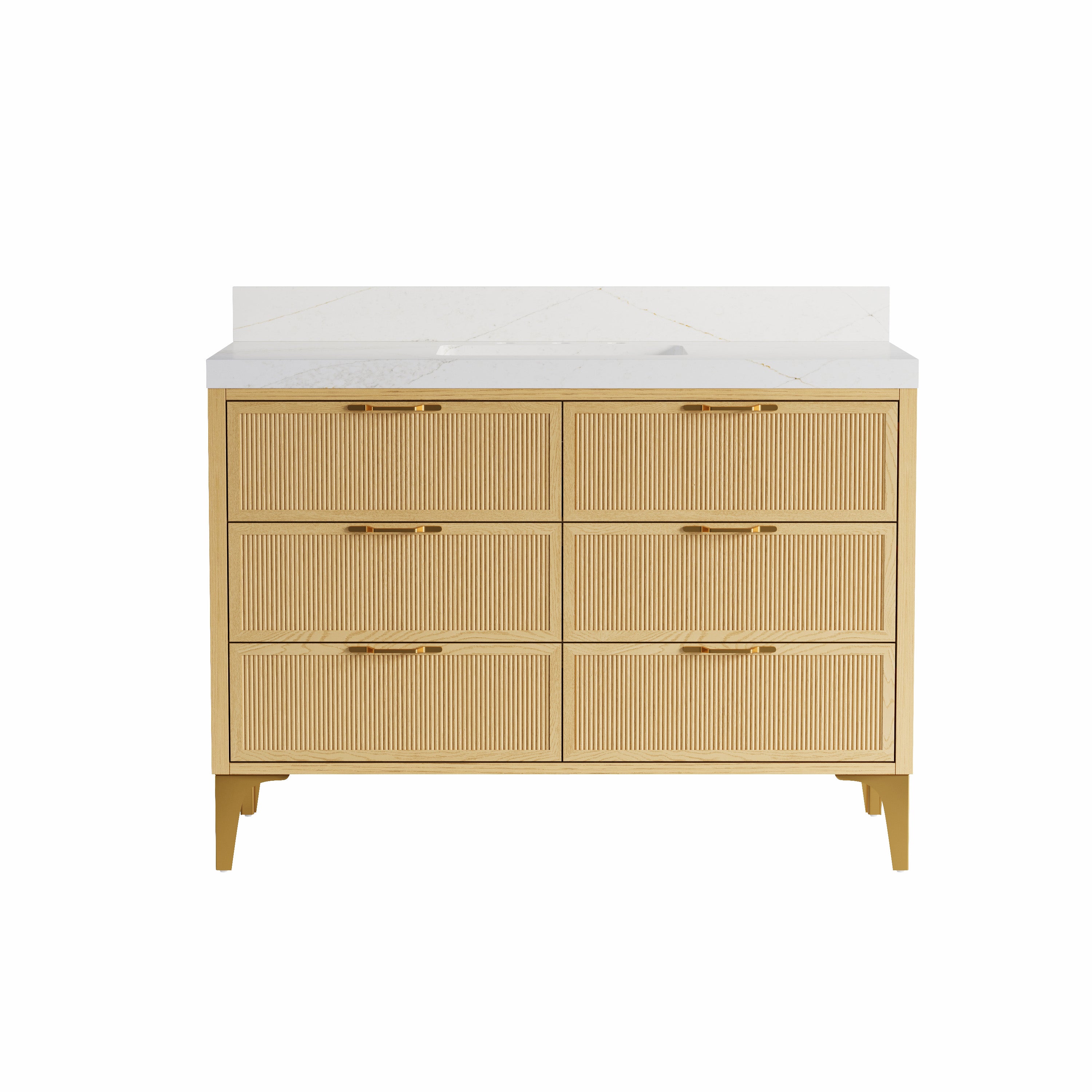


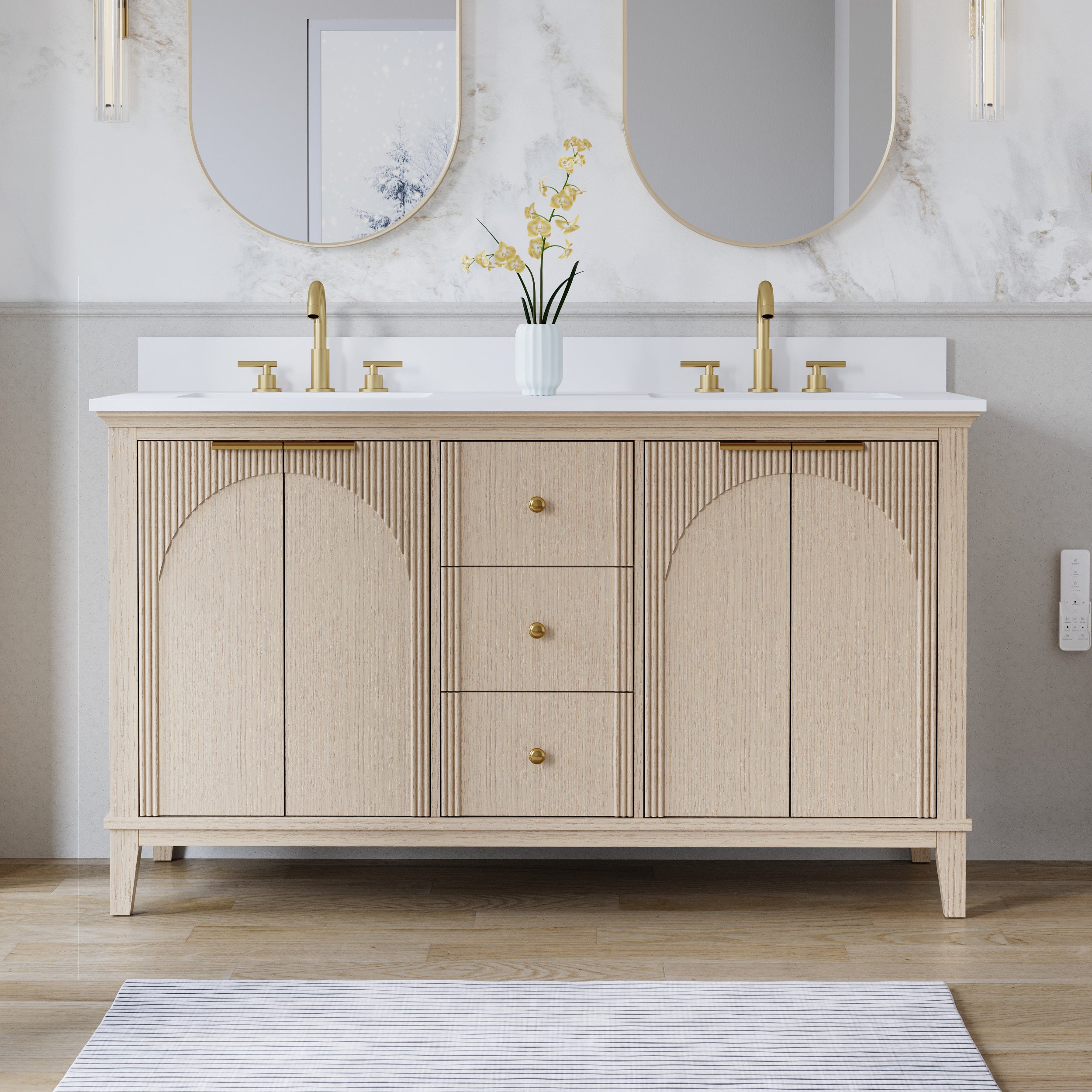
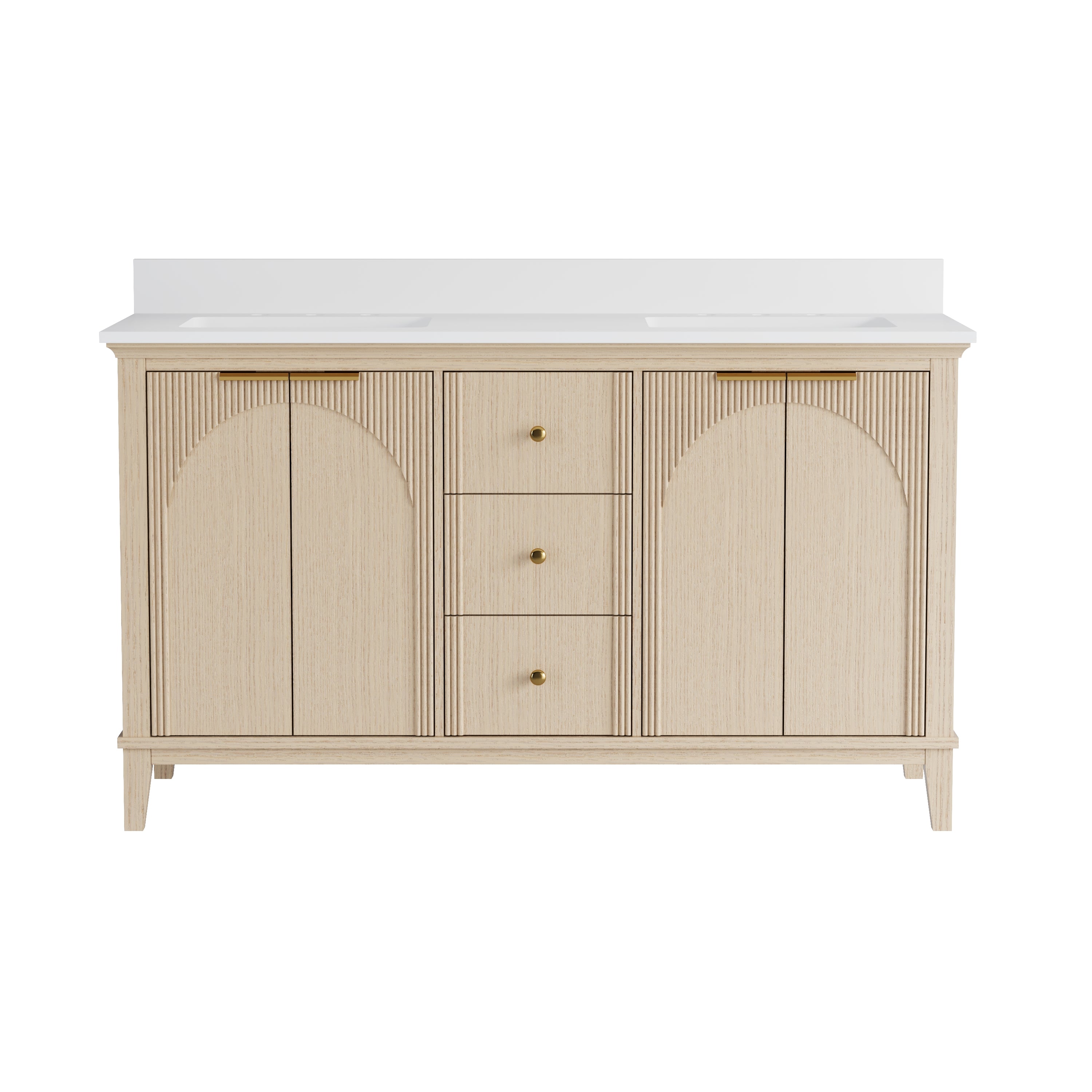
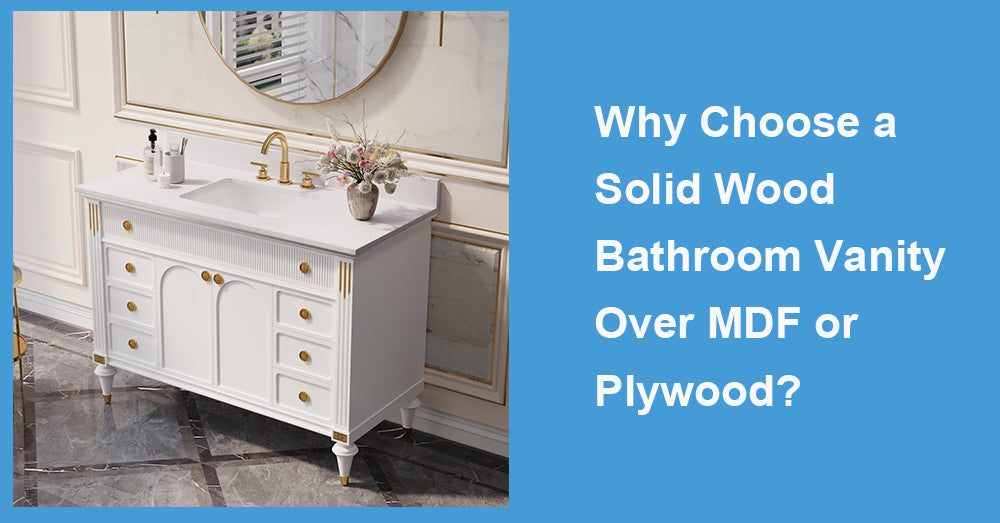
In the process of bathroom renovation and space upgrades,solid wood bathroom vanity is often seen as a more high-end, durable choice.
However, MDF and plywood have long dominated the market due to their price and processing stability.
The real question when faced with these three common materials is not "which one is cheapest", but which one can deliver more reliable structural performance and a higher return on investment in high-humidity environments and long-term use.
1. The bathroom environment has much higher requirements for cabinet materials than other spaces
The bathroom is not an ordinary indoor space.
Alternation between hot and cold water, frequent humidity fluctuations, and water vapor condensation continuously subject the cabinet material to long-term stress changes.
Industry maintenance data shows that the most common problems with bathroom cabinets are not direct water damage, but deformation, loose joints, and surface aging caused by humidity changes.
This is also why the same material performs well in the kitchen or bedroom but has a significantly shorter lifespan in the bathroom.
Under these environmental conditions, the material's stability and structural elasticity become particularly critical.
2. The core advantages of solid wood: natural strength and structural recovery ability
High-quality solid wood cabinets usually use a hardwood frame structure, such as high-density hardwoods.
In the mainstream bathroom cabinet size range of 36-60 inches, the stability performance after long-term use is particularly outstanding.
Industry tests have shown that although solid wood undergoes slight expansion and contraction with humidity changes, these changes are more uniform, predictable, and less likely to cause structural damage.
In other words, solid wood is more "breathable" but less likely to "lose control and deform".
This feature helps maintain the overall framework stability even after years of use.
3. Advantages and limitations of MDF
MDF is formed by high-density fiber compression, with high flatness and controllable cost, and is a commonly used material for many modern bathroom cabinets.
In the initial stage of use, MDF has an excellent appearance and structural stability, especially with good surface sealing, and shows good tolerance to short-term humidity fluctuations.
However, long-term industry feedback also shows that once the edge sealing or coating is damaged, water vapor can easily penetrate along the fiber structure, leading to local expansion.
Compared to solid wood, MDF has weaker structural recovery ability after humidity intrusion and is more prone to irreversible deformation.
4. Middle Route of Plywood
Multilayer boards are formed by interlocking wood grain stacking, and their stability is usually better than that of single-directional structural materials.
In small- and medium-sized bathroom cabinets ranging from 24 to 48 inches, multilayer boards can offer good bending and deformation resistance while also providing cost advantages.
However, in larger cabinet sizes, if the internal reinforcement structure is insufficient, multilayer boards may still experience slight bending under long-term humidity stress, and their stability is usually between that of solid wood and MDF.
5. Structural strength is significant for large-sized cabinets
As the width of the bathroom cabinet reaches 48 inches or more, the structural load-bearing capacity of the material itself becomes a key factor.
Industry engineering experience shows that in large cabinets, solid-wood frame structures are the most reliable in terms of load-bearing and deformation resistance.
MDF requires more complex internal reinforcement, and multilayer boards rely on board thickness and manufacturing quality.
That's also why most high-end, large-sized bathroom cabinets still prioritize solid wood as the primary structural material.
6. Durability and repairability are the key to long-term value differences
One of the most significant advantages of solid wood is its repairability.
Surface scratches and slight wear can often be restored through polishing and repainting.
In contrast, once structural damage occurs in MDF and multilayer boards, the repair space is minimal, and usually only components can be replaced.
Long-term industry usage data shows that repairability significantly extends the "psychological service life" of solid wood bathroom cabinets and reduces the probability of early replacement.
7. The long-term influence of visual texture and spatial value
In addition to structural performance, the spatial texture brought by the natural texture of solid wood is also an essential reason for its continued popularity.
As usage time increases, the surface of solid wood gradually shows a softer luster, while composite materials are often more prone to aging after coating.
At the visual level, solid wood is more likely to cross the fashion cycle and maintain long-term durability.
8. Why are more and more high-end projects returning to solid wood structures
Industry trends show that the proportion of solid wood cabinets is on the rise in bathroom projects that emphasize long-term quality and spatial value.
The core reason is not simply pursuing a "traditional feel", but that solid wood still exhibits the most stable overall performance after comprehensive durability, maintainability, and long-term experience.

9. Conclusion: The choice is not the material, but the usage cycle
Choosing between solid wood bathroom vanities and MDF or multilayer boards essentially determines how long you expect this bathroom cabinet to last and whether it will remain stable and aesthetically pleasing after many years.
If short-term cost control is pursued, composite materials can meet basic needs.
Still, if long-term structural stability, repairability, and spatial texture are valued, solid wood often provides higher overall value.
The true quality is not just how exquisite it looks at first, but the ability to maintain reliability and durability under the test of humidity, time, and high-frequency use.









Leave a comment
This site is protected by hCaptcha and the hCaptcha Privacy Policy and Terms of Service apply.