














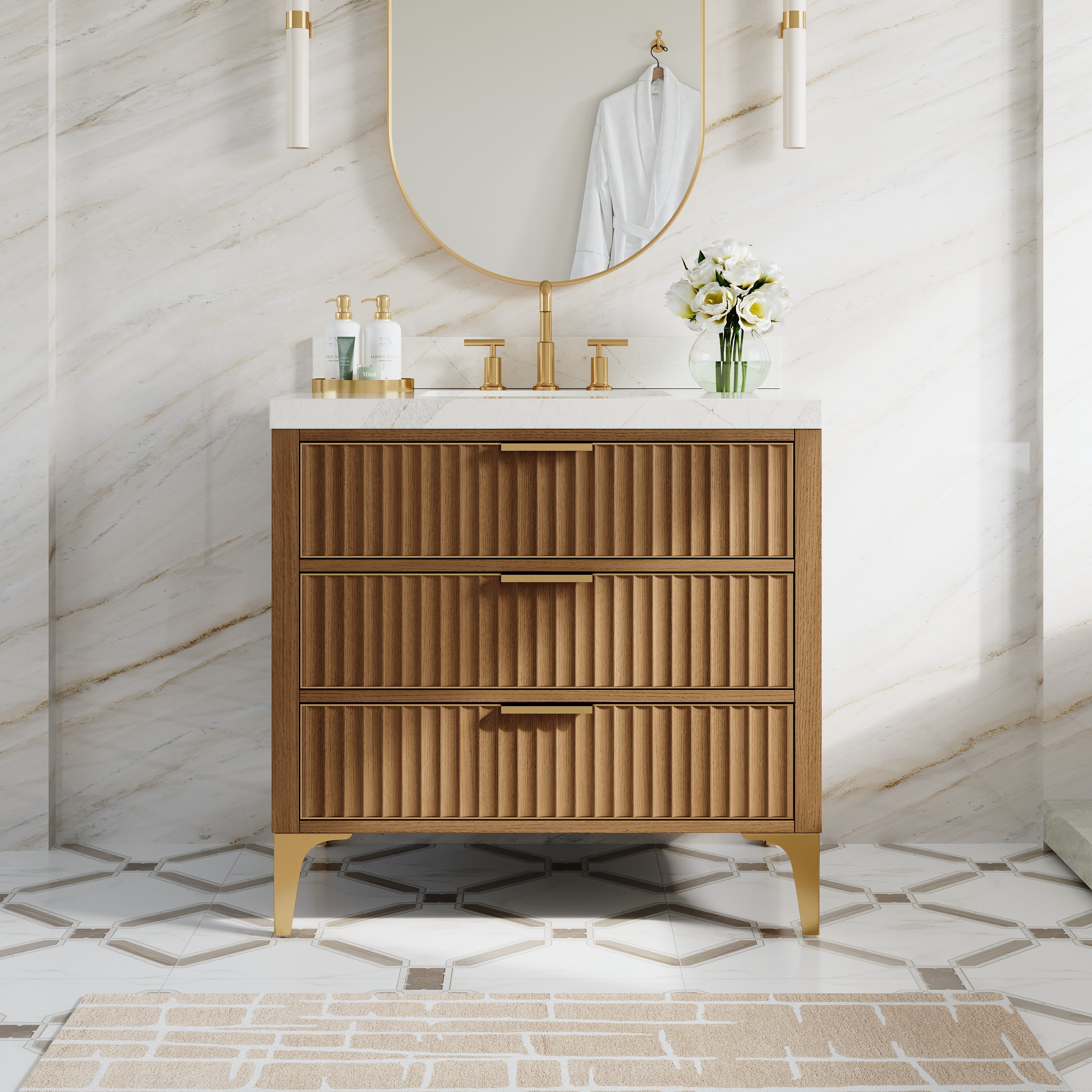
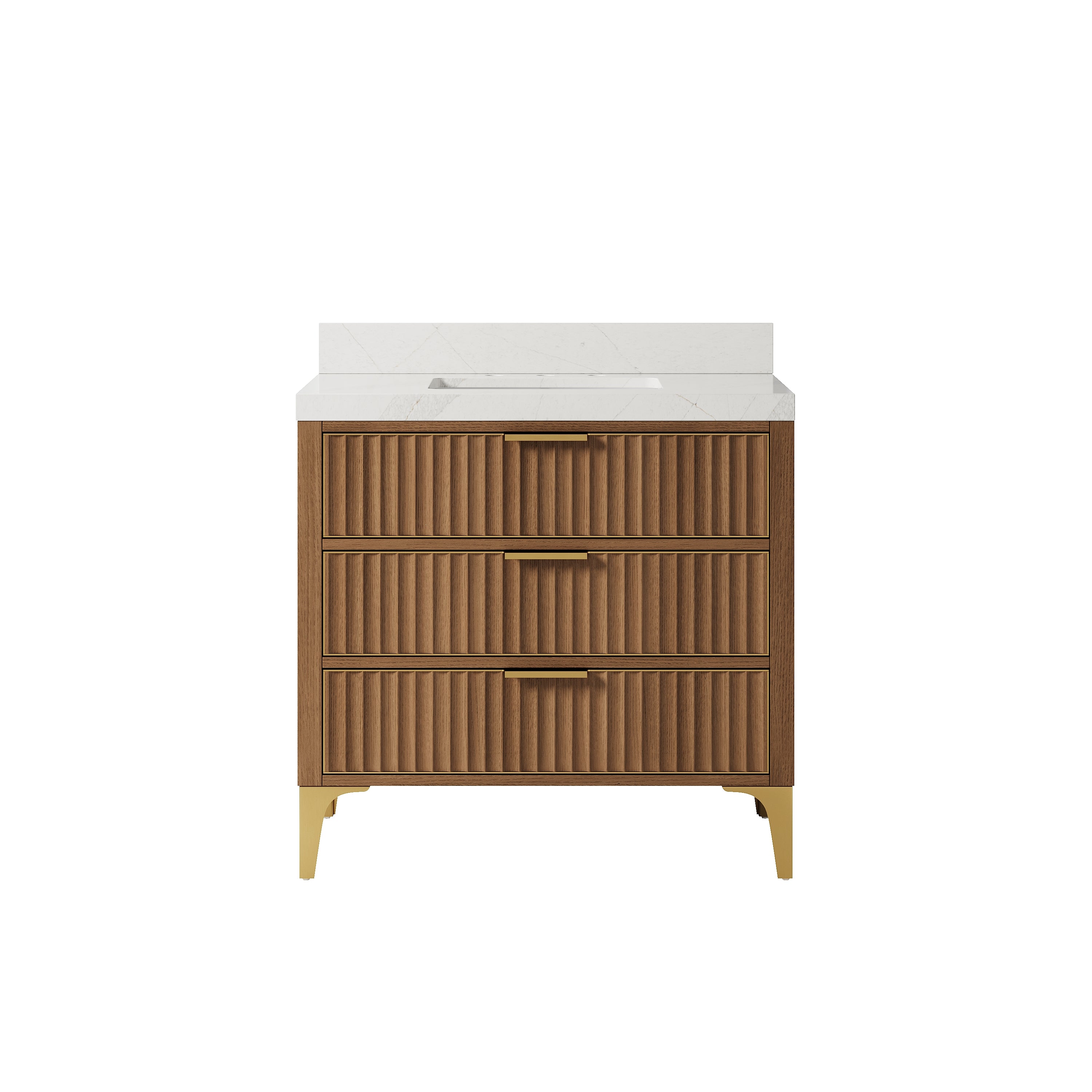
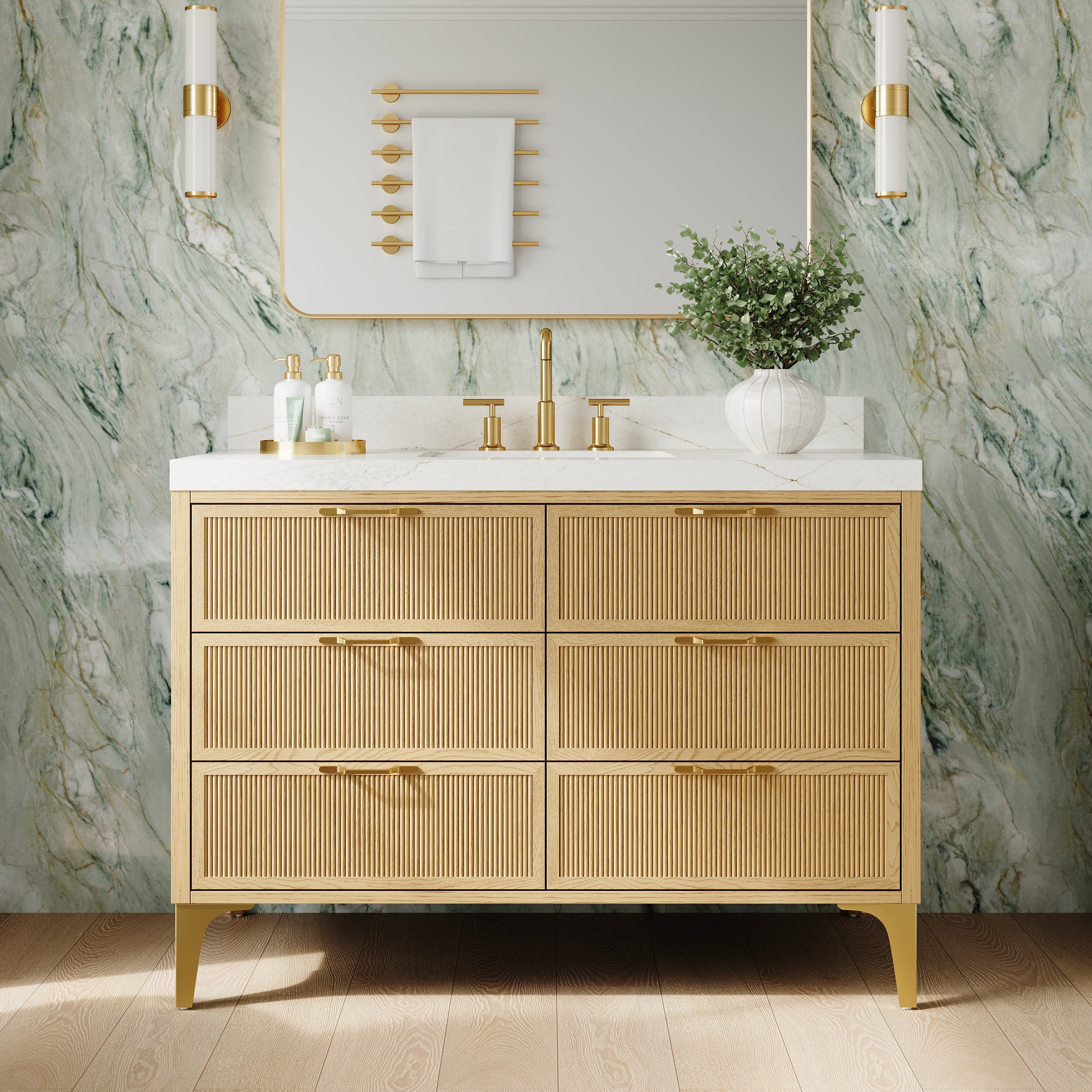
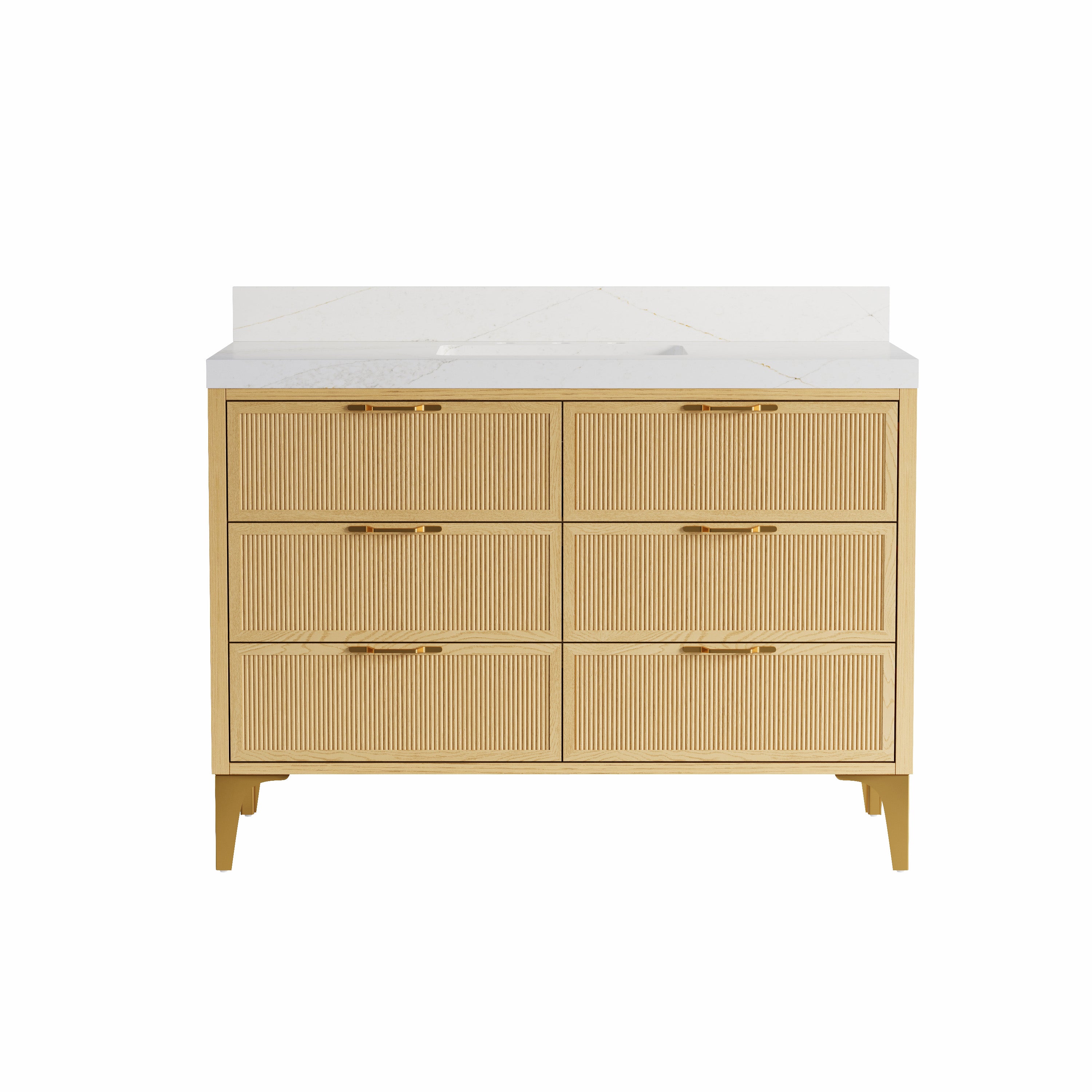


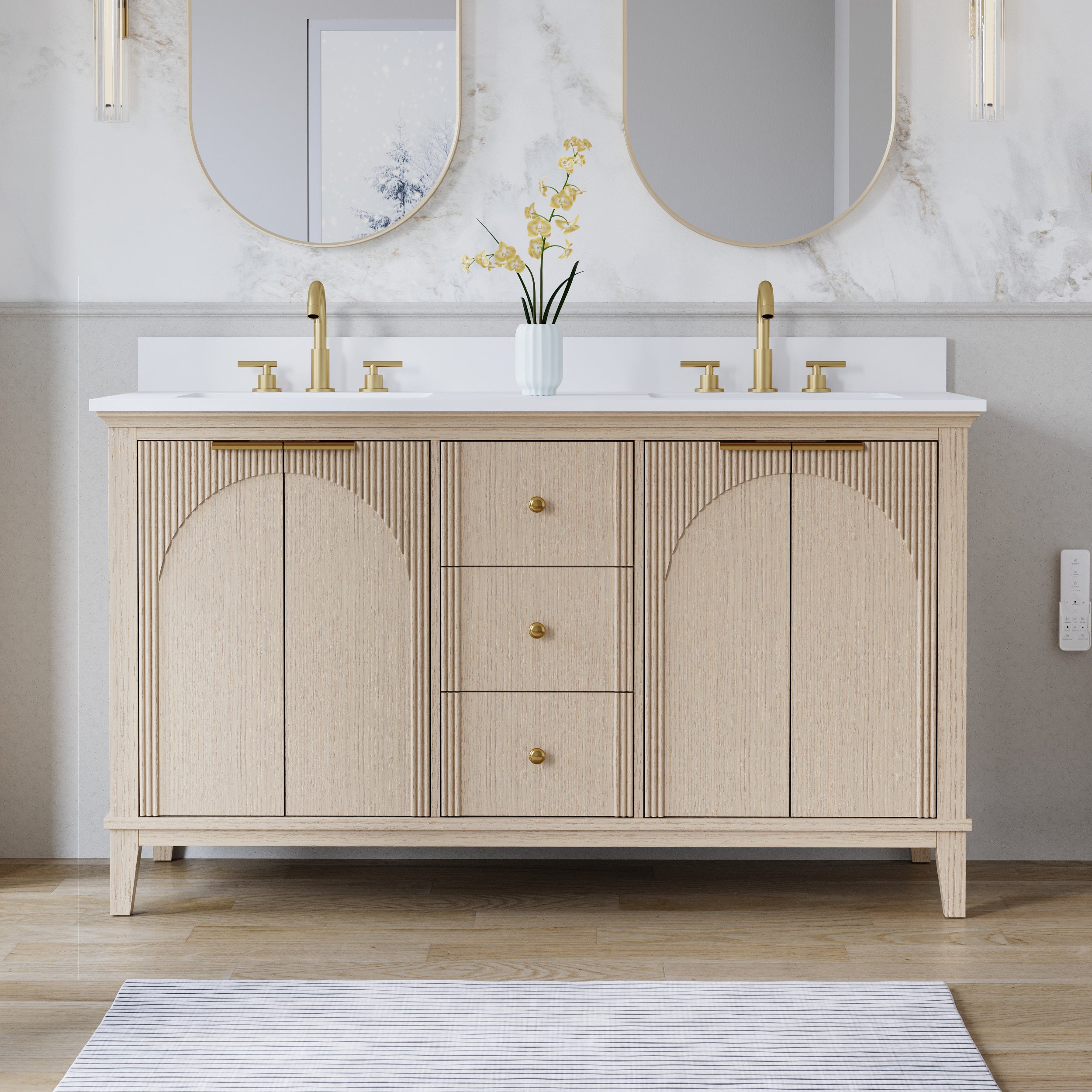
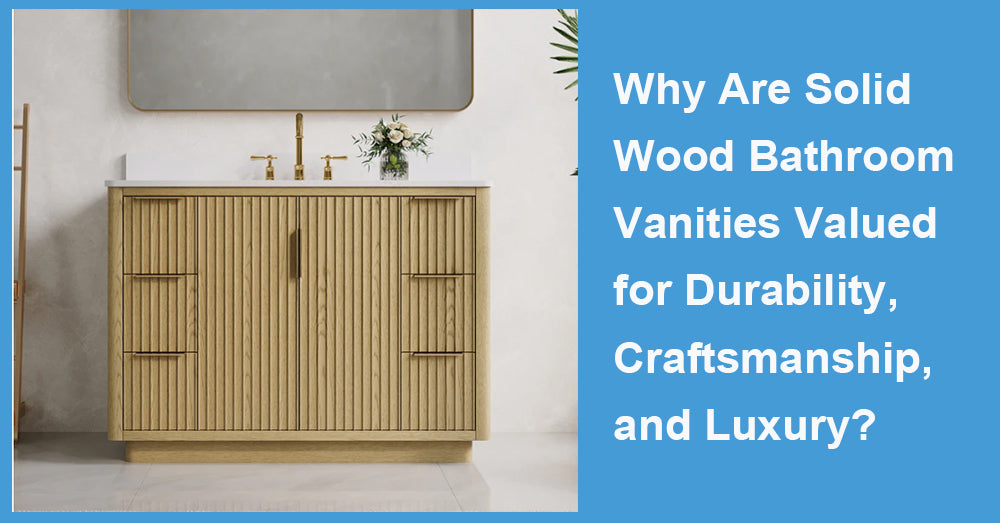
Solid wood bathroom vanities are now seen less as basic storage and more as long-term investments. The 2025 Houzz Bathroom Trends Study shows that 74% of homeowners choosing wood vanities picked solid wood, making it the top wood type. The data also identifies the most common species, indicating that solid wood is now a default premium choice for many upgrades, not a niche preference.
1. A Clear Material Preference Is Taking Shape
Design organizations tracking bath specifications note a stronger pull toward natural materials. NKBA’s 2026 Bath Trends reports that wood-faced vanities (62%) have surpassed painted vanities (53%), connecting the vanity category to the broader move toward biophilic, warmer interiors. Combined with Houzz’s finding that solid wood leads among wood vanities, the takeaway is clear: buyers seek true wood for its performance and feel—not just its appearance.
This also explains why "solid wood" signals quality on product pages. Many cabinets use mixed materials, so shoppers want specifics: solid wood frames, doors, plywood boxes, or composite panels.
2. Durability Starts With Structure and Repairability
Solid wood vanities earn durability points for two reasons: structural performance and repairability.
Structural performance matters most at stress points: door hinges, drawer slides, organizers, and legs. Solid wood holds fasteners well and withstands repeated use better than weak composites, especially with proven hardware.
Repairability is the long-game advantage. Scratches, small dents, edge wear, and minor watermarks can often be sanded and refinished on solid wood components, extending the life of the vanity rather than forcing a replacement. That “refinish instead of replace” reality is one reason solid wood keeps its premium perception in bathrooms, where daily wear is unavoidable.
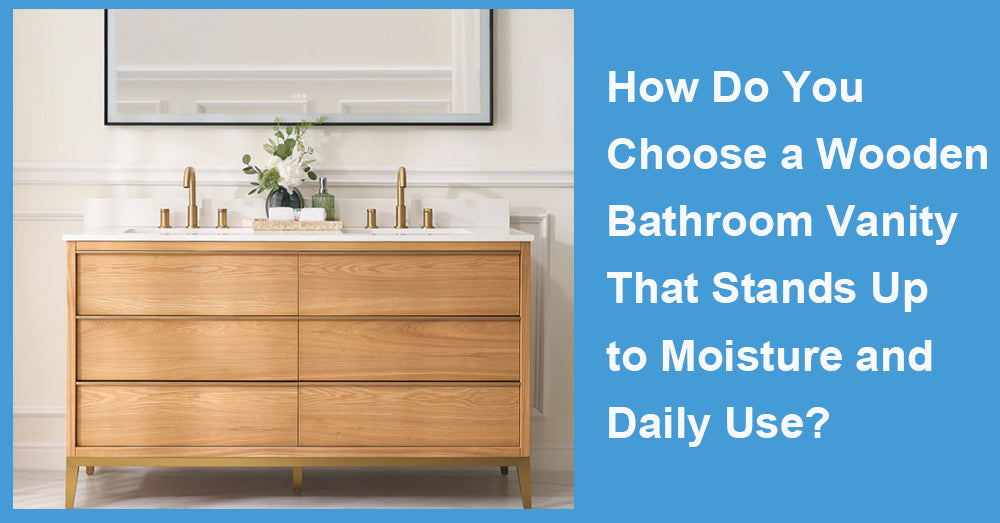
But durability is not guaranteed just because a product is wood. Wood absorbs and releases moisture, leading to swelling, shrinking, warping, checking, or splitting with humidity changes. The best vanities use kiln-dried lumber, strong joinery, and moisture-resistant finishes suited for bathrooms.
3. “Craftsmanship” Means Managing Wood Movement, Not Fighting It
Craftsmanship in a bathroom vanity is not only decorative detailing. It is engineering.
Because wood naturally moves with changes in moisture, the best cabinetmakers use construction methods that accommodate that movement rather than trap it. Examples include frame-and-panel doors that allow panels to “float,” properly oriented grain, and joinery that stays tight over time. This is also why drawers and doors that feel smooth and square in a showroom still need strong underlying construction to stay aligned in real bathrooms.
The USDA’s warning about swelling and shrinking is a reminder that the bathroom is a stress-test environment for wood products. A well-built, solid-wood vanity shows in the details: consistent reveals around doors, drawers that do not rattle, and corners that remain true after months of humidity cycles.
In premium builds, craftsmanship also appears in furniture details: dovetail drawers, mortise-and-tenon-like frames, and multi-step finishes that seal end grain and edges, which are most susceptible to moisture.

4. Luxury Is a Sensory Experience, Not Just a Price Tag
Solid wood signals luxury partly because it looks distinct in real light. Grain depth, chatoyance, and natural variations create visual appeal that printed surfaces rarely match. It also feels unique. A solid wood door has a particular weight and sound when closed, which signals quality.
Trend data shows buyers want wood character, not to hide it. NKBA ties the rise of wood-facing to biophilic design, and the Houzz study shows top solid wood choices: maple (29%), white oak (23%), birch (12%), and walnut (9%). Designers call these “quiet luxury” species: warm, textured, and aging gracefully.
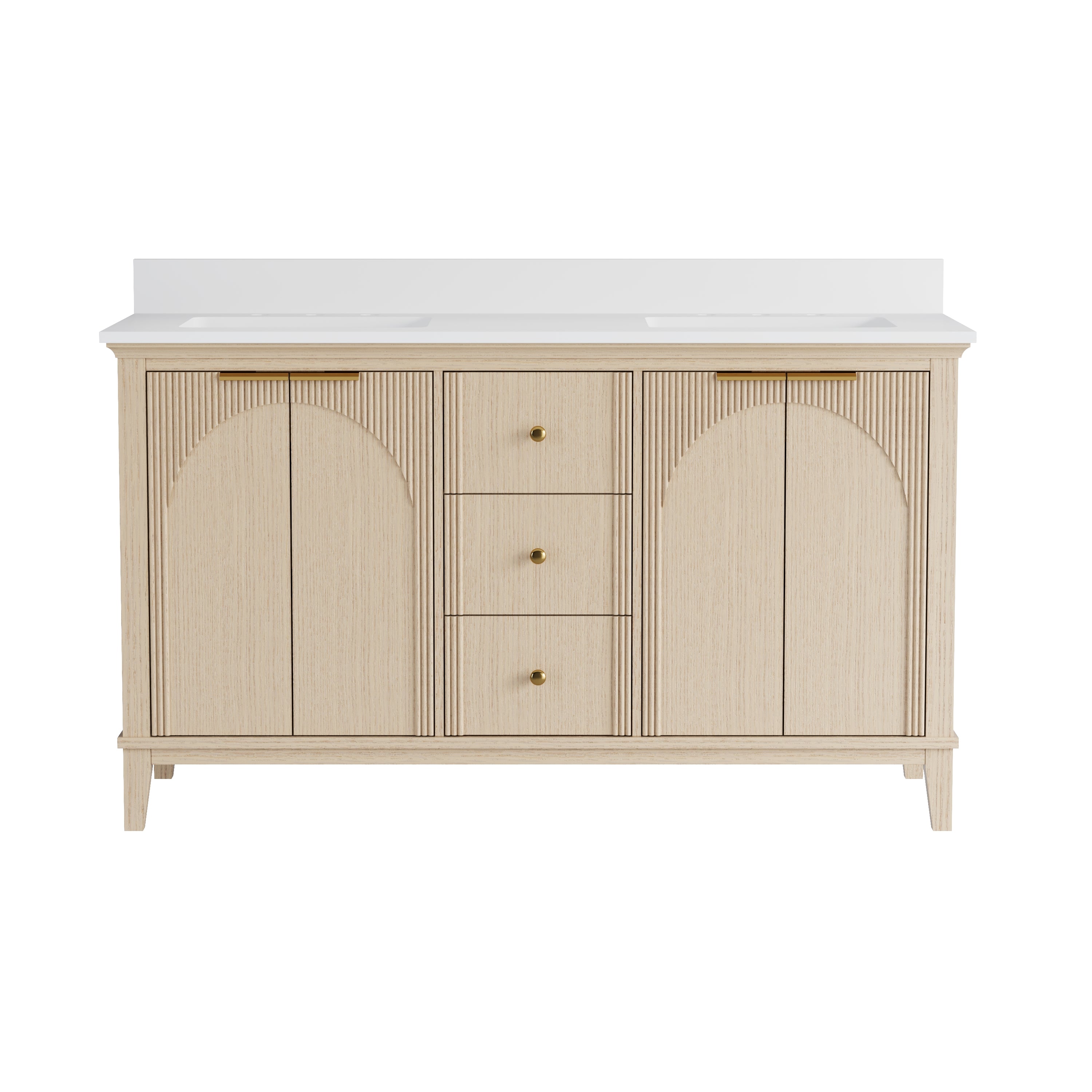
Luxury also shows up in sizing and proportion. Common vanity widths like 24, 30, 36, 48, and 60 inches create different design possibilities, and solid wood is often chosen when a vanity is intended to be a focal point rather than a background cabinet. In that context, wood species, grain matching, and finish tone become part of the room’s “signature,” much as wood flooring or millwork does.
5. Material Transparency and Indoor Air Concerns Are Part of the Conversation
Another reason for solid wood’s value is that shoppers ask about what’s inside the cabinet, not just the surface. Composite woods like plywood, MDF, and particleboard are regulated by EPA TSCA Title VI standards to reduce indoor formaldehyde exposure.
This does not mean composites are “bad.” Many high-quality vanities use plywood boxes for stability and efficiency. But the existence of formaldehyde rules for composites has raised awareness, and some buyers interpret “more solid wood” as a simpler, more premium bill of materials. At minimum, it pushes brands toward clearer disclosure: which parts are solid wood, which are veneer, and which are composite.
6. What Pros Look for When Recommending a Solid Wood Vanity
Professionals typically evaluate solid wood vanities with a checklist mindset:
· Where the solid wood is used: solid wood doors and frames tend to matter more than marketing claims about “solid wood construction.”
· Joinery and alignment: tight reveals, square drawers, and a stable door fit suggest the build can handle humidity cycles.
· Finish system: sealed edges and moisture-resistant coatings reduce the risk of swelling and staining.
· Ventilation behavior: bathrooms with poor ventilation increase the risk of wood movement described by the Forest Products Laboratory.
· Transparency on composite components: if plywood or MDF is used, look for clear TSCA Title VI compliance labeling where applicable.
7. The Bottom Line
Solid wood bathroom vanities are valued for three advantages: they can be structurally strong at high-stress points, are more repairable over time, and deliver a level of visual and tactile richness that reads as luxury. The recent trend data backs up the direction of travel, with solid wood dominating wood vanity selections and wood-facing rising in design preference.
The best results come from pairing solid wood in the right places with smart construction and finishes that respect how wood behaves in humidity. In other words, “solid wood” signals premium potential, but craftsmanship is what turns that potential into a vanity that still looks and functions like new years down the line.













Leave a comment
This site is protected by hCaptcha and the hCaptcha Privacy Policy and Terms of Service apply.