


















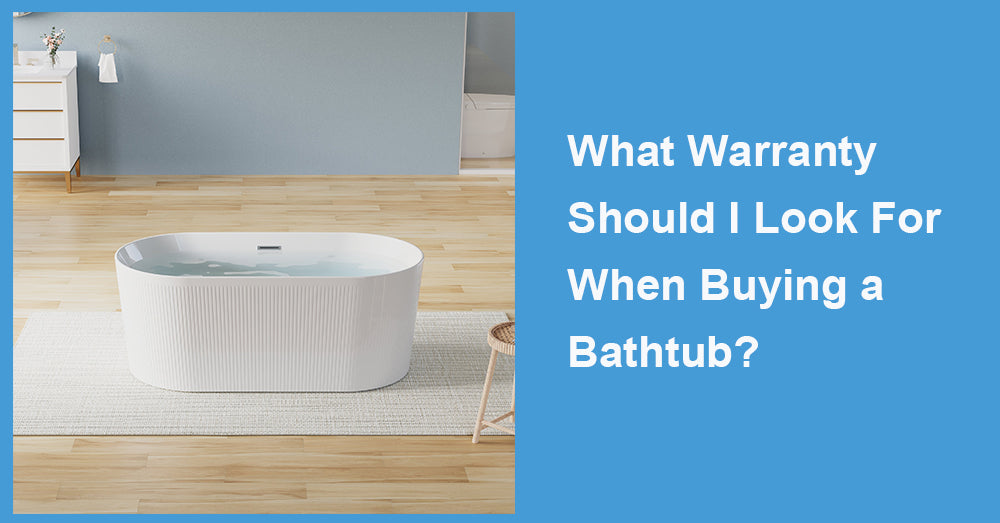
When you're browsing bathtub for sale listings online, it's easy to focus on style, size, and price. But the warranty is what protects your investment after installation—when repairs get expensive, downtime is annoying, and returning a large item isn't simple. A strong warranty doesn't just sound good on paper. It should be clear, practical, and easy to use when something goes wrong.
Below is what to look for when buying with confidence.
Start with the basics: what does the warranty actually cover?
Most bathtub warranties break down into three major areas. The best ones clearly define each:
l Structural coverage: Cracks, warping, or material separation in the tub body. This is the core of any good warranty.
l Surface/finish coverage: Problems like blistering, peeling, excessive fading, or crazing (spiderweb-like surface cracking). This matters a lot for glossy white finishes.
l Parts & components: Drains, overflow, feet/levelers, and—if applicable—whirlpool or air-bath systems (pump, motor, blower, controls).

Also read the exclusions. Warranties often won't cover damage caused by improper installation, harsh chemicals, impact damage, alterations, or unauthorized repairs.
"Limited" vs. "Lifetime" warranty: the wording can be misleading
Two terms show up frequently:
Limited warranty: Common and not necessarily bad. "Limited" usually means the coverage is restricted (for example, to manufacturing defects only) or that labor/shipping isn't included.
Lifetime warranty: Sounds impressive, but often comes with conditions:
l Valid only for the original purchaser
l Applies only to residential use
l May cover structure only, not surface or parts
l May provide replacement product only, not labor or freight
l A well-written 10-year warranty can be more valuable than a vague "lifetime" promise.
These 5 details matter more than the number of years
Labor coverage (installation costs)
Many warranties will replace the tub but won't pay for removal and re-installation. With a bathtub, labor can easily cost more than you expect. If a brand offers any labor allowance, that's a major plus.
Freight/shipping coverage
Bathtubs are heavy and easily damaged in transit. If a warranty claim requires replacement, ask:
l Who pays freight?
l Is it covered one-way or both ways?
l Is curbside delivery included?
A warranty that includes shipping (or clearly states the shipping policy) is worth more.
Claim process and response time
A warranty is only as good as the process behind it. Look for brands that:
l Allow online submissions
l Respond within a stated time window.
l Clearly list what you need (photos, serial number, installation photos, proof of purchase)
Transferability
If you plan to sell your home later, a transferable warranty is a nice feature. Many warranties are non-transferable, so check the fine print.
Definitions of "normal wear" vs. "defect."
Surface issues can be subjective. A good warranty defines what counts as a defect, especially for:
l Discoloration/yellowing
l Scratches
l Loss of gloss
l Crazing or staining
The clearer the definitions, the fewer disputes later.
Match warranty expectations to bathtub material
Different tub materials typically come with different warranty strengths. Here's what you should generally prioritize:
l Acrylic tubs: Look for at least 5–10 years of structural coverage, with some surface/finish protection. If surface coverage is very short, read carefully.
l Cast iron enamel tubs: Often longer warranties. Focus on the enamel finish terms (chipping, crazing, staining) and what's excluded.
l Stone resin / solid surface tubs: Confirm coverage for cracking/warping and ask about repair policy. Also, check if certain cleaners void the warranty.
l Whirlpool / air-bath tubs: The tub body and system components usually have separate warranty periods. Make sure pump/motor/control coverage is clearly stated, along with labor coverage.
Make sure you don't accidentally void the warranty
A lot of claims get rejected for reasons that are easy to avoid. Before installation, confirm requirements like:
l Proper support and leveling
l Correct drain/overflow installation
l Approved sealants and cleaning products
l Any required "inspection" or registration steps
Pro tip: Take a few photos during installation (drain connection, leveling, support points). If you ever need a claim, those photos can save you weeks.
A quick "before you buy" warranty checklist
When comparing any bathtub for sale, ask or verify:
l How long is structural coverage, and what defects are included?
l Is the surface/finish covered, and for how long?
l Are parts (drain/overflow/feet) covered separately?
l Does the warranty include labor or any labor allowance?
l Who pays shipping/freight for warranty replacements?
l Is the warranty limited to the original owner or transferable?
l What documentation is required to file a claim?
l What are the key exclusions (install, cleaners, misuse, commercial use)?
Final thought: buy a bathtub, but also buy peace of mind
A bathtub isn't a small purchase—and once it's installed, replacing it can be costly, messy, and time-consuming. That's why the warranty matters just as much as the design. When you're shopping for a bathtub for sale, don't stop at the big number on the label. Read what it actually protects: structural issues like cracking or warping, surface problems like discoloration or peeling, and any parts that could fail over time.
Just as important are the practical details that affect your real-world experience. Does the warranty cover shipping for replacements? Is labor included, or is it "parts only"? Are claims straightforward, with clear steps and reasonable response times? A strong warranty should feel like a promise you can actually use—not fine print that creates obstacles.
In the end, the best bathtub does more than upgrade your bathroom. It gives you confidence every day: confidence in the build, confidence in the finish, and confidence that support won't disappear after checkout.





























Leave a comment
This site is protected by hCaptcha and the hCaptcha Privacy Policy and Terms of Service apply.