






















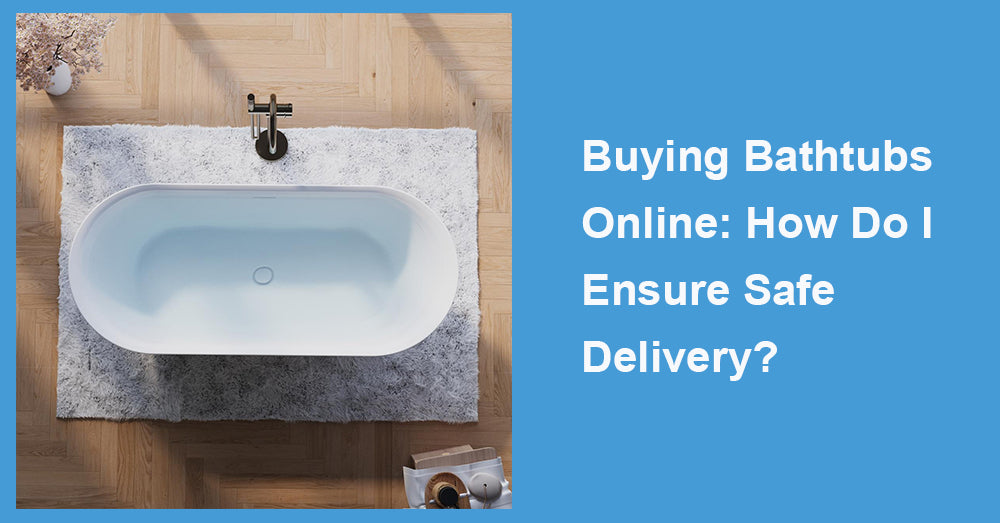
Shopping for bathtubs for sale online can be a win on selection and pricing, but delivery is where most headaches happen. A bathtub is bulky, often fragile at the corners, and typically moves through a less-than-truckload (LTL) network where freight from many shippers gets mixed—exactly the scenario ISTA’s LTL-focused test procedures are designed to simulate.
1. Understand the Delivery Risk Before You Click “Buy.”
1. LTL handling increases touchpoints. LTL freight is consolidated and transferred, which means more loading, unloading, and terminal handling than a dedicated truck. ISTA describes LTL systems as mixed loads from different shippers headed to different destinations—an environment that naturally increases impact and abrasion risk.
2. Damage isn’t rare in real operations. One industry study reported an average LTL damage rate of 1.94% in 2023 (roughly 1 in 51 shipments) and highlighted the cost impact of damage/loss claims. Treat the exact number as directional, but the takeaway is clear: damage is common enough that your receiving process matters.
3. The cheapest shipping option can be the most expensive outcome. If delivery is curbside only, or the carrier shows up without the right equipment, rushed handling and dragging cartons can turn a “deal” into a return saga.
2. Choose the Right Service Level and Equipment
1. Liftgate is non-negotiable for most homes. If a truck arrives without a liftgate and you don’t have a dock, the driver may ask you to unload in a way that’s unsafe for the truck and for people. Add liftgate service when the shipment is palletized or skidded.
2. Decide what you’re actually buying: curbside vs. threshold vs. room-of-choice vs. white glove.
1. Curbside: fastest and cheapest, highest risk for damage during the last steps.
2. Threshold/garage: often the best value—less dragging, less tipping.
3. Room-of-choice/white glove: reduces handling mistakes, especially for upstairs or tight turns.
3. Confirm the “handling unit.” Many bathtubs ship palletized or skidded. A standard logistics pallet footprint is commonly 48 in × 40 in, and knowing whether your tub arrives on something this size helps you plan driveway space, door approach, and whether a pallet jack can be used.
3. Packaging Quality Is the Silent Difference Between “Arrived Perfect” and “Instant Return.”
1. Look for packaging that behaves like freight, not retail packaging. In LTL, your carton may be stacked near other freight or pushed at terminals. ISTA’s LTL procedure is built around the reality that mixed freight shares a trailer and experiences multiple hazards.
2. Ask the seller one blunt question: “Is the tub shipped in a reinforced carton with corner protection and strapped to a skid/pallet?” If the answer is vague, that’s a warning sign.
3. Ask whether the packaging has been distribution-tested. ISTA testing is commonly used as a pre-shipment validation approach to confirm package performance in real distribution hazards. Even if a seller won’t share a full report, a clear mention of ISTA-style testing is a positive signal.
4. Plan the Route Inside Your Home Like a Contractor Would
1. Measure the tightest point in inches—then add a buffer. Don’t just measure the front door. Measure the narrowest hallway, the sharpest turn, and the stair width (if applicable). A tub carton can be wider than the tub because of foam and corner blocks.
2. Plan where the pallet/skid will stop. If the tub arrives on a skid, you may want to place it in a garage or covered area, then unpack it closer to the installation room. This reduces the risk of denting door frames' corners.
3. Clear a staging zone. Make sure you have a flat area where the carton can be opened without tipping the tub onto an edge.

5. Receiving Day: Your 10-Minute Inspection Can Save Weeks of Back-and-Forth
1. Inspect before you sign. Carriers and shippers routinely require inspection at delivery, and that any damage/shortage be notated on the receiving documents at the time of delivery.
2. Be specific on the proof of delivery (POD). Don’t write “damaged” only. Write what you see: “carton crushed on right side,” “puncture,” “corner impact,” “straps broken,” “pallet broken.” The more specific the notation, the stronger your position if a claim is needed.
3. Take photos like you’re building a case. Photograph:
1. The pallet/skid from all sides
2. Any crushed corners, holes, or tears
3. The shipping label and tracking/PRO number
4. The tub itself immediately after opening (focus on corners and rim)
6. Know the Difference Between Visible and Concealed Damage
1. Visible damage: You see it at delivery. Note it on the POD and alert the driver immediately.
2. Concealed damage: The carton looks fine, but the tub is cracked or chipped after opening. Many carriers require prompt notification. A FedEx Freight loss/damage guide states that concealed damage should be reported within a defined window (the document specifies a time limit for reporting). Use this as a practical benchmark: open and inspect quickly, and report immediately in writing when something’s wrong.
3. Keep all packaging. Foam, corner blocks, straps, and cartons are evidence of impact and also help explain how the damage occurred.
7. Shipping Details That Reduce Damage Probability (What to Confirm With the Seller)
1. Accurate dimensions and weight matter. Freight class and pricing often depend on density, and NMFTA emphasizes that measurements should be accurate—not estimated—because misclassification can lead to re-bills and handling problems.
2. Require “Do Not Stack” only when justified. Overusing “Do Not Stack” can be ignored in the real world; what matters more is rigid packaging and corner protection.
3. Request shipment scheduling and contact confirmation. Missed appointments lead to re-delivery attempts and extra handling—each attempt is another chance for damage.
8. The Bottom Line: A Safe Delivery Is Mostly Process, Not Luck
1. Pick the right service level (liftgate + threshold/room of choice when needed).
2. Demand freight-grade packaging (corner protection, skid/pallet, and strapping).
3. Measure your route in inches and stage smart.
4. Inspect before signing, document precisely, and report fast.








































Leave a comment
This site is protected by hCaptcha and the hCaptcha Privacy Policy and Terms of Service apply.