
















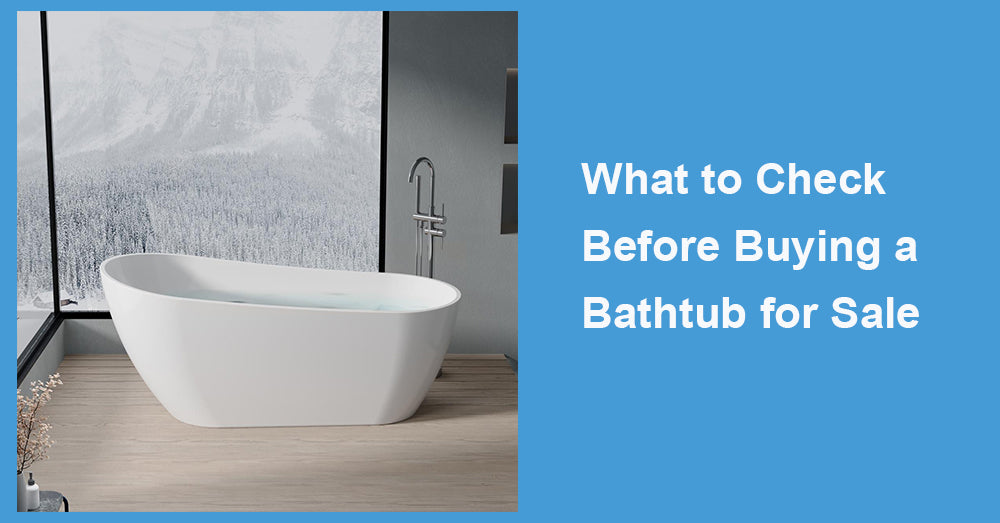
When browsing various bathtub for sale information, many buyers and end users often focus more on appearance and price, but overlook key variables such as size adaptation, load-bearing structure, water efficiency, and installation conditions.
As the proportion of residential renovations continues to rise, the functionalization and comfort upgrade of bathroom spaces have become the mainstream trend. Industry data shows that in recent years, bathroom renovation projects have accounted for over 30% of overall residential renovation expenditures, with bathtub replacement or upgrade among the most frequent projects.
Therefore, before purchasing a bathtub, a systematic evaluation of the following core elements has become the basic process for professional procurement decision-making.
1. Size and space matching: it's not just a matter of length
The standard specifications for embedded bathtubs are 60 inches long, 30-32 inches wide, and 14-20 inches deep, which are suitable for most traditional three-wall-structured bathrooms. For products that require a deeper immersion, the internal water depth is typically 16-18 inches.
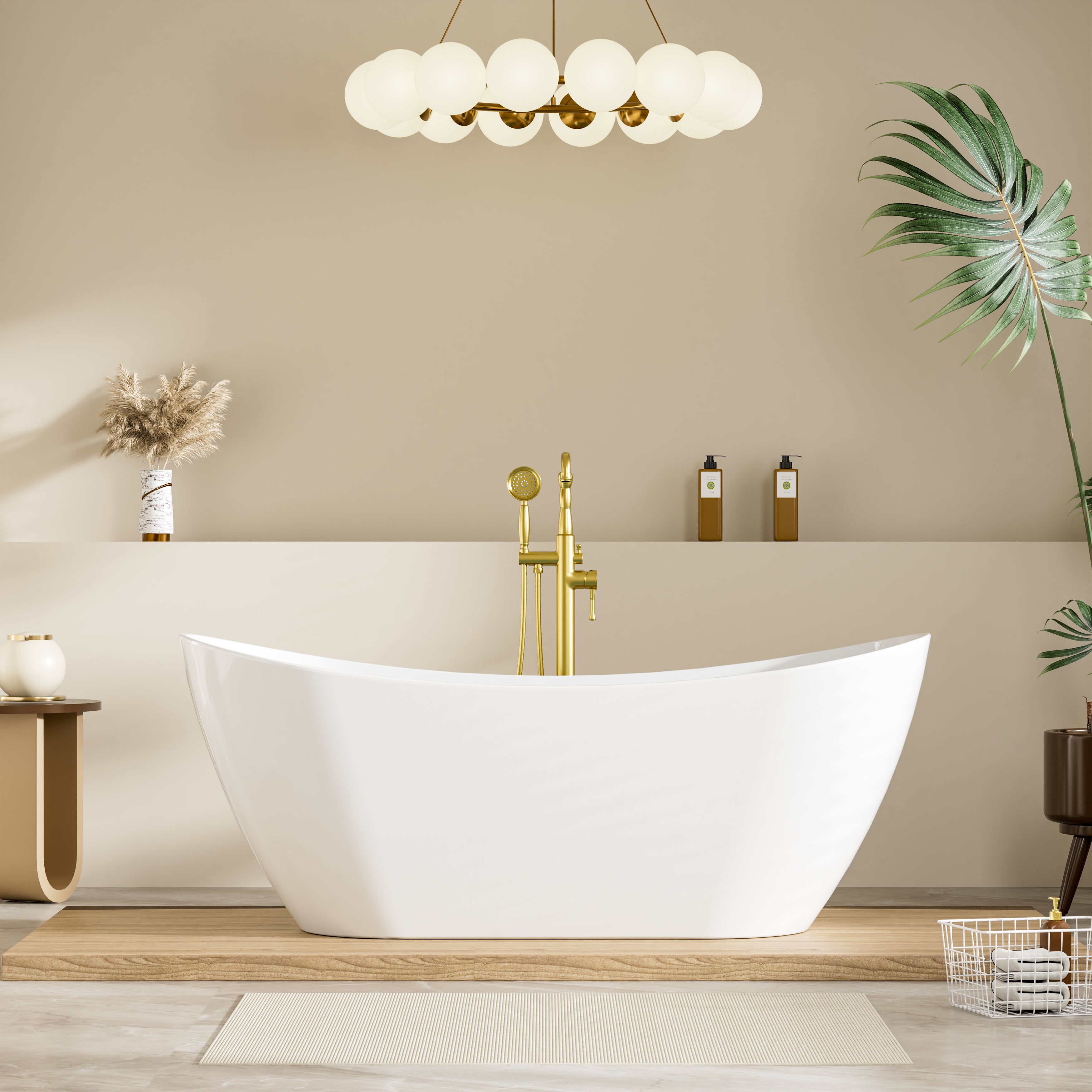
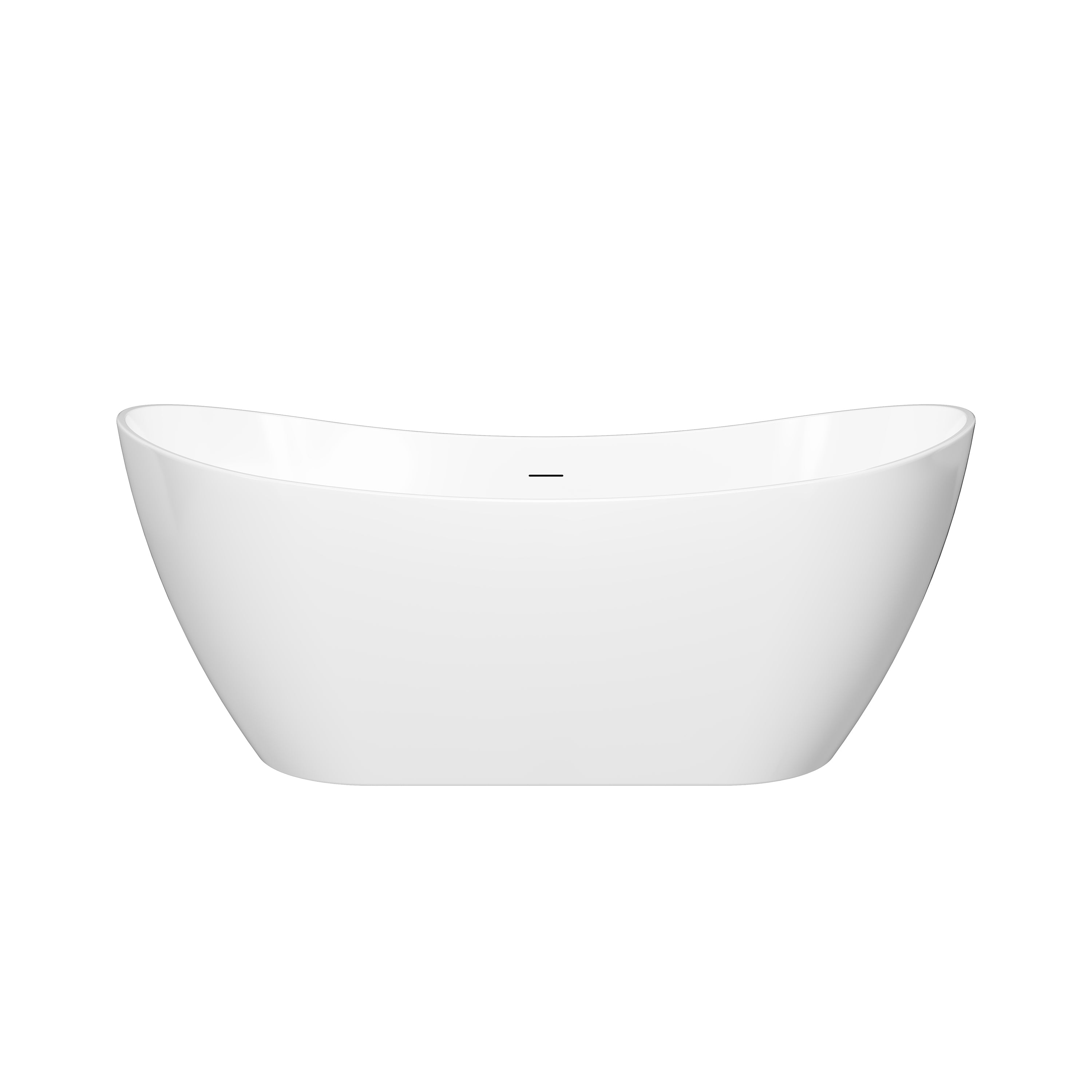
If it is a freestanding tub, the common length is between 55 and 72 inches, and the width is about 27 and 32 inches. Models with a length exceeding 67 inches are usually more suitable for the main bedroom suite bathroom. They should be installed with at least 4-6 inches of clearance around them for maintenance and drainage repairs.
When selecting, it is recommended to focus on confirming three parameters:
• Actual installation space net size (non-blank Size)
• Does the width of the door frame allow for the entire cylinder to be moved in (common door frame width is 28-32 inches)
• Does the distance between the sewer pipe's centerline and the wall match the product design?
Industry statistics show that about 18% of bathtub returns and exchanges are due to sizing errors, which must be avoided in bulk engineering procurement.
2. Material selection: balance between performance and cost
The current mainstream bathtub materials include acrylic, cast iron, porcelain-on-steel, and solid-surface composite stone.
Acrylic bathtubs typically weigh between 70 and 120 lbs, offer good insulation, and are easy to repair on the surface, making them the most popular category on the market.
Cast iron bathtubs can weigh 300-500 lbs, are highly durable, have a service life of over 30 years, but require a high load-bearing capacity for the floor slab.
The weight of the steel plate enamel bathtub ranges from 100-150 lbs, with a moderate cost, but its insulation performance is slightly lower than that of acrylic.
The composite stone bathtub has a high-end appearance, weighs about 250-400 lbs, has slow thermal conductivity, and is usually used in high-end residential projects.
From the perspective of the industry sales structure, acrylic products account for over 60% of overall sales due to their lower transportation, installation, and maintenance costs and greater adaptability.
3. Load bearing and structural safety
When choosing a bathtub, the comprehensive weight of "full water+human body" must be calculated.
Taking a standard bathtub measuring 60 inches by 30 inches by 18 inches as an example, its maximum water capacity is approximately 40-50 gallons. Calculated at approximately 8.34 lbs per gallon of water, the weight of water alone may reach 330-417 lbs. In addition to the average body weight (about 180 lbs), the total load can exceed 500 lbs.
If it is a standalone large-sized soaking bathtub, the water capacity may reach 60-80 gallons, and the total load can exceed 800 lbs. Therefore, in residential buildings with wooden beam structures, it is necessary to confirm whether the beam spacing (commonly 16 inches on center) and load-bearing capacity meet the requirements.
Industry building codes generally require a minimum load-bearing capacity of approximately 40 lbs/square foot for bathroom flooring. Still, for large volume bathtubs, the actual load-bearing capacity may be much higher than this benchmark.
4. Water efficiency and capacity design
Water conservation standards are increasingly becoming an important indicator for bathtub design. Some efficient models have optimized their internal curves to control the average water consumption of a standard 60-inch60-inch bathtub to 35-40 gallons, while traditional models may require more than 50 gallons.
In the context of stricter water resource management, high-capacity bathtubs (70 gallons or more) may provide a deeper soaking experience. Still, they also mean higher hot water consumption and energy costs. For households with a water heater capacity of 40-50 gallons, a large-capacity bathtub may not fill all at once.
Therefore, it is recommended to simultaneously evaluate the capacity and recovery rate of the hot water system during selection.
5. Installation method and construction complexity
Different installation types determine the differences in construction costs:
• Alcove (three-wall embedded): Lowest construction cost, suitable for renovation projects
• Drop-in (embedded countertop): Frame and finish customization required.
• Undermount: commonly seen on high-end stone countertops
• Freestanding: requires high ground flatness and precise reservation of drainage pipe positions.
Industry construction data shows that the average installation time for freestanding bathtubs is typically 25%-40% higher than that for embedded ones.
In addition, it is necessary to confirm whether additional ground reinforcement or drainage improvements are needed, as these will directly affect the overall budget.
6. Anti-slip and safety design
Security performance has received increasing attention in recent years. Wet, slippery floors are responsible for more than 65% of bathroom slips. High-quality bathtubs are usually equipped with anti-slip textures or a micro-frosted finish on the bottom.
If used for elderly housing or wellness projects, you may consider:
• Low threshold design (threshold height under 15 inches)
• Built-in armrest
• Reserve a location for installing the Grab Bar.
• The anti-slip level meets the relevant ANSI standards.
Security design has become an important direction for differentiated competition.

7. After-sales and warranty terms
The standard warranty period for bathtub products is 5 to 25 years. Acrylic structures typically come with a limited warranty of over 10 years, while some cast iron brands may offer a lifetime warranty.
Before procurement, it should be confirmed that:
• Is surface discoloration within the warranty scope?
• Does the crack cover
• Does it cover transportation damage?
• Does it include the cost of labor replacement?
According to industry surveys, the speed of after-sales response and transparency of quality assurance have become key factors in procurement decisions.
Conclusion
In the current market environment, bathtub selection has shifted from simple product comparisons to a comprehensive evaluation of structural adaptability, energy efficiency, safety standards, and long-term maintenance costs. Both engineering purchasers and retail buyers should establish a complete technical checklist when selecting bathtub products for sale.
Size matching, structural load-bearing capacity, capacity planning, material durability, and installation conditions are the five core elements that determine a project's success or failure.
Only after these basic parameters have been fully validated can the comparison of appearance and price have practical significance.











Leave a comment
This site is protected by hCaptcha and the hCaptcha Privacy Policy and Terms of Service apply.