


















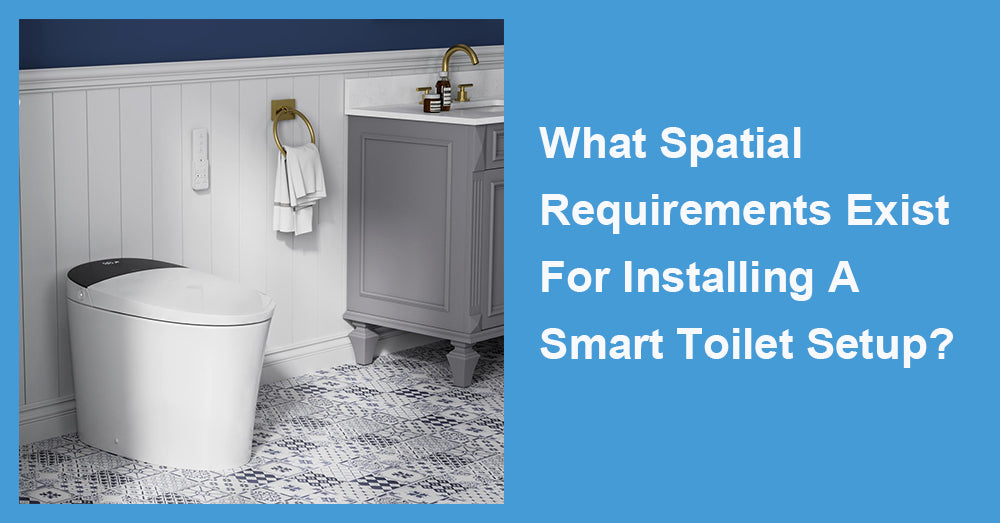
Upgrading to a smart toilet can feel like a small change with a big payoff—heated seat, warm-water washing, air drying, deodorizing, and a cleaner look with fewer add-ons. But before you fall in love with features, it’s smart to confirm something more basic: will it actually fit in your bathroom, and will the space support the installation?
A smart toilet isn’t always a drop-in replacement for a standard toilet. Depending on the model, it may need extra clearance, a nearby power outlet, and enough room around the bowl for comfortable use and easy cleaning. This guide breaks down the most common smart toilet spatial requirements so you can plan accurately and avoid last-minute surprises.
Start With Rough-In: The Measurement That Determines Compatibility
The rough-in is the distance from the finished wall (not the baseboard) to the center of the floor drain/closet flange bolts. In most U.S. homes, the standard rough-in is 12 inches, but 10 inches and 14 inches exist in older homes, and some custom builds.
Why it matters: if the rough-in doesn’t match, the toilet may not sit correctly against the wall, or it may not align with the drain at all. Smart toilets often have a more sculpted tankless body, but they still rely on the same rough-in alignment to install properly.
Tip: measure twice, and measure from the finished wall surface. Baseboards can throw off your number if you include them.
Check Overall Footprint: Depth, Width, and “Real-Life” Fit

Most shoppers focus on the rough-in and forget the overall footprint. Smart toilets can be longer than basic toilets due to their integrated features and seat design.
Here are the key dimensions to check:
1) Depth (front-to-back)
Depth affects how much “leg room” you have and whether the toilet crowds doors or walkways. In small bathrooms, an extra couple of inches can be the difference between a comfortable layout and a tight squeeze.
Practical checks:
· Does the bathroom door swing into the toilet zone?
· Is there enough room to stand comfortably in front of the toilet?
· Will the toilet project into a narrow walkway?
2) Width (side-to-side)
Smart toilets can appear wider because of the seat profile and body shape. This matters most if your toilet sits between a vanity and a tub, or in a tight toilet alcove.
3) Height
Height usually isn’t a problem for fitting, but it matters for shelving above the toilet or tight wall features. If you have cabinets or open shelving above, verify there’s enough clearance for the lid to open fully and for maintenance access.
Code-Like Clearances: What Most Bathrooms Need To Feel Comfortable
Local codes vary, but many U.S. bathroom layouts follow similar spacing guidelines. Even if your bathroom is older and “grandfathered in,” these clearances are still a useful benchmark for comfort.
Minimum side clearance
A common guideline is at least 15 inches from the centerline of the toilet to the nearest side wall or obstacle (vanity edge, tub, etc.). That typically equals about 30 inches of total width for the toilet area.
Why it matters for smart toilets: features like auto lid opening and wider seat profiles work best when the toilet isn’t squeezed in.
Minimum front clearance
Many layouts aim for roughly 21 inches of clear space in front of the toilet (some standards recommend more for comfort). This is the “knee room” that keeps the space from feeling cramped.
Why it matters for smart toilets: you’ll want enough room to sit down comfortably, stand up, and clean around the base without contorting.
Wall Clearance Behind The Toilet: More Important Than You Think
Smart toilets often sit closer to the wall for a sleek look, but they may still need clearance for:
· Water supply connection routing
· Power cord routing
· Ventilation access (on some designs)
· Seat and lid movement
If your current toilet is already tight against the wall or the water valve is awkwardly placed, confirm the smart toilet you choose can accommodate that setup. Some models include a skirted design that covers the trapway, which looks cleaner but can reduce access to the shutoff valve if it’s too close.
Electrical Space Requirements: Outlet Placement and Cord Reach
Unlike a standard toilet, a smart toilet needs electricity. Planning power is often the biggest “surprise” for homeowners.
Outlet location
Most smart toilets require a standard grounded outlet near the toilet. Practically, you want an outlet within cord reach without using an extension cord. If there’s no outlet nearby, you may need an electrician to add one—especially in bathrooms where GFCI protection is required.
Cord management
Even if you have an outlet, think about how the cord will run:
· Will the cord cross a walkway?
· Will it be visible and messy?
· Is there a discreet route along the wall?
A clean installation usually includes a nearby outlet positioned so the cord stays tucked and protected.
Water Supply Space: Valve Position and Hose Routing
A smart toilet uses the same water supply line concept as a standard toilet, but the connection points can be different depending on design.
Before buying, check:
· Where your shutoff valve is located (left/right side, height, distance from center)
· Whether the valve is easily reachable after installation
· Whether there’s enough room for hose bends without kinking
If your shutoff valve is too close to the toilet body, it might be hard to access later, which is a practical headache you want to avoid.
Door Swings, Drawers, and Traffic Paths: The “Hidden” Spatial Conflicts
Bathrooms are full of moving parts. A smart toilet might technically fit, but still clash with daily use if you don’t think through the motion of nearby elements.
Quick things to test:
· Does the bathroom door hit the toilet or your knees?
· Does a vanity drawer open into the toilet area?
· Is the toilet positioned in a tight corridor between tub and the vanity?
Smart toilets can also have auto-open lids. If your toilet is tucked into a tight alcove, make sure there’s enough space for the lid and seat to open smoothly without hitting a wall or shelf.
Maintenance Access: Leave Room To Service It
Smart toilets are advanced appliances, and like any appliance, they occasionally need service or part replacement. Even if it’s just cleaning filters or accessing a panel, tight installs make maintenance frustrating.
A good setup allows:
· Enough side room to reach connections
· Clear access to the water shutoff
· A reasonable path to unplug the unit if needed
This is where “minimum clearance” versus “comfortable clearance” really matters.
Final Take: What Space Do You Actually Need For A Smart Toilet?
To install a smart toilet successfully, you need more than just the right rough-in. The most important spatial requirements include:
· Correct rough-in alignment (commonly 12 inches in many U.S. homes)
· Enough width for comfortable side clearance
· Enough open space in front for easy use and movement
· A nearby grounded outlet with safe cord routing
· Accessible water shutoff and supply line routing
· Clearance for lid/seat movement and future maintenance
If your bathroom already feels tight, don’t guess—measure carefully and compare the toilet’s dimensions to your real layout, including doors and drawers. When the space is planned well, a smart toilet upgrade can feel seamless and luxurious. When the space is ignored, even the best features won’t make up for a cramped, awkward fit.















Leave a comment
This site is protected by hCaptcha and the hCaptcha Privacy Policy and Terms of Service apply.