
















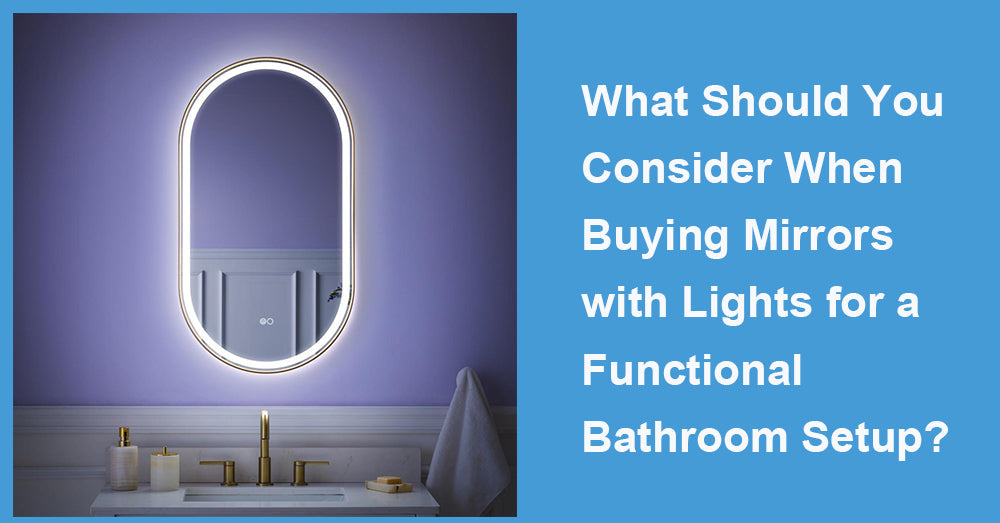
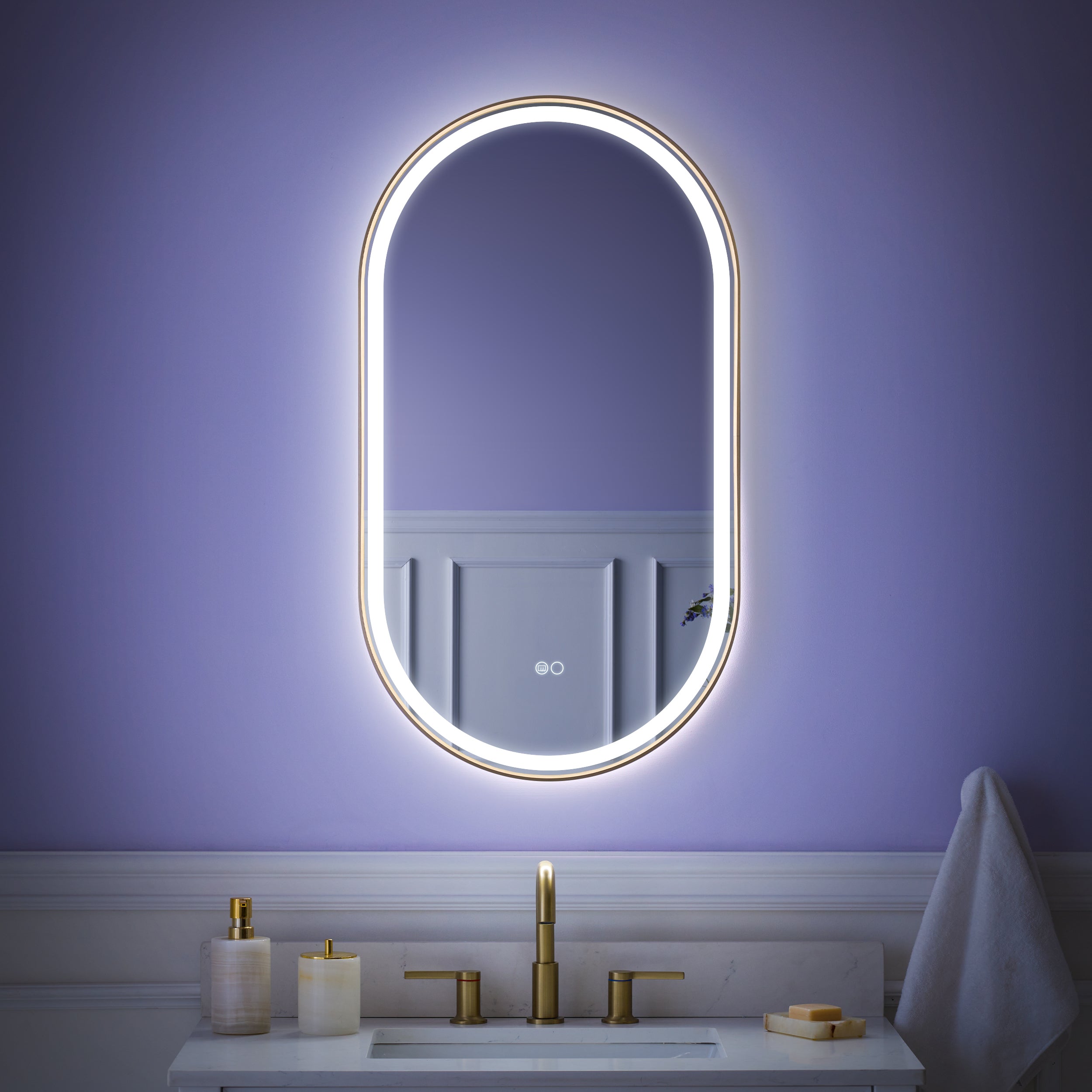
As the residential decoration market shifts from "aesthetic priority" to "functional luxury", the role of the bathroom as a safe haven for families is redefined. According to the "2026 Bathroom Trends Report" released by the National Kitchen and Bath Association (NKBA), over 78% of homeowners prioritize "lighting solutions" in their renovations. In this wave, mirrors with lights have become the core of modern practical bathroom layouts due to their ability to provide basic lighting, assist with dressing, and expand space.
However, choosing this item is not just about selecting its shape. In the North American market, a practical and durable illuminated mirror requires in-depth consideration from four dimensions: optical performance, electrical safety, integrated technology, and spatial proportion.

1. Optical Performance: Hard Metrics to Eliminate "Makeup Color Discrepancy"
For a practical layout, the lamp mirror's primary function is to provide precise color rendering. Many cheap products may have sufficient brightness, but due to their low color rendering index (CRI), they can cause the skin to appear bluish or dull.
Color rendering index (CRI): Industry standards recommend a CRI of at least 90+ for bathroom vanity lighting. High CRI can truly restore skin tone and cosmetic color, which is crucial for morning preparation.
Color Temperature Adjustment (CCT): Modern high-end light mirrors typically offer seamless adjustment from 2700K (warm yellow light) to 6000K (cool white light). Pragmatists should prioritize products with "color temperature memory" function to quickly switch between simulating natural office light and warm dinner light.
Luminous output: Relying solely on mirror backlighting is often insufficient to support the entire bathroom. According to the recommendations of the Institute of Lighting Engineering (IES), the illumination in the sink area should be maintained at 300-500 Lux. Therefore, when making a purchase, it is necessary to confirm whether the lamp mirror's lumen value is sufficient for task lighting rather than just environmental decoration.
2. Electrical Safety & Durability: Long-term Reliability in Wet Zones
The bathroom is a high-humidity environment, and the market has almost stringent requirements for the compliance of bathroom appliances.
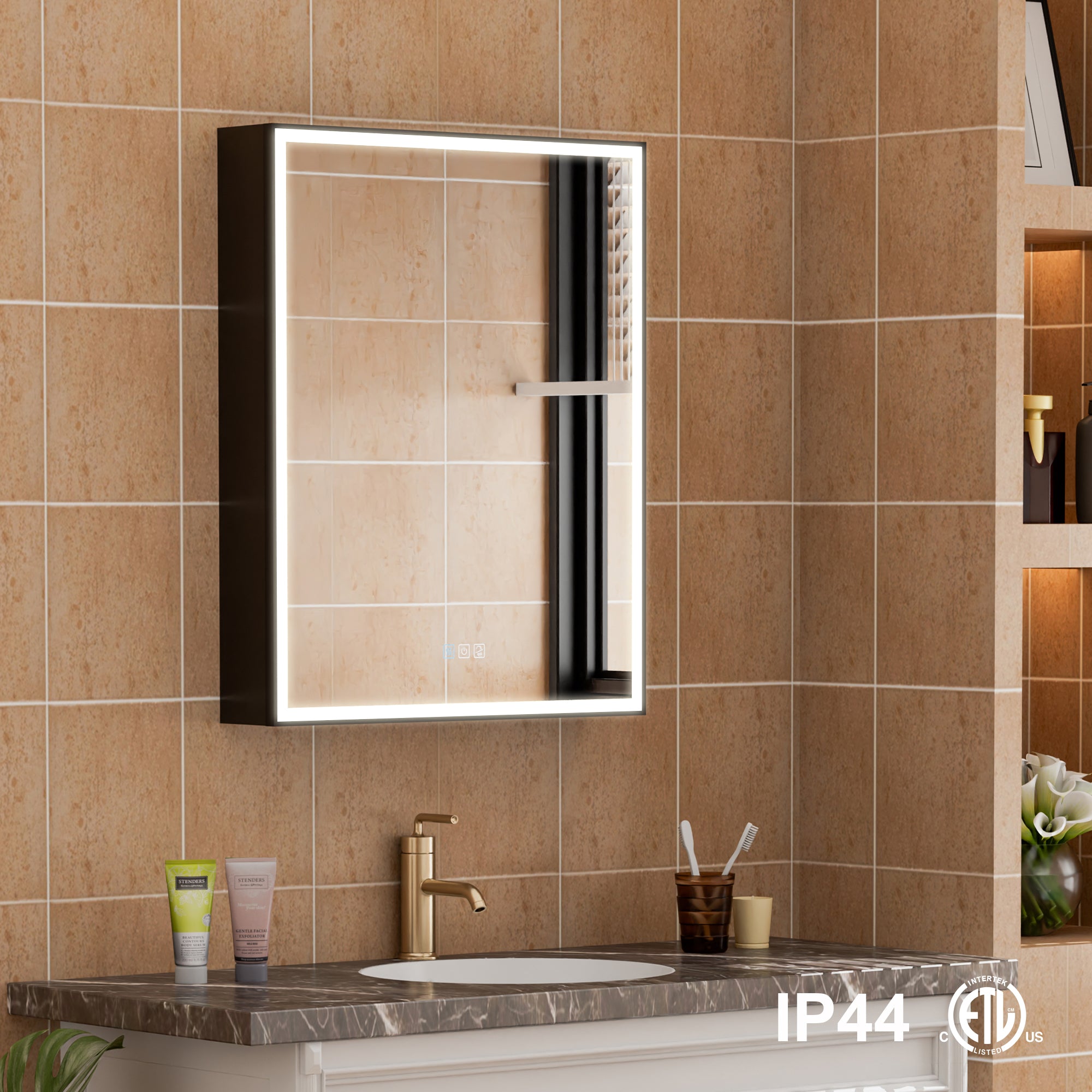
UL/ETL certification: This is the ticket to enter the mainstream market. Ensure that the entire product (not just the internal drivers) has passed UL (Underwriters Laboratories) or ETL certification. This not only relates to the risks of fire and electric shock, but also directly affects the claims of home insurance.
IP waterproof rating: Practical layout requires that the lamp mirror must have a waterproof and dustproof rating of at least IP44. If the mirror is close to the shower area, the level requirement is higher.
Defogger function: In the fast-paced modern life, waiting for the mist to dissipate after taking a shower is a huge waste of time. The mirror with built-in electric anti-fog film has become standard. Data shows that products with independent anti-fog switches can save about 15% of energy consumption compared to products with linked switches.
3. Dimensions & Spatial Perception: Visual "Expansion Techniques."
Against the backdrop of the increasing proportion of small residential units, the choice of mirror size directly determines the space's openness.
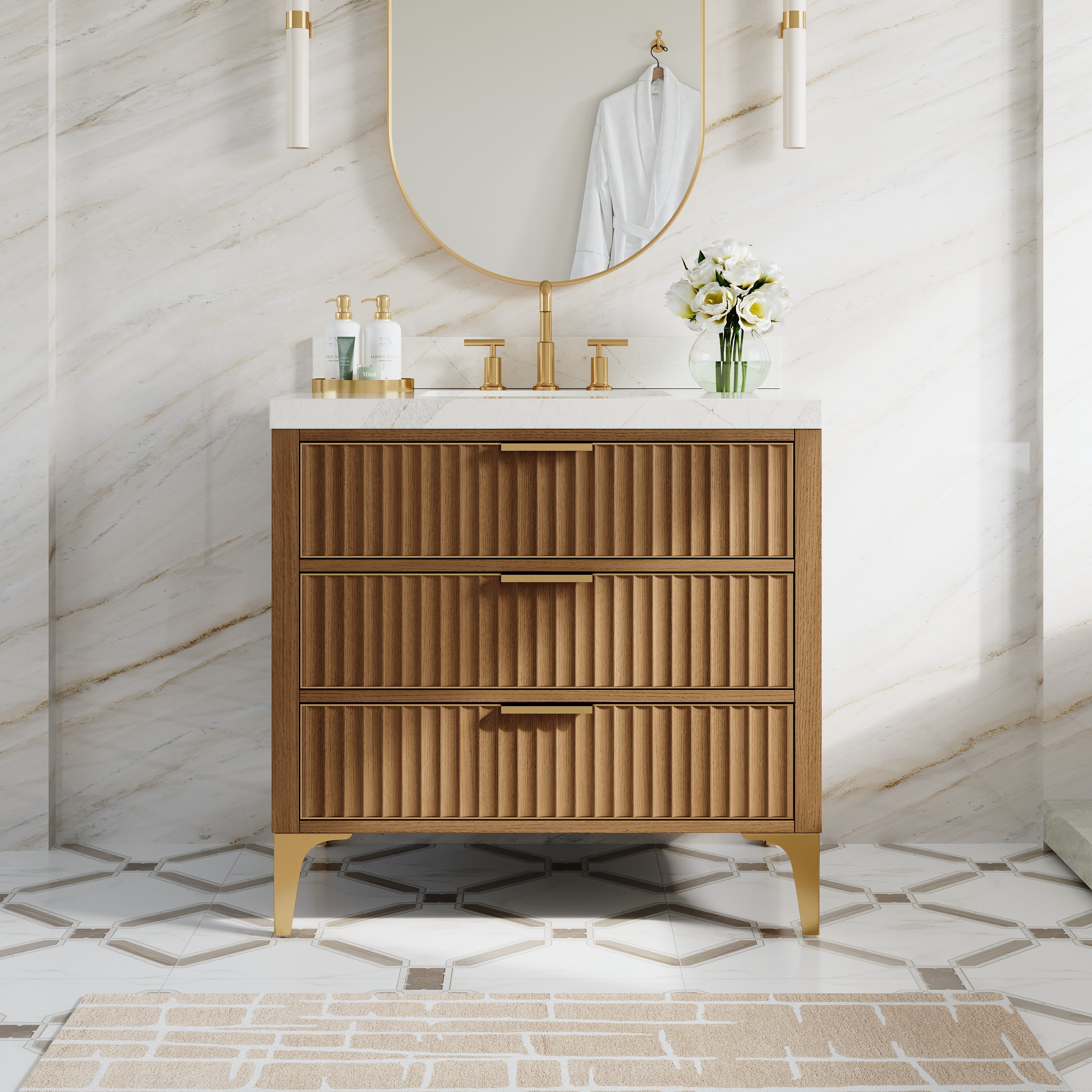
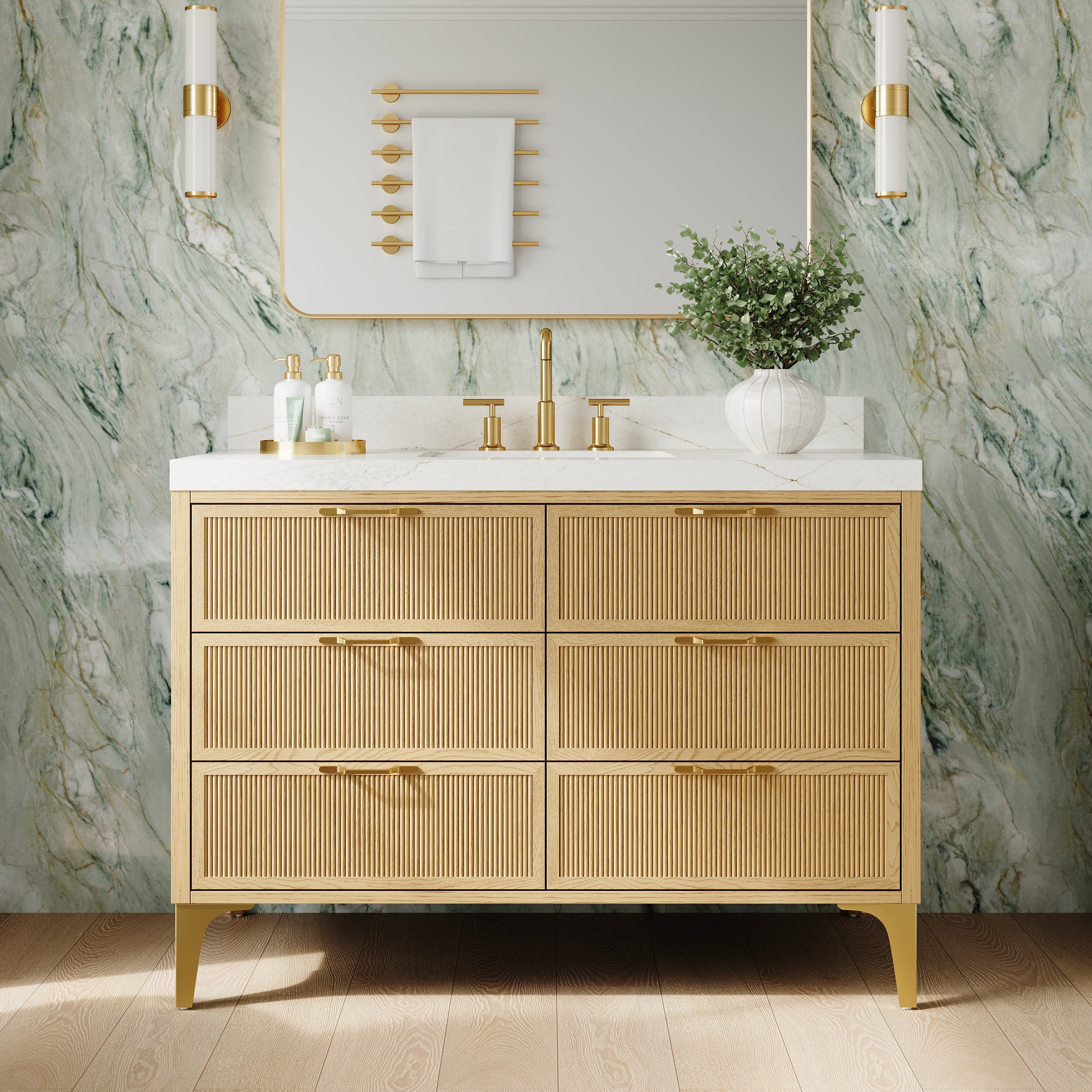
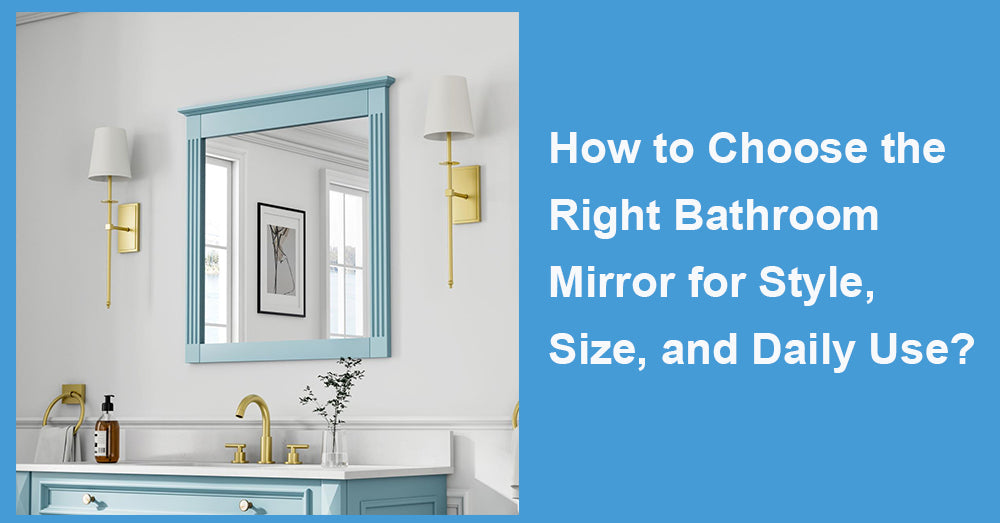
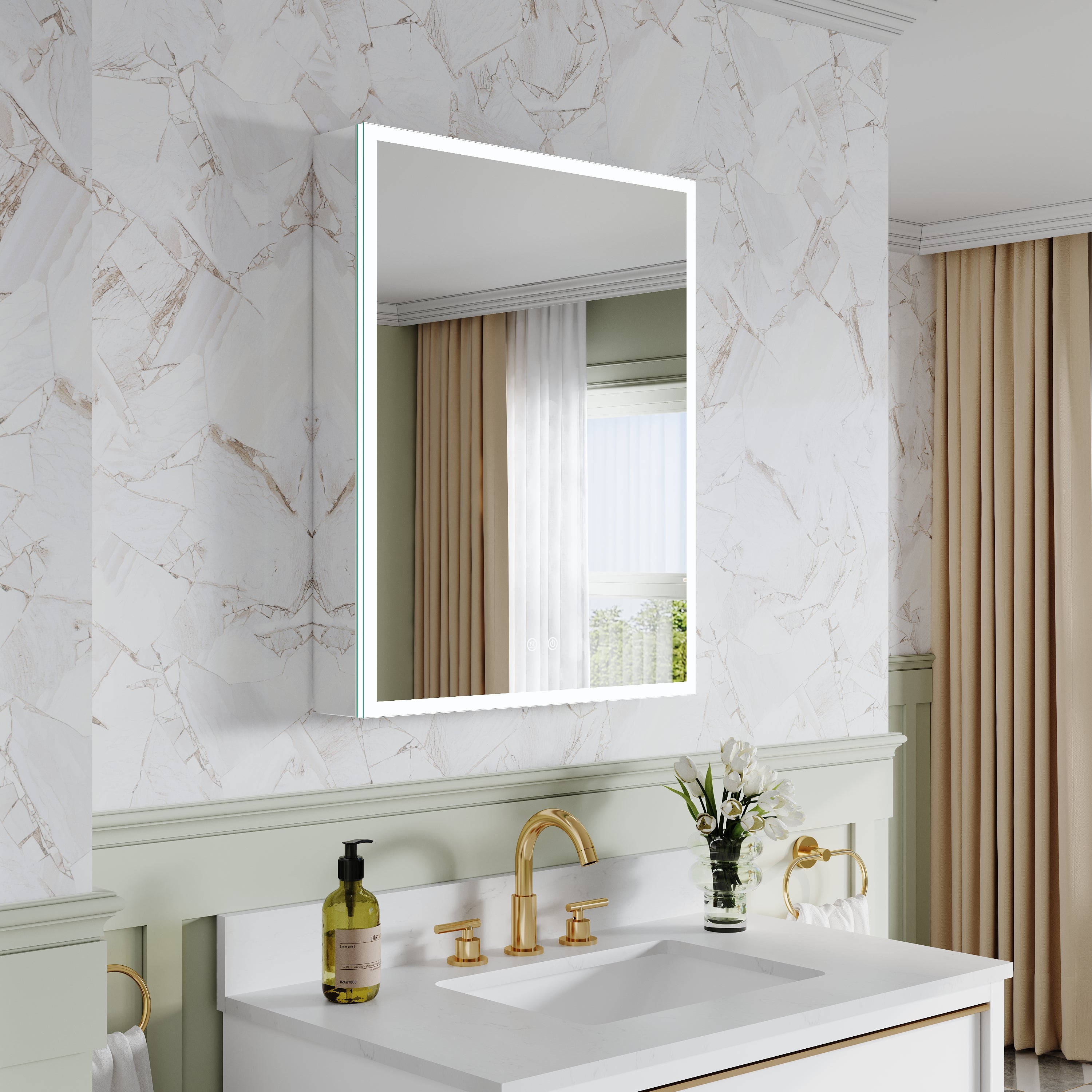
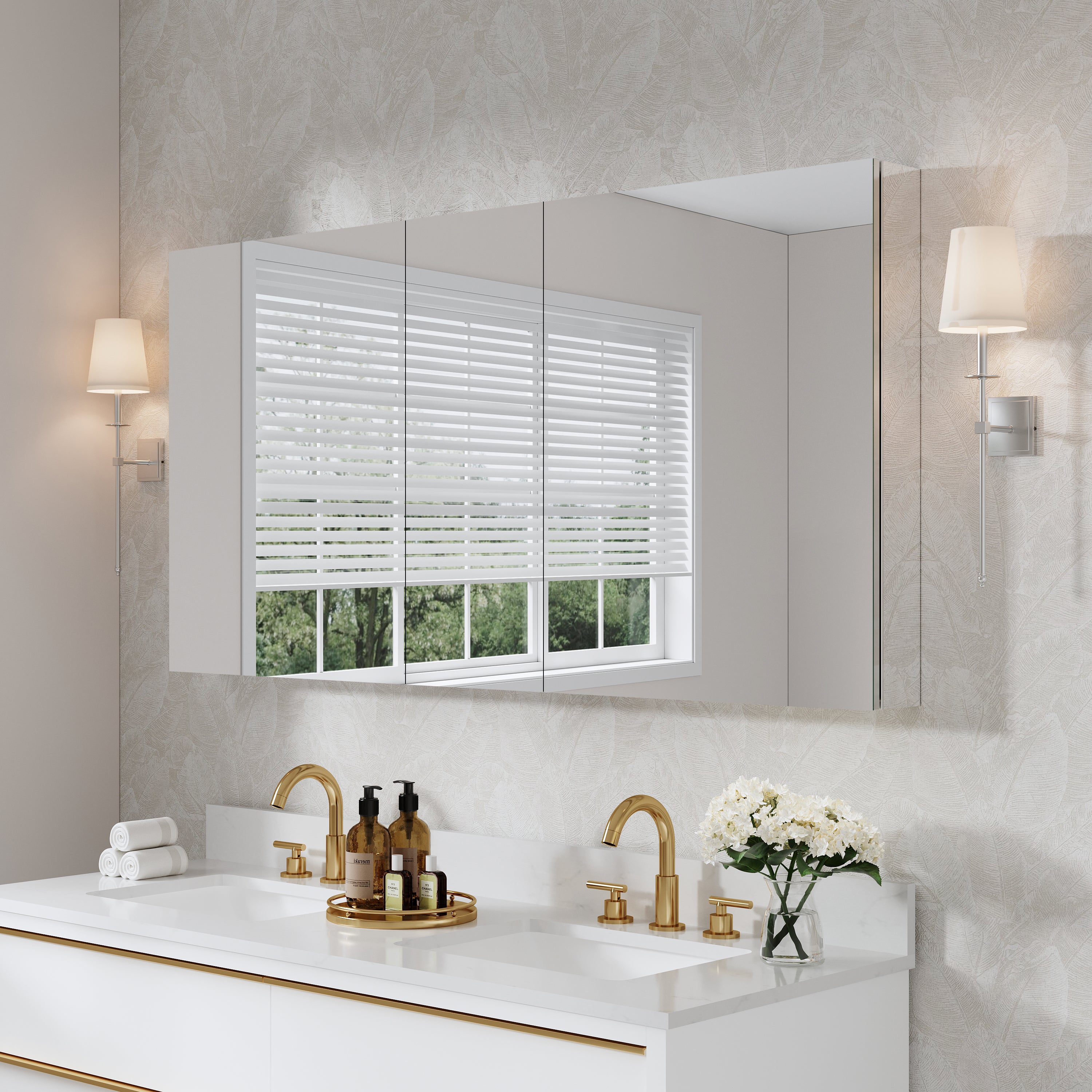
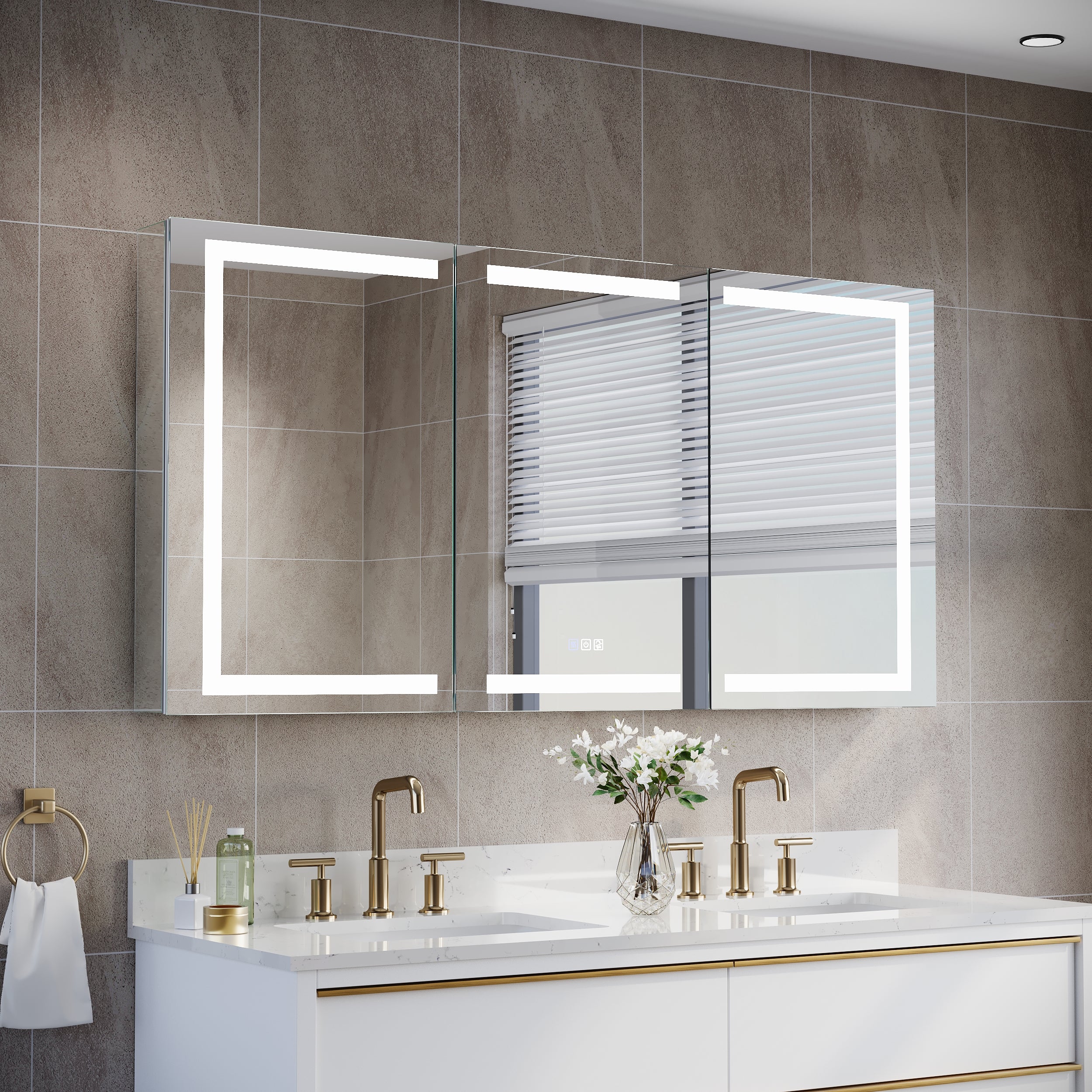
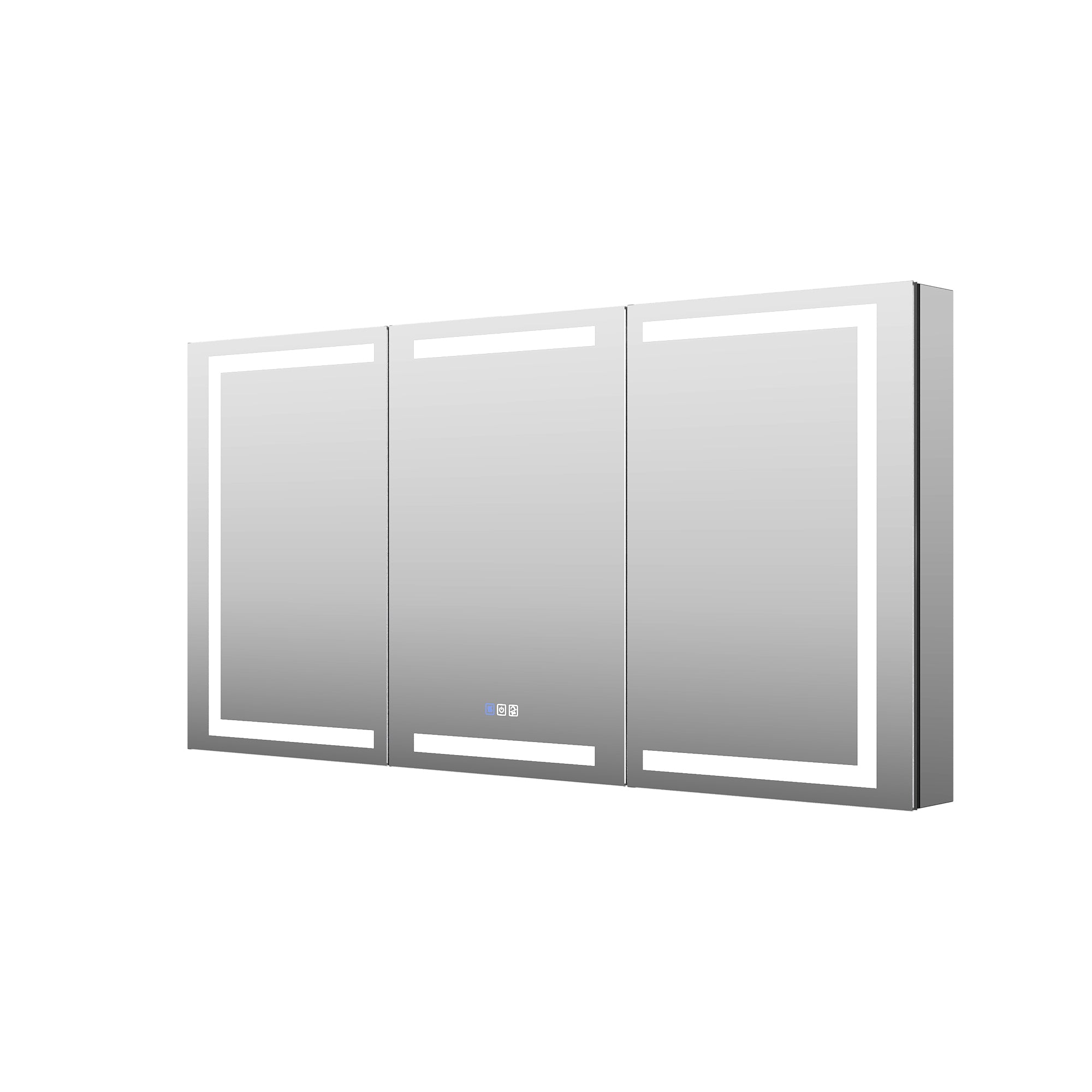
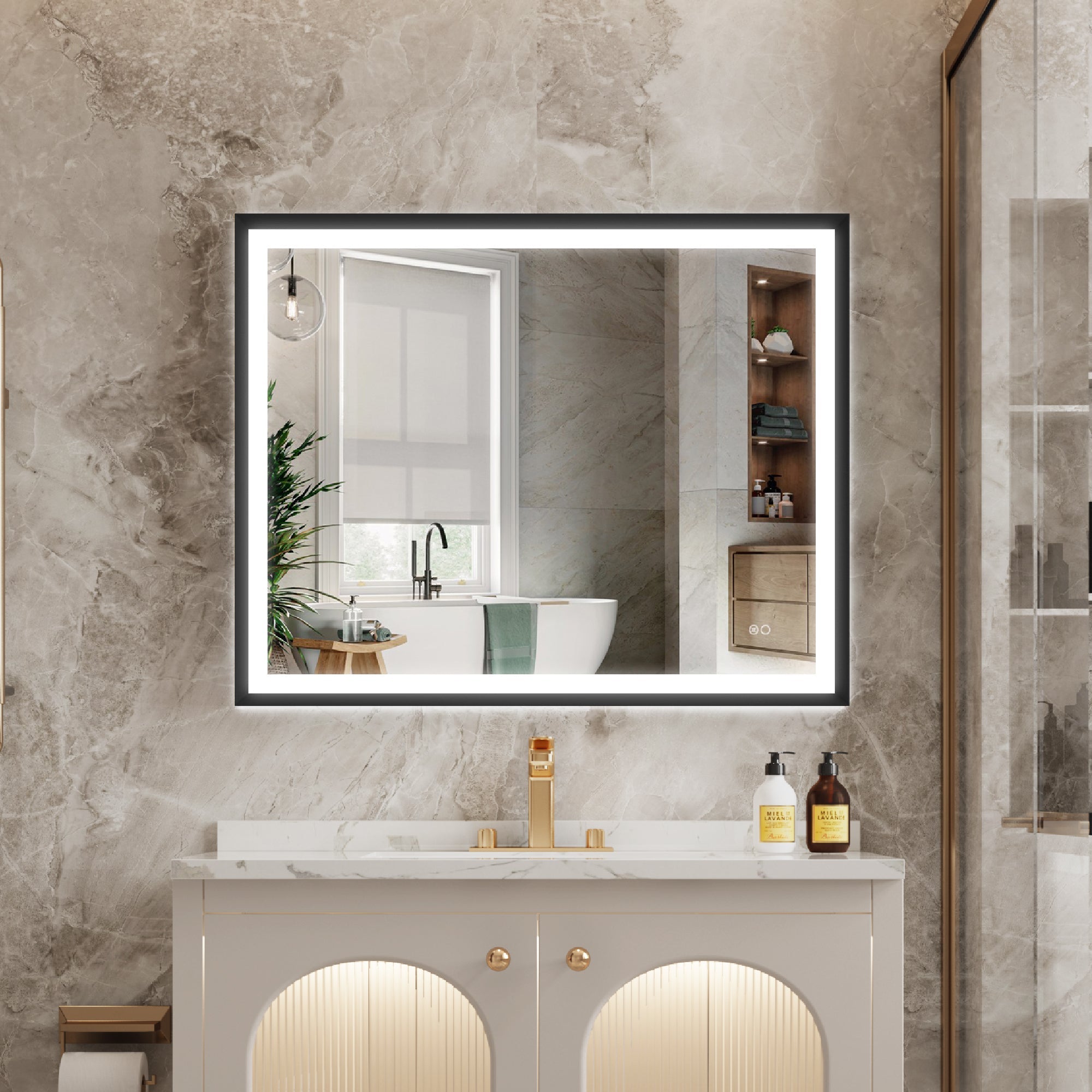
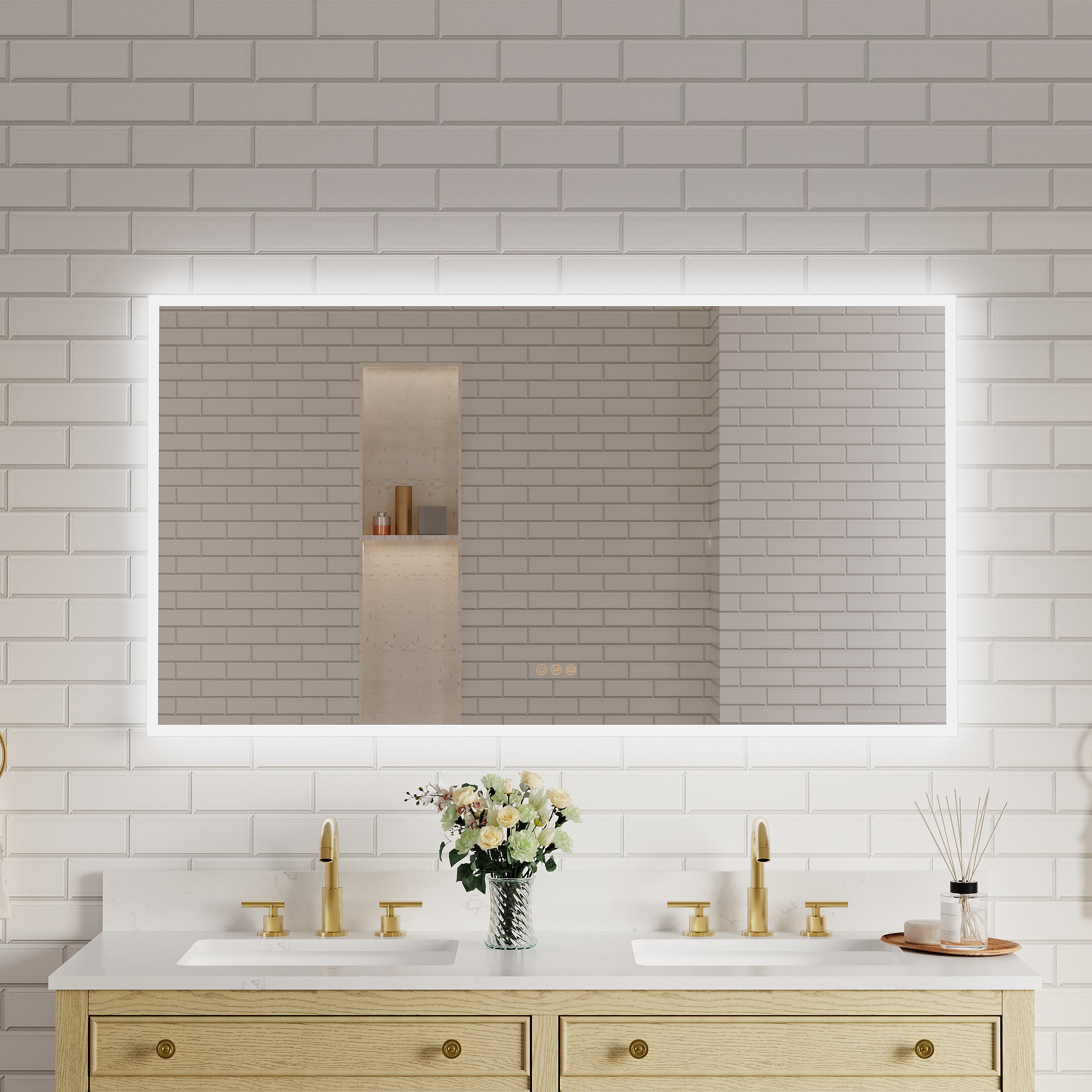
The Golden Width Principle: Interior designers typically follow the principle of "mirror width slightly narrower than the total width of the washbasin" (usually with 1-2 inches of indentation on each side). But for practicality, more and more designers are adopting a "through-wall" layout, where the mirror width is equal to the width of the washbasin, and shadow is eliminated using border light strips.
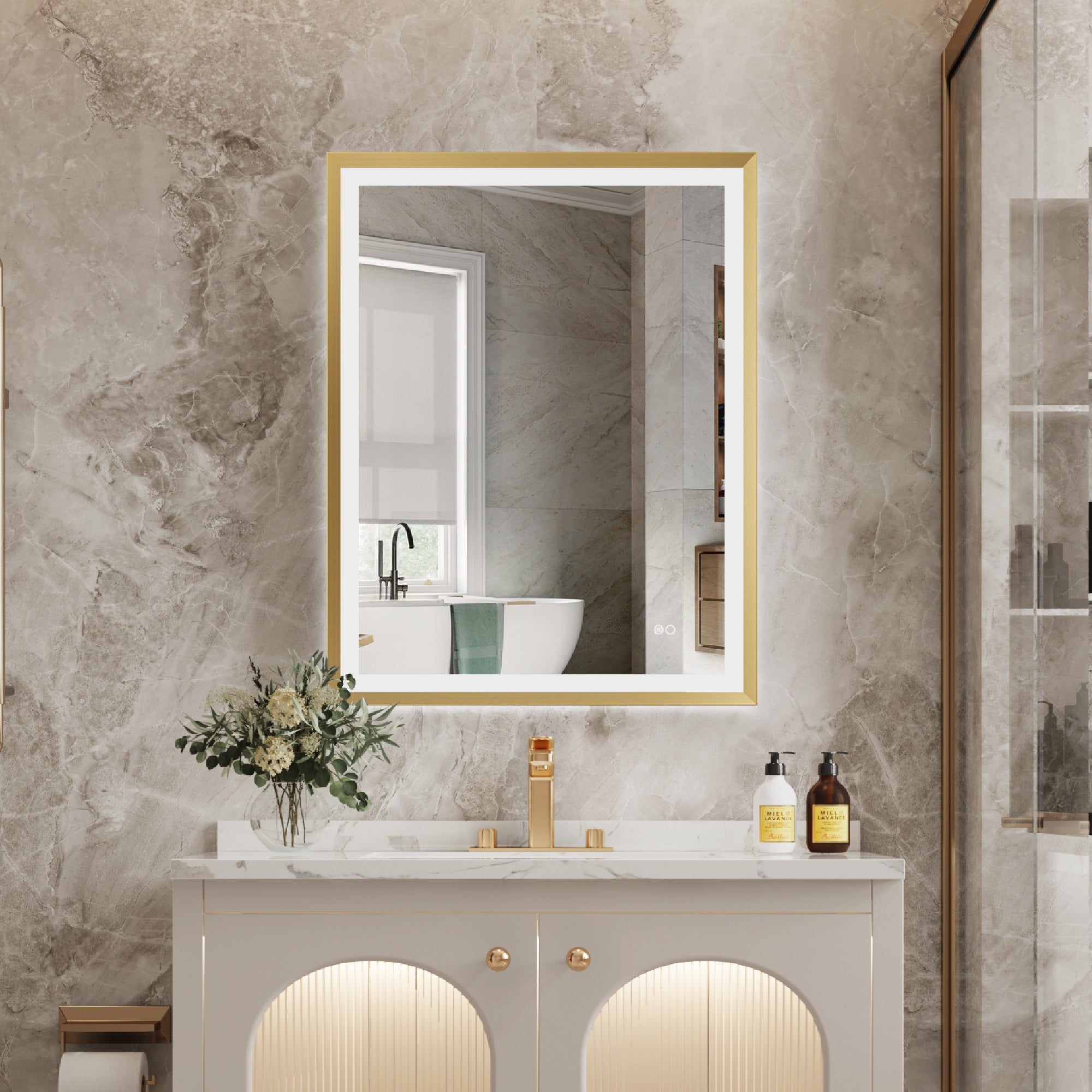
Vertical height: The top of the mirror should be at least 72 inches above the ground, while the bottom depends on the height of the faucet. For families with children or significant height differences, large-sized vertical mirrors can provide a wider viewing angle and reduce visual blind spots.
4. Smart Integration: From "Decorative Item" to "Command Center."
The smart home of 2026 is no longer just a gimmick, but a tangible convenience.
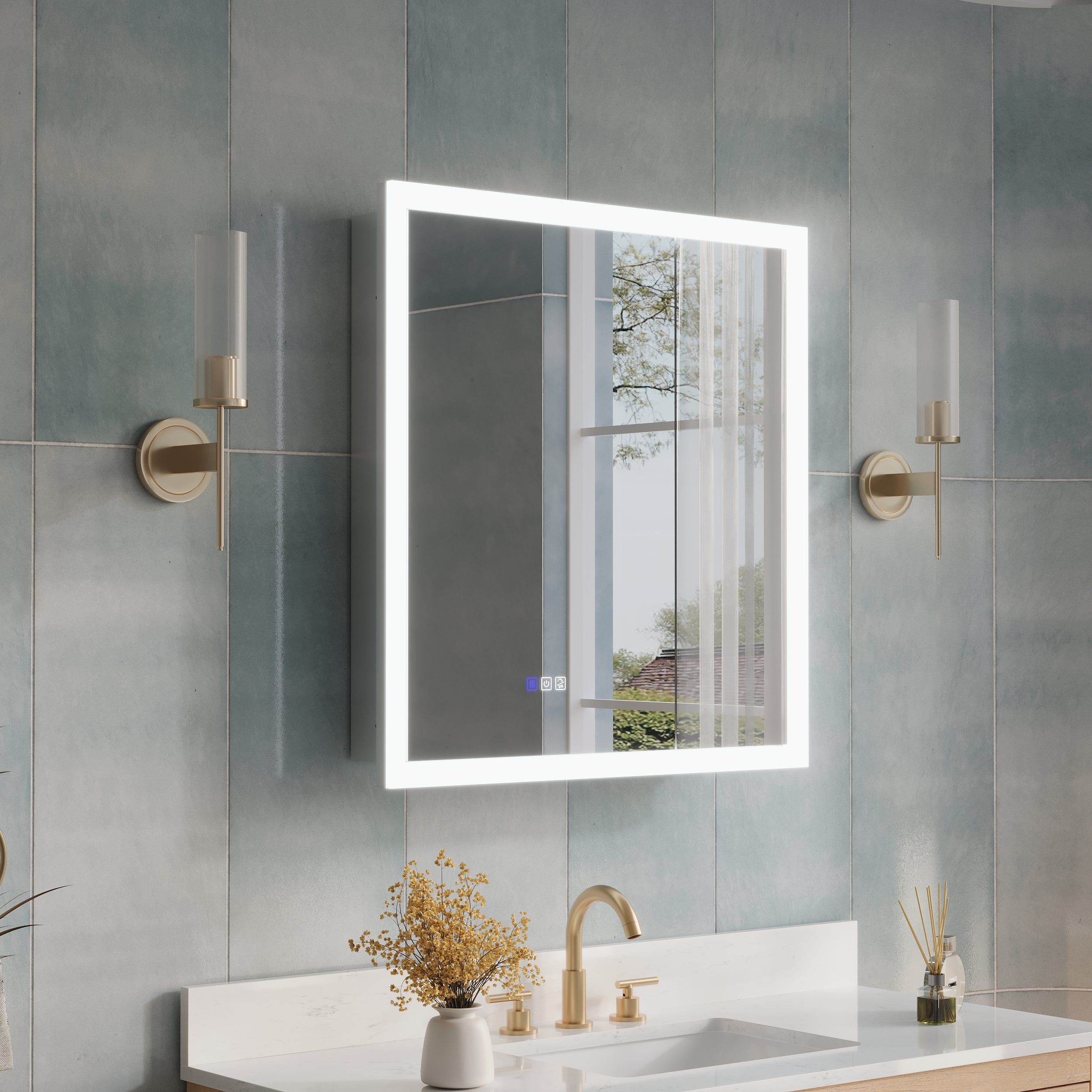
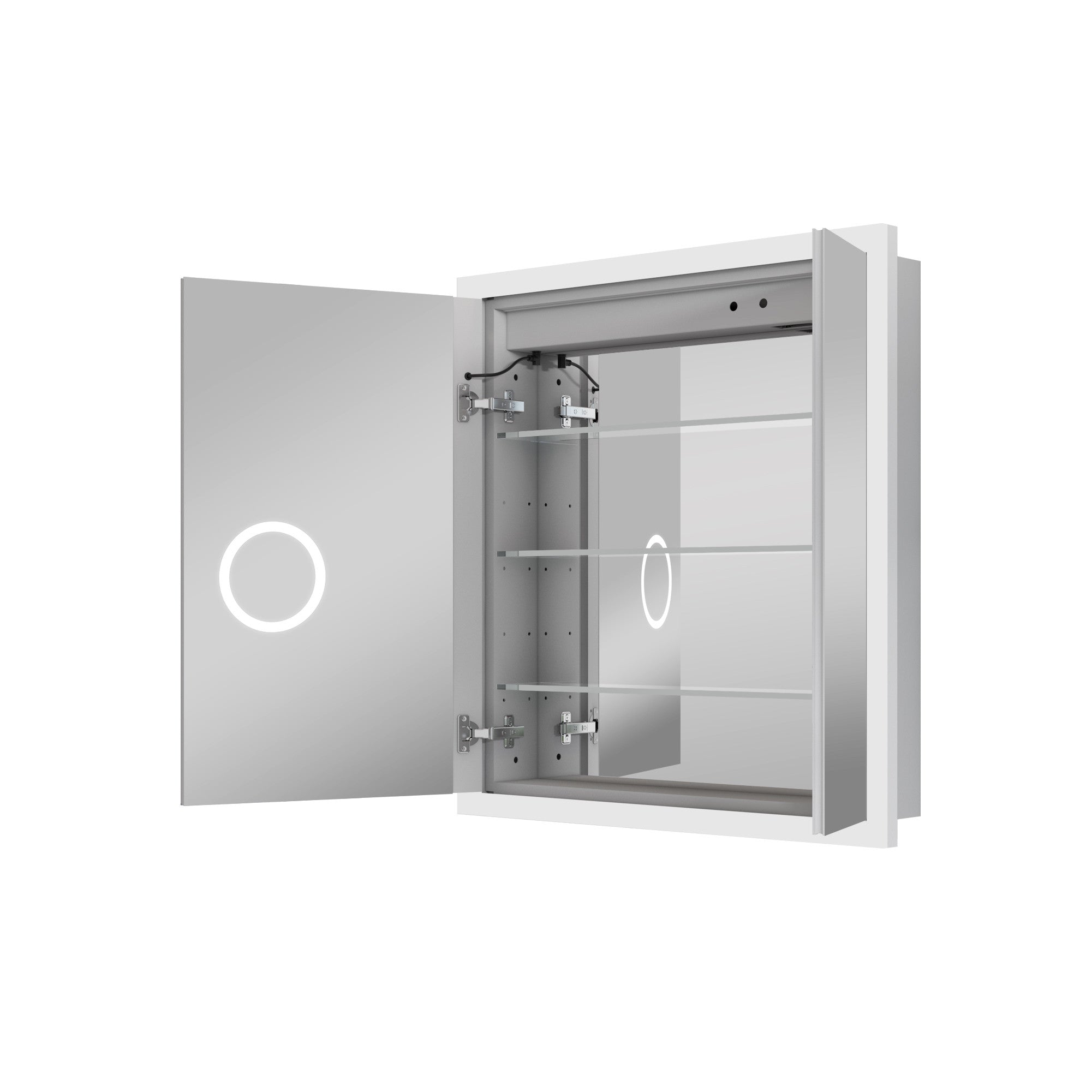
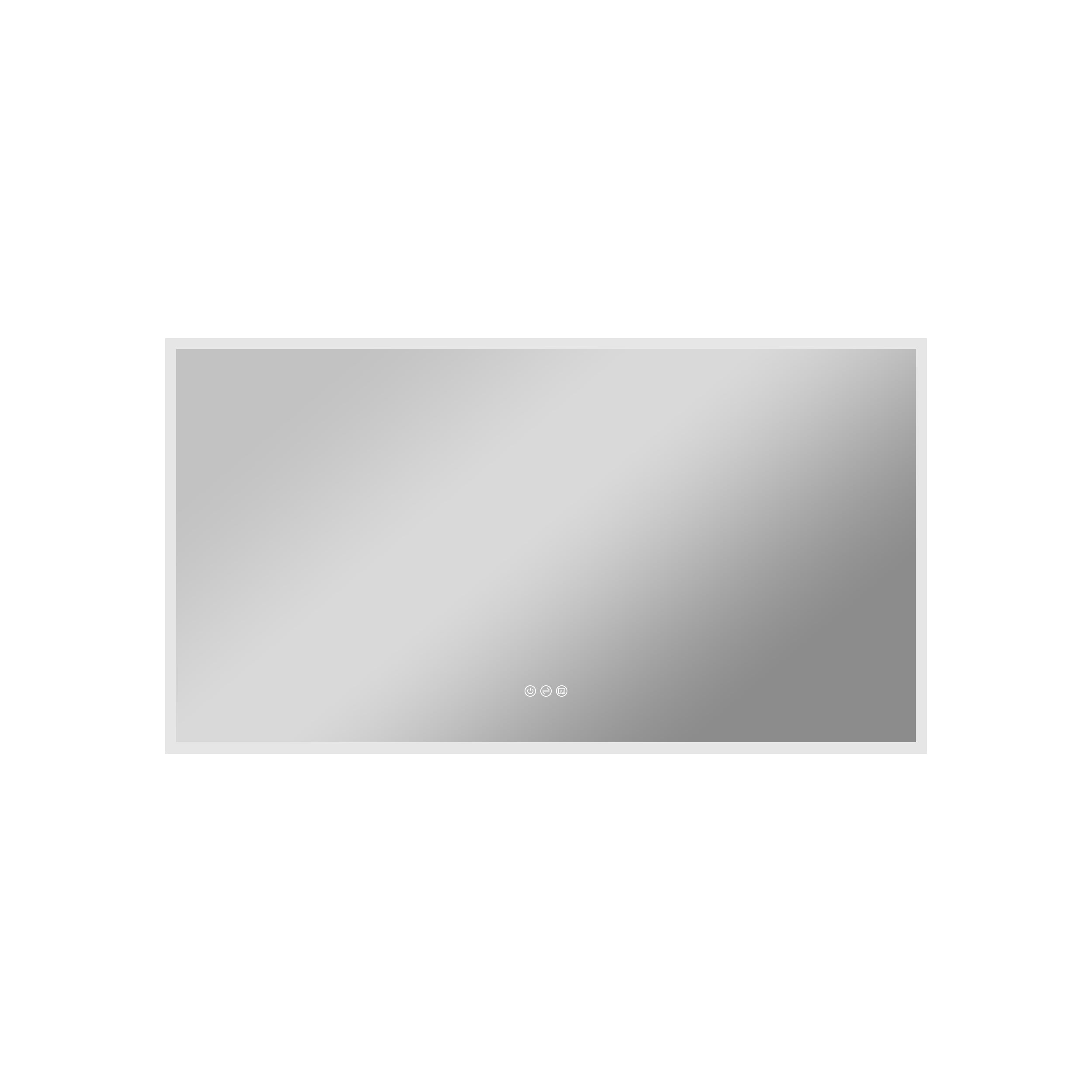
No-touch sensing: For wet-hand use, infrared-sensing switches are more hygienic than physical buttons. In addition, products with DALI or 0-10V dimming interfaces can easily connect to whole-house intelligent systems (such as Control4 or Lutron) to adjust lighting from sunrise to sunset automatically.
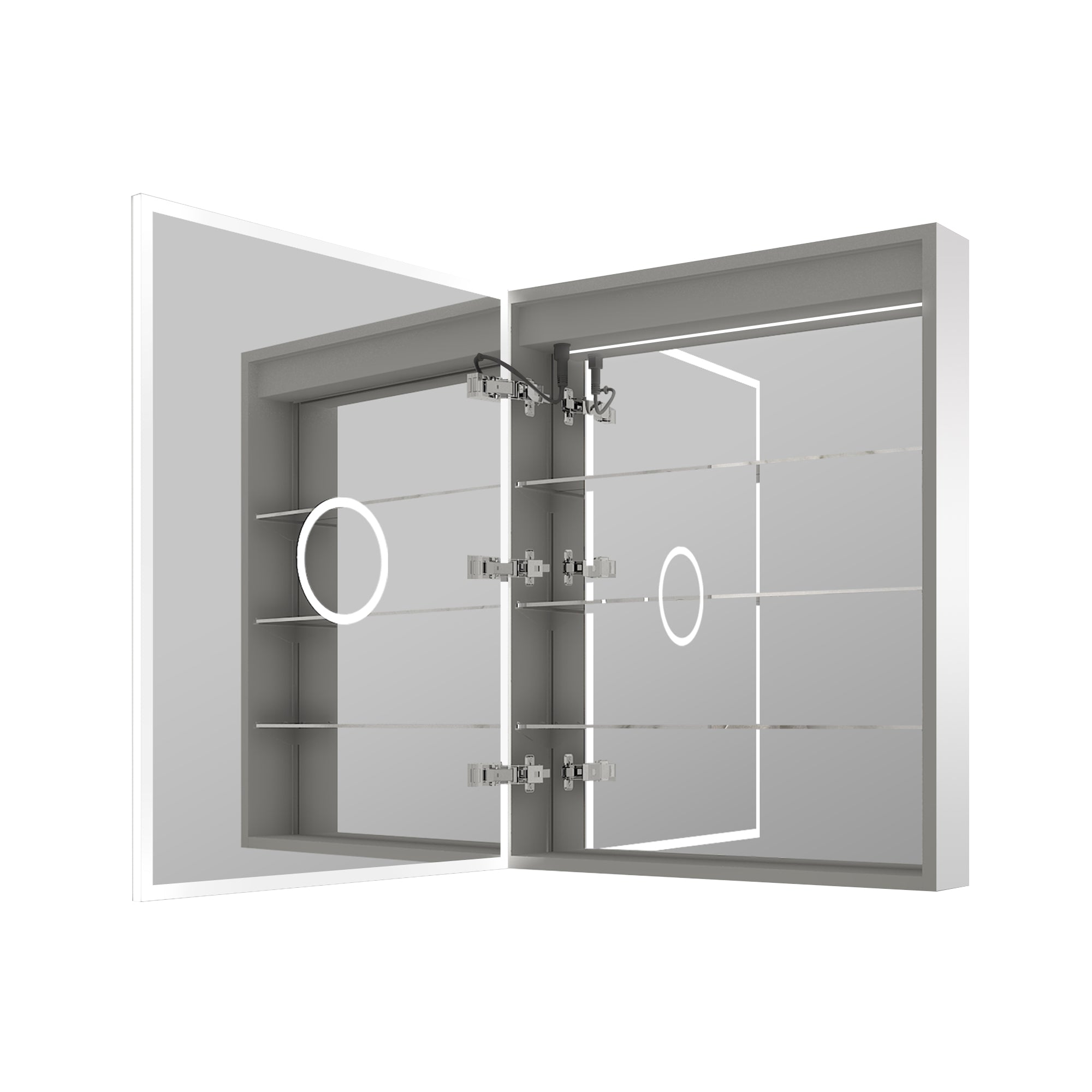
Built-in audio and charging: For people who like to listen to news or music in the bathroom, the mirror with integrated Bluetooth speakers is becoming popular. Meanwhile, the USB-C charging port hidden on the side or back of the mirror provides a neat charging solution for electric toothbrushes and razors.
5. Market Trends: Sustainability and Long-term Investment
According to a survey by Builder Week, LED-illuminated mirrors are over 80% more energy-efficient than traditional incandescent bulbs and have a lifespan of up to 50,000 hours. This means that under normal use, the light source part of the mirror can be continuously used for more than 20 years.
Consumers are no longer just looking at price; they are starting to pay attention to the 'Cost of Ownership per Year,' "said Mark Stevens, a renowned interior designer in Los Angeles. An LED mirror with a copper-free mirror and high-quality driver, although the initial investment is 30% higher, avoids the high replacement costs caused by blackened edges and circuit failures. ”
6. Expert Summary: The Buyer’s Checklist
Before making the final decision, please make sure to confirm the following five points:
Certification: Do you have full machine UL/ETL certification?
Performance: Has CRI reached 90? Do you have a color range of 3000K-6000K?
Function: Does the anti-fog film have an independent timed closing function (to prevent wastage)?
Material: Is it a copper-free, environmentally friendly mirror surface used (with 3 times higher oxidation resistance)?
Installation: Is it Hardwired or Plug-in? (It is recommended to use hard wiring during renovation for a simpler appearance.
Conclusion
In the pursuit of ultimate practicality in bathroom layout, a mirror with lights is not just a piece of furniture, but also a precise optical instrument and electrical control terminal. By scientifically considering color rendering, safety, size, and technology, homeowners can achieve a perfect appearance and significantly enhance the overall efficiency and asset value of the bathroom as a private space.










Leave a comment
This site is protected by hCaptcha and the hCaptcha Privacy Policy and Terms of Service apply.