
















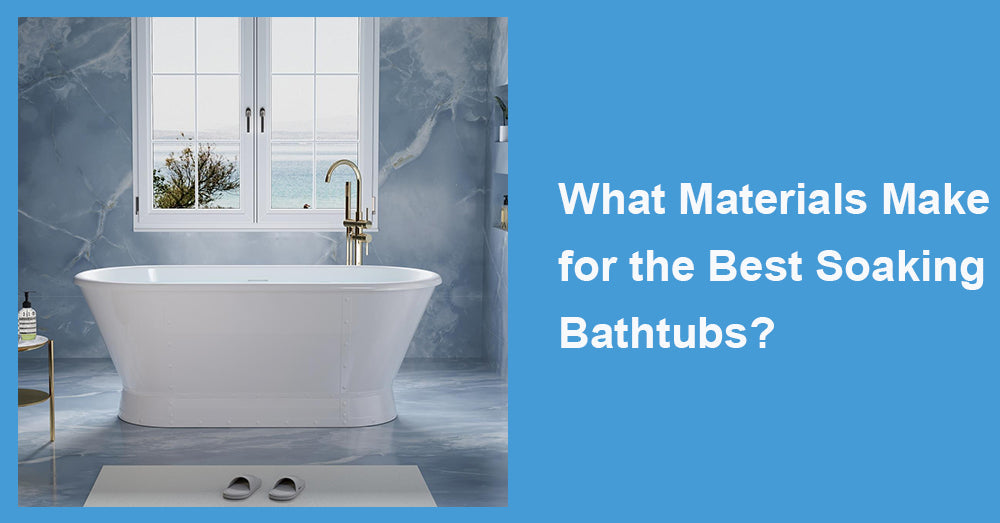
When designers and buyers ask what materials create the best soaking bathtubs, the answer is no longer just about appearance. Recent bathroom-renovation data shows that soaking tubs are the clear favorite among tub types, chosen by 62% of homeowners adding or replacing a bathtub. In comparison, acrylic leads tub materials at 60%, followed by fiberglass at 16%, enameled cast iron at 8%, and cast polymer at 6%. That matters because material affects everything that defines a good soak: heat retention, surface feel, maintenance, installation weight, and long-term durability.
1. Why Material Matters More Than Shape Alone
When looking at a soaking tub in a showroom, the unit's dramatic appearance will draw you in, but how you experience being in a soaking tub depends on more than its style. Your first impression of the tub will be influenced by the materials used in its construction, as will the rate of heat loss from the bathing water, the surface's susceptibility to scratching, and how well the unit can be installed as part of an upstairs renovation or in a confined space. As with all bathtub products, there is more to your experience than just size. Typically, a standard-sized bathtub is around 60" in length by 30" to 32" in width by 14" to 20" in depth; however, many freestanding and deep-soaking tubs have a larger footprint. For example, Jacuzzi acrylic soaking tubs are available in sizes such as 60"x30"x15" or 66"x36"x18.50". This indicates that once the tub has reached the point at which it is appropriate for soaking, the choice of materials will determine whether the customer feels the experience is worth the money they have invested.
2. Acrylic Is Still the Best All-Around Choice
If the goal is to identify the best overall material for most projects, acrylic still holds that position. The current Houzz study shows just how dominant it remains in renovated bathrooms, and that is not an accident. Kohler describes acrylic as lightweight, durable, and easy to clean, with a strong, flex-resistant structure and a smooth finish that resists chipping and cracking for years of performance. Jacuzzi similarly highlights high-gloss acrylic for durability and ease of cleaning in its soaking-bath collections.
That combination makes acrylic especially strong for freestanding tubs, modern oval designs, and remodels where installation flexibility matters. A material can be beautiful, but if it is difficult to move through a doorway or too demanding on the subfloor, it may not be the best choice in practice. Acrylic strikes a useful balance: it supports deep-soak designs, stays easier to handle than cast iron, and fits both transitional and contemporary bathrooms without pushing the project into a specialty-installation category. For most homeowners and most layouts, acrylic remains the safest, smartest answer.
3. Enameled Cast Iron Is the Best for Longevity
If acrylic is the all-around winner, enameled cast iron is still the benchmark for durability and permanence. Kohler describes enameled cast iron as timeless, ultradurable, and excellent at retaining heat. That reputation explains why cast iron continues to carry prestige even though it trails acrylic in total share. In a market increasingly focused on wellness, permanence still matters. NKBA’s bath trend research continues to frame bathrooms as restorative, spa-like spaces, which helps explain why some buyers still gravitate toward heavier, heritage-grade materials when they want a tub to feel substantial and architectural.
The tradeoff is obvious: cast iron is rarely the easiest material to install. Products positioned as alternatives to cast iron repeatedly market themselves as lighter and easier to handle, which tells you exactly where cast iron becomes challenging. So the material is best when the project can support the weight, the budget allows for it, and the design goal is long-term permanence rather than installation convenience. For a primary bath meant to feel anchored and lasting, cast iron remains one of the strongest options on the market.

4. Solid Surface and Cast Polymer Are Best for a Premium Look
For buyers who want sculptural form and a more elevated visual finish, solid-surface and cast-polymer tubs occupy an important middle ground. Houzz places cast polymer at 6% of current tub-material choices, which is far below acrylic but still meaningful in premium projects. Kohler positions Lithocast, its premium solid-surface material, as a format that allows unique geometries, textures, and designs, while describing its cast-resin baths as hand-finished and well-suited to modern forms. That makes these materials especially appealing in minimalist bathrooms where the tub acts as a centerpiece rather than just a fixture.
This category is often the best choice when visual refinement matters as much as the soak itself. A solid-surface tub can look sharper, more tailored, and more custom than a basic molded shell. It is less about mass-market practicality and more about creating a focal object with cleaner lines, richer surface character, and a boutique-hotel presence. For design-led bathrooms, that is a real advantage.
5. Fiberglass and Composite Options Still Matter, but Mostly for Budget Reasons
Fiberglass remains relevant because of cost and accessibility, but it is usually the value option rather than the best long-term soaking material. Houzz still places fiberglass in second place by share, though far behind acrylic. Composite systems such as Sterling’s Vikrell and American Standard’s Americast show why the category has not disappeared: manufacturers emphasize lighter handling, stain resistance, easier installation, and, in Americast’s case, better heat retention than cast iron and enamel steel. Those are not small benefits. They serve a different buyer priority.
In other words, these materials are often best when the project needs to control cost, simplify installation, or solve access constraints. They can perform well, but they usually win on practicality rather than aspiration.
6. So, What Material Is Actually Best?
The best soaking tub material depends on what “best” means in the room you are building. Acrylic is the best all-around choice because it balances comfort, durability, easy care, and installation flexibility. Enameled cast iron is best for long-term durability and a substantial, classic feel. Solid-surface and cast-polymer tubs are best for premium aesthetics and statement design. Budget-minded fiberglass and composite options still have a place, especially when installation simplicity matters.
But if one material has earned the broadest recommendation today, it is acrylic. The market data supports it, major manufacturers continue to build their core soaking lines around it, and its performance profile fits how most bathrooms are actually renovated now. That is why, for most projects, acrylic still defines what the best soaking bathtubs look and feel like today.













Leave a comment
This site is protected by hCaptcha and the hCaptcha Privacy Policy and Terms of Service apply.