














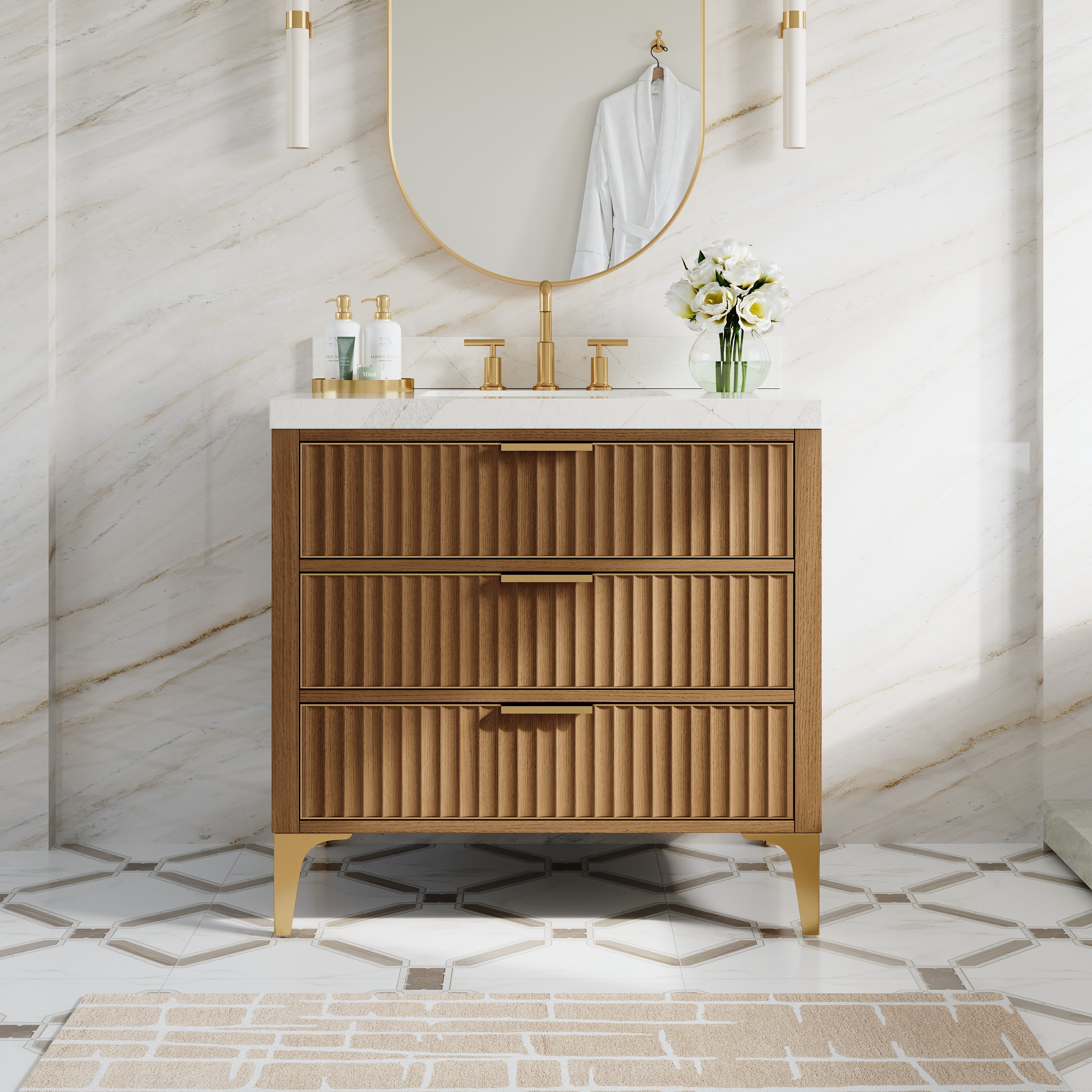
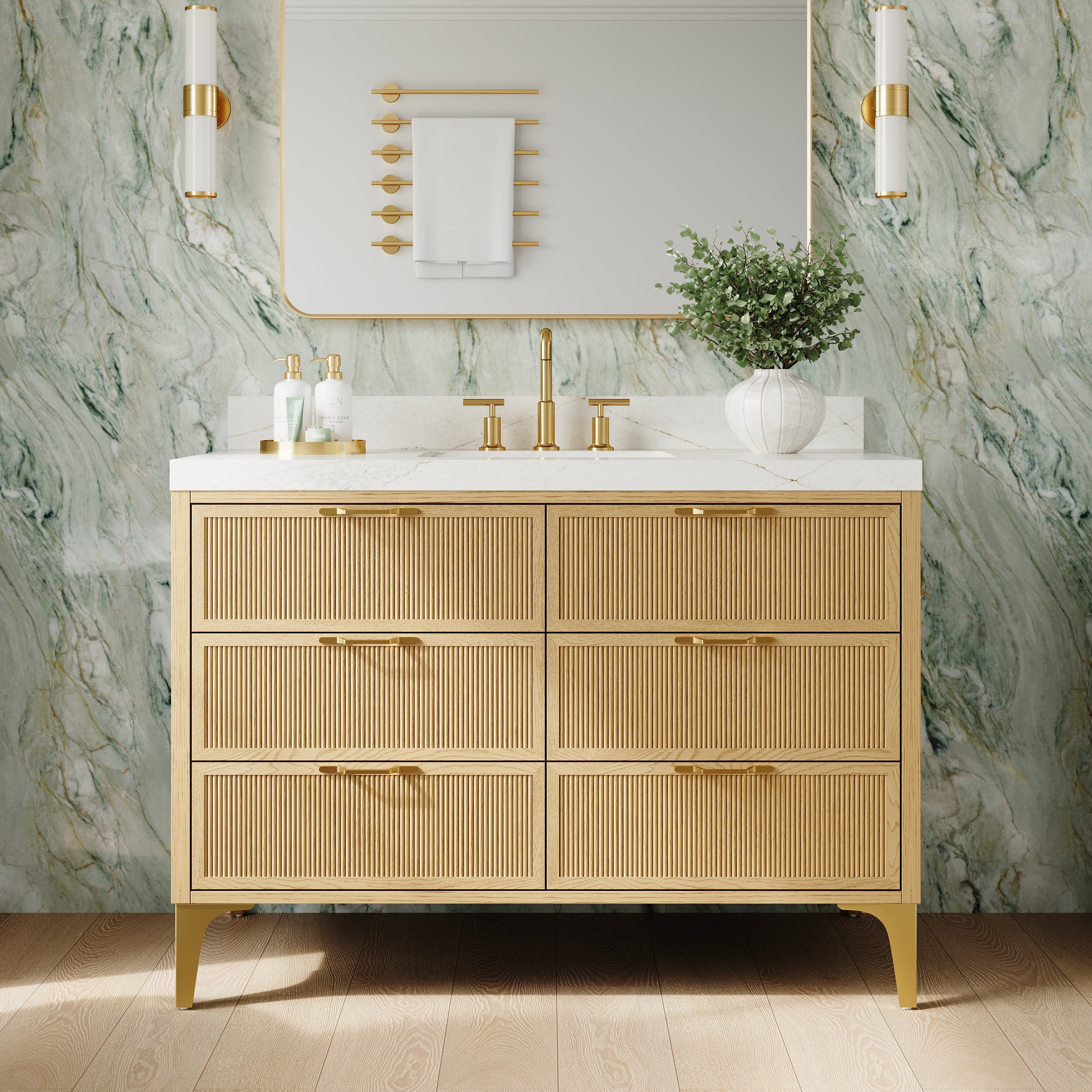


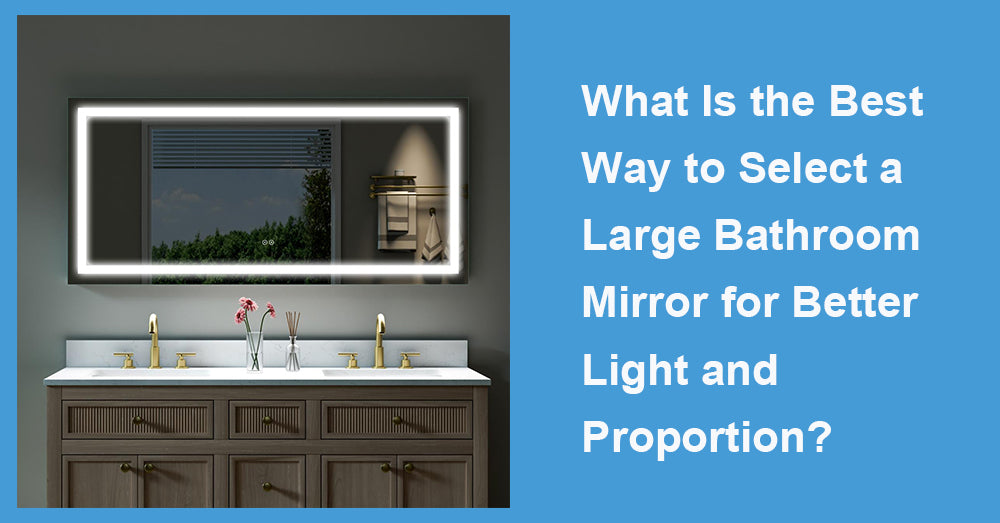
A large bathroom mirror can make a bathroom feel brighter, more open, and more “finished”—but only when it’s sized and placed with intention. Go too small ,and the vanity looks top-heavy; go too big ,and the wall feels chaotic ,or the lighting becomes harsh. The best results come from balancing three things at once: proportion (how the mirror relates to the vanity and wall), lighting (how the mirror interacts with task and ambient illumination), and durability (how the glass and installation hold up in humidity).
1. Define What “Large” Should Mean in Your Space
A mirror feels “large” for one of two reasons:
1. It’s wide (spanning most of the vanity or even wall-to-wall).
2. It’s tall (creating a strong vertical presence and better viewing coverage).
Before picking a size, decide what you want the mirror to reflect:
· Better proportion: widen the mirror to visually anchor the vanity.
· Better light distribution: increase surface area and pair with the right lighting strategy.
· Better usability: increase height so multiple users can comfortably see without crouching.
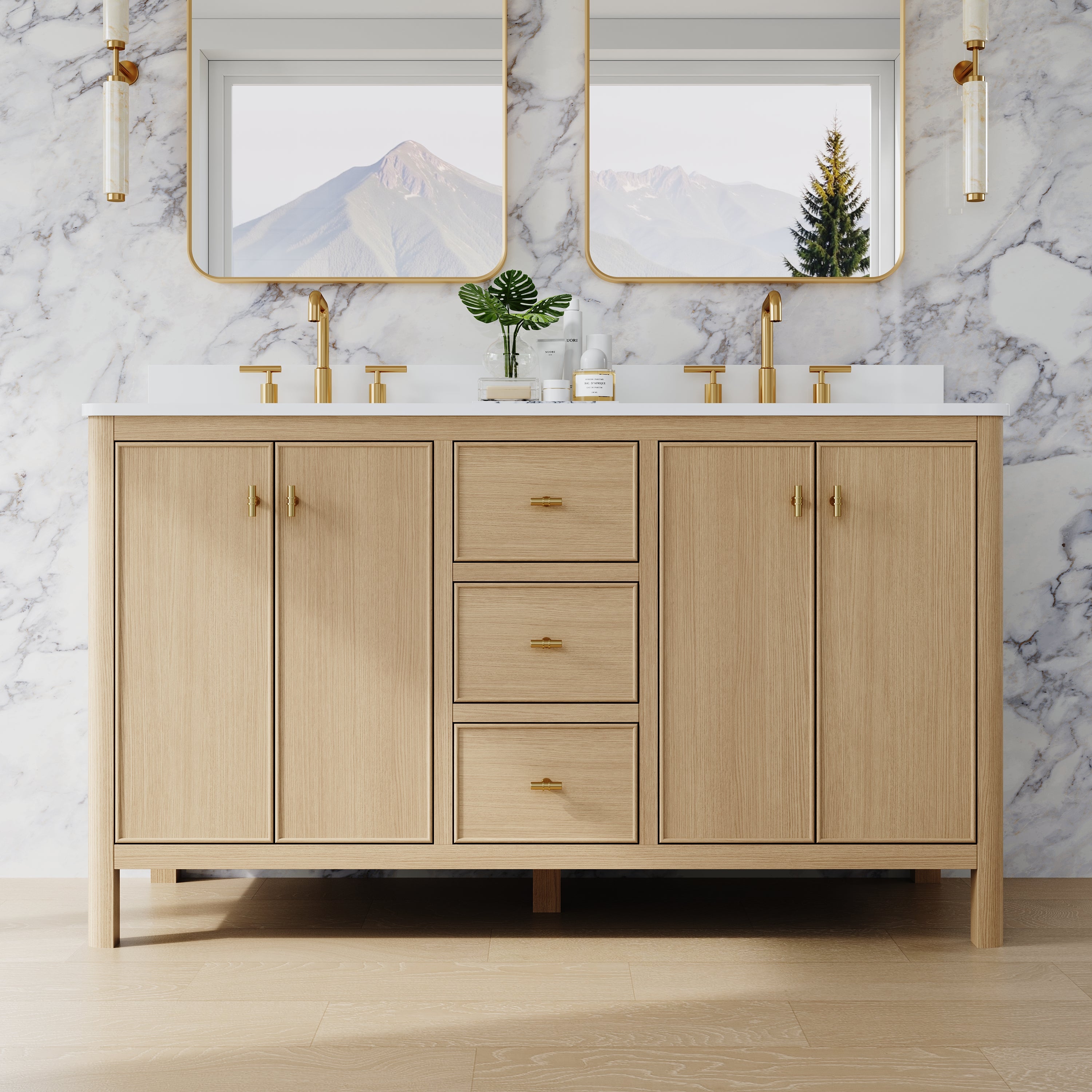
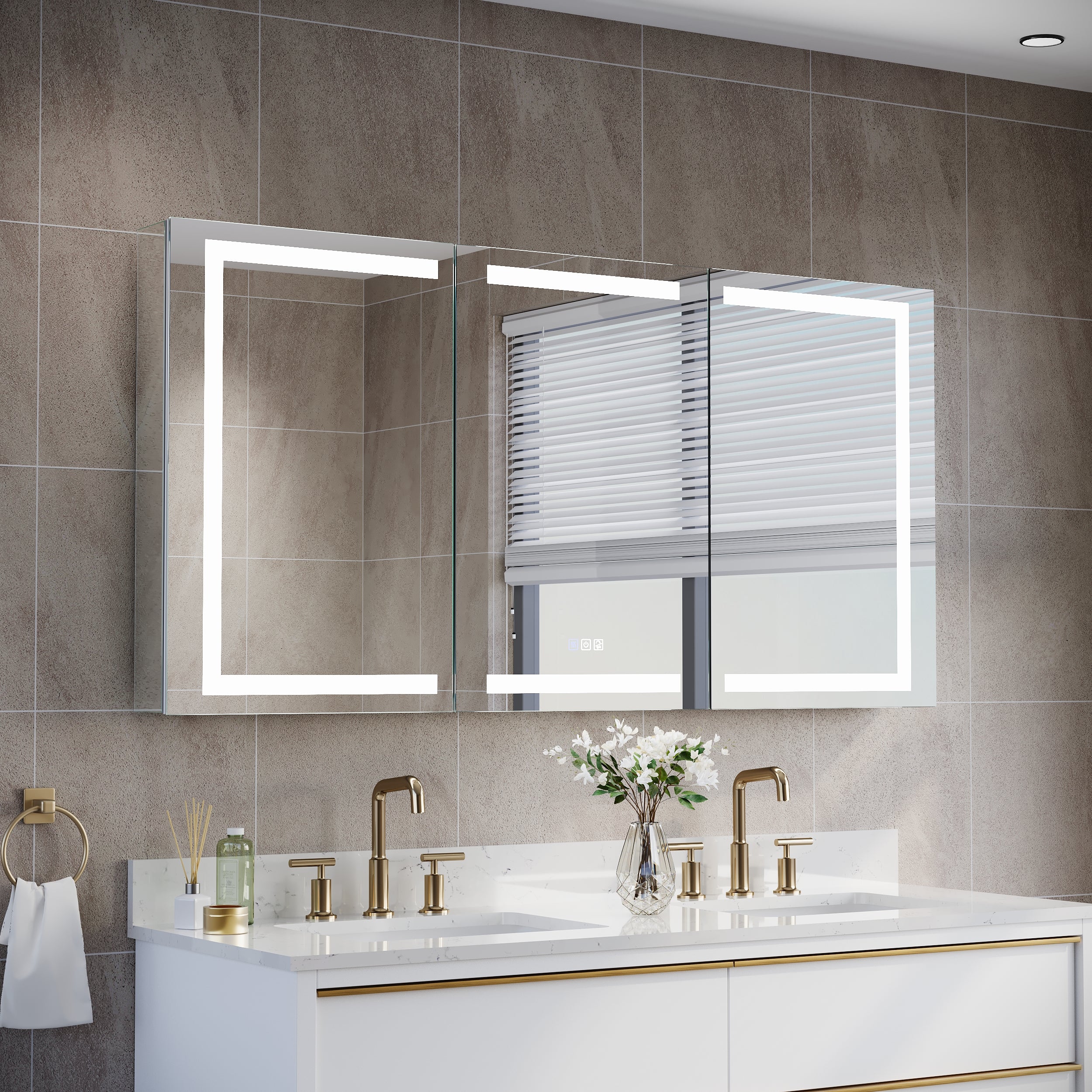
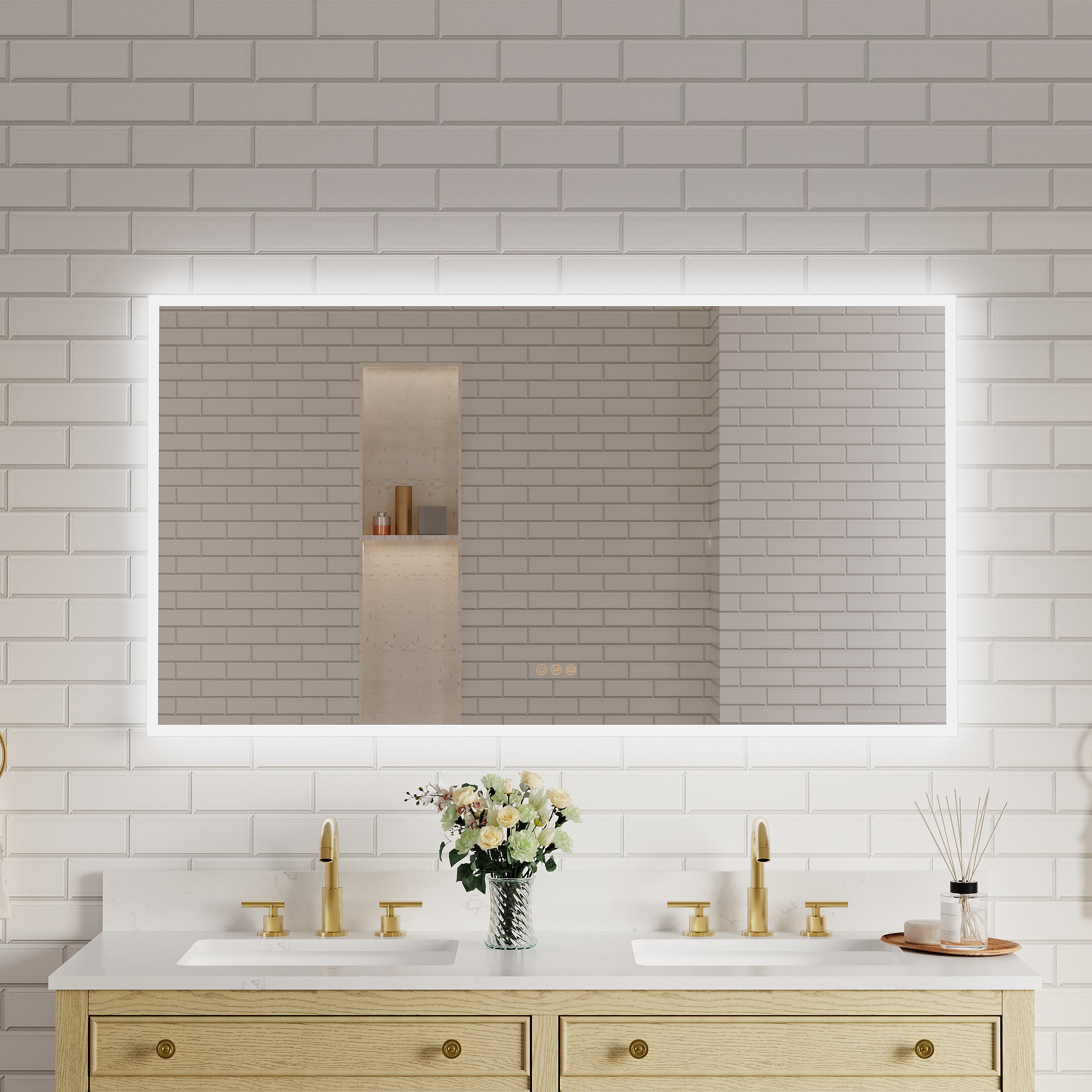
A useful design starting point is tying mirror width to vanity width. One guideline recommends that a bathroom mirror span about 70%–90% of the vanity’s width to create balance (Source: Edward Martin, “How Big A Mirror Should Be Over A Vanity?”). Another practical rule is to keep the mirror 2–4 inches narrower than the vanity to maintain clean margins (Source: Signature Glass & Windows, “Bathroom Mirror Size Guide”).
2. Choose the Right Width: The Proportion Rules That Rarely Fail
Option A: The “70%–90% of vanity width” rule (most universally flattering)
This approach prevents the mirror from looking like an afterthought while still leaving breathing room at the edges (Source: Edward Martin).
Example:
· 48" vanity → mirror width roughly 34"–43"
· 60" vanity → mirror width roughly 42"–54"
(These ranges are derived directly from the 70%–90% guideline; Source: Edward Martin.)
Option B: The “2–4 inches narrower than the vanity” rule (clean and tailored)
This is easy to execute on-site and works especially well when you have wall trim, tile borders, or sconces that need space (Source: Signature Glass & Windows).
Example:
· 48" vanity → mirror width often 44"–46".
· 60" vanity → mirror width often 56"–58" .
When to go wall-to-wall
A wall-to-wall mirror can look stunning in a modern bathroom, maximizing perceived space and light. To keep it from feeling like a commercial restroom, you’ll need:
· simplified lighting (clean sconces or a well-designed linear light),
· careful height placement,
· and tidy edge detailing (polished edges or a minimal channel).
3. Pick a Height That Improves Visibility, Not Just Symmetry
Many mirrors are mounted based on “centered on the wall,” which often results in a mirror that’s too high for real daily use. A strong reference comes from accessibility standards:
· Mirrors above a lavatory or countertop: bottom edge of the reflecting surface 40 inches max above the finished floor.
· Mirrors not above a lavatory/countertop: bottom edge 35 inches max.
(Source: 2010 ADA Standards, Section 603.3.)
Even if you’re not designing for accessibility compliance, these numbers are excellent practical guardrails for comfortable everyday viewing (Source: 2010 ADA Standards, Section 603.3).
Quick field method:
Stand at the sink, mark your eye level, then aim for your eye level to land in the upper-middle of the mirror rather than near the bottom edge. This makes the mirror feel naturally usable for grooming.
4. Use Light Intentionally: Bigger Mirrors Help, But They Don’t Replace Good Lighting
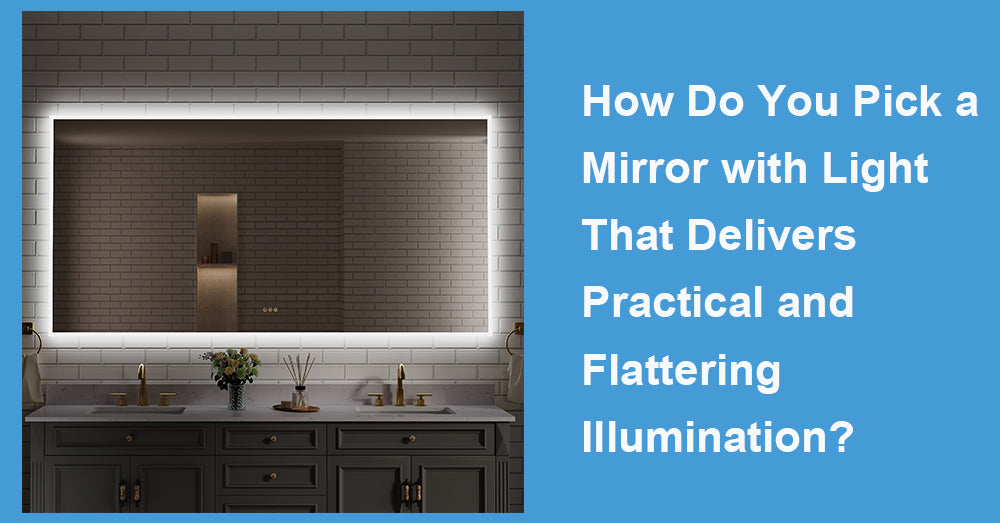
A mirror can amplify light by reflecting it, but it cannot create light. Your goal is to pair a large mirror with lighting that flatters faces and reduces shadows.
4.1 Know what light levels are measured in
A foot-candle is a common unit of illuminance, and 1 foot-candle equals 1 lumen per square foot (Source: IES Recommended Light Levels PDF, Waypoint Lighting).
4.2 Target the right light levels for the vanity
For precision tasks like grooming and makeup, one lighting guide suggests aiming for 75–100 foot-candles at the vanity, while ambient bathroom lighting can be a softer 20–50 foot-candles range (Source: Edward Martin, “How to Layer Vanity Lights for Bathroom Style and Function”).
What a large mirror changes:
· It increases the reflective surface that can bounce light back into the room.
· It helps reduce “dead zones” of darkness when paired with side lighting.
· It can visually brighten the space even at the same lumen output—because more of the room reads as reflective.
4.3 Why side lighting often beats overhead-only lighting
Overhead lights commonly create shadows under eyes and chin. A large mirror paired with two side sconces (or a well-designed integrated mirror light) tends to deliver more even facial illumination.
5. Understand Reflection and Why a Bigger Mirror Can Feel Brighter
Mirrors reflect a high percentage of visible light depending on the coating. In optical coating references, aluminum reflects about 90% of visible light, while silver reflects about 95% (Source: Photonics.com, “Mirrors: Coating Choice Makes a Difference”). That high reflectance is why a large mirror can noticeably improve the “brightness feeling” in the room—especially when it reflects a bright wall or a well-placed vanity light.
The key point: a large mirror works best when it’s reflecting something worth reflecting—clean, bright surfaces and well-aimed lights.
6. Don’t Ignore Thickness and Weight: Large Mirrors Must Be Installed Like Fixtures
As mirrors get larger, thickness and mounting become more important for safety and long-term stability.
A glass weight reference lists typical weights per square foot:
· 1/4" glass ≈ 3.27 lb/sq ft
· 3/16" glass ≈ 2.45 lb/sq ft
(Source: “Glass Weight per Square Foot” PDF, Noxtat.)
Why this matters: a large mirror can become surprisingly heavy, and adhesive-only installs become riskier as size increases. For large formats, consider:
· mechanical support (J-channel or clips) plus compatible adhesive,
· proper spacing pads,
· and installers following mirror-safe adhesive guidance.
7. Durability in Bathrooms: Humidity Control Protects Mirror Edges
Bathrooms experience humidity spikes that can shorten mirror life, especially at exposed edges and backing. Moisture control guidance recommends keeping indoor relative humidity below 60%, ideally between 30% and 50% (Source: U.S. EPA, Mold Course Chapter 2).
For large mirrors, durability improves when you:
· run the exhaust fan during showers and afterward,
· avoid letting water pool along the bottom edge,
· and keep caulking/backsplash transitions tidy so water doesn’t sit against the mirror.
8. A Practical Selection Framework (Copy-Friendly)
Use this sequence to choose confidently:
Step 1: Choose width by proportion
· Start at 70%–90% of vanity width (Source: Edward Martin), or
· choose 2–4 inches narrower than the vanity for crisp margins (Source: Signature Glass & Windows).
Step 2: Choose height by usability
· Use the 40-inch bottom-of-reflective-surface reference as a comfort check for mirrors above countertops (Source: 2010 ADA Standards, Section 603.3).
Step 3: Choose lighting targets
· Vanity grooming: 75–100 foot-candles target range (Source: Edward Martin).
· Ambient: 20–50 foot-candles range (Source: Edward Martin).
· Remember 1 foot-candle = 1 lumen per sq ft (Source: Waypoint Lighting IES PDF).
Step 4: Choose construction appropriate for size
· For large mirrors, confirm thickness, weight, and mounting method using weight-per-square-foot references (Source: Noxtat glass weight PDF).
Step 5: Protect long-term finish
· Keep humidity ideally 30%–50% and below 60% (Source: U.S. EPA Mold Course).

Conclusion
The best way to select a large bathroom mirror is to treat it as both a design element and a performance tool. Size it to the vanity using proven proportion rules, mount it at a height that supports real daily use, and pair it with lighting that targets practical foot-candle levels at the vanity. Then protect your investment with proper thickness, secure mounting, and humidity control—because in a bathroom, durability is part of the design.













Leave a comment
This site is protected by hCaptcha and the hCaptcha Privacy Policy and Terms of Service apply.