



















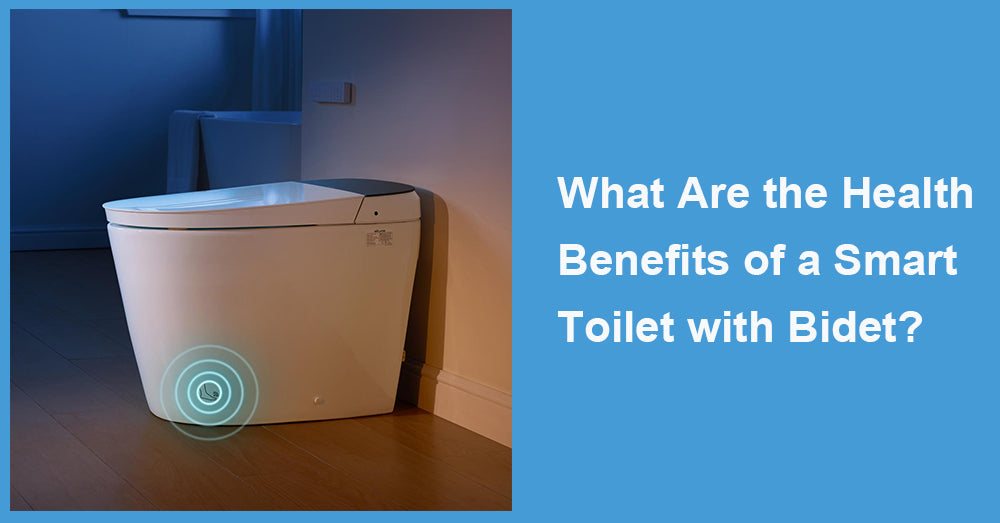
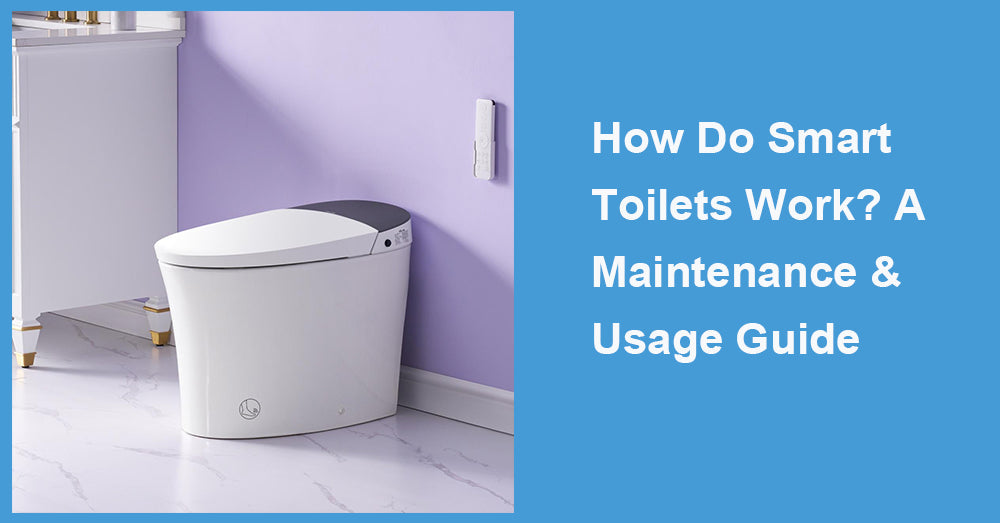
In recent years' discussions on bathroom upgrades, smart toilet with bidet are no longer just a "technological configuration".
Still, they are gradually being re-examined in the context of health and quality of life.
More and more industry research and feedback indicate that smart toilets with flushing functions have value beyond comfort or convenience, and that they have quantifiable positive impacts on daily hygiene habits, skin health, and long-term physical burden.
1. Health differences starting from 'cleaning methods.'
The traditional cleaning method after using the toilet has long relied on dry wiping.
This method may seem effective in the short term, but it has natural limitations due to skin friction, residual irritants, and repeated contact.
Industry hygiene research shows that, compared to dry wiping, warm water rinsing is more consistent at reducing residue and can significantly reduce mechanical irritation of the skin surface.
This is also one of the key reasons why bidet flushing is gradually being introduced in medical and nursing settings.
For people with sensitive skin, this "water instead of paper" approach can significantly reduce the frequency of discomfort.
2. More skin-friendly and intimate area-friendly
The bidet flushing system of smart toilets usually adopts controllable water pressure and directional nozzle design.
The nozzle position can be adjusted, and the water flow distribution is more concentrated, avoiding the stimulation caused by large-scale flushing.
From long-term feedback, this approach is particularly evident in the following aspects:
Reduce skin redness caused by frequent friction.
Reduce discomfort caused by insufficient cleaning.
Maintain a more stable skin condition in high-frequency usage scenarios.
The design dimensions of the nozzle and seat ring are usually based on ergonomics.
For example, the standard seat ring contact width is about 14–15 inches, which helps evenly distribute stress on the body and, by extension, improves relaxation during use.
3. Practical assistance for people with limited mobility
A significant health benefit of smart toilets is their support for people with limited mobility.
Industry data shows that automatic flushing and drying functions can significantly reduce physical burden in scenarios where bending, twisting, or repetitive force needs to be reduced.
For example, the combination of automatic spray washing and warm air drying can reduce reliance on the hands and waist.
The seat heating and stable height design also make the sitting process smoother.
These details may seem small in daily life, but over the long term, their impact on physical comfort is straightforward.
4. Improve the hygiene conditions of the toilet environment
In addition to its direct impact on the body, a smart toilet with a bidet also improves environmental hygiene.
The flushing function can reduce reliance on toilet paper, while designs such as automatic flushing and nozzle self-cleaning minimize the probability of cross-contact.
Industry tests have shown that reducing manual operations can help lower the residual risk of bacteria at high-frequency contact points.
In addition, some smart toilets are equipped with deodorization and air filtration systems, which can significantly reduce odor retention time in enclosed spaces and improve the overall user experience.
5. The importance of water temperature and pressure control
Unlike early simple bidets, modern smart toilets have more precise control over water temperature and pressure.
A multi-level water pressure and constant-temperature system makes the flushing process more controllable, avoiding discomfort caused by water temperature fluctuations or excessive water pressure.
Industry feedback shows that the more detailed the adjustable range, the easier it is for users to find settings that suit them, thereby forming long-term, stable usage habits.
The significance of this for health is far greater than the individual experience itself.
6. Potential impact on long-term intestinal and bowel habits
Some studies have found a correlation between the degree of relaxation during toileting and the smoothness of bowel movements.
Smart toilets help create a more relaxed user experience by stabilizing seat temperature and reducing the number of tense operating steps.
Although smart toilets are not medical devices, based on long-term feedback, comfortable, non-irritating cleaning methods are more likely to be adopted continuously, and stable toilet habits are themselves part of health management.
7. Indirect benefits of reduced use of toilet paper
Industry statistics show that after long-term use of the bidet's flushing function, toilet paper use has generally decreased.
This change is not only reflected in the cost aspect, but also reduces skin problems caused by excessive wiping.
For people with already weak skin barriers, reducing repeated friction is itself a form of protection.
8. Not everyone needs it, but it is indeed beneficial for many people
What needs to be viewed rationally is that smart toilets are not a universal solution to health.
For spaces with lower usage frequency or populations sensitive to functional complexity, their value may not be as significant as in high-frequency use scenarios.
However, in environments with high daily usage intensity and higher requirements for cleanliness and comfort, the health benefits brought by smart toilets with a bidet are often long-term and cumulative, rather than disposable.

9. Conclusion: Health improvement often comes from changes in habits
The health benefits of a smart toilet with a bidet are not reflected in a single "significant improvement", but in daily, repeated use that gradually reduces stimulation, reduces burden, and optimizes cleaning methods.
As cleaning becomes gentler, operations become more effortless, and the environment becomes more hygienic, the slight pressure on the body also decreases in parallel.
These seemingly subtle changes are the most genuine and sustainable components of a healthy lifestyle.






















Leave a comment
This site is protected by hCaptcha and the hCaptcha Privacy Policy and Terms of Service apply.