














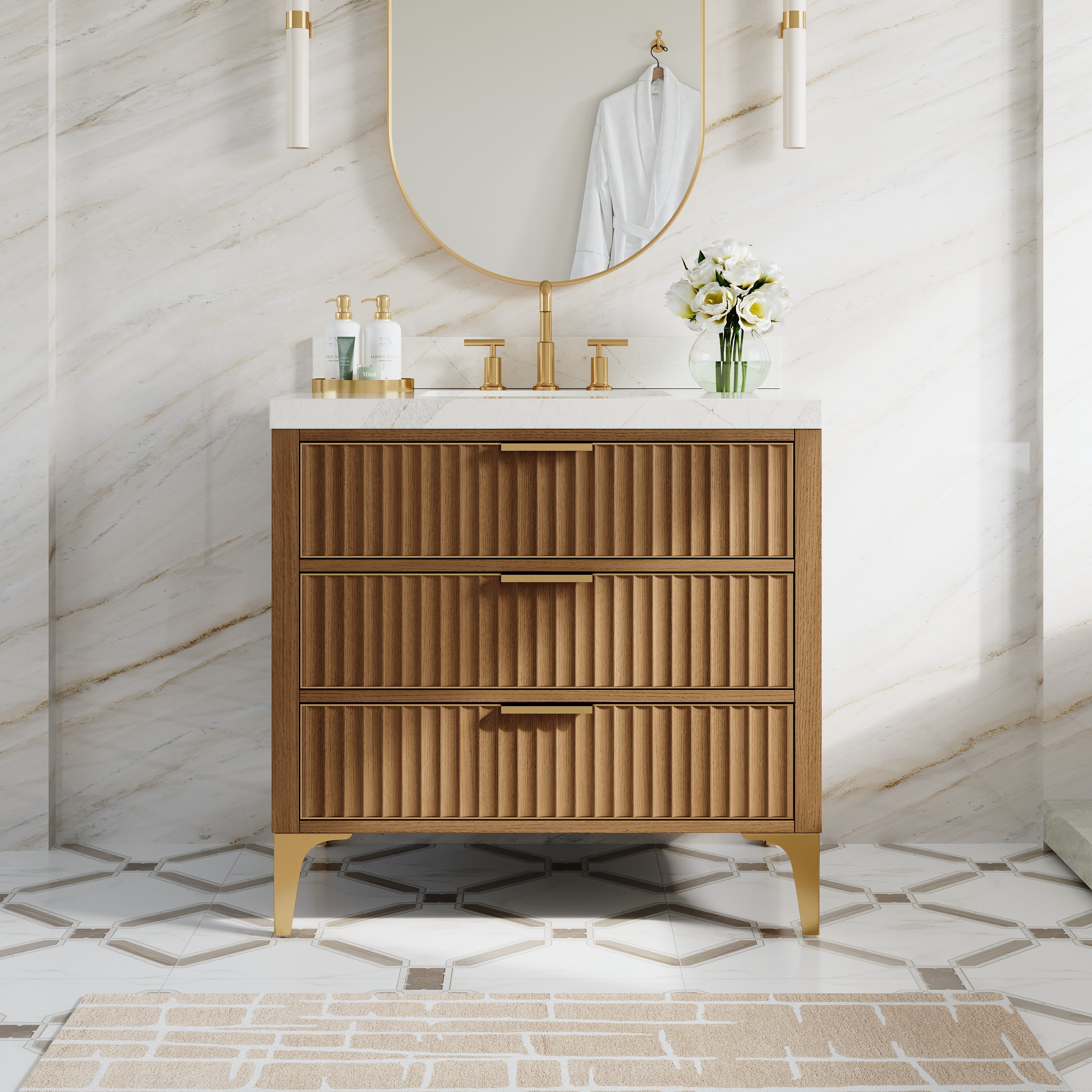
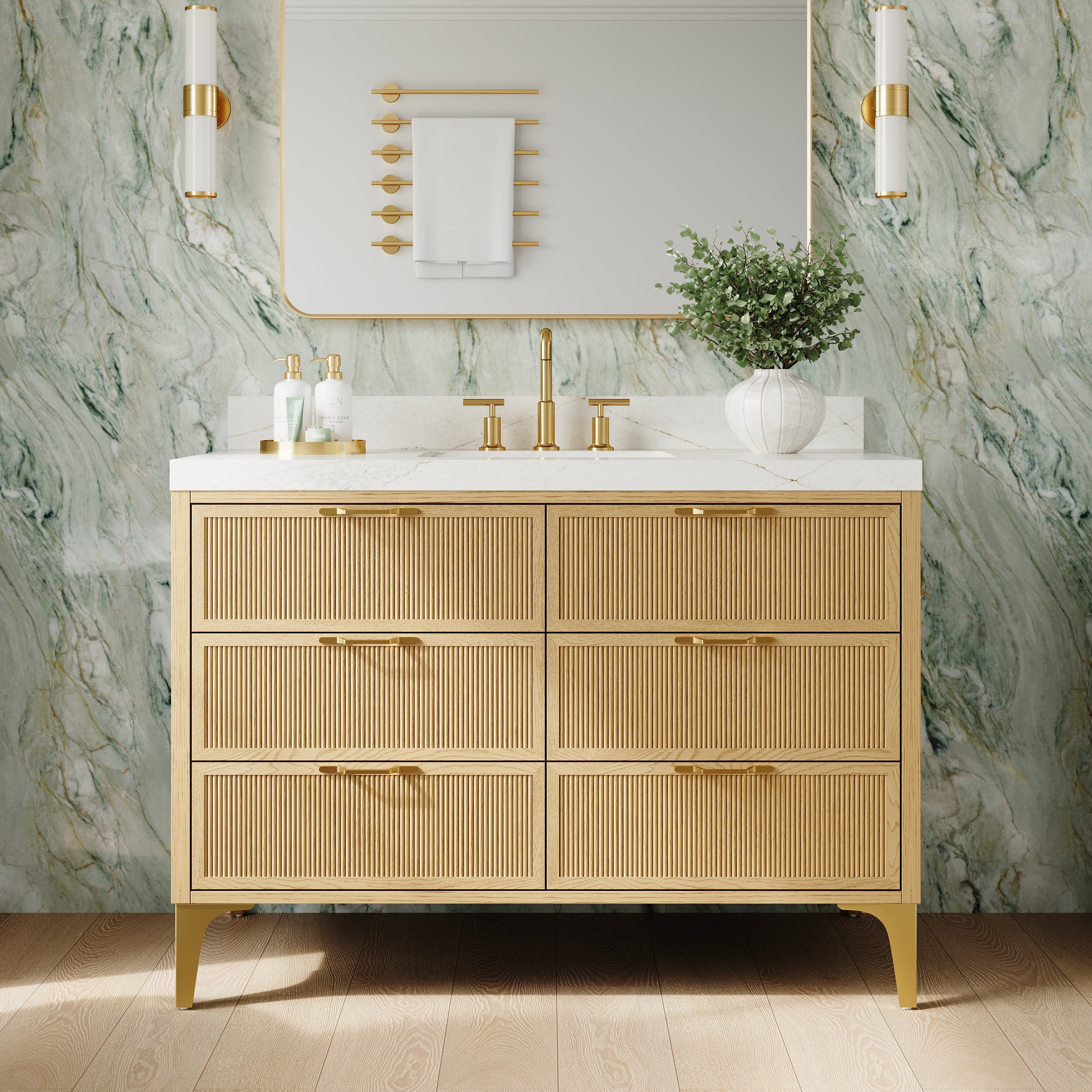


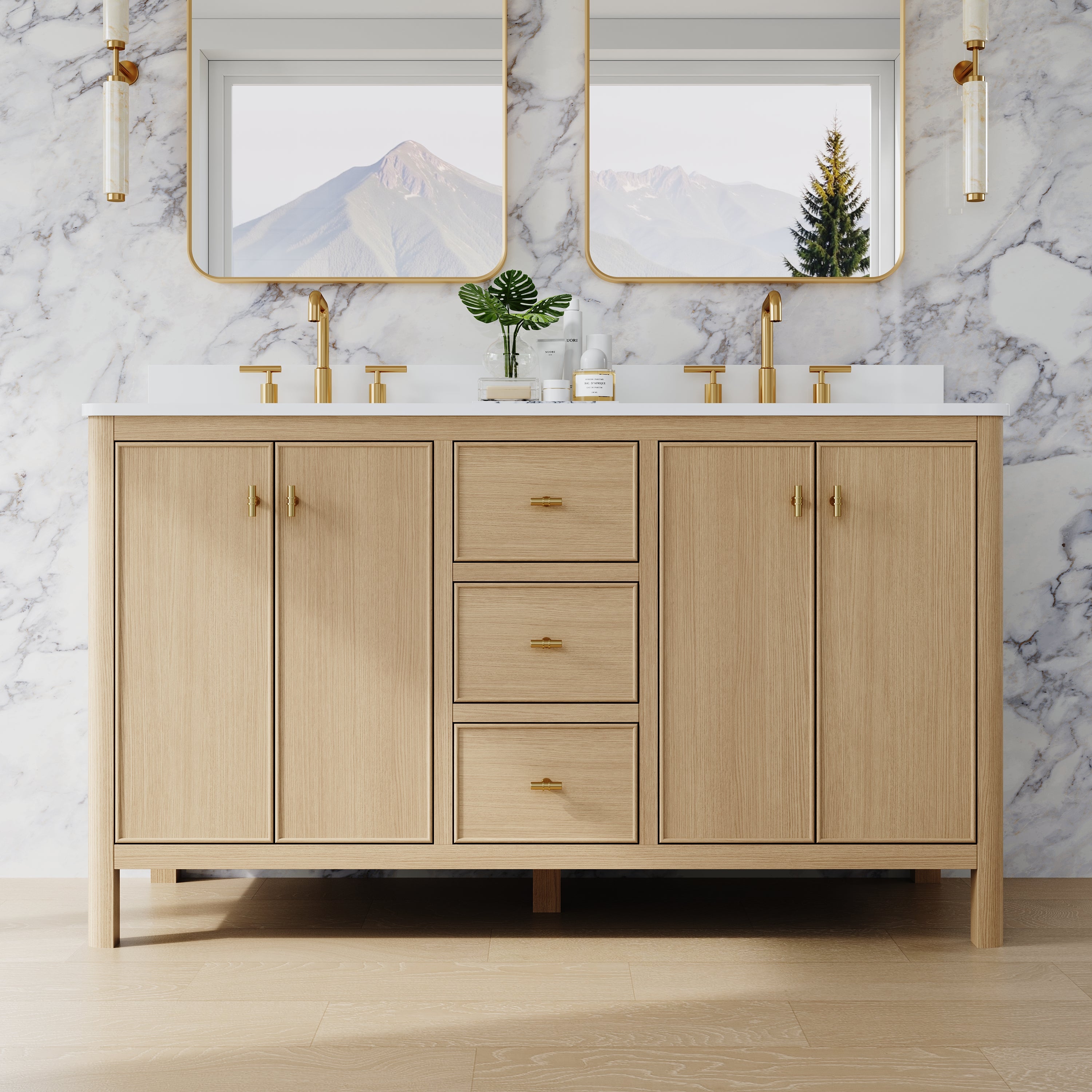
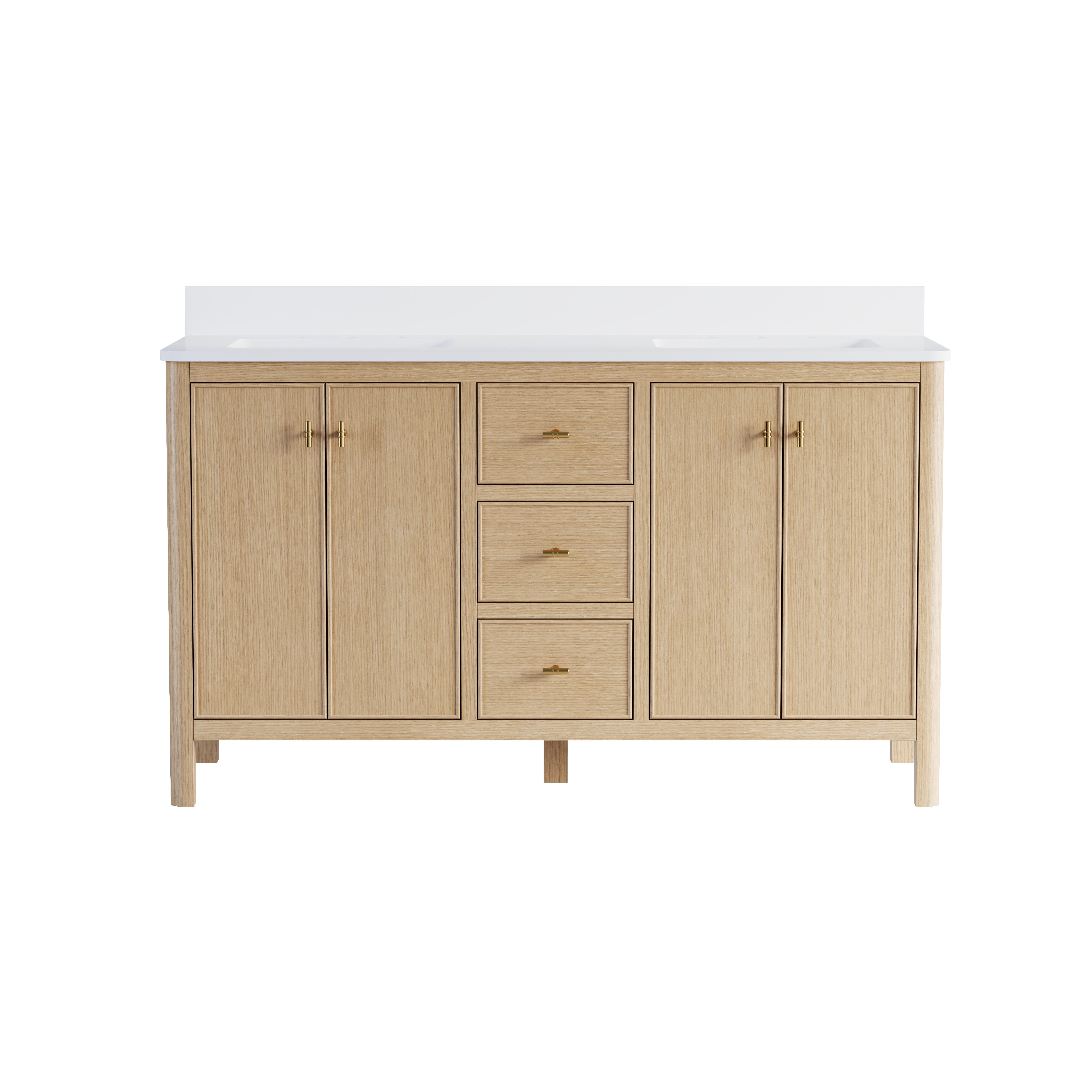

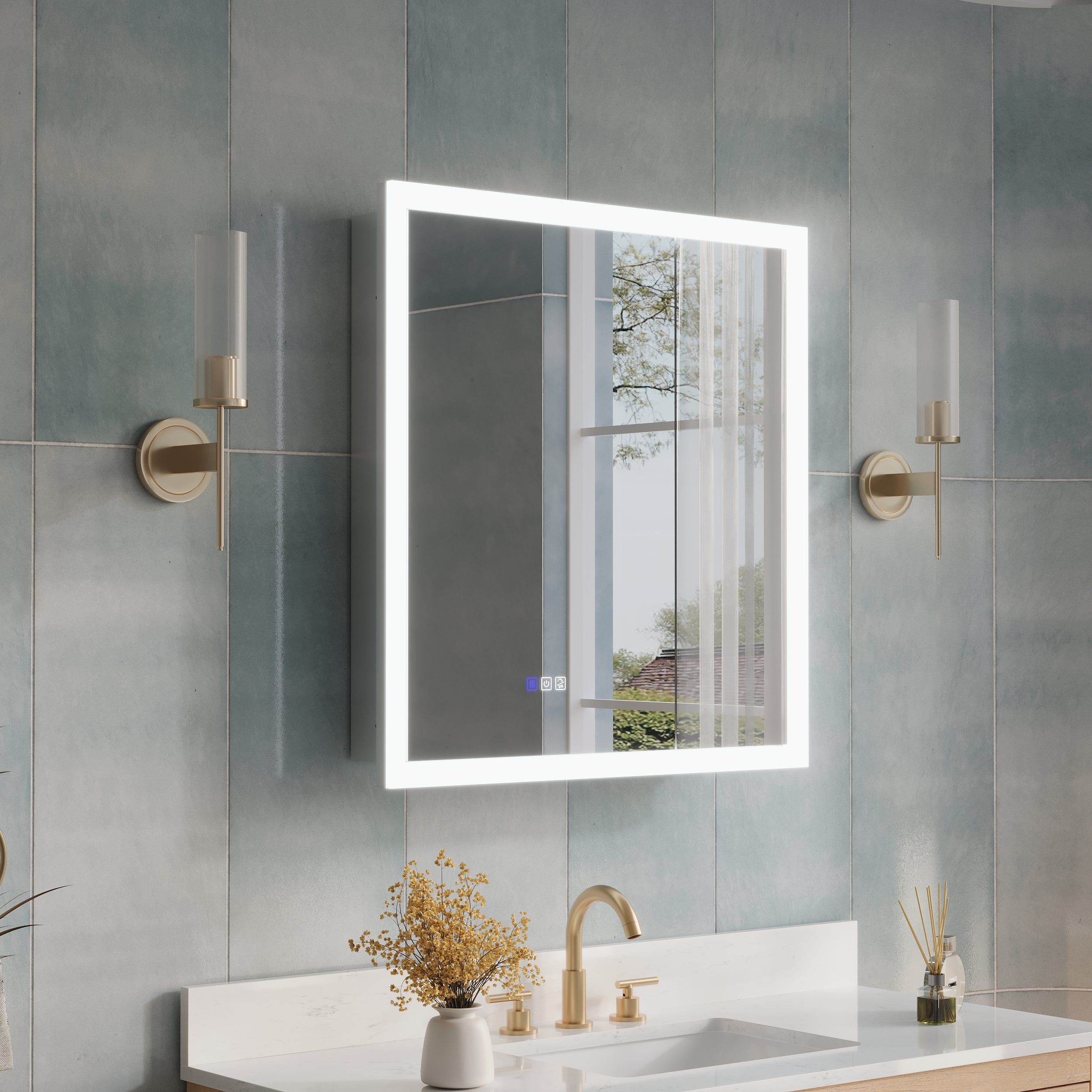
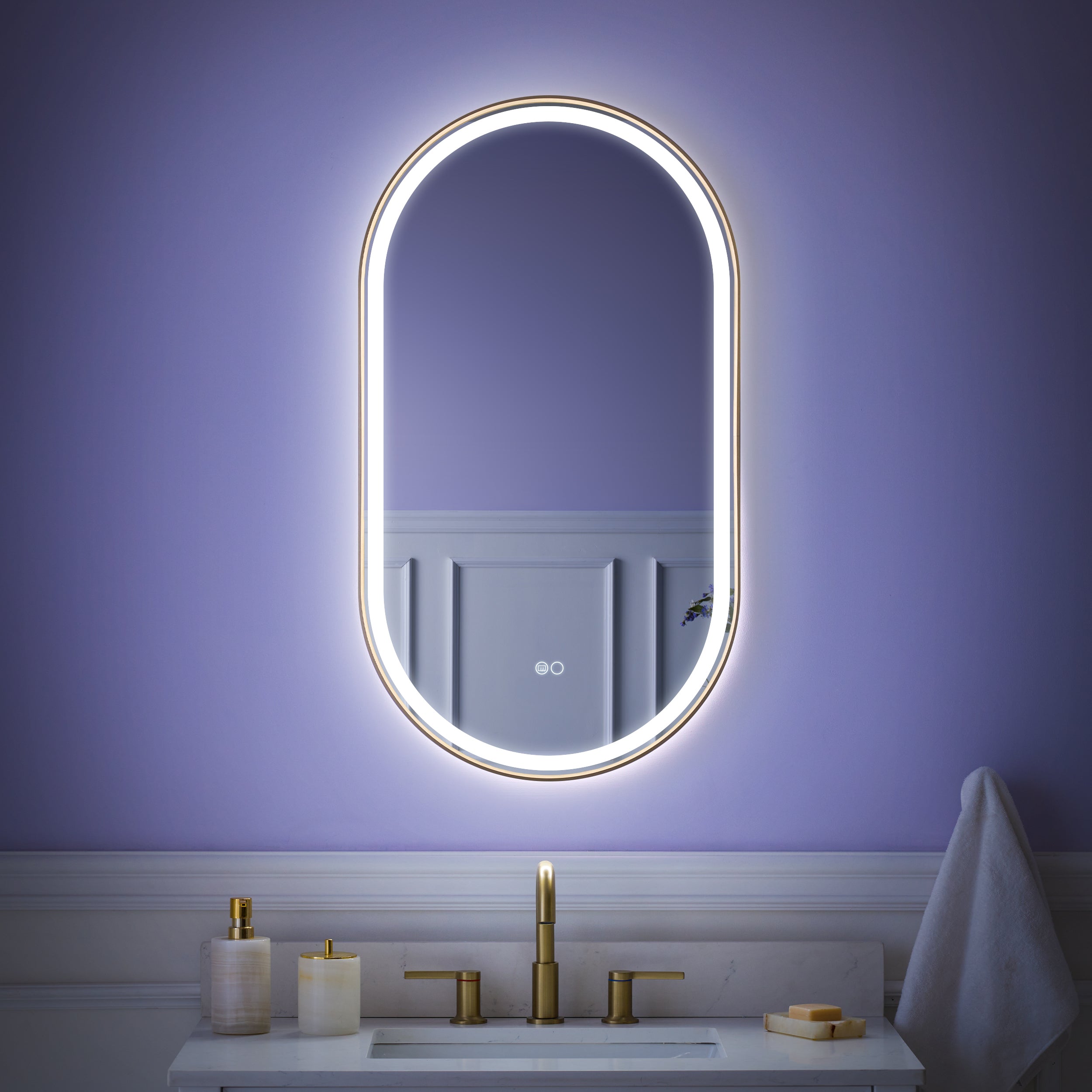
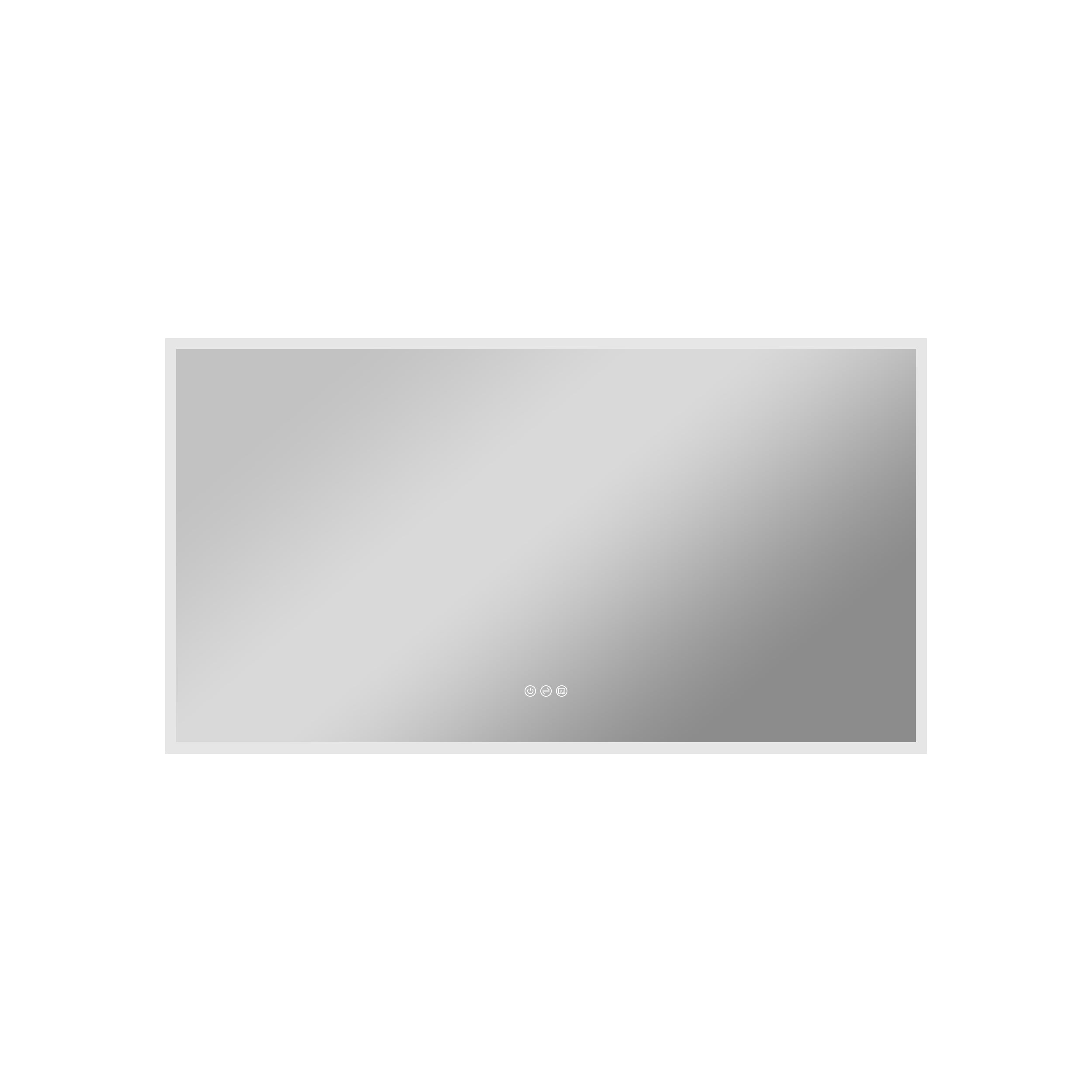
In the trend of modern bathroom renovation, mirror with built in light are gradually replacing traditional sconces and becoming an important choice for integrated lighting design. Traditional layouts typically install wall lights on both sides of mirrors to reduce facial shadows; Mirrors with built-in light sources embed light directly into the mirror body through a surround or backlit LED structure. Industry data shows that in recent years, the proportion of integrated LED lighting mirrors in high-end bathroom renovation projects has exceeded 50%. Whether to use mirrors with lights instead of wall lamps is not only about aesthetics, but also about lighting quality, spatial proportions, and installation structure.
1. Comparison of Lighting Uniformity: Who is More Professional?
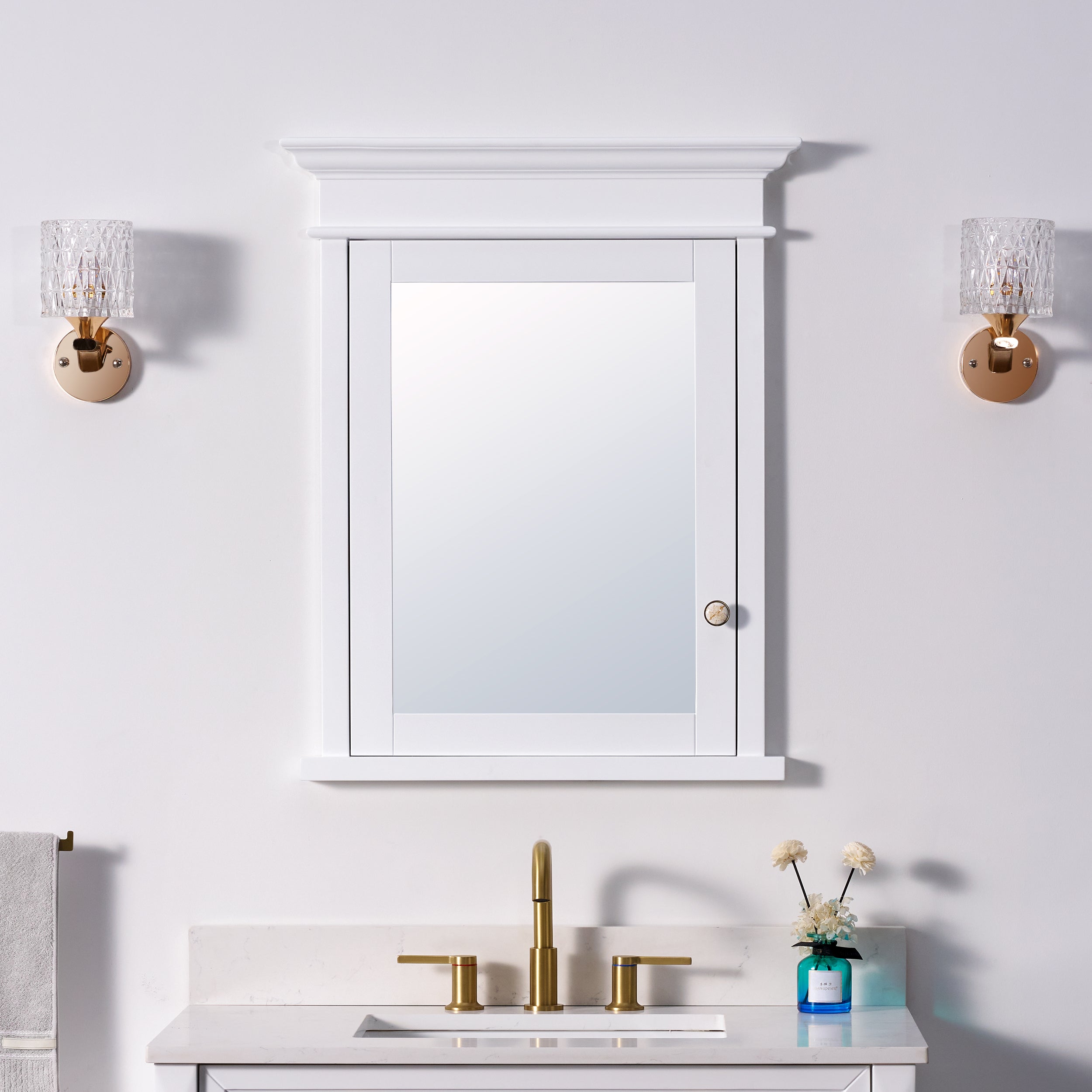
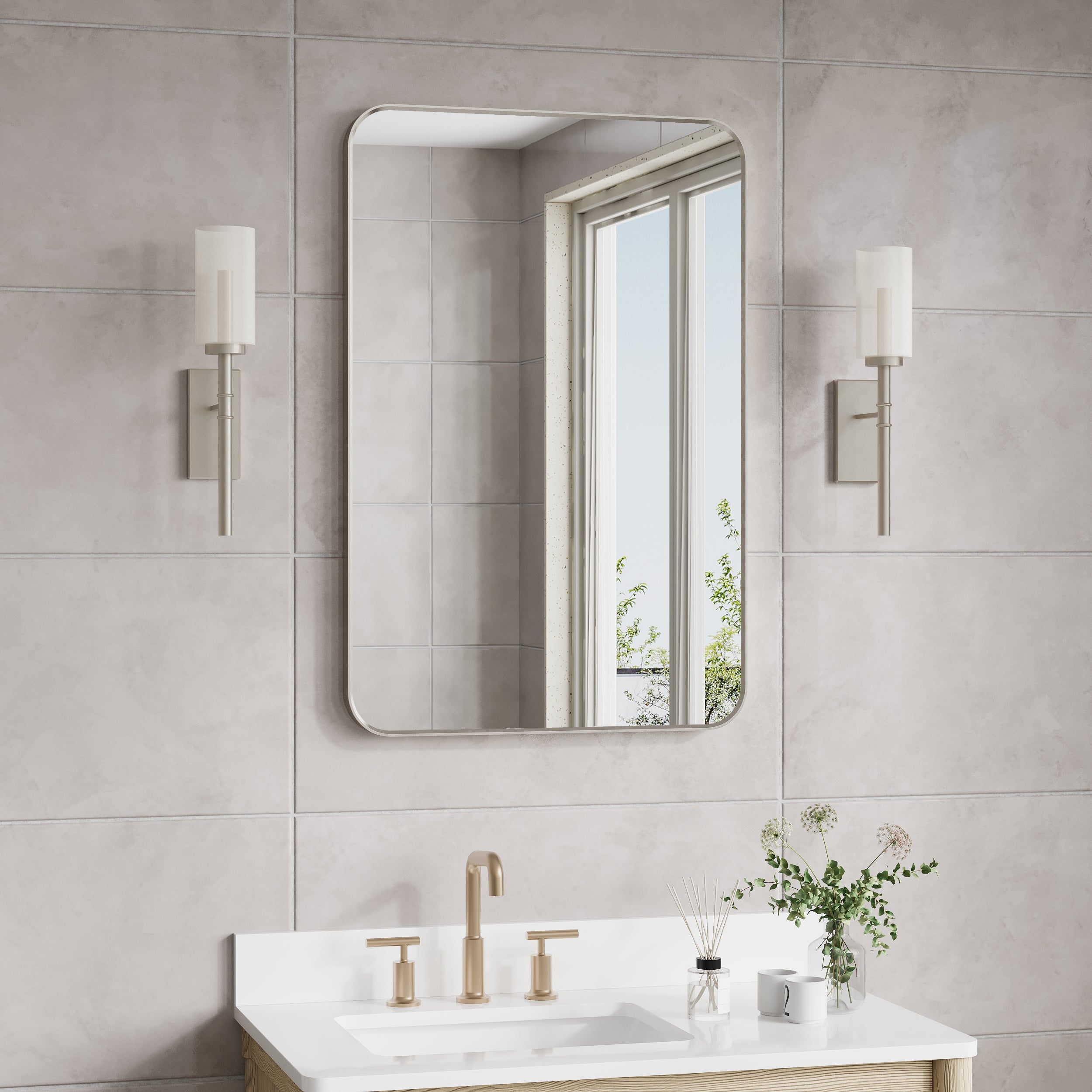
Traditional wall lamps are usually installed on both sides of mirrors, with a center height of about 60 inches to 65 inches, to ensure that light enters from both sides of the face. If the wall lamp is too high or too low, it is easy to cast shadows.
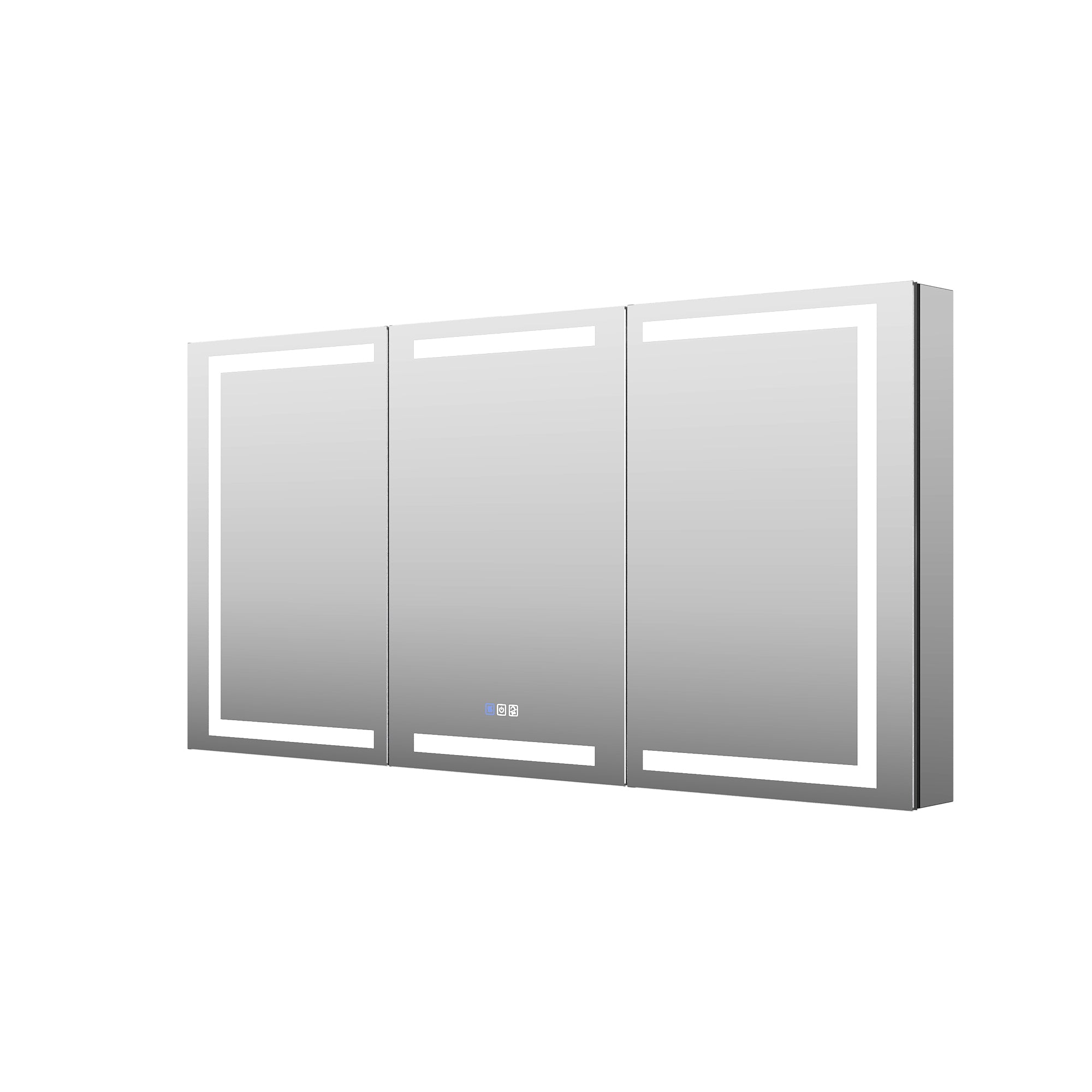
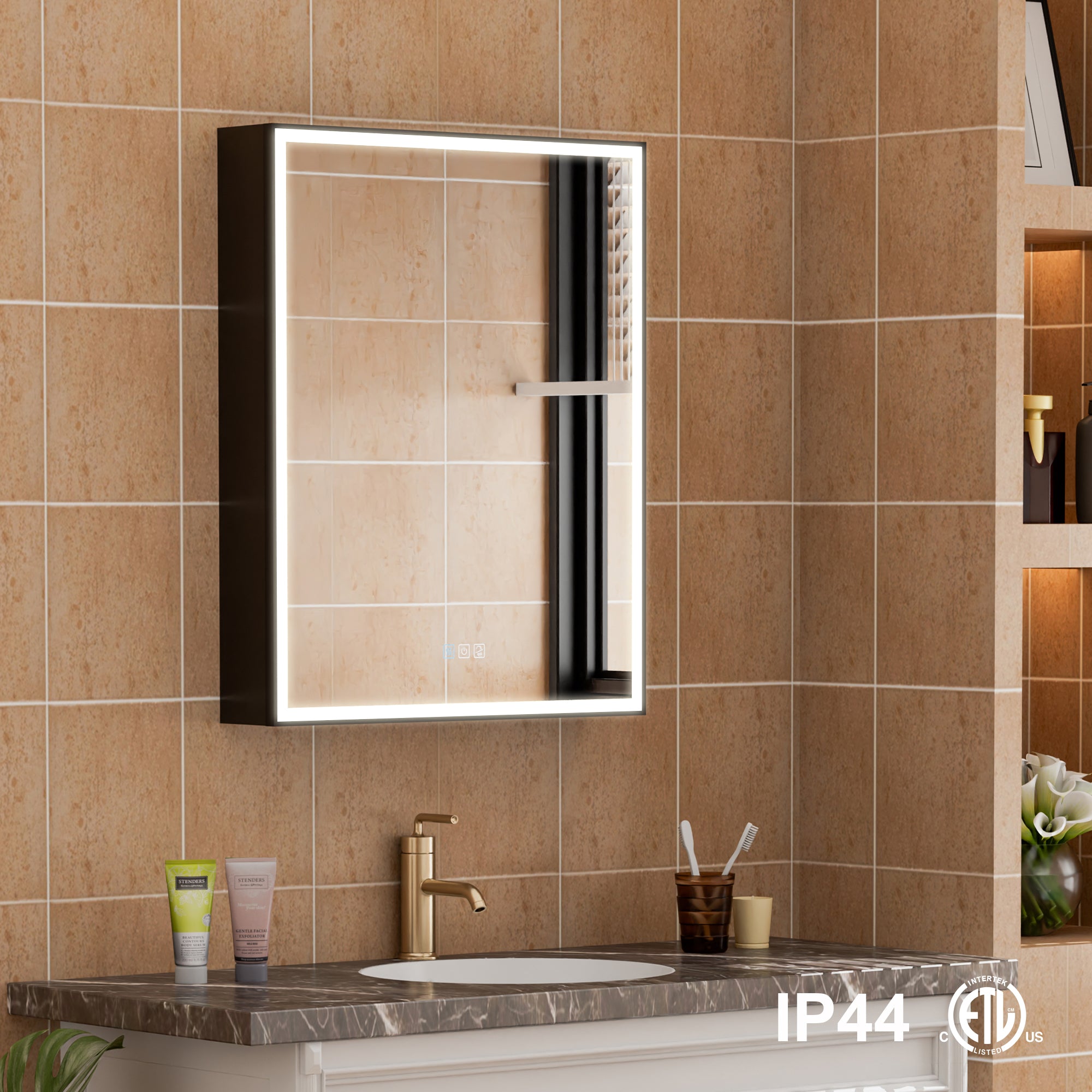
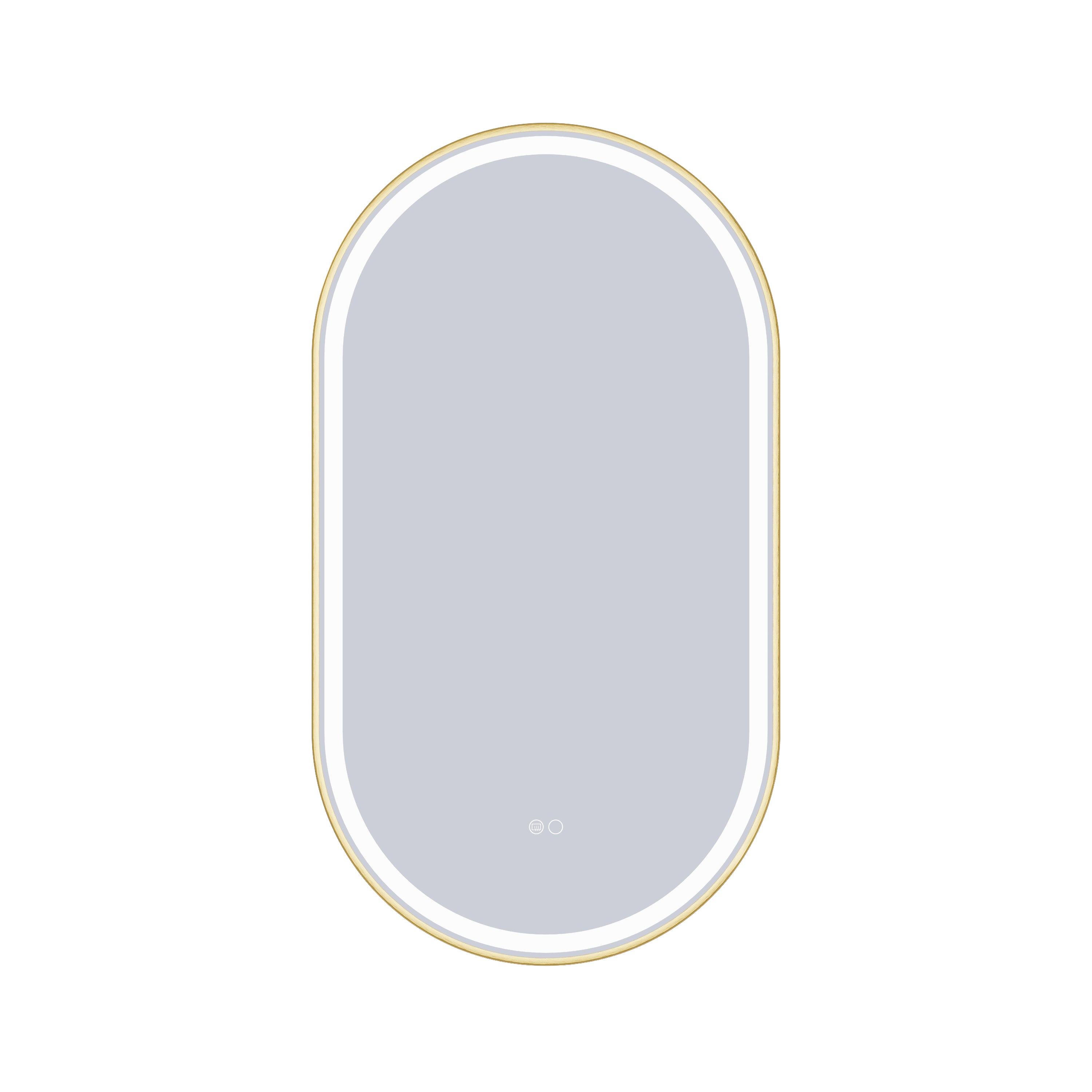
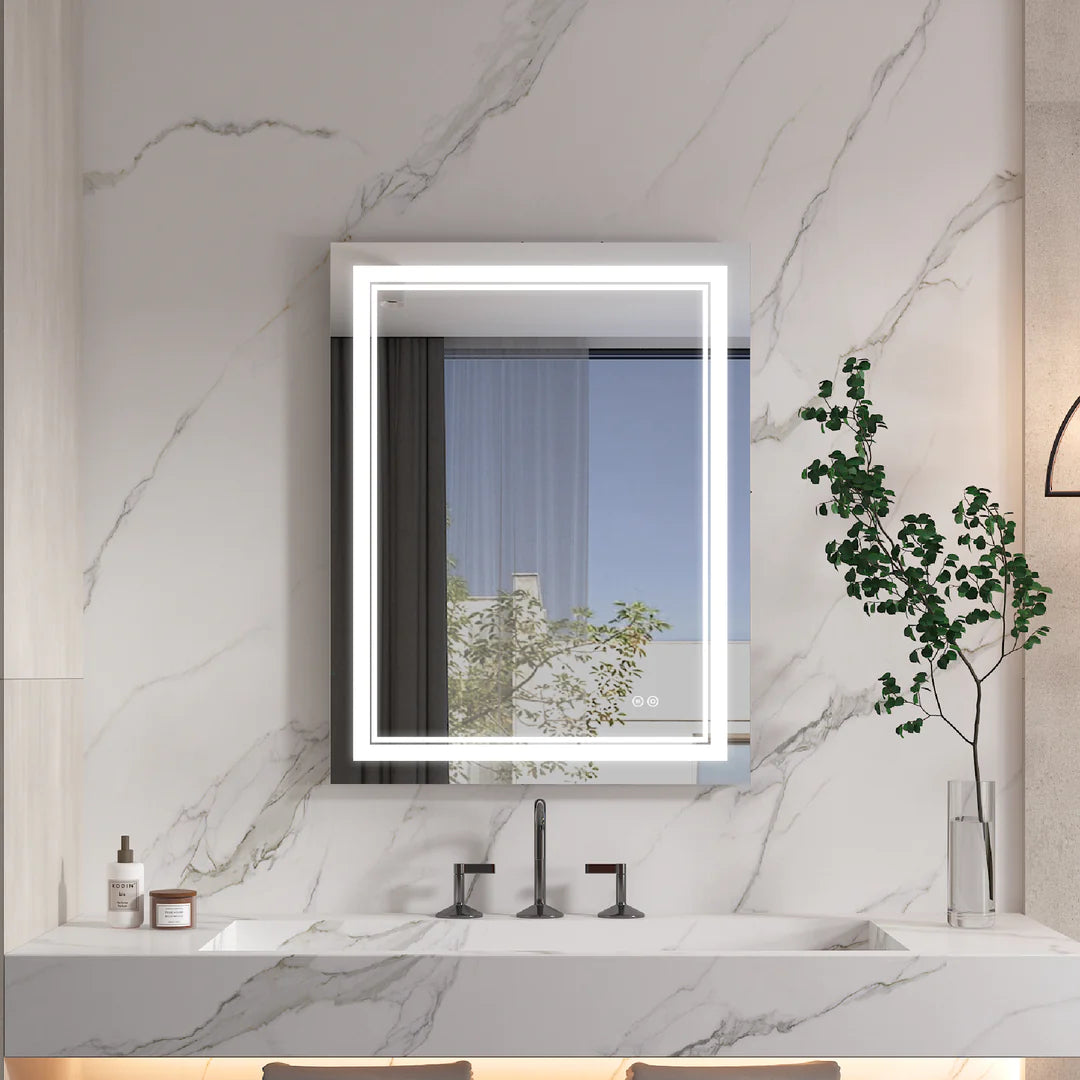
Mirrors with built-in light sources often use surround LED light strips to evenly illuminate the face. The output brightness of the 36-inch model is usually between 1200 and 2000 lumens; the 48-inch to 60-inch model can reach 2500 to 3500 lumens.
Test data shows that when the color rendering index (CRI) reaches 90 or above, facial detail clarity increases by about 20% and shadow contrast decreases by about 25%. In terms of light uniformity, integrated mirrors are more stable.
2. Wall space utilization rate
Traditional wall lamps typically require a 4-inch to 6-inch space on both sides of the mirror.
In a 30-inch to 36-inch countertop layout, this type of side light fixture will span the entire wall, creating a crowded visual impression. Mirrors with lights integrate the light source into the mirror body, reducing the need for additional installation space.
Data shows that in bathrooms with an area of less than 90 square feet, integrated mirrors can increase wall utilization by about 15%.
This advantage is particularly evident in compact spaces.
3. Installation complexity and wiring structure
Wall lights require independent power lines and coordinated positioning with mirrors.
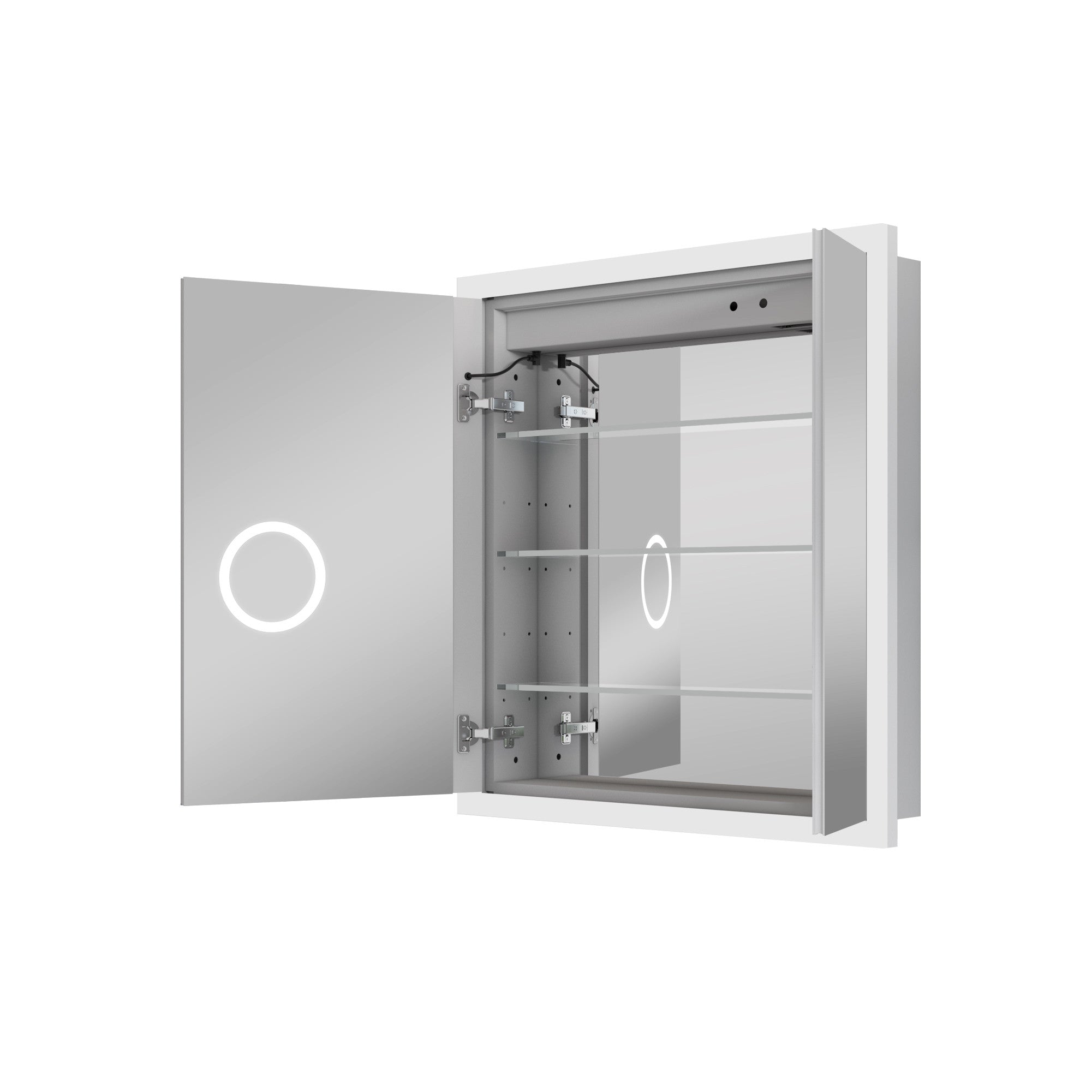
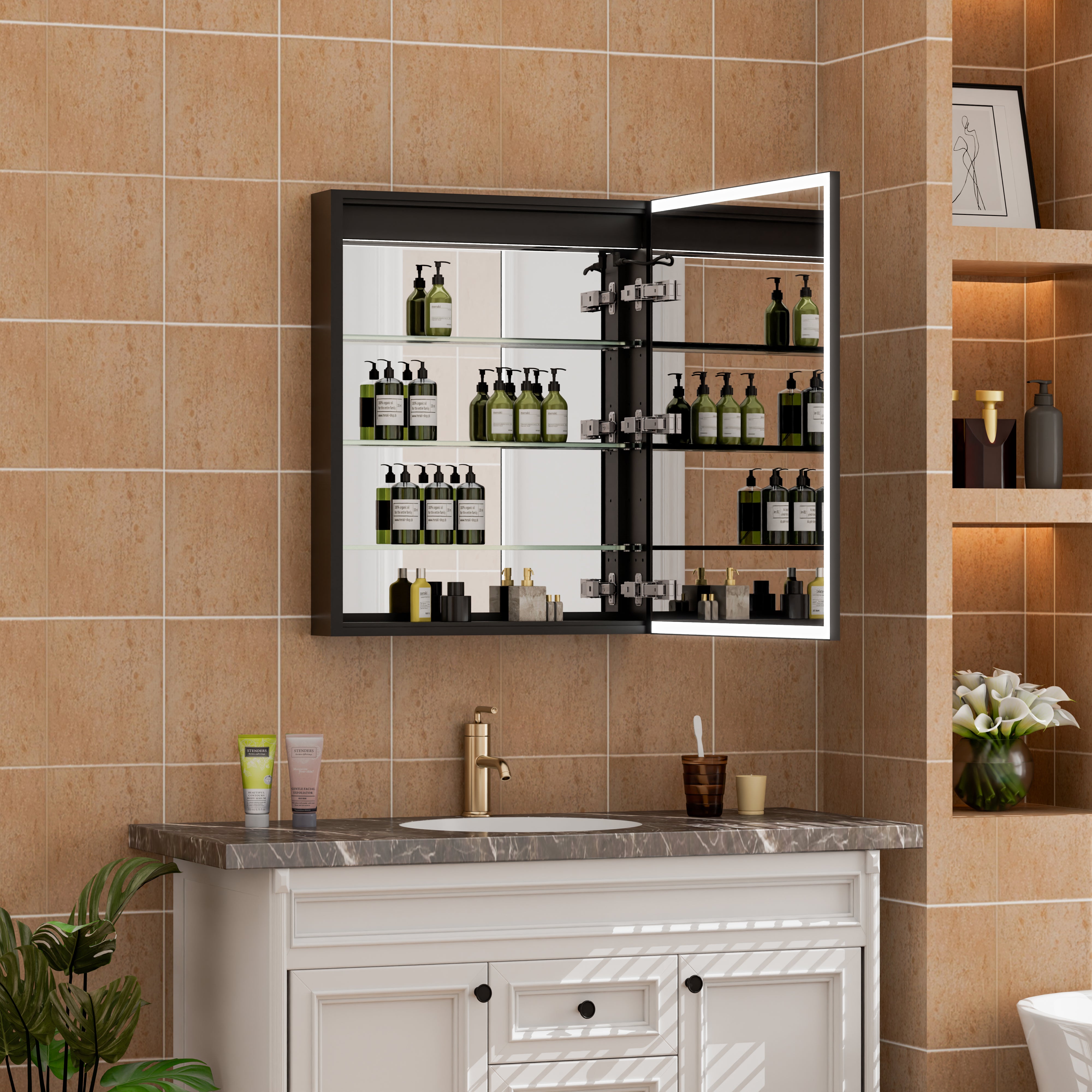
Mirrors with built-in light sources are powered via a single wiring interface, simplifying the installation structure. The embedded structure can use a 3.5-inch cavity in the wall to control the exposed depth to within 1 inch.
Data shows that in renovation projects, the installation time of integrated mirrors is reduced by an average of about 20%.
For projects that pursue construction efficiency, this is an important consideration.
4. Differential expression of design styles
Wall lamps emphasize decoration and are suitable for traditional or transitional style spaces.
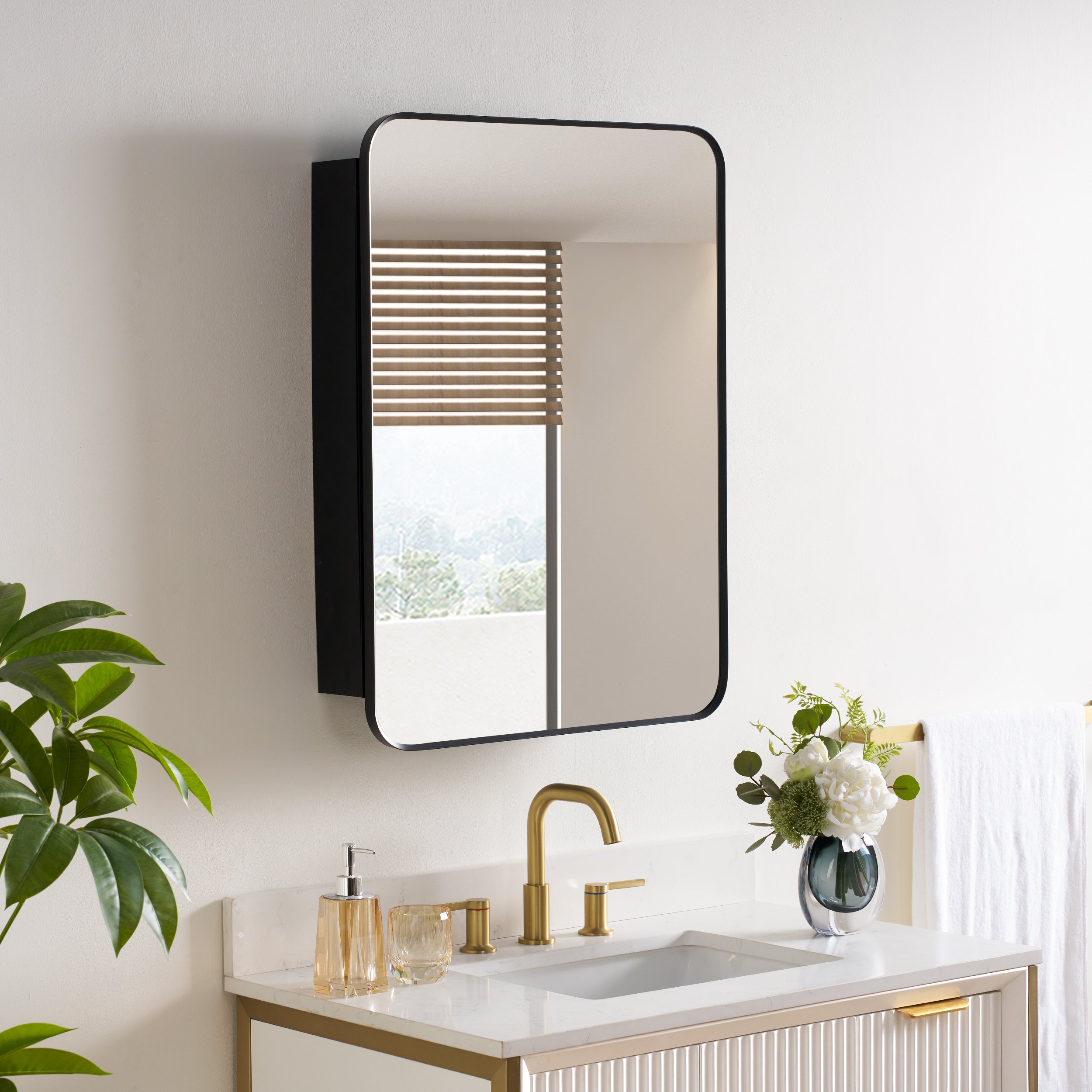
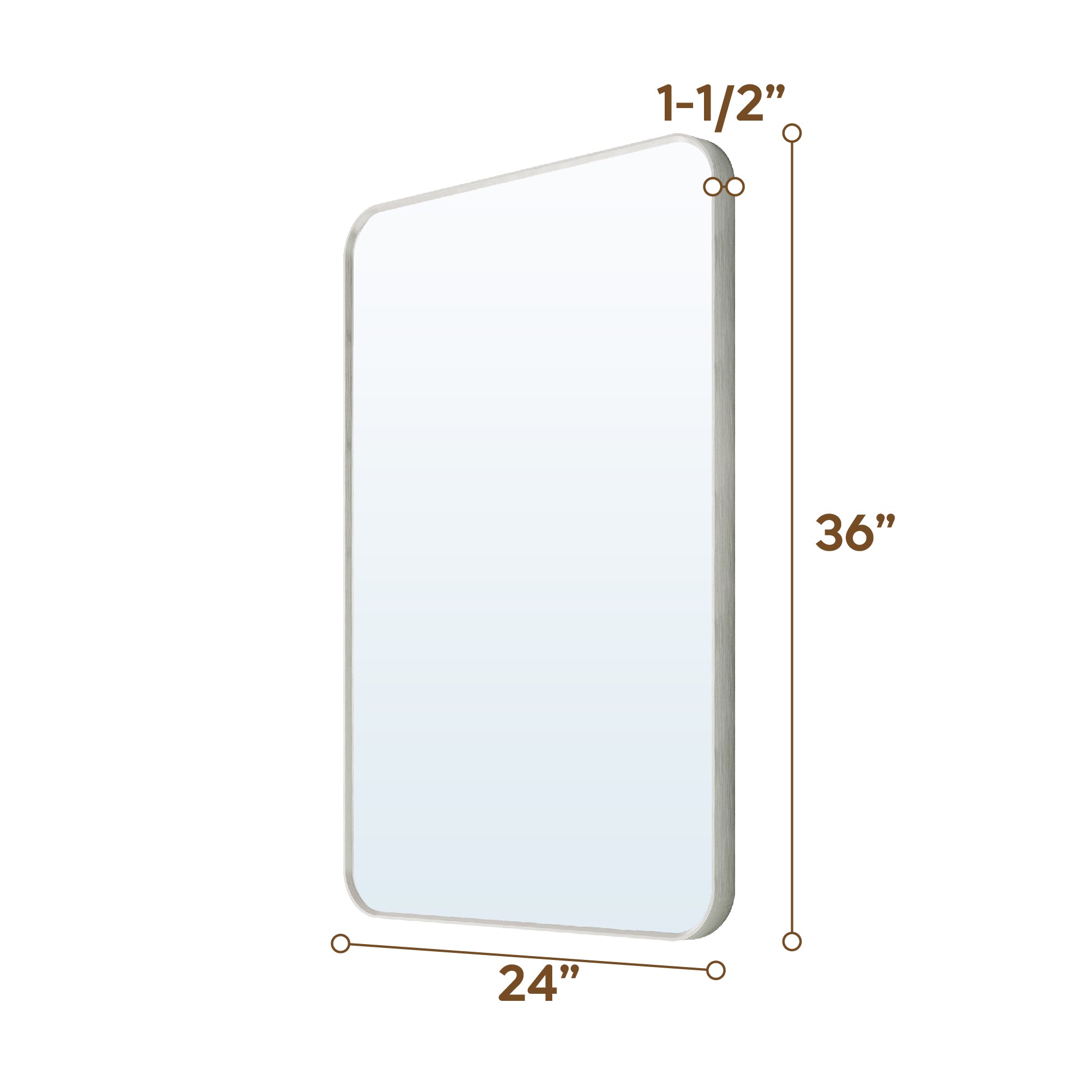
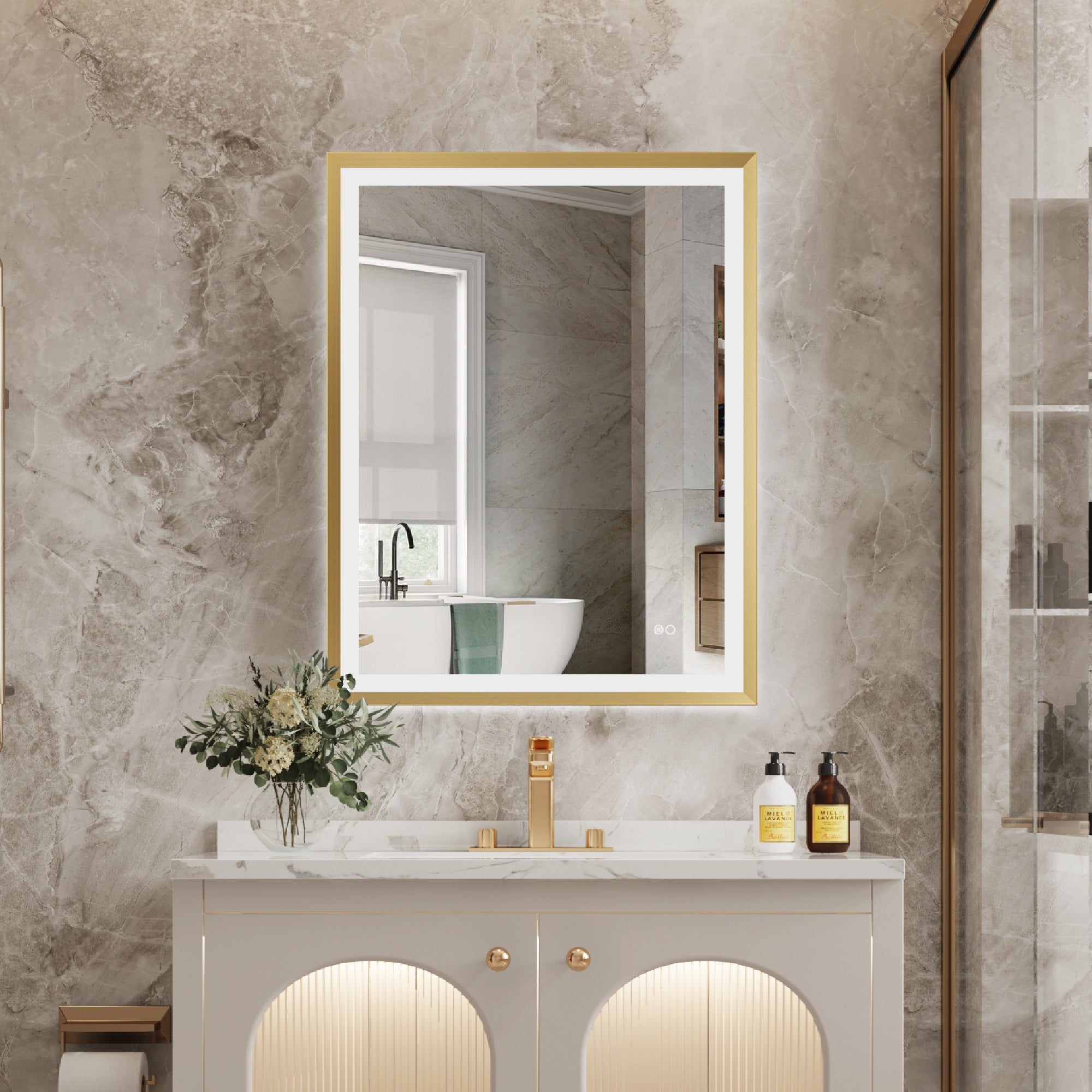
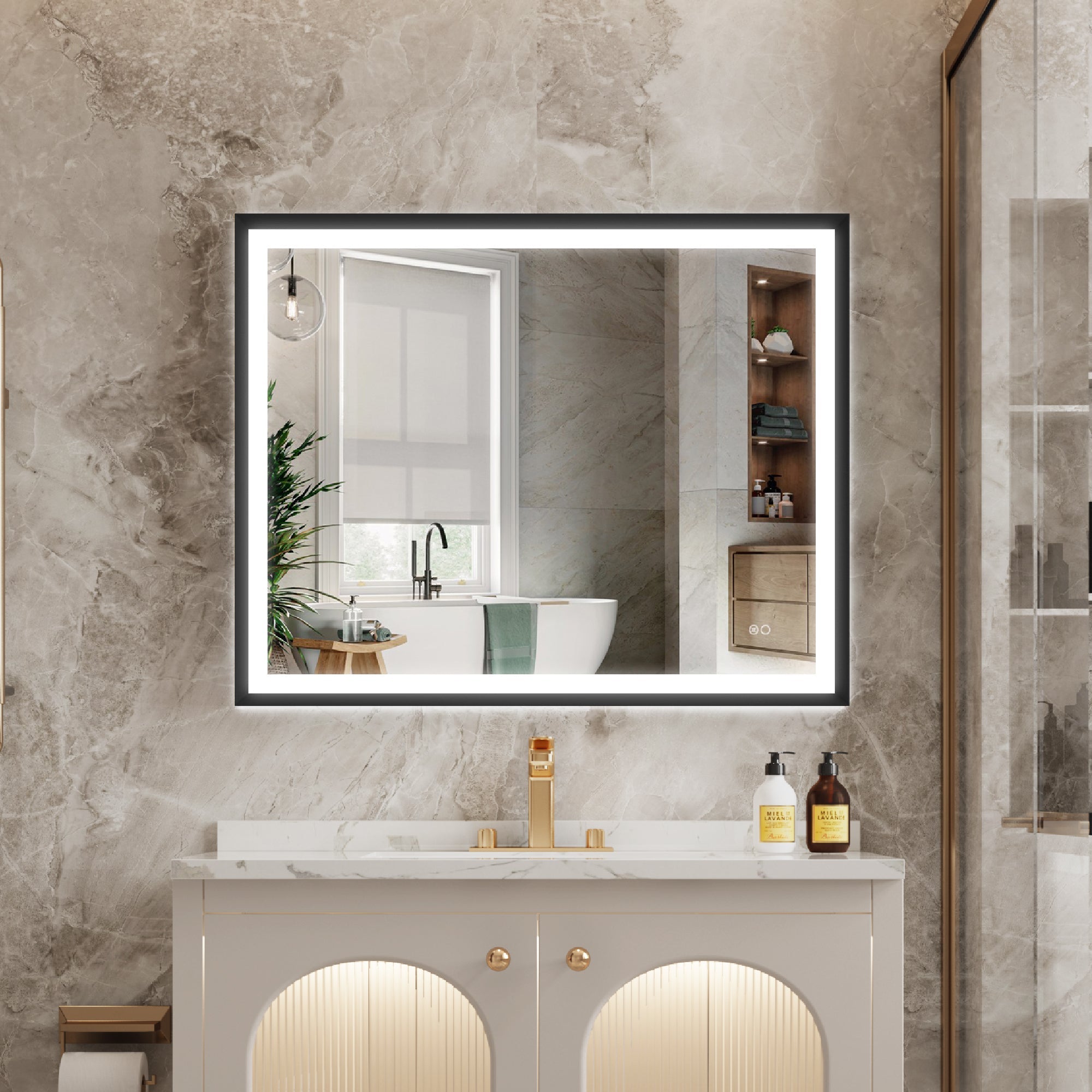
Mirrors with lights are more in line with modern minimalist style. Frameless or narrow-border designs typically have a thickness of 0.5 to 1 inch, reinforcing clean lines.
Data show that in minimalist-style spaces, the style-matching score for integrated mirrors is about 20% higher than that for wall lamp combinations.
The choice depends on the overall design direction.
5. Brightness and spatial scale matching
In the main bathroom, where the space exceeds 100 square feet, a single illuminated mirror can deliver about 2500 lumens or more, which meets task lighting needs, but it is still recommended to pair it with top auxiliary lighting.
In compact spaces with an area of less than 80 square feet, a mirror output of 1500 to 2000 lumens is sufficient for daily use.
The data shows that within a reasonable brightness range, the lighting satisfaction score has increased by about 15%.
The prerequisite for replacing wall lamps is to ensure the mirror surface is sufficiently bright.
6. Color temperature and dimming function
Modern illuminated mirrors typically support color temperature adjustment from 3000K to 5000K.
Warm-colored light is suitable for a nighttime atmosphere, while cool white light is suitable for morning tidying up. Wall lamps usually do not have a color temperature adjustment function.
Data shows that in adjustable color temperature environments, user satisfaction has increased by approximately 18%.
This flexibility makes the illuminated mirror more technologically advanced.
7. Additional value of defogging function
Wall lamps cannot solve mirror fogging, but some mirrors with built-in lamps integrate a defogging heating film that restores clarity in 2 to 5 minutes.
Data shows that in environments with humidity exceeding 75%, the clarity retention rate of mirrors with defogging function exceeds 90%.
This is an obvious feature upgrade.
8. Maintenance and long-term costs
The average power of LED light sources is between 30W and 60W, with significantly lower energy consumption than traditional light bulbs.
Data shows that compared to traditional halogen lamps, LED systems can reduce energy consumption by about 70% and have a longer lifespan.
Integrated design reduces the number of lighting fixtures and simplifies maintenance.
9. Selection strategy for dual basin layout
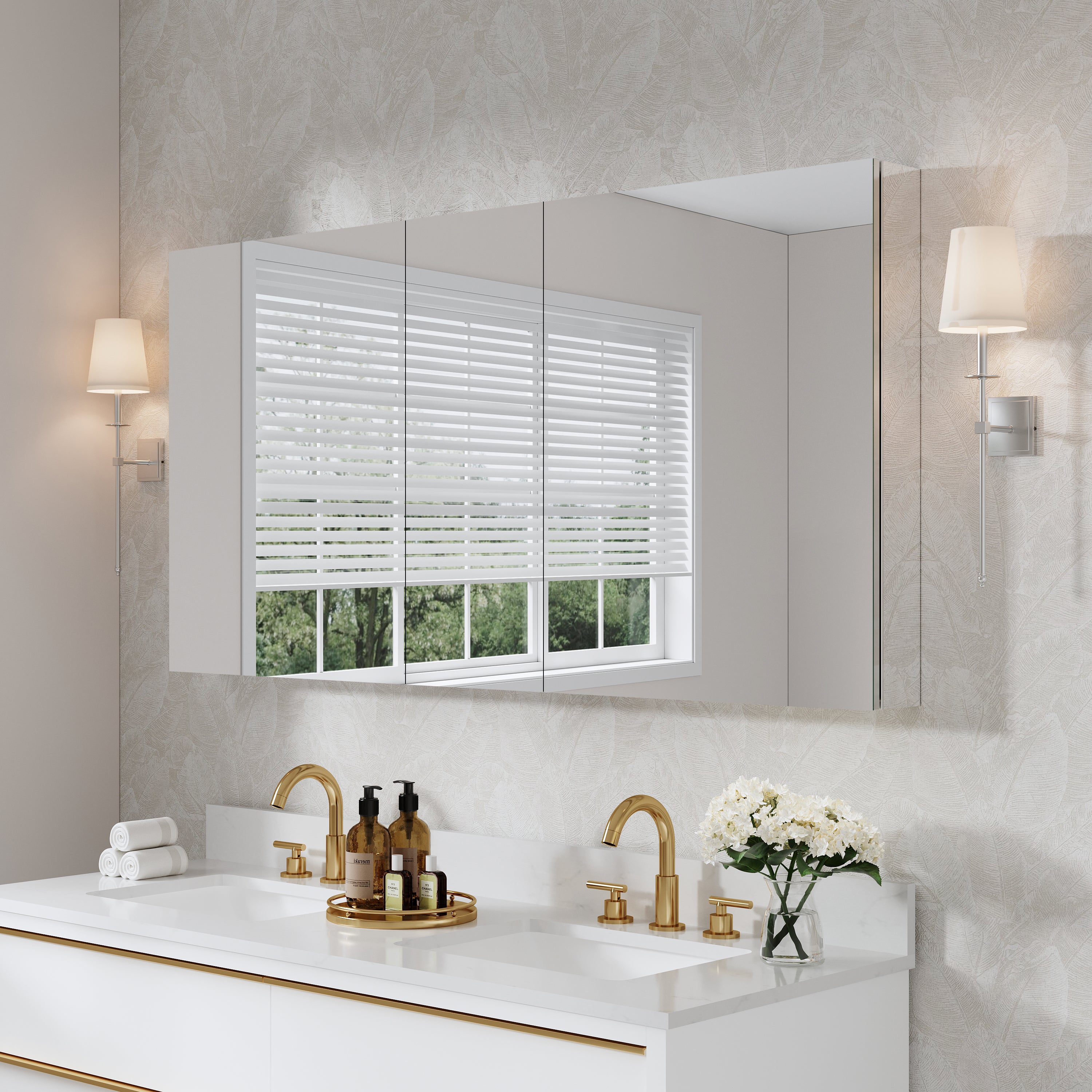
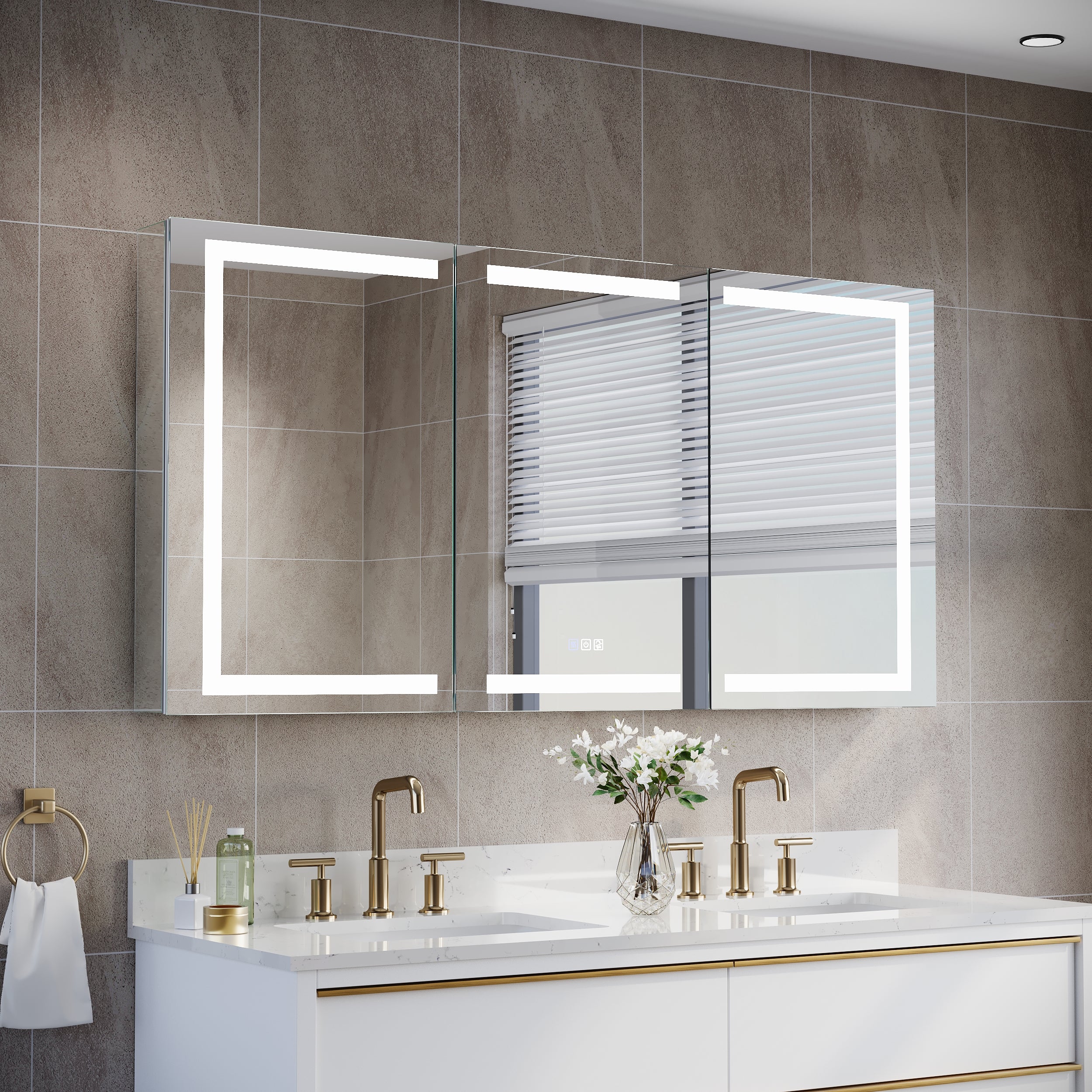
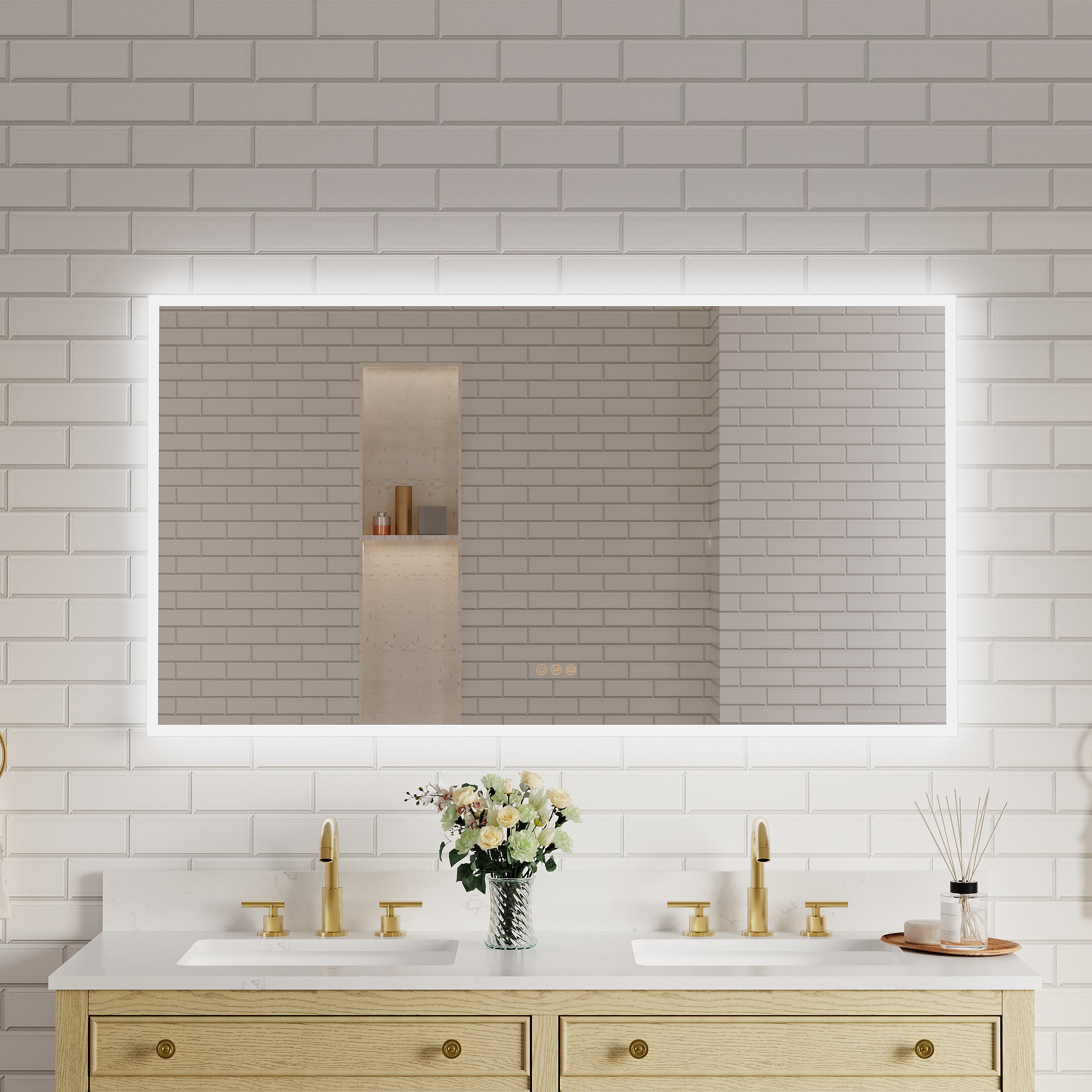
In the 60-inch double basin structure, two mirrors with lights or one full-length mirror can be selected.
Data show that in the two-person use scenario, the practical satisfaction with two independent mirrors is about 12% higher than with a single long mirror.
If the space emphasizes symmetry and order, then the overall mirror has more advantages.
10. Is it a complete replacement for wall lamps?
Although mirrors with lights have powerful functions, wall lamps still have design value in traditional spaces that emphasize decoration.
In spaces with larger areas and ceilings exceeding 8 feet, some designs still use wall lamps as auxiliary lighting.
Data show that in a mixed lighting layout, overall brightness uniformity improves by about 15%.
Therefore, whether to replace wall lamps should be judged comprehensively based on style and spatial scale.

11. Conclusion
Whether a mirror with built-in lighting can completely replace wall lamps depends on the space, brightness requirements, and design style. From the compact 1500-lumen model to the wide 3500-lumen design, every inch size and unit brightness affects the final effect. By controlling the proportion of light sources, adjusting color temperature, and integrating functionality, mirrors with built-in light sources can provide a more uniform and efficient lighting experience in most modern bathrooms. However, in layouts that emphasize decoration and layering, wall lamps still have unique expressive value. The final choice should be based on spatial scale and long-term design goals.












Leave a comment
This site is protected by hCaptcha and the hCaptcha Privacy Policy and Terms of Service apply.