














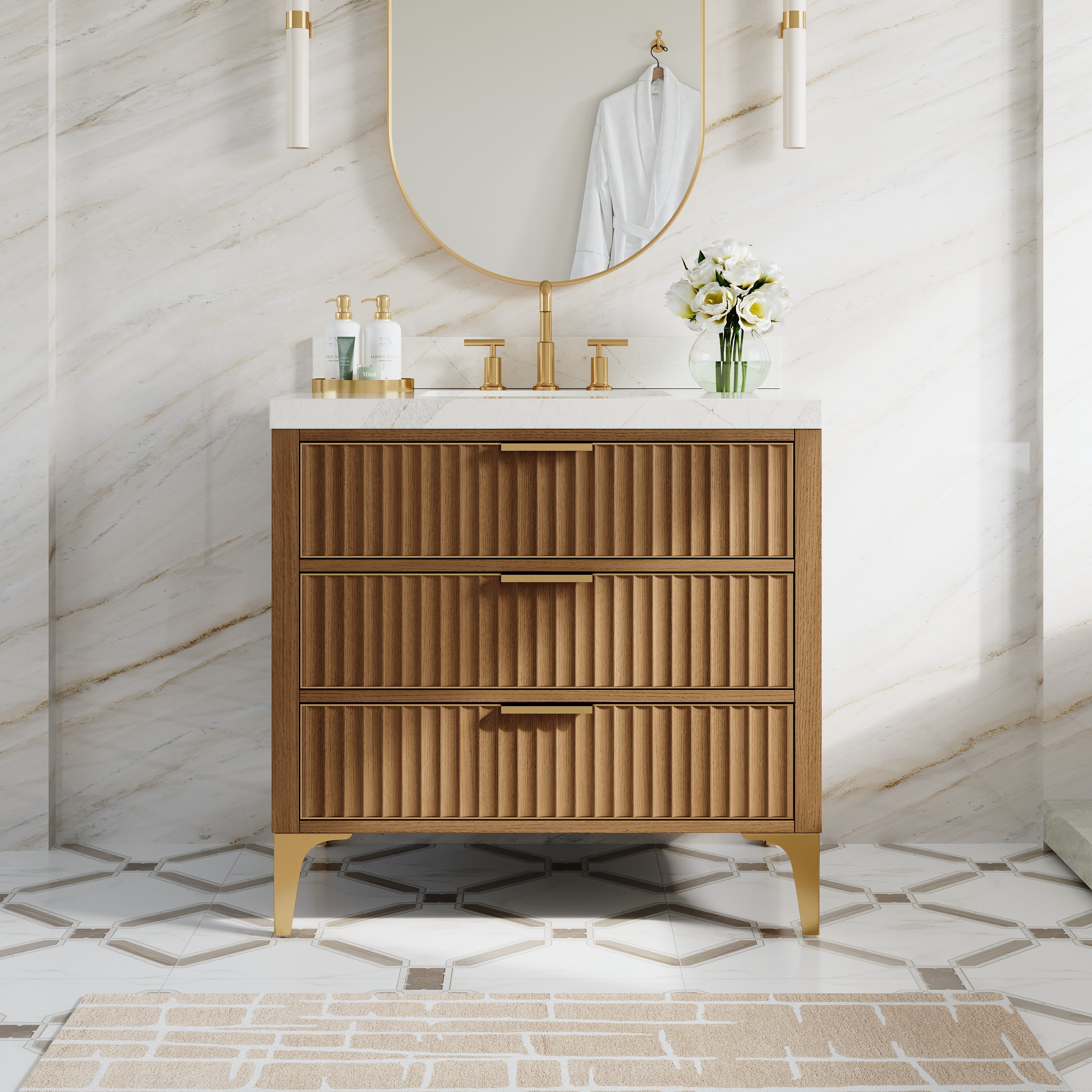
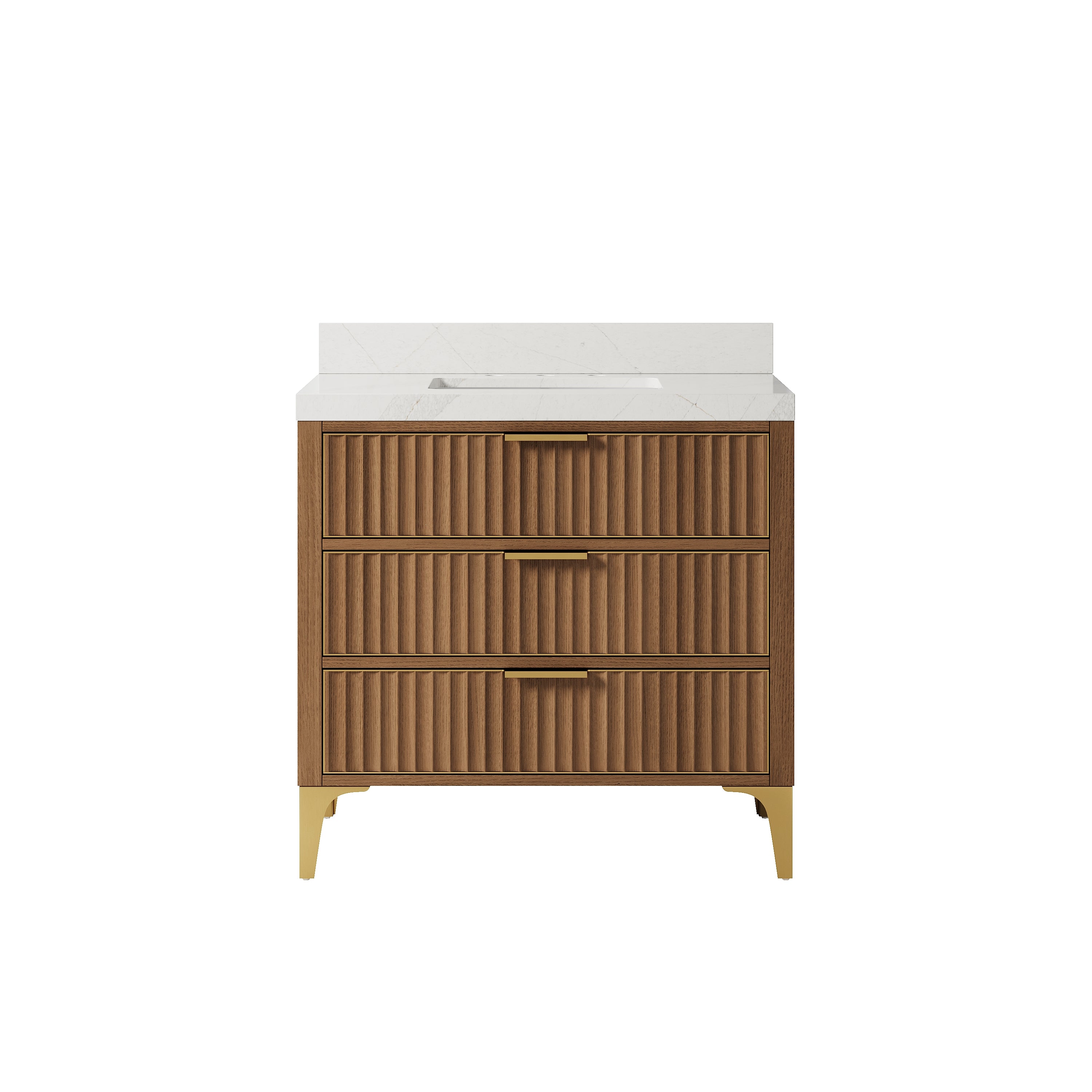
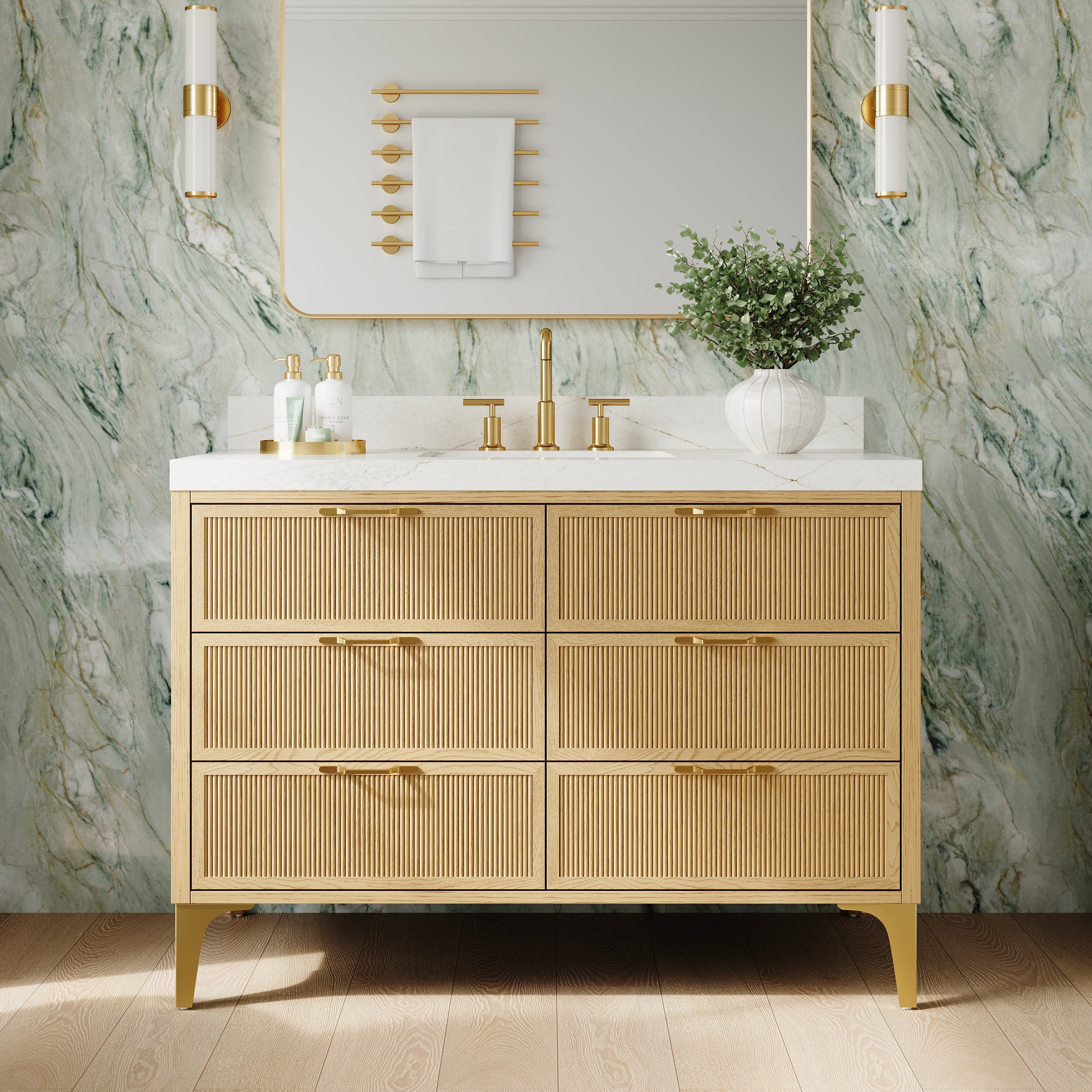
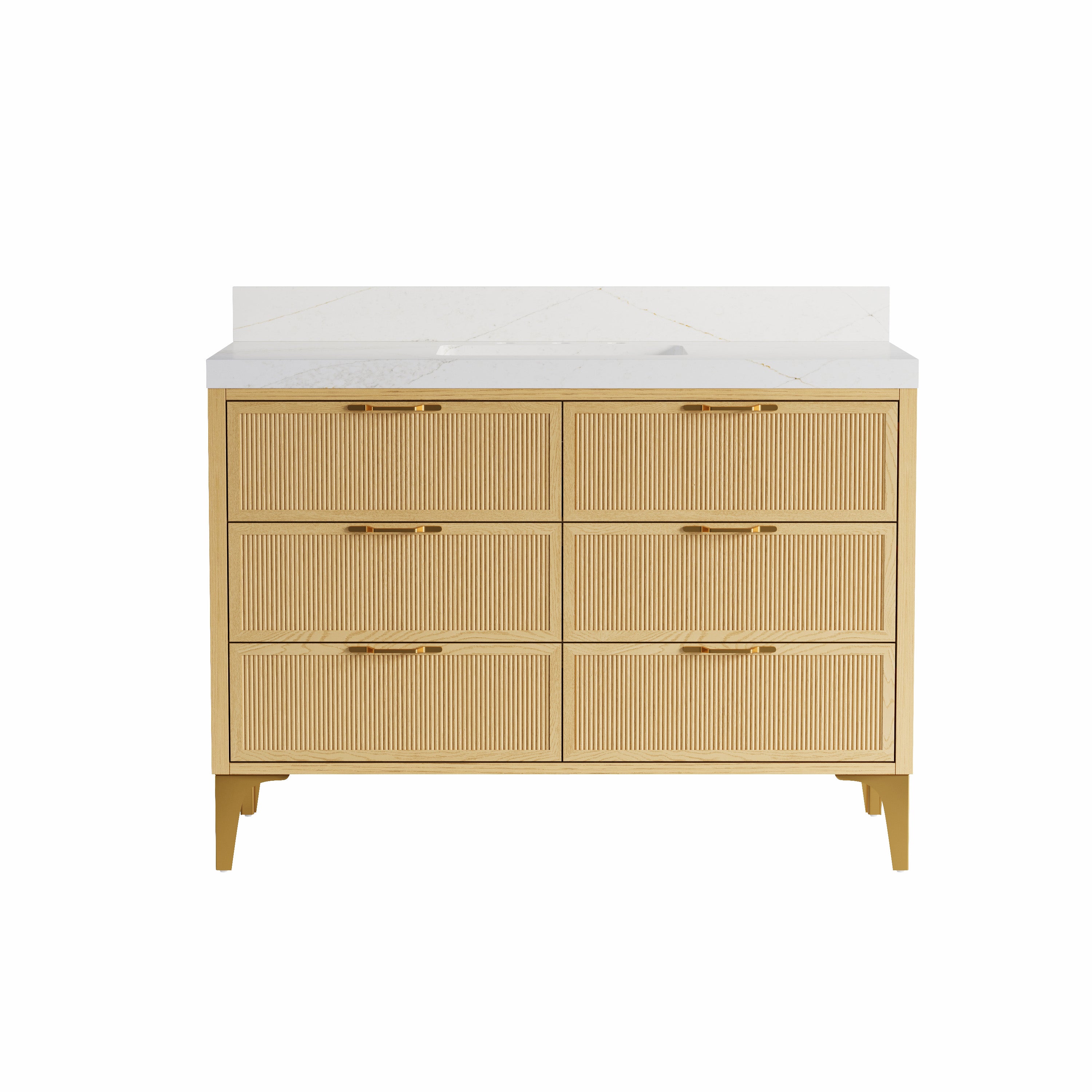


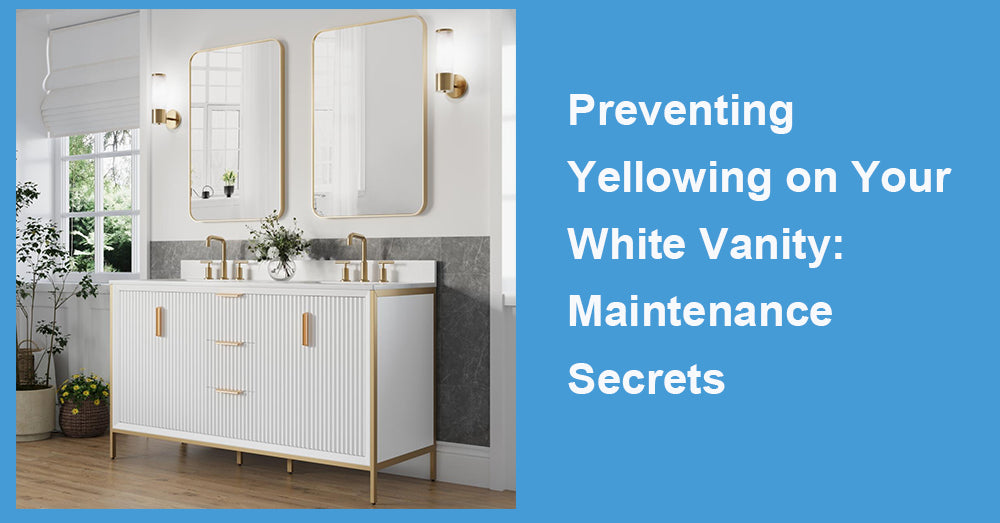
In modern bathroom design, a white vanity is widely welcomed for its clean, bright visual effect. From 24-inch compact bathroom cabinets to 60-inch dual-basin designs, white cabinets can make the space feel more spacious and complement various decorative styles. However, as usage time increases, some white bathroom cabinets may show slight yellowing or darkening. Research on material maintenance indicates that humidity, lighting, and cleaning methods in bathroom environments can all affect surface color stability. Therefore, through proper daily maintenance and environmental control, the aging process of white cabinets can be effectively delayed.
1. Why does the white bathroom cabinet turn yellow
The yellowing of white surfaces is usually not caused by a single factor, but by the combined effects of multiple environmental factors.
Firstly, there is the impact of ultraviolet radiation. Even in indoor environments, ultraviolet rays in natural light may still cause slow oxidation of coatings. The material aging test shows that the coating surface exposed to natural light for a long time may exhibit slight color differences within a few years.
Next are pollutants and oil residues in the air. For example, the chemical components in the skin care spray, perfume, and detergent may form a film on the cabinet's surface. If these residues are not cleaned promptly, the surface color may gradually change.
In addition, humidity is an important factor. When the bathroom humidity exceeds 65% for an extended period, some coating structures may undergo minor changes, which can affect gloss and color stability.
2. The influence of surface material type
White bathroom cabinets made of different materials differ in their resistance to yellowing.
For example, baked paint surfaces usually have high smoothness and strong sealing performance. This coating is formed through multi-layer spraying and curing, which can reduce pollutant penetration to some extent.
In contrast, some thin-film veneers or low-cost coatings are more prone to color change in long-term, humid environments.
Material research data shows that the yellowing resistance of multi-layer baked paint structures is usually about 20% to 30% higher than that of single-layer coatings. Therefore, when choosing a white bathroom cabinet, the quality of the coating is an important consideration.
3. The correct daily cleaning method
The simplest way to maintain the brightness of a white cabinet is to clean the surface regularly.
It is recommended to use a soft, damp cloth to wipe the cabinet and a mild, neutral cleaner. Excessive chemical cleaning agents may damage the surface protective layer.
For example, cleaning products containing bleach or high-concentration alcohol may accelerate coating aging if used for extended periods. Cleaning experiments have shown that mild cleaning agents combined with soft cloth wiping can effectively remove about 90% of daily stains without damaging the coating.
After cleaning, dry the water with a dry cloth to avoid water stains.
4. Avoid long-term accumulation of water stains
Water stains are among the most important causes for darkening on white surfaces.
Water droplets often splash onto the washbasin. If mineral residues remain after water droplets evaporate, light-colored traces may gradually form.
Especially on bathroom cabinets with widths of 36 or 48 inches, countertops are used more frequently and are more prone to this situation.
It is recommended to promptly dry the sink edges and the cabinet surface after washing hands or cleaning the countertop. Simple wiping habits can reduce water stains by about 30%.
5. Reduce direct sunlight exposure
Although bathrooms usually do not receive as much sunlight as living rooms, bathrooms with windows may still be affected by sunlight.
Ultraviolet radiation will gradually alter the coating's chemical structure, resulting in a slight yellowing of the white surface.
If the bathroom window is facing the cabinet, consider using curtains or frosted glass to reduce direct sunlight. Research has shown that reducing UV exposure can significantly slow down the aging rate of coatings.
6. Regularly check the sealing edge
The edges and seams of the cabinet are often the most easily overlooked areas.
For example, the connection between the countertop and the cabinet, the edge of the drawer, and below the door panel. If there are minor cracks in these areas, moisture may enter the internal structure.
In large bathroom cabinets with a 60-inch width, these structures have more connection points and therefore require regular inspections.
If aging or cracking of the sealant is found, timely supplementary treatment can be performed to maintain overall moisture resistance.

7. Control bathroom humidity
Humidity control is an important factor in preventing cabinet discoloration.
The ideal indoor humidity is usually between 40% and 60%. When the humidity in the bathroom is too high, the coating surface may be more prone to adsorb particles and pollutants from the air.
After showering, it is recommended to run the exhaust system for 15 to 20 minutes to allow moisture to be expelled promptly.
A well-ventilated environment can not only protect the cabinet surface but also reduce the risk of mirror fogging and wall moisture.
8. Regular in-depth maintenance
In addition to daily cleaning, regular deep care can also help maintain the brightness of white surfaces.
For example, using specialized furniture care agents for surface maintenance. These types of products typically form a thin protective film, making the surface easier to clean.
Research shows that regularly maintained furniture surfaces can extend gloss retention by about 15%.
For bathroom cabinets with high usage frequency, simple maintenance can be done every 6 months.
Conclusion
The popularity of white vanity largely stems from its clean, concise visual appeal. However, maintaining this pure white state in a humid environment requires certain maintenance skills.
By properly cleaning, controlling humidity, reducing water stains, and avoiding exposure to strong light, the problem of surface yellowing can be significantly delayed. For families who value spatial aesthetics and long-term user experience, these simple maintenance methods can help keep white bathroom cabinets fresh and elegant even after years of use.









Leave a comment
This site is protected by hCaptcha and the hCaptcha Privacy Policy and Terms of Service apply.