














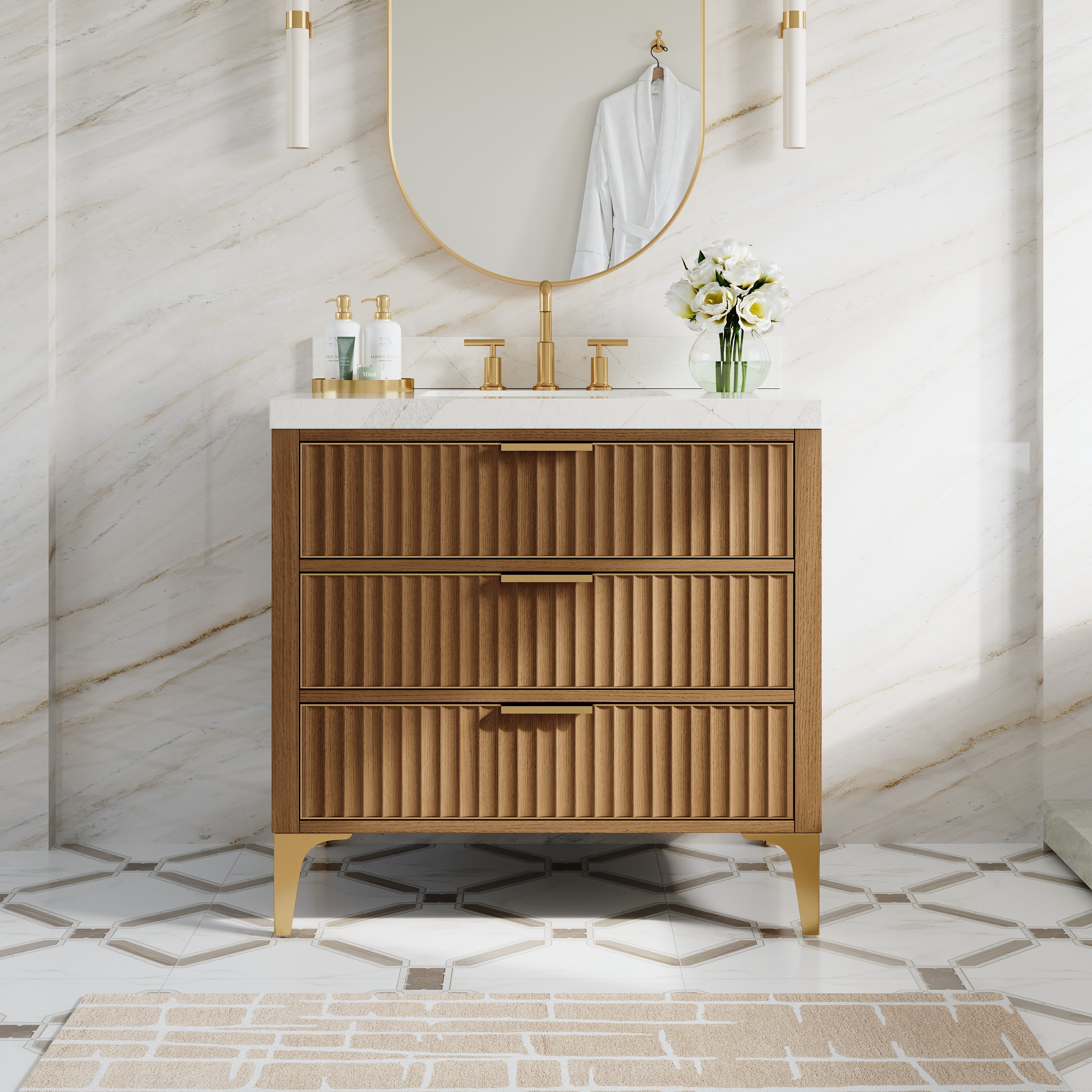
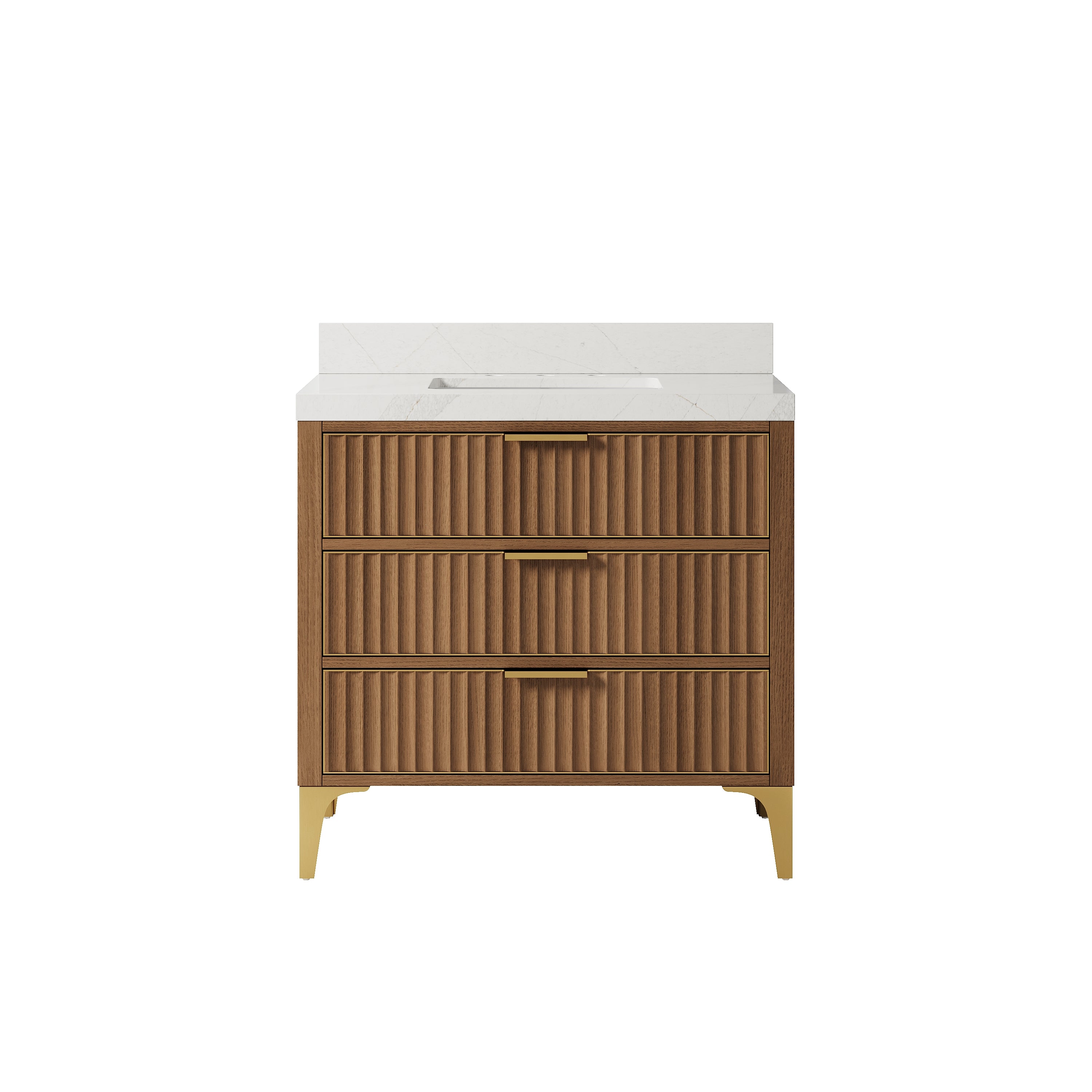
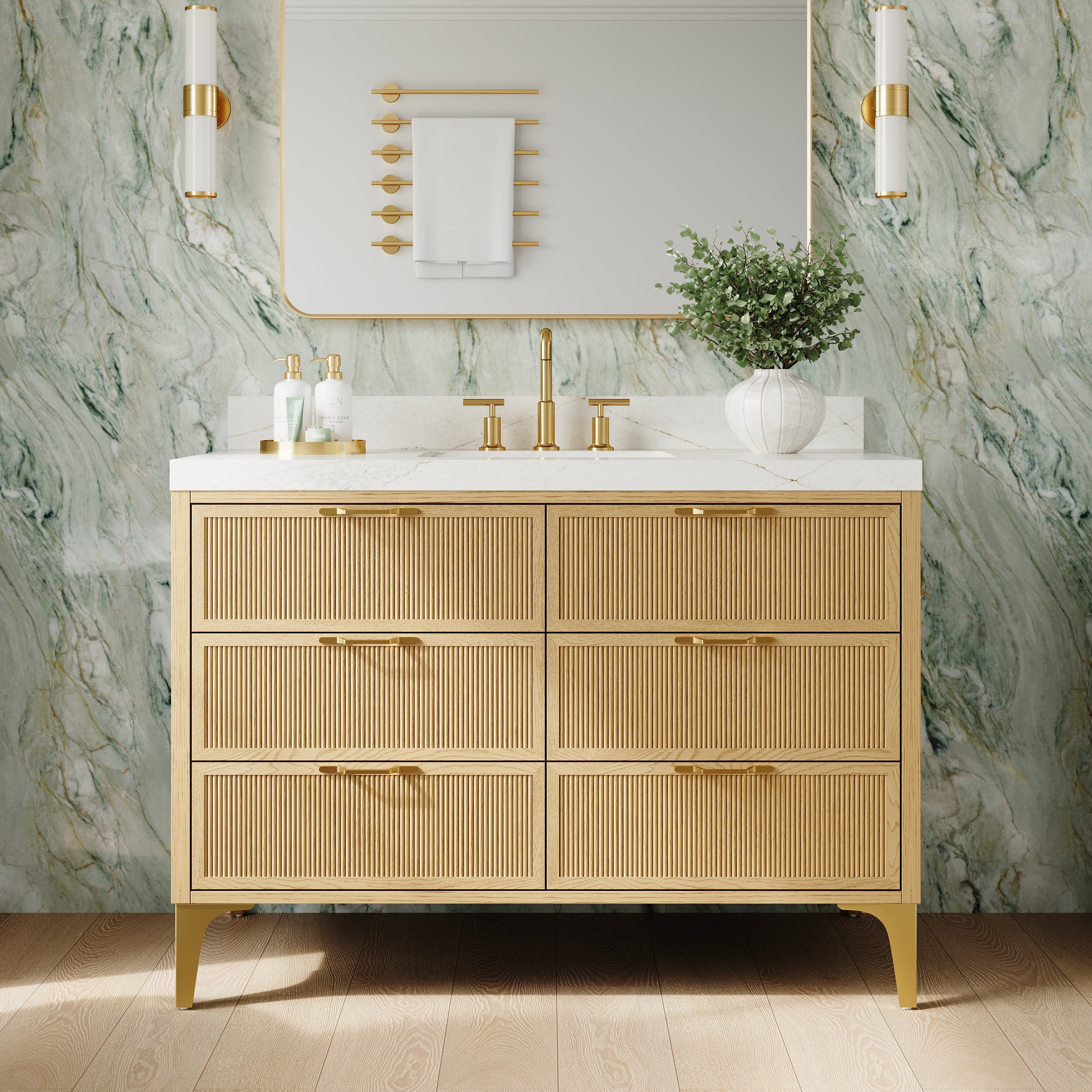
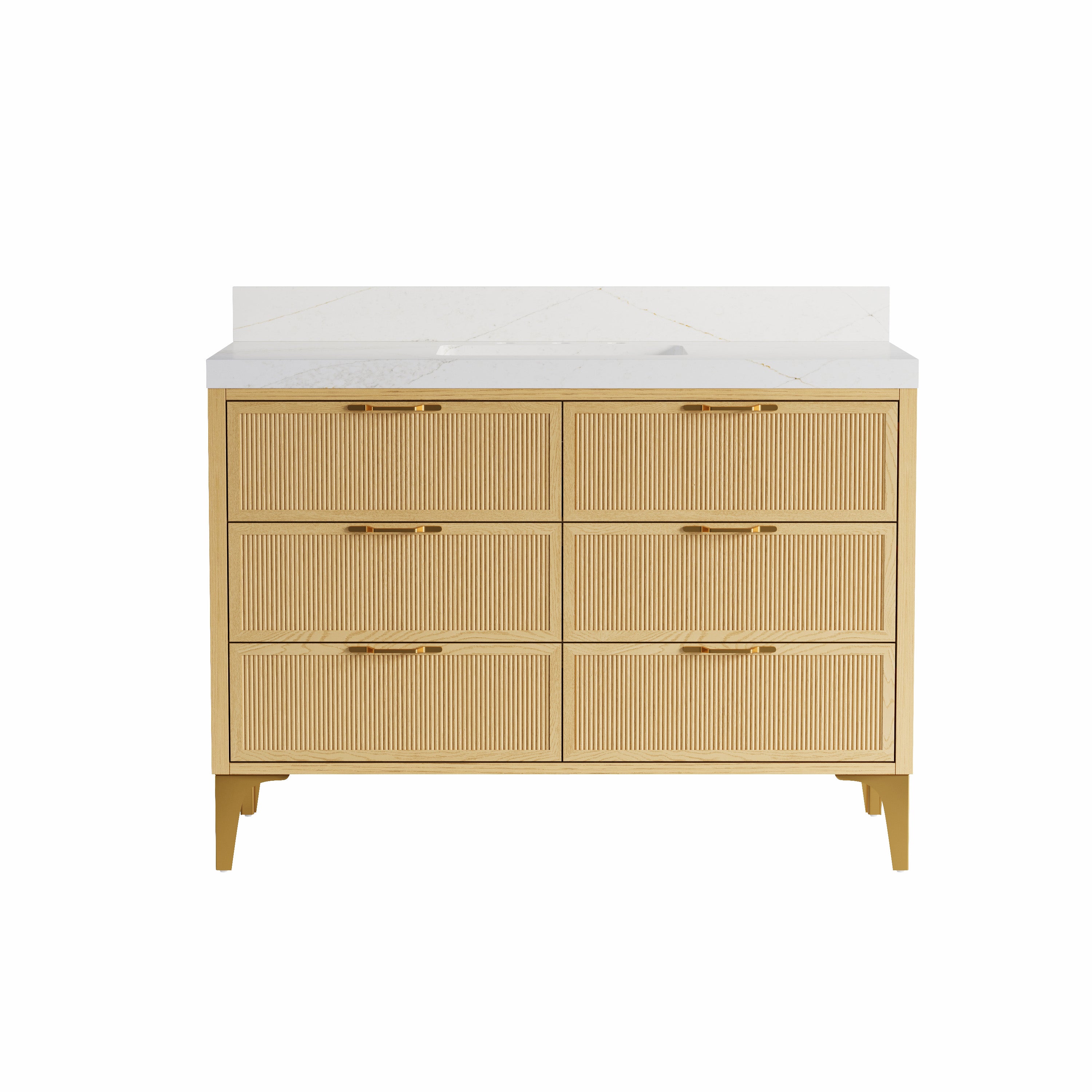


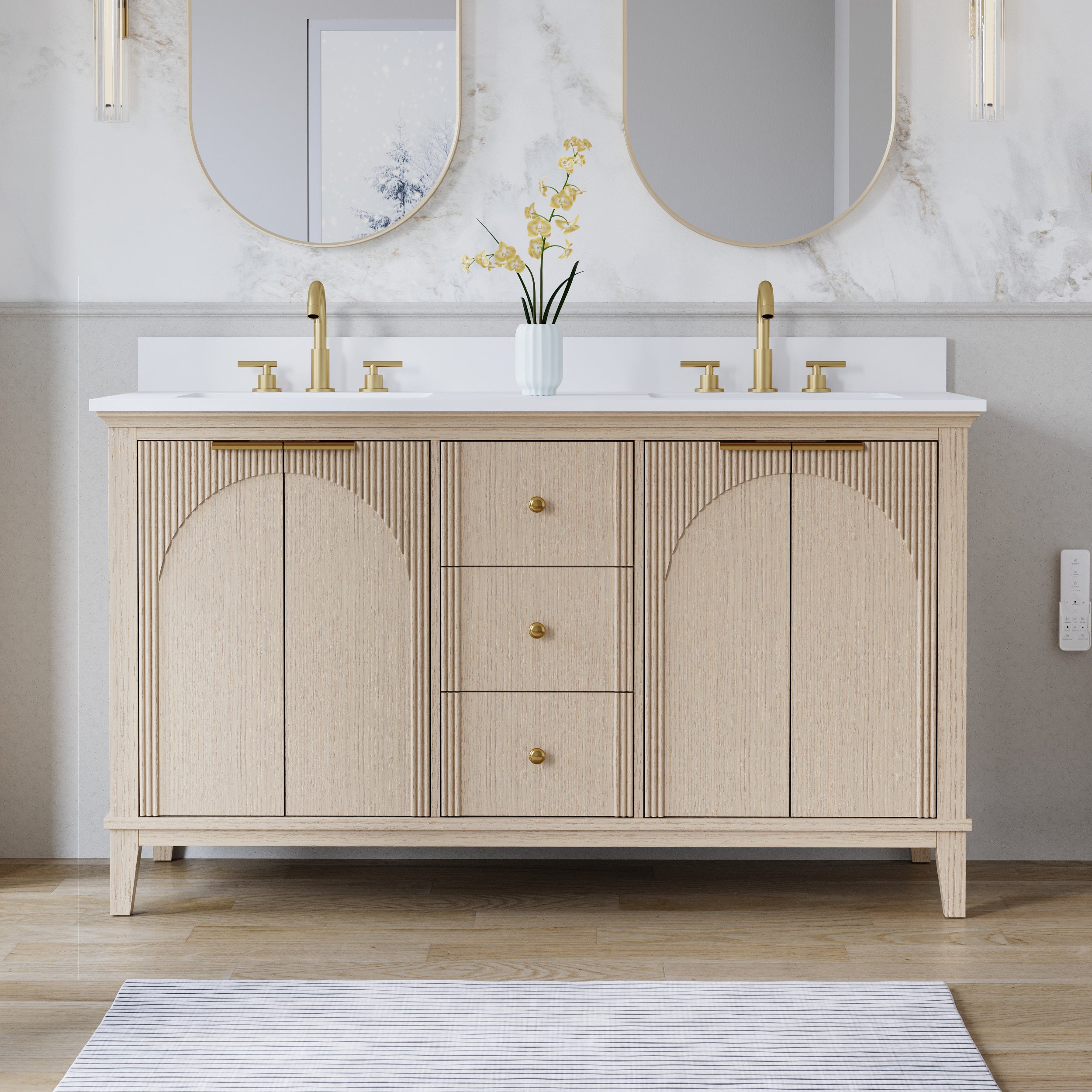
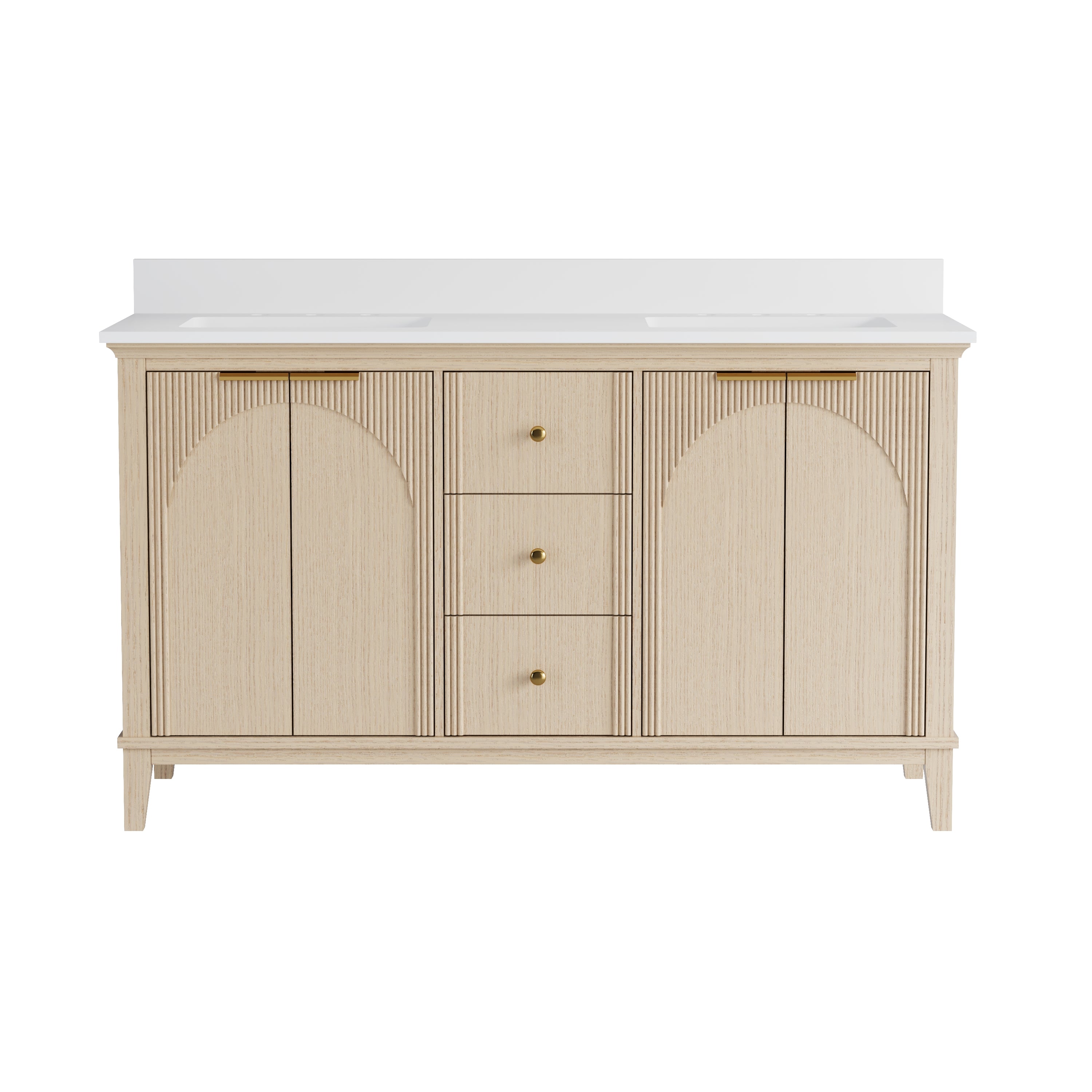
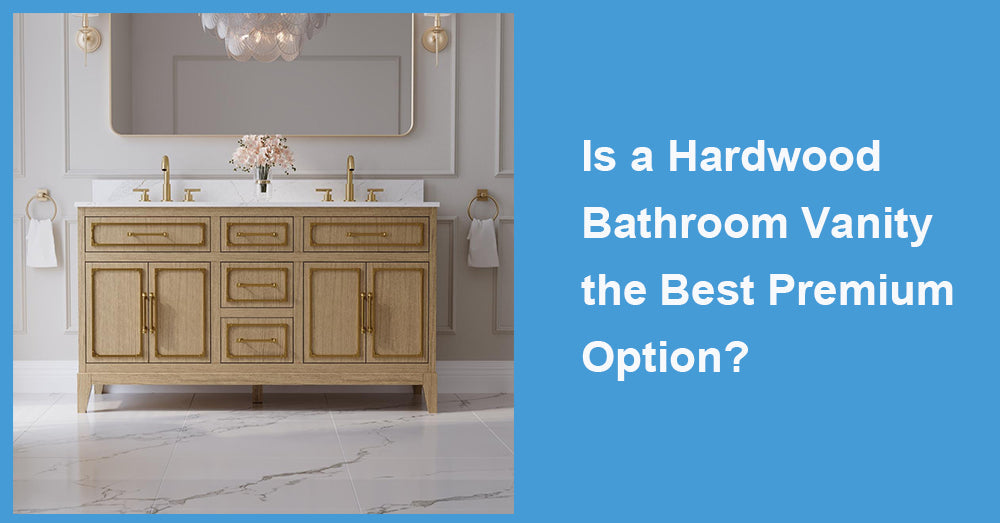
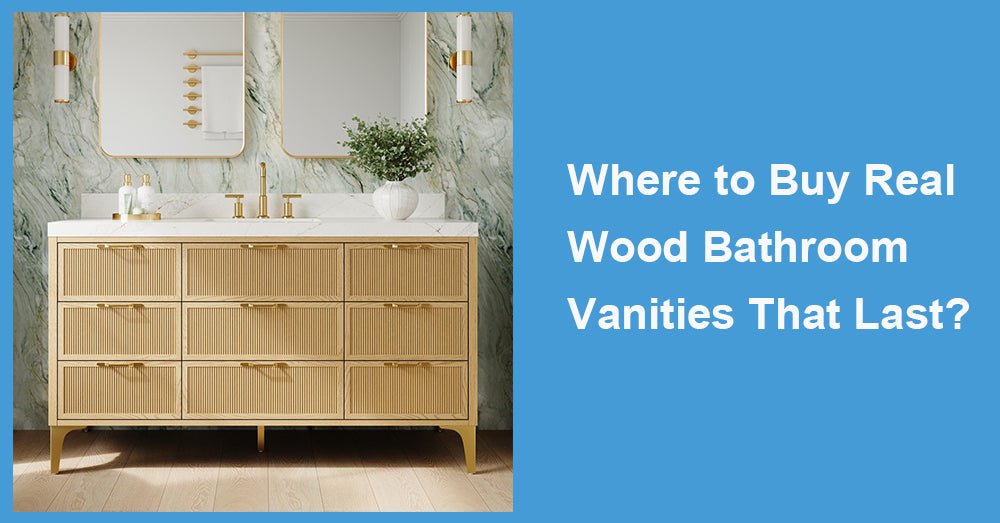
If you are shopping for a hardwood bathroom vanity, you are usually aiming for three things at once: a richer look, a sturdier “furniture feel,” and a cabinet that holds up under daily humidity and use. Hardwood can absolutely be a premium option, but it is not automatically the best one in every bathroom. The “best” choice depends on the species, the cabinet box construction, the finish system, and how well moisture is controlled in the room. When those pieces are right, hardwood’s biggest advantage is resilience over time: it resists dents better than softer woods, holds hardware securely, and can often be repaired or refinished instead of replaced.
What Counts as Hardwood, and Why It Matters
Hardwoods come from deciduous trees and are often denser than many softwoods used in cabinetry. In practical terms, density usually translates into better resistance to dents and wear on high-touch areas like door edges and drawer fronts. Popular cabinet hardwoods include oak, maple, cherry, and walnut.
But “hardwood” does not automatically mean “solid hardwood everywhere.” Many high-quality vanities use a smart combination:
· Solid hardwood for face frames and doors (where durability and appearance matter most).
· Plywood for the cabinet box (for stability and strong screw-holding).
This hybrid approach can outperform an “all solid wood” box if it is engineered and sealed properly.
The Data Side: Hardness Is Measurable
One reason hardwood is considered premium is that its dent resistance can be compared using the Janka hardness test. The Janka test measures how much force it takes to embed a 0.444 in. steel ball halfway into the wood, and results are commonly listed in pounds-force (lbf).
Examples of commonly referenced Janka values (kiln-dried, lbf):
· Hard maple: 1,450 lbf
· White oak: 1,360 lbf
· Red oak: 1,290 lbf
· Black walnut: 1,010 lbf
· Cherry: about 950 lbf
These numbers do not tell the whole story, but they help explain why maple and oak often feel more “tank-like,” while walnut and cherry prioritize refined looks with moderate hardness.
The Bathroom Reality: Moisture Is the True Stress Test
Hardwood’s real challenge in bathrooms is not normal wear. It is moisture.
Wood is hygroscopic, meaning it takes on and releases moisture depending on relative humidity and temperature, and changes in moisture content can influence wood’s performance.
That is why ventilation matters as much as material selection. EPA guidance commonly recommends keeping indoor relative humidity below 60 percent, ideally between 30 percent and 50 percent, to reduce moisture problems and mold risk.
If humidity stays high for long periods after showers, even premium hardwood can suffer from finish breakdown, swelling at edges, and long-term odor issues inside the cabinet.
Hardwood vs. MDF: Why Premium Buyers Often Avoid Fiberboard Boxes
Many budget vanities use MDF or particleboard for the cabinet box. These can look smooth and stable in dry conditions, but they are less forgiving after moisture intrusion.
A Composite Panel Association technical bulletin notes that when particleboard or MDF swells and expands beyond its original dimensions due to exposure to high humidity or water, that change is not reversible (it is not fully recovered upon re-drying).
This is the practical reason hardwood (or hardwood plus plywood construction) is often viewed as a premium durability path: one slow leak or repeated splashes at the toe-kick can permanently distort MDF-heavy cabinetry, while solid wood components are often more repairable.
What Actually Makes a Hardwood Vanity “Premium”
A premium vanity is not just the wood species. Look for these quality signals.
1. Cabinet Box Construction
A strong premium build often uses plywood panels for the box. Plywood’s layered construction helps stability, especially when humidity changes. (This is why many high-end cabinet makers use hardwood doors with plywood boxes rather than solid wood boxes.)
2. Joinery and Reinforcement
Better vanities rely on strong joinery rather than staples alone, especially at:
· Drawer boxes
· Face frame connections
· Mounting rails for wall anchoring
3. Hardware That Matches the Price Tier
Premium feel shows up in:
· Soft-close hinges
· Soft-close drawer slides
· Smooth, stable drawer travel without wobble
Hardware does not just feel better. It reduces impact stress and helps keep doors aligned over years of use.
4. Finish System and Edge Sealing
In bathrooms, finishes fail first at:
· Sink cutouts under the countertop
· Plumbing holes
· Toe-kicks and bottom edges
· Door and drawer edges
A premium vanity is sealed where you do not usually look, not only on the front.
When a Hardwood Vanity Really Is the Best Premium Option
A hardwood vanity is often the best premium choice when:
· The bathroom is used heavily every day.
· You want long-term repairability (refinishing, touch-ups, part replacement).
· You prefer a furniture-like look with real grain depth.
· You plan to keep the vanity for a long time. Many sources cite common vanity lifespans around 10 to 20 years, with good materials and care supporting longer service life.
· You are pairing with heavier tops or fixtures and want strong structural support.
There is also a remodel economics angle. The 2025 Cost vs. Value Report lists a midrange bathroom remodel with cost recouped around 80 percent (Source: Journal of Light Construction, 2025 Cost vs. Value Report).
A premium vanity does not guarantee higher ROI by itself, but bathrooms are spaces where quality is noticed quickly.
When Hardwood Might Not Be the Best Premium Choice
Hardwood may not be the smartest “premium” decision if:
· The bathroom has chronic ventilation problems you cannot fix. Keeping humidity below 60 percent (ideally 30 to 50 percent) is a real durability requirement, not a suggestion.
· You prefer a perfectly uniform painted surface. In that case, a well-built vanity with a stable engineered door panel and a high-quality paint system may deliver the look you want with fewer wood-grain telegraphs over time.
· Your budget pushes you toward “hardwood doors only” but a weak MDF box. In real bathrooms, the box material and edge sealing often matter more than the door species.
A Simple Premium Checklist Before You Buy
Use this checklist to confirm you are paying for real quality, not just a hardwood label:
· Hardwood doors and face frame (species disclosed).
· Plywood cabinet box (or clearly specified stable box material).
· Fully sealed interior and edges, including sink and plumbing cutouts.
· Soft-close hardware and sturdy drawer construction.
· A moisture plan for the room: aim for 30 to 50 percent RH, and keep it below 60 percent.

Bottom Line
A hardwood bathroom vanity can be an excellent premium option, especially when it combines dent-resistant species (like oak or maple), a stable cabinet box (often plywood), quality hardware, and thorough sealing. Hardwood’s premium advantage is not just beauty. It is long-term resilience and serviceability in a room where moisture is the real test. If you pair the right build with humidity control targets recommended by the EPA, hardwood becomes less of a luxury splurge and more of a long-horizon decision.









Leave a comment
This site is protected by hCaptcha and the hCaptcha Privacy Policy and Terms of Service apply.