














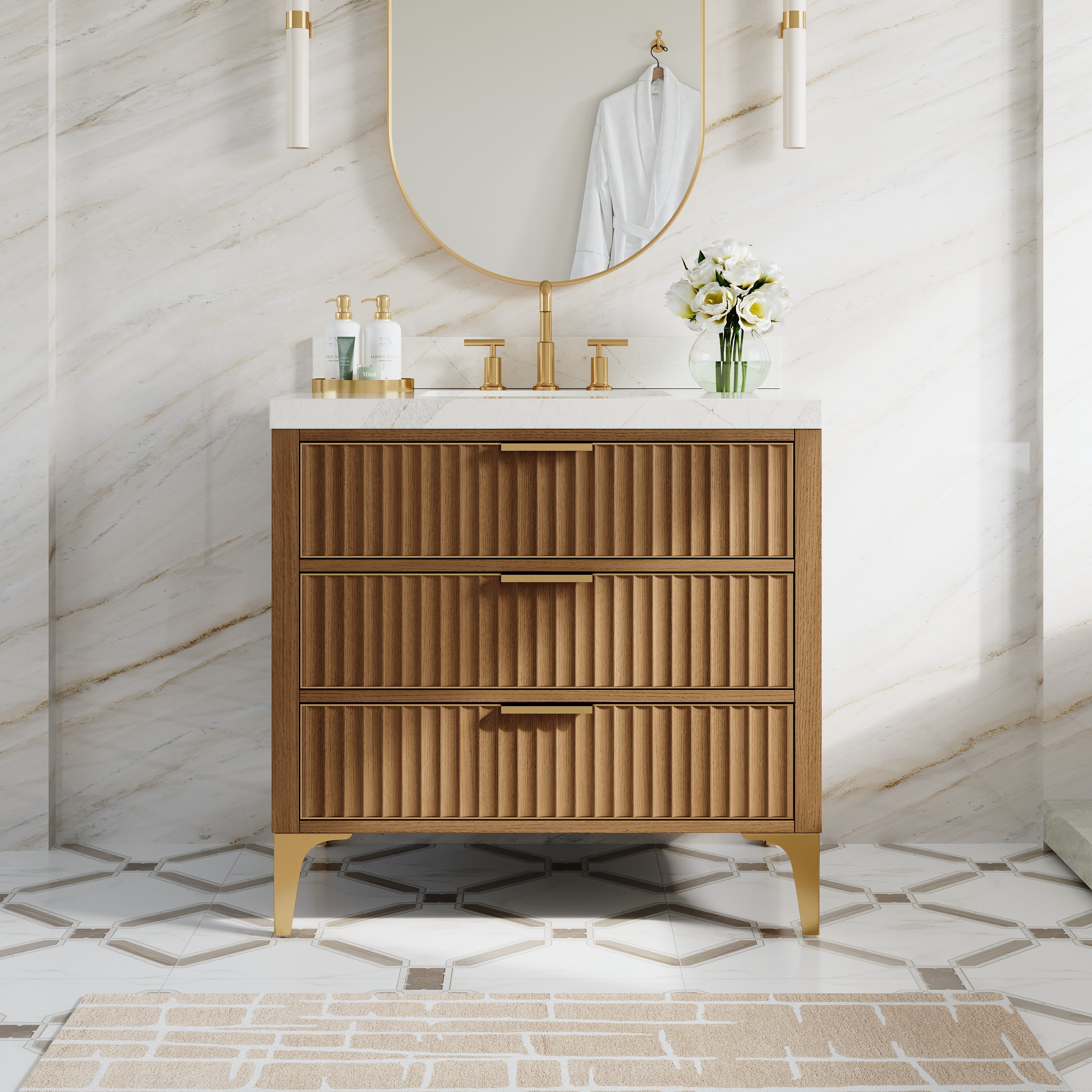
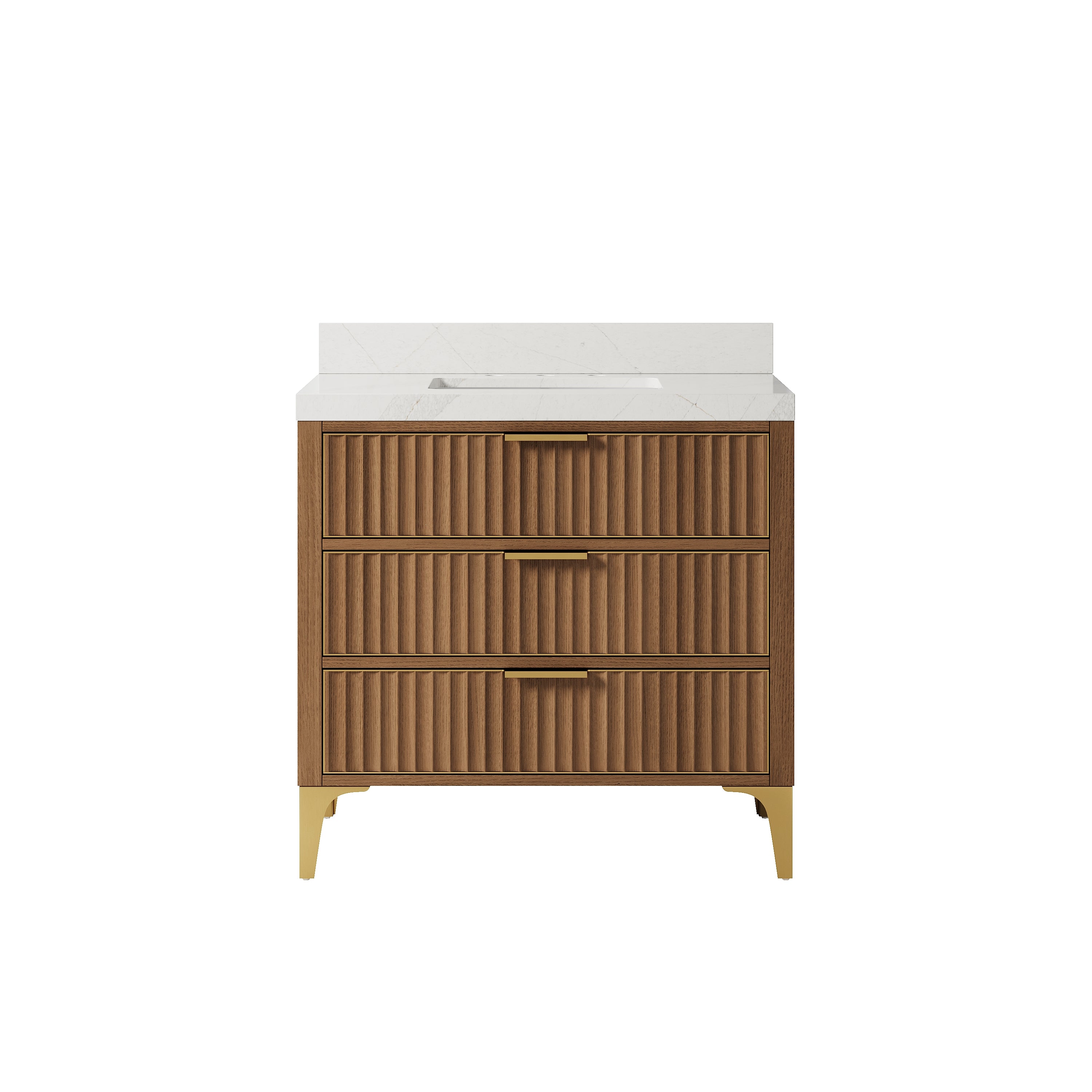
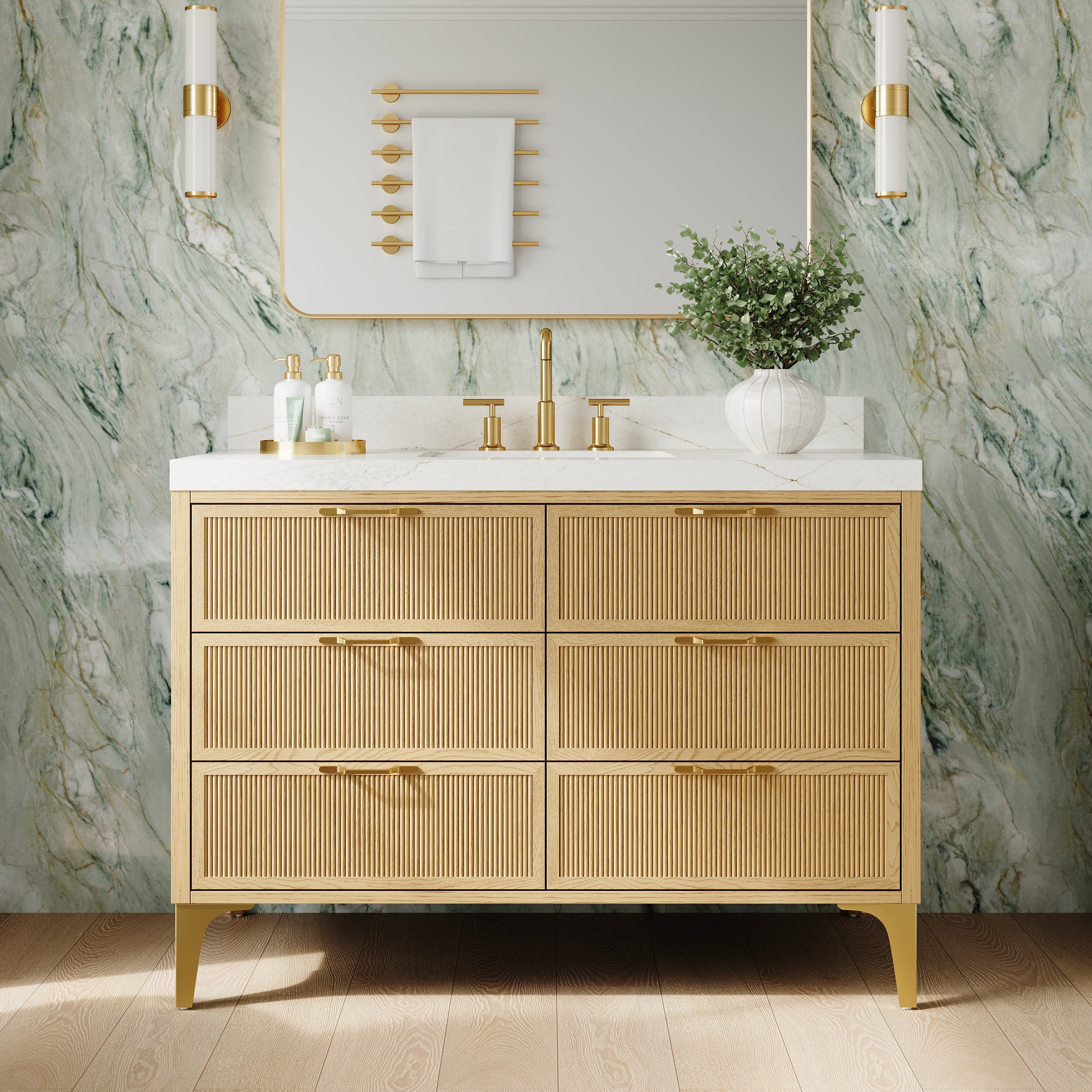
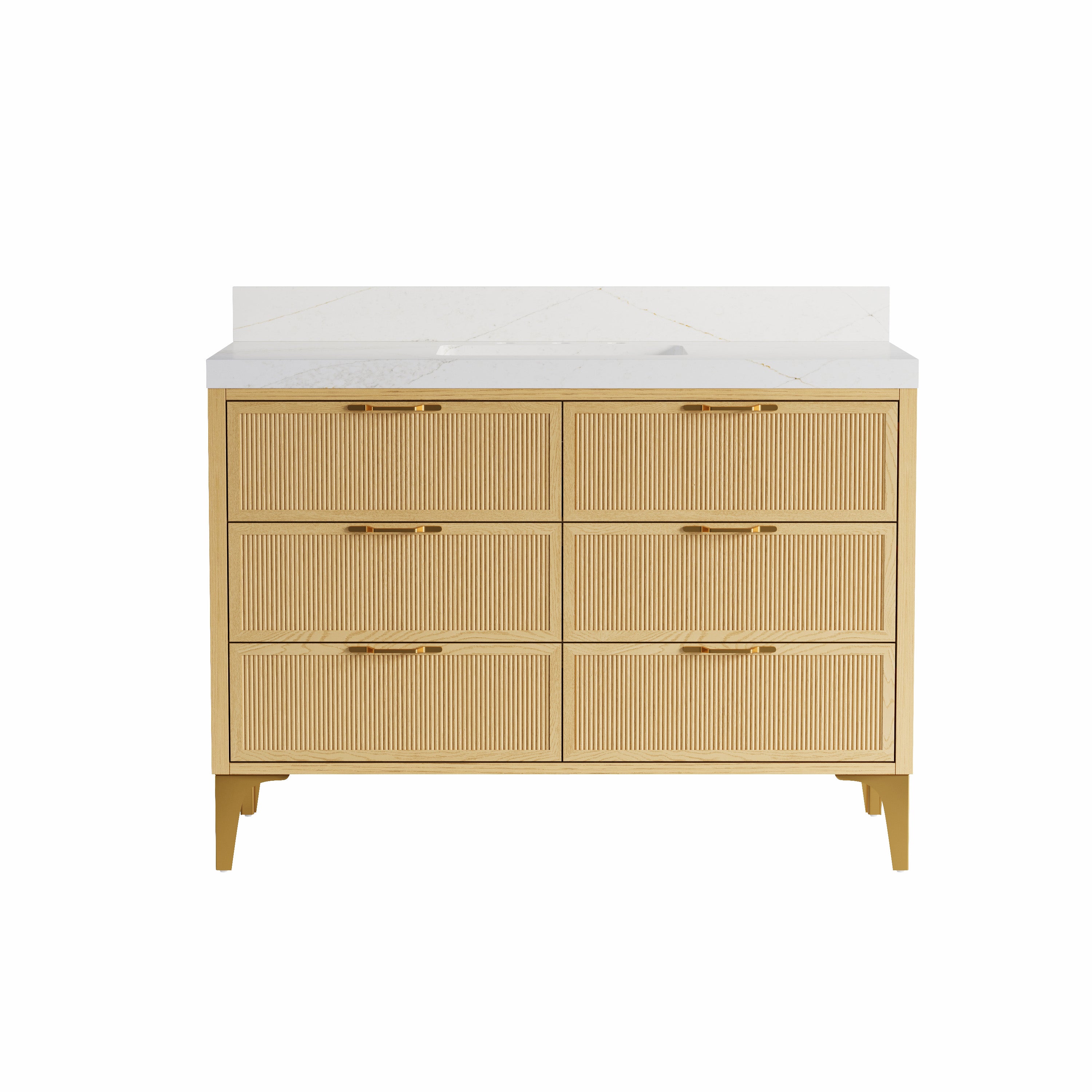


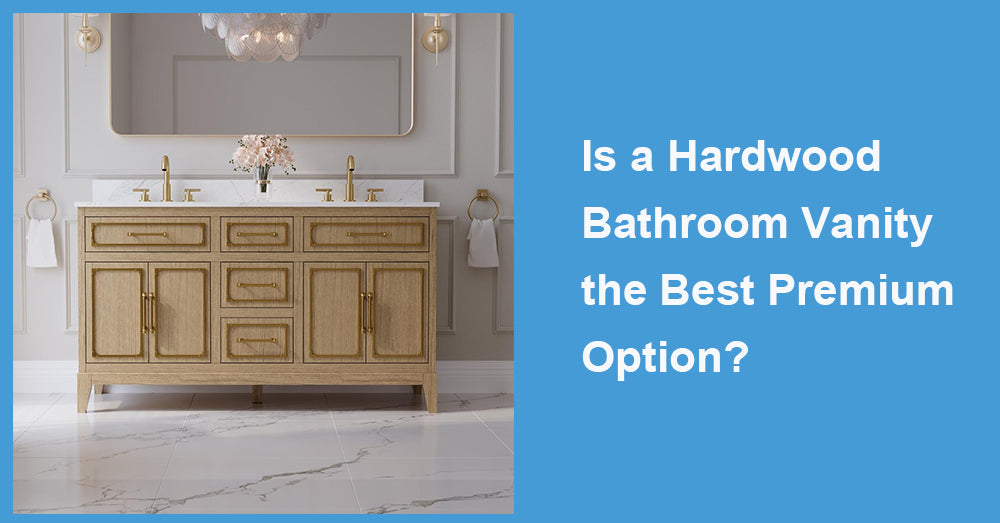
Buying a vanity can feel confusing because product pages often use “wood” as a broad marketing term. A truly real wood bathroom vanity is not defined by one label. Quality shows up in construction choices you can verify, how well the cabinet is sealed against humidity, and whether the manufacturer discloses materials in a transparent way. The goal is simple: choose a vanity that stays square, holds hardware tightly, and survives real bathroom conditions without swelling, peeling, or sagging.
1. Confirm What “Real Wood” Actually Means
“Real wood” can describe several things, and they are not equal.
· Solid wood: made from natural lumber, often used for face frames, doors, and drawer fronts.
· Plywood: layered wood veneers, typically stronger and more stable than fiberboard in cabinet boxes.
· MDF or particleboard with veneer: a wood surface over a fiber core.
Why it matters: MDF and particleboard can swell when exposed to high humidity or water, and that swelling is not reversible once expansion occurs beyond the original dimensions (Source: Composite Panel Association, Dimensional Stability Technical Bulletin).
What to do:
· Look for wording like “solid wood frame” and “plywood cabinet box.”
· Be cautious with vague phrases like “wood construction” or “engineered wood” without specifics.
2. Inspect the Cabinet Box, Not Just the Door Front
Many vanities look great from the front but use weaker materials where you cannot see them.
Quality cabinet box signals:
· Plywood side panels and bottom panel, not thin fiberboard.
· A solid back panel or reinforced mounting rails for wall anchoring.
· A cabinet that feels rigid when you gently press on the side walls.
Red flags:
· A bottom panel that feels soft or hollow.
· Thin stapled panels with minimal reinforcement.
· Unfinished raw edges inside the cabinet.
3. Check Joinery and How the Vanity Is Put Together
Joinery is a major durability predictor because bathrooms create repeated stress: drawers open and close thousands of times, doors pull on hinges, and humidity cycles tug at joints.
Higher-quality build clues:
· Drawer boxes with dovetail joints or other interlocking joinery.
· Frames that use tight joints (not gaps filled with heavy putty).
· Drawer bottoms set into grooves rather than simply stapled on.
Lower-quality clues:
· Mostly staples with little structure.
· Drawer boxes that flex easily when pulled.
4. Evaluate the Finish Like It Is a Protective Coating (Because It Is)
A bathroom finish is not just cosmetic. It is moisture armor.
Where finishes fail first:
· Around the sink cutout under the countertop.
· Near plumbing holes.
· Along the toe-kick and cabinet bottom edges.
· On door and drawer edges where water sits after handwashing.
What to look for:
· A consistent finish inside the cabinet, not just on the front.
· Smooth coverage on corners and edges (no dry, chalky, or thin areas).
· Sealed cutouts and interior seams.
Why it matters: wood exchanges moisture with its environment, and dimensional change is tied to moisture content and humidity conditions (Source: USDA Forest Service, Forest Products Laboratory, Wood Handbook chapter on moisture relations; Source: Oregon State University Extension on wood moisture relationships).
5. Use Humidity Standards as a Real-World Quality Test
Even the best vanity can fail early in a bathroom that stays damp for hours. Good products and good ventilation work together.
EPA guidance recommends keeping indoor relative humidity below 60%, ideally 30% to 50%, to protect building materials and contents (Source: U.S. Environmental Protection Agency, Moisture Control; Source: U.S. EPA Mold Course).
How to apply this when shopping:
· If the bathroom has weak ventilation, prioritize a vanity with better sealing, stronger box material, and fewer exposed seams.
· If humidity control is good, you have more flexibility in finishes and wood species.
6. Test Hardware Quality and “Feel”
Hardware is where quality becomes obvious on day one.
Look for:
· Soft-close hinges and soft-close drawer slides.
· Drawer action that feels smooth and stable, not wobbly.
· Doors that sit evenly with consistent gaps.
Why it matters: a cabinet can be “wood,” but if the box twists or fasteners loosen over time, doors sag and drawers rub. Stronger materials and better construction help hardware stay aligned.
7. Learn to Spot Veneer, Laminate, and Painted MDF
There is nothing inherently wrong with veneer or MDF in controlled conditions, but you should know what you are buying.
Quick identification tips:
· End grain check: solid wood shows natural end grain at edges (often visible on the back of doors or inside corners). Veneer and laminate typically do not.
· Grain continuity: solid wood grain will vary naturally. Printed patterns can look repeated and too perfect.
· Edge banding: thick edge banding can signal a manufactured core underneath.
Remember: MDF and particleboard are most vulnerable at edges and seams. Once they swell beyond original dimensions from moisture, they may not fully recover (Source: Composite Panel Association).
8. Ask About Material Compliance for Composite Components
Even “solid wood” vanities often include composite parts (drawer bottoms, back panels, shelves). Composite wood products such as hardwood plywood, MDF, and particleboard are covered by TSCA Title VI formaldehyde emission standards, and after March 22, 2019, regulated composite wood products (including finished goods containing them) must be labeled as TSCA Title VI compliant (Source: U.S. Environmental Protection Agency).
What to do:
· Ask customer support what composite materials are used (if any).
· Look for compliance statements or labeling language on documentation.
This is not only about indoor air, it is also a transparency signal: brands that document materials clearly are often more consistent in manufacturing.
9. A Simple Scorecard You Can Use Before Buying
Use this quick checklist to judge “real wood bathroom vanity” quality without getting lost in marketing:
· Cabinet box: plywood or solid wood structure, feels rigid.
· Doors/face frame: solid wood, not only a thin veneer over fiberboard.
· Finish: sealed edges, sealed cutouts, consistent interior coating.
· Joinery: drawers and frames built with structural joints, not staples alone.
· Hardware: soft-close, smooth travel, minimal wobble.
· Moisture plan: ventilation keeps humidity below 60%, ideally 30% to 50% (Source: U.S. EPA).
· Transparency: clear material listing and TSCA Title VI compliance where composite wood exists (Source: U.S. EPA).

Conclusion
A high-quality real wood bathroom vanity is not defined by one word in a product title. It is defined by verifiable construction: a strong cabinet box, solid joinery, a finish system that seals vulnerable edges, and hardware that stays aligned over time. If your bathroom runs humid, moisture control matters just as much as material choice, and keeping indoor humidity below 60% (ideally 30% to 50%) protects the vanity and the room (Source: U.S. EPA). If you apply these checks, you can confidently separate genuine quality from “wood-looking” shortcuts and buy a vanity that holds up for years.











Leave a comment
This site is protected by hCaptcha and the hCaptcha Privacy Policy and Terms of Service apply.