
















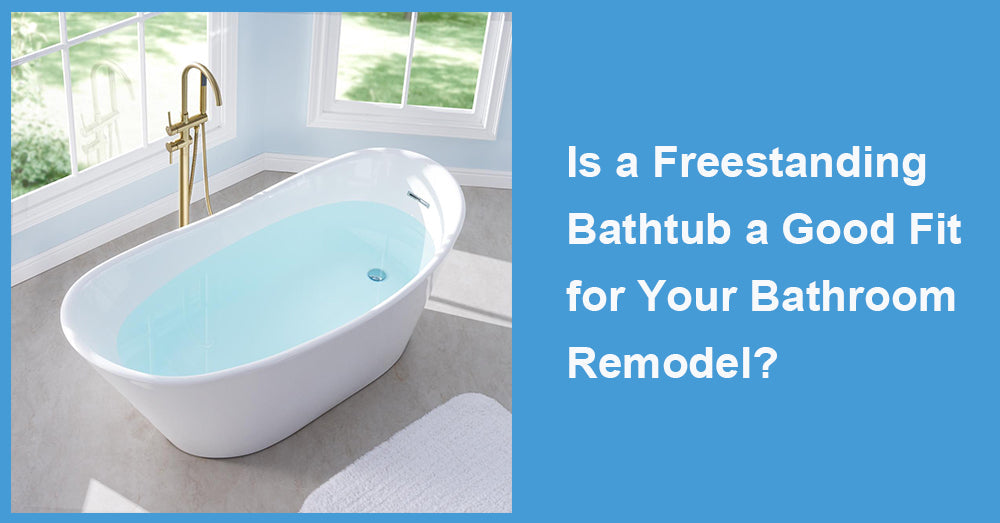
In the trend toward high-quality bathroom renovations, the freestanding bathtub is gradually becoming a visual focal point and a symbol of a comfortable experience. Compared to traditional embedded structures, independent bathtubs do not attach to walls, giving them a more sculptural appearance and emphasizing a sense of spatial ceremony. Industry data shows that in main bathroom renovation projects with an area exceeding 120 square feet, the proportion of independent bathtub configurations continues to increase, and the installation rate in some high-end renovations has approached or exceeded 50%. But is this design suitable for your space? It is necessary to comprehensively evaluate from multiple perspectives, including size ratio, pipeline conditions, maintenance costs, and actual usage requirements.
1. Is the spatial area sufficient to support the proportion?
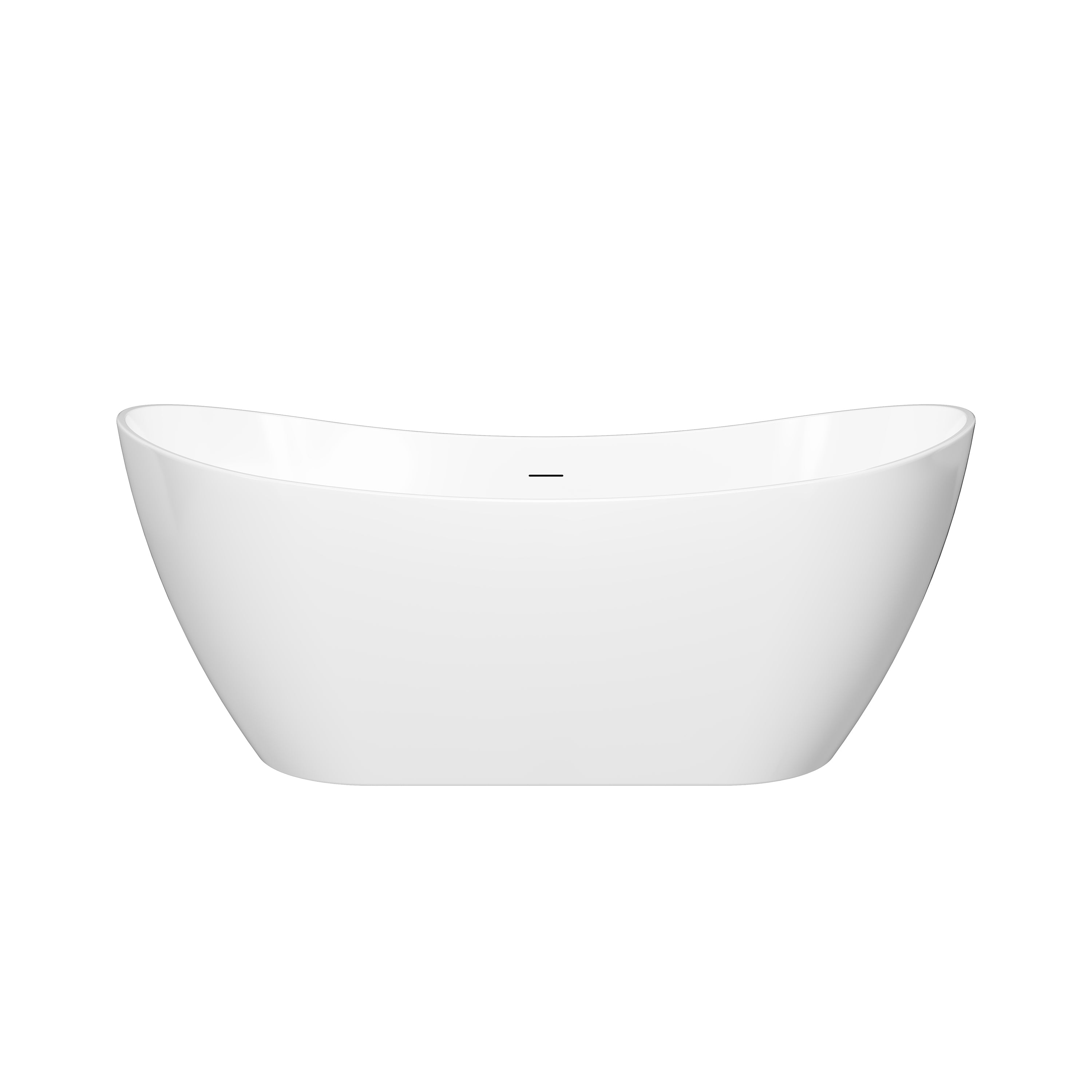
Independent bathtubs typically measure 60, 67, or 72 inches long and 30 to 34 inches wide. Unlike embedded bathtubs, it requires at least a 4-inch to 6-inch cleaning and maintenance space to be reserved around the perimeter.
If the bathroom area is less than 100 square feet, the independent structure may compress the flow line, affecting the use of the washbasin or shower area. The data shows that in spaces with an area less than 90 square feet, the comfort rating of independent bathtubs is significantly lower than that of embedded structures.
When the space reaches 120 square feet or more and can ensure a minimum traffic width of 30 inches, the independent proportion is more coordinated.
2. Visual focus and spatial upgrade effect
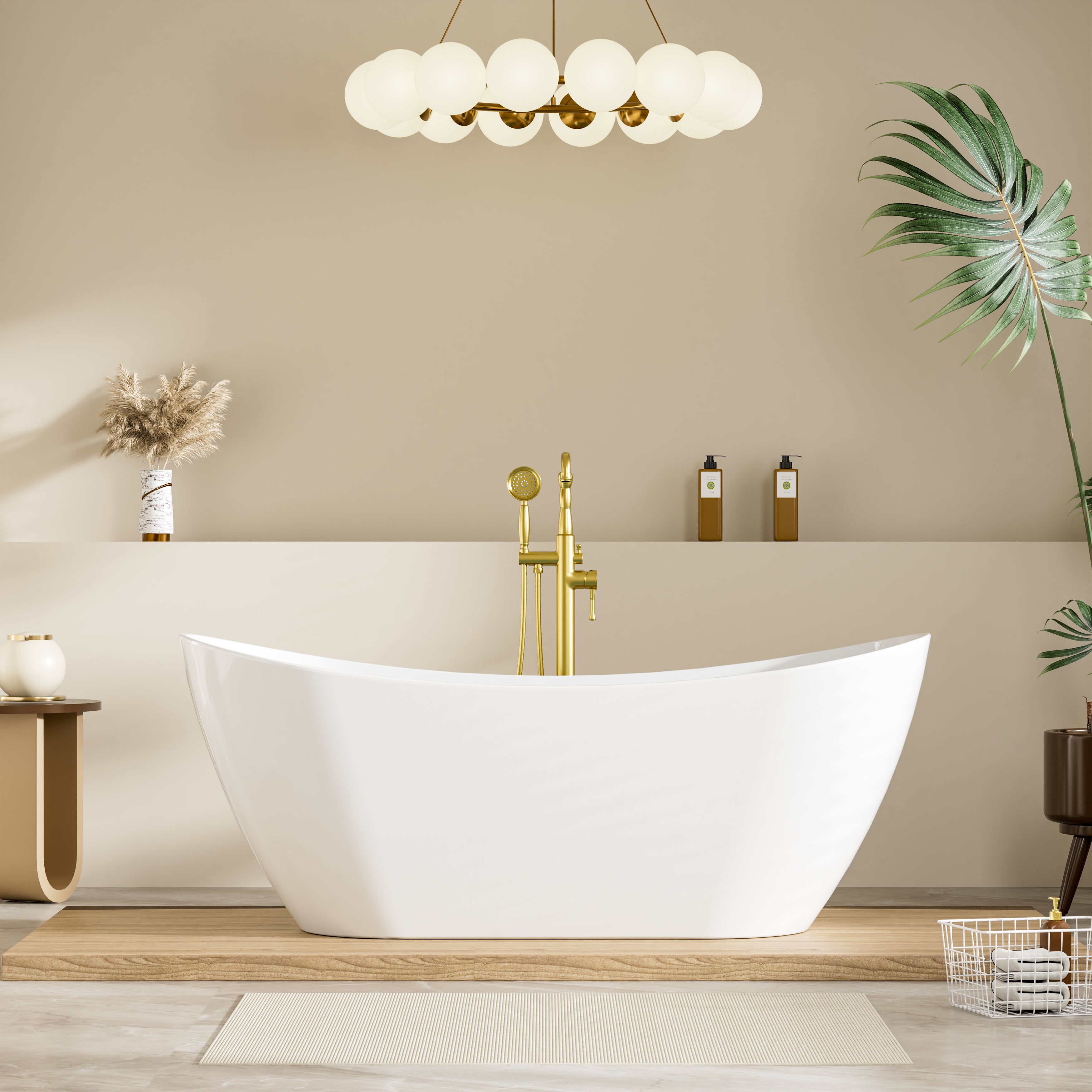
Independent bathtubs are usually placed in the center of the space or near the window area, forming a visual core. Its streamlined edges and independent base structure enrich the spatial hierarchy.
Data shows that after adding a freestanding bathtub to the main bathroom renovation, the overall space's "luxury" rating increased by an average of about 20%. Especially in 8- or 9-foot-high floor spaces, independent design is more expressive.
In a compact space within a 60-inch-wide wall, it may appear disproportionate.
3. Comfort and ergonomic performance
The internal inclination angle of a freestanding bathtub is usually between 110° and 125°, and the back support is more natural. The water depth is mostly within the range of 15 inches to 18 inches.
Test data shows that in bathtubs longer than 66 inches, the comfort score for body stretching increases by about 18%. Compared to the 60-inch standard embedded structure, the longer model offers a more relaxing experience.
But if family members are short, an excessively high edge height (usually 21 to 24 inches) may make entry and exit less convenient.
4. Material and insulation performance
Common materials include acrylic, cast iron, and composite stone.
Acrylic is lighter and has stable insulation performance, with a water temperature drop of about 3 °F to 5 °F within 30 minutes. Cast iron structures are more robust, with a water-temperature drop rate typically lower than that of acrylic by about 1 °F to 2 °F, but they are significantly heavier.
Data show that in households that prioritize insulation, composite stone and cast-iron structures have higher satisfaction ratings, but the load-bearing conditions need to be confirmed in advance.
5. Pipeline and installation complexity
Independent bathtubs usually use floor drainage or concealed wall pipes. The drainage position needs to be accurately aligned with the ground pipeline.
Data shows that in projects where drainage locations are not planned in advance during the renovation phase, additional construction costs increase by approximately 15% to 25%.
If the original bathroom is an embedded structure, it needs to be reconfigured with pipes and a waterproof layer on the ground when it is transformed into an independent one.
6. Cleaning and maintenance costs
The freestanding bathtub has a wider cleaning range due to the gaps around it. If the reserved space is less than 4 inches, the cleaning difficulty will increase significantly.
The data shows that with reasonable reserved space, there is no significant increase in daily maintenance time. But if the space is compact, the cleanliness convenience score will decrease by about 15%.
In addition, maintaining indoor humidity between 40% and 55% can help extend the lifespan of materials and hardware.
7. Is it suitable for all family structures?
If there are many family members or showering is the main activity, the frequency of using a freestanding bathtub may be lower than expected.
Data show that in households with daily usage frequency of less than once a week, the actual utilization rate of large freestanding bathtubs gradually decreases.
Therefore, in situations where space is limited, prioritizing the comfort of the shower area may be more rational.
8. Investment return and long-term value
Bathroom renovations are often seen as important projects to improve the quality of residential properties. The independent bathtub has shown significant improvement in spatial grade due to its visual impact and high-end image.
Industry data shows that in high-end renovation projects, independent bathtubs have become one of the key elements for upgrading the main bathroom.
Although the initial investment is usually about 20% to 40% higher than the standard 60-inch embedded structure, it offers sustained advantages in visual appeal and enhanced user experience.

9. Conclusion
Whether a freestanding bathtub is suitable for your renovation project depends on the space area, flow planning, and actual usage needs. From a 60-inch standard length to a 72-inch-wide design, each inch affects proportions and comfort. If the bathroom area is sufficient, the budget allows, and visual focus and an immersive experience are a priority, a freestanding bathtub can indeed bring significant upgrades to the renovation. However, if the space is compact or the priority is different functions, careful consideration is needed. A rational evaluation of dimensions, load-bearing capacity, and maintenance conditions is necessary to truly realize the value of this design.











Leave a comment
This site is protected by hCaptcha and the hCaptcha Privacy Policy and Terms of Service apply.