
















Bathroom vanities are no longer a "last-step" selection in a remodel. They have become a planning decision that influences storage, cleaning effort, plumbing layout, lighting, and even perceived room size. Recent renovation research shows homeowners still favor built-in and freestanding installations overall, but floating options keep gaining mindshare as bathrooms chase a lighter, more tailored look.
Why This Choice Matters More In 2026
Renovation activity remains substantial, which is why vanity decisions are getting more scrutiny from both designers and homeowners. One industry report estimates $603 billion was spent on home remodeling projects in 2024, underscoring how many households are actively upgrading kitchens and baths. Another forecast expects annual spending on improvements and maintenance to reach about $518 billion by the end of 2026, even as growth slows. In that environment, vanities are judged on durability, cleanability, and long-term flexibility, not just looks.
What Current Data Says About Vanity Mounting Trends
Survey data from the 2025 Houzz Bathroom Trends Study shows built-in vanities remain the most common choice in remodeled bathrooms at 58%, with freestanding at 30% and floating at 11% (about 1% fall into other categories). This same study also signals what shoppers consider "must-haves" regardless of mounting style: 78% choose soft-close drawers, and 75% choose soft-close doors.
Size preferences help explain why the mounting decision can change a room's visual balance. Nearly half of renovating homeowners (47%) favor vanities that are 48 inches or less, while 60-inch vanities account for 19%, 72-inch vanities for 14%, and larger than 72 inches for 13%. Floating designs tend to "read" lighter at wider sizes, which is part of their appeal in more open, spa-like layouts.
Floating Vanities: Where They Win (And Where They Can Fail)
Floating (wall-hung) vanities are often chosen for three practical reasons.
First, they make floors easier to clean. With open space underneath, you can sweep and mop without navigating legs, toe-kicks, or tight corners. This matters in bathrooms with textured tile, grout lines, or radiant floor systems where dirt shows up quickly.
Second, they create visual space. Even if the room is the same square footage, the visible floor under a vanity can make a bath feel less crowded, especially with 48-inch and 60-inch widths.
Third, they let you fine-tune height. A wall-hung cabinet can be installed slightly higher or lower than the typical default, useful when users prefer a customized counter height (many installations land around 34 to 36 inches, but floating can be tailored when plumbing and ergonomics allow).
Where floating vanities can fail is rarely about style, and usually about structure and planning. Wall blocking and secure fastening are non-negotiable. If studs are not in ideal positions or if the wall is not reinforced, installation becomes more complex. Plumbing can also be trickier: drain and supply lines may need cleaner routing inside the wall or a more thoughtful rear cutout design to keep the cabinet looking seamless.
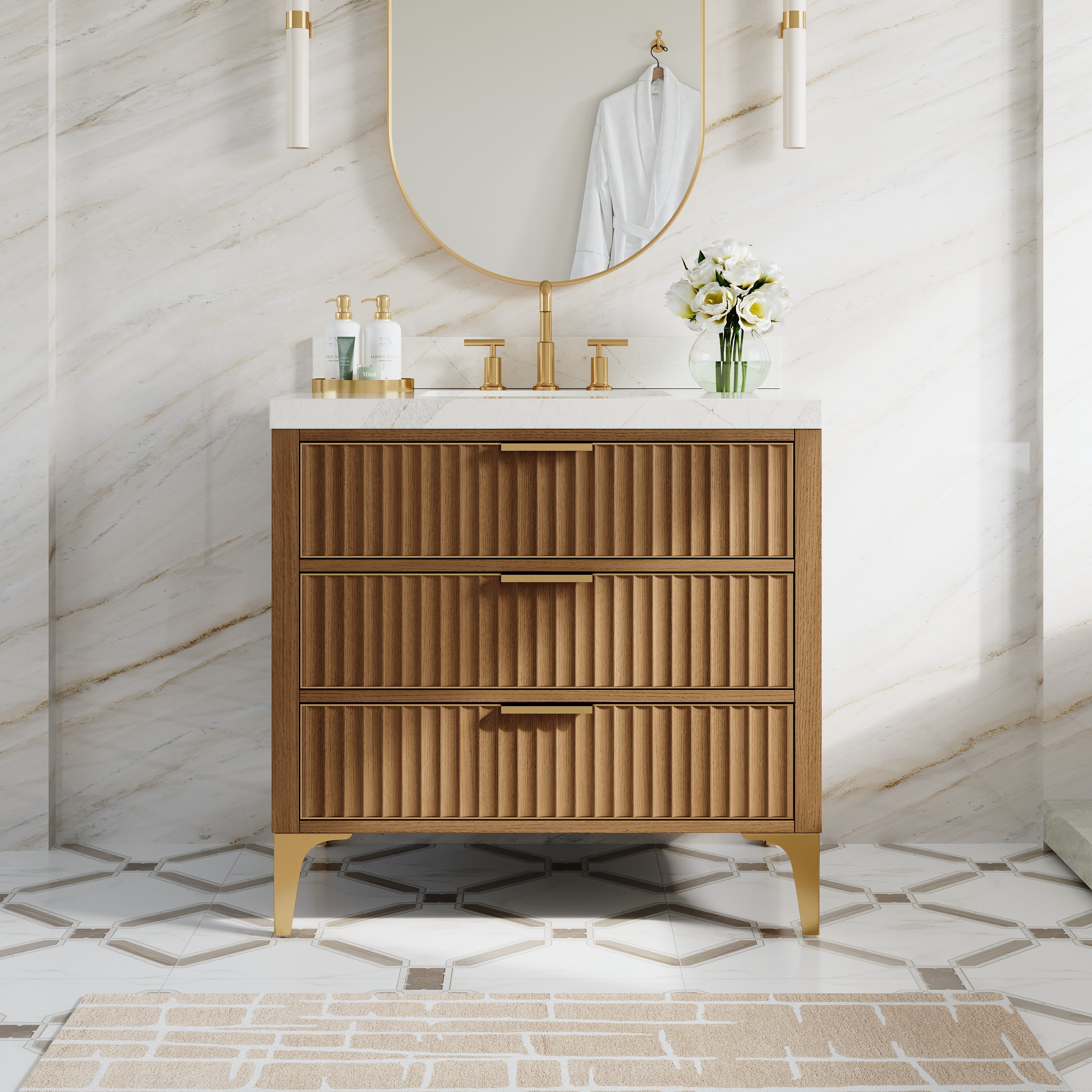
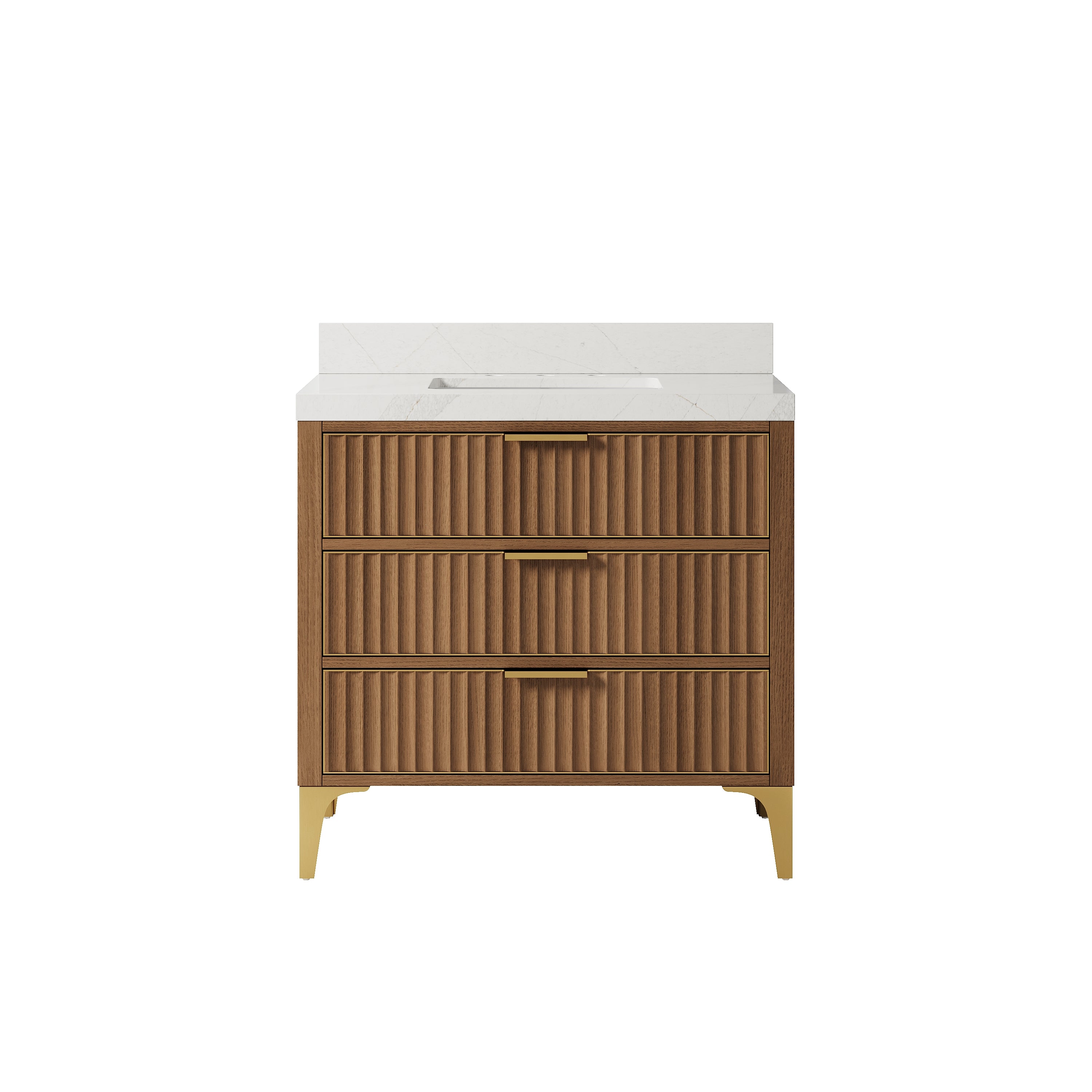
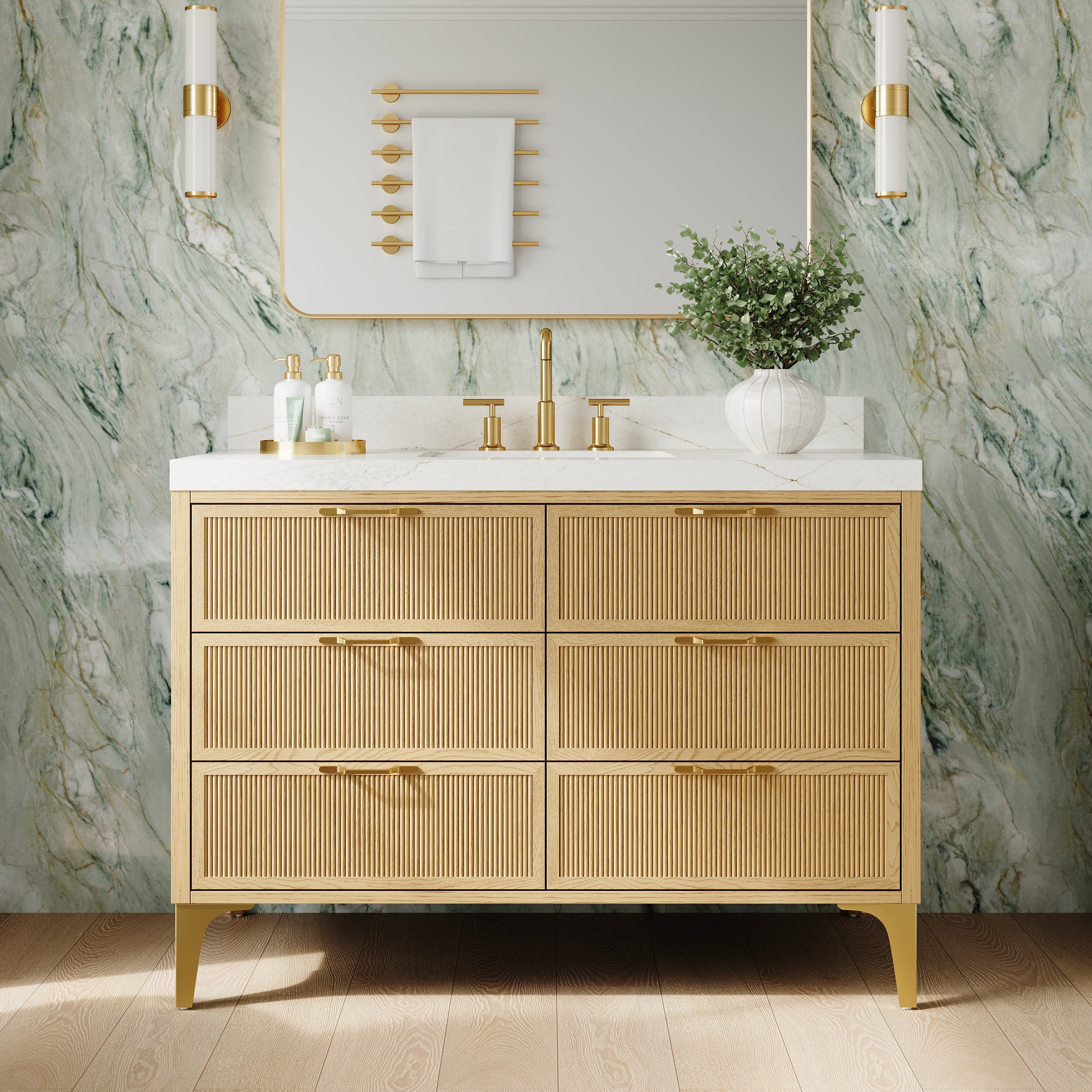
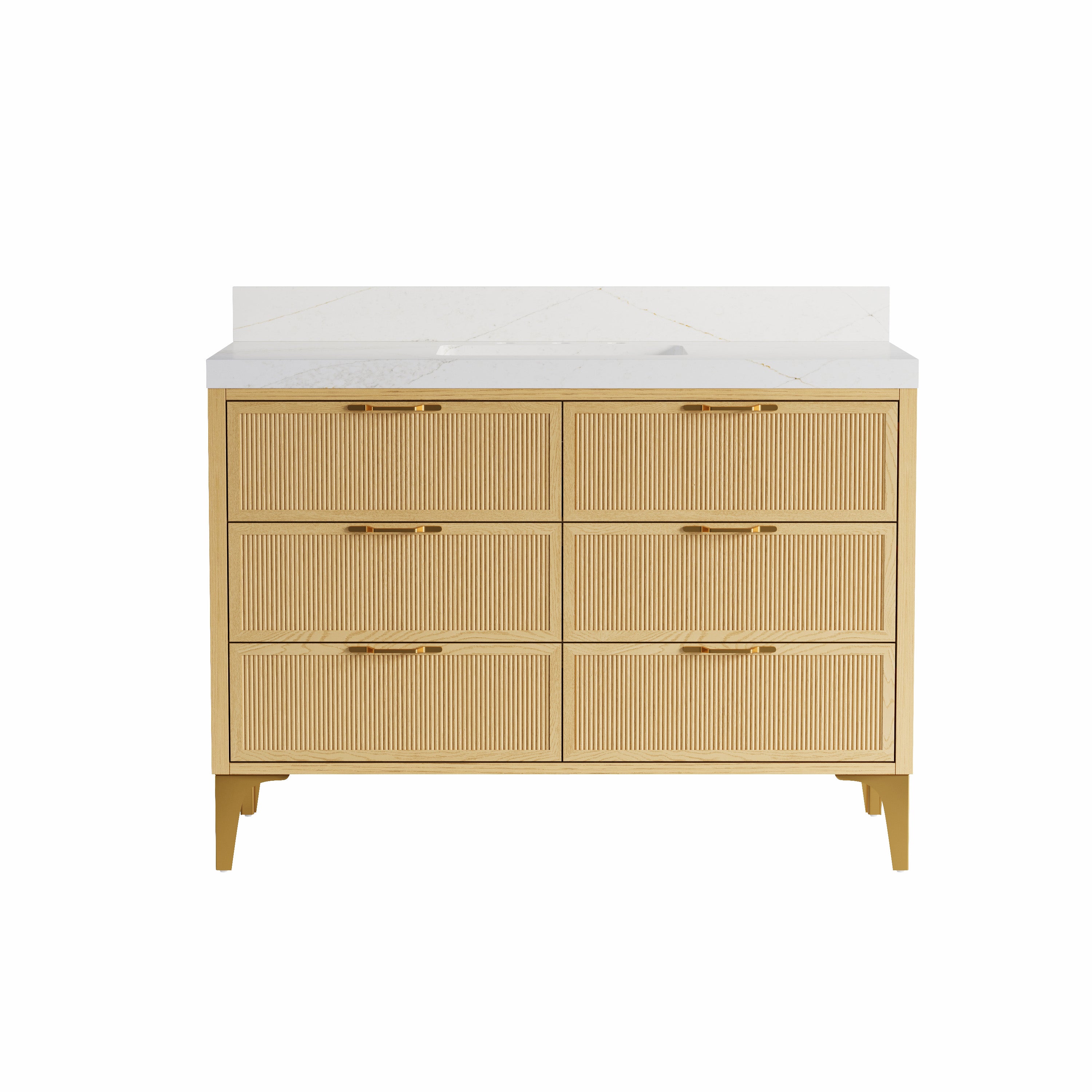
Floor Standing Vanities: The Safer Default For Storage And Retrofit Jobs
Freestanding (floor-standing) vanities remain popular because they are forgiving in real homes.
They tolerate imperfect walls and older plumbing. If you are replacing an existing vanity without moving drain lines, a floor-standing cabinet often fits with minimal changes. It also tends to offer more enclosed volume for storage, especially if you need deep drawers, taller door cavities, or a full-depth base that hides plumbing without aggressive cutouts.
They also distribute weight to the floor rather than the wall, which can feel more reassuring with heavy tops, oversized sinks, or high-traffic bathrooms. Material choice still matters, but the market preference for solid wood is notable: nearly three-quarters (74%) of renovating homeowners choosing wood vanities opted for solid wood, suggesting durability and long-term wear resistance are top priorities.

Value And Resale: What ROI Data Implies For The Vanity Decision
Vanities are only one line item in a remodel, but ROI research helps frame how cautious (or bold) a plan should be. The 2024 Cost vs. Value Report lists a midrange bathroom remodel with an average 74% cost recouped, while an upscale bath remodel is listed at 45%. It also includes a "universal design" bath remodel at 49% cost recouped.
The takeaway is not "pick the cheapest vanity." It is that layout changes, premium finishes, and complex installations should be chosen deliberately. Floating vanities can be a smart move when they simplify cleaning and improve perceived space, but if they require major wall reconstruction, the total project cost may rise faster than the practical benefit. Conversely, if the wall is already open during a full renovation, adding blocking for a floating vanity can be a low-friction upgrade with a high daily-life payoff.
A Practical Decision Framework (No Guesswork)
Use floating when most of the following are true.
You want a cleaner look with a more visible floor.
The bathroom is visually tight, and you want it to feel larger.
The wall can be reinforced, or you are already opening it during renovation.
You are comfortable planning plumbing alignment, rear cutouts, and installation tolerances early.
Use floor standing when most of the following are true.
You are doing a quick replacement and want minimal plumbing changes.
You need maximum enclosed storage volume.
The wall condition is uncertain, or reinforcement work is not in scope.
You want a simpler install path with fewer structural dependencies.
If you are planning a double vanity, pay attention to width and proportion. With many homeowners choosing 60 or 72 inches, the cabinet's visual "weight" matters. A floating install can keep a 72-inch run from feeling bulky, while a floor-standing cabinet may feel more grounded in traditional designs or when paired with thicker tops and furniture-style details.
What To Watch Next
Two trends will continue to shape this debate. The first is a steady push toward easier maintenance and better functionality, which is why soft-close hardware is so widely selected. The second is the broader renovation backdrop: spending is still huge, but forecasts point to slower growth into late 2026, which typically increases demand for choices that feel "worth it" every day.
In other words, the best answer is not a universal rule. Floating vanities are often the higher-impact choice when the room needs visual breathing room, and the wall can support it. Floor-standing vanities remain the most reliable option for fast retrofits, high storage needs, and risk-controlled installs. The winning plan is the one that aligns with the structure, plumbing realities, and daily habits, then delivers the look you want without turning installation into a hidden project of its own.













Leave a comment
This site is protected by hCaptcha and the hCaptcha Privacy Policy and Terms of Service apply.