














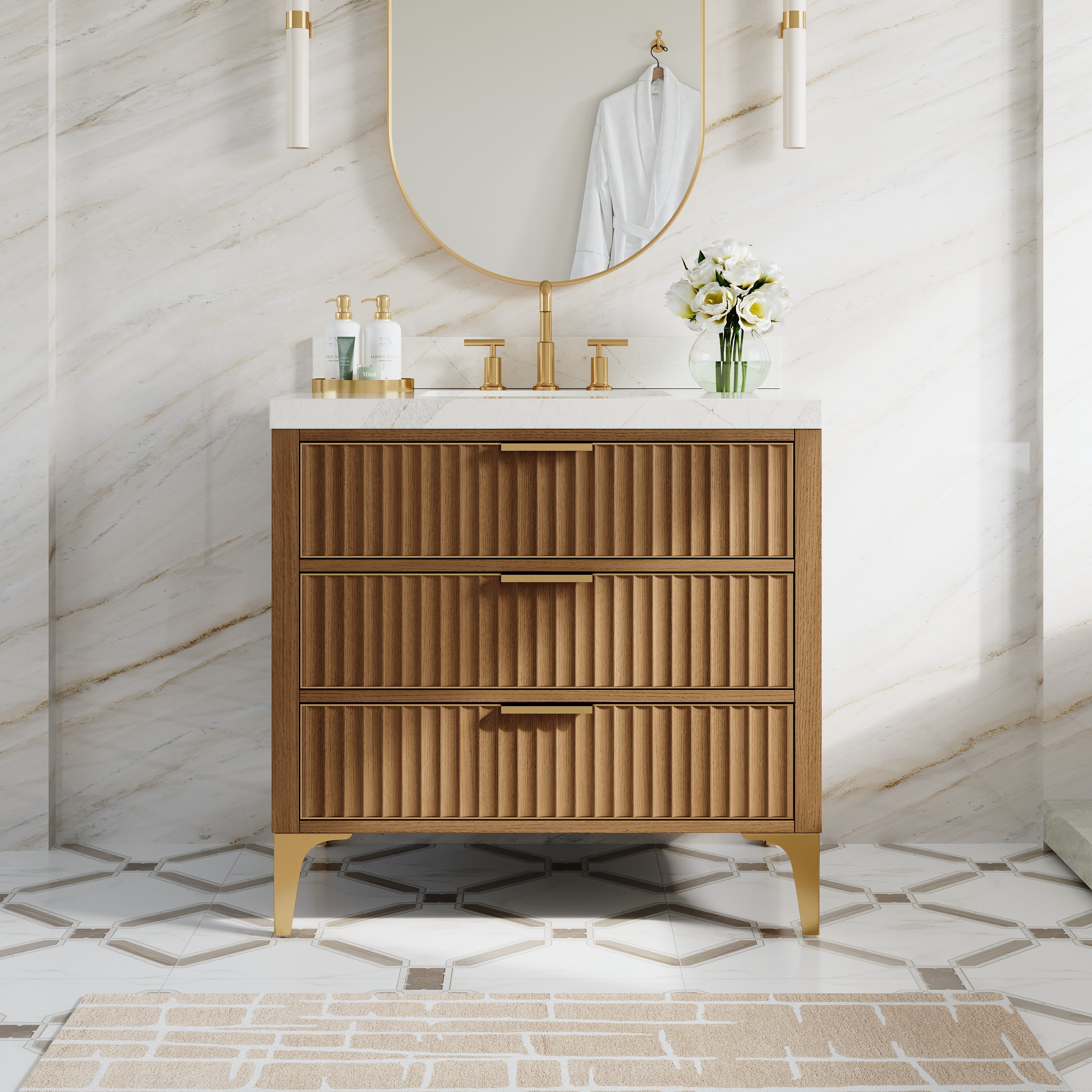
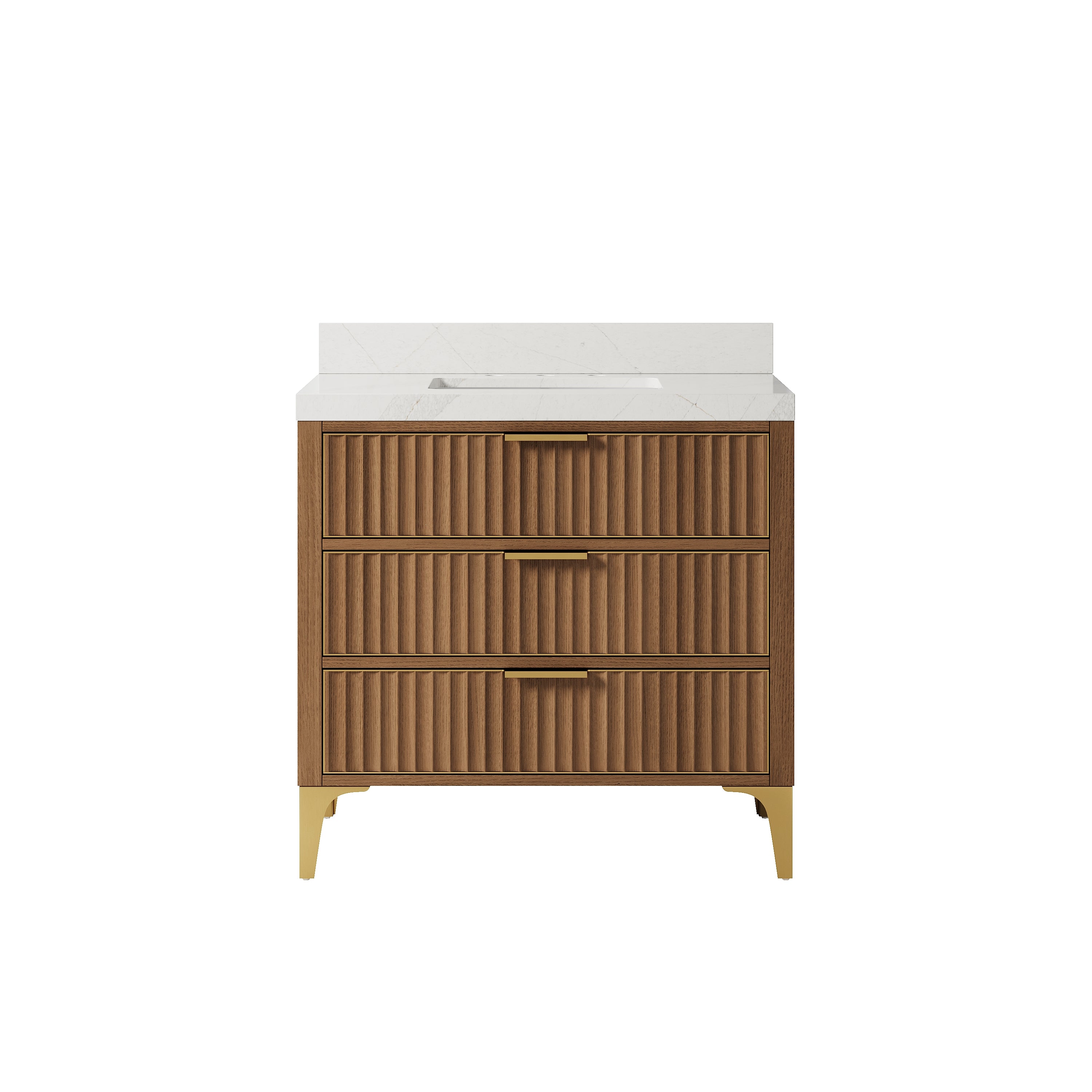
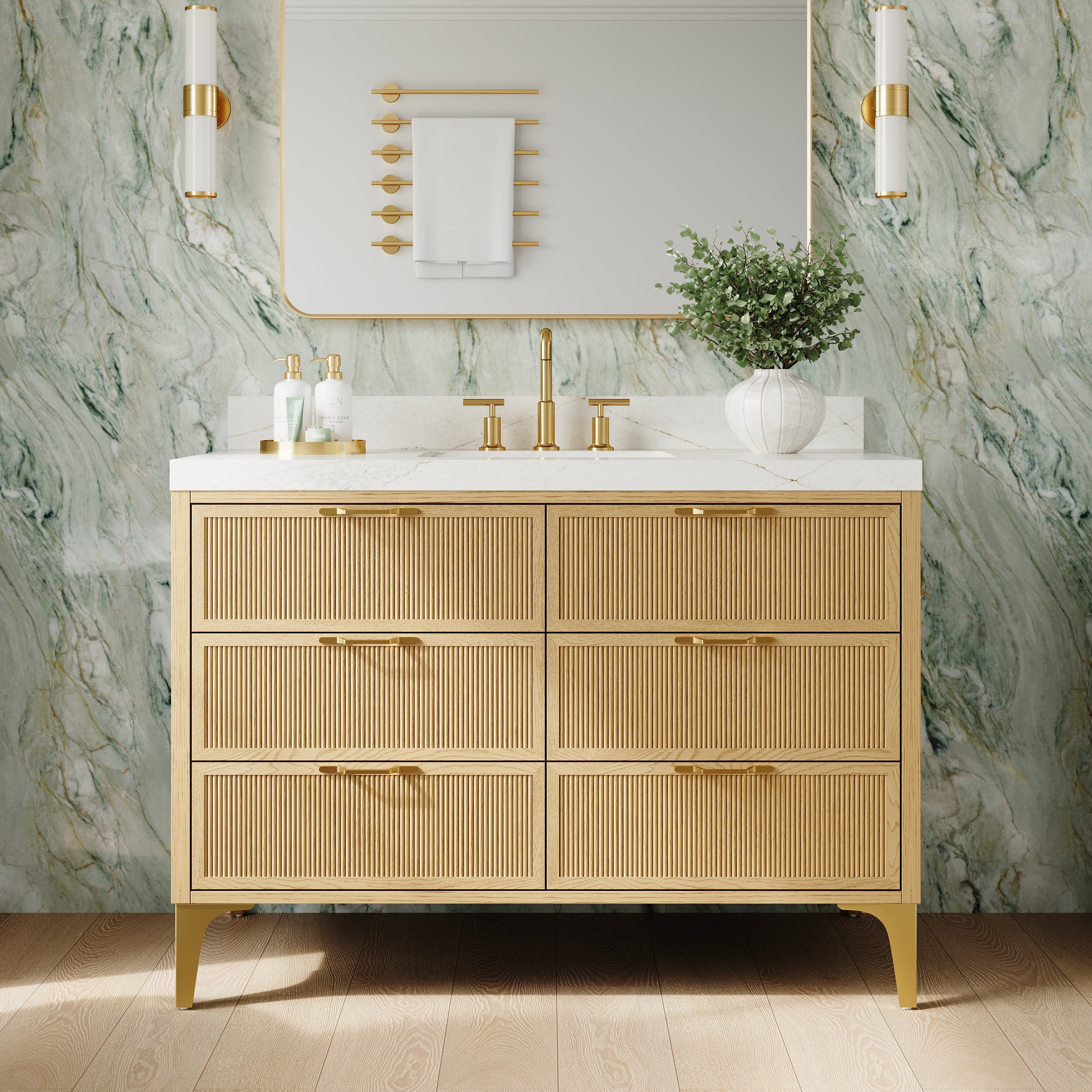
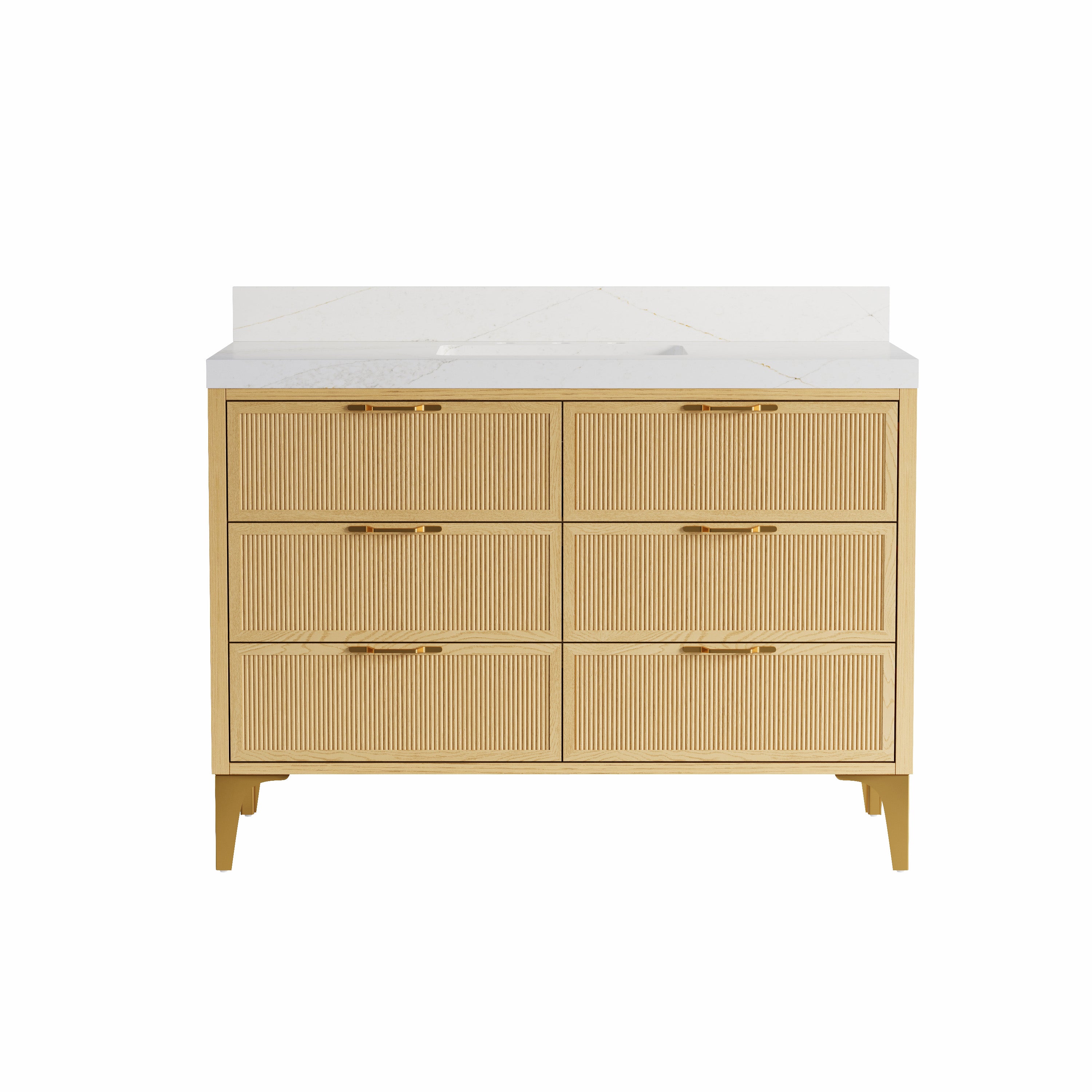


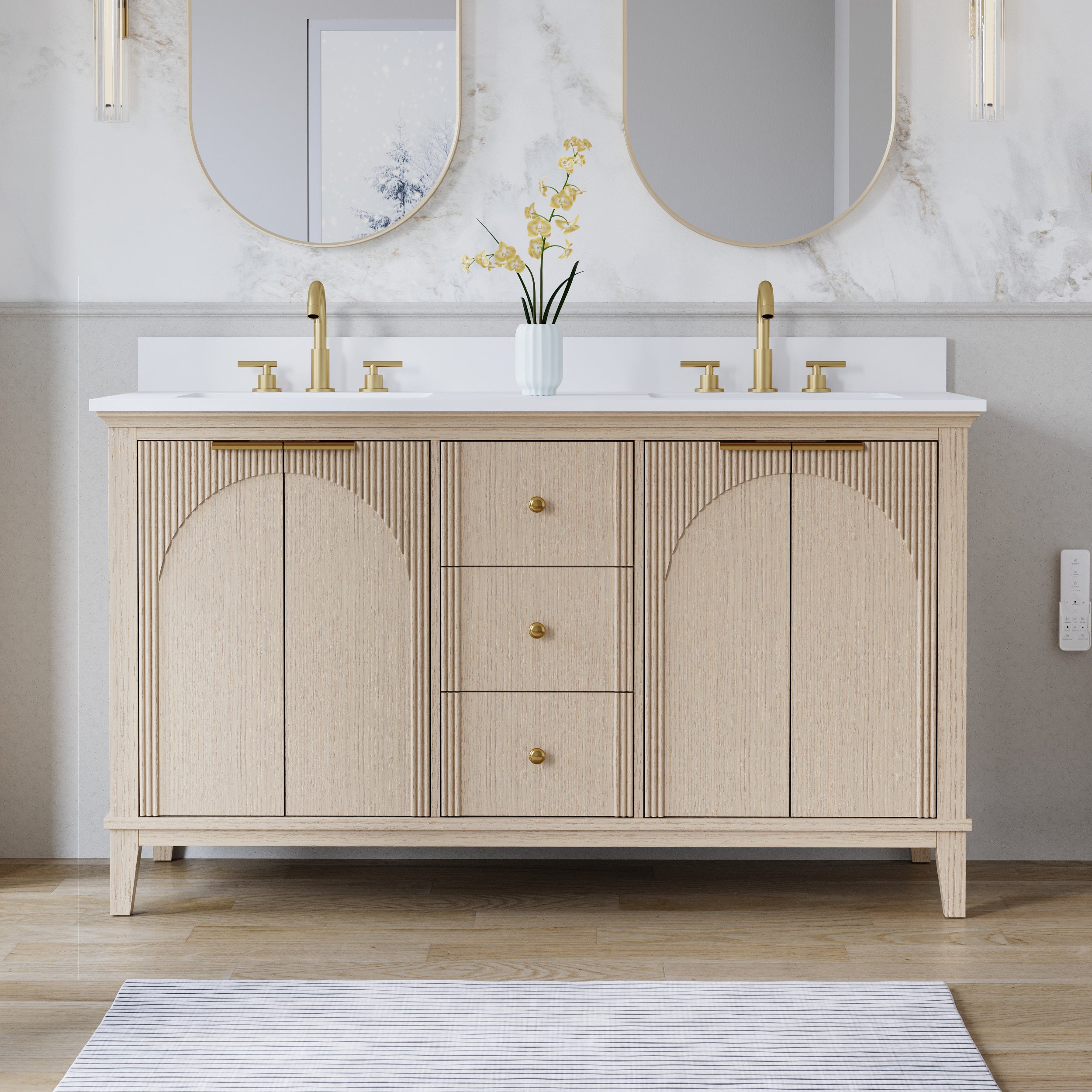
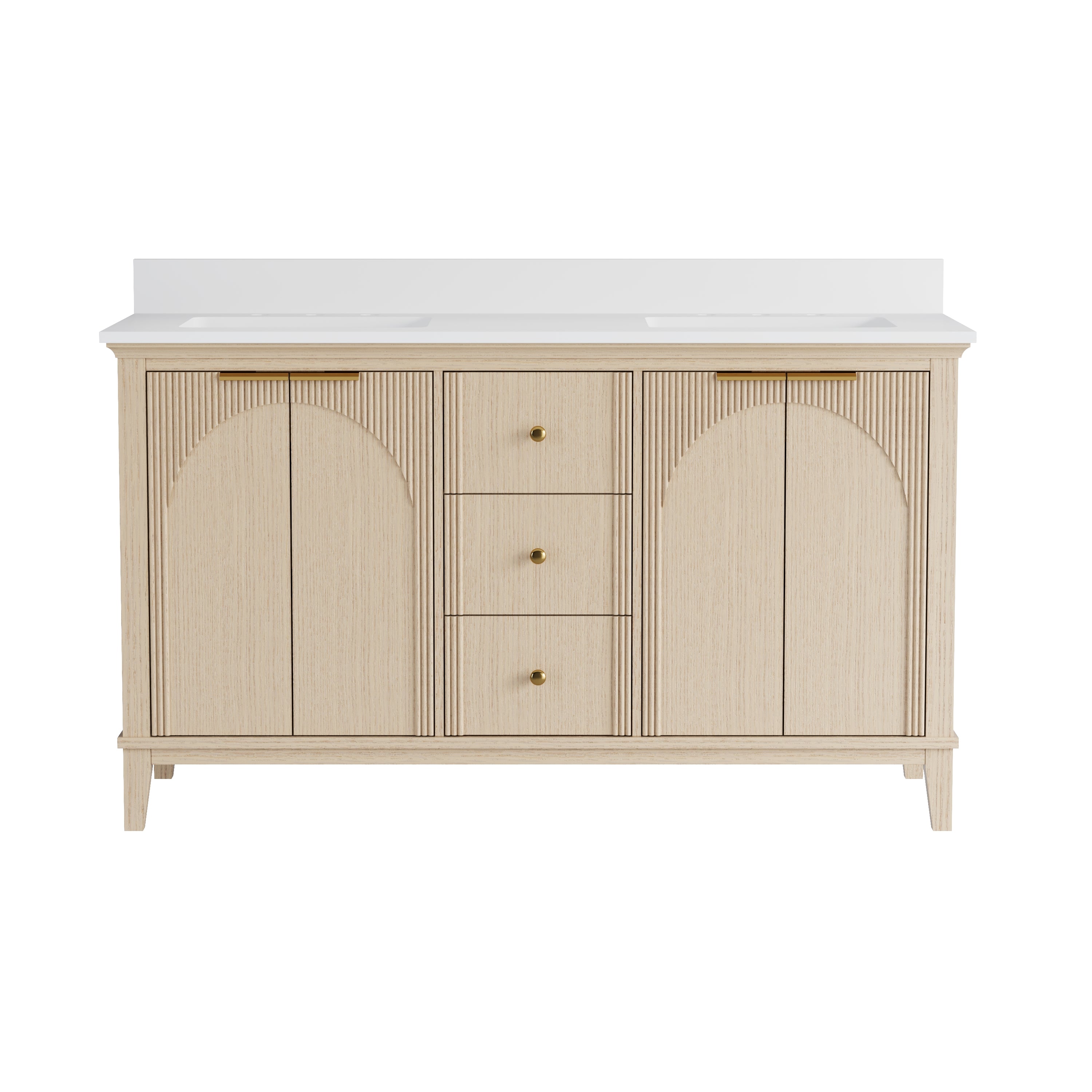
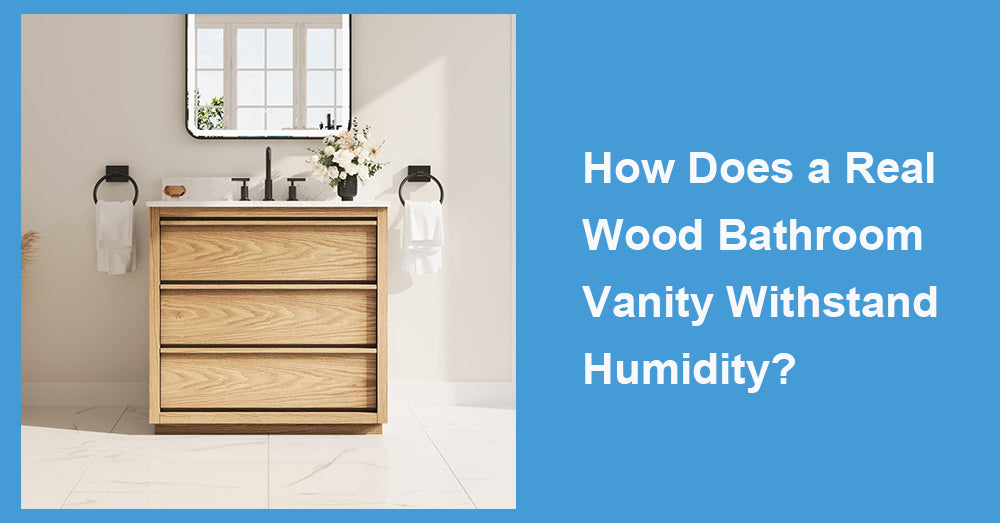
A real wood bathroom vanity can perform extremely well in a humid bathroom, but it does not ignore” moisture. Wood is hygroscopic, meaning it continuously exchanges moisture with the surrounding air until it reaches equilibrium. That natural behavior is why solid wood can last for decades with the right construction and finishing, and also why it can swell, shrink, or warp when humidity swings are frequent and ventilation is poor.
1. What humidity actually does to wood
Humidity changes the moisture content inside wood fibers. As the surrounding relative humidity (RH) rises, wood absorbs moisture and expands; when RH drops, wood releases moisture and contracts. This is why stable indoor humidity matters for wood performance, not just for comfort.
Guidance for building health and moisture control commonly recommends keeping indoor RH below 60%, ideally 30%–50% when possible. Those ranges are practical because they reduce condensation and mold risk while also reducing moisture swings that stress wood joints and finishes.
2. Equilibrium moisture content explains “seasonal movement.”
Wood doesn’t just get wet on the surface. Over time, it seeks an equilibrium moisture content (EMC) based on temperature and RH. The USDA Forest Products Laboratory’s Wood Handbook includes EMC data across many RH levels, showing that as RH increases, EMC increases as well—meaning the wood is literally holding more moisture inside it.
In plain terms: if a bathroom sits steamy day after day, the vanity’s panels and frames may slowly gain moisture. If the bathroom then dries out quickly (or seasonally), that moisture leaves the wood, and the parts move again. The more extreme the swing, the more stress on joints, door alignment, and finish edges.
3. The real “humidity shield” is construction, not species alone
Wood species matters (some are naturally more stable than others), but vanity performance is usually decided by how it’s built:
· Frame-and-panel doors: Panels can “float” within a frame, allowing them to expand/contract without splitting the frame.
· Joinery quality: Well-made joints resist racking as the cabinet cycles through humidity.
· Engineered panels where it counts: Many premium “solid wood” vanities still use plywood for side/back panels because plywood’s cross-laminated structure is dimensionally stable. This is often a smart, humidity-resistant choice, not a downgrade.
A solid-wood face frame with stable panels and a good finish is typically more reliable in bathrooms than an all-solid, flat, wide board approach that has nowhere to move.
4. Finishes: the difference between “water resistant” and “waterproof.”
Most vanity finishes (lacquer, polyurethane, conversion varnish, UV-cured coatings) are moisture-resistant barriers, not permanent waterproof shells. The finish slows moisture exchange and blocks splashes, but water can still enter at weak points:
· sink cutout edges
· seams around the countertop
· toe-kick corners where mopping water sits
· unsealed back edges against a damp wall
· hardware holes and drilled edges
This is why two vanities that look identical can age differently: the one with better edge sealing and better finish coverage in hidden areas survives humidity cycles with fewer issues.

5. Ventilation: humidity control is the vanity’s best “warranty.”
If you want real wood to behave, you have to manage bathroom moisture. Residential ventilation guidance commonly points to local exhaust requirements around 50 cfm intermittent or 20 cfm continuous in bathrooms as a baseline approach to removing moisture at the source.
Why this matters for a vanity: even if the wood never sees direct water, high RH can keep the cabinet interior damp—especially when doors are closed, and airflow is limited. Lowering the room’s average humidity reduces the wood’s long-term EMC and the number of cycles.
Practical habit that helps more than any “miracle” wood treatment:
· Run the fan during showers and keep it running afterward until the mirrors and glass stop fogging
· Crack the door if the fan is weak
· Avoid leaving wet towels draped directly over vanity doors or side panels
6. Common failure points in humid bathrooms and how good vanities avoid them
Humidity-related issues usually show up as:
· Door rubbing or misalignment: wood movement + hinge adjustments drifting over time
· Finish whitening or dull edges: moisture entering micro-gaps at corners
· Swollen corners near the floor: repeated wet mopping or bathmat trapping moisture
· Musty odor inside cabinets: high RH + low airflow in an enclosed box
Better designs reduce these risks by using sealed interiors, better back panel protection, adjustable hinges, and construction that tolerates movement rather than fighting it.
7. The “30%–50%” rule of thumb applies to wood products for a reason
Wood industry groups frequently emphasize maintaining indoor conditions around 30%–50% RH (with typical comfort temperatures) to minimize wood movement and related issues over time. This guidance is often discussed for wood flooring, but the physics are the same for vanities: stable RH means fewer expansion/contraction cycles, which means fewer stress points on joints, coatings, and door alignment.
If your bathroom regularly spikes well above 60% RH, the vanity isn’t just dealing with “humidity.” It’s dealing with a repeated stress test.
8. What to look for when buying a real wood vanity for humid spaces
If you’re evaluating options, these specs and details are more predictive than marketing labels:
· Sealed sink cutout and cabinet top edges (especially if the countertop is installed separately)
· Moisture-resistant interior coating (not raw wood inside)
· Plywood side panels paired with solid wood frames (a stability upgrade)
· Soft-close hinges with adjustability so minor seasonal movement can be tuned back into alignment
· Raised feet or a protected toe kick to avoid standing water contact
· Back panel that isn’t left raw if it sits against an exterior wall or plumbing cavity
9. Conclusion: real wood can thrive—if the bathroom is managed like a wet zone
A real wood vanity withstands humidity through a combination of controlled moisture exposure, smart construction that allows natural movement, and finishes that block water at the most vulnerable edges. The goal is not to “stop” wood from responding to humidity—it will—but to keep RH in a healthy range and prevent frequent spikes that push the wood’s moisture content up and down. Keep indoor humidity ideally around 30%–50% and below 60% when possible, ventilate aggressively during showers, and avoid letting liquid water sit on seams or at the cabinet base. Do that, and solid wood becomes a long-term asset in a bathroom rather than a maintenance headache.










Leave a comment
This site is protected by hCaptcha and the hCaptcha Privacy Policy and Terms of Service apply.