















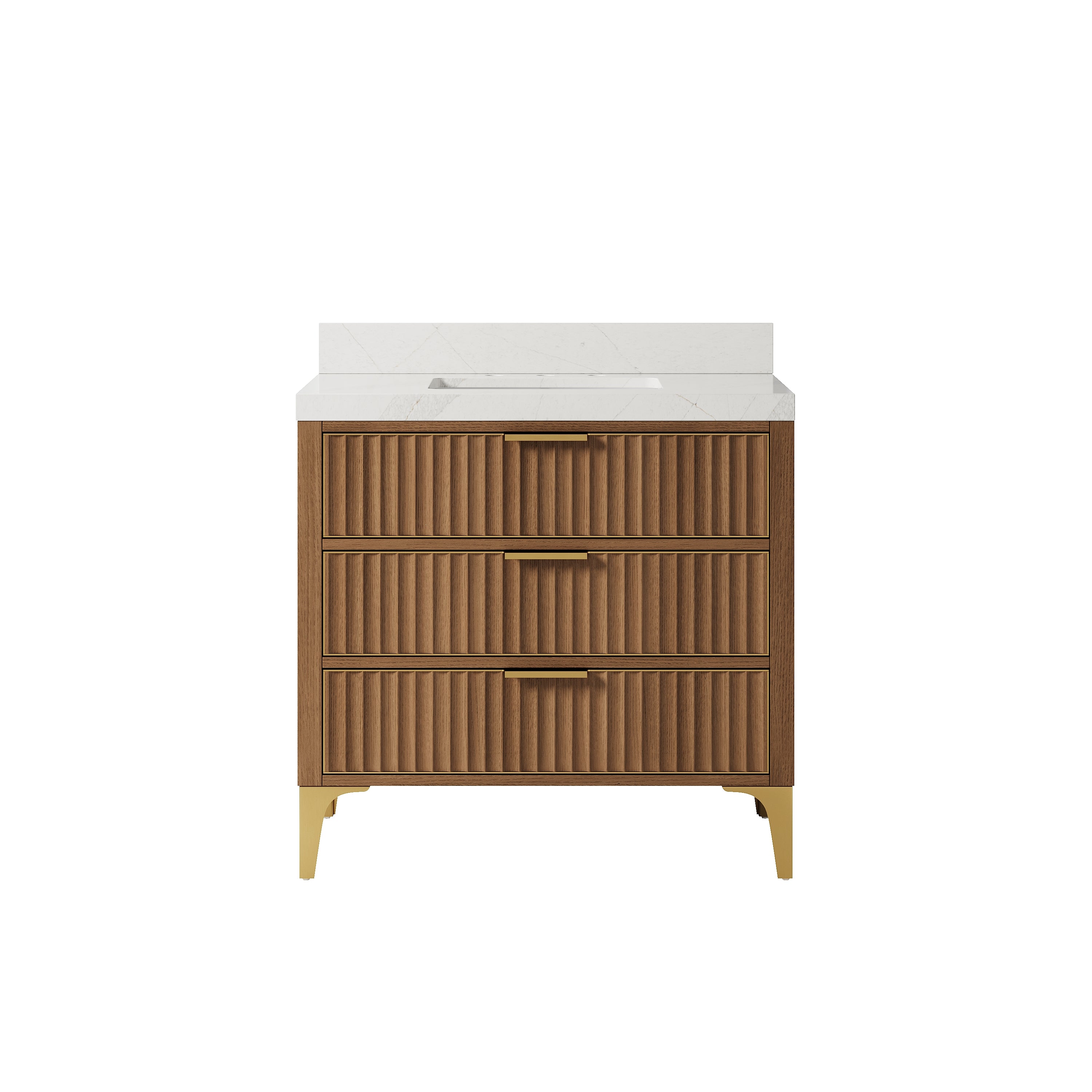

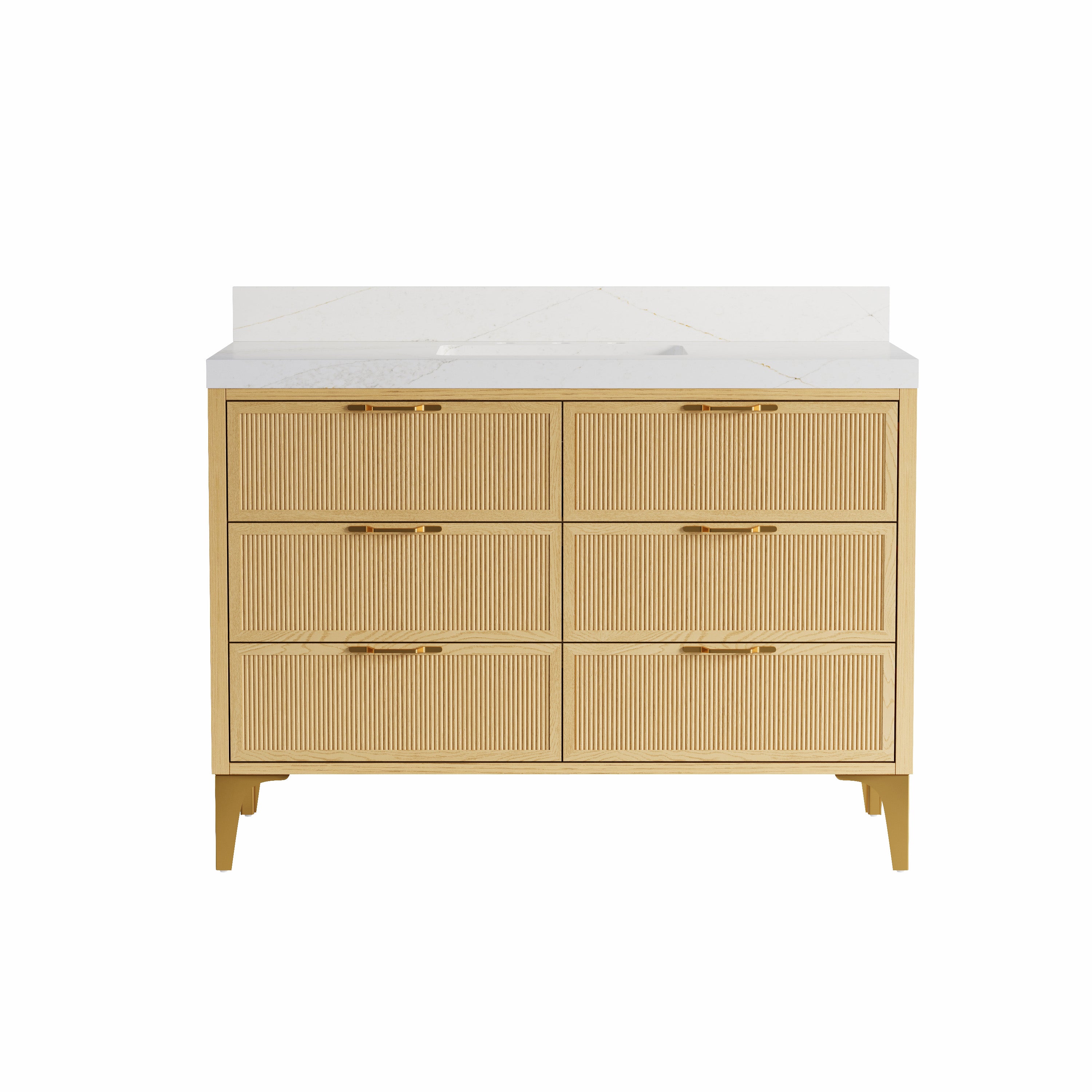


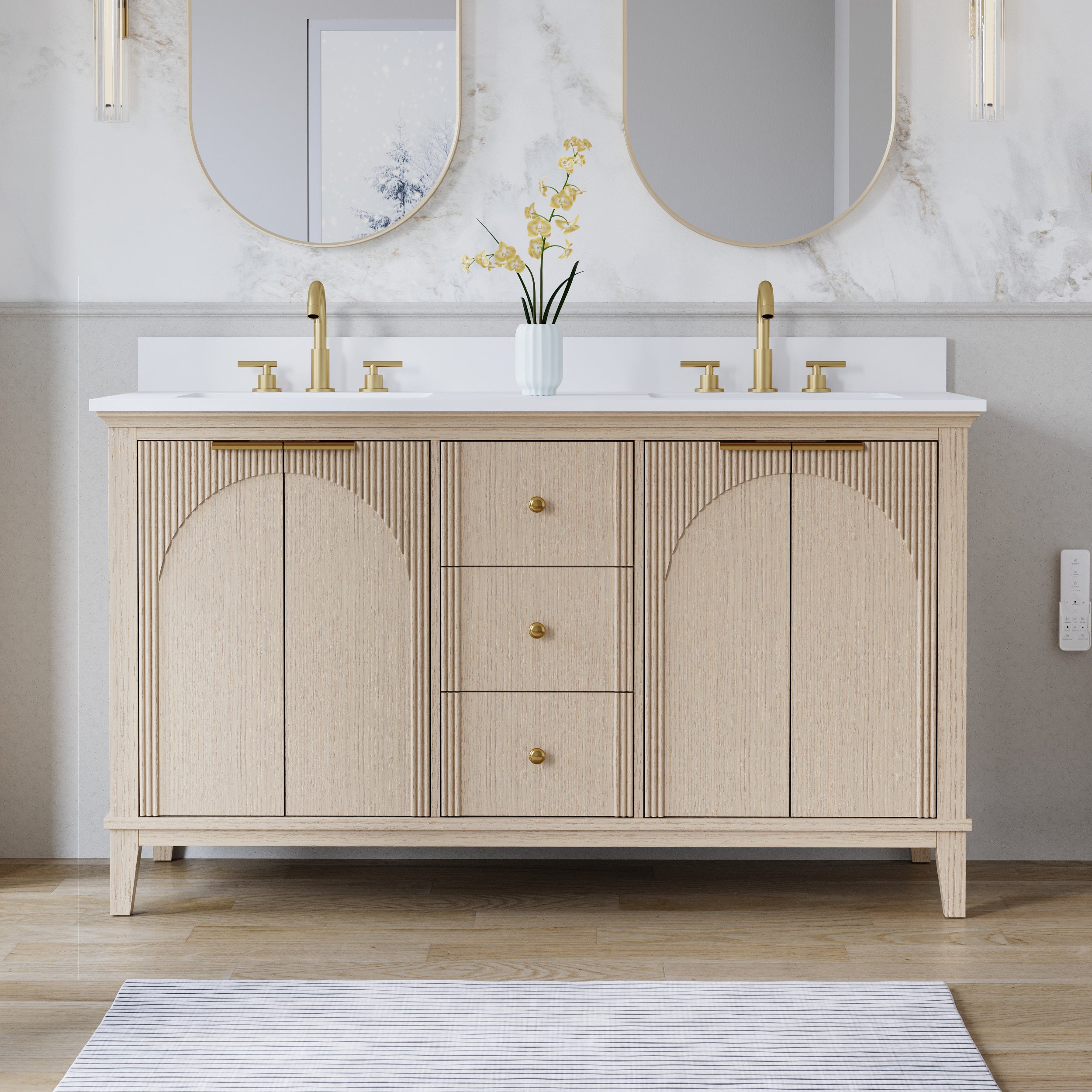
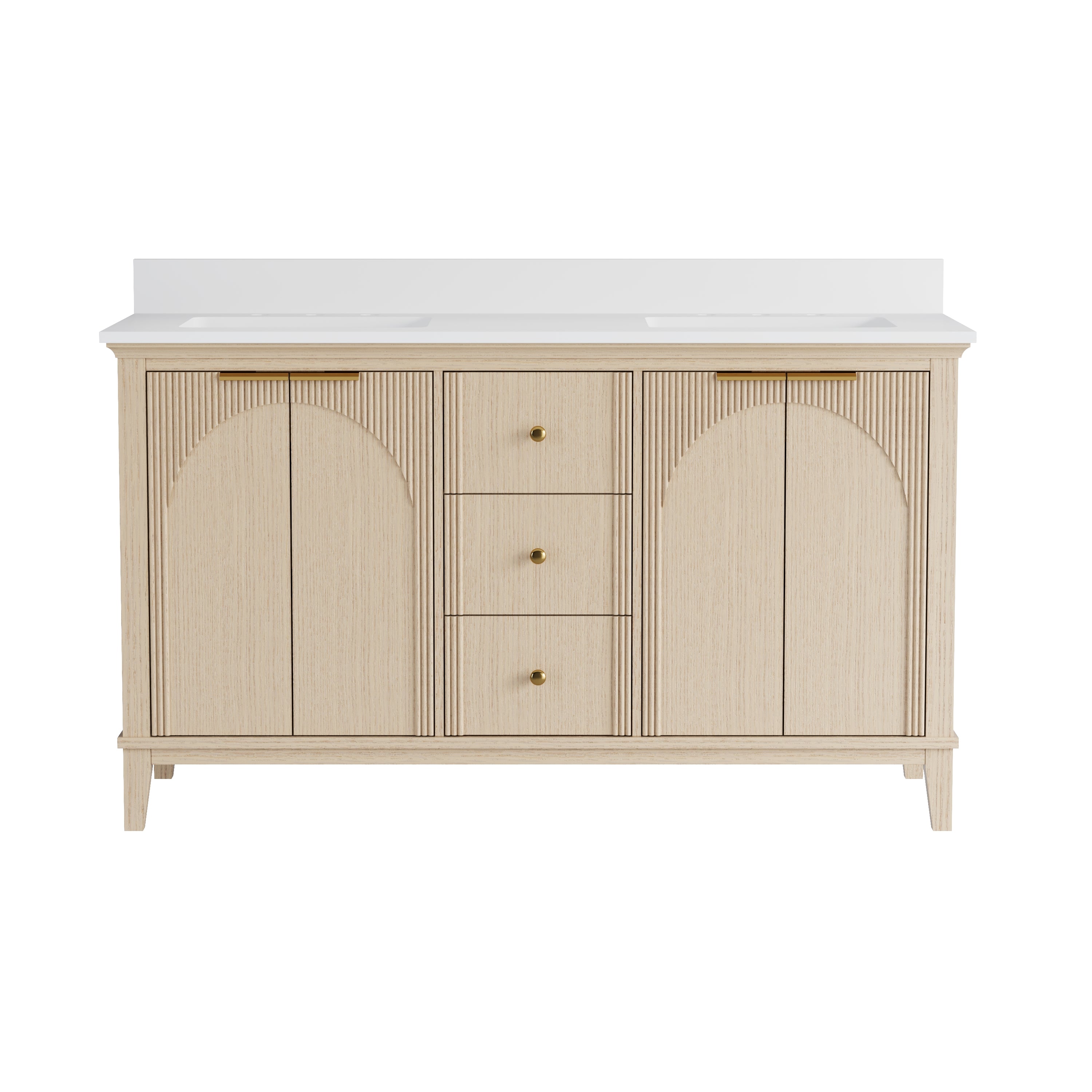
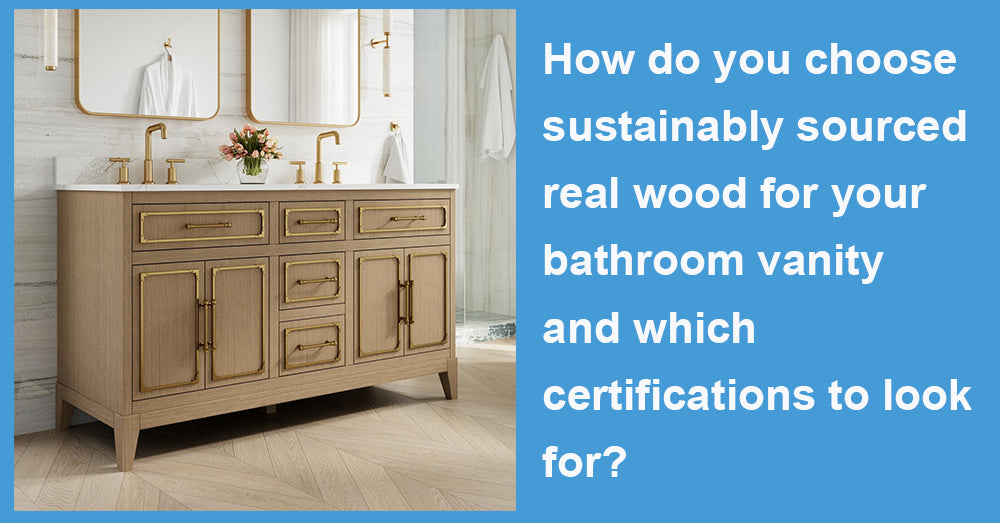
Buying a real wood bathroom vanity can feel like a straightforward upgrade—until you start asking the sustainability question. “Real wood” only tells you what the vanity is made from, not how the forest was managed, how the wood moved through the supply chain, or whether the panels and finishes were selected with indoor air quality and moisture resistance in mind. And since the world still loses an estimated 10 million hectares of forest per year to deforestation, choosing verified sources is more than a nice-to-have. (Source: FAO Global Forest Resources Assessment 2020)
Below is a practical way to pick responsibly sourced wood and end up with a vanity that holds up in a steamy room.
1. Don’t start with “solid vs. engineered”—start with traceability
A sustainable vanity purchase is really a paperwork-and-process purchase. The strongest signal isn’t a poetic product description; it’s whether the seller can show traceability from forest to finished goods.
What “good” looks like:
· The listing or spec sheet clearly states wood species (for example, oak, birch, rubberwood).
· The brand can provide certification claims that match a recognized system (FSC, PEFC, SFI).
· If you ask for documentation, they can respond with a certificate code, invoice statement, or chain-of-custody information rather than vague marketing language.
If a seller can’t explain where the wood comes from or what standard they’re referencing, “sustainably sourced” is just a label.
2. Choose wood construction that survives bathroom humidity
Sustainability is pointless if the vanity warps in a year. Bathrooms swing between dry and damp conditions, and wood reacts to that. Two simple targets keep you out of trouble:
· Keep indoor relative humidity below 60%, ideally 30% to 50% when possible. (Source: EPA mold/humidity guidance)
· Wood destined for interior applications is commonly dried to about 6% to 8% moisture content to reduce movement issues. (Source: Purdue Extension, “Controlling Moisture Content in Stored Lumber”)
In real bathroom terms, that means the best-performing “real wood” vanities are often built like this:
· Solid wood for the frame, face frame, door rails/stiles (it’s strong and takes joinery well).
· Quality plywood panels (not MDF) where stability matters, such as side panels or back panels.
· Sealed edges and a durable topcoat (more on that below).
You still get the real-wood look and feel, but the structure is less likely to swell, crack, or twist.
3. Know the big three certifications and what they actually signal
If you want a short list of certifications that buyers recognize and suppliers can document, start here:
FSC (Forest Stewardship Council)
FSC is widely known for forest management and chain-of-custody verification. FSC UK’s facts and figures page notes 160 million hectares of forest certified to FSC standards and 60,000 companies holding FSC chain-of-custody certification. (Source: FSC Facts and Figures)
PEFC (Programme for the Endorsement of Forest Certification)
PEFC is a large umbrella endorsement system. PEFC’s facts and figures state that almost 300 million hectares of forest area are managed in compliance with PEFC’s benchmarks. (Source: PEFC Facts and Figures)
SFI (Sustainable Forestry Initiative)
SFI is common in North American fiber supply chains and is PEFC-endorsed. SFI’s own materials state 370 million acres / 150 million hectares are certified to the SFI Forest Management Standard. (Source: SFI Forest Management Standard)
How to use this info without getting overwhelmed:
If a vanity is genuinely sustainably sourced, the seller should be able to tell you which standard they’re claiming and where it applies (solid wood parts, plywood parts, packaging, or the whole product line).
4. “Certified wood” is not enough—look for chain-of-custody
Forest certification and chain-of-custody are related but not identical. Forest certification is about how forests are managed. Chain-of-custody is about whether certified material is tracked through processing and manufacturing.
A practical buyer move: ask one simple question in writing (email/chat):
“Can you provide the FSC/PEFC/SFI chain-of-custody claim used for this SKU (for example, FSC 100% or FSC Mix), or a compliance statement on the invoice?”
Why this matters: FSC notes tens of thousands of companies hold chain-of-custody certification, which exists precisely to support traceability beyond the forest. (Source: FSC Facts and Figures)
If the brand can’t provide any traceability language, treat sustainability claims as unverified.

5. Watch the “hidden materials” that affect air quality
Even if a vanity is built with real wood, many include plywood, drawer bottoms, back panels, or interior components that rely on resins. This is where indoor air quality concerns show up—especially formaldehyde emissions from some composite wood products.
EPA’s TSCA Title VI rule sets formaldehyde emission limits for key composite wood categories:
· Hardwood plywood: 0.05 ppm
· MDF: 0.11 ppm
· Thin MDF: 0.13 ppm
· Particleboard: 0.09 ppm
(Source: EPA TSCA Title VI FAQ)
What you do with that as a buyer:
· Prefer vanities that state TSCA Title VI compliant for plywood components (or CARB Phase 2, which is closely aligned).
· If the vanity uses plywood boxes/drawer parts, ask whether the plywood meets TSCA Title VI limits.
· If you see “NAF” (no-added-formaldehyde) or “ULEF” (ultra-low-emitting formaldehyde), that can be a plus—but still ask for the compliance basis.
This is an area where credible sellers usually have a clear answer.
6. A sustainable vanity still needs “bathroom-grade” finishing details
Here’s the blunt truth: moisture doesn’t care about your certificate. A sustainable real-wood vanity must also be finished and built like it belongs in a wet room.
Look for these practical build/finish cues:
· Sealed end grain (especially the bottom edges of doors and side panels).
· A finish that feels consistent on the inside of doors and around sink cutouts (uneven finishing is where moisture sneaks in).
· Tight, clean joinery (dovetails or well-executed box joints are good signs, but even simple joinery can work if it’s precise and sealed).
· A backsplash or water barrier plan if the vanity sits tight to a wall—standing water is what breaks down finishes.
If possible, inspect a close-up photo of corners and edges. Most long-term failures start there.
7. A five-question buying checklist that works in real life
Before you hit “buy,” ask (or verify) these:
1. What wood species is used for the frame/doors?
2. Which certification applies (FSC, PEFC, SFI), and is there chain-of-custody support?
3. Are plywood components TSCA Title VI compliant? (Source: EPA emission limits)
4. What finish is used, and are interior surfaces sealed as well as exterior ones?
5. What is the moisture-control plan for the room? (Aim for 30%–50% RH when possible.) (Source: EPA humidity guidance)
If a seller can answer these clearly, you’re usually dealing with a product that’s both responsibly sourced and realistically built for a bathroom.

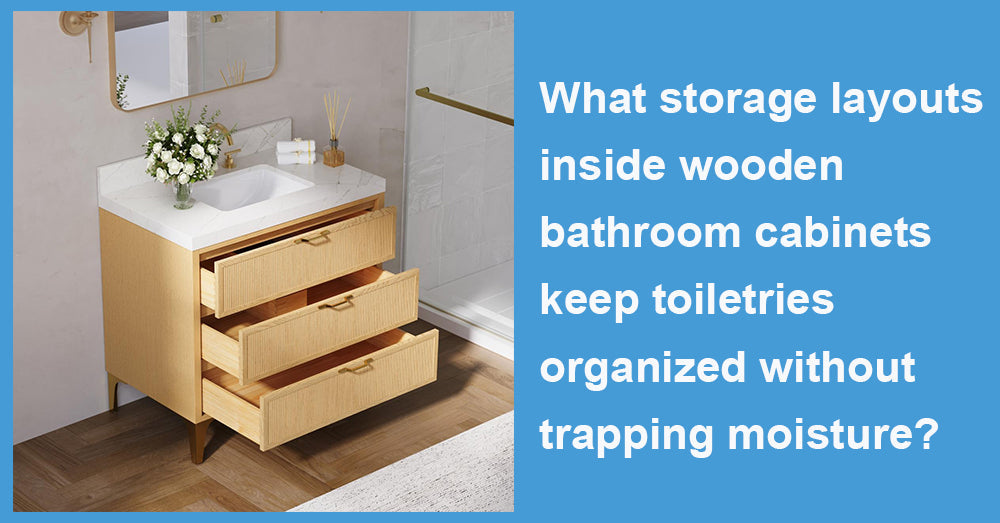



























Leave a comment
This site is protected by hCaptcha and the hCaptcha Privacy Policy and Terms of Service apply.