


















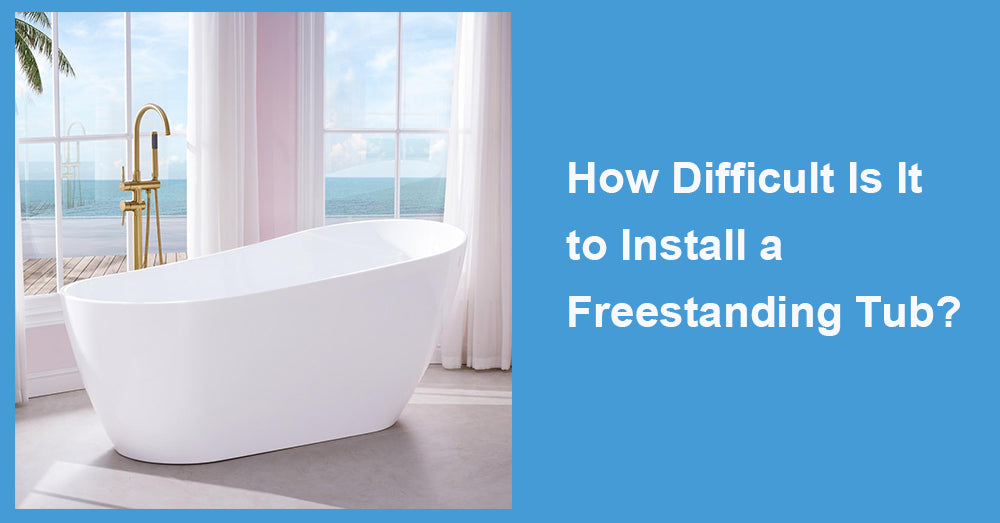
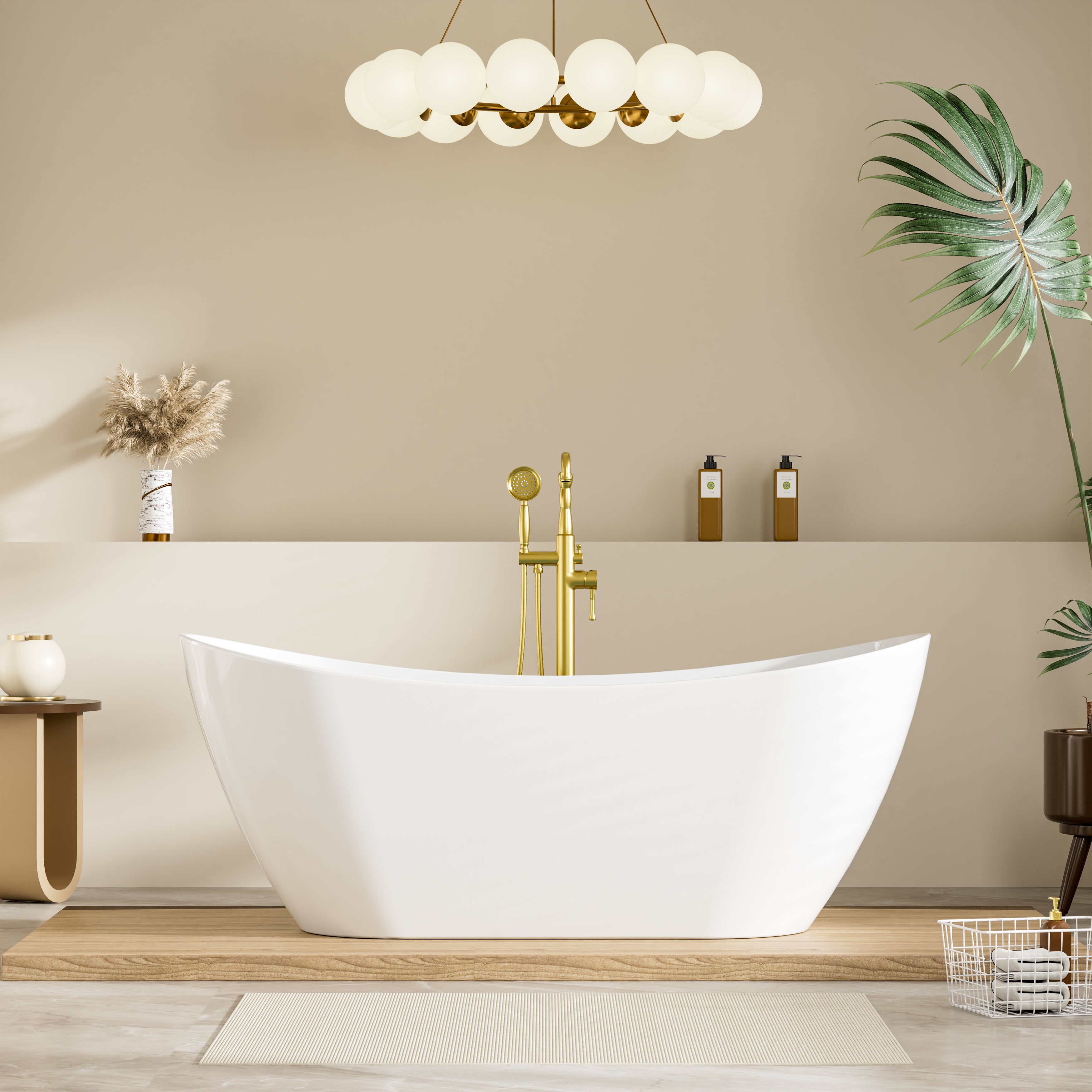
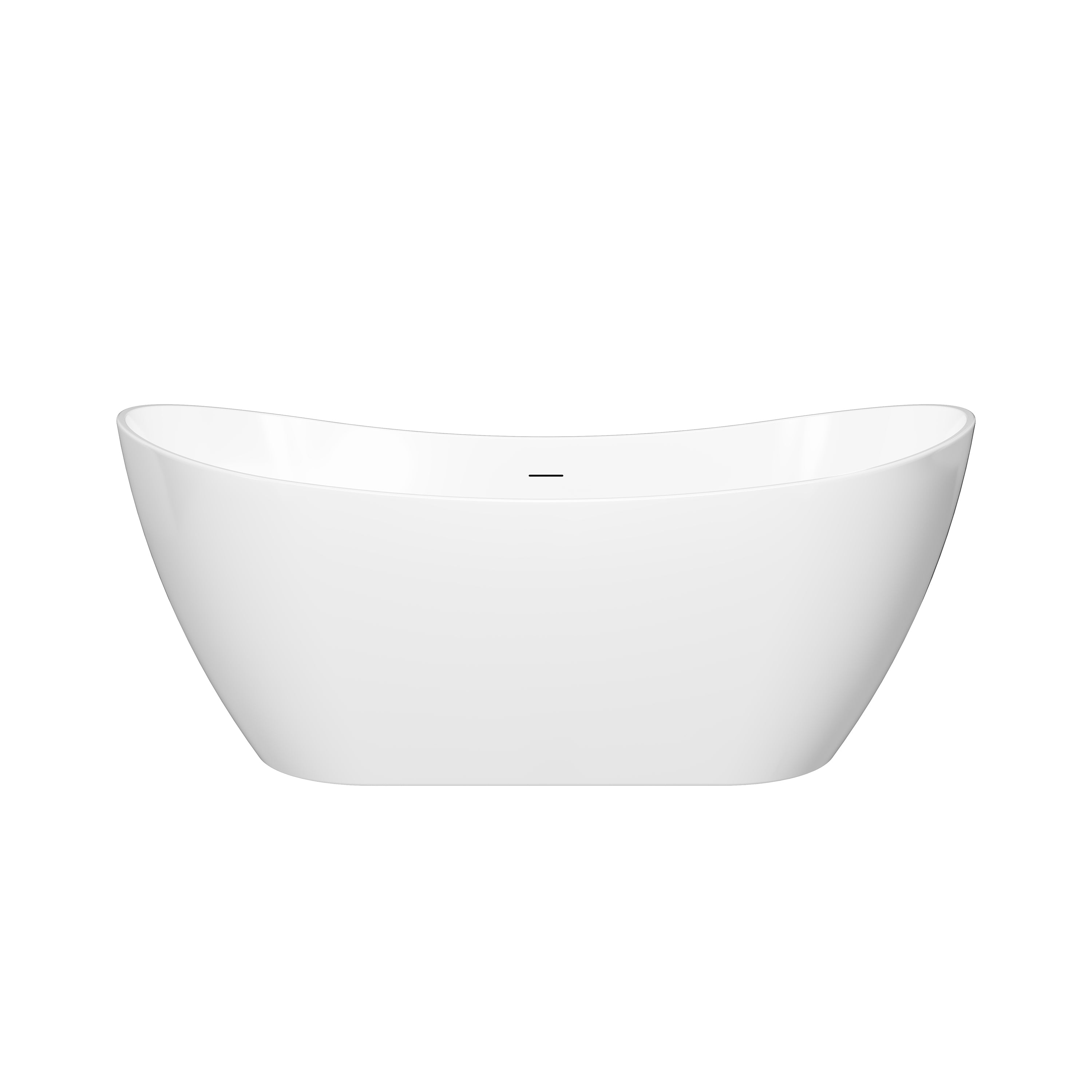
In the home decoration trend of 2025, freestanding tub are no longer exclusive to luxury villas; they have gradually become a popular choice for bathroom upgrades among middle-class families in the United States. It not only represents a high-quality lifestyle but also reflects people's new understanding of private space, relaxation experience and home aesthetics. However, many consumers often misunderstand the construction process or underestimate the challenges when choosing to install a freestanding bathtub. This article will examine common issues in the installation process and offer practical solutions to help consumers make informed decisions.
(I) Key preparations before installation: far more than just "buying a bathtub."
Although the freestanding bathtub is fashionable and straightforward in appearance, its installation involves multiple system engineering considerations, especially drainage, ground load-bearing, circuit layout, waterproof layer treatment, and other related issues. If it is not fully prepared in the early stage, it is very easy to cause rework or even safety hazards in the later stage.
• Space assessment: Measure the size of the bathtub and consider the flow line in and out of the bath, as well as the maintenance space and visual proportion. In particular, small bathrooms require a more precise layout.
• Floor load-bearing capacity: For cast iron and solid stone freestanding bathtubs, especially when full of water, the weight may exceed 200 kg. Therefore, it is necessary to ensure that the floor structure can support it.
• Drainage system: Freestanding bathtubs typically utilise either floor or wall drainage. When modifying an old bathroom, it is essential to determine in advance whether the drainage slope and pipe direction require adjustment.
(II) Common construction challenge 1: High difficulty in transportation and handling
Many consumers ignore the "volume challenge" of freestanding bathtubs - their large integrated structure makes it impossible to disassemble and transport them.
• Solution:
Before purchasing, confirm whether the bathtub size can pass through the door frame, elevator or stairs.
Confirm with the brand whether it provides door-to-door + floor delivery services.
If necessary, consider using pulleys and lifting equipment to assist with transportation.
(III) Common construction challenge 2: Pipes and drainage interfaces do not match
During the renovation of old bathrooms, the drainage outlet used by the original embedded bathtub may not be compatible with that of the new bathtub, which can easily cause leakage or slow drainage.
• Solution:
Ask a plumber to survey the location and height of the drainage outlet before installation.
Choose models with flexible drain hoses to improve interface compatibility.
Install an adjustable bathtub bracket to adapt to changes in ground slope.
(IV) Common construction challenge 3: Improper fixing and sealing
Some users believe that freestanding bathtubs do not require installation, but this is not the case. If they are not fixed in place, they may slide or even move during use, causing safety hazards and water seepage problems.
• Solution:
Use anti-slip mats or special bases to improve stability.
Use professional anti-mildew sealant strips on the bottom edge to prevent water from seeping in.
Place the bathtub after the tile construction is completed to ensure complete sealing.
(V) Coordination issues between electrical coordination and intelligent functions
With the popularization of smart bathrooms, some freestanding bathtubs have massage, hydrotherapy, heating and other functions, which put higher requirements on the circuit system.
• Solution:
Ask an electrician to evaluate the power load capacity before installation.
Make sure the bathroom has waterproof sockets and independent switches.
All electrical interfaces must be UL-certified and comply with local electricity regulations.

(VI) Seasonal factors and construction cycle coordination
In the United States, the construction season also has a significant impact on installation quality and efficiency.
• Spring and autumn (March-June, September-November): moderate climate, fast drying of materials, recommended construction.
• Summer: high temperatures can easily affect the stability of glue, and attention should be paid to the construction time.
• Winter: materials are brittle, transportation and construction efficiency are reduced, and protection must be strengthened.
(VII) Installation team selection and service guarantee
A high-quality installation team is the key to the success of the entire project. Consumers need to clarify the division of responsibilities: Who provides the product? Who is responsible for installation? Who should be found to solve problems?
• It is recommended to give priority to suppliers that provide "product + installation integration" or confirm whether there are auxiliary materials such as installation guidance videos and drawings.
• The delivery standards and warranty terms should be clearly stated in the contract to avoid disputes later.
(VIII) Maintenance and later use precautions
• Regularly check whether the drainage system is blocked.
• If a bathtub made of natural materials (such as solid wood and stone) is used, attention should be paid to moisture-proofing, waxing and other maintenance measures.
• If there are smart functions, test their response regularly to prevent long-term non-use and cause electronic control failure.
(IX) Installation precautions in rental houses or apartments
In the United States, many consumers choose rental houses, which also brings different installation restrictions.
• If it is a rental property, you should obtain the landlord's written permission in advance.
• You can choose a movable independent bathtub that does not damage the original ground structure to avoid changing the original pipe layout.
• Give priority to lightweight materials (such as acrylic) to reduce pressure on the ground.
(X) Budget planning and long-term considerations
Many consumers pay attention to the budget but ignore the hidden costs of long-term use and maintenance.
• Choose a bathtub with stable quality, complete accessories, and easy maintenance to save future maintenance costs.
• Within the budget, give priority to mid-to-high-end brand products with warranty, which will help improve service life and experience satisfaction.
(Conclusion: Be prepared and let the wonderful experience start from the "first step")
Installing a freestanding bathtub is not out of reach. As long as you plan in advance, select materials scientifically, and cooperate with a professional team for construction, you can create a private bathing space with great texture and comfort, even in a medium-sized bathroom. In 2025, whether you are a design expert who pursues aesthetic enjoyment or a home user who hopes to improve the quality of living, you should grasp every detail before installation because details determine experience, and experience determines value.












Leave a comment
This site is protected by hCaptcha and the hCaptcha Privacy Policy and Terms of Service apply.