




















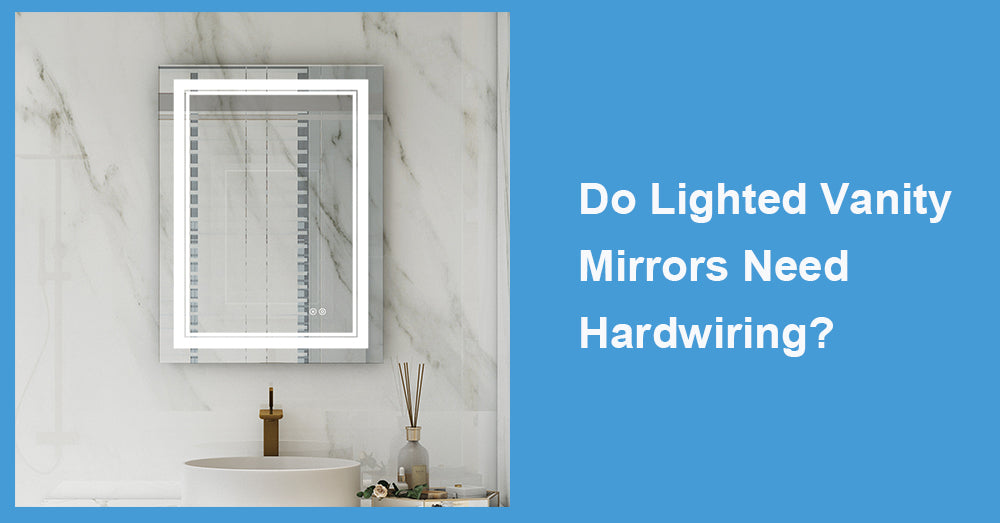
Many people's biggest concern when buying lighted vanity mirrors is not whether they light up, but whether they need to be hardwired.
The conclusion should be made clear: it is not necessarily necessary. There are two common power supply methods for illuminated mirrors: plug-in and hardwired. Whether hardwiring is necessary depends on the location of the socket in your bathroom, circuit protection (GFCI), appearance requirements, and whether you want to connect the light/anti-fog to the wall switch.
In a large number of bathroom renovation projects, the adoption rate of illuminated mirrors is on the rise, indicating that such products are being planned as "conventional electrical equipment" rather than special decorative parts.
1. First, distinguish between two types of power supply: plug-in and hard-wired
A. Plug in: No wall breaking, quick to use
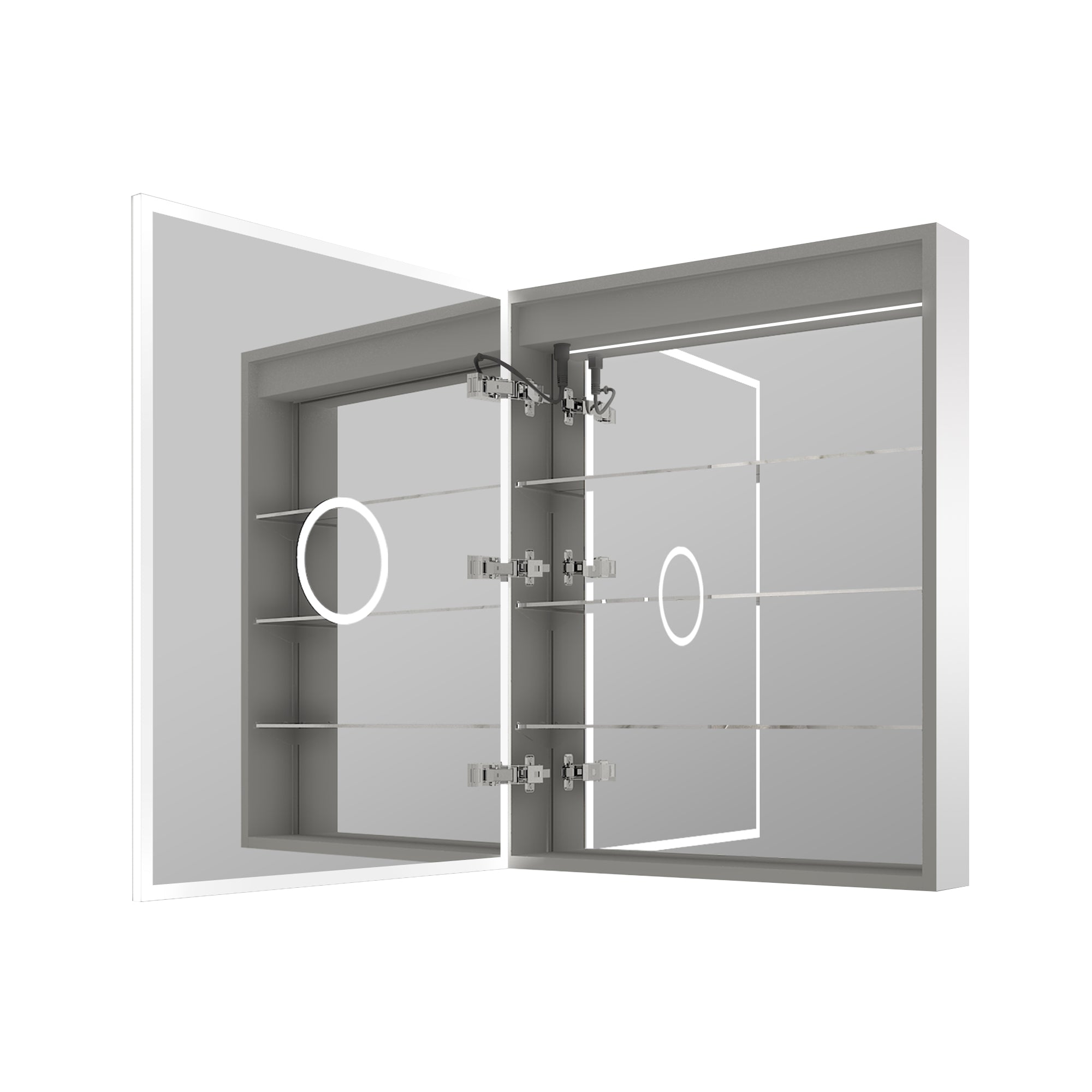
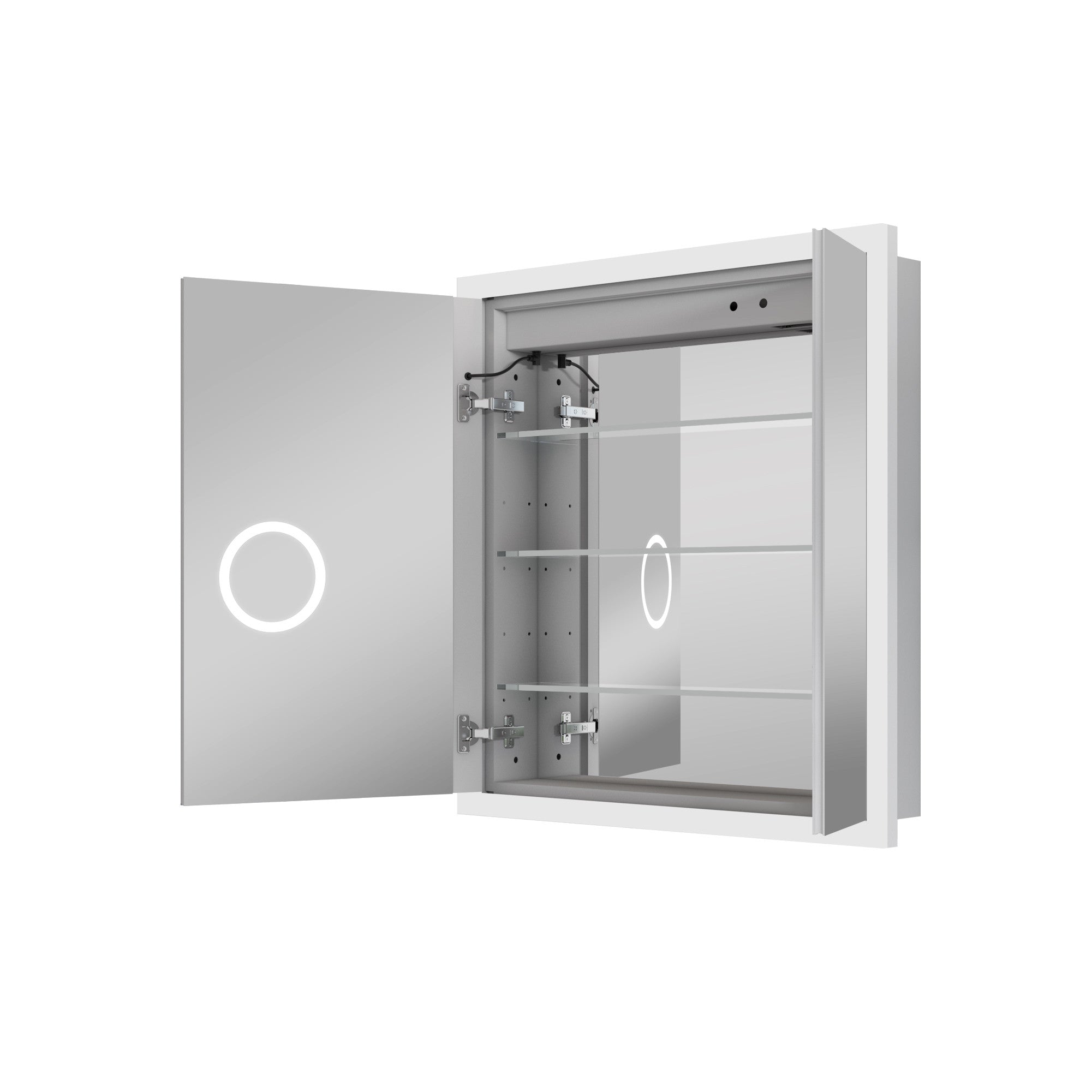
Features: The mirror has a power cord and plug on the back/side, which can be directly plugged into the bathroom socket.
fit:
• You don't want to change the wall or line; you just want to upgrade quickly.
• There are already sockets near the mirror, and they can ensure that the wires are not exposed (such as sockets inside the mirror cabinet or in the mirror blocking area).
Risk point: If the socket position is not ideal, the exposed power cord will affect the appearance. In addition, the bathroom is in a humid area and is more sensitive to circuit protection (GFCI protection will be discussed below).
B. Hardwired: The cleanest and most "lamp-like" method
Features: The mirror is directly connected to the junction box inside the wall, without any exposed plug.
fit:
• You pursue minimalist and clean walls;
• You want to control the mirror with a wall switch (or incorporate the mirror into the whole house lighting logic);
• You were already renovating, so the cost of electrical construction is lower.
Cost: It requires reserved junction boxes and wire positions, often requiring more involvement from electricians, thereby increasing overall construction complexity.
Conclusion: "Whether hard wiring is required or not" is not a safety issue first, but rather "installation conditions+appearance/control requirements" first.
2. From the perspective of "safety and regulations": Hardwiring is not the only correct option; the key is GFCI and circuit
The true bottom line for bathroom electricity usage is that in humid environments, there must be reliable leakage protection (GFCI) and standardized circuits.
The authoritative bathroom planning guidelines explicitly state that all bathroom sockets should be protected by GFCI protection, and that at least one GFCI-protected socket location that meets the requirements should be installed near the washbasin.
NEC rules say bathroom sockets should be on a 120V, 20A branch circuit. This limits the branch’s power supply range, especially for bathroom sockets.
This means:
• Plug-in can be safe: the premise is that the socket is protected by GFCI, the location is reasonable, and the product is suitable for humid environments (marked with damage location, etc.).
• Hardwiring may be unsafe if the wiring isn’t standard, grounding is poor, or the junction box isn’t sealed or secured. These can cause safety issues.
So: don't use 'hard-wired' as a synonym for 'safer'. More importantly, whether there is GFCI protection, whether the circuit is compliant, and whether the installation is standardized.
3. From an "experience" perspective: When is it strongly recommended to hardwire?
The value of hard wiring will be very obvious in the following situations:
A. Do you want to use wall switches to control (especially in conjunction with other lights)
Many families hope that when they turn on the bathroom light, the mirror will also light up; or mirror lights can be used as part of the main lighting. In this scenario, hard wiring is more natural because it can be directly incorporated into switch control (of course, it also depends on whether the product supports the "wall control+mirror touch" compatibility logic).
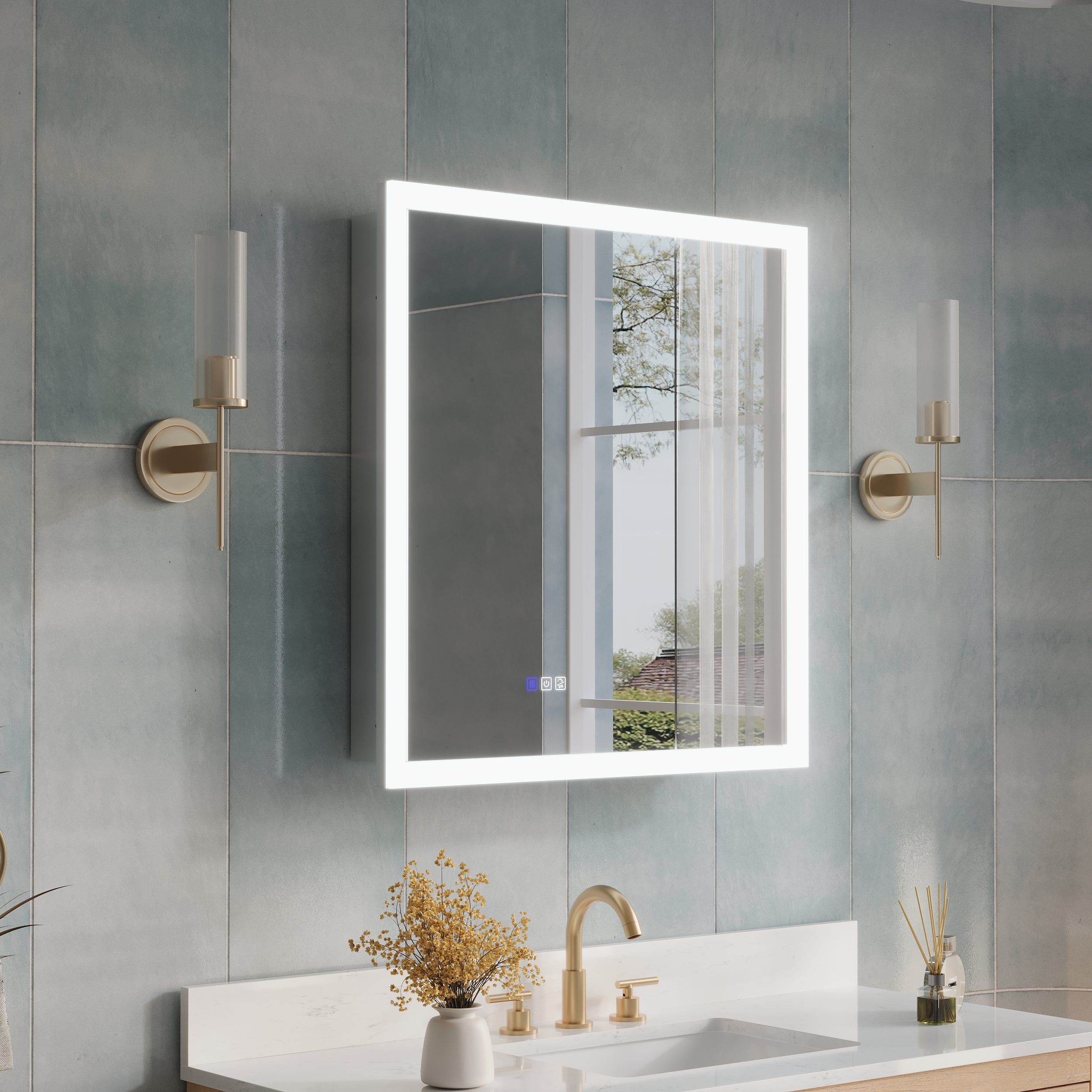
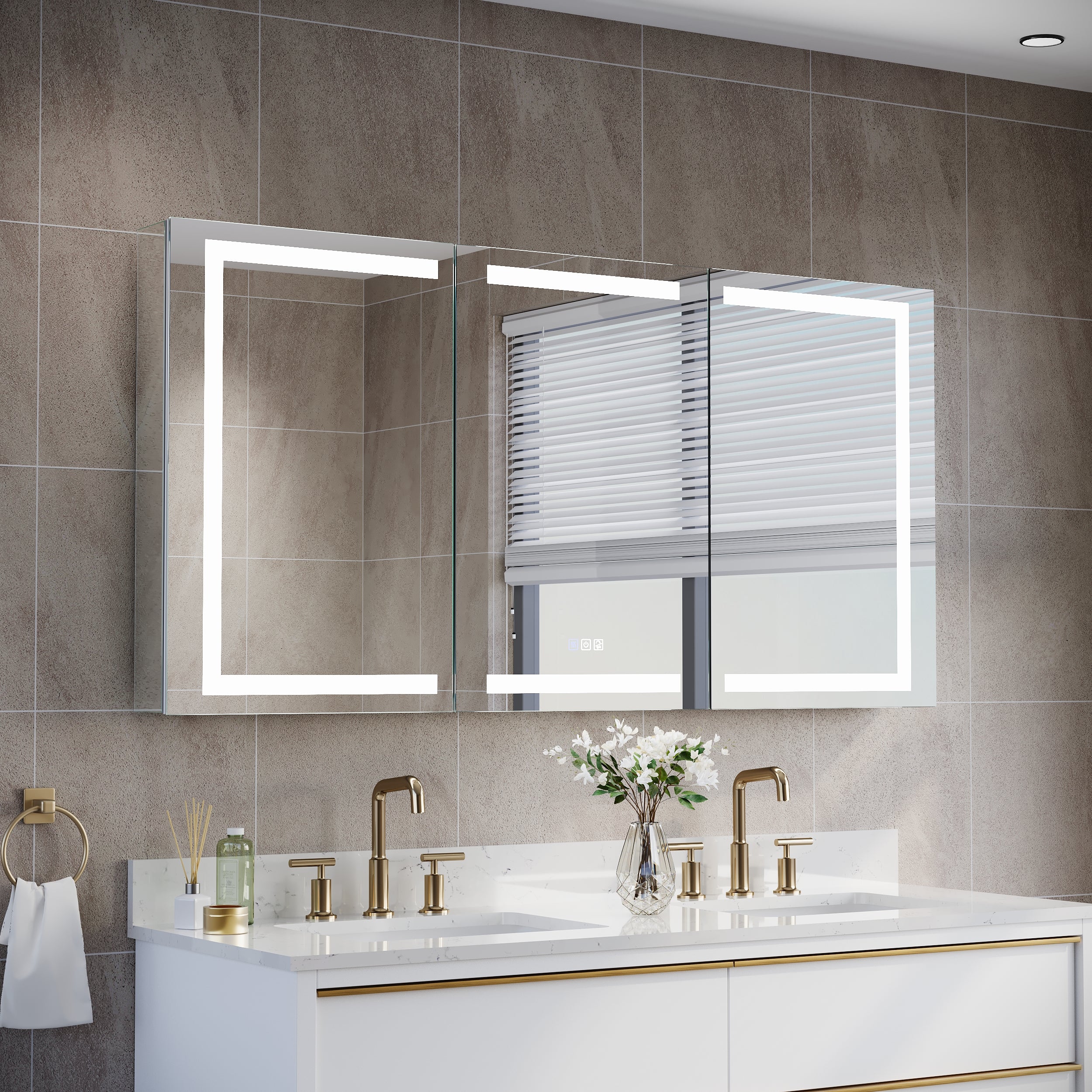
B. You don't want to see any lines
The most common issue with plug-in systems is that the socket is outside the mirror's coverage area, so the wires must be exposed. Hardwiring can make the appearance more like a 'fully assembled effect'.
C. You bought a mirror with "anti-fog/heating/multifunctional" function
A mirror with anti-fog is equivalent to an additional electrical load (i.e., a heating element). You may wish to:
• Separate control of lights and anti-fog;
• Anti-fog is only activated when needed, reducing unnecessary power consumption and heat generation.
This type of finer control requirement is often better suited for solving in one go during the hard wiring and circuit planning stages (depending on whether the product's internal circuit supports sub-control).
4. When is it not necessary to hardwire? Plug-in is actually more cost-effective
A. You prioritize low renovation costs
Guest bathroom, rental room, or just want to try the experience with a light mirror first, without touching the wall or electricity. Plug-in models have lower costs and more flexible replacements.
B. You already have a GFCI socket in the ideal location at your home
If a socket can be hidden behind a mirror or cabinet so that no wires show, plug-in models have no appearance drawback.
C. You are more concerned about post-maintenance and replacement
Some integrated mirrors are difficult to repair once the power drive fails. Plug-in is usually more convenient in "replacing the entire mirror" or temporary replacement solutions (without the need to modify the junction box).
5. Use these 6 questions to quickly determine a solution before purchasing
• Is there a GFCI-protected socket behind/near the mirror? Can the location be obscured?
• Can you accept seeing the power cord? Cannot accept → more rigid wiring.
• Do you want to connect the mirror to the wall switch/link it with other lights? Need to be more hardwired.
• Do you need anti-fog and would like to have separate control from the lights? Need to be more inclined towards "planning routes in advance" (with greater advantages of hard wiring).
• Is your bathroom circuit a standardized 20A branch and well-protected? Uncertain → Let the electrician check the circuit and protection before making a decision.
• Is the product clearly labeled as suitable for damp locations and has reliable certification information? I'm not sure → It's not recommended to forcefully insert it into the wall when you come up.

6. Conclusion: One sentence summary: "Is it worth hard-wiring"
Lighted vanity mirrors do not necessarily require hardwiring.
You need "minimalist appearance+wall control linkage+functional control+long-term overall feeling" → Hardwiring is more worthwhile;
You need "low-cost upgrade+no power change+ideal socket location+easy future replacement" → Plug-in type is completely feasible.
What truly determines safety and long-term stability is the GFCI protection and standardized installation of bathroom circuits, rather than the point of "whether there is hard wiring".

























Leave a comment
This site is protected by hCaptcha and the hCaptcha Privacy Policy and Terms of Service apply.