














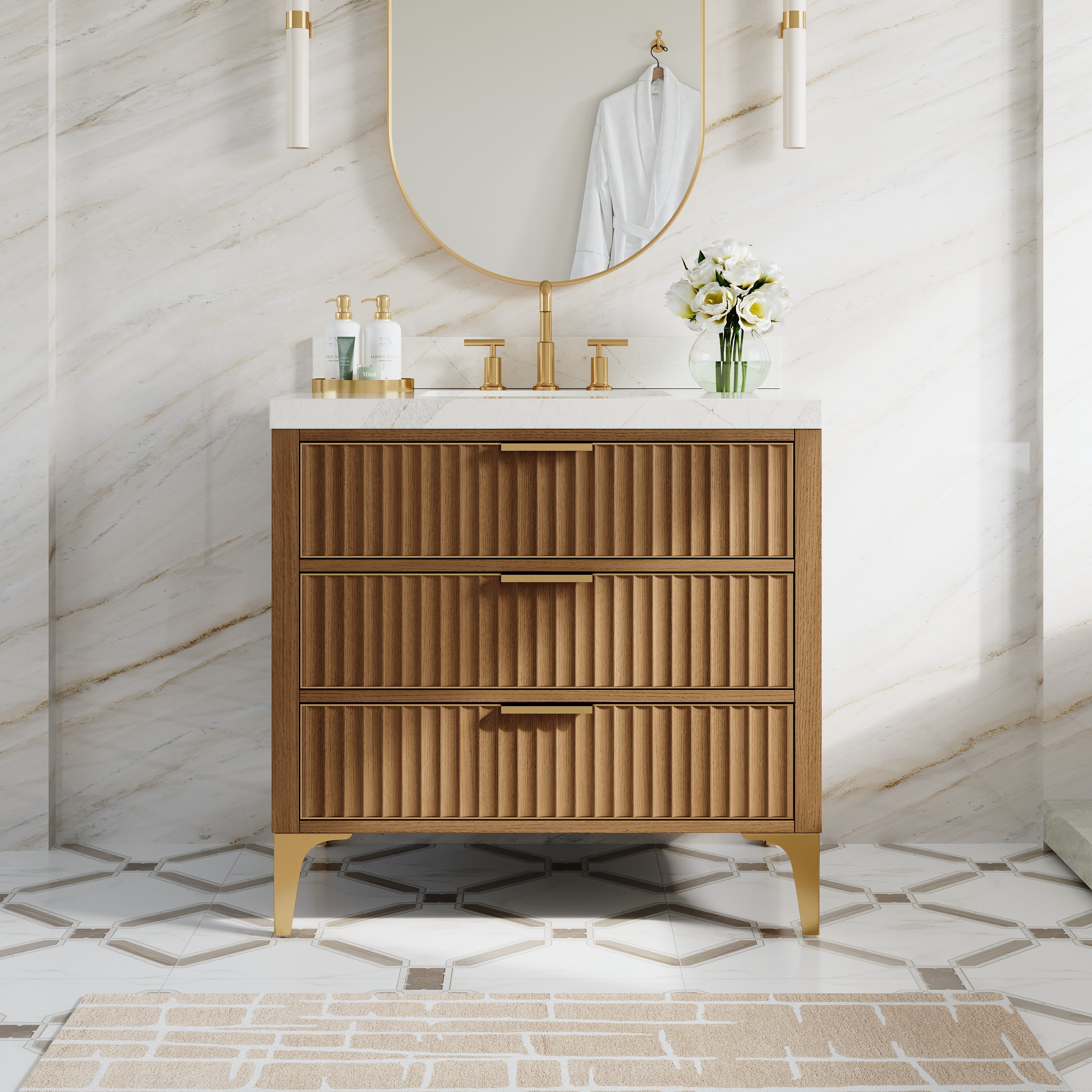
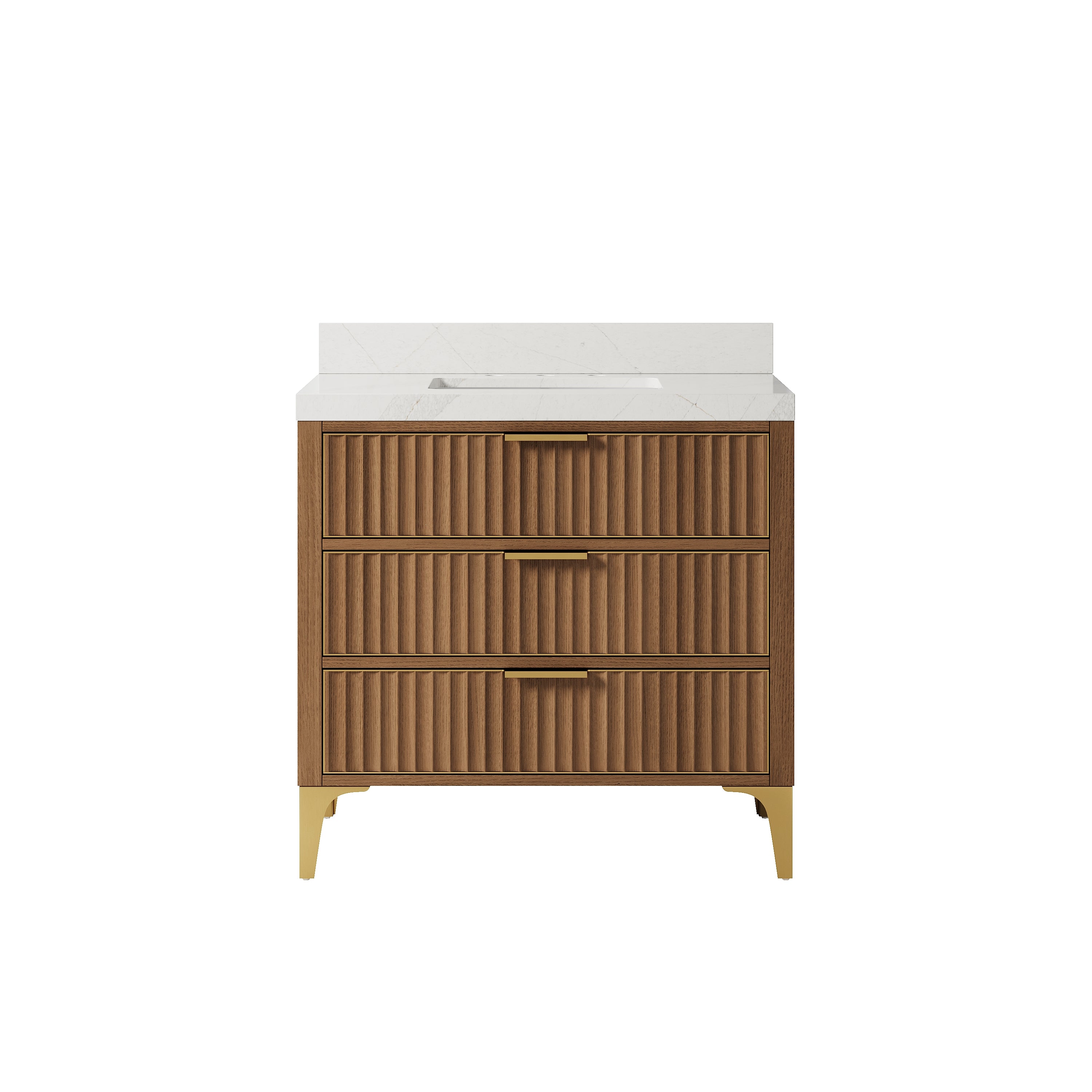
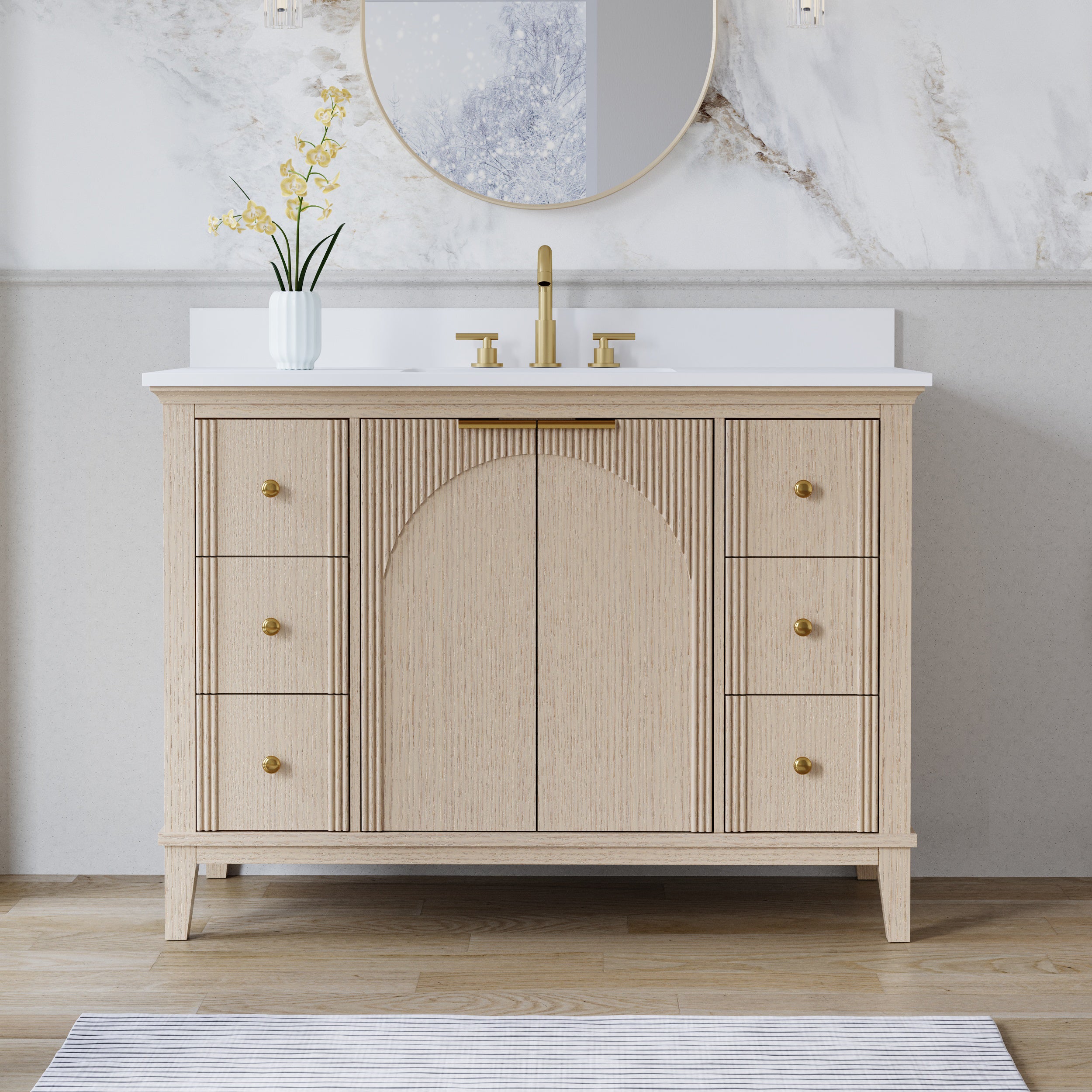
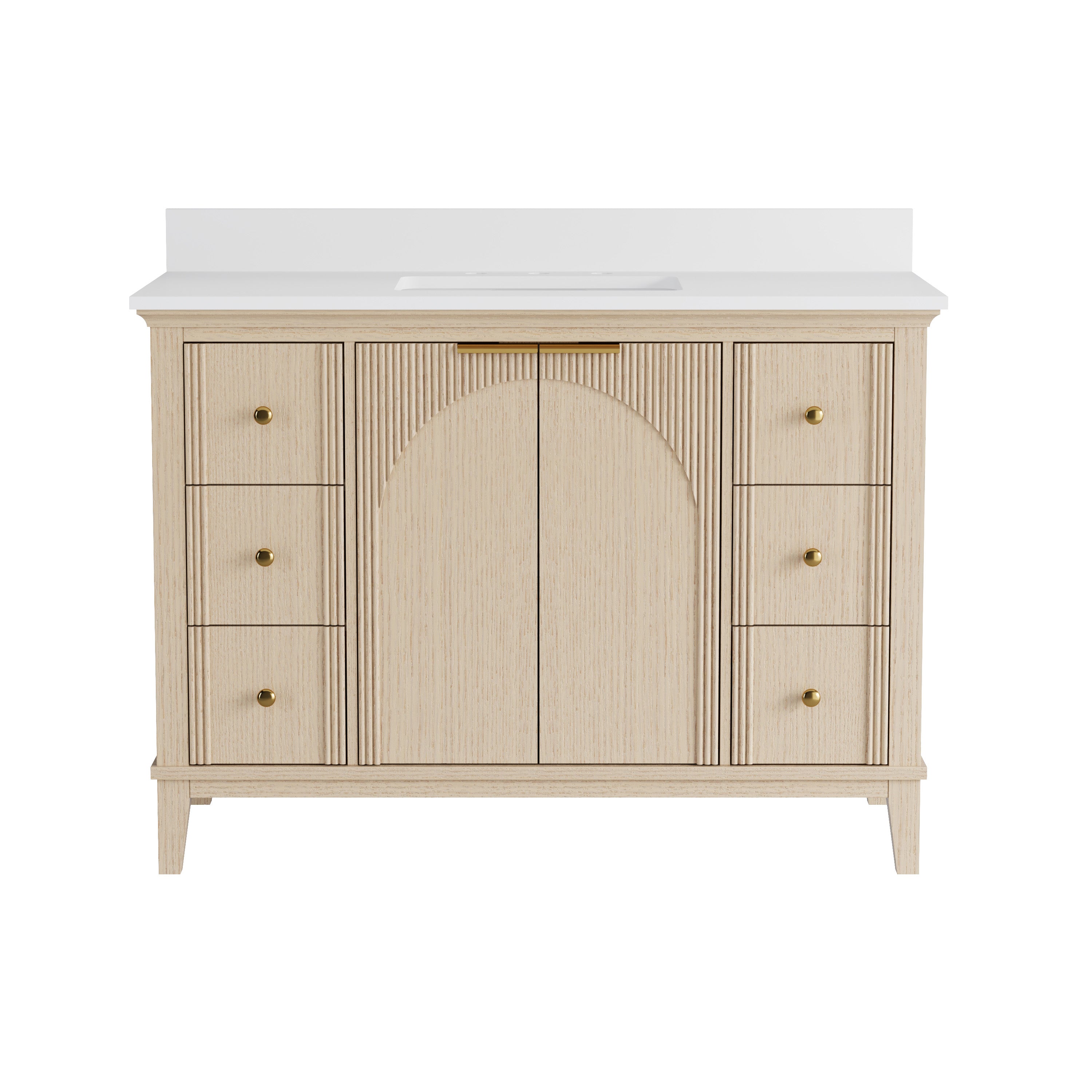


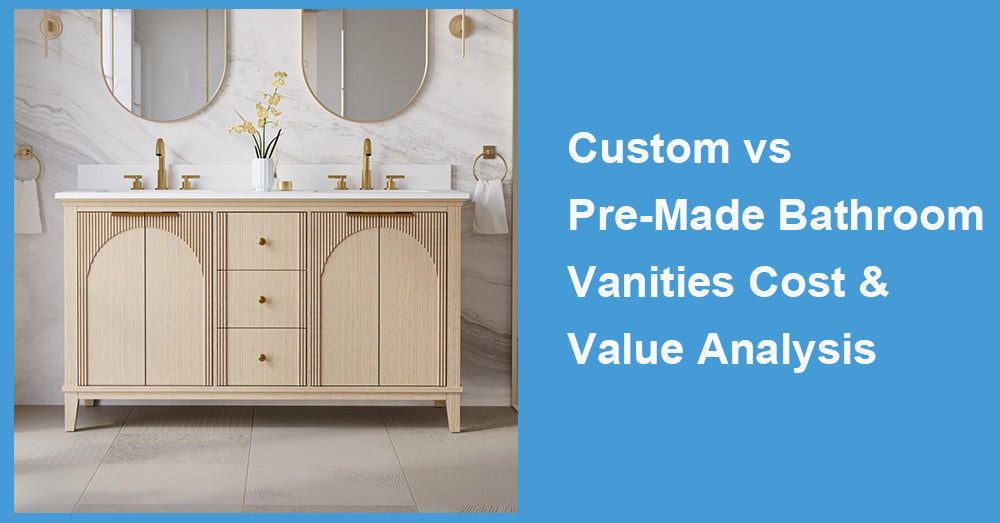
Choosing between a custom vanity and a pre-made unit is not simply a question of spending more or less. The better choice depends on the room, plumbing, materials, and the project’s long-term goals. A pre-made vanity can control costs and shorten installation time, while a custom piece can solve awkward dimensions, improve storage, and create a more integrated appearance. The useful comparison is total installed value, not the cabinet price shown online or in a showroom.
1. Understand What You Are Comparing
A pre-made, or prefabricated, vanity is manufactured in standard configurations. Some packages include the countertop and sink, while others include only the cabinet. Because production is standardized, buyers can usually see the final appearance before ordering and receive it relatively quickly.
A custom vanity is designed for a particular wall, plumbing arrangement, storage plan, and style. Width, depth, sink position, drawer sizes, wood species, finish, hardware, and countertop details can be adjusted. Semi-custom products fall between the two categories.
Always compare equal scopes. A complete pre-made package should not be compared with a custom cabinet quote that excludes the countertop, sink, delivery, plumbing, and installation.
2. Compare the Real Upfront Costs
Current estimates place most prefabricated bathroom vanities between $100 and $2,600 before installation. The overall installation project commonly ranges from about $400 to $2,200. A simple prefabricated installation may start near $300, while a custom vanity project can reach roughly $4,000 or more. (Source: Angi 2026 Bathroom Vanity Installation Cost Guide)
For custom work, cabinet construction alone may cost about $500 to $2,800. Installation can add $200 to $1,000, and countertop materials may range from approximately $5 to $200 per sq. ft. Plumbing changes are usually separate.
These figures are planning ranges. Local labor, wood selection, delivery, wall repairs, and plumbing changes can shift the total considerably.
3. When a Pre-Made Vanity Offers Better Value
Pre-made vanities usually provide the strongest value when existing plumbing stays in place and the room can accept a standard configuration. They reduce design time and fabrication time. Many models also include a matching top and sink.
This route works well for guest bathrooms, powder rooms, rental properties, and renovations with firm budgets or short schedules. Savings are greatest when the new vanity connects without relocating drain or water lines.
The tradeoff is compromise. There may be filler gaps, less useful drawer placement, limited finish choices, or hardware that needs upgrading. A low purchase price can also lose its advantage when delivery, a separate countertop, plumbing changes, and installation are added later.
4. When Custom Cabinetry Earns Its Higher Price
Custom work becomes easier to justify when the bathroom has an unusual wall length, off-center plumbing, limited door clearance, deep trim, or an uneven wall. A made-to-measure cabinet can use space that a standard unit would leave empty and can place drawers around pipes instead of sacrificing a storage section.
Clearance also affects value. The National Kitchen & Bath Association recommends at least 30 in. of clear floor space from the front of a lavatory or other fixture to an opposite wall or obstruction. A vanity that is slightly too deep may technically fit while making the room uncomfortable.
Customization can also support divided storage, built-in outlets, special-height counters, or a countertop shaped around an imperfect wall. Here, the extra spending buys better function, not just a different appearance.
5. Construction Quality Matters More Than the Label
“Custom” does not automatically mean durable, and “pre-made” does not automatically mean poor quality. Compare the materials used for the frame, doors, cabinet box, drawers, and back panel. Check whether vulnerable edges are sealed and whether the interior finish is complete.
Drawer joinery, slide quality, hinge adjustability, countertop support, and finish consistency all influence long-term performance. A well-built pre-made vanity may outlast a poorly specified custom one. A skilled cabinetmaker, however, can select stable materials, improve plumbing access, and reinforce heavy countertops.
Review the warranty. Confirm who handles warped doors, finish failure, or damaged hardware.
6. Consider Resale and Long-Term Use
Higher spending does not guarantee a higher return. The 2025 Cost vs. Value Report estimated that a midrange bathroom remodel recovered about 80% of its cost at resale, while an upscale remodel recovered about 42%.
These figures cover full remodels rather than vanity replacements, but the lesson is relevant. Functional, broadly appealing improvements often recover a larger share of their cost than highly personalized luxury work.
A custom vanity may still be worthwhile in a long-term home when it fixes poor storage or an awkward layout. For a property likely to be sold soon, a durable pre-made vanity in a neutral finish may provide a better balance.
Value should also include daily use. Well-positioned drawers, accessible storage, enough counter space, and easy cleaning can improve the bathroom every day. These benefits may justify customization even when they do not produce a dollar-for-dollar return at resale.

7. Compare Complete Installed Quotes
Ask every supplier or contractor to quote the same scope. The estimate should state whether it includes removal, disposal, assembly, countertop, sink, faucet drilling, backsplash, delivery, plumbing connections, wall repair, and final sealing.
Angi estimates old-vanity removal at about $150 to $500 and installation labor at about $200 to $1,000, showing how omitted work can change the comparison.
The broader budget matters too. Houzz reported a median spend of $13,000 for bathroom renovations completed in 2024 and $22,000 for major remodels.
Before signing a contract, request an itemized estimate and confirm the payment schedule, lead time, material specifications, installation responsibilities, and warranty coverage. For custom work, approve dimensioned drawings before fabrication begins. For a pre-made unit, verify the finished width, depth, countertop overhang, sink position, and plumbing clearance before ordering.
Final Verdict
Choose a pre-made vanity when the layout is straightforward, standard dimensions work, and cost control or speed is the priority. It will usually deliver better short-term financial value and a more predictable installation.
Choose custom when standard products waste space, interfere with movement, or cannot provide the required storage and construction details. The higher price is easier to justify when customization prevents major plumbing changes, makes an awkward room usable, or creates storage that will be used every day.
The best value is the vanity that fits correctly, avoids unnecessary building changes, handles bathroom conditions, and supports daily routines. Measure carefully, compare complete quotes, and pay more for customization only when it delivers a clear functional benefit.












Leave a comment
This site is protected by hCaptcha and the hCaptcha Privacy Policy and Terms of Service apply.