






















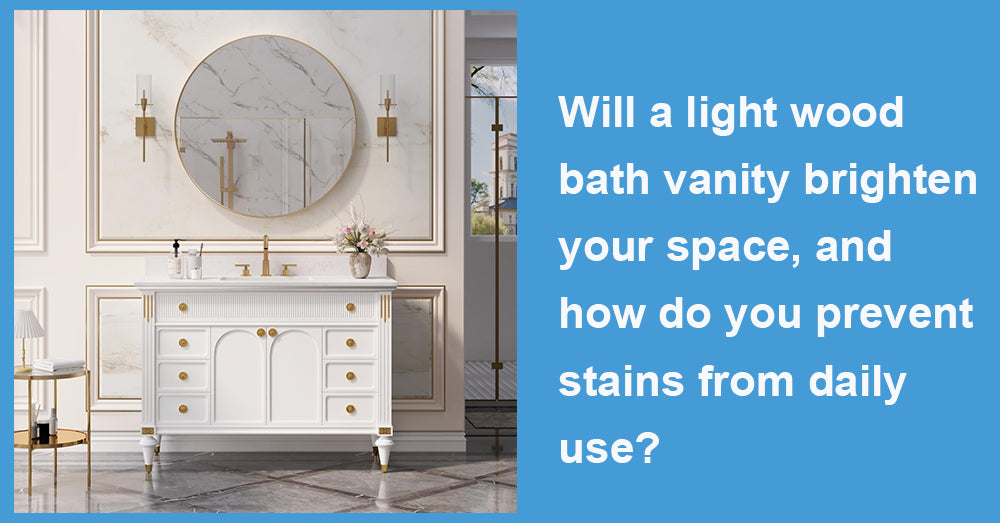
A light wood bath vanity can make a bathroom feel brighter and more open because lighter surfaces reflect more visible light back into the room. Designers often describe this effect using Light Reflectance Value, or LRV, which places surface colors on a 0 to 100 scale based on how much light they reflect. Higher values reflect more light, while lower values absorb more light. (Source: HunterLab, Light Reflectance Value overview.)
The good news is that “bright and light” does not have to mean “high maintenance.” If you understand what actually causes stains on pale wood finishes, you can prevent most of them with a simple routine that focuses on timing, humidity, and the right cleaning methods.
1. Why light wood visually brightens a bathroom
Bathrooms often have limited daylight and lots of hard surfaces, so reflectance matters. LRV is a practical way to think about it: a surface closer to 100 reflects more light, so it tends to make the space feel brighter, while a surface closer to 0 absorbs more light and can feel heavier or moodier. (Source: HunterLab, Light Reflectance Value overview.)
Light wood tones generally sit in a mid to higher reflectance range compared with darker finishes. In practice, a light vanity can bounce both daylight and artificial light, especially when paired with lighter walls and a clean mirror line.
What this means in real rooms:
· The space can feel larger and cleaner without changing fixtures.
· Shadows look softer because light is reflected back into the lower half of the room.
· Water spots and residue can show faster on pale finishes, so prevention matters.
2. What “stains” on light wood vanities usually are
Most everyday “stains” are not deep pigment soaking into wood. They are often surface buildup:
· Mineral deposits from water droplets that dry on the surface.
· Toothpaste spray, soap film, and skincare residue that turns into haze.
· Small wet rings from bottles left on the counter.
· Darkened seams where water repeatedly sits at joints.
True absorption problems often start at weak points like seams and end grain. End grain exchanges moisture faster than face grain, which is why edges and cut ends are more vulnerable than flat faces. Some wood moisture experts note that end grain can absorb and release moisture at much higher rates than face grain. (Source: Wagner Meters, end grain vs face grain moisture behavior.)
3. The biggest protection step is humidity control
Even a great finish struggles if the room stays steamy for long periods. Reducing humidity lowers condensation, shortens wet time on surfaces, and reduces musty cabinet interiors.
A commonly cited guideline is to keep indoor relative humidity below 60 percent, ideally between 30 percent and 50 percent if possible. (Source: U.S. EPA, mold and moisture guidance.)
Practical habits:
· Run the exhaust fan during showers and keep it on afterward until the mirror clears and the room feels dry.
· If you see frequent condensation on pipes or walls, treat it as a sign that moisture is lingering too long.
· Consider a small humidity meter so you can see patterns instead of guessing.
4. The daily routine that prevents most stains (under 60 seconds)
This routine is simple and realistic:
Step 1. Wipe the splash zone.
Use a clean microfiber cloth around the faucet area and the front edge of the counter.
Step 2. Dry edges and seams, not only the flat surface.
Spend 5 to 10 seconds on lower door edges, drawer edges, and seam lines near the sink.
Step 3. Quick sink base check.
Open the cabinet and look for dampness near the trap and supply lines. A slow drip creates stains fast.
If you do only one thing, do this: do not let water air-dry repeatedly in the same spots. Air drying leaves minerals and a cleaner film behind, and buildup becomes dullness.
5. Weekly cleaning that keeps light wood bright
The goal is to remove film without damaging the finish.
Safe weekly method for most factory finishes:
· Dust first with a dry microfiber cloth.
· Wipe with a slightly damp cloth and warm water.
· If needed, add a small amount of mild dish soap.
· Wipe again with a clean, damp cloth to remove soap residue.
· Dry immediately with a separate clean cloth.
6. Cleaners and tools to avoid
Many people accidentally create “stains” by using harsh products. These can slowly dull or roughen the finish.
Avoid:
· Abrasive powders and scouring pads.
· Strong bathroom sprays meant for tile and grout.
· Bleach or ammonia-heavy cleaners used repeatedly on wood.
· Abrasive “eraser” sponges on finished wood, which can micro-scratch and leave haze.
7. Protect the high-risk zones: edges, seams, and the sink base
Light wood finishes stay clean when edges stay sealed and dry. If they do not, you often see dark seams or edge swelling.
High-impact prevention moves:
· Do not drape wet towels over cabinet edges.
· Do not store dripping bottles on the vanity top without a tray.
· Keep the sink base floor dry. Use a removable mat or tray, but replace it if it stays damp.
· If a damp area keeps returning, fix the source, not the symptoms.
Remember: end grain and cut edges move moisture far faster than flat faces. (Source: Wagner Meters, end grain vs face grain moisture behavior.)
8. Quick fixes for common daily use issues
Water spots or chalky dots: wipe with a damp cloth, then dry. If needed, use mild soapy water, wipe with clean water, then dry.
Toothpaste haze near the sink: weekly mild cleaning plus daily quick wipe and dry. Avoid harsh sprays that leave residue.
Darkened seam line: Change the drying habit first. If it continues, inspect for a slow leak or an unsealed edge.

Bottom line
Yes, a light wood bath vanity can brighten your space because lighter surfaces reflect more visible light, often described using LRV on a 0 to 100 scale. (Source: HunterLab, Light Reflectance Value overview.) To prevent stains, shorten water time on the surface, keep humidity under control, and clean gently without abrasives or harsh chemicals. A strong target is keeping indoor relative humidity below 60 percent and ideally between 30 percent and 50 percent when possible. (Source: U.S. EPA, mold and moisture guidance.) With a quick daily wipe and a simple weekly clean, a light wood vanity can stay bright through everyday use.







































Leave a comment
This site is protected by hCaptcha and the hCaptcha Privacy Policy and Terms of Service apply.