






















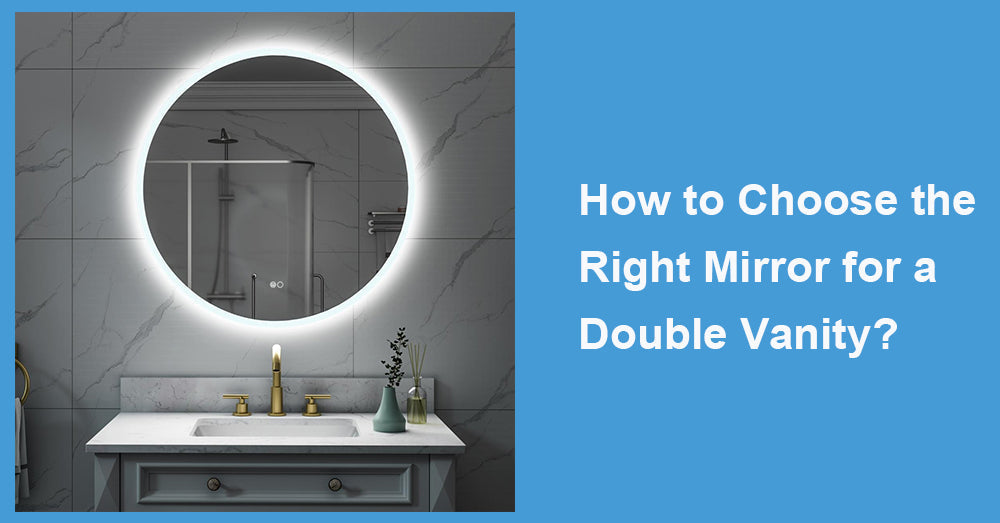
A double vanity can be one of the most satisfying upgrades in a bathroom, but it only delivers that “easy mornings” feeling when the bathroom mirror plan is sized, placed, and lit correctly. With two sinks, a longer countertop, and often two people using the space at once, the mirror becomes both a design anchor and a daily tool. The best choice is not simply “one mirror or two.” It is a measured decision based on vanity width, sink spacing, lighting strategy, and how much visual calm you want on the wall.
1. Start With the Numbers: Vanity Width and Sink Centers
Before you shop, measure in inches:
· Total finished vanity width (countertop edge to edge).
· Center point of each faucet (or sink drain) measured from the left wall.
· Height of backsplash, if any.
· Locations of outlets, sconces, windows, and side walls.
Why this matters: Double vanities are commonly found in widths like 48", 60", and 72", with larger options up to about 84" depending on layout and storage needs. (Source: Wayfair double vanity size guide. Source: Edward Martin double vanity size guide.) A mirror that is perfect over a 36" single sink can look undersized or awkward across 60"+ of countertop.
2. Decide Between One Large Mirror or Two Separate Mirrors
Option A: One large mirror (the “unified wall” look)
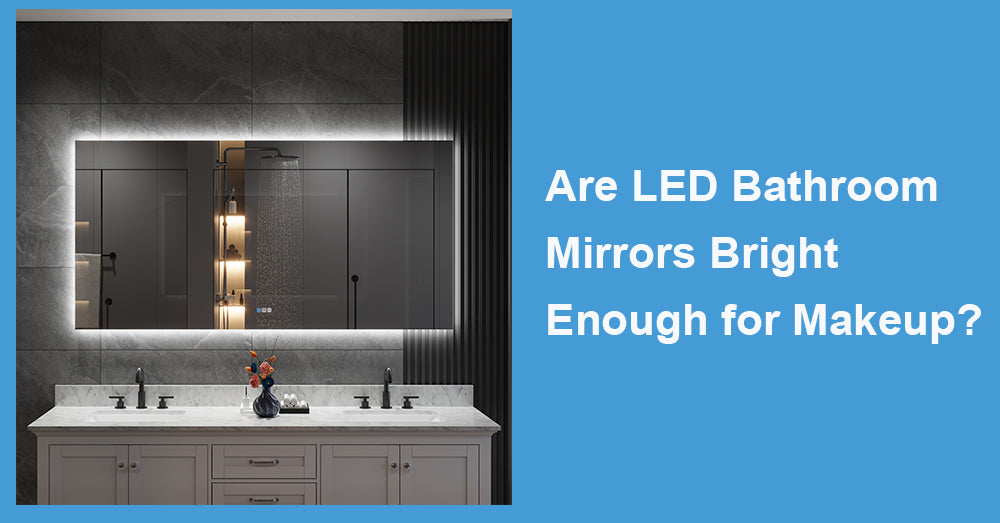
A single mirror spanning much of the vanity creates a clean, continuous line and can make the room feel brighter by reflecting more light and more of the space.
Choose one mirror if:
· You want a calm, minimal look across a long wall.
· The sinks are not dramatically separated.
· You want the easiest way to make the wall feel wider.
Watch-outs:
· A wide mirror reflects everything, including countertop clutter.
· Lighting must be planned to stay even across the full width.
Option B: Two mirrors (the “two zones” look)
Two mirrors can give each sink its own center and make shared routines easier. Visually, it can feel symmetrical and intentional when sized and aligned well.
Choose two mirrors if:
· Each sink has a clear “zone” and you want each user centered.
· You plan to use sconces beside each mirror.
· You prefer framed mirrors as a design feature.
Watch-outs:
· Spacing and alignment must be precise, or the wall can look choppy.
· Thick frames can visually crowd a narrow wall.
A simple rule: If the wall is already busy (tile patterns, cabinets, windows), one large mirror often reads cleaner. If the wall is simple and you want rhythm and symmetry, two mirrors can look more intentional.
3. Size the Mirror(s) With a Proven Proportion Rule
A commonly used guideline is for a vanity mirror to span about 70% to 90% of the vanity width for balanced proportions. (Source: Edward Martin, “How Big A Mirror Should Be Over A Vanity?”)
If you choose one large mirror
Use the 70% to 90% guideline against the full vanity width, then adjust for practical constraints like sconces and trim.
Example starting points:
· 60" vanity: mirror often looks balanced around 42" to 54".
· 72" vanity: mirror often looks balanced around 50" to 65".
Do not force a mirror to the wall edges. Leaving breathing room helps the wall feel designed, not stuffed.
If you choose two mirrors
Treat each sink area like its own mini-vanity:
· Center each mirror on its faucet.
· Keep both mirrors identical in width, height, and frame profile.
· Keep the gap between mirrors consistent and intentional.
If your sinks are close together, two mirrors may leave an awkward narrow gap. In that case, one large mirror often looks smoother.
4. Pick Height for Real People, Not “Center of Wall”
Comfort is about where the reflecting surface begins and ends. A useful reference point comes from accessibility standards for mirrors:
· Mirrors above lavatories or countertops: bottom edge of reflecting surface at 40" maximum above the finished floor.
· Mirrors not above lavatories or countertops: bottom edge at 35" maximum. (Source: 2010 ADA Standards, Section 603.3. Source: Corada 603.3 Mirrors page.)
Even if you are not designing for compliance, these numbers help avoid the most common mistake: mounting the mirror too high.
Practical home method:
· Stand at each sink and mark eye level.
· Aim for eye level to land around the upper-middle portion of the mirror.
· If different heights share the vanity, choose a taller mirror rather than mounting higher.
5. Plan Lighting With Measurable Targets
Many mirror complaints are actually lighting failures: harsh shadows, dim faces, and glare. A widely shared reference explains foot-candles as a measure of illuminance and summarizes that the Illuminating Engineering Society provides recommended maintained levels for different applications. (Source: Waypoint Lighting, “IES Recommended Light Levels” PDF.) In bathrooms, the key is not only brightness, but direction and evenness at face level.
Best-practice lighting for double vanities:
· Two mirrors: place sconces at the sides of each mirror to reduce face shadows.
· One large mirror: place sconces at both ends, or use multiple fixtures that distribute light evenly across the width.
Avoid relying only on a single overhead light. Overhead-only lighting tends to cast shadows under eyes, nose, and chin, which is exactly where grooming tasks need clarity.
6. Shape and Frame Choices That Work in Double Vanity Layouts
Rectangular mirrors are the easiest match for double vanities because the vanity, backsplash, and countertop are straight lines. They also maximize usable reflection area.
Round mirrors can work beautifully, but require discipline:
· Size them large enough to avoid looking “small” over a wide vanity.
· Keep spacing consistent so the wall feels intentional, not scattered.
· Pair with strong side lighting to keep face illumination practical.
Frames change visual weight:
· Slim frames or frameless mirrors keep the wall lighter, which helps in tighter bathrooms.
· Thick decorative frames can look premium, but they reduce perceived space unless the room is large.
7. Maintenance and Daily Use: Choose Features That Solve Problems
In shared bathrooms, small annoyances repeat twice as often. Prioritize features that remove friction:
· Easy-to-clean geometry (fewer ledges and deep channels).
· Durable finishes that resist spotting and corrosion.
· Anti-fog only if fogging is a daily issue and ventilation is limited.
If you want a cleaner look without constant wiping, the most reliable “feature” is still good ventilation plus a quick squeegee habit after showers.

Conclusion
Choosing the right mirror for a double vanity is a practical design problem: balance width, two sink centers, user comfort, and lighting quality. Start by measuring the vanity and faucet centers, then decide whether you want a unified wall (one large mirror) or two defined zones (two mirrors). Size with the 70% to 90% proportion guideline, mount at comfortable heights using proven reference points, and plan lighting for even, face-friendly illumination. When those fundamentals are right, the double vanity looks intentional and works smoothly every day.









































Leave a comment
This site is protected by hCaptcha and the hCaptcha Privacy Policy and Terms of Service apply.