






















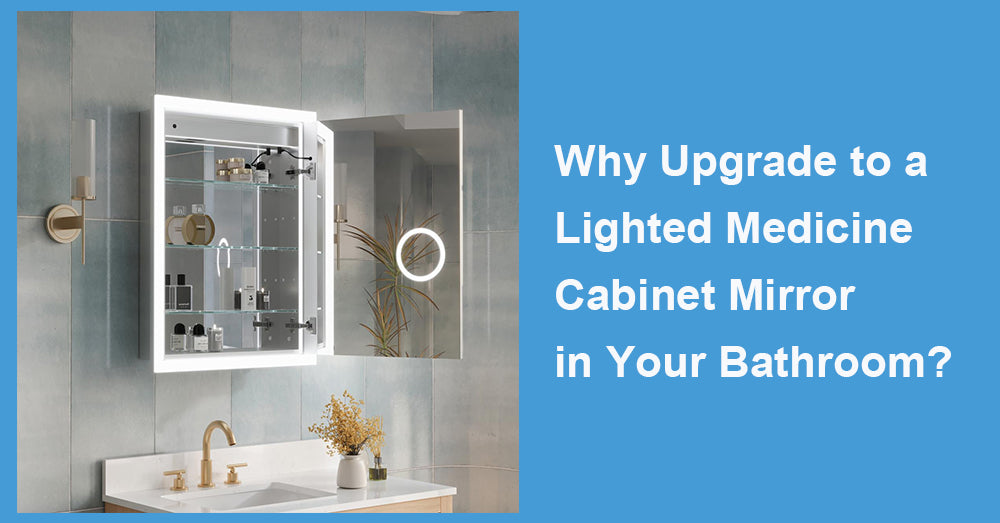
A lighted medicine cabinet mirror has moved from “nice-to-have” to “makes sense” in many bathroom refresh projects. The reason is simple: it upgrades the mirror area—one of the most-used spots in the room—by combining brighter task lighting, hidden storage, and a cleaner look in one product. Instead of adding more countertop organizers or changing multiple fixtures, you solve several daily pain points at once.
Bathrooms also stay high on the renovation priority list because small changes feel big. A widely used remodeling benchmark shows a midrange bath remodel with a job cost of about $25,251, a resale value of about $18,613, and a cost recouped of about 74%. Even if your goal isn’t resale, numbers like these help explain why practical bathroom upgrades keep attracting attention: they improve everyday function and keep the space looking current.
1) You get better face lighting, not just “more light.”
Many bathrooms rely on overhead lighting, which often creates shadows under the eyes, nose, and chin. That’s the worst setup for grooming. You end up leaning forward, turning your head, or using your phone flashlight to see what you’re doing.
A lighted medicine cabinet mirror puts light closer to your face, where it matters.
The light is more direct and more even across the mirror, so tasks like shaving,
applying makeup, or checking skincare become easier and more accurate. If the model has dimming, it also works well at night—bright when you need it, softer when you don’t.
2) LEDs make the upgrade practical and long-lasting
Integrated LED lighting is one of the main reasons these products are growing in popularity. LEDs are efficient, bright, and built to last. Federal energy guidance notes that residential LEDs can use at least 75% less energy and last up to 25 times longer than incandescent lighting.
Lighting also isn’t a tiny part of home energy use. Another energy guide explains that lighting accounts for around 15% of an average home’s electricity use, and the average household saves about $225 per year in energy costs by using LED lighting. The exact savings depend on your home and habits, but the direction is clear: LED-based lighting reduces both maintenance and ongoing expenses.
For a bathroom mirror, that translates into fewer headaches. You get consistent brightness without worrying about frequent bulb changes, and the mirror area becomes a reliable “task station” every day.
3) Storage that removes clutter (and makes cleaning easier)
A mirror is required. Storage is always needed. Combining them is simply efficient.
Countertops fill up fast: toothbrushes, toothpaste, floss, razors, skincare, hair products, extra soaps, and small tools. When everything sits out, the bathroom looks messy even when it’s clean—and wiping down the counter takes longer because you have to clean around bottles and holders.
A medicine cabinet moves those daily essentials off the counter and behind the mirror. When the doors are closed, the wall looks clean and modern. When you open it, you get shelves that keep items organized and easy to reach. This is especially helpful in smaller bathrooms where there isn’t space for extra cabinets or tall storage towers.
4) It matches standard bathroom sizes
Another reason this upgrade is easy to adopt: the sizes fit standard bathroom layouts.
Many bathrooms are built around standard modules (vanity widths and mirror widths that “just work”), so lighted medicine cabinet mirrors are commonly offered in familiar dimensions. You’ll often see popular single-sink sizes like 24" W units, along with wider options for larger vanities. The mirror cabinet becomes a straightforward replacement: measure the existing mirror width, check the available wall space, and choose a size that looks balanced over the vanity.
If you’re planning from scratch, a valid design rule is to keep the mirror (or mirror cabinet) slightly narrower than the vanity, so it feels centered and intentional rather than oversized.

5) The feature set has grown—without becoming complicated
Today’s lighted medicine cabinet mirror is no longer just “mirror + shelves.” Many models include simple convenience features that make daily use smoother:
· Defog/anti-fog, so the mirror stays clearer after hot showers
· Dimming, so you can lower the brightness at night
· Selectable light tone, for warm/neutral/cool preferences
· Soft-close hinges, for quieter use and less wear over time
· Interior power options, depending on model, to keep cords out of sight
You don’t need every feature. But having options lets buyers choose based on routine: defog for steamy bathrooms, dimming for nighttime comfort, and adjustable tone for makeup or shaving.
6) A clean, modern look with “built-in” impact
A lighted medicine cabinet mirror changes the entire feel of the vanity wall. A standard mirror can look flat or unfinished, especially in older bathrooms. When you add integrated lighting, the wall seems more designed—closer to what you see in newer builds and higher-end renovations.
It’s also a substantial upgrade when you want a “new bathroom feel” without replacing tile or moving plumbing. Many refresh projects aim for maximum visual improvement with minimal disruption, and the mirror wall is one of the best places to do that.
7) Moisture awareness: choose the right location rating
Bathrooms are prone to humidity and condensation, so it’s smart to choose products designed for that environment. Lighting industry guidance on location ratings explains that areas with moisture in the air or occasional condensation are commonly treated as “damp” environments, provided ventilation prevents ongoing moisture buildup. It also gives practical distance examples: surfaces more than 2 ft from a sink (that’s 24") or at least 8 ft above a tub (that’s 96") may be considered damp locations when ventilation is adequate.
In simple terms: pick a mirror cabinet that’s designed for humid spaces, and make sure the bathroom has decent ventilation. That combination supports better long-term performance.
8) Renovation spending shows people still invest in bathrooms
It’s not just product marketing—bathrooms continue to attract real renovation dollars. A major bathroom trends study reported median spending on all bathroom remodels rising from $13,500 to $15,000 year over year, and noted that minor remodel spend for smaller bathrooms increased from $5,000 to $6,000.The same study also reported that 83% of homeowners hired professionals for bathroom renovations.
These numbers point to two realities: people keep upgrading bathrooms, and many projects are planned with durability and installation quality in mind. A lighted medicine cabinet mirror fits that “practical upgrade” pattern—noticeable improvement, manageable scope.
What to check before you buy
To avoid common mistakes, keep the checklist simple:
· Measure your current mirror width and the available wall space.
· Decide recessed (built-in look) vs surface-mount (more flexible installation).
· Confirm door swing won’t hit nearby walls, lights, or faucets.
· Choose lighting features based on routine: brightness for grooming, dimming for night, defog for heavy steam.
· Select a unit designed for humid bathroom conditions.
The takeaway
A lighted medicine cabinet mirror is gaining traction because it upgrades the most-used part of the bathroom in a single step. You get better face lighting, cleaner storage, and a more modern wall appearance—without complicating the project. When you choose the correct size and a moisture-appropriate build, it’s an upgrade that feels useful every single day.









































Leave a comment
This site is protected by hCaptcha and the hCaptcha Privacy Policy and Terms of Service apply.