


















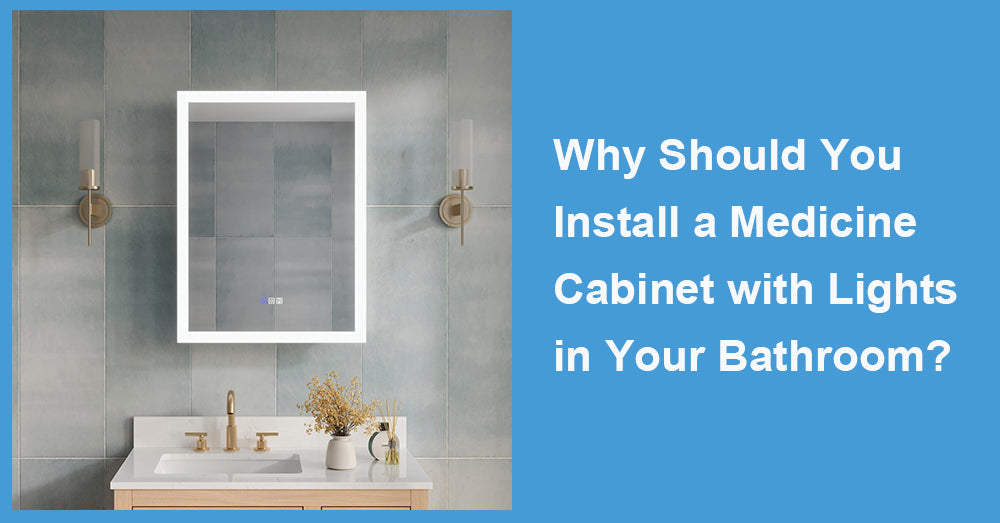
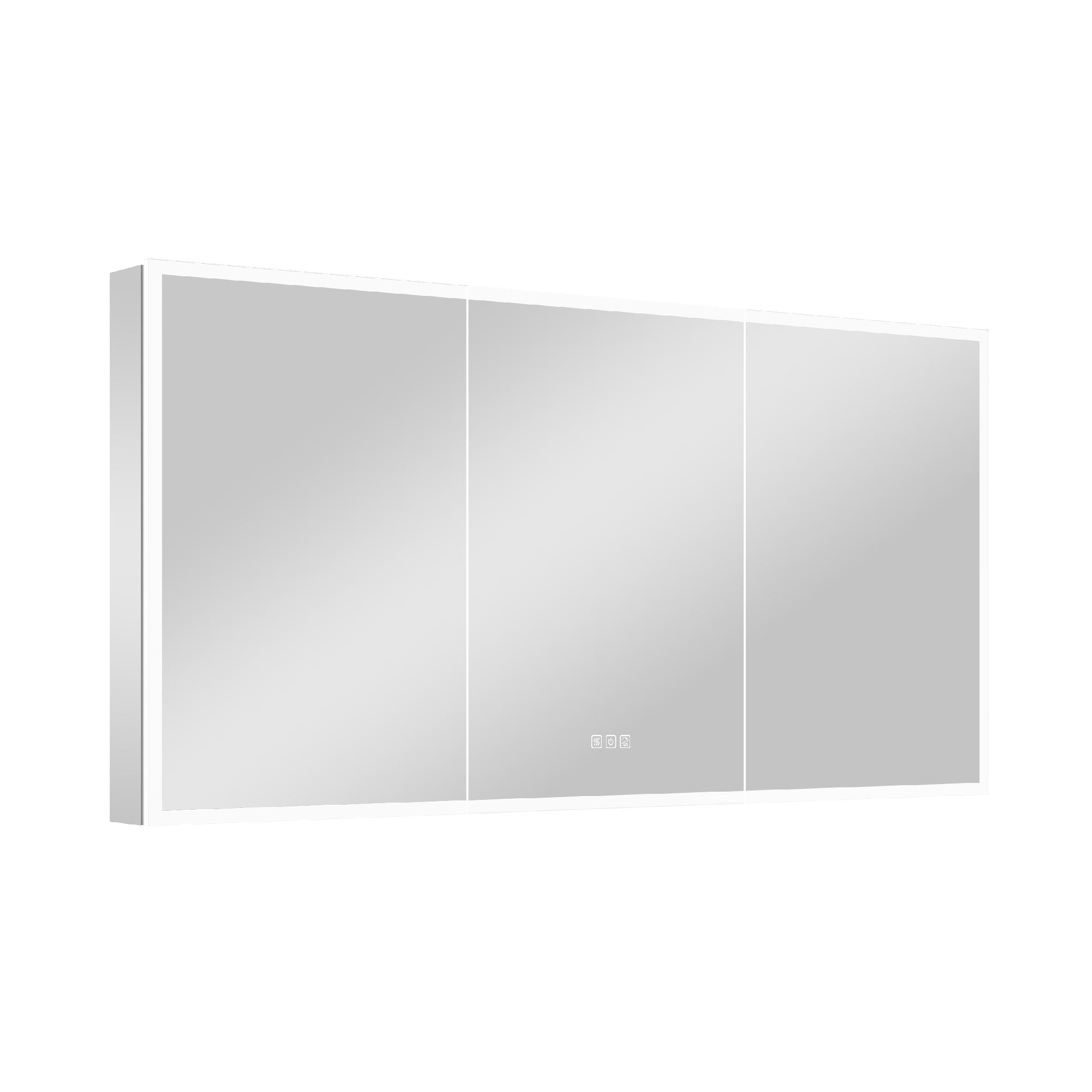
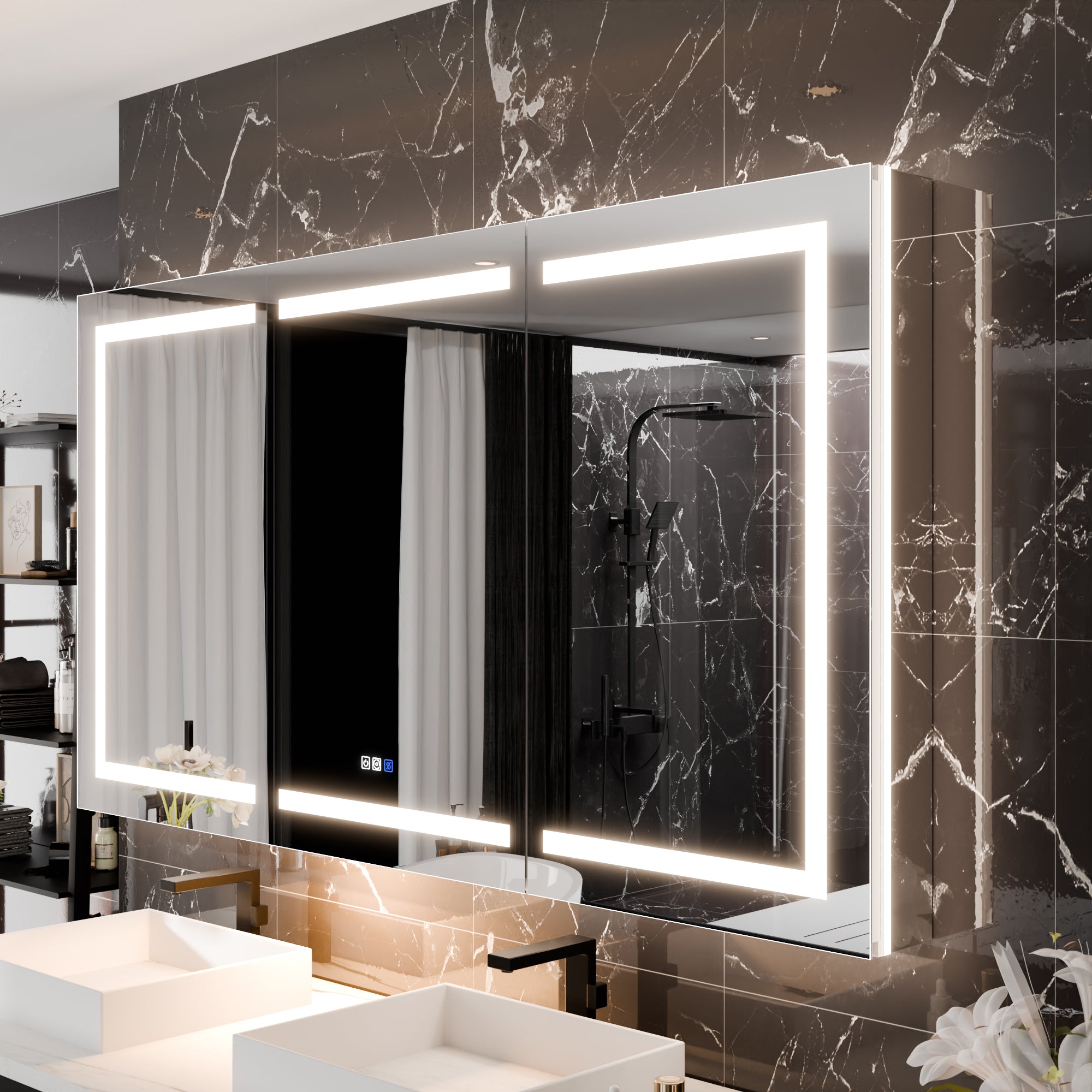
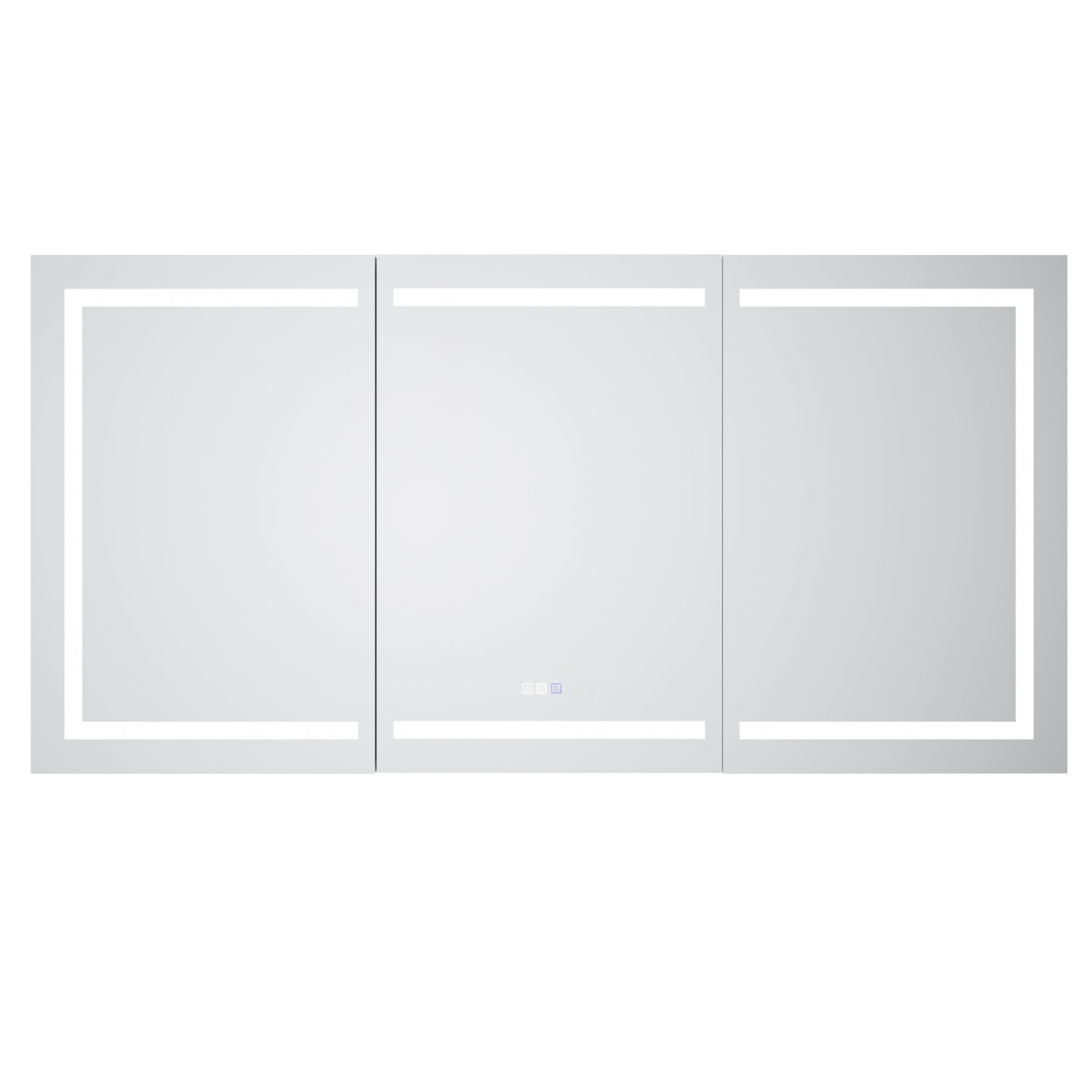
A medicine cabinet with lights is one of the most practical bathroom upgrades because it improves two everyday pain points at the same time: clutter and visibility. It gives you hidden storage right where you stand each day, and it adds task lighting at face level so grooming feels easier and more accurate. When chosen well, it can also reduce energy waste, simplify your lighting plan, and make the vanity wall look cleaner and more modern, without adding extra fixtures.
1. It Improves Daily Grooming by Fixing Face-Level Lighting
Many bathrooms rely on overhead fixtures, which brighten the room but often create shadows under brows and chin. A cabinet with integrated lighting brings illumination closer to the mirror plane, which usually makes shaving lines, skincare application, and makeup blending more precise.
If you want to think about lighting like a professional, focus on illuminance. Lighting guidance commonly uses foot-candles, and one reference definition is that 1 foot-candle equals 1 lumen per square foot (Source: IES recommended light levels reference PDF). This matters because a mirror area can look “bright” but still be unhelpful if the light is poorly aimed or too harsh. A well-diffused cabinet light is designed to deliver usable illumination where you need it, not just on the ceiling.
Practical benefits you will notice quickly.
· Cleaner shaving edges because shadows are reduced.
· More even skincare and makeup application because light is distributed more consistently.
· Fewer “double checks” in another room because the vanity zone lighting is more reliable.
2. It Helps Keep Counters Clear by Putting Storage Where You Use It
The most efficient storage in a bathroom is storage you can access without bending down or walking away from the sink. A medicine cabinet places shelves at eye level, so daily essentials can live behind the mirror rather than on the countertop.
A simple organization approach that works well.
· Daily zone: toothbrush, cleanser, moisturizer, razor.
· Weekly zone: treatments and grooming tools.
· Backup zone: refills and extras.
For real usability, adjustable shelves are the key feature. Without adjustability, shelf heights rarely match real bottles and the cabinet ends up wasting space. Many size guides note common medicine cabinet depths around 4 to 5 inches, often yielding about 3 to 4 inches of usable interior storage depending on construction (Source: Simple Project US). That range is usually enough for typical toiletries without making the cabinet feel bulky.
3. It Can Simplify the Vanity Lighting Plan and Reduce Wall Clutter
A cabinet with integrated lighting can reduce the need for separate vanity bars or side sconces, especially when wall space is limited by tile layouts, windows, or tight clearances. This can be a big design win because fewer fixtures means fewer competing finishes and fewer visual lines around the mirror.
That said, the best bathrooms still use layered lighting.
· Ambient light for general brightness.
· Task light at the vanity (where the cabinet lighting helps).
· Optional low-level night lighting for late-night use.
A lighted cabinet makes the task layer more predictable, which often makes the entire room feel more intentional.
4. It Can Reduce Energy Waste and Maintenance With LED Advantages
Most modern lighted cabinets use LEDs. This matters because LEDs are both efficient and long-lasting. The U.S. Department of Energy notes that residential LEDs, especially ENERGY STAR-rated products, use at least 75 percent less energy and can last up to 25 times longer than incandescent lighting (Source: U.S. Department of Energy, “LED Lighting”). For a bathroom light used every day, longer life also means fewer replacements and fewer failures over time.
Practical impact.
· Lower long-term energy use compared with older bulb-based fixtures.
· Less frequent maintenance because LED life is typically much longer.
· More consistent lighting performance when the driver and diffusion are well designed.
If you want the upgrade to feel premium, prioritize dimming. Dimming improves comfort at night and reduces glare, and it also reduces energy use because you are not always running at maximum output.
5. It Supports Better Mirror Placement and Everyday Comfort
A mirror can be stylish but still feel wrong if it is mounted too high. A useful comfort reference from accessibility standards states that mirrors above lavatories or countertops should have the bottom edge of the reflecting surface 40 inches max above the finished floor, and mirrors not above lavatories or countertops should have the bottom edge 35 inches max (Source: 2010 ADA Standards, Section 603.3). Even if you are not designing for compliance, this is a practical guardrail that prevents awkward viewing angles and reduces glare.
A simple placement method.
1. Stand at the sink and mark your eye level.
2. Aim for eye level to land around the upper-middle of the mirror area.
3. Confirm the cabinet does not feel too high once lighting is on, since integrated light can create glare if placed poorly.
6. It Can Improve Nighttime Routines Without Harsh Overhead Light
Many lighted cabinets include a softer lighting mode or can be dimmed, which helps at night when you do not want full overhead brightness. This is especially useful in shared households, where one person’s late-night routine should not wake everyone else.
If your cabinet includes a night light feature, prioritize one that is subtle and warm, not a bright spotlight. A clean, low-glare glow makes the bathroom feel calmer and more spa-like.
7. Durability and Humidity: Why Ventilation Still Matters
Bathrooms are humid environments, and humidity affects hinges, mirror edges, and electronics. EPA guidance recommends keeping indoor relative humidity below 60 percent, ideally between 30 percent and 50 percent when possible, to reduce moisture-related problems (Source: U.S. EPA Mold Course, Chapter 2). While showers will spike humidity, the goal is to bring the room back down quickly with ventilation.
How this connects to a lighted cabinet.
· Electronics and drivers can age faster when moisture lingers.
· Hinges and screws can corrode if hardware is not moisture-resistant.
· Mirror edges can deteriorate faster if condensation sits on them daily.
The simplest protection is routine ventilation. Run the exhaust fan during showers and for a period after, and wipe standing water near the backsplash so moisture does not sit against the cabinet.
8. What to Look For So the Upgrade Feels Truly Worth It
A medicine cabinet with lights is worth installing when it improves routine and stays reliable. Use these practical criteria.
Lighting quality.
· Smooth diffusion, no visible LED dots or harsh strips.
· Dimming for comfort and flexibility.
· Color options if multiple users care about grooming accuracy.
Storage design.
· Adjustable shelves.
· Interior depth that fits your real items (often 4 to 5 inches overall depth is a common target range). (Source: Simple Project US).
Installation reality.
· Secure mounting into studs where possible.
· Door style that matches your clearance, such as tri-view doors for tight spaces.
Humidity readiness.
· Corrosion-resistant hardware.
· Clear manufacturer guidance for bathroom conditions.
· Ventilation habits aligned to keeping humidity below 60 percent when possible. (Source: U.S. EPA).
Energy and longevity.
· LED system with credible warranty coverage.
· Efficiency and long-life expectations aligned with DOE LED benchmarks. (Source: U.S. Department of Energy).

Conclusion
Installing a medicine cabinet with lights is a smart upgrade because it improves daily life in multiple ways: better face-level lighting for grooming, hidden storage that reduces countertop clutter, and a cleaner, more modern vanity wall. It can also be a practical efficiency choice, since DOE notes LEDs can use at least 75 percent less energy and last up to 25 times longer than incandescent lighting (Source: U.S. Department of Energy). The best results come from choosing a cabinet with smooth diffusion, dimming, adjustable shelves, and moisture-aware durability, then supporting it with good ventilation so humidity stays below 60 percent when possible (Source: U.S. EPA).





























Leave a comment
This site is protected by hCaptcha and the hCaptcha Privacy Policy and Terms of Service apply.