






















Choosing a bathtub faucet is one of those decisions that can either make bathing feel effortless—or turn every soak into a slow fill, splashy mess, or temperature guessing game. The best choice balances compatibility (mount type, rough-in, reach), performance (flow rate and temperature control), materials (finish durability and “lead free” compliance), and long-term serviceability (cartridges, parts, support). Use the checklist below to choose a faucet that looks right on day one and still performs reliably years later.
1. Confirm the Installation Type First
Bathtub faucets are not one-size-fits-all. Your tub style and placement usually determine the mount type:
· Wall-mount tub spout (with separate valve/trim): common for alcove tubs and tub/shower combos; requires correct spout reach and in-wall valve rough-in.
· Deck-mount (roman tub) faucet: mounts on a tub deck or surrounding platform; needs enough flat surface and access below for service.
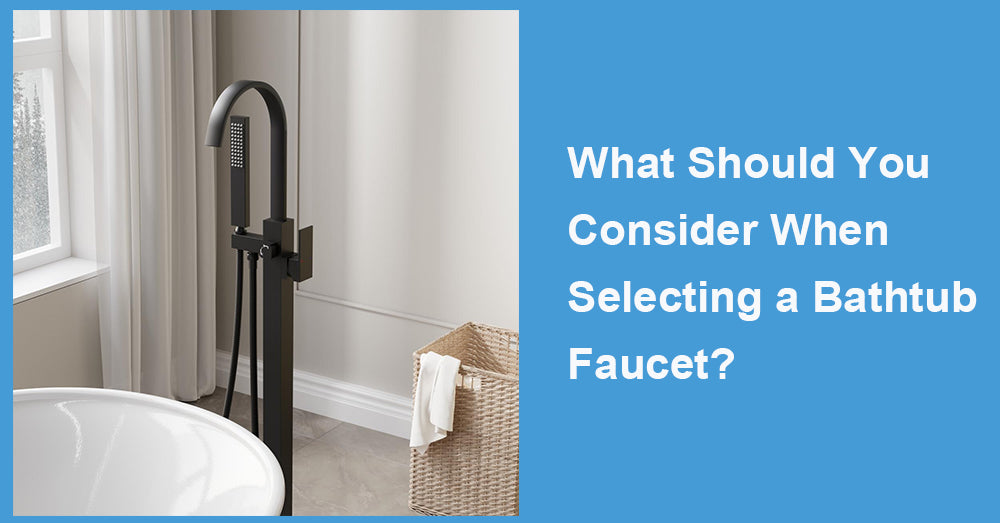
· Freestanding tub filler: designed for freestanding tubs; requires floor mounting stability and correctly routed supply lines.
Why this matters: changing mount type later can mean redoing plumbing and tile. During a remodel, lock in the mount type early—then select the faucet style within that category.
2. Use Flow Rate to Predict Fill Time (So You’re Not Waiting Forever)
A faucet can look premium and still feel disappointing if it fills slowly—especially with larger soaking tubs. Start by estimating your tub’s water volume. Many typical tubs hold roughly 40–60 gallons depending on size and design (Source: TubSafe).
Then do the simple math:
Fill time (minutes) ≈ tub gallons ÷ tub spout flow (gpm)
Example:
· 50-gallon fill ÷ 5 gpm ≈ 10 minutes
· 60-gallon fill ÷ 3 gpm ≈ 20 minutes
The “right” gpm depends on your tub and patience. If you’re choosing between two faucets, don’t guess—look for the manufacturer’s rated tub spout flow at a stated pressure, then calculate a realistic fill time.
Important nuance: actual flow depends on your home’s water pressure, plumbing diameter, and how many fixtures are running. The spec sheet gives you a baseline, not a guarantee.
3. Prioritize Temperature Safety and Stability (This Is Where Quality Shows)
A bathtub faucet is not just about volume—it’s about comfortable, stable temperature. Sudden temperature swings can happen when other fixtures run, and scald risk is real.
The Consumer Product Safety Commission notes that a water heater thermostat setting of 120°F may be necessary to reduce or eliminate the risk of most tap water scald injuries (Source: CPSC “Avoiding Tap Water Scalds” PDF).
Practical selection tips:
· If you’re doing a tub/shower combo, prioritize a pressure-balancing or thermostatic valve that helps stabilize temperature when pressure changes.
· If multiple people use the tub, consider valves with adjustable limit stops (so maximum temperature can be set safely).
· For families with children or older adults, stable control matters even more than high flow.
4. Match the Spout Reach and Water Trajectory to the Tub
A common mistake is buying a faucet that “fits the style” but sends water too close to the tub wall—leading to splashing and slow fills (because the stream hits the wall rather than flowing cleanly).
Check:
· Spout reach: does the stream land comfortably inside the tub basin, not on the rim?
· Spout height (for deck-mount): enough clearance for hand access and cleaning, but not so high it splashes excessively.
· Tub shape: deep soaking tubs often benefit from spouts designed to project farther into the basin.
If possible, sketch the tub rim and basin centerline and compare to the faucet’s spout reach spec. This 5-minute step prevents a lot of regret.
5. Verify the Faucet Meets Recognized Plumbing Fitting Standards
When you want reliable everyday performance, look for products built to recognized standards rather than vague marketing claims. The ASME/CSA plumbing supply fittings standard (ASME A112.18.1 / CSA B125.1) includes bath and shower supply fittings in its scope (Source: ANSI/CSA standard scope listing).
You don’t need to memorize the standard—just use it as a trust filter:
· A faucet listing that references recognized standards is usually a better sign than one that only says “premium quality.”
6. “Lead Free” and Material Credibility: Know What It Actually Means
Even if you don’t drink from the tub spout, it’s still part of your household water pathway. “Lead free” has a specific meaning in plumbing compliance context.
EPA guidance explains that “lead free” means products must meet a weighted average lead content of ≤ 0.25% for wetted surfaces (with solders/fluxes having a stricter limit) and notes the connection to NSF/ANSI/CAN 372 certification marks (Source: EPA PDF on identifying lead-free certification marks).
NSF also summarizes key technical requirements for NSF/ANSI/CAN 372, including the 0.25% maximum weighted lead content for most components (Source: NSF knowledge library).
What to do as a buyer:
· Look for credible certification language (for example, NSF/ANSI/CAN 372) rather than “eco brass” style vague claims.
· Prefer brands with clear documentation and parts support.
7. Finish and Corrosion Resistance: Choose What You Can Maintain
Bathrooms are humid, and tub areas see more splashing and cleaning chemicals than many fixtures. A finish that looks great in photos can dull or spot if it doesn’t match your cleaning habits and water chemistry.
Practical guidance:
· If you want the lowest-maintenance look, choose finishes known to be forgiving with water spots and fingerprints (often brushed/satin finishes).
· If your water is hard, plan on gentler cleaning and occasional wipe-downs to prevent mineral buildup at joints and aerators (if present).
Also check whether the finish warranty is meaningful (clear terms, real duration, excludes “improper cleaning” only in reasonable ways).
8. Serviceability: Cartridges, Diverters, and Long-Term Parts
A bathtub faucet is a daily-use mechanical system. The part most likely to need service is often the cartridge (for mixing) or the diverter (if you’re switching to a hand shower/showerhead).
Before you buy, confirm:
· Are replacement cartridges available by model number?
· Does the brand provide a parts diagram?
· Is support easy to reach?
A faucet that’s easy to service can last far longer because small issues get fixed instead of turning into “replace the whole thing.”
9. A Practical Buying Checklist
Use this fast checklist to avoid 90% of bathtub faucet mistakes:
· Mount type matches your tub: wall, deck, or freestanding.
· Flow rate supports your fill expectations: start with tub volume (often 40–60 gallons) and calculate fill time (Source: TubSafe).
· Temperature safety and stability: plan around safe hot water practices (120°F guidance) and consider stable valves (Source: CPSC).
· Spout reach lands water into the basin without splash.
· Recognized standards: look for references like ASME A112.18.1 / CSA B125.1 that cover bath and shower supply fittings (Source: ANSI/CSA listing).
· Lead-free credibility: weighted average lead content ≤ 0.25% for wetted surfaces; look for NSF/ANSI/CAN 372 signals (Sources: EPA; NSF).
· Parts availability: cartridge/diverter support and a clear warranty.

Conclusion
The right bathtub faucet is the one that fits your installation type, fills your tub in a reasonable time, delivers stable and safe temperature control, and comes from a manufacturer that backs its product with standards-based documentation and serviceable parts. If you start with mount type and flow math, then verify safety, materials, and support, you’ll end up with a faucet that doesn’t just look good—it performs well in the routine you live every day.









































Leave a comment
This site is protected by hCaptcha and the hCaptcha Privacy Policy and Terms of Service apply.