















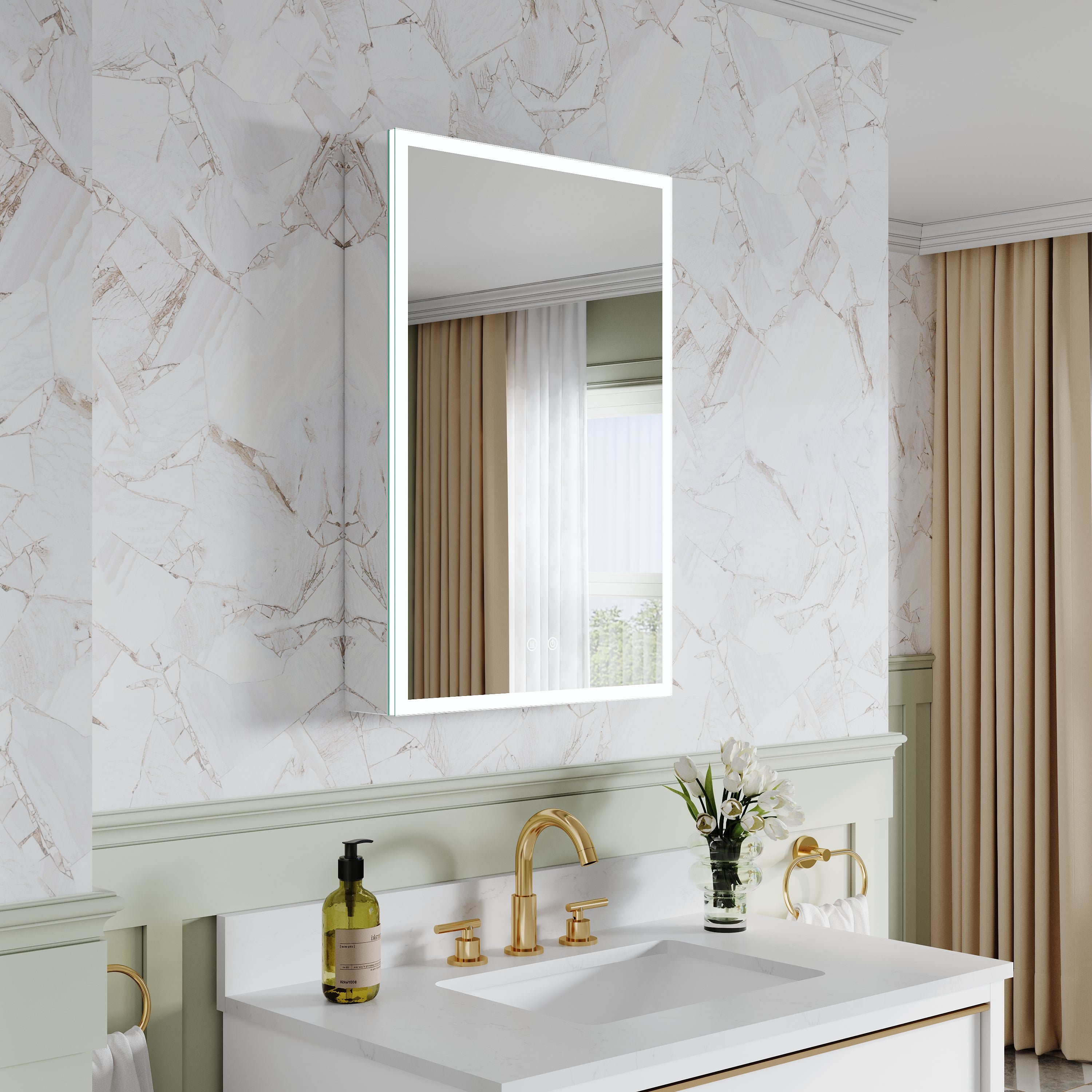
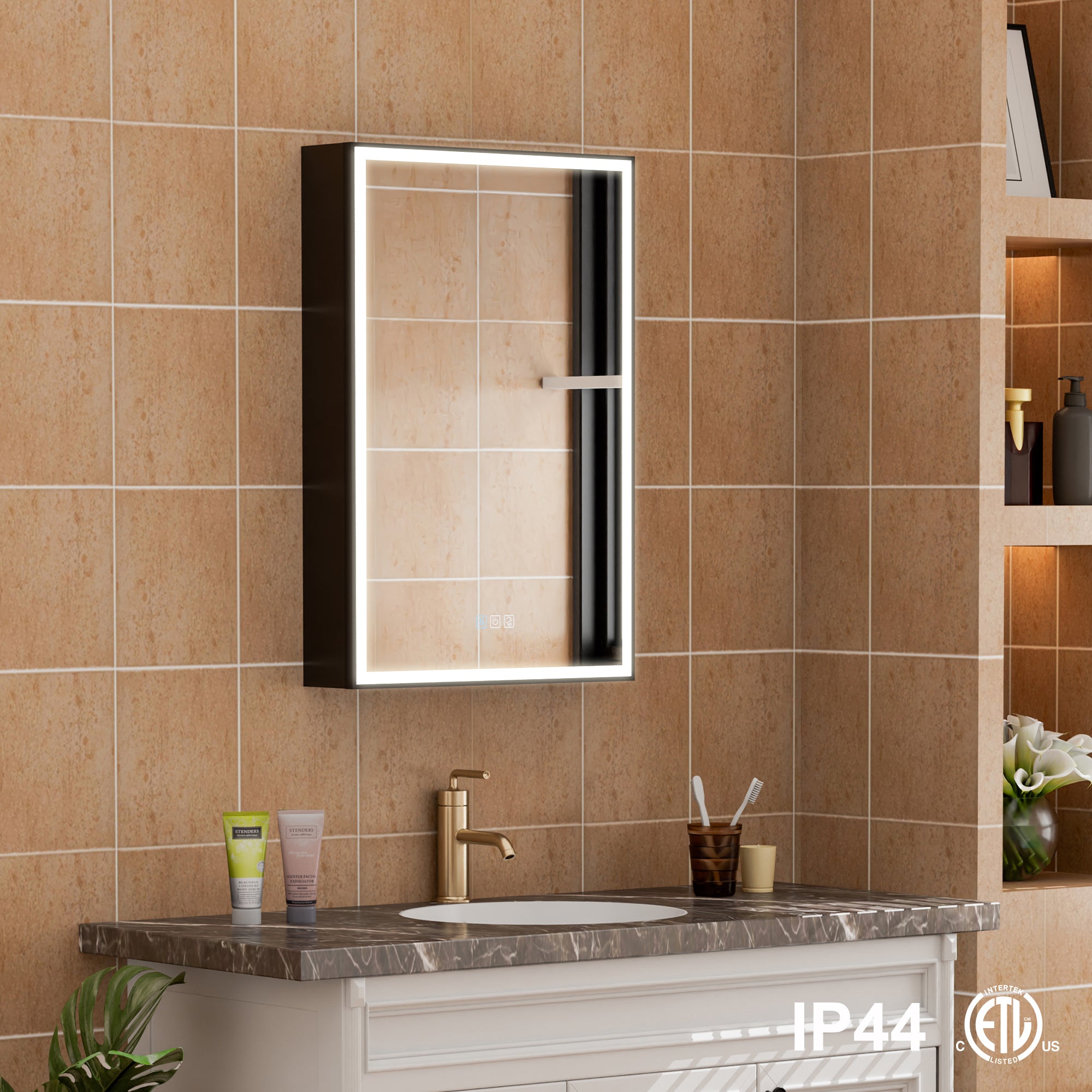










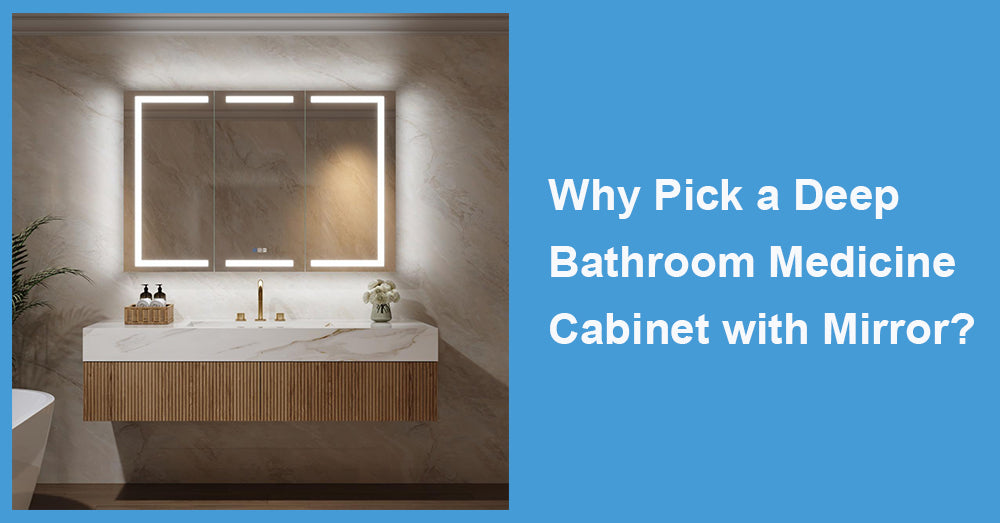
If your bathroom counter is a graveyard of half-used bottles and scattered toiletries, the problem might not be your organization skills. It might be that your storage is too shallow to handle real life. A bathroom medicine cabinet with mirror that offers genuine depth changes the equation entirely. Standard cabinets are built around the limitations of wall framing, often capping interior depth at around 4 inches. A deeper model pushes past that constraint, giving you room for tall bottles, full skincare routines, and the kind of clutter that usually ends up colonizing your sink. Here is why depth matters more than most shoppers realize, and what you gain when you stop settling for a shallow box.
The Depth Problem Most Cabinets Ignore
To understand why a deep cabinet is worth seeking out, you need to know what you are up against. Recessed medicine cabinets are constrained by the wall cavity. Standard 2x4 framing leaves roughly 3.5 inches of raw depth, and after drywall and finishing, the usable space drops to about 3.25 inches . That is why most recessed cabinets are engineered to sit around 4 inches deep at most .
Surface-mounted cabinets offer more flexibility. They project outward from the wall, so they can reach depths of 6 inches or even 7 inches without any structural changes . But many homeowners default to recessed models for the flush look, not realizing they are sacrificing storage capacity in the process.
The practical difference is significant. A 4-inch interior is enough for toothbrushes, razors, and small medication bottles. A 6-inch interior, by comparison, holds roughly twice the product volume with no change in the cabinet’s wall footprint . That means perfume bottles, taller skincare containers, and stacked bins all fit behind the door instead of spilling onto the counter.
What a Deeper Cabinet Actually Holds
The value of depth becomes obvious when you look at what people actually store in a bathroom. The average medicine cabinet holds 20 to 30 daily items behind a closed door . In a shallow cabinet, those items have to be arranged with military precision, and anything taller than a standard pill bottle becomes a problem.
A deep cabinet removes that constraint. Adjustable glass shelves let you customize the spacing, so you can set one level for tall shampoo or contact lens solution and another for smaller items like tweezers and nail clippers . The extra inches mean you are not constantly rearranging or removing items to reach something in the back.
For households where both partners store full skincare and grooming routines, the difference is even more pronounced. Industry guidance suggests that for primary bathrooms where two users need real storage, going with the deepest interior available is the practical choice . A deep cabinet keeps the counter clear, and a clear counter makes the entire bathroom feel more manageable.
Recessed vs. Surface-Mount: The Depth Trade-Off

The installation style you choose directly determines how deep you can go. This is the decision that matters most before you buy.
If you have 2x6 wall framing, you have about 5.5 inches of cavity depth to work with, which supports deeper recessed models . That is less common in interior walls but worth checking during a remodel. For most standard 2x4 walls, a recessed cabinet will cap out around 4 to 5 inches of usable depth.
Surface-mounted cabinets are the simpler path to depth. They bolt directly to the wall face and can project 6 inches or more into the room . The trade-off is visual bulk: the cabinet protrudes from the wall rather than sitting flush. But for renters, or for anyone who does not want to open up drywall and risk hitting plumbing or wiring, surface-mount is the only realistic option. And when the cabinet matches your vanity finish, the protrusion reads as intentional design rather than an afterthought .
Features That Make Depth More Useful
A deep cabinet is only as good as what goes inside it. A few features amplify the storage benefit.
Adjustable tempered glass shelves are standard on quality deep cabinets, and they are worth prioritizing. Fixed shelves force you to work around their spacing; adjustable shelves let you create the layout your products actually need . Glass is also easier to wipe clean than wood or coated particleboard.
Interior outlets or USB ports are increasingly common on deeper models, and they solve a specific problem: electric toothbrush chargers and hair trimmers that otherwise live on the counter because there is nowhere to plug them in . This feature requires a 120V rough-in inside the wall cavity, so it is best planned during a remodel rather than retrofitted later.
Soft-close hinges are another detail that matters more in a deep cabinet. A door that slams shut puts stress on the hinges and the glass shelves over time. Dampened hinges close quietly and protect the contents .
The Verdict: Go Deep If You Can
A deep bathroom medicine cabinet with mirror is not about luxury. It is about acknowledging that bathroom storage needs have changed. People keep more products than they did a generation ago, and a 4-inch cabinet designed for a bar of soap and a bottle of aspirin cannot keep up.
If you have the wall depth or the willingness to surface-mount, a 6-inch cabinet doubles your usable volume without changing your floor plan. It keeps the counter clear, hides the clutter, and makes the daily routine faster because you are not digging through a cramped shelf every morning. The mirror is the part you see. The depth is the part that actually solves the problem.




































Leave a comment
This site is protected by hCaptcha and the hCaptcha Privacy Policy and Terms of Service apply.