
















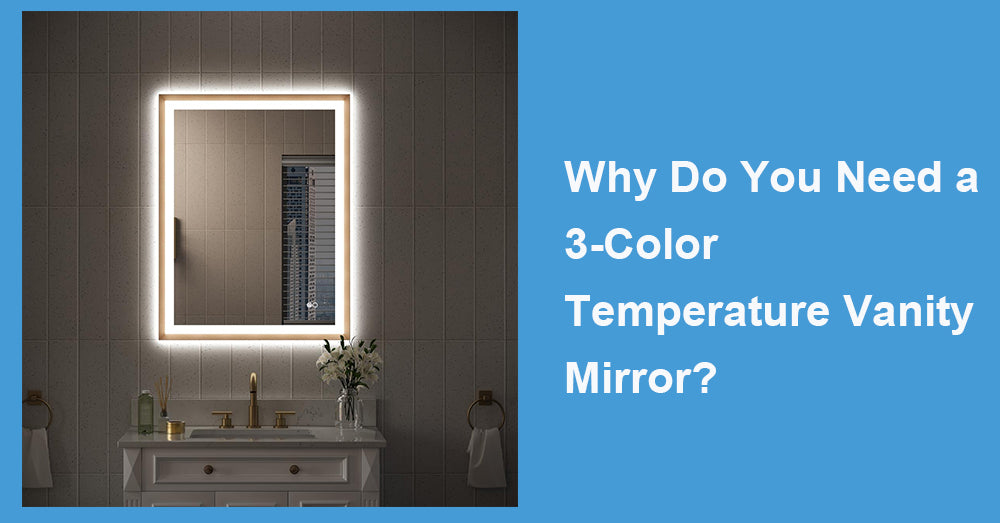
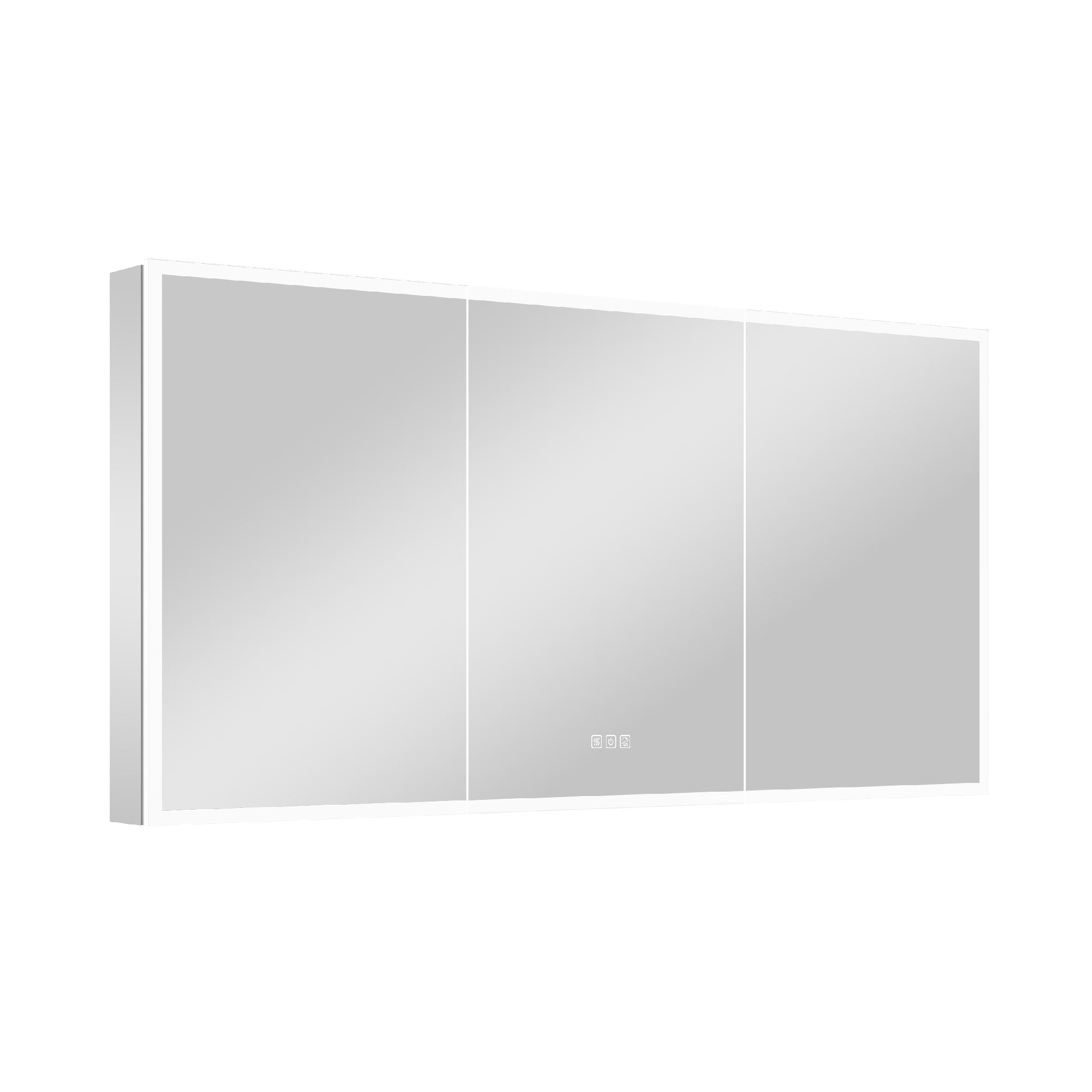
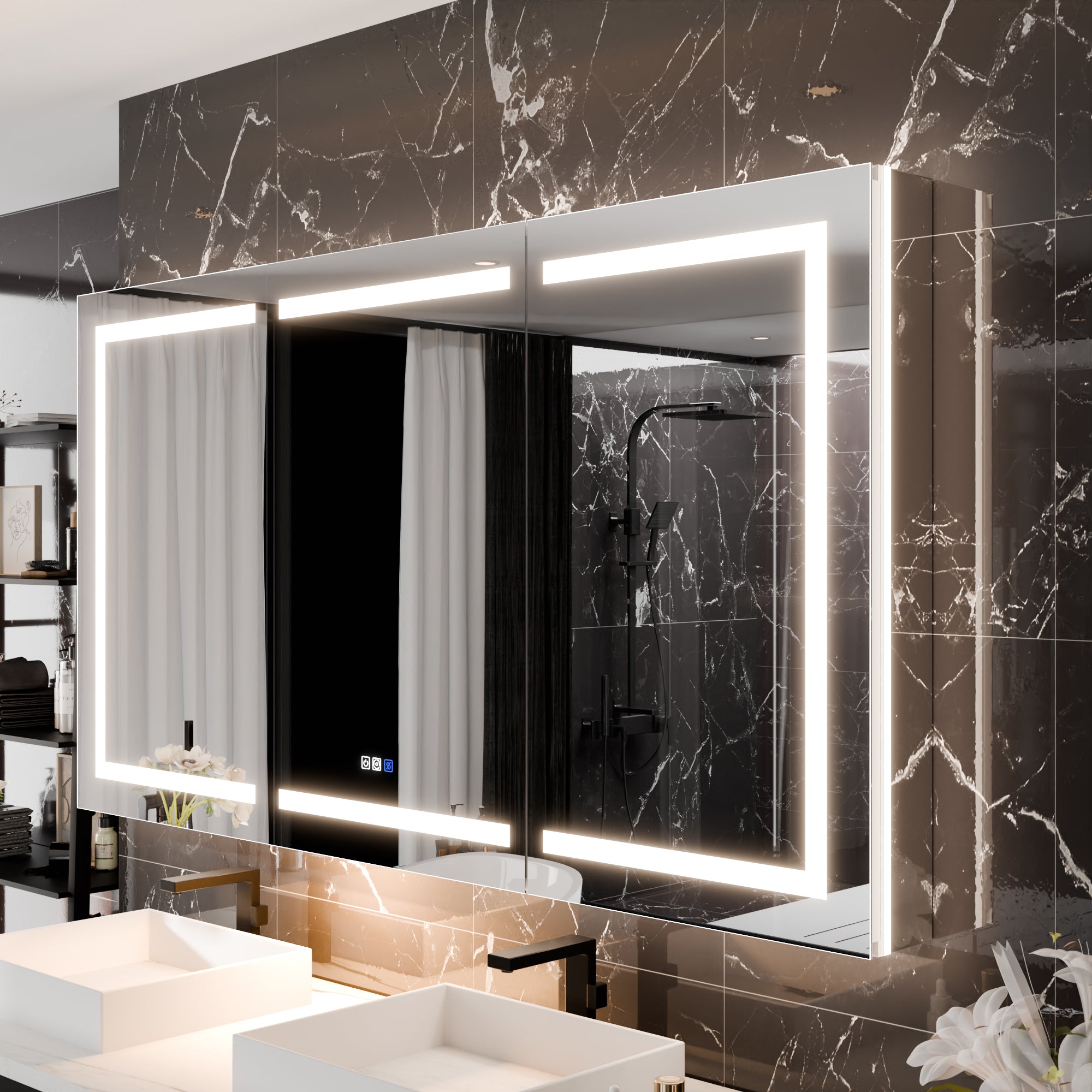
In the modern bathroom and makeup space upgrade, the 3 color temperature led vanity mirror is increasingly a frequently mentioned keyword. Compared to traditional mirrors that can only provide a single color, these makeup mirrors that support multi-color temperature switching are considered more "professional" and better suited to daily use. But the question is: is it really necessary to pay for multi-color temperature? Is this feature just a parameter upgrade, or does it have a fundamental impact on the experience?
1. There is a long-neglected contradiction between makeup and lighting
Many people encounter a similar situation when finishing their makeup in front of the mirror: they look just right indoors, but appear yellowish or whiter, and even lose their layering when exposed to different lighting conditions. This is not a matter of makeup technique, but a result of mismatched lighting conditions and usage scenarios.
In daily environments, the color temperature of indoor light sources varies greatly. From a slightly warm range of 2700K to 3000K, to a neutral range of 4000K, and then to a somewhat superb range of over 5000K, different light colors can significantly impact skin tone, shadows, and color perception. A mirror with a single color temperature is difficult to cover all real usage scenarios.
2. What is 'tri color temperature' and what problem does it solve?
A tri-color temperature mirror usually refers to providing three modes of warm light, neutral light, and cool light in the same mirror surface, with standard ranges covering approximately 3000K, 4000K, and 5000K. By simply switching, users can observe the makeup effect under different lighting conditions.
The core value of this design lies not in "having more choices", but in "comparing reality". It allows the makeup process to no longer rely solely on a single environmental judgment, reducing makeup deviation across different occasions by simulating multiple common lighting conditions.
3. What is the impact of different color temperatures on makeup judgment?
In a warm light environment, skin color is usually softer, and defects are less obvious, but this can lead to excessive foundation use. Cold light will magnify facial details, clarify shadow boundaries, and help with fine grooming, but may make the overall makeup look cooler.
The neutral color temperature lies between the two, closer to typical indoor lighting conditions during the day. The data show that makeup completed in neutral-light environments has significantly greater stability across multiple light sources. This is also why tricolor thermometers often recommend neutral light as the default mode, with warm and cool light as auxiliary references.
4. Why is single color temperature becoming increasingly insufficient?
In the past, bathroom lighting was relatively simple, and a single light source was sufficient for basic grooming. But as bathroom functions expand to fine scenes such as skincare, makeup, and styling, the requirements for lighting also increase.
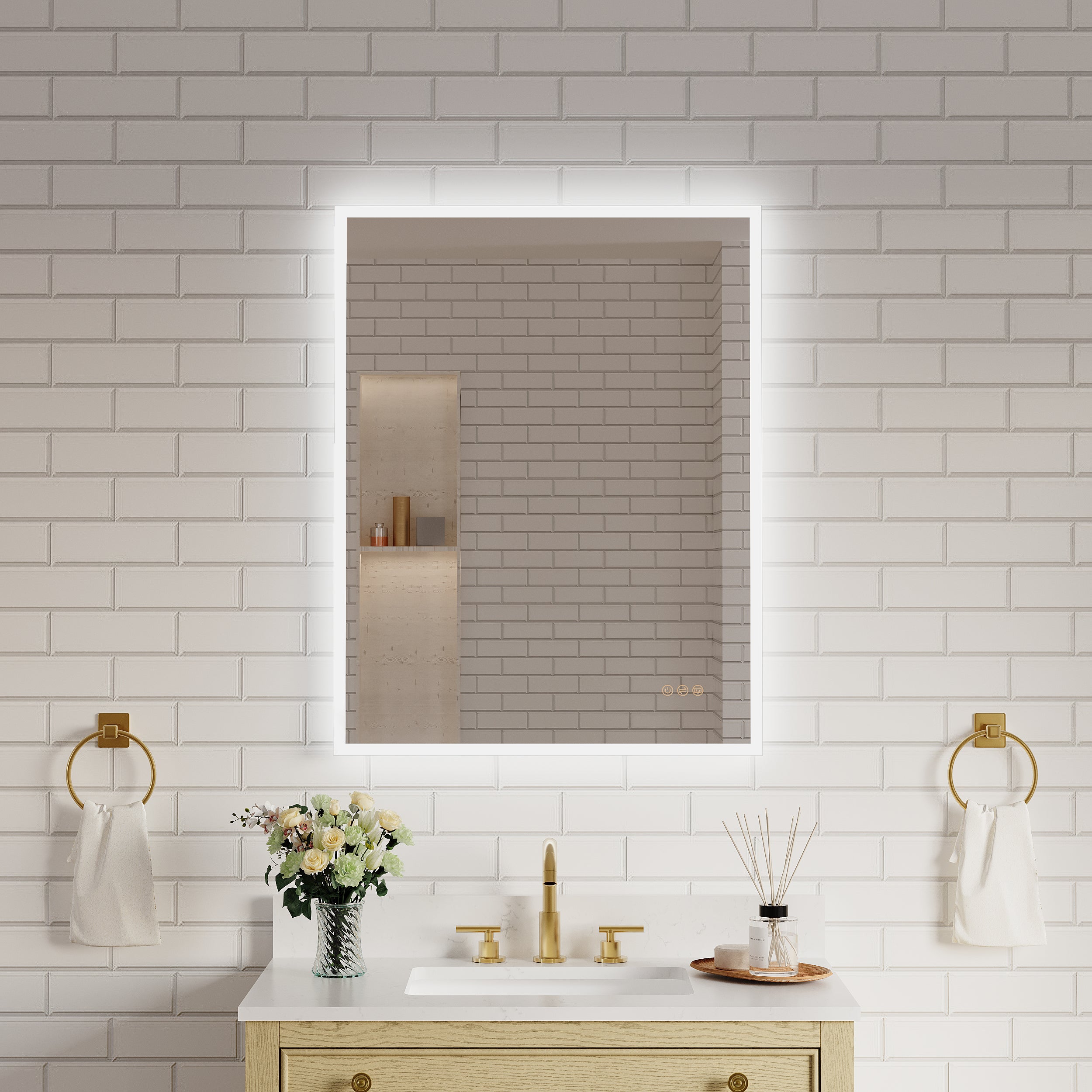
Especially in front of mirrors with a width of 24-40 inches, the illumination coverage area increases. If the color temperature is not selected correctly, the overall makeup judgment error will be further amplified. This is also why multicolor temperature design has greater practical significance in medium- to large-sized makeup mirrors.
5. Tri-color temperature does not mean a complex operation
Many people's concerns about the multi-color temperature function stem from their imagination of "complex operation". However, in practice, most three-color thermometers can switch modes via single-key cycling or touch switching, with extremely low learning costs.
From usage data, the vast majority of people will form a fixed habit after two to three uses: first complete the basic makeup under neutral light, then switch to cool light to check details, and finally confirm the overall effect with warm light. Once this process is established, it is actually more efficient than repeatedly adjusting the lighting.
6. Combined with brightness adjustment, the value is further amplified
The tri-color temperature function often appears simultaneously with the dimming system, which is not accidental. Color temperature determines the 'color of light', brightness determines the 'intensity of light', and both together constitute a complete lighting experience.
In practical use, many people use warm light for skincare at lower brightness levels and combine it with cool light for detailed makeup at higher brightness levels. This combination method makes the mirror no longer just a passive lighting tool, but an auxiliary device that actively participates in makeup judgment.
7. From an industry perspective, this is the evolution of lighting logic
Multi-color temperature design is not simply catering to the market, but a natural evolution of lighting concepts. With the maturity of LED technology, it is no longer difficult to achieve stable, multi-color-temperature output from a single lamp body, and costs are also becoming more controllable.
Therefore, the three-color-temperature mirror is gradually evolving from a "high-end differentiated configuration" to a fundamental capability of makeup mirrors, especially in product lines that emphasize functional integrity.

8. So, do we really need tri-color temperature?
If makeup is only an occasional behavior and mainly occurs in an environment with sufficient natural light, a single color warm mirror can still handle it. But for people who frequently apply makeup indoors, in the morning, or at night, the improvement in judgment accuracy brought by tri-color temperature is continuous and perceptible.
From a long-term experience perspective, the three color temperature LED vanity mirror is not a magical tool to make makeup look "better", but a practical solution to make makeup look "more stable" in different environments. This stability is the actual reason for the existence of multi-color temperature.















Leave a comment
This site is protected by hCaptcha and the hCaptcha Privacy Policy and Terms of Service apply.