






















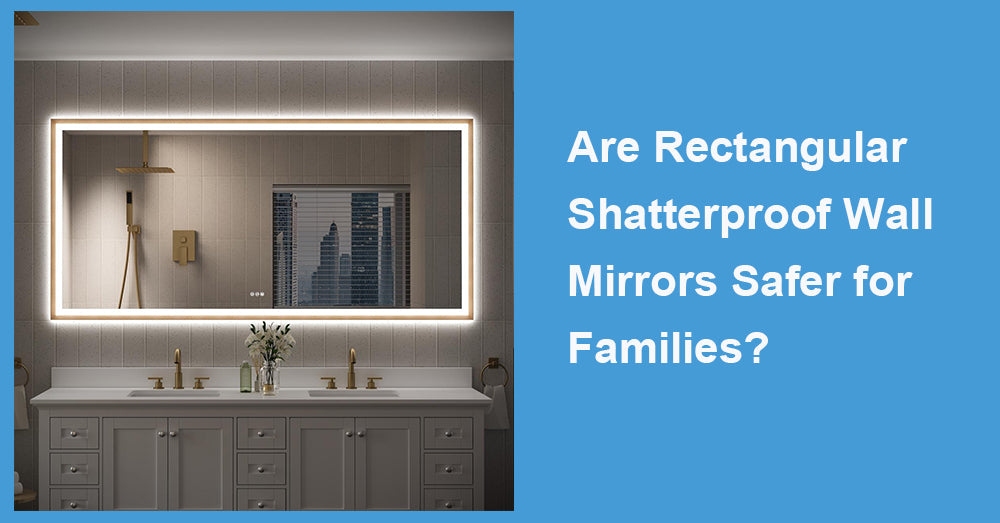
The shatterproof bathroom wall mirror rectangular is increasingly being discussed as a safety solution for home bathrooms and public spaces. With the changing structure of family members and the increasing awareness of residential safety standards, more and more designers, building materials suppliers, and end-users are paying attention to whether mirrors will break and whether breaking them will harm people. Especially in households with children, older people, or frequent bathroom use, the safety of mirror materials and structures is no longer just an additional selling point but a basic requirement.
1. Potential risks brought by mirrors in family spaces
Traditional wall mirrors often use ordinary float glass or low-grade tempered glass. Once subjected to external impact or improper installation, there is a risk of breakage. According to relevant accident statistics, the proportion of lacerations caused by glass products has been high for a long time in indoor accidental cutting incidents at home, with bathrooms and changing areas being high-risk scenarios.
Especially in the bathroom environment, humidity changes frequently, and there is an apparent alternation between hot and cold. If the mirror back panel, adhesive layer, or fixed structure is unstable, it is easy to generate long-term hidden stress. Once the mirror surface ruptures, the fragments may present sharp edges, causing deep cuts to the skin, which is particularly dangerous for children and older people.
2. What is a shatterproof mirror?
Shatterproof "does not mean" completely unbreakable, but instead refers to a mirror that does not produce sharp fragments that scatter or splash when impacted or damaged. Common anti-shatter structures mainly include the following forms:
The first method is to add explosion-proof safety film on the back of the mirror. Even if the glass breaks, the fragments will firmly adhere to the film layer, maintaining the overall structure and preventing them from falling and injuring people.
The second method is to use a laminated mirror structure with a high-toughness intermediate layer between two glass layers. This structure is widely used in buildings and commercial spaces and offers a high level of safety.
The third type is high-grade tempered mirror, which breaks into granular fragments with relatively rounded edges. However, in practical household scenarios, it is still often used in conjunction with explosion-proof film to further enhance safety.
3. Why are rectangular mirrors more controllable in terms of safety?
Among various mirror forms, rectangular wall mirrors are considered to have relatively lower structural risks in home environments. This is because rectangular mirrors are easier to achieve a stable design in terms of force distribution, installation method, and support structure.
Rectangular mirrors usually use straight frames with clear force points, and can be installed with multi-point fixation or continuous backplate support to reduce local stress concentration. In contrast, irregular mirrors or irregular curved mirrors are more likely to form weak areas at the edges.
In standard household bathroom sizes, rectangular mirrors are usually 24, 30, 36, or 48 inches wide, and 30 to 40 inches high. This type of size has mature solutions for wall load-bearing, hardware installation selection, and backboard matching, making it easier to achieve long-term stability.
4. Consideration of Size and Thickness from the Perspective of Family Safety
From a safety perspective, the thinner the mirror, the better. The industry standard thickness for shatter-resistant wall mirrors is 0.2 to 0.25 inches. Within this thickness range, the mirror can provide sufficient structural strength without placing additional pressure on the wall fasteners from excessive weight.
For rectangular wall mirrors with a width of 48 inches or more, it is usually recommended to use full back panel support or a metal back frame structure, rather than relying solely on four corners or local buckles for fixation. This installation method can significantly reduce the risk of cracking caused by slight wall deformation or vibration.
5. Families with children and older adults need to pay more attention to these details
In multi-member families, mirrors are often overlooked. Children who move frequently in the bathroom may slap the mirror or lean against the cabinet; older people are more prone to collisions due to an unstable center of gravity during use.
The most significant advantage of shatter-resistant rectangular wall mirrors in these scenarios is that they can minimize the possibility of secondary damage even in the event of accidental impact. Even if cracks appear on the mirror surface, it remains attached as a whole and will not immediately detach or form sharp fragments.
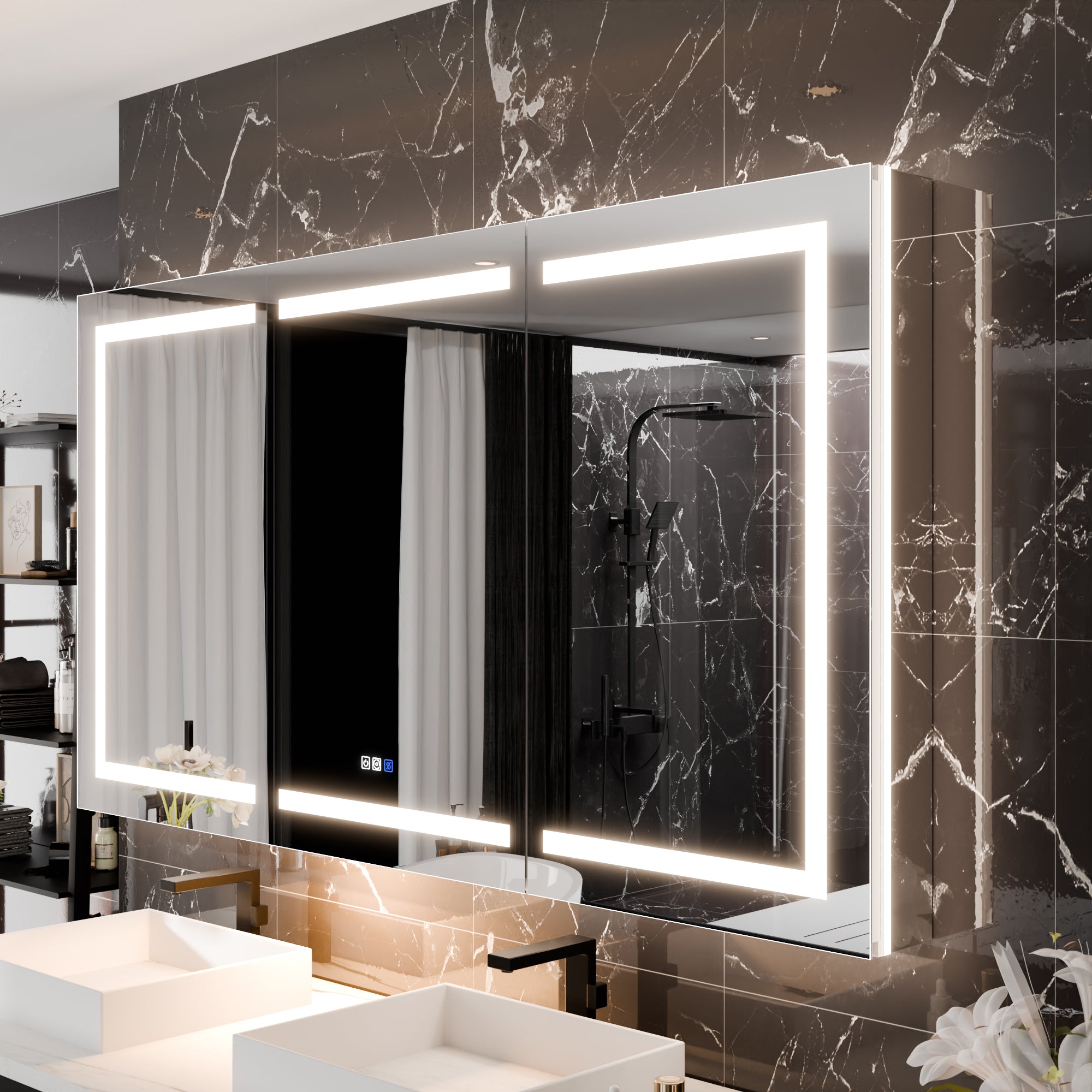
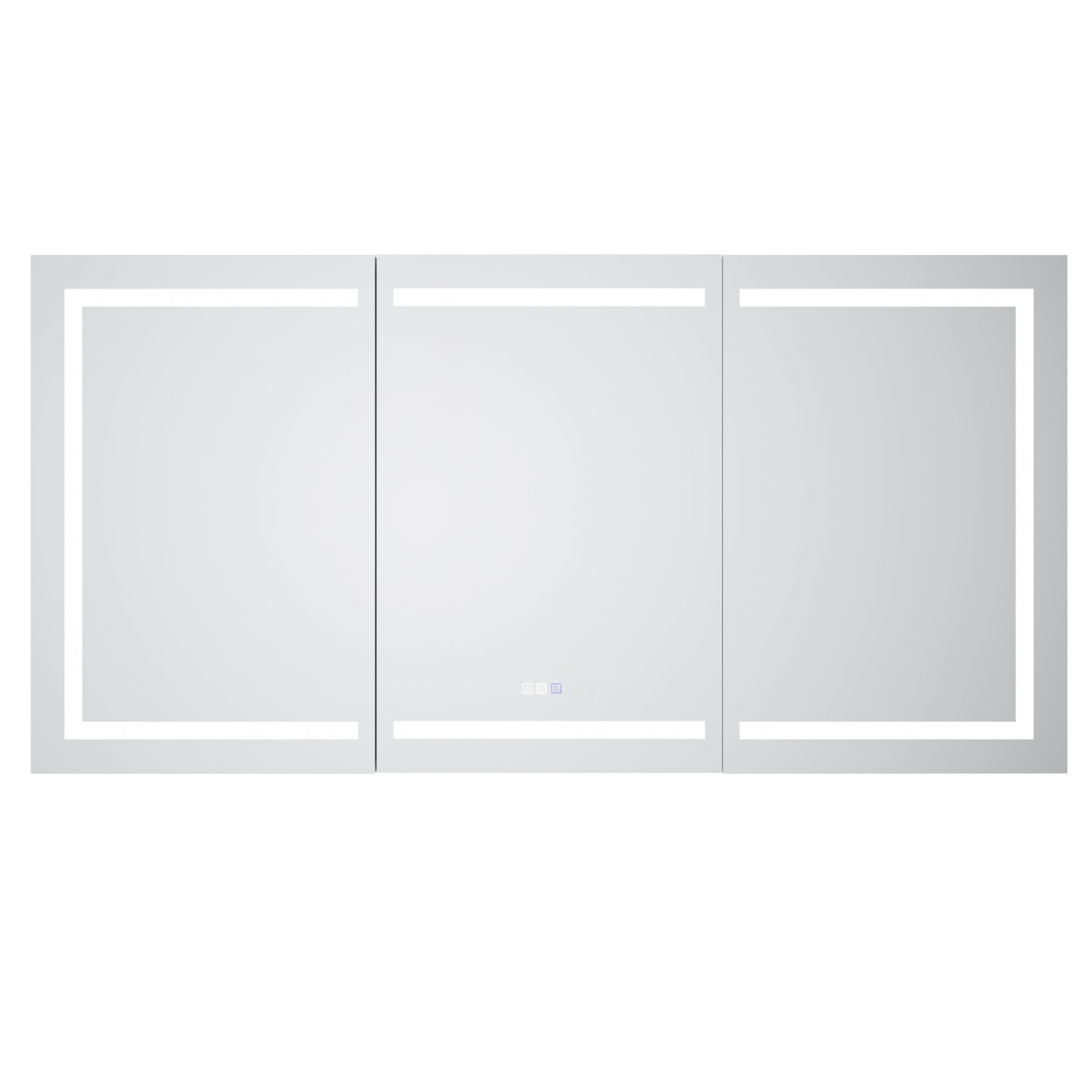
In addition, rectangular mirrors are usually easier to integrate with mirror cabinets and wall cabinet systems, reducing the number of independently suspended mirror surfaces and further enhancing structural safety.
6. Application scenarios outside the bathroom
Although the bathroom is the most discussed space for use, shatter-resistant rectangular wall mirrors are also suitable for bedrooms, changing rooms, corridors, and home fitness areas. These areas often have narrow spaces and frequent personnel movements. Once the mirror is broken, the impact range is even larger.
In the dressing room, the standard full-length mirror can reach a height of about 60 inches and a width of about 24 inches or 30 inches. Once this type of mirror breaks, the fragments are highly concentrated within the range of human activity, making anti-shatter structures almost a necessary option.
7. Design and safety are not in conflict
In the past, some consumers believed that anti-shatter mirrors would compromise visual effects, but with advances in materials and craftsmanship, this gap has been significantly narrowed. High-quality explosion-proof film and sandwich structure will hardly affect clarity, reflectivity, and color reproduction under regular use.
The rectangular design is more in line with the aesthetic trend in modern bathrooms and residential spaces, featuring clean, sharp lines that blend effortlessly with minimalist, contemporary, or light luxury styles. While ensuring safety, the overall design sense will not be sacrificed.

8. Safety standards are becoming the fundamental threshold
In the current trend of architecture and interior design, "safety" is no longer an option, but a fundamental threshold. More and more projects are actively requesting anti-shatter structural specifications, clear thickness parameters, and reasonable size matching schemes when selecting wall mirrors.
For home users, choosing a rectangular, shatter-resistant wall mirror is a long-term risk-management strategy. It is not frequently noticed in daily use, but once an accident occurs, its value will be immediately amplified.
9. Conclusion: Is a rectangular shatter-resistant wall mirror more suitable for families?
From the perspectives of comprehensive structural stability, installation controllability, and practical safety, rectangular shatter-resistant wall mirrors offer significant advantages in home environments. It cannot guarantee 'never rupture', but it can significantly reduce the probability of damage occurring at critical moments.
For living spaces that prioritize family safety, especially those with children or older people, this mirror-like form and structure have gradually shifted from an "upgrade option" to a "rational choice". In future residential design, safety and aesthetics will go hand in hand, becoming the most fundamental consensus for mirror products.







































Leave a comment
This site is protected by hCaptcha and the hCaptcha Privacy Policy and Terms of Service apply.