
















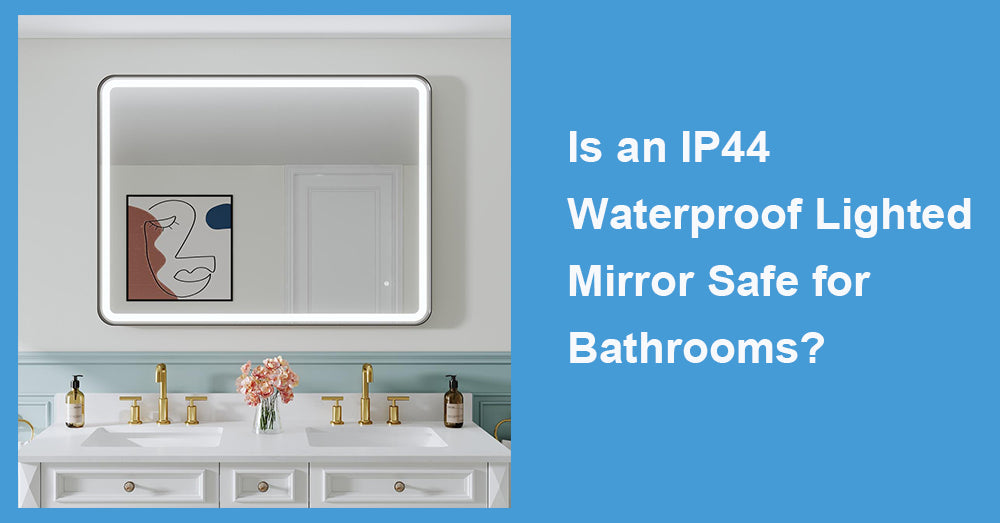
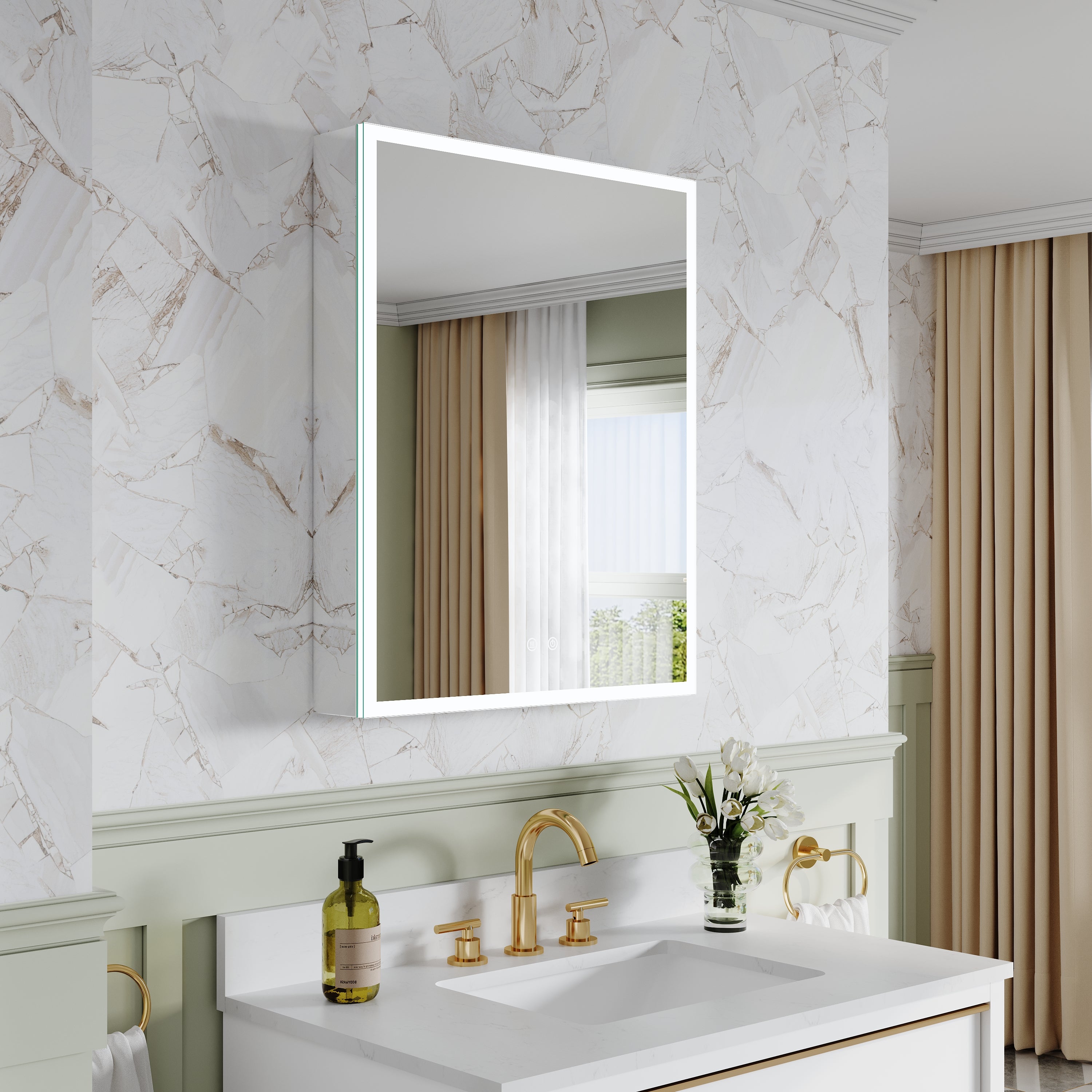
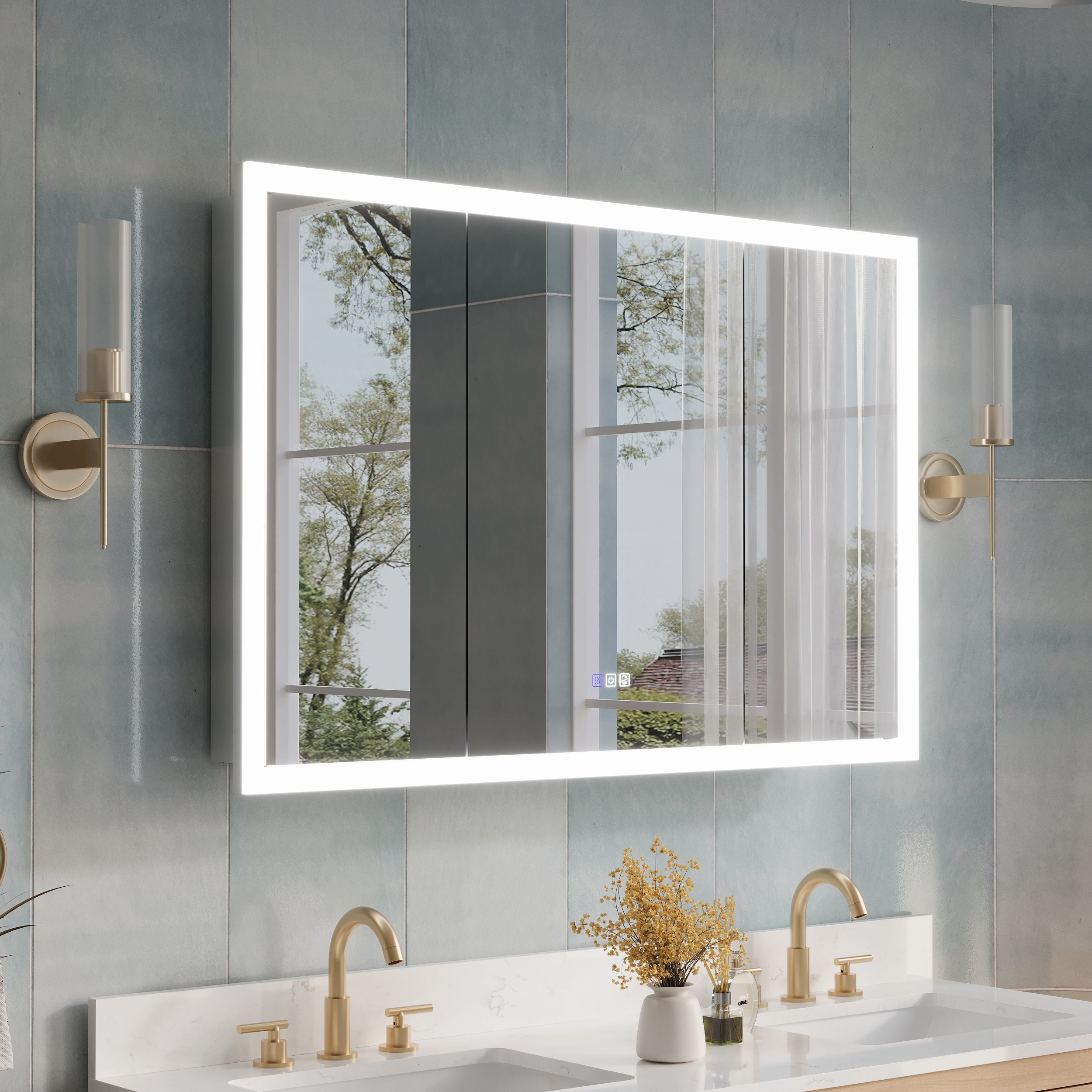
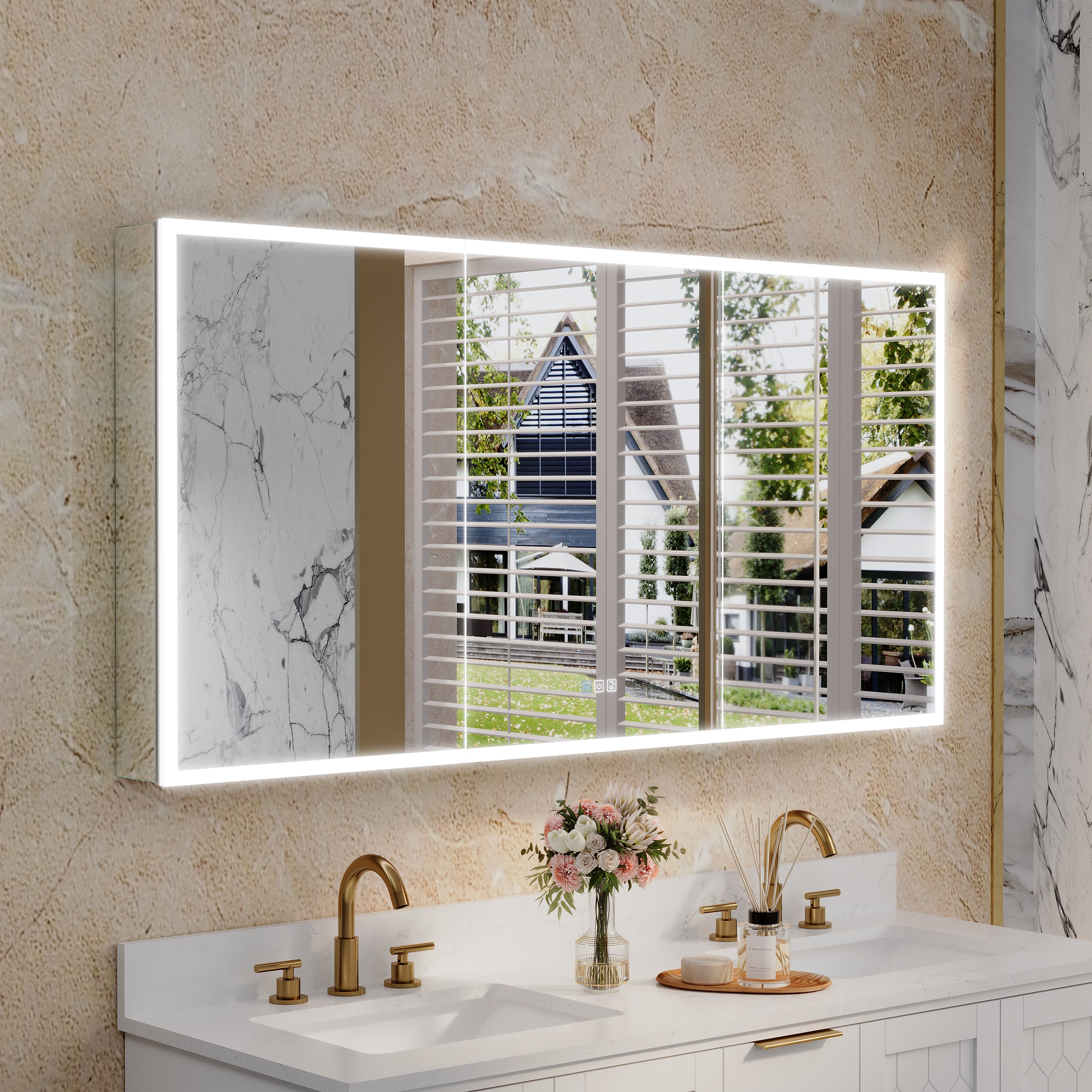
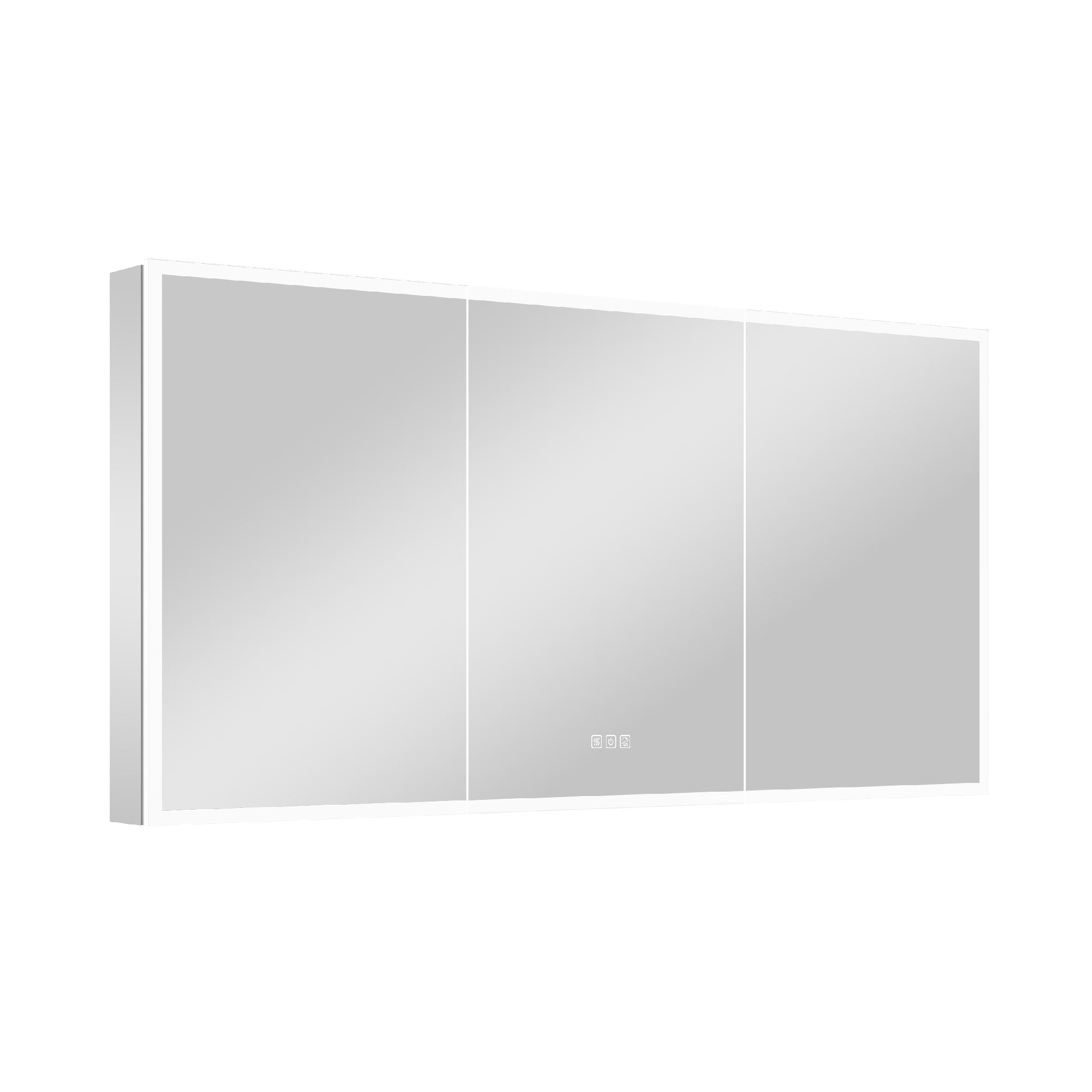
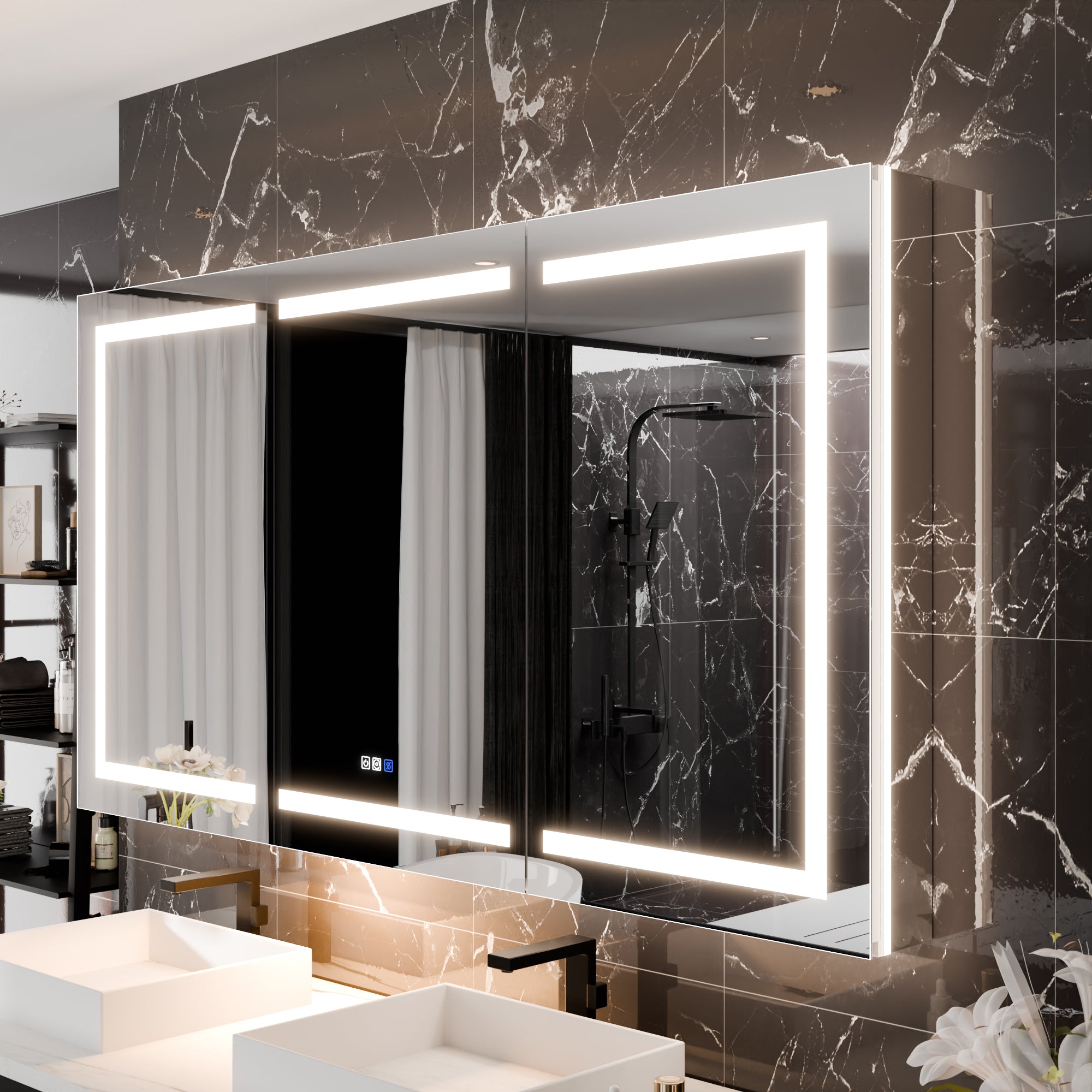
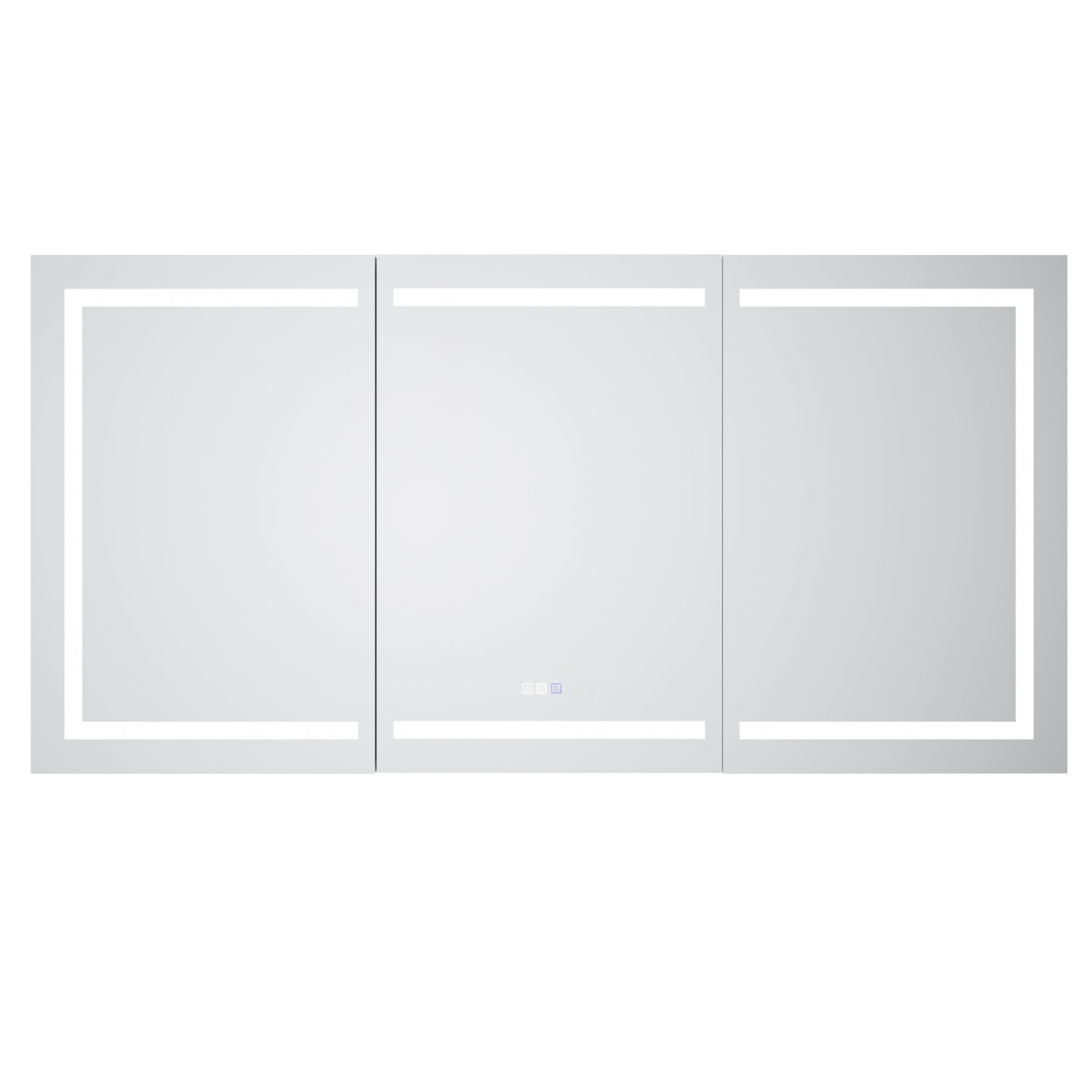
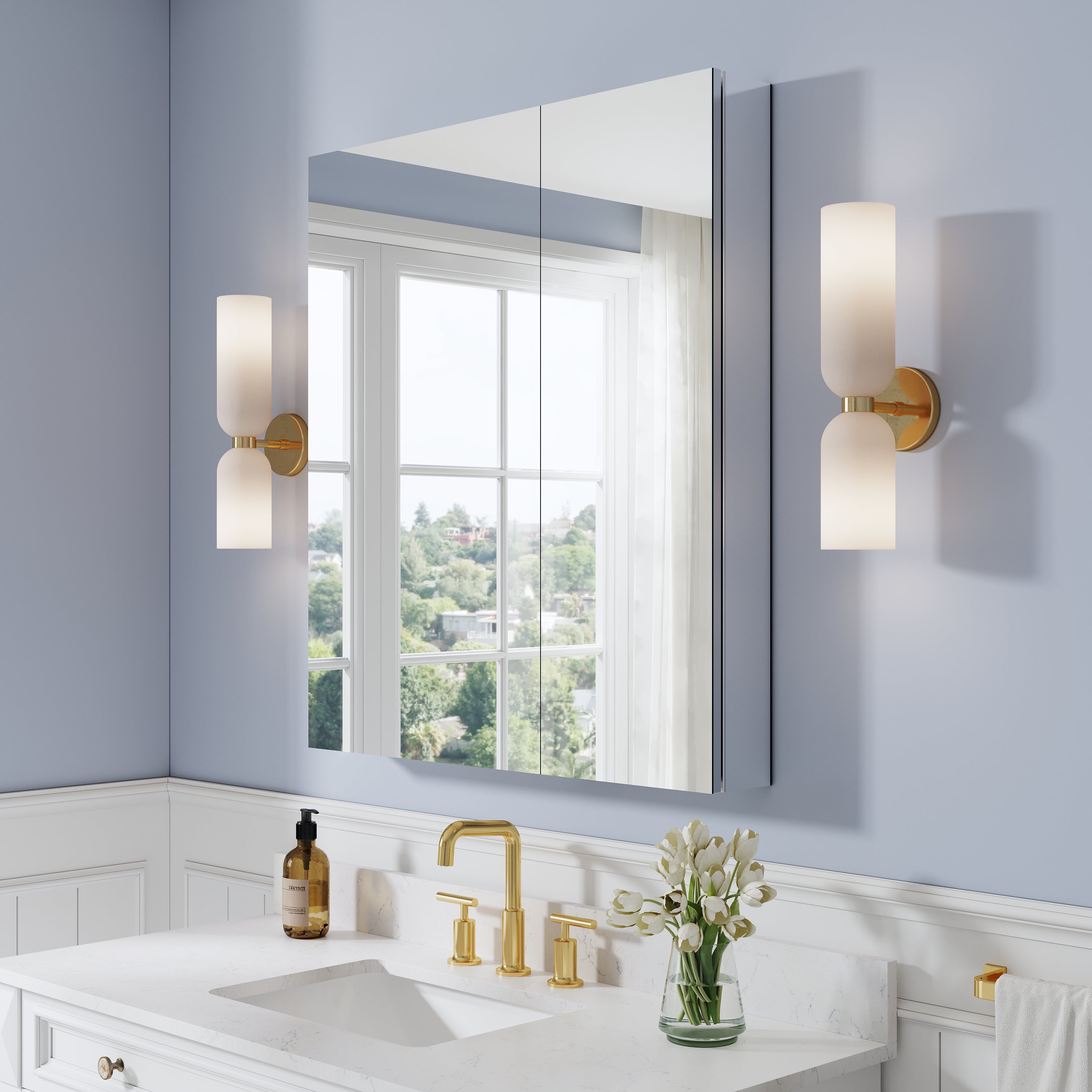
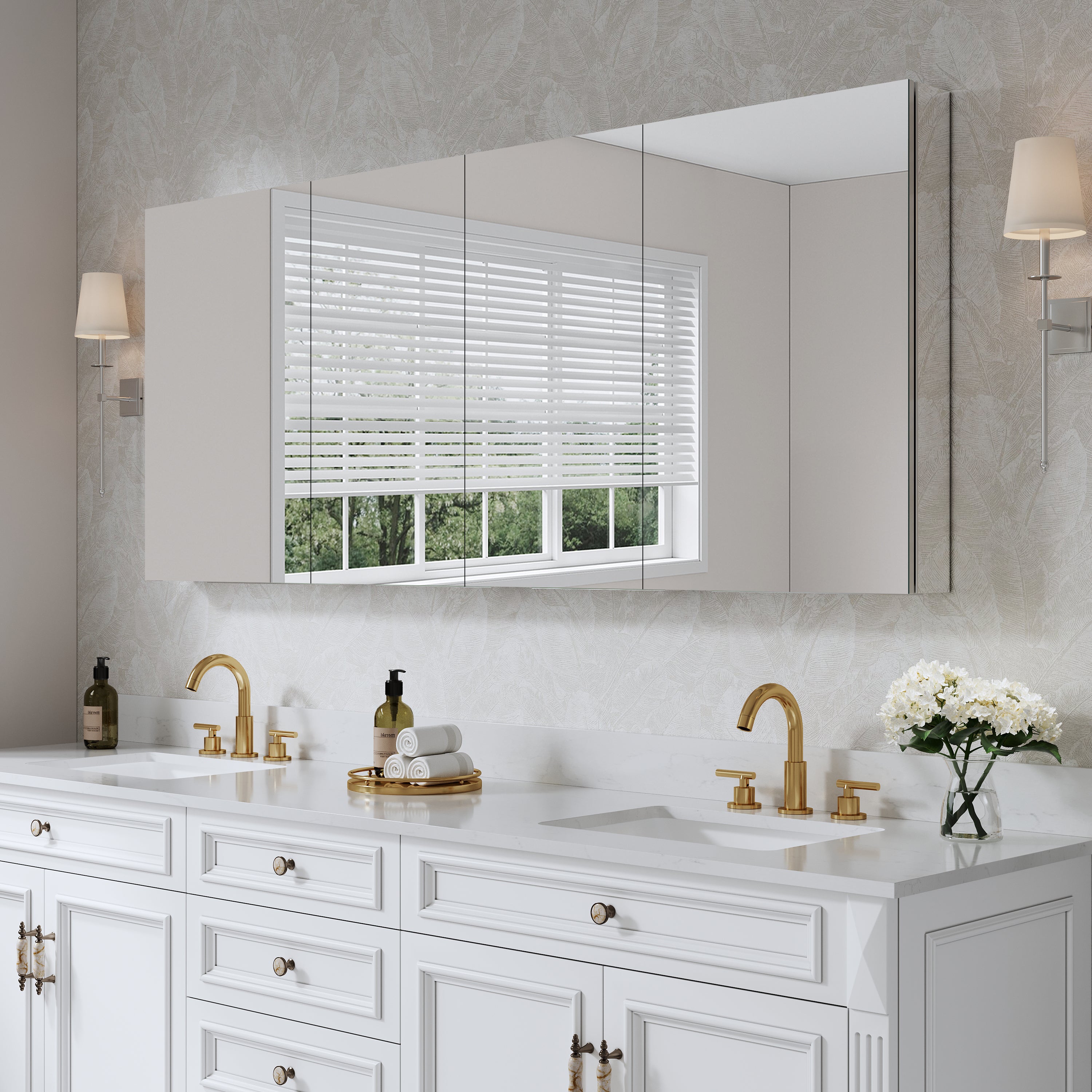
Against the backdrop of constantly upgrading bathroom lighting and mirror products, the waterproof lighted mirror for bathroom ip44 has gradually become one of the most frequently mentioned parameters when choosing. For most people, "IP44" sounds both professional and somewhat abstract, so safety becomes the core question: is this type of illuminated mirror with this protection level really suitable for long-term installation in high-humidity environments such as bathrooms?
1. The bathroom environment has much higher requirements for electrical appliances than ordinary spaces
The bathroom is not an ordinary indoor space. During bathing, air humidity will rapidly rise, and water vapor will adhere to walls, mirrors, and lamp surfaces, even forming condensed water droplets.
Under typical usage conditions, the humidity in certain areas of the bathroom can reach 80%-95%. In contrast, the area around the mirror, especially near the sink, often faces the dual effects of water vapor and splashing water droplets. This environment requires that any charged equipment be dust- and water-resistant.
2. IP44, what does it really mean?
The IP protection level consists of two digits; the first digit indicates resistance to solid foreign objects, and the second indicates waterproofing. In IP44, "4" means that the device can prevent solid foreign objects with a diameter greater than about 0.04 inches from entering; the second "4" indicates that it can withstand water droplets splashing from any direction without affecting the internal electrical structure.
In other words, IP44 is not "completely waterproof", but designed to protect against the most common water vapor and splash situations in daily use. This perfectly matches the bathroom mirror's actual usage environment.
3. At the data level, the applicability of IP44 in bathrooms
Based on long-term test results, lighting equipment with an IP44 rating is widely accepted as a solution when used within a specific range of the washbasin or shower area. A common suggestion is that, as long as the mirror is installed at least 24-36 inches from the direct water flow, the IP44 protection level can cover the risks of daily use.
That's also why many bathroom mirrors with lights are clearly labeled as IP44 in their product specifications, rather than higher protection levels. It's not a technical limitation; the usage scenario itself doesn't require a "fully sealed" solution.
4. Why aren't all bathroom mirrors made with higher waterproof levels?
From an engineering perspective, increasing protection levels is not without cost. A higher IP rating requires more complex sealing structures, stricter heat-dissipation designs, and higher manufacturing costs.
The lighting system for bathroom mirrors is usually low power, and most LED light sources have a power range of 30-60W, requiring sufficient heat dissipation space. If one unthinkingly pursues complete sealing, it may actually affect heat dissipation efficiency and shorten the lifespan of electronic components.
Therefore, IP44 is more like a "balance point" - a relatively reasonable compromise between waterproof safety and heat dissipation stability.
5. IP44, is it suitable for long-term use?
From the perspective of actual service life, IP44 is not a short-term solution. As long as they are correctly installed and avoid long-term direct water erosion, these mirrors can work stably in high-humidity environments for many years.
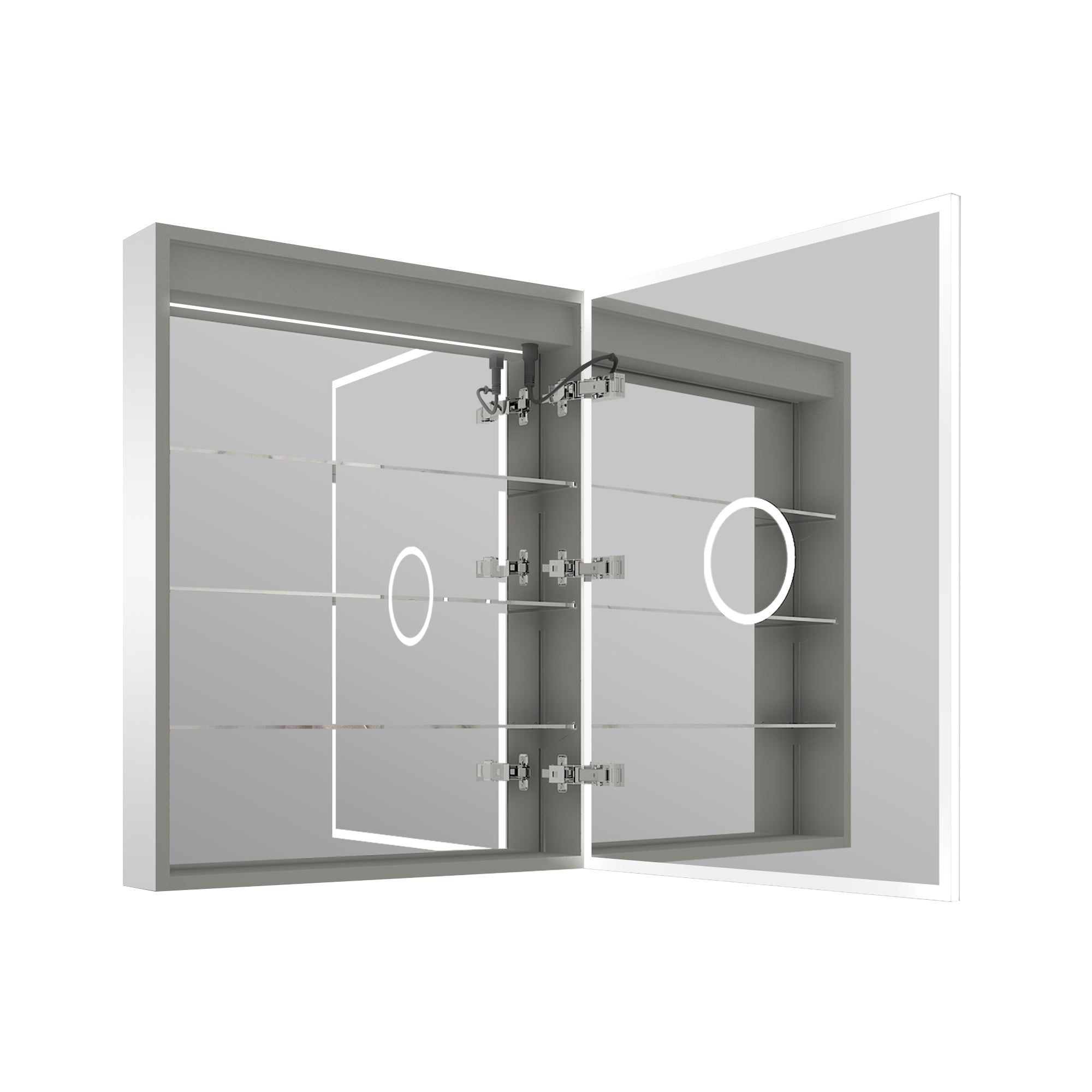
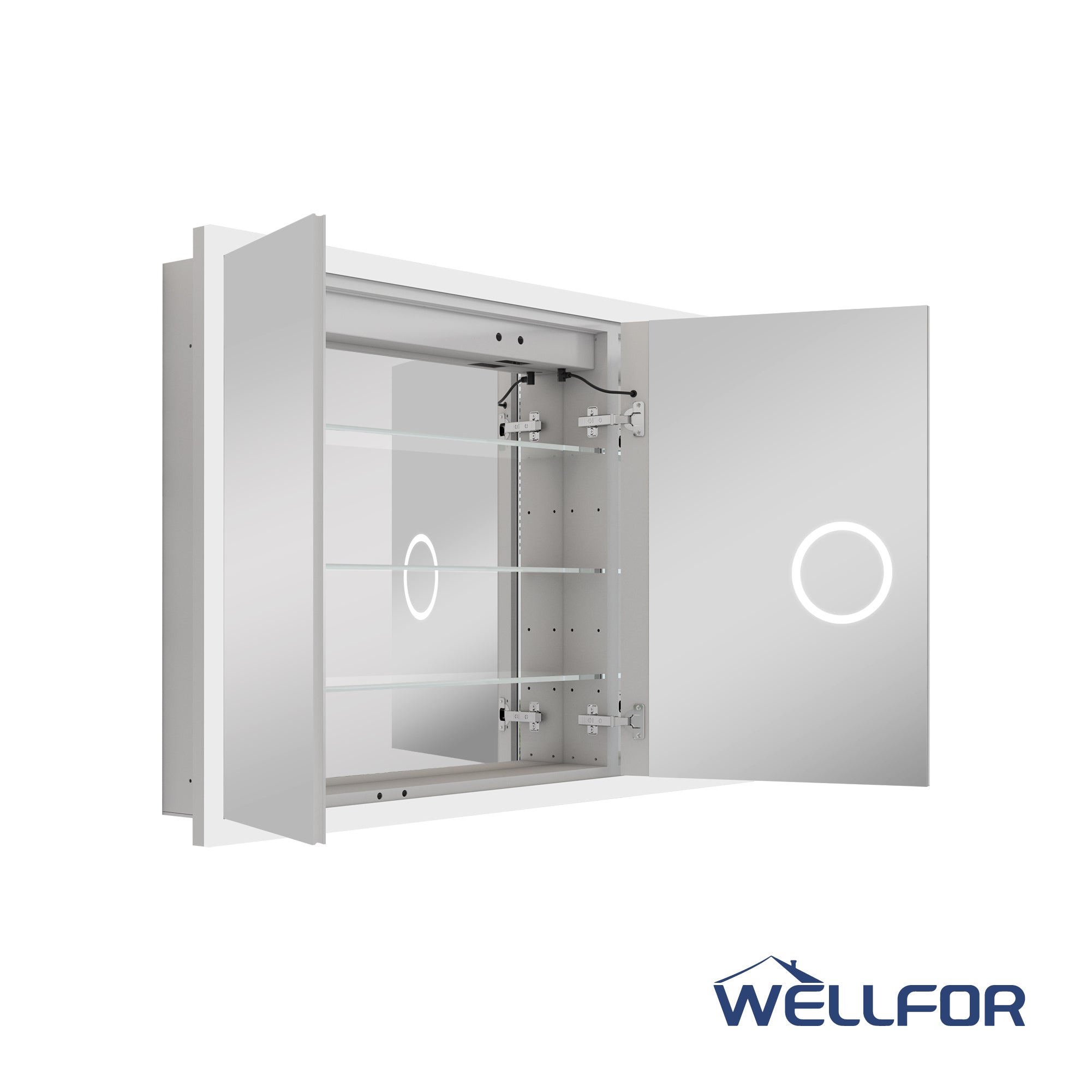
In bathroom mirrors with a width of 30-48 inches, the light strip is usually distributed on the back or edge of the mirror, with a physical distance from the water source. In addition, power modules are often designed in relatively dry areas, further enhancing the overall system's safety redundancy.
6. The sense of security in use comes not only from the level of protection
It should be emphasized that IP rating is only a part of the security system, not the whole. The safety of bathroom mirrors also depends on the following factors:
Firstly, whether the power structure is stable and whether it has basic insulation and moisture-proof design;
Secondly, whether the wiring method is standardized and whether the hard-wired or plug-in interface is far away from the direct water source;
Thirdly, whether the back of the mirror body has a reasonable ventilation and heat dissipation path.
When these conditions are met simultaneously, the IP44 protection level can play its role.
7. Why do some people still have doubts about IP44?
Doubts often stem from a misunderstanding of the concept of "waterproofing". Many people subconsciously understand waterproofing as "can be directly rinsed with water," but this is not a prerequisite for using bathroom mirrors.
The protective target for bathroom mirrors is to handle water vapor, splashes, and occasional contact, rather than withstand continuous water flow. As long as the installation position is reasonable and avoids the mirror facing the shower or bathtub overflow area, IP44 is fully capable.
8. From an industry perspective, IP44 has become the mainstream standard
From an industry perspective, IP44 has become one of the most common and mature protection levels for illuminated bathroom mirrors. It can meet the safety needs of the vast majority of home bathrooms without introducing unnecessary structural complexity.
With the continuous integration of lighting mirror functions, the industry tends to optimize appearance, lighting efficiency, and user experience on the premise of "sufficient safety," rather than simply piling up parameters.

9. So, is an IP44 bathroom mirror safe?
If viewed from the premise of standardized installation and reasonable use, the answer is yes. IP44 is not a compromise choice, but a result of long-term validation of the actual bathroom environment.
For the vast majority of washbasin areas, the waterproof, illuminated mirror for bathrooms with IP44 protection is sufficient to support stable, safe daily use. However, what really needs attention is whether the installation location is reasonable and whether the overall electrical design is standardized.













Leave a comment
This site is protected by hCaptcha and the hCaptcha Privacy Policy and Terms of Service apply.