






















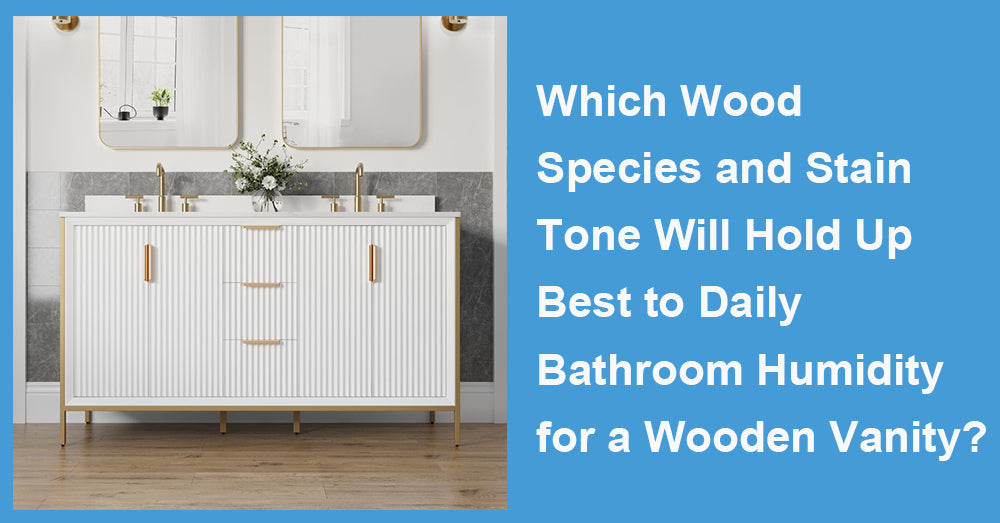
A wooden vanity can look timeless in a bathroom, but humidity is a real stress test for wood. Steam, temperature swings, and occasional splashes cause wood to absorb and release moisture, which leads to expansion and contraction. Over time, that movement can show up as sticking drawers, shifting door gaps, or slight cupping if the materials and finish are not designed for a wet environment. Because wood movement is driven by moisture content and happens mostly across the grain, durability is not just about looks. It is about selecting a stable build, choosing a species that behaves predictably, and pairing it with a stain tone and finish that ages well (Source: USDA Forest Products Laboratory, Wood Handbook; Source: Purdue Extension, “The Shrinking and Swelling of Wood and Its Effect on Furniture”).
The Key Truth: Finish and Construction Matter More Than the Exact Species
Before getting specific about wood types, it helps to understand what actually keeps a vanity looking good long term.
· Stable core and smart construction reduce movement. Engineered panels, such as quality plywood with wood veneer, tend to be more dimensionally stable than wide solid boards, because cross-oriented layers help reduce warping.
· Edges must be sealed. Many failures begin at exposed edges, under the sink cutout, or around joints where moisture can enter.
· Humidity control supports the material. Ventilation, wiping splashes, and avoiding standing water at seams reduce stress dramatically.
With that foundation, wood species becomes a performance choice instead of a guessing game.
Wood Species That Tend to Perform Best in Humid Bathrooms
1. White oak, especially quarter sawn
White oak is widely used in cabinetry because it is strong and reliable when properly finished. Quarter-sawn boards can be more stable in certain applications because the growth-ring orientation can reduce some types of movement and help panels stay flatter (Source: USDA Forest Products Laboratory, Wood Handbook; Source: Purdue Extension).
Why it works:
· Predictable performance when sealed correctly.
· Pairs well with light, medium, or darker stains.
· Holds up visually even with daily use.
2. Teak and other naturally oily hardwoods
Teak is known for its natural oils and extractives, which make it more tolerant of moisture exposure. This does not eliminate the need for a finish, but it can be an advantage in bathrooms where humidity swings are frequent.
Why it works:
· Naturally more moisture-tolerant than many common hardwoods.
· Often ages gracefully with medium tones and satin finishes.
3. Walnut, when the build and finish are strong
Walnut is not “waterproof,” but it can perform well when construction is stable, and the topcoat is protective. Walnut also has a naturally forgiving color range.
Why it works:
· Medium to dark base tone hides minor wear.
· Looks better over time in satin sheens.
4. Maple or birch, with careful staining
Maple and birch have tight grain and can look clean and modern, but they can stain unevenly without the right process. If you want this look, a controlled factory finish or a stain system designed to reduce blotching helps.
Why they can work:
· Tight grain keeps surfaces smooth and easy to wipe.
· Excellent for lighter tones if finished properly.
Which Stain Tones Age Best With Daily Humidity?
Stain tone influences what you notice most: water spots, mineral residue, and small scratches.
Medium tones are usually the most forgiving.
Warm oak, balanced browns, and light walnut tones tend to hide everyday wear better than extremes. They reduce contrast between the base color and small marks.
Why they win:
· Water spotting and dust are less obvious.
· Minor scratches blend more naturally.
Light tones look fresh but show staining more easily.
Very light finishes can make a small bathroom feel brighter. The trade-off is that, if cleaning is inconsistent, darker water drips, makeup residue, or mineral deposits may be more noticeable. Satin topcoats and sealed edges help.
Very dark tones can look premium, but require more maintenance.
Deep espresso and near-black stains can highlight hard water spotting and soap residue, especially under bright lighting. If you choose dark tones, a satin sheen typically looks better and is easier to maintain than high gloss.
The Finish System: The Real Durability Factor
If you want the best chance of long-term performance, focus on the topcoat quality and edge sealing. Factory-grade catalyzed finishes are often referenced as tougher because they cure chemically and form a more durable film than simple coatings (Source: CabinetDoors.com, “What Is Conversion Varnish?”). Even if you are not selecting the chemistry yourself, it is worth asking whether the vanity uses a cabinet-grade, moisture-resistant finish designed for kitchens and baths.
What to look for:
· Fully sealed surfaces, including edges and sink cutouts.
· Clear care instructions from the manufacturer.
· Hardware that tolerates humidity and frequent use.
A Simple Recommendation for Real Bathrooms
If you want a low-risk combination that holds up well in daily humidity:
· Wood choice: white oak or teak for dependable performance, walnut for a richer tone if sealed well.
· Stain tone: medium warm tones for the easiest maintenance.
· Finish and build: stable construction, sealed edges, and a durable cabinet-grade topcoat.

Conclusion
The wood species and stain tone that hold up best in daily bathroom humidity are those supported by a stable construction and a strong finish system. White oak and teak are consistently reliable choices, walnut performs well when sealed properly, and tight-grain woods like maple can work with a controlled staining process. For stain tone, medium shades tend to be the most forgiving, while very light and very dark finishes often demand more maintenance to look perfect. If you prioritize sealed edges, moisture-resistant topcoats, and good ventilation habits, your wooden vanity will stay attractive and functional for years.







































Leave a comment
This site is protected by hCaptcha and the hCaptcha Privacy Policy and Terms of Service apply.