
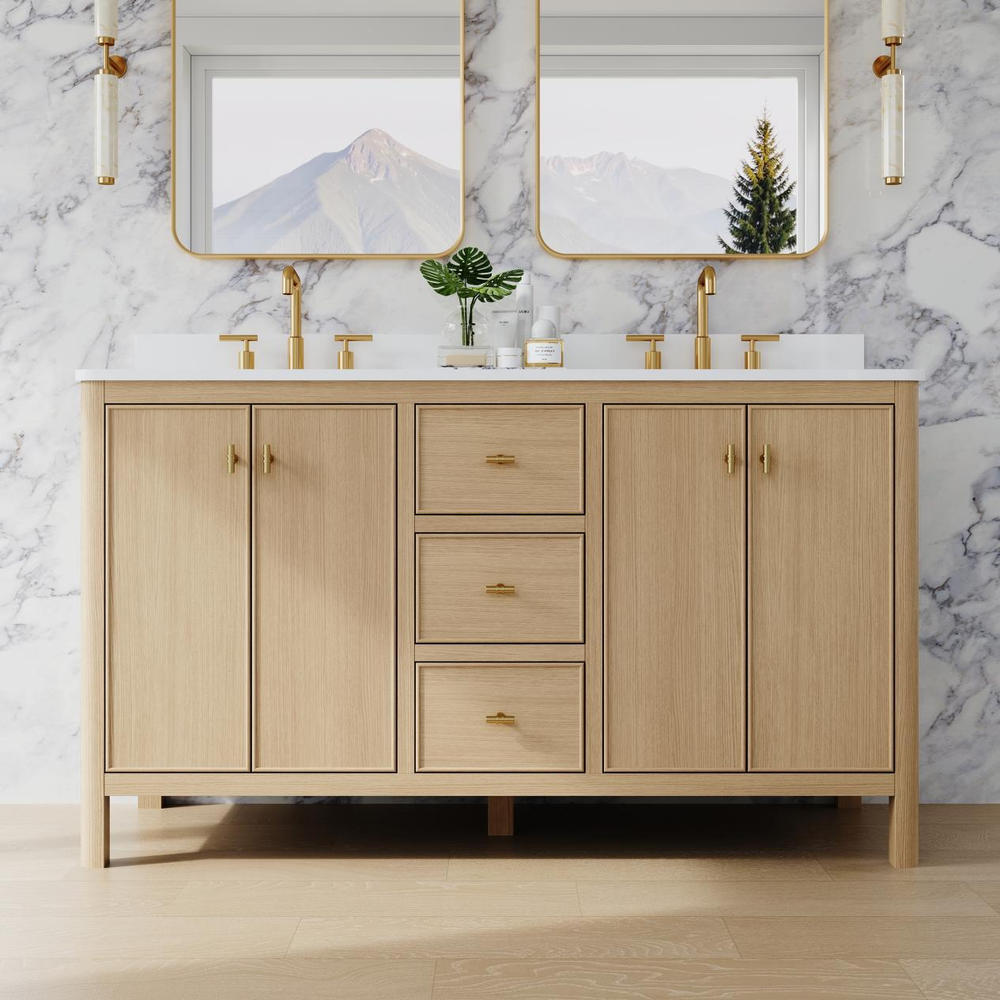
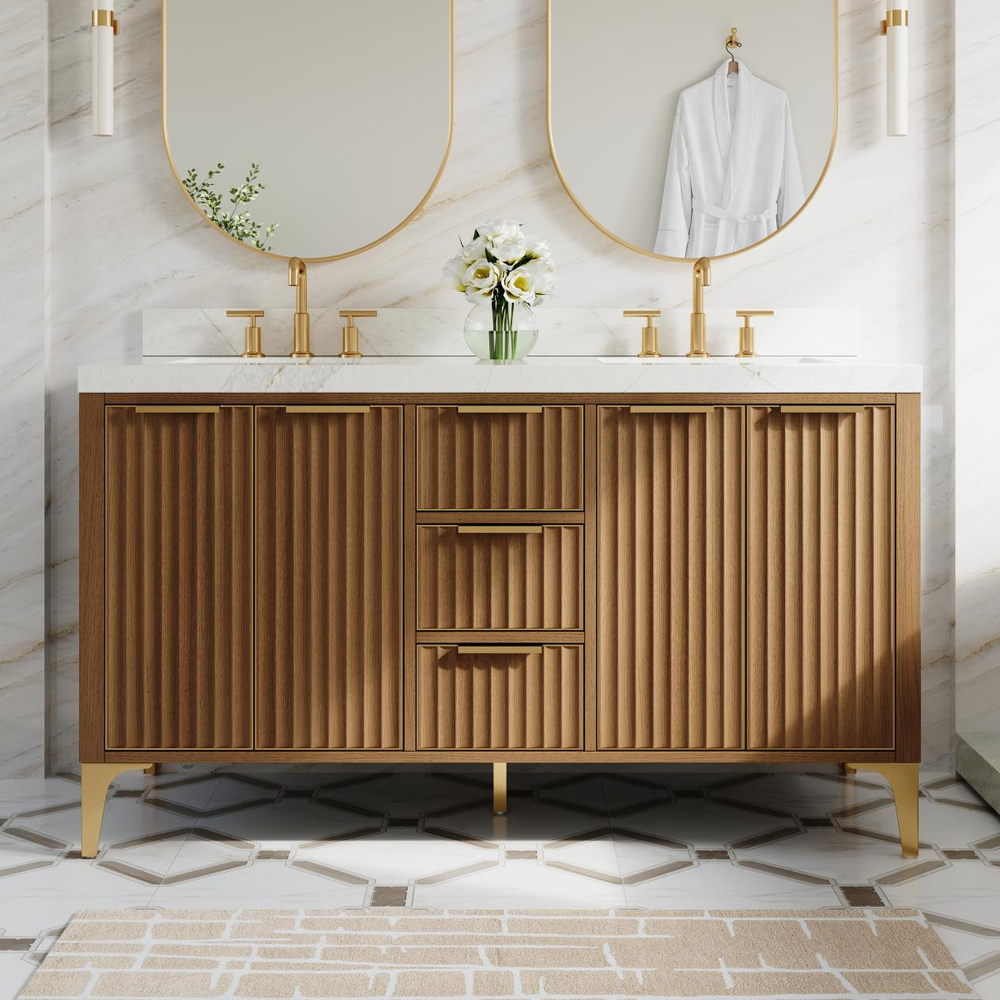
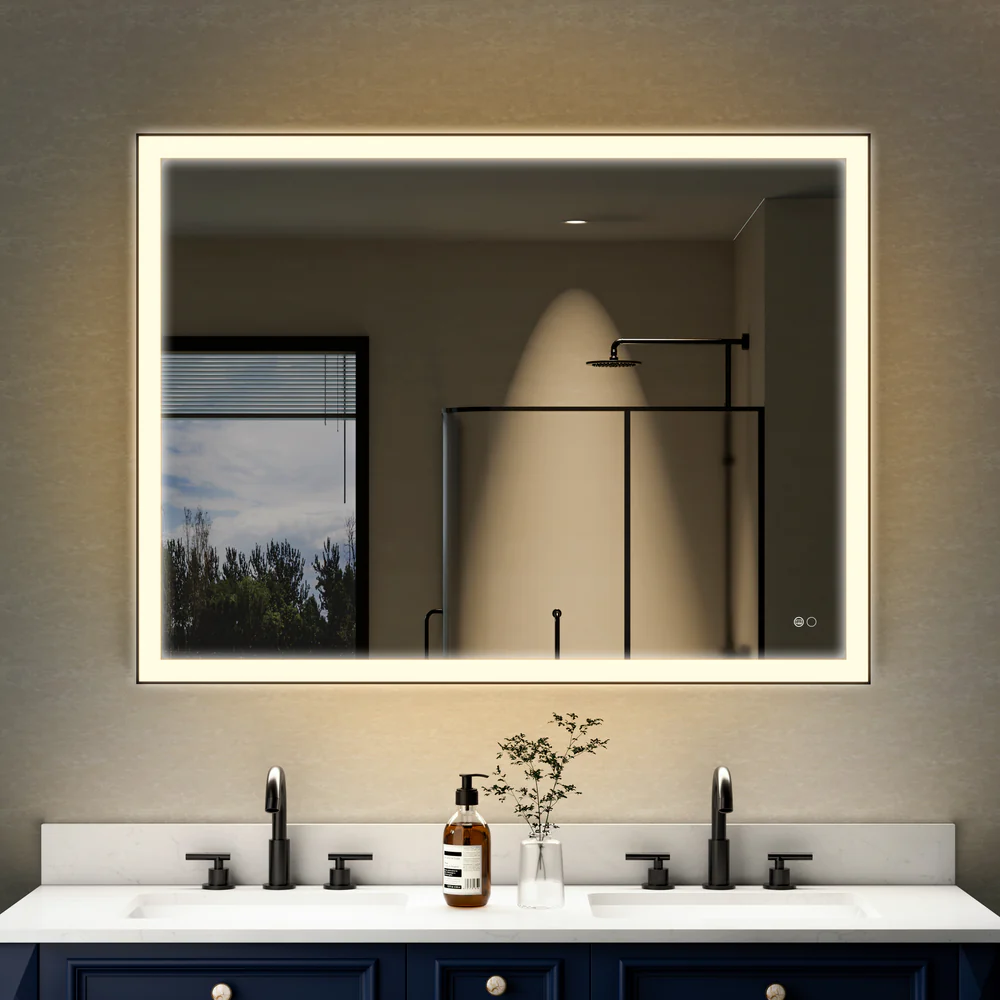



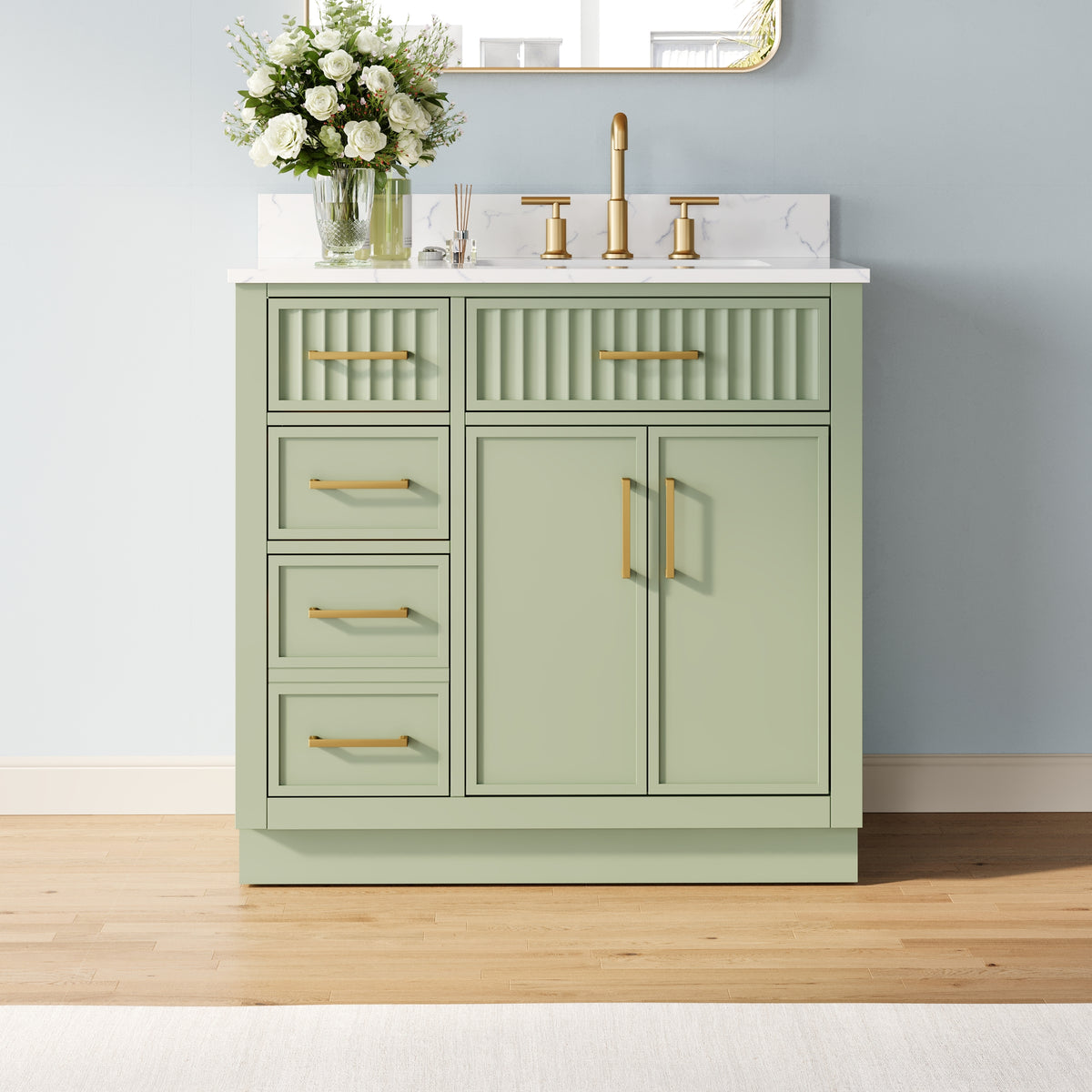
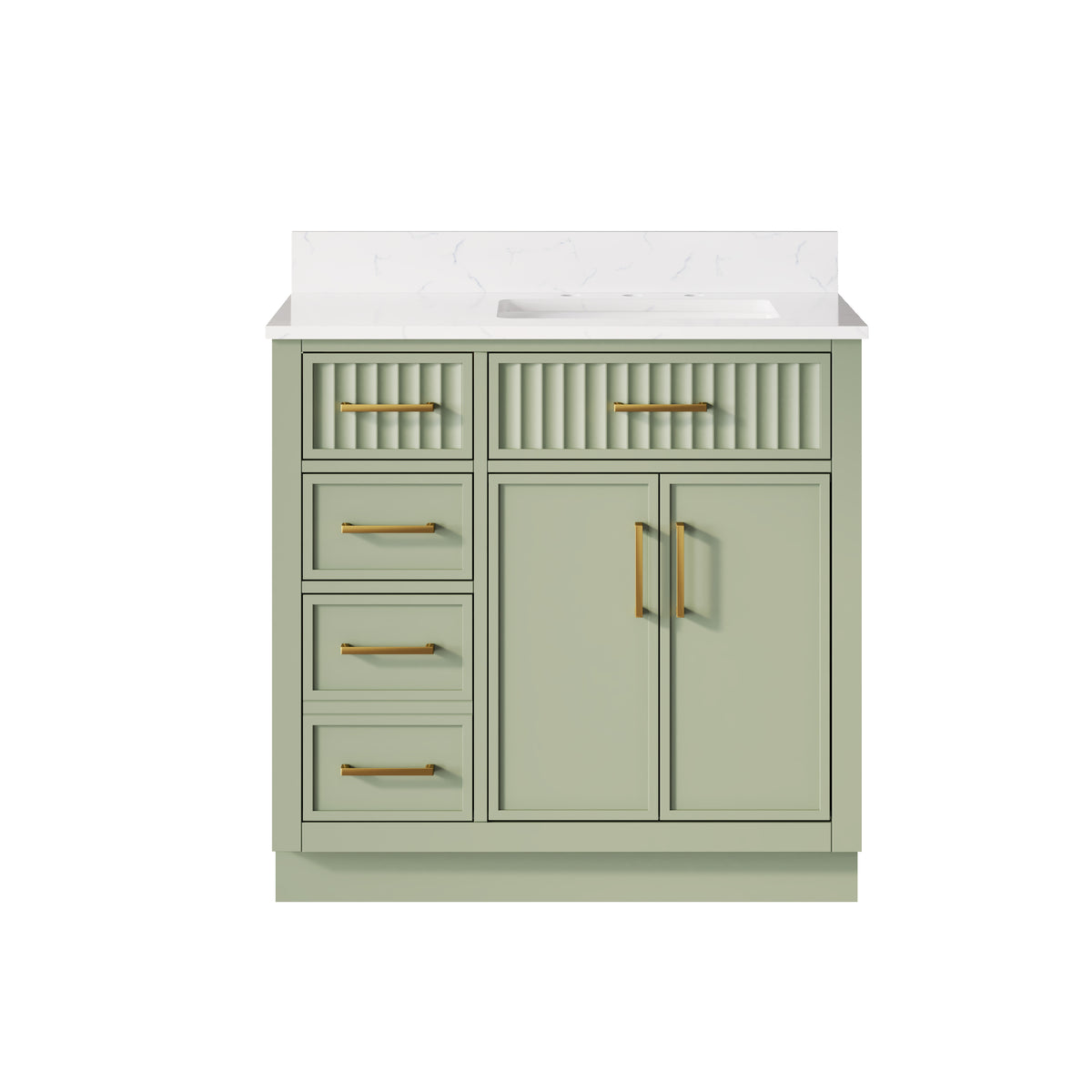
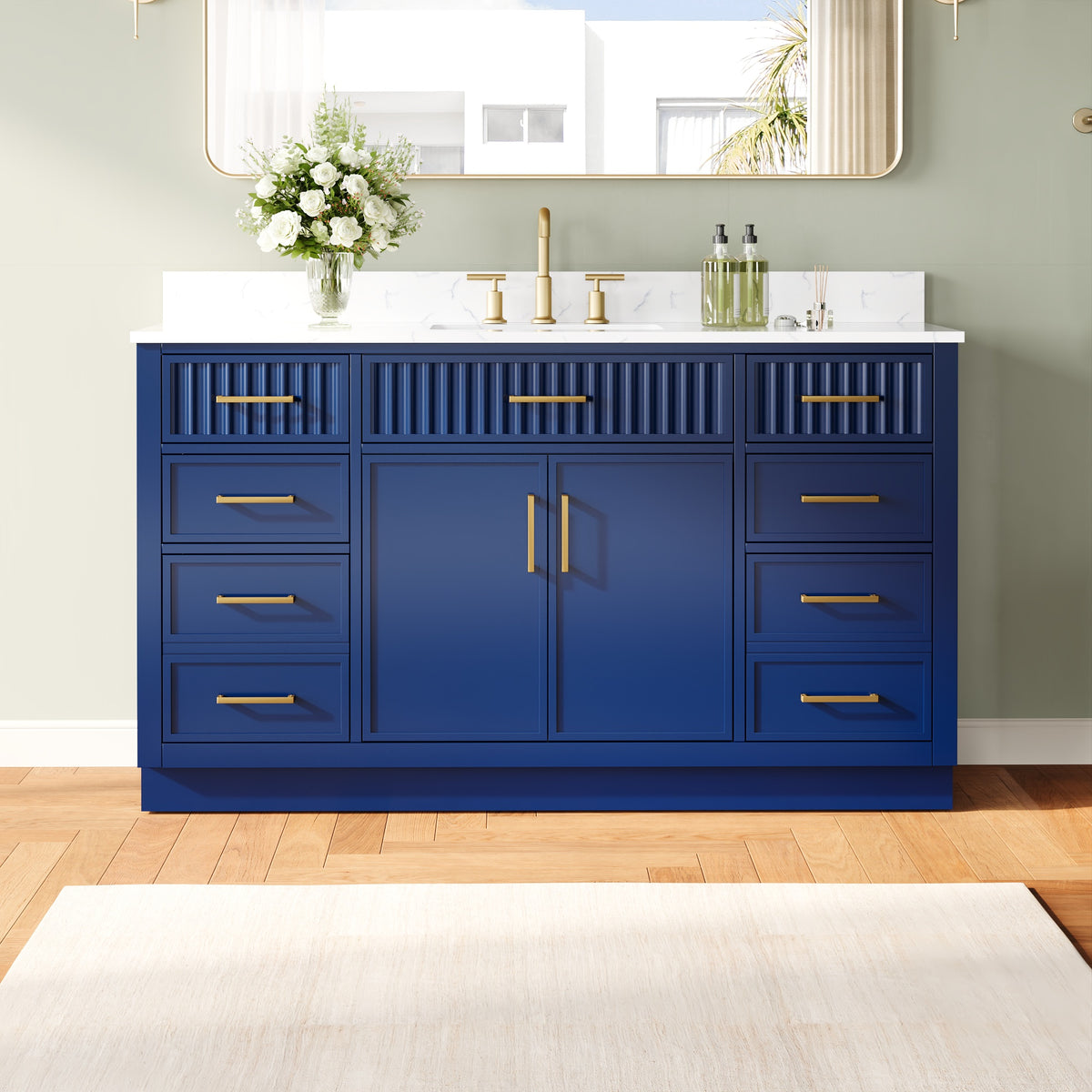
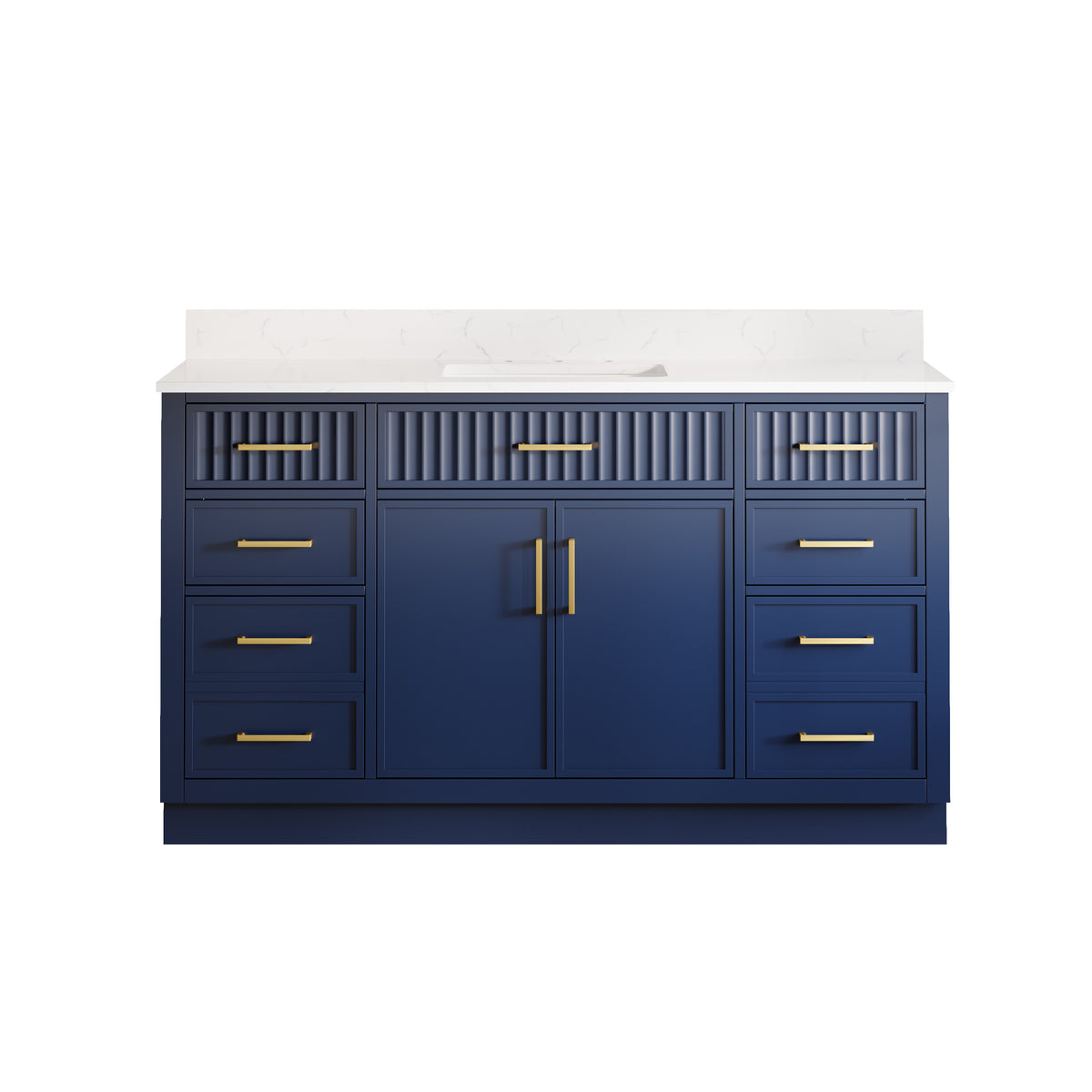
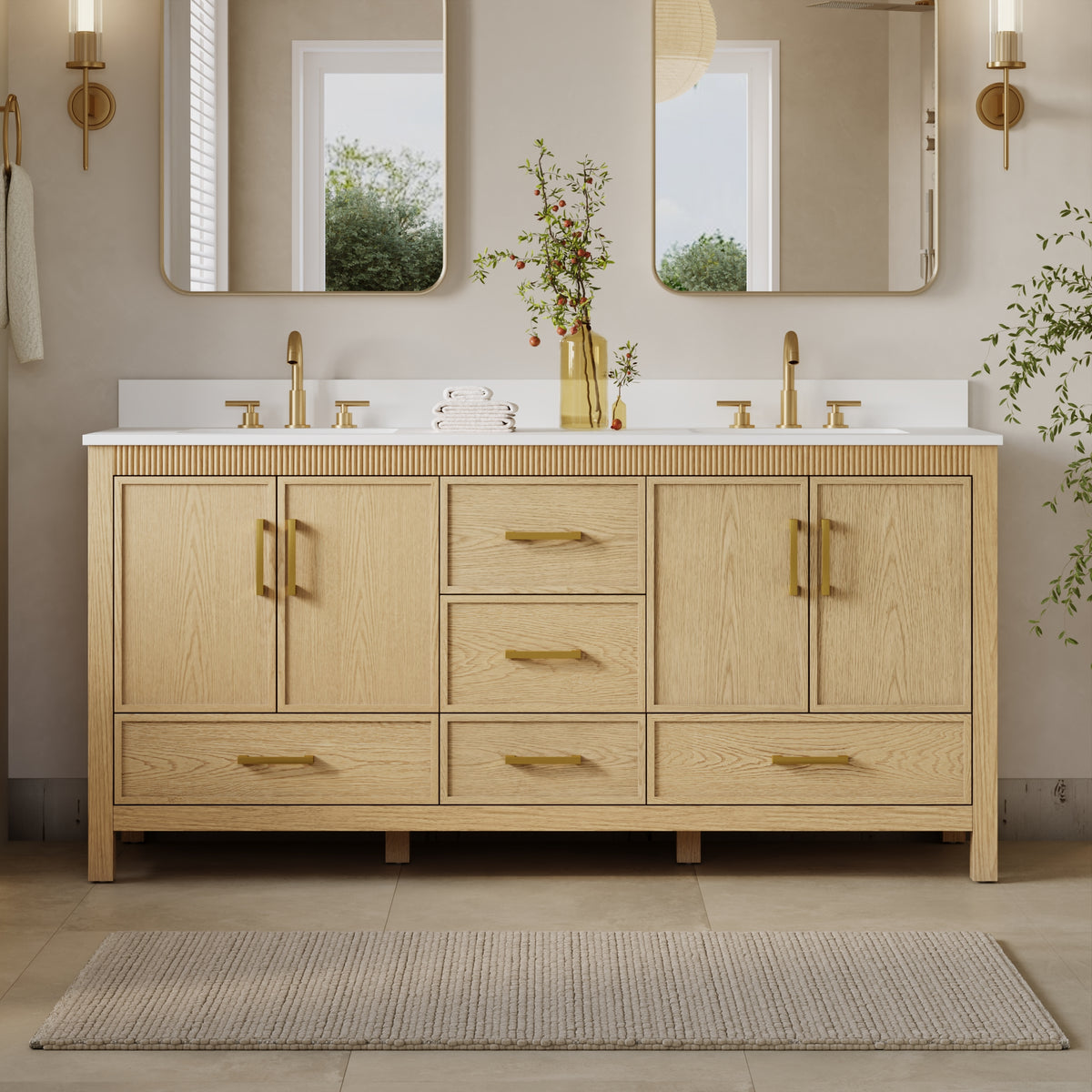
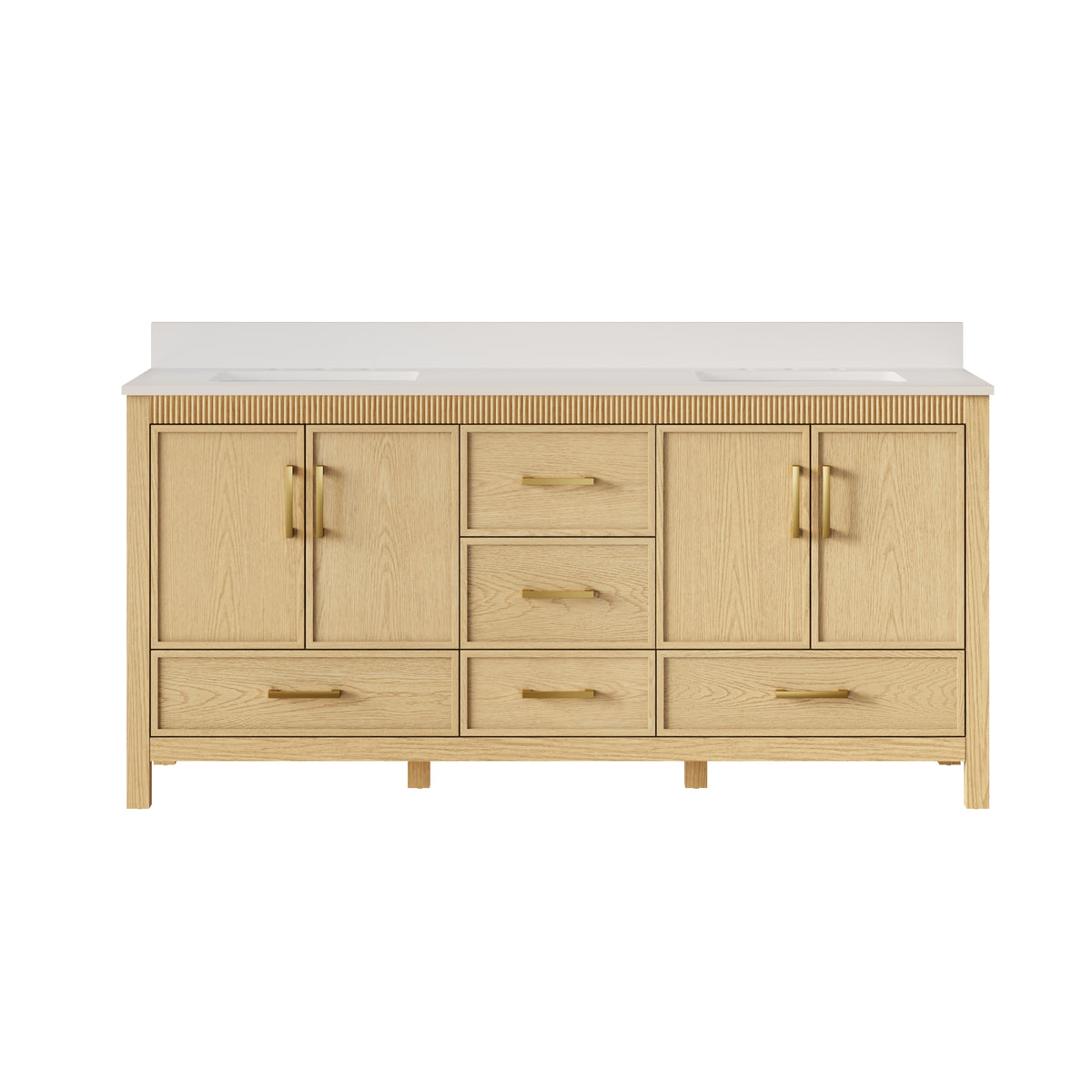
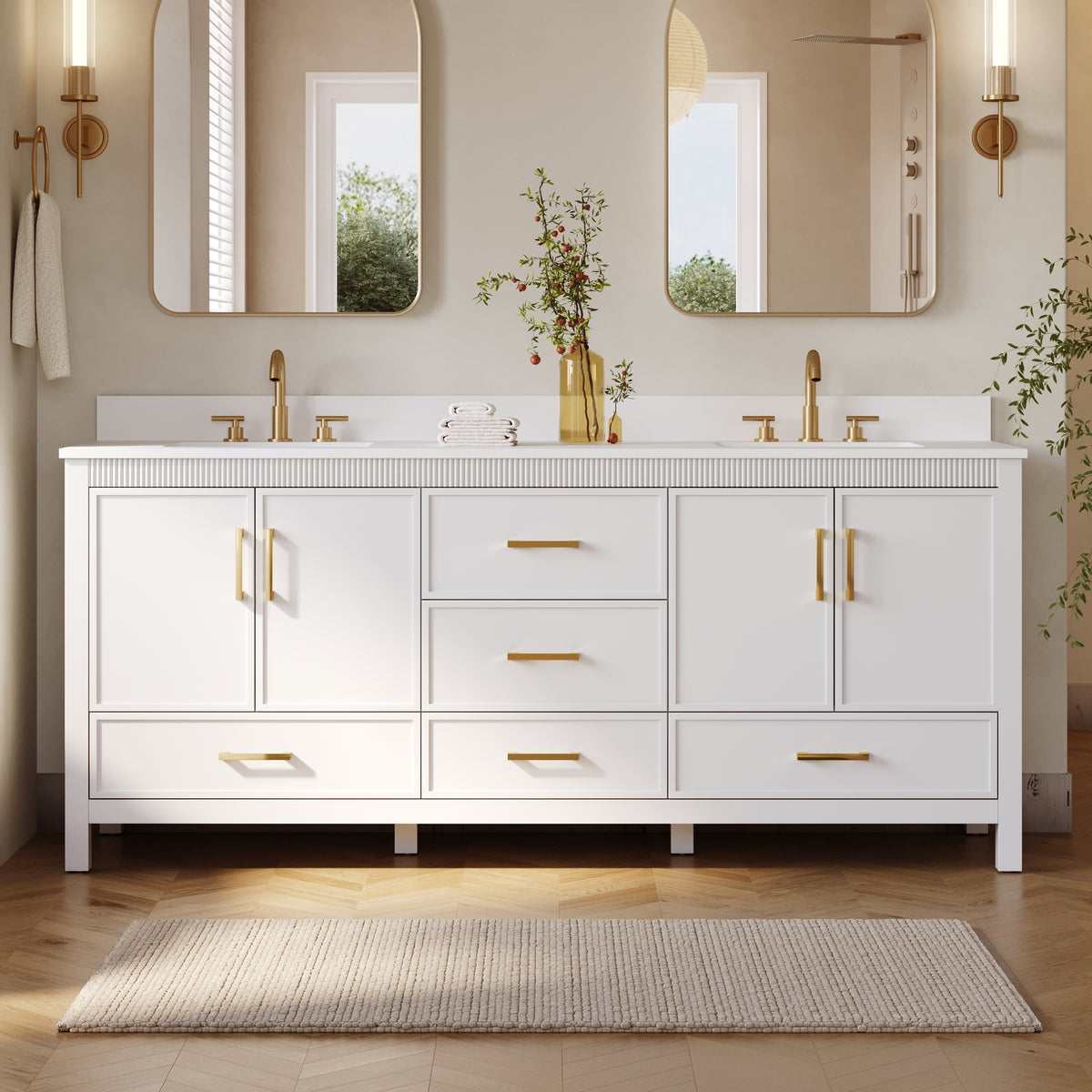
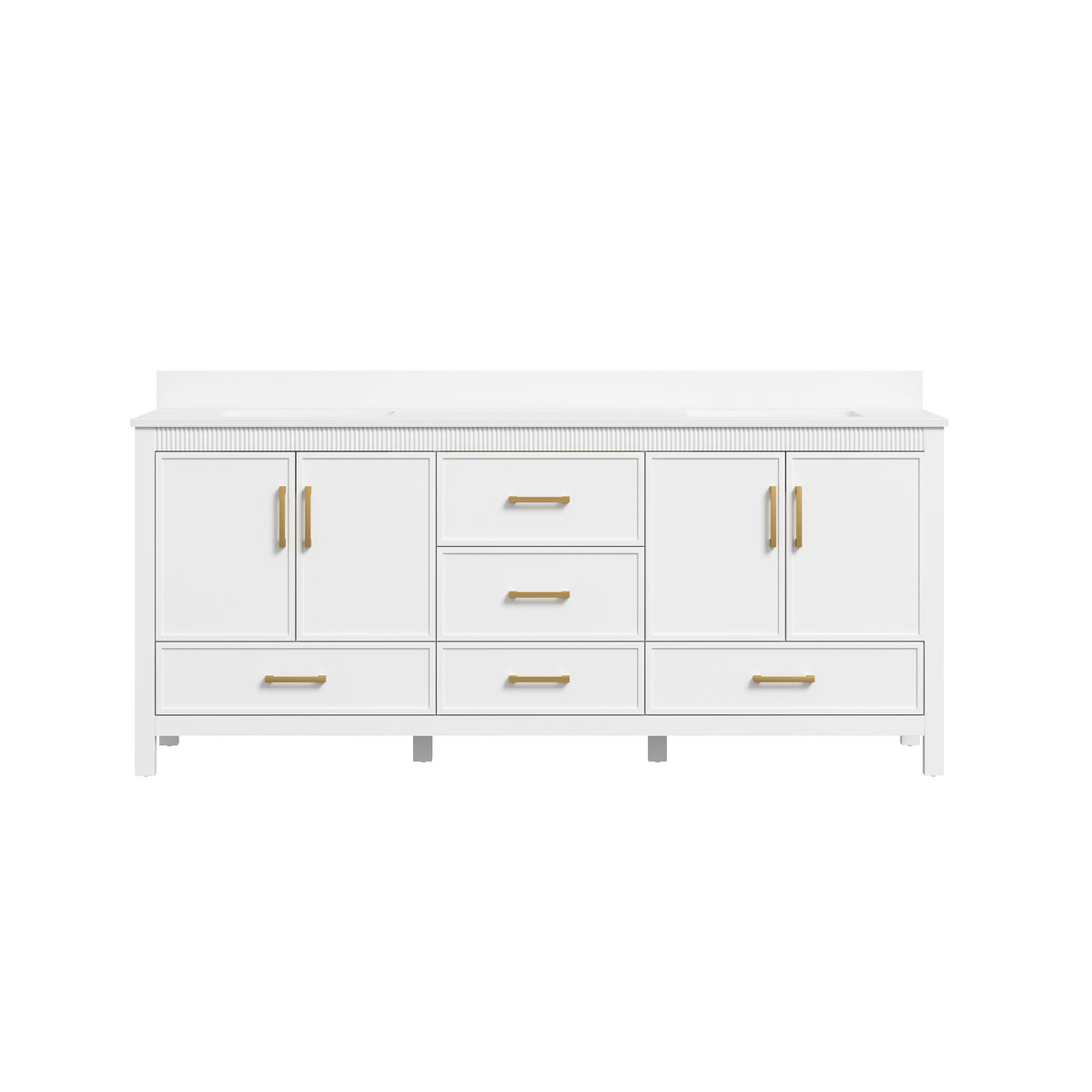

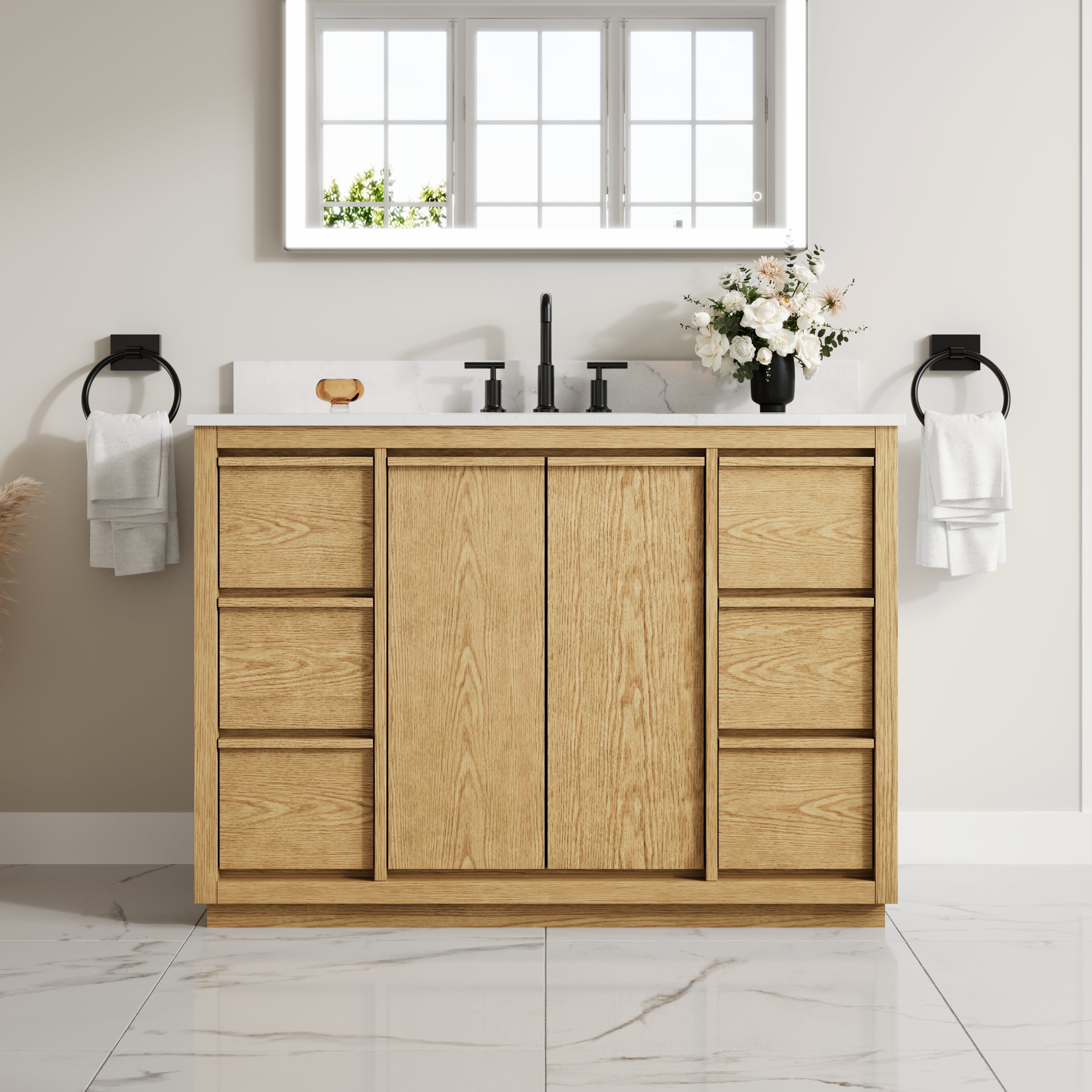
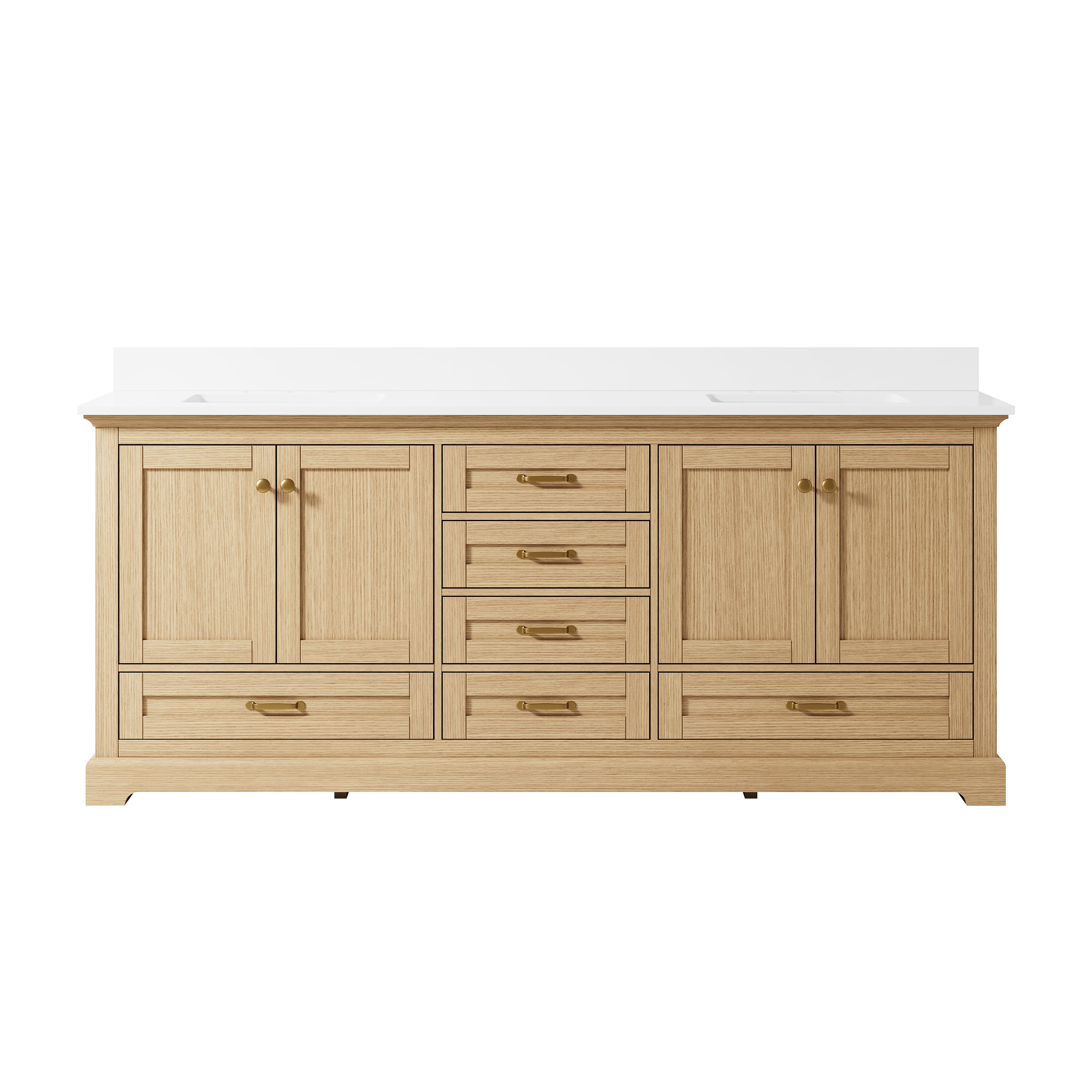
Bathroom vanities made of wood have the natural grains, warmth and feel of furniture. The term wood bathroom vanities can be used to describe cabinets made of solid wood or cabinets made of plywood with wood veneer. But usually a combination of both types of materials is used in wood bathroom vanities. Common types of wood used in the manufacture of such cabinets are oak, maple, birch, cherry and poplar. These types have different visual presence, strength and price, so the buyer needs to know how exactly they differ.
Oak: Distinctive Grain and Everyday Strength
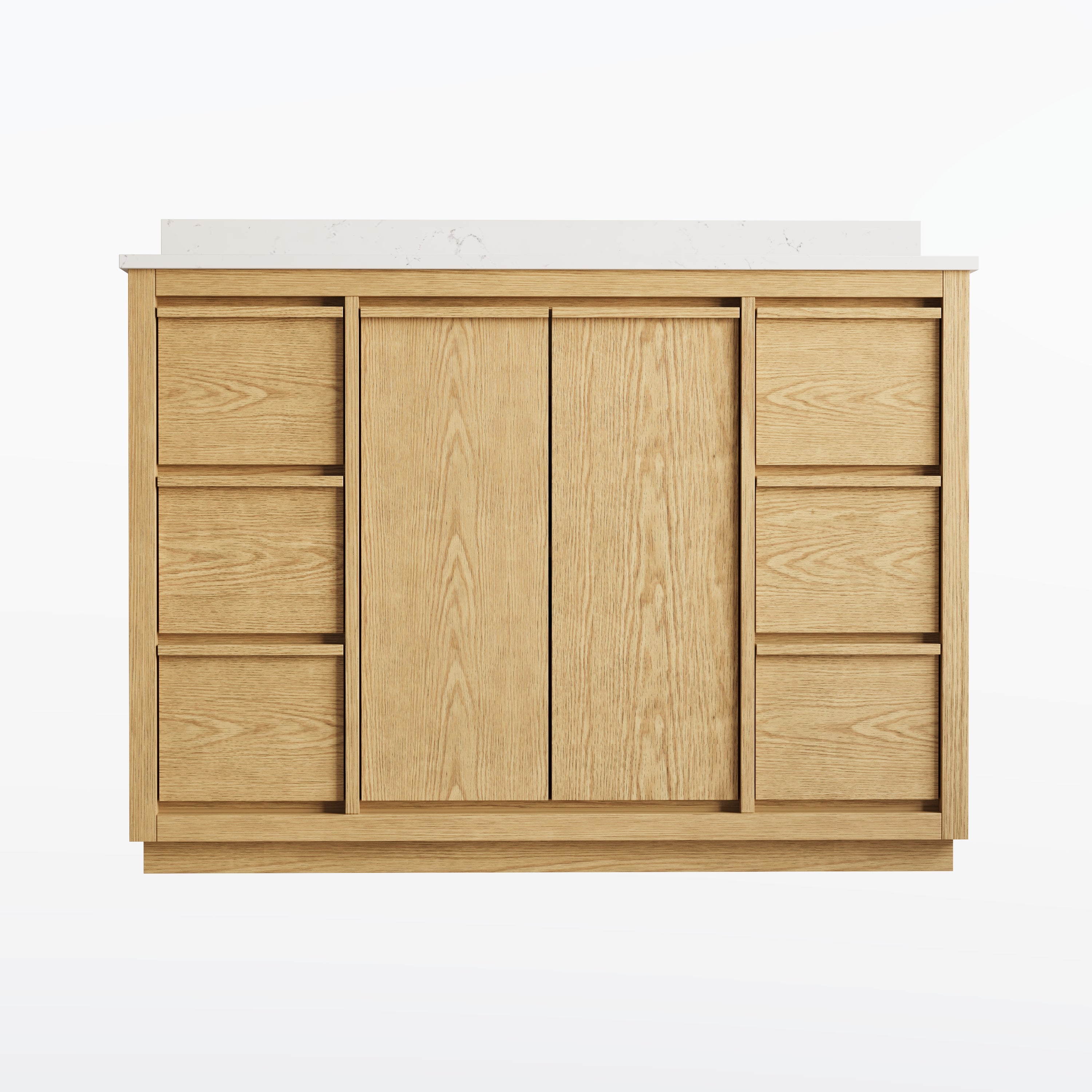
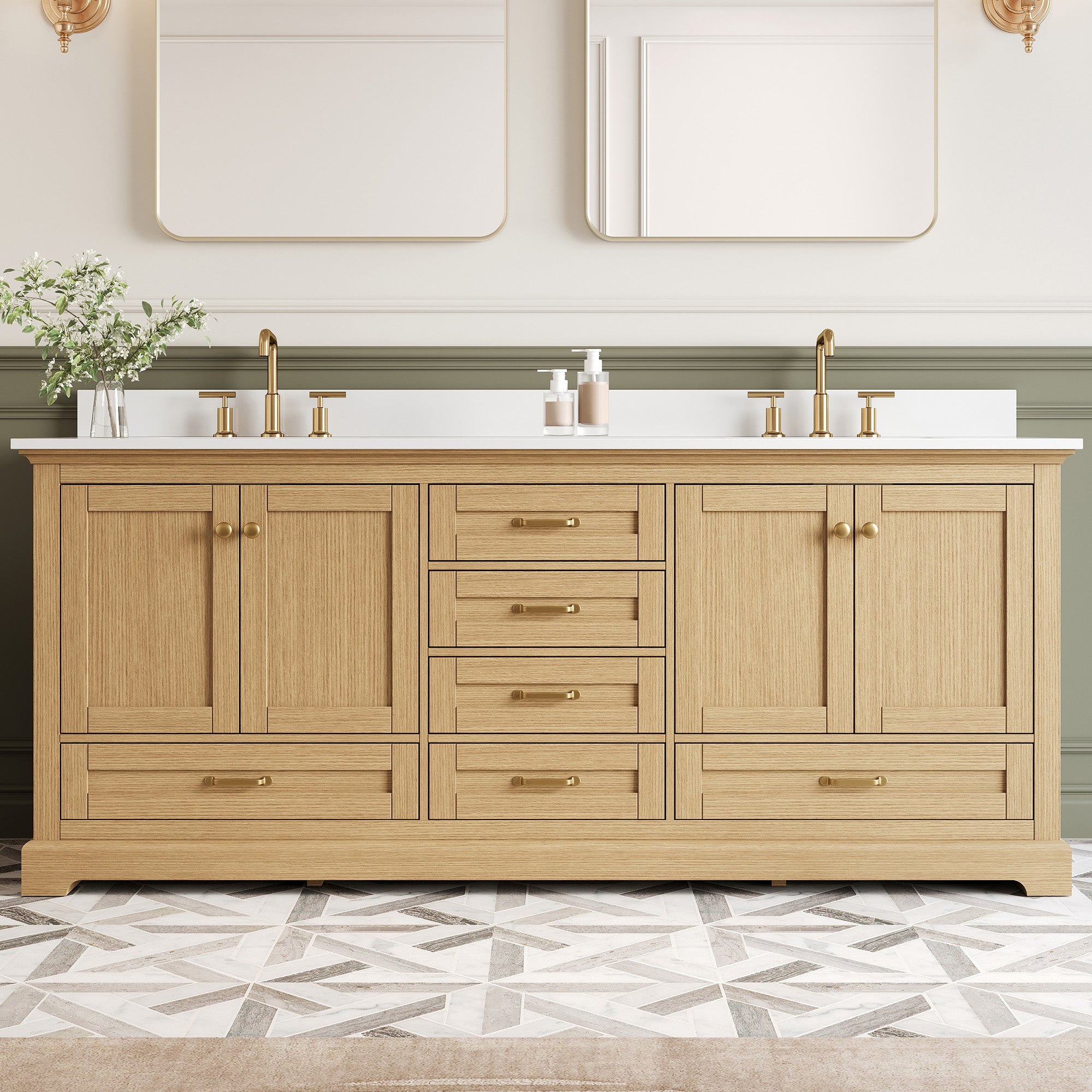
Vanity frames, cabinet doors, and drawer faces are usually made of oak. red oak has an open visible grain while white oak is less grainy with a brownish, olive-like tinge. It is possible to use a variety of oak stains, and oak can find its place in both traditional and modern bathrooms and look good.
According to the Wood Handbook published by the USDA Forest Products Laboratory, the properties of wood vary from one species to another. Commercial wood species differ in terms of their strength, hardness, and dimensional stability. Despite the fact that the appearance of wood is important, its structural properties are also significant. It also mentions that when describing construction and finish of a vanity, construction methods (the way how it is made) are as important as the material used.
Maple: A Smooth Surface for Painted Finishes
Maple has a relatively fine and uniform grain, which is why it is often used for painted vanity doors and drawer fronts where the grain pattern should be less visible. Some kinds of maple can also be stained, although being light in color may lead to a slightly different end result compared to oak or cherry. The simplicity of maple makes it ideal for bathroom cabinetry that fits into a contemporary, unpretentious decor.
The word “maple” can be used to name different varieties, meaning a product description should provide details about the species used. A cabinet that is described as maple is likely to include solid maple in the visible parts of the product, but will include other types of wood in the interior construction. In a "maple" cabinet project, one should inquire about each component's nature: solid wood, veneer-covered plywood, or other materials.
Birch and Poplar: Practical Options for Cabinetry
Birch has a relatively subtle grain and is used in both solid components and plywood. Birch plywood can provide a stable panel for cabinet sides or shelves, while a birch veneer offers a real wood surface over an engineered core. Its lighter color can take a variety of stains and finishes, though the final appearance depends on the veneer, preparation, and coating.
Poplar is often used for frames, rails, and other painted components. Its grain is generally less prominent than oak’s, and it is commonly selected for parts that will be covered by an opaque finish. As with other species, performance depends on how the cabinet is built, joined, sealed, and installed—not simply on the wood name. These woods may be less visible in the finished vanity, but they can play an important role in its internal structure.

Cherry: Warm Color That Deepens Over Time
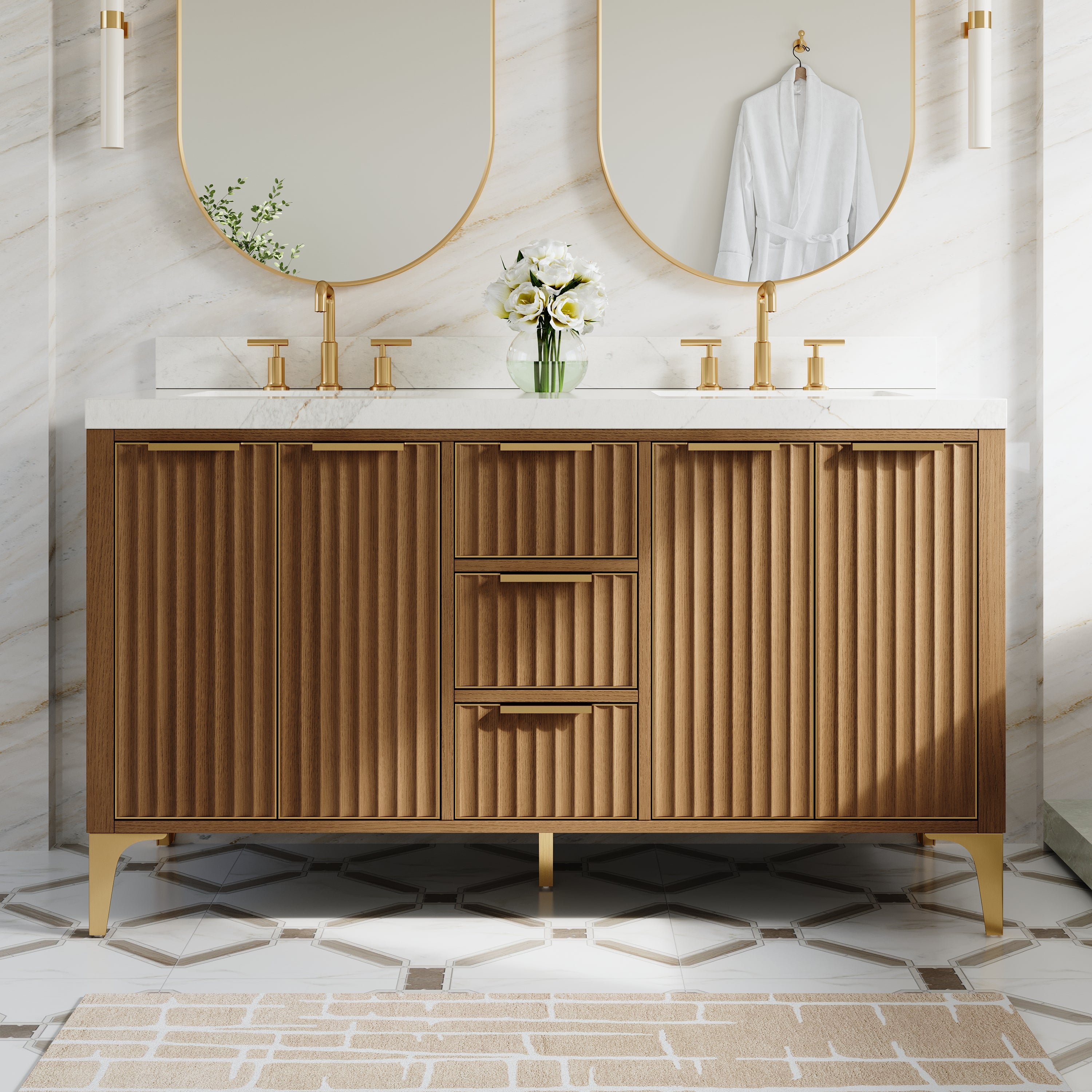
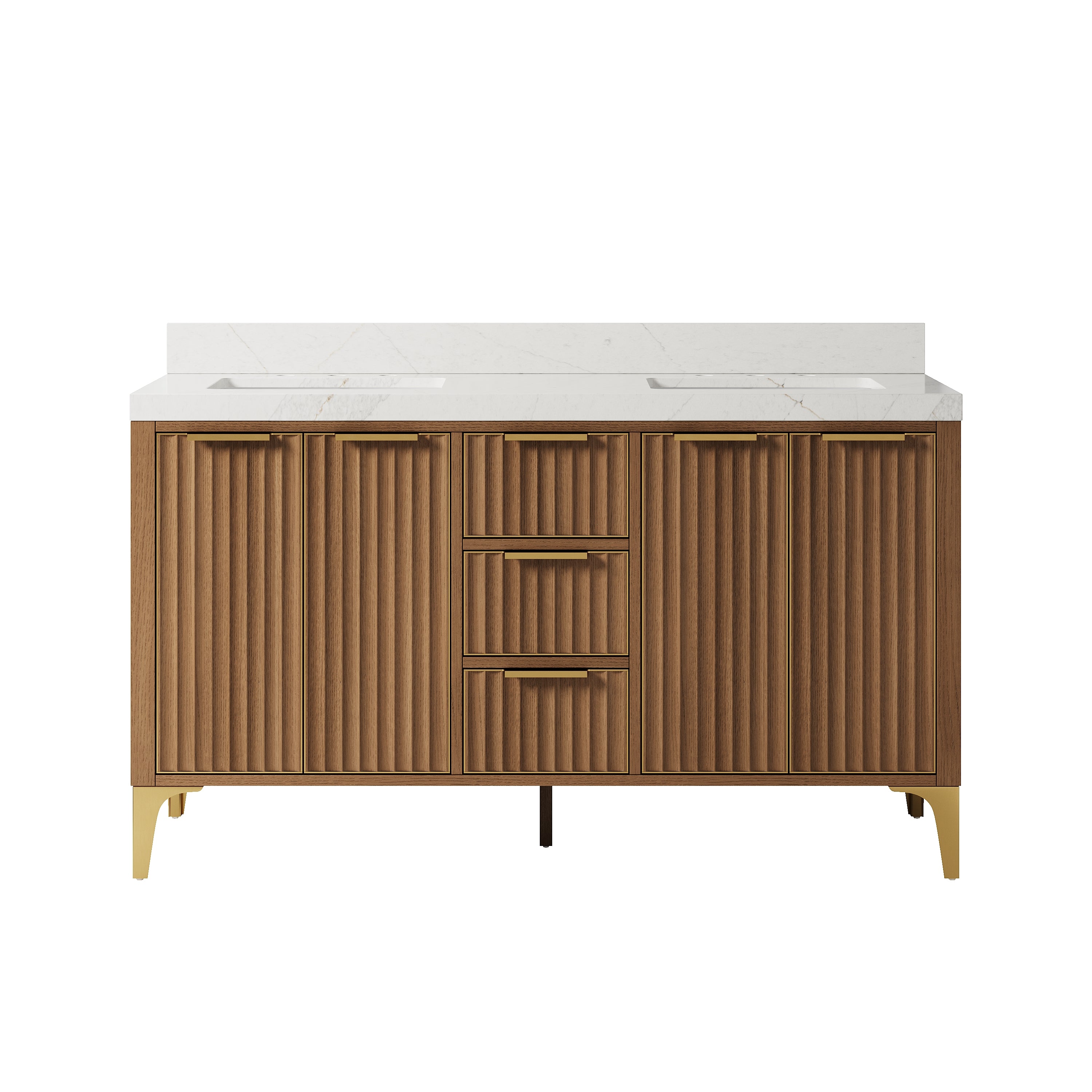
Cherry is valued for its smooth grain and warm reddish-brown appearance. Its color can deepen with exposure to light, giving the vanity a richer look over time. It is often positioned as a premium furniture wood and may carry a higher price than more commonly used cabinet materials.
Because natural wood varies, two cherry doors may not have identical color or grain. Some variation is part of the material’s character. For shoppers seeking a uniform appearance, product photos and finish samples can help set expectations, though lighting and screen settings may affect how a finish appears. Cherry is often chosen when the vanity is meant to feel like a distinctive piece of furniture rather than a purely functional cabinet. A clear or lightly tinted finish can preserve more of its natural color, while darker stains create a more formal look.
Solid Wood, Veneer, and Plywood: Read the Construction Details
A product described as “solid wood” does not necessarily consist of solid planks. Many manufacturers make cabinets with a solid wood frame or doors combined with plywood panels. Veneered is very thin wood laminated to a medium. This construction gives the cabinet solid wood appearance and allows for maximum material efficiency regarding usage.
The USDA says that humidity in the air influences the dimension of wood. In a bathroom where showers are used and baths are taken, wood must dry and maintain a stable shape. A good finish and sealed edges, good quality joinery, and working conditions help to achieve long durability. One can learn from the product description what materials were used for the making of frames, doors, drawer fronts, sides of cabinets, and shelves.
It is wrong to classify plywood and veneered as low-grade materials. The quality of products may depend on the type of the wood and its thickness(es), the quality of the veneer, the sealing of the edges, and the quality of joinery.
Bathroom Conditions Matter as Much as Species
Even a durable wood species is not waterproof. Wipe standing water from the vanity, repair plumbing leaks promptly, and use the bathroom exhaust fan during and after bathing. The EPA advises exhausting bathroom air outdoors; its remodeling guidance cites 50 cubic feet per minute for an intermittent fan or 25 cubic feet per minute for a continuously operating fan. Good ventilation helps remove moisture from the room, while regular care protects the cabinet’s finish.
Installation also affects how well a vanity holds up. The cabinet should sit level and be secured according to its instructions. Any gaps around plumbing cutouts or exposed edges should be protected as directed by the manufacturer. During routine cleaning, use a soft cloth and a cleaner suitable for the cabinet finish; abrasive pads and harsh chemicals can dull or damage the surface.
Choosing a Vanity That Fits the Room
The right wood choice depends on the look a buyer wants and how the vanity is constructed. Oak highlights natural grain, maple provides a smoother appearance, birch and poplar are practical cabinetry materials, and cherry offers warm color that can deepen over time. For painted finishes, the wood may be less visible, making the quality of the frame, panels, finish, and hardware especially relevant.
Before purchasing, check the listed materials for the cabinet frame, doors, drawer fronts, sides, and shelves. Also review the finish, sink-top compatibility, storage layout, and care instructions. Compare the vanity’s overall dimensions with the available wall space, plumbing location, and door or drawer clearances. Common widths such as 24, 30, 36, and 48 inches can fit different room layouts, but the cabinet’s depth and height should also be checked before ordering.
A well-made vanity pairs suitable materials with sealed surfaces and moisture-conscious construction. Choosing by both wood type and build quality helps buyers find a cabinet that suits the bathroom’s style and stands up to daily use.


















Leave a comment
This site is protected by hCaptcha and the hCaptcha Privacy Policy and Terms of Service apply.