






















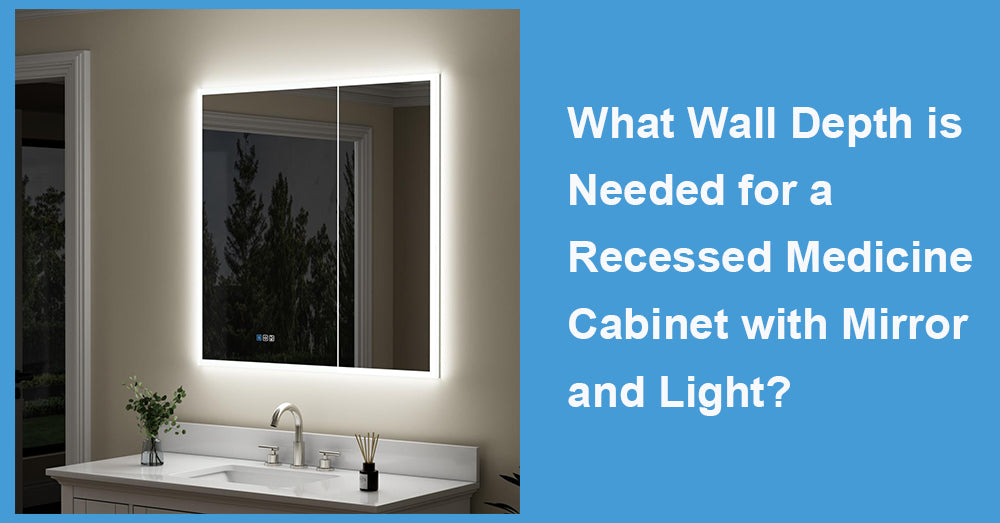
A recessed medicine cabinet with mirror and light is one of the smartest upgrades you can make in a bathroom. It adds storage, keeps the vanity area clutter-free, and creates a clean built-in look that feels modern and high-end. But before you order one, there’s one critical question you must answer:
How much wall depth do you need for a recessed installation?
If you choose the wrong cabinet depth—or your wall cavity isn’t deep enough—you may end up with a cabinet that sticks out, requires reframing, or can’t be recessed at all.
In this guide, we’ll break down the wall depth requirements for recessed medicine cabinets, what factors affect the installation, and how to measure your wall correctly before purchasing.
What Does “Recessed” Mean for a Medicine Cabinet?
A recessed medicine cabinet is installed inside the wall cavity, rather than mounted entirely on the surface of the wall.
That means the cabinet body (the storage box portion) sits between the studs, while the mirror door and frame sit flush or nearly flush with the wall.
This creates a sleek, built-in appearance and gives you more usable space in smaller bathrooms.
Standard Wall Depth in Most U.S. Homes
In the United States, most bathroom walls are built with:
2x4 Stud Walls
A typical 2x4 stud is actually about 3.5 inches deep.
After adding drywall (usually 1/2 inch), the available recessed space is generally around:
· 3.5 inches inside the wall cavity
· 4 inches total including drywall thickness
So for most standard homes, a recessed cabinet that requires 3.5 inches or less will fit comfortably.
Recommended Wall Depth for a Recessed Medicine Cabinet with Mirror and Light
Most recessed medicine cabinets with lighting are designed to fit standard walls. The most common depth requirement is:
At Least 3.5 Inches of Wall Cavity Depth
This is the standard depth for most recessed cabinets and works well for:
· typical 2x4 stud walls
· drywall interior walls
· standard bathroom layouts
However, some larger cabinets with advanced lighting features, outlets, or internal wiring may require a slightly deeper cavity.
A safer guideline is:
3.5 to 4 inches of available depth (ideal range)
Why Some Lighted Medicine Cabinets Need More Depth
A basic recessed cabinet only needs space for shelves and the cabinet box. But a recessed medicine cabinet with mirror and light often includes extra components such as:
· LED driver box
· wiring channel
· touch sensor system
· anti-fog power module
· interior outlet components (on certain models)
These features may increase the required depth slightly compared to a non-lighted cabinet.
That’s why checking product specifications is always important.
What If Your Wall Is Only 3 Inches Deep?

If your wall cavity is too shallow, recessed installation may still be possible, but it depends on your wall structure and cabinet model.
Here are common options:
Option 1: Partially Recessed + Surface Mount
Some homeowners install the cabinet partially recessed so it sits inside the wall as much as possible, with a small portion extending outward.
This still gives a built-in look while avoiding major wall work.
Option 2: Surface Mount Installation
Many lighted medicine cabinets are designed for both recessed and surface mounting. If your wall depth is limited, surface mount is usually the easiest solution.
Option 3: Reframing the Wall
If you’re remodeling, a contractor may be able to modify the framing to create additional depth—but this can increase labor costs and is not always recommended.
How to Measure Wall Depth for a Recessed Cabinet
Before purchasing, it’s best to measure the wall cavity directly.
Here are the easiest ways:
1. Measure at an Existing Outlet or Light Switch
If your medicine cabinet will be near an outlet, remove the outlet cover plate and carefully measure the depth from drywall to stud space (if visible).
2. Use a Stud Finder
A stud finder helps locate studs and determine spacing, but it won’t tell you exact depth. Still, it helps you plan placement.
3. Cut a Small Test Opening (Best Method)
If you're doing a remodel, cutting a small inspection hole where the cabinet will go provides the most accurate information.
You can check for:
· depth clearance
· plumbing lines
· electrical wiring
· insulation
· blocking
Stud Spacing Matters Too (Not Just Depth)
Wall depth is important, but recessed cabinets also require enough width between studs.
Most U.S. homes use:
16-inch on-center stud spacing
That gives about 14.5 inches of clear space between studs.
If your cabinet is wider than 14.5 inches (such as 20", 24", or 30"), your installer may need to cut studs and install a header, similar to framing a window.
This is common and manageable, but it should be planned in advance.
Watch Out for Plumbing and Vent Pipes
The most common installation problem isn’t depth—it’s what’s hiding inside the wall.
A recessed medicine cabinet cannot be installed in a cavity that contains:
· drain pipes
· water supply lines
· vent stacks
· HVAC ductwork
Bathrooms often have plumbing directly behind the vanity wall, especially in older homes or second-floor bathrooms.
If plumbing is present, you may need to:
· shift the cabinet location
· choose a smaller size
· surface mount instead
How Deep Are Most Recessed Medicine Cabinets?
Most recessed medicine cabinets fall into these depth ranges:
· 3.0 inches (slim models, easier install)
· 3.5 inches (standard recessed depth)
· 4.0 inches (extra storage, may require more clearance)
· 5.0 inches or more (deep cabinets, less common)
For a cabinet with LED lighting, 3.5 inches is still the most typical depth.
What Wall Depth Is Needed for WELLFOR Recessed Medicine Cabinets?
Most WELLFOR recessed cabinets are designed to fit standard American residential walls, typically 2x4 framing.
However, because sizes and features vary, you should always confirm the product’s recessed depth requirement listed on the product page.
Pro Tip: Plan for Wiring Space
If your cabinet includes LED lighting, anti-fog, or an internal outlet, you may need to route wiring into the wall cavity.
That means you should also consider:
· junction box placement
· wire entry location
· local electrical code requirements
· whether a plug-in or hardwired model is being installed
Even if your wall depth is sufficient, the wiring must be done properly for safety and compliance.
For many homeowners, hiring a licensed electrician is the best choice for a smooth installation.
Final Answer: What Wall Depth Do You Need?
So, what wall depth is needed for a recessed medicine cabinet with mirror and light?
Most homes need at least 3.5 inches of wall cavity depth
That matches standard 2x4 stud framing and works for most recessed cabinets.
Ideal recommendation:
· 3.5–4 inches of available wall depth
If your wall is shallower, you can often still install the cabinet using surface mount or partial recess options.
Conclusion
A recessed medicine cabinet with mirror and light is a stylish, space-saving upgrade—but proper planning is key. Most standard U.S. bathrooms provide enough depth for recessed installation, especially if you have 2x4 stud walls.
Before purchasing, always measure your wall cavity, check for plumbing obstacles, and confirm cabinet depth specifications. Taking a few minutes to verify these details can save you major time, cost, and frustration later.
With the right wall depth and planning, your new cabinet can look like it was built into the home from day one.







































Leave a comment
This site is protected by hCaptcha and the hCaptcha Privacy Policy and Terms of Service apply.