












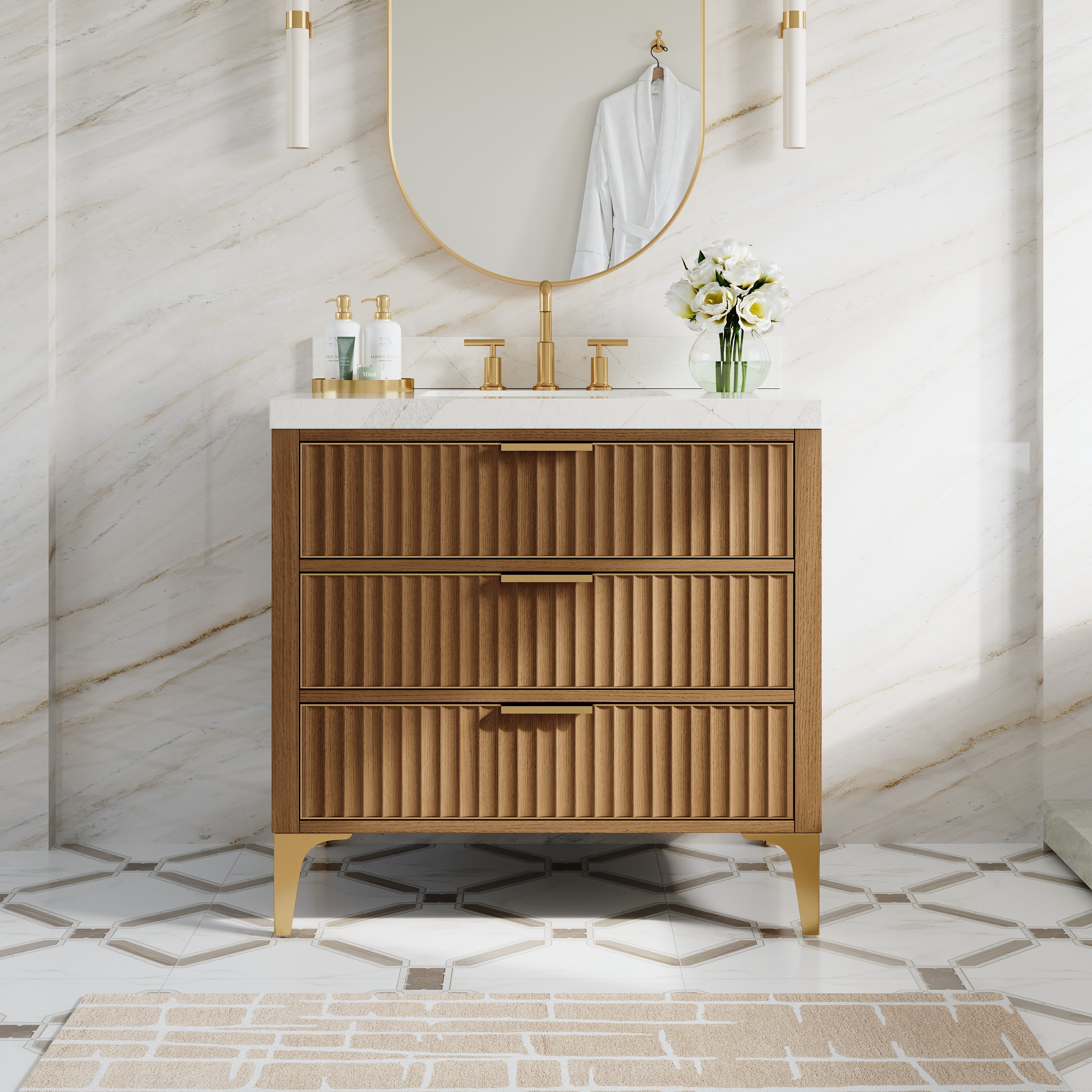
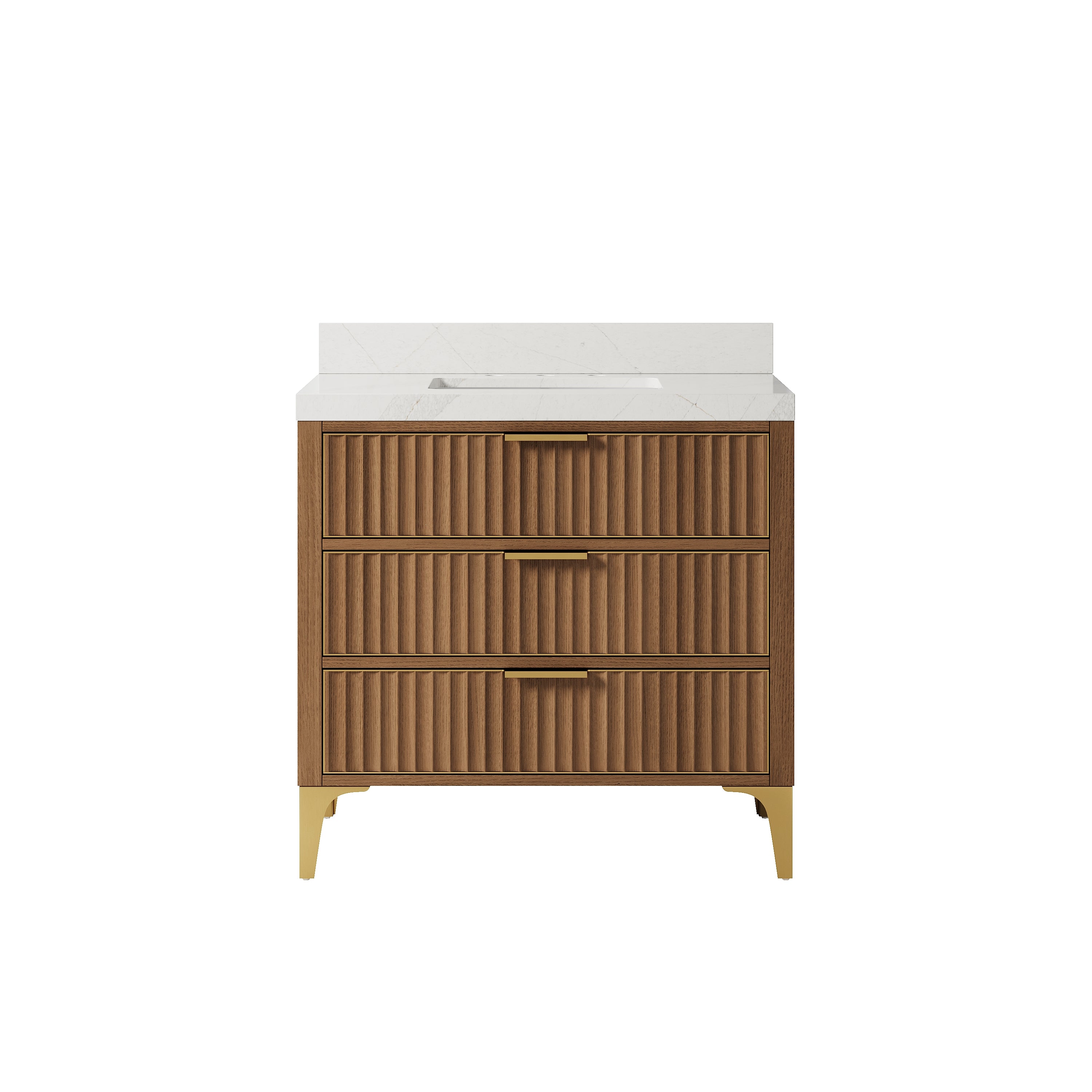
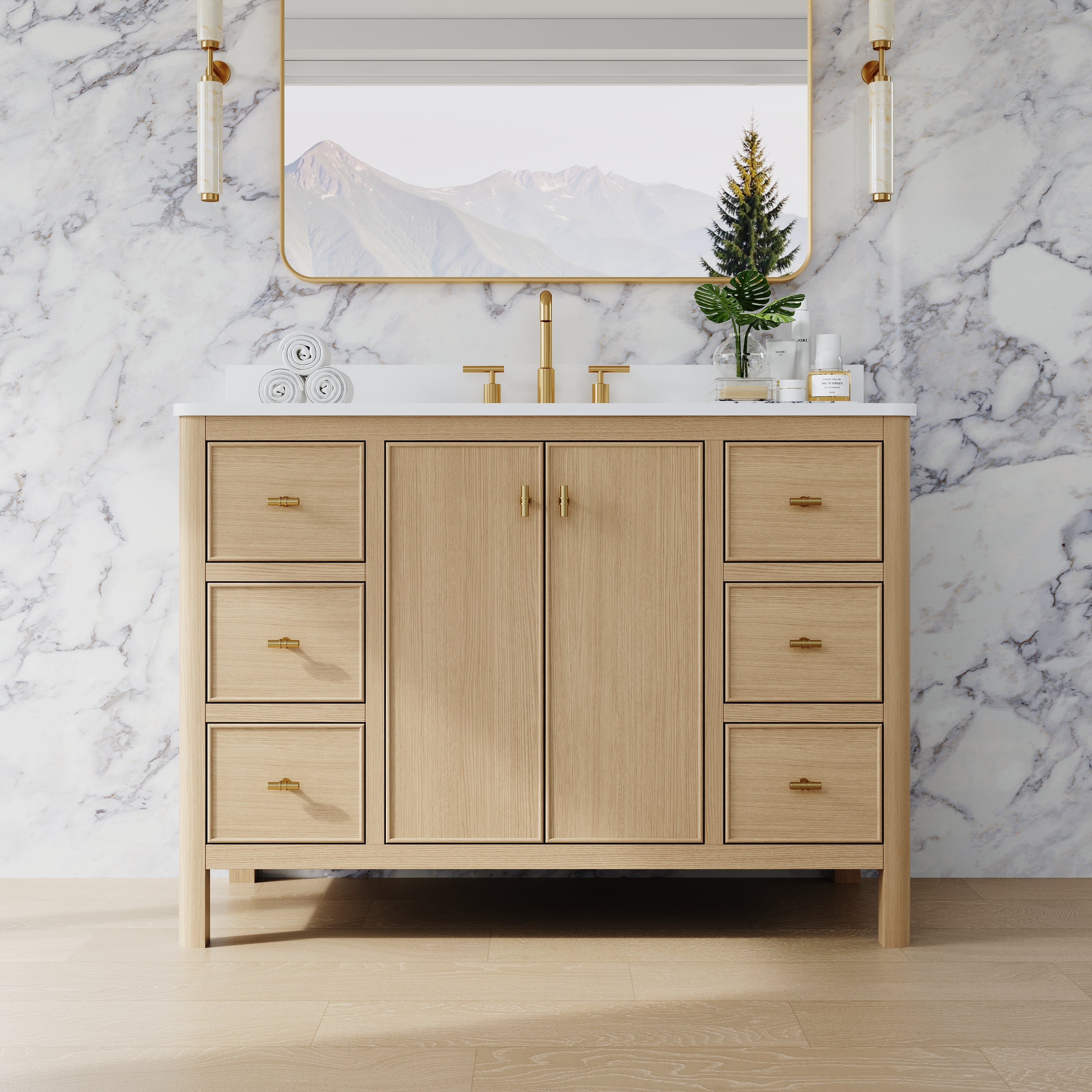
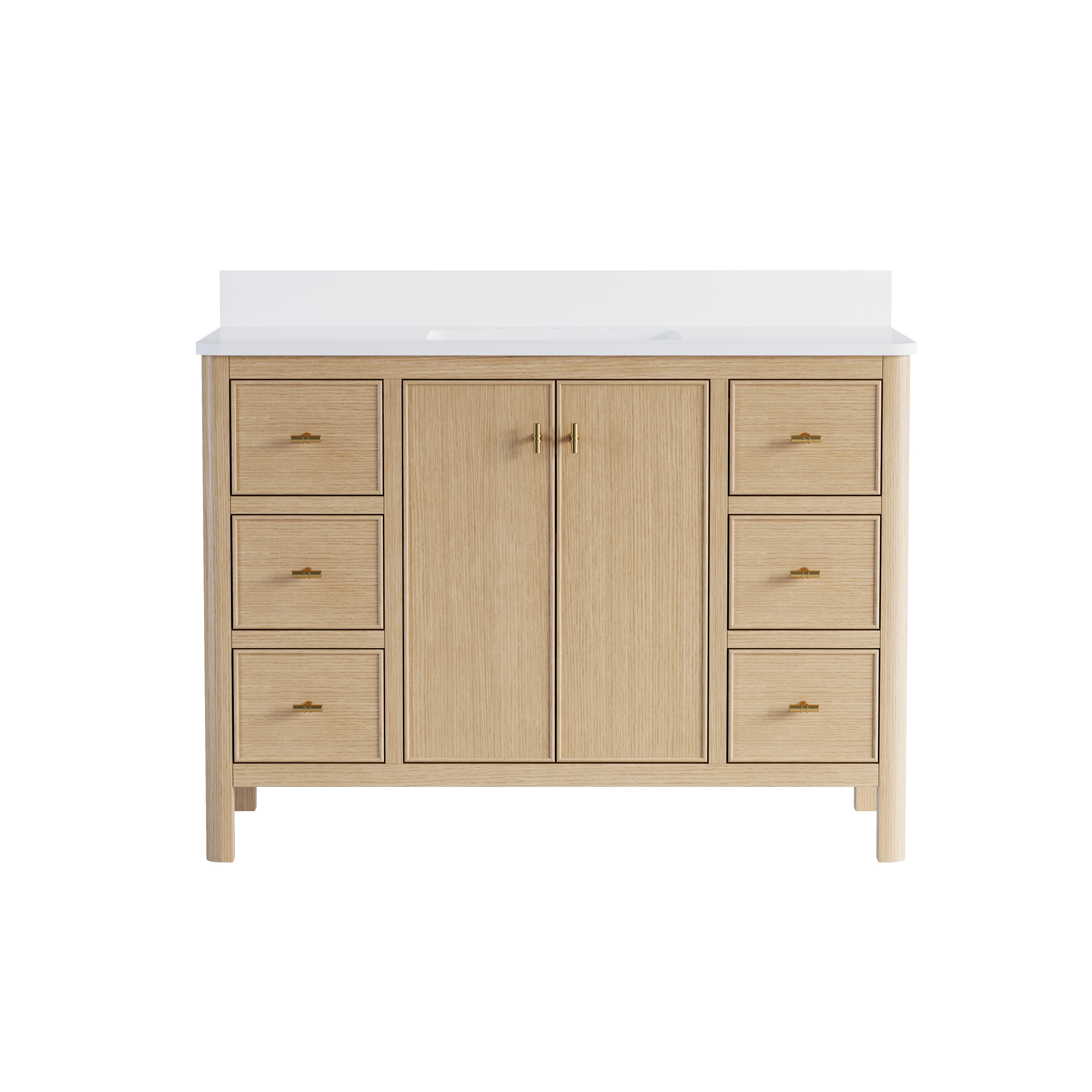
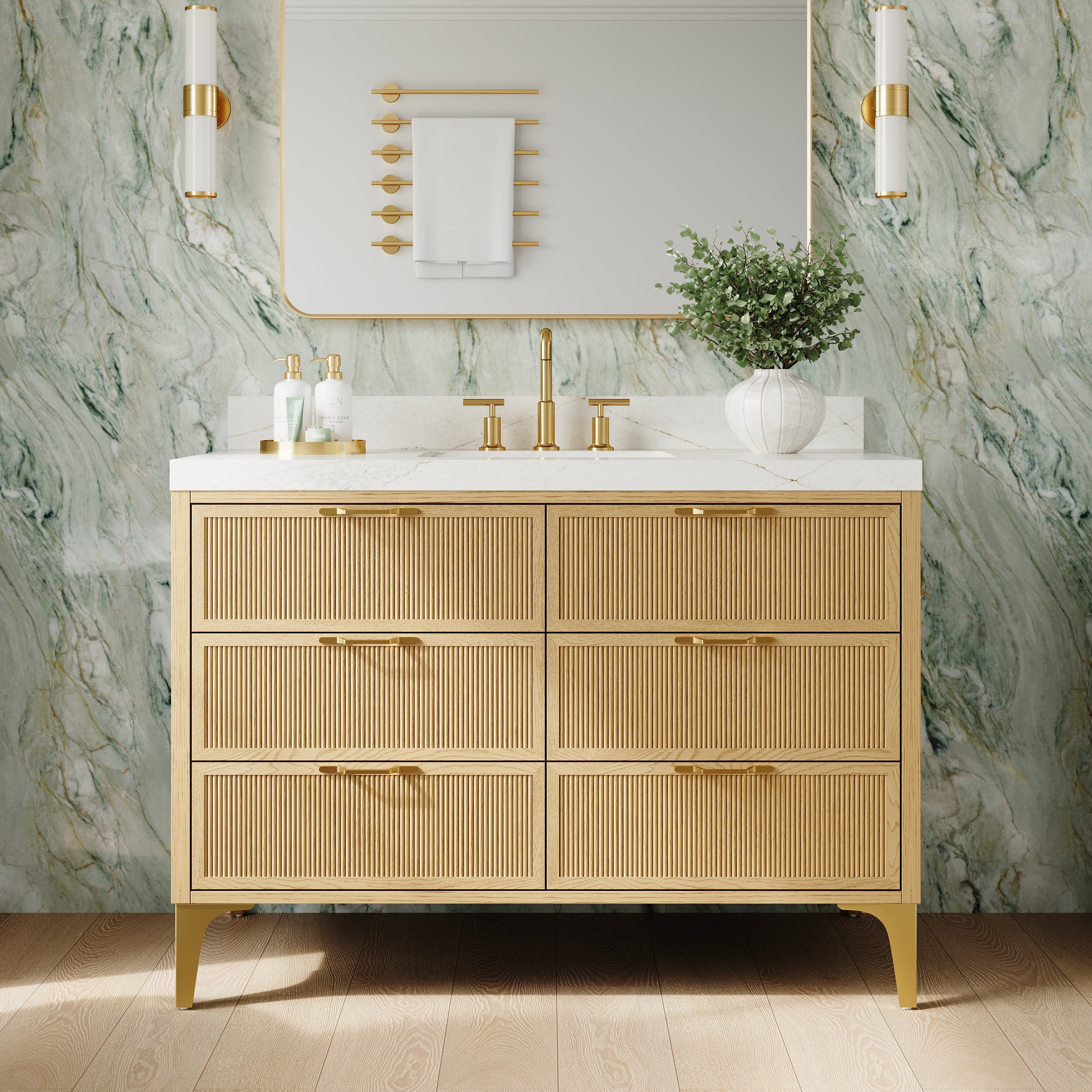
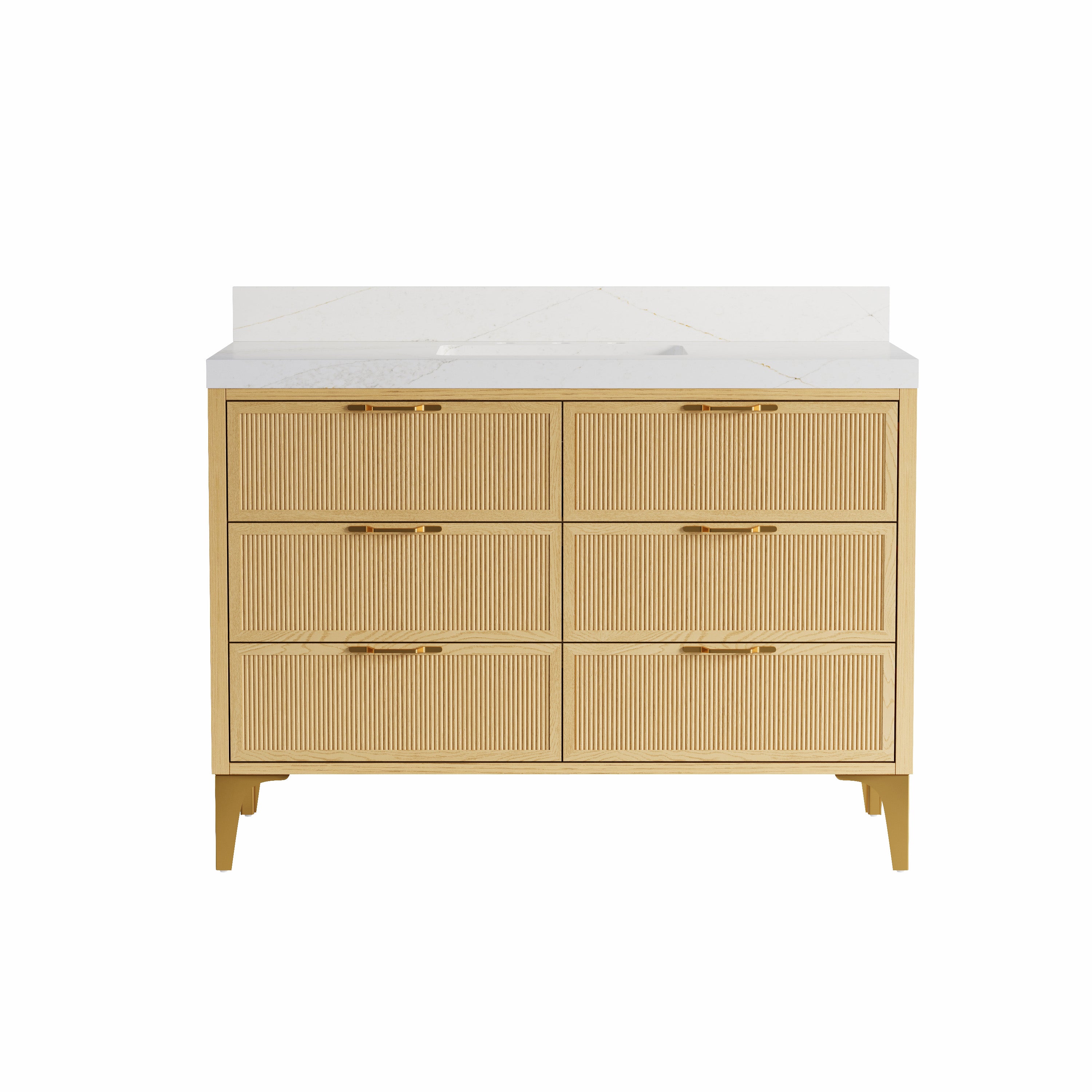


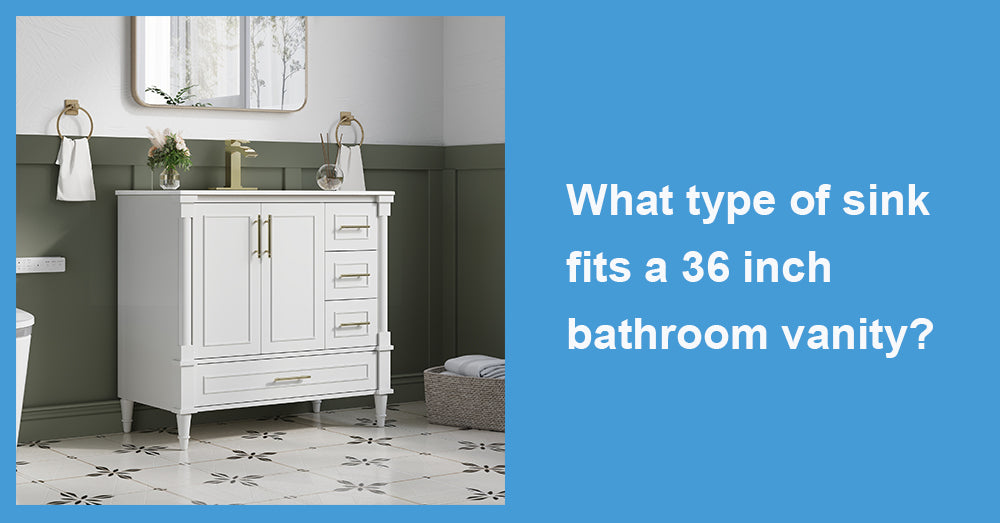
In bathroom renovation, a 36 inch bathroom vanity is considered one of the most ideal "golden sizes". It is both more spacious than 30 inches and does not create as much pressure on space as 48 inches, so it is widely used in master bathrooms, guest bathrooms, and high-end apartments. But what truly determines the user experience is often not the cabinet itself, but "what type of washbasin to match". Whether the size matches, the structure is reasonable, and the installation method affects storage and cleaning, all of these issues will directly affect the comfort of use for the next ten years or even longer.
1. The actual usable space of the 36-inch cabinet is not as wide as imagined
From the outside, a 36-inch bathroom cabinet may seem spacious, but in actual installation, the "effective width" available for a washbasin is often only 30-32 inches. At least 1-2 inches should be reserved on both sides for side panel structure, installation errors, and table chamfering. The back also needs to leave space for the drainage and water supply pipes to circulate.
This means the ideal width for a washbasin is usually 20-28 inches. If you choose an integrated basin larger than 30 inches, it can create a sense of pressure at the edges and even affect the faucet's installation position.
Industry project data shows that in 36-inch cabinet configurations, over 70 percent of solutions choose a single-basin design over a double-basin design. Although the double pots are visually symmetrical, the effective width of each pot is often reduced to 12-14 inches, significantly reducing practicality.
2. On stage basin: free in shape, but with extremely high requirements for proportion
The basin on the stage is the most expressive in design, with a standard width of 16 to 22 inches. For a 36-inch cabinet, a single countertop basin is the most common way of matching.
From a proportional perspective, controlling the width of the washbasin within the range of 55 percent -65 percent of the cabinet width is most coordinated, which is around 20-24 inches. Too small will appear spacious, while too large will occupy the operating area of the table.
But the height of the basin on the table will raise the table's overall height. If the standard height of the cabinet itself is 34-35 inches and a 5-6-inch tabletop basin is added, the final operating height may easily exceed 40 inches, which is not very user-friendly for shorter users. That is also why, in a 36-inch cabinet, a countertop basin is more suitable for pairing with a low cabinet or wall-mounted structure.
3. Under counter basin: the most practical "stable choice"
In practical engineering projects, the under-the-table basin is one of the most common configuration methods for 36-inch cabinets.
The commonly used sizes are concentrated in the range of 18 x 14 inches, 19 x 15 inches, and 21 x 16 inches. This size ensures sufficient depth inside the basin while leaving 6-8 inches of countertop operating space on both sides for convenient placement of toiletries.
Industry data show that in the home's main bathroom and high-frequency-use bathroom, the cleaning satisfaction of the under-table basin scheme is about 25 percent higher than that of the on-table basin. The countertop has no edge-water accumulation area, making it less likely for water stains to persist and reducing long-term maintenance costs.
For families who pursue practicality and durability, a 36-inch cabinet with a medium-sized under-table basin is the most stable and least likely to regret combination.
4. Integrated basin: the mainstream solution of modern style
In recent years, integrated basins have rapidly become popular in the mid- to high-end market. The washbasin is integrated into the countertop and typically measures 24-30 inches wide.
The most commonly used integrated basin width in a 36-inch cabinet is 25-28 inches. This size creates a complete visual center while retaining left and right functional areas.
From a structural perspective, the center of the integrated basin is usually located in the cabinet's center, and the drainage pipe can be routed straight down without occupying space in the side cabinet, which is conducive to drawer and partition design. Project statistics show that in a 36-inch cabinet with a drawer structure, the internal storage utilization rate of the integrated basin scheme is about 15 percent higher than that of the under-table basin.
This is also why modern minimalist and high-end integrated projects tend to choose integrated basins as standard configurations.
5. Is the double basin suitable for a 36-inch cabinet?
A 36-inch cabinet can hold double pots, but it is not ideal for practical use.
The minimum common combination of double pots is two 12-14-inch pots, with a gap between the faucet and the water stopper reserved in the middle. In this way, the effective washing width of each basin is less than 10 inches, and it is easy for elbows to collide with the edge of the countertop when washing the face.
Data shows that in households with a 36-inch dual basin configuration, over 60 percent of users end up using only one basin for the long term. In contrast, the other is primarily used for the temporary storage of items.
Therefore, unless there are special symmetrical design requirements, it is recommended to use a "high-quality single basin" rather than a "barely double basin" in a 36-inch cabinet.
6. Depth and front-to-back dimensions are equally important
In addition to width, the front and back depth of the washbasin directly determines the comfort level of use.
Industry experience suggests that the basin depth should be at least 12 inches, with an optimal range of 14 to 18 inches. Shallow surfaces are prone to splashing water, while deep surfaces can occupy workspace for table operations.
On a standard 21-inch-deep bathroom countertop, the ideal distance between the basin edge and the countertop edge is 2-3 inches. This not only prevents water from splashing out, but also does not affect the standing position.
Many installation problems are not caused by incorrect width but by neglecting the front-to-back ratio, leading to splashing water or awkward operation.

7. Conclusion: correct size is more important than shape
For a 36-inch bathroom cabinet, there is no "one correct" sink type, but there is a clear priority order:
If pursuing stability and practicality, the preferred option is an under-the-table basin of 20-22 inches.
If pursuing a modern overall feel, choose a 25-28-inch integrated basin.
If emphasizing the styling design, a 20-24-inch tabletop basin can be selected, but the overall height needs to be controlled.
Try to avoid using a double-basin structure at this size as much as possible.
The truly excellent combination is not about pursuing the largest size or the most complex design, but about maintaining a balance between proportion, flow, cleanliness, and storage over the long term.
In the high-frequency use space of the bathroom, the choice of washbasin may seem like a small accessory, but it often determines the most basic comfortable experience every day.
















Leave a comment
This site is protected by hCaptcha and the hCaptcha Privacy Policy and Terms of Service apply.