
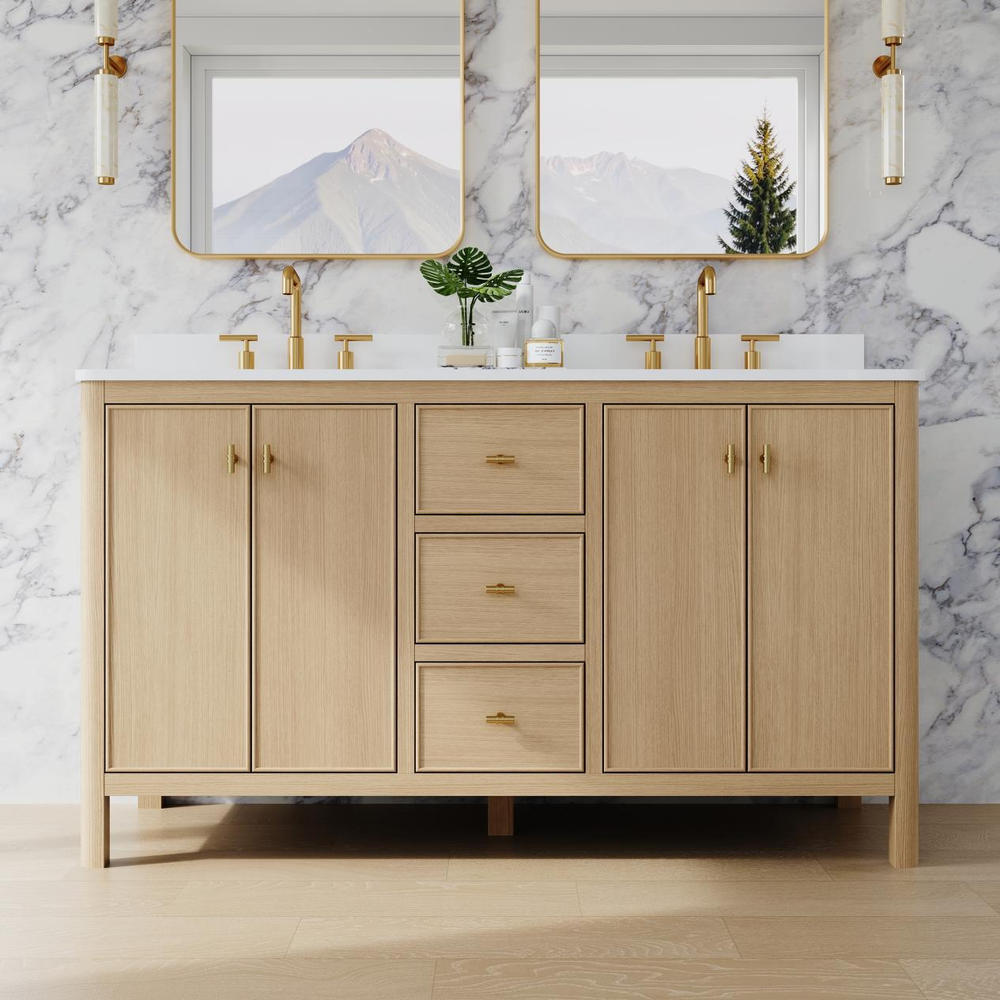
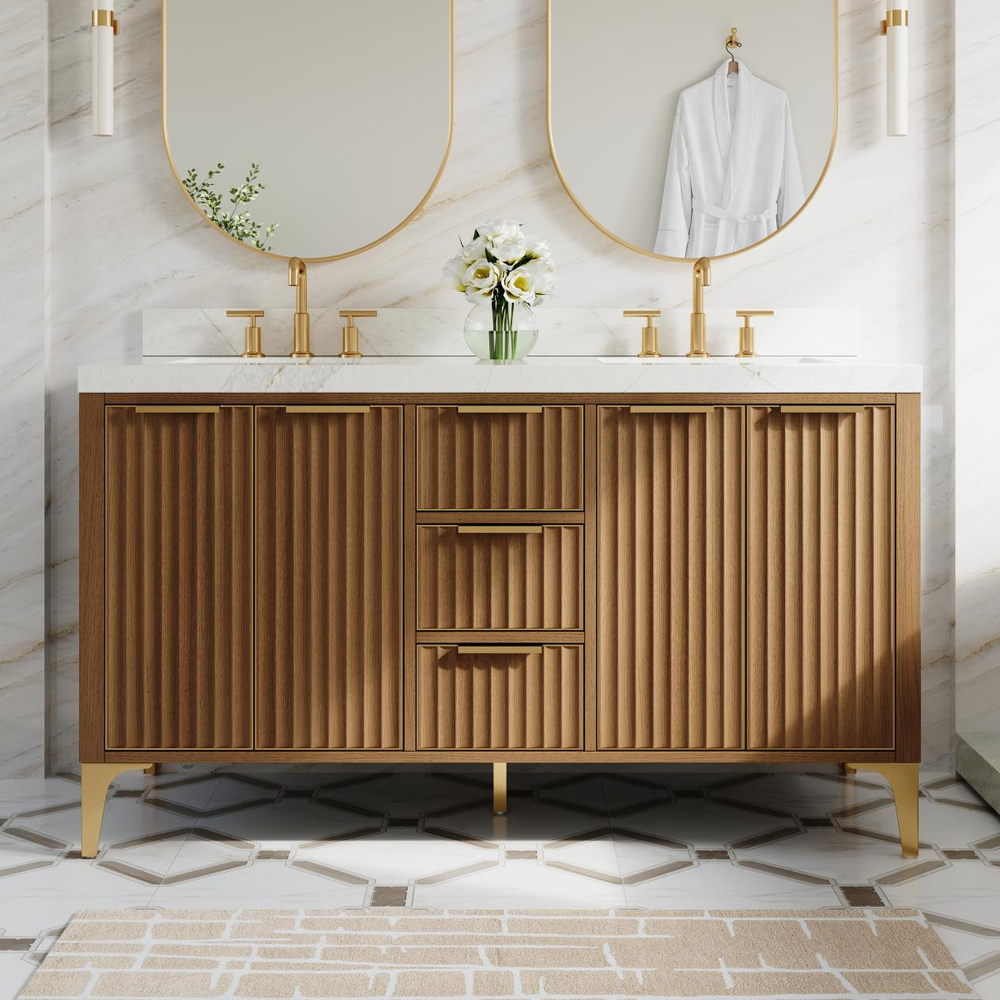
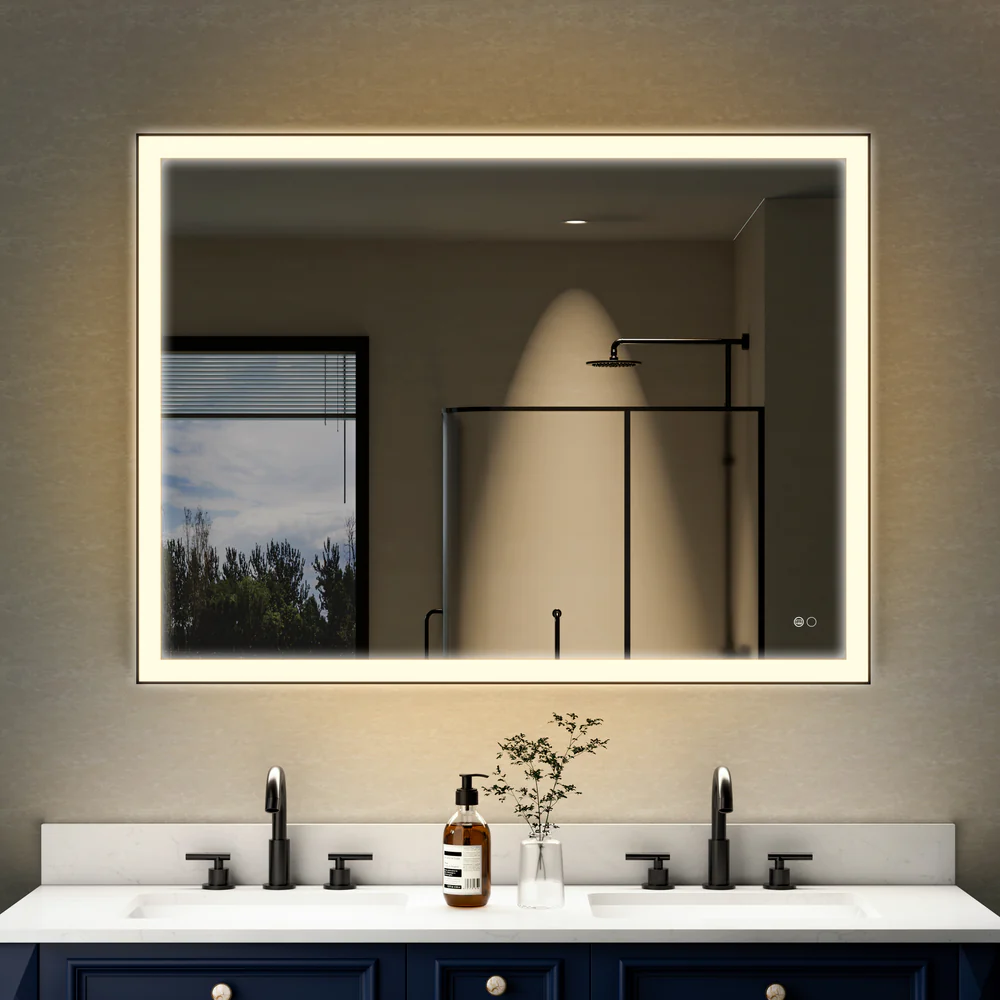

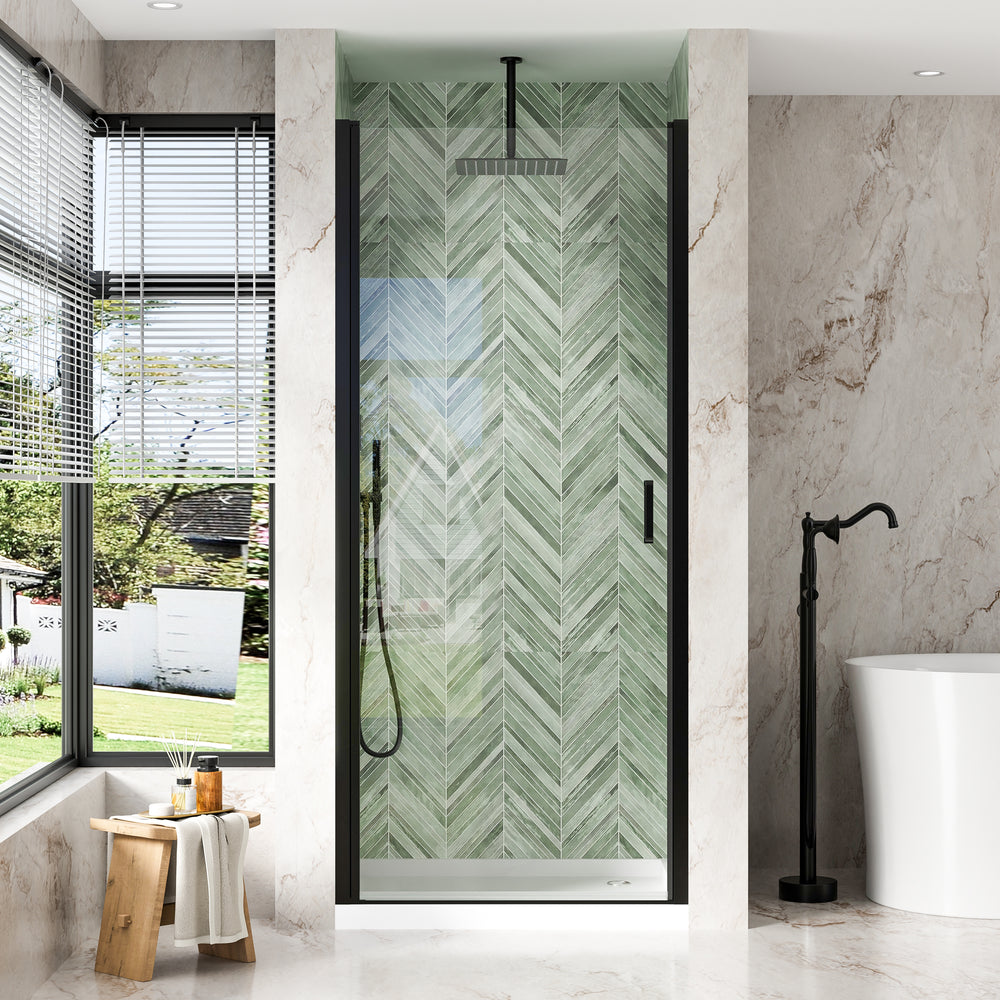

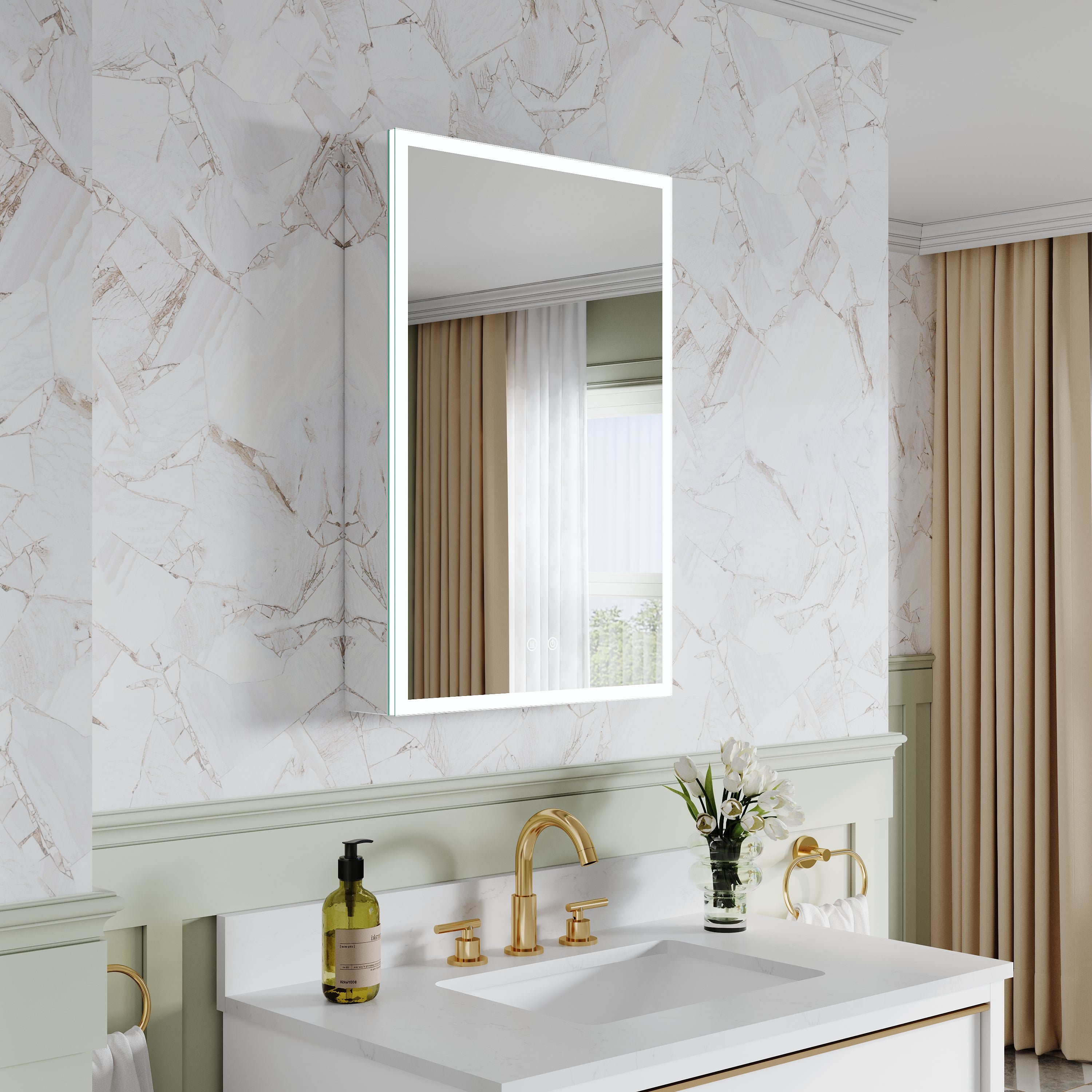


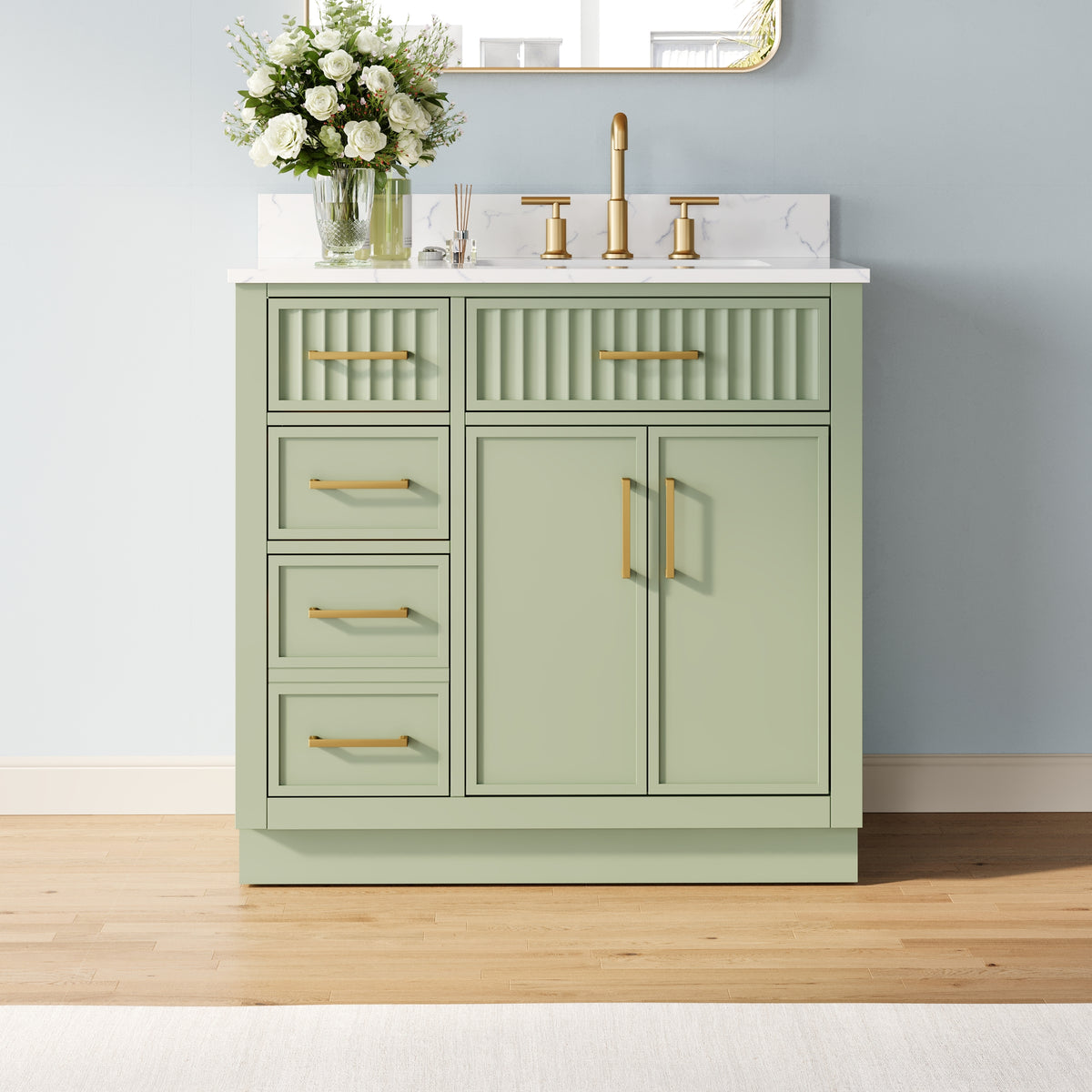
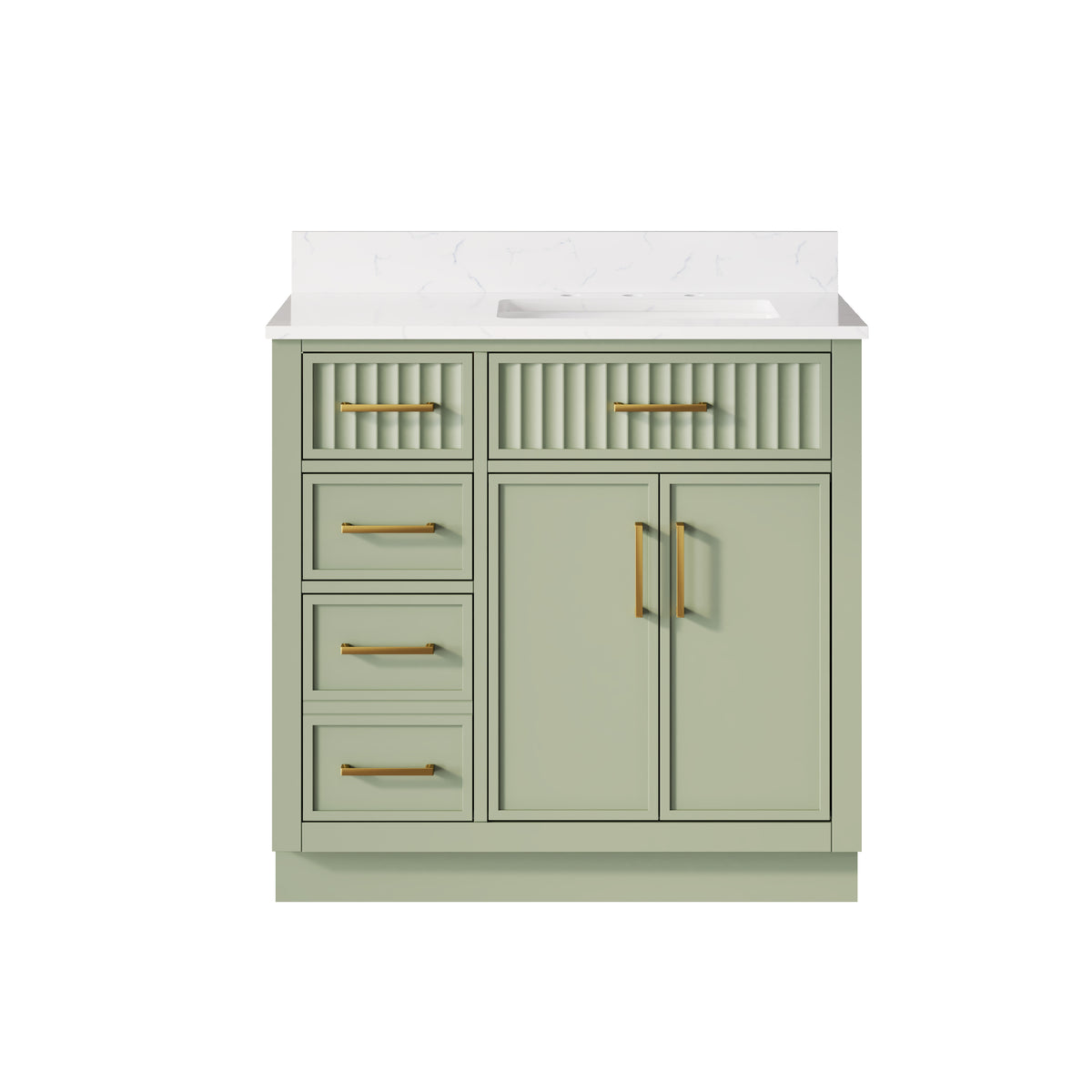
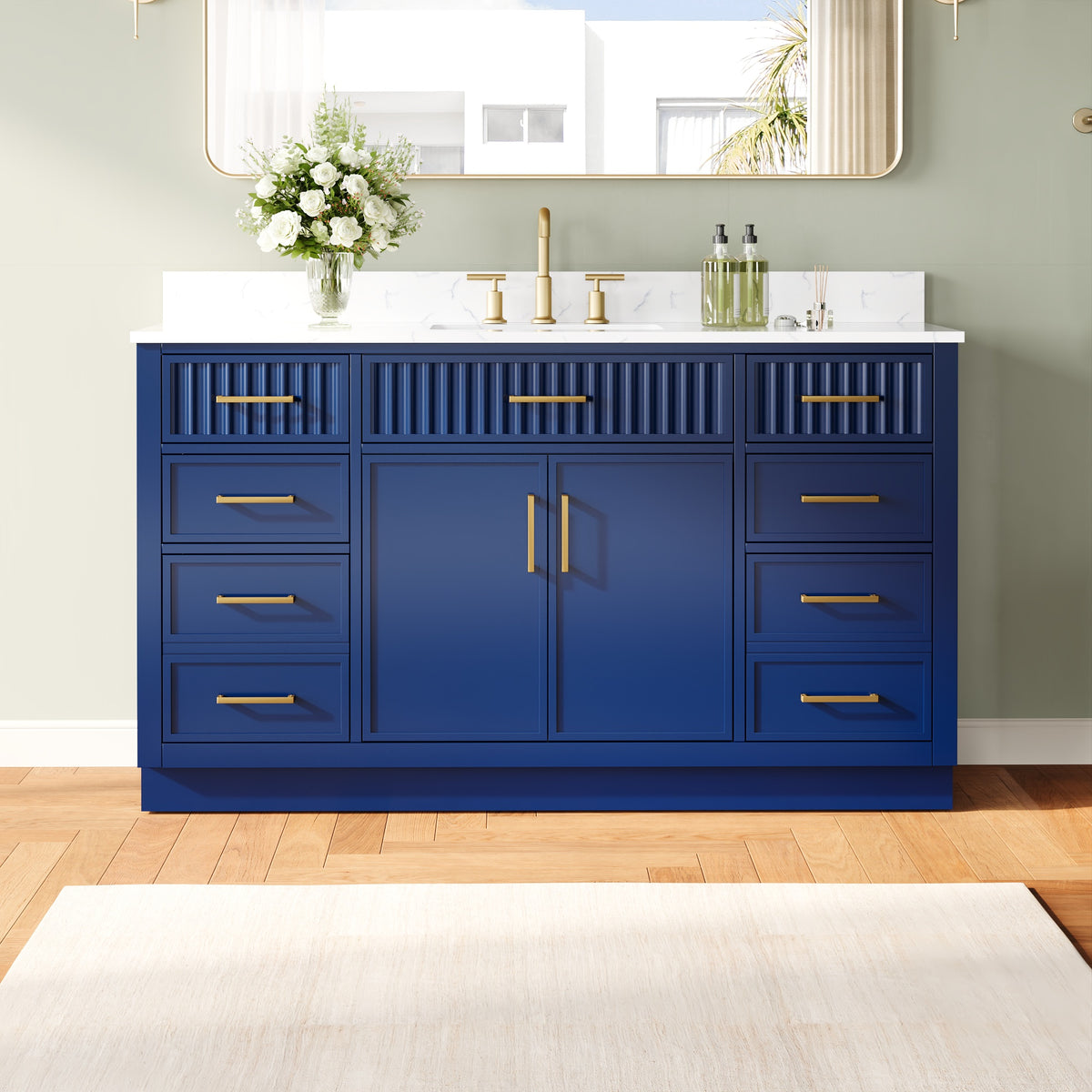
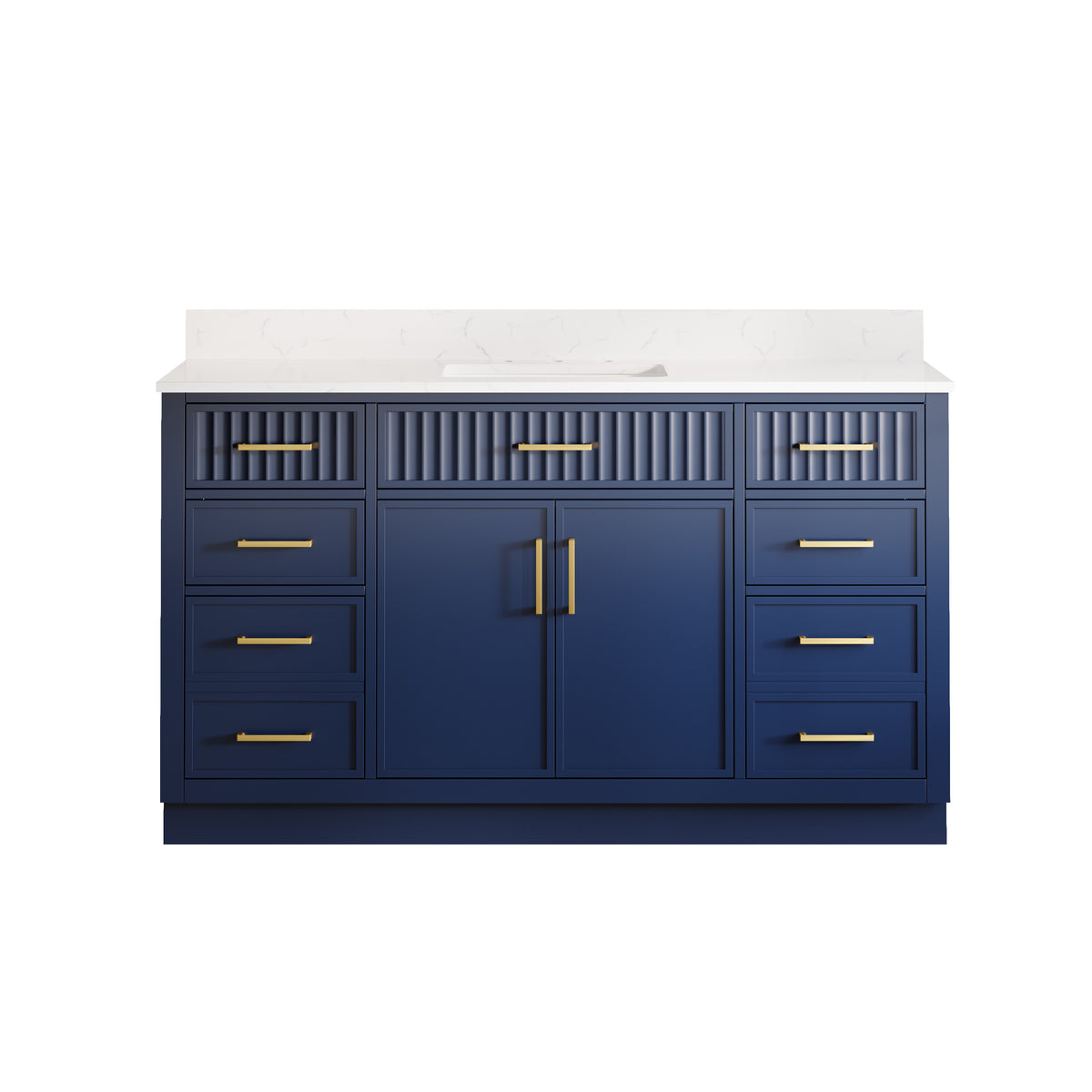
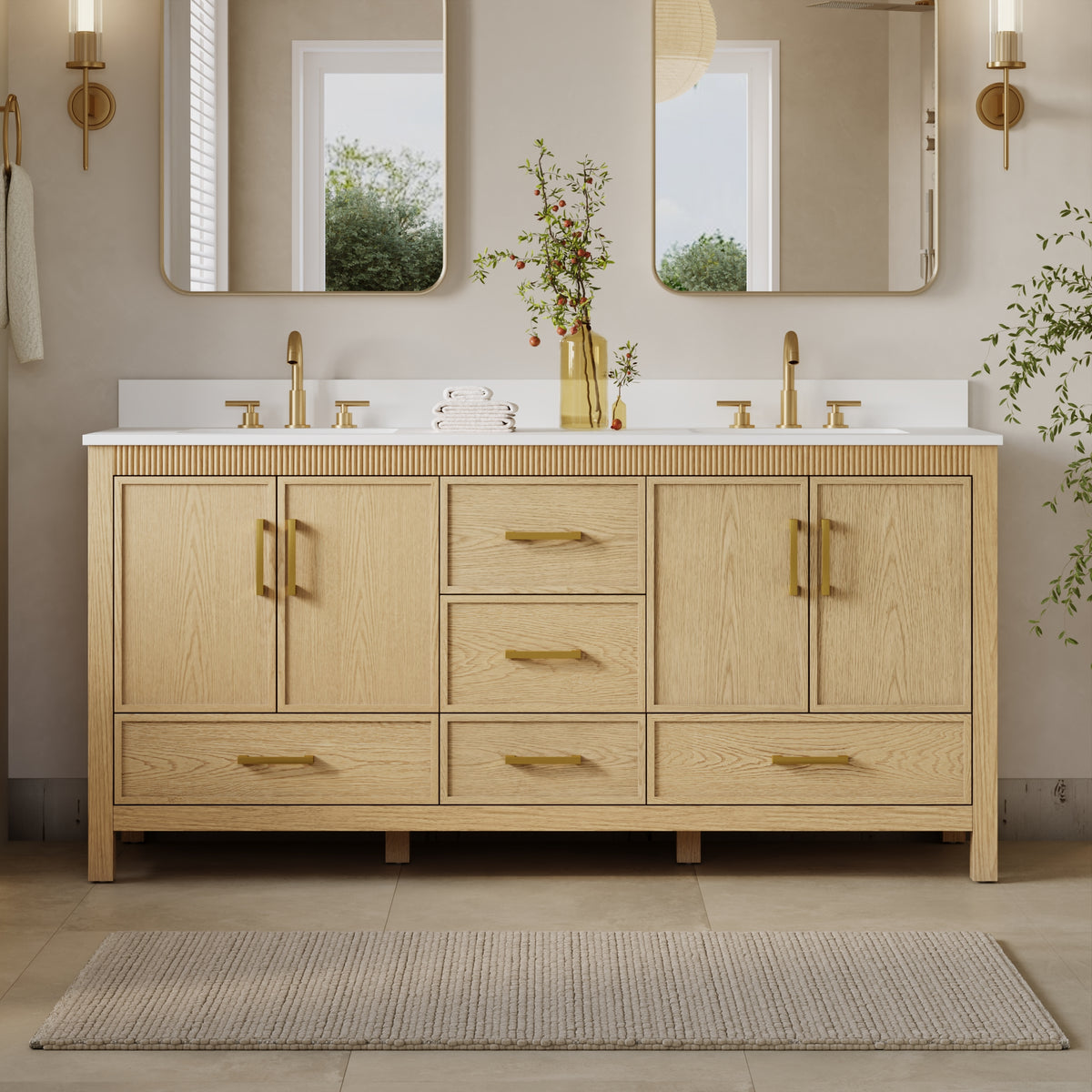
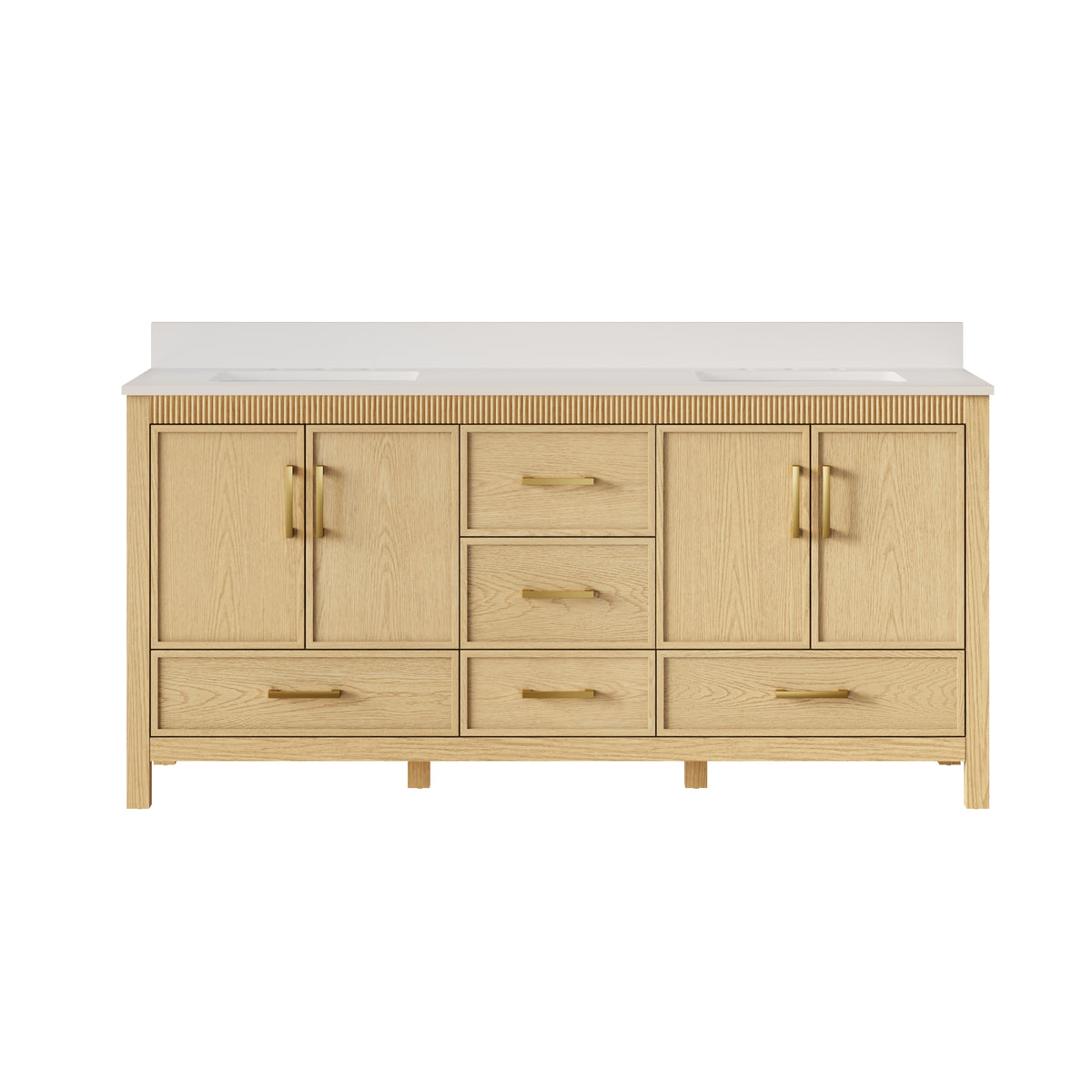
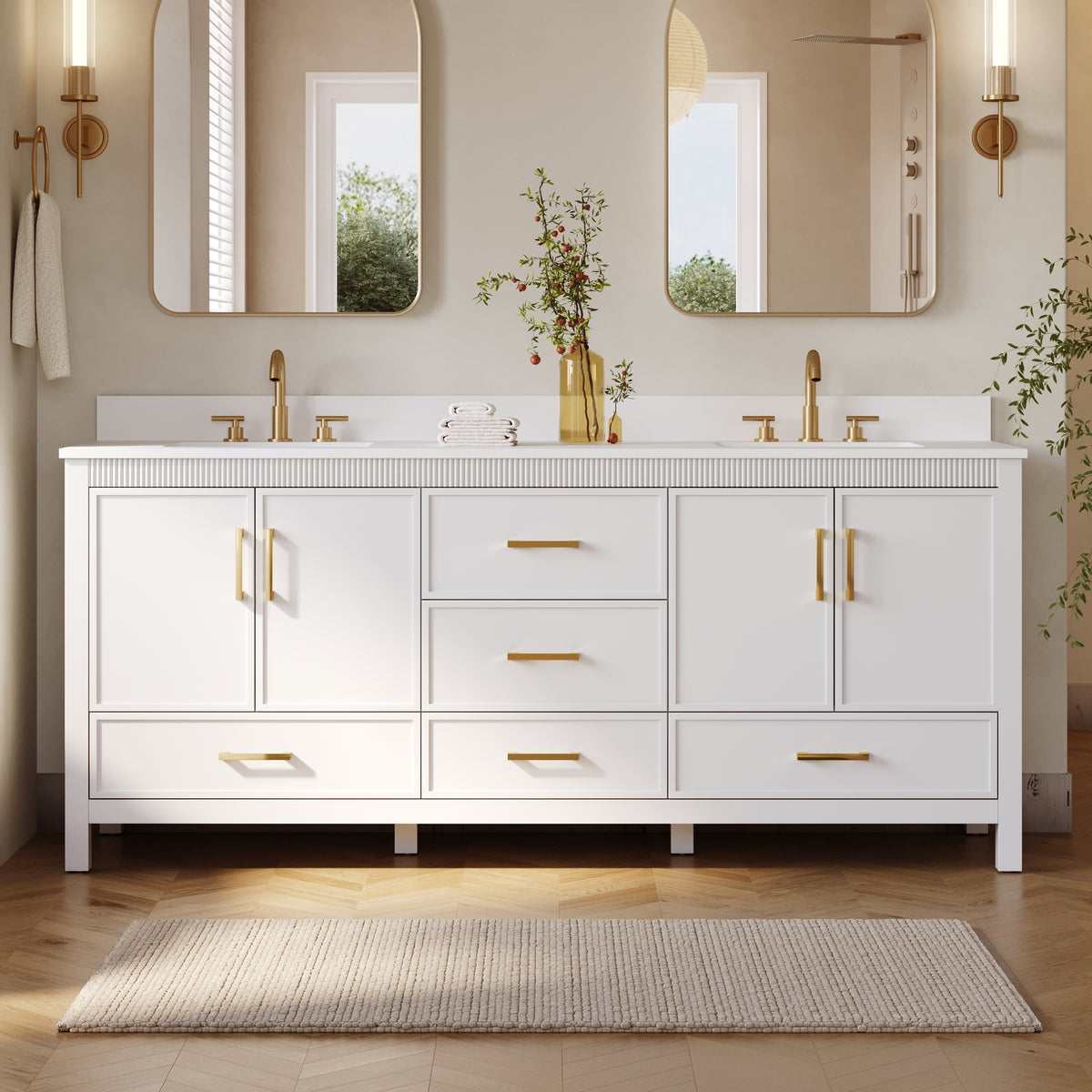
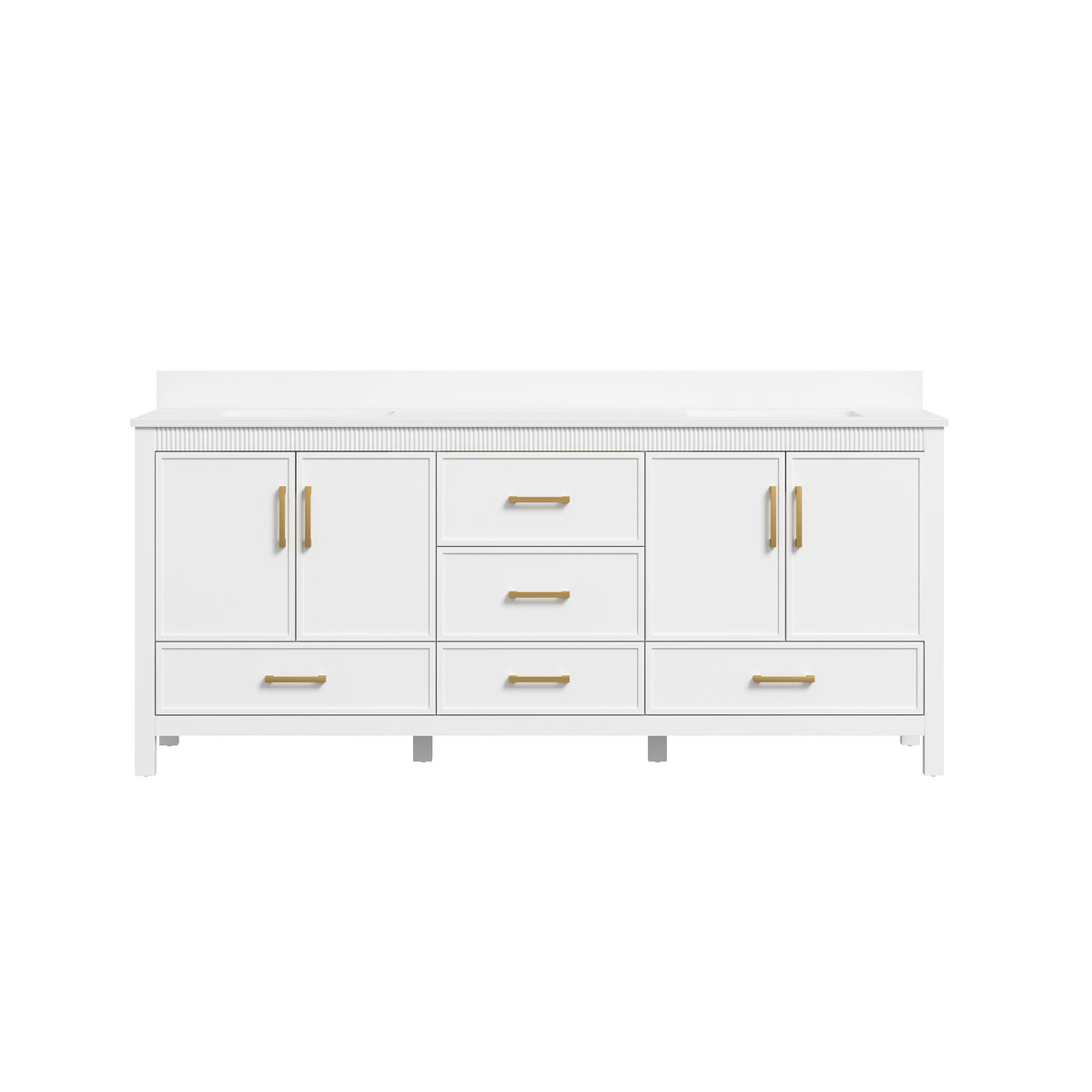

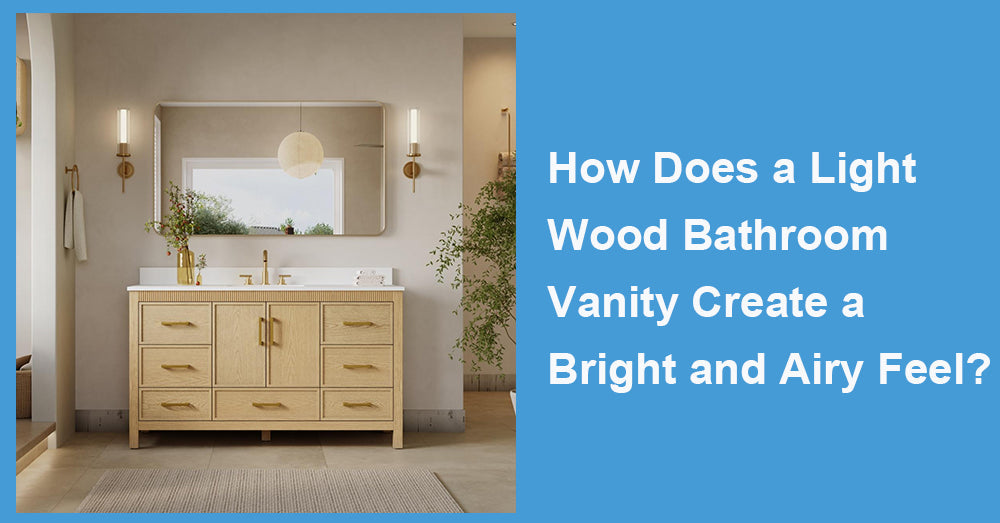
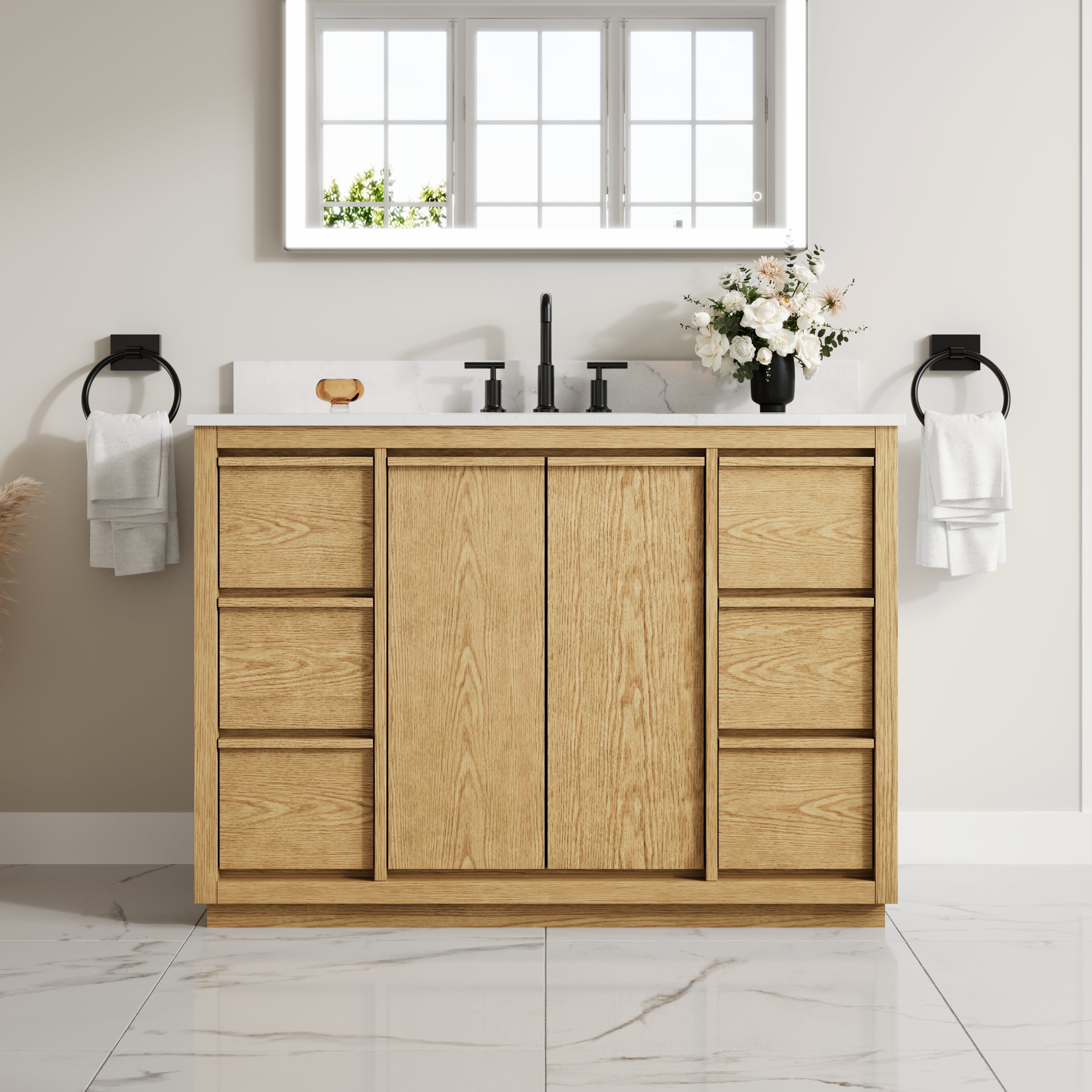
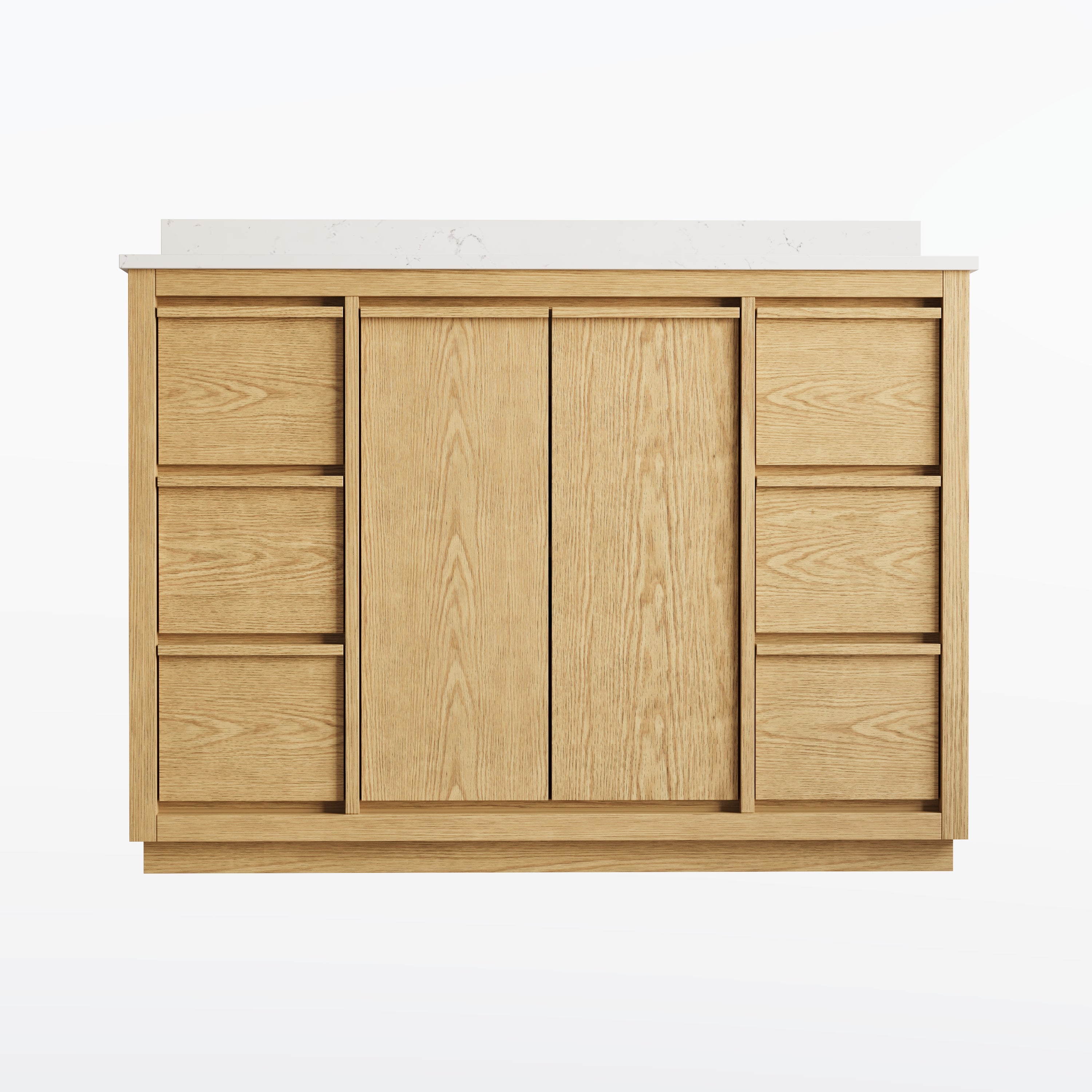
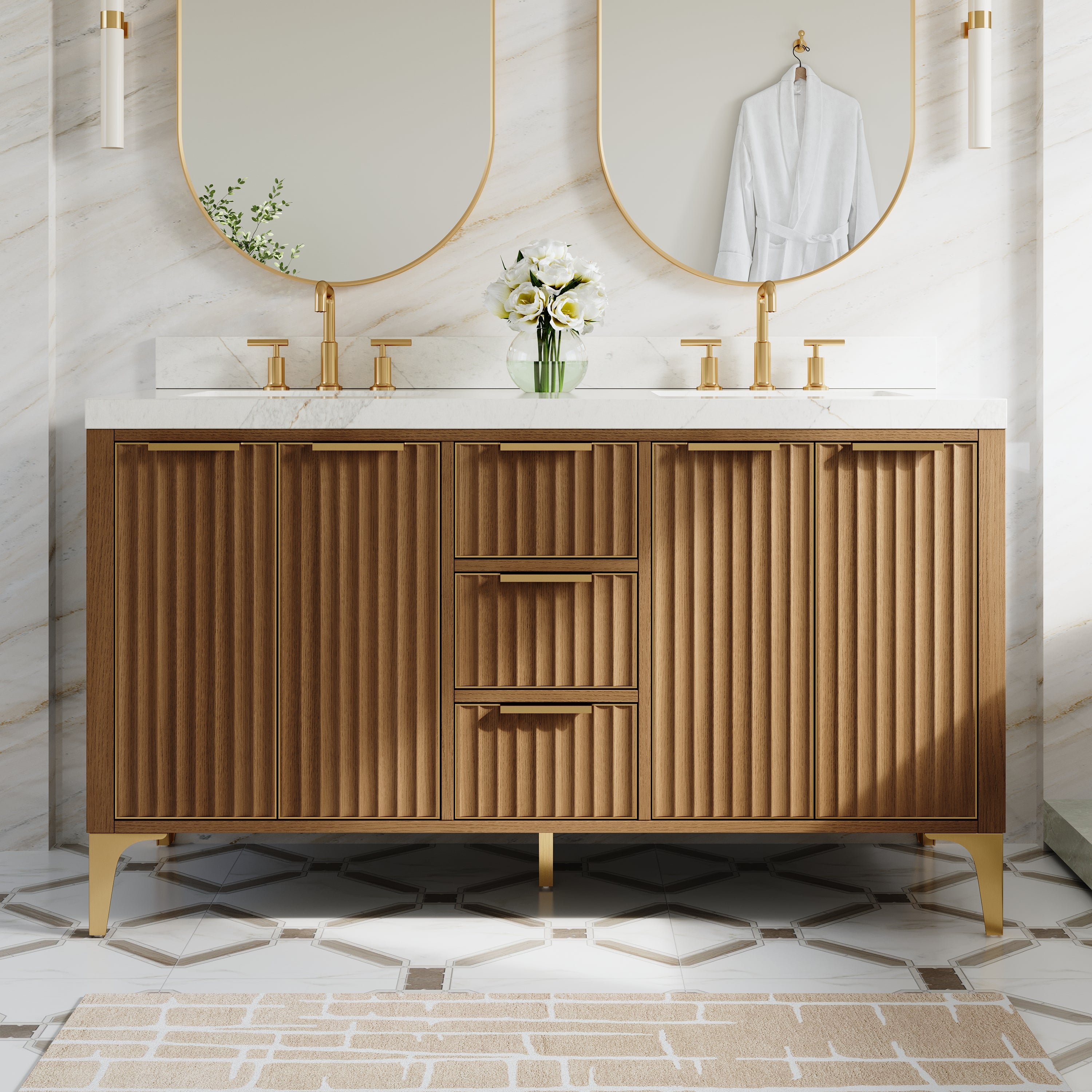
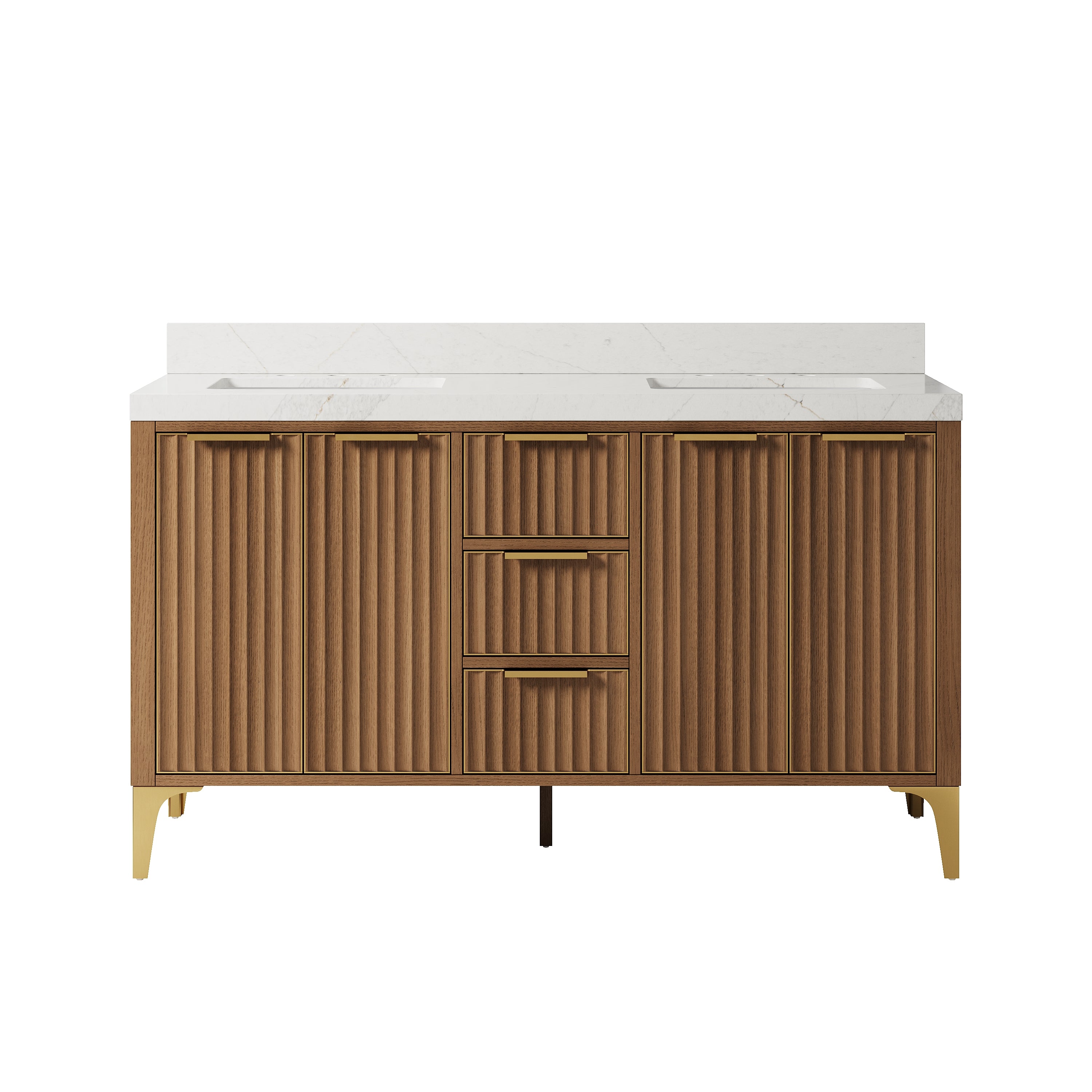
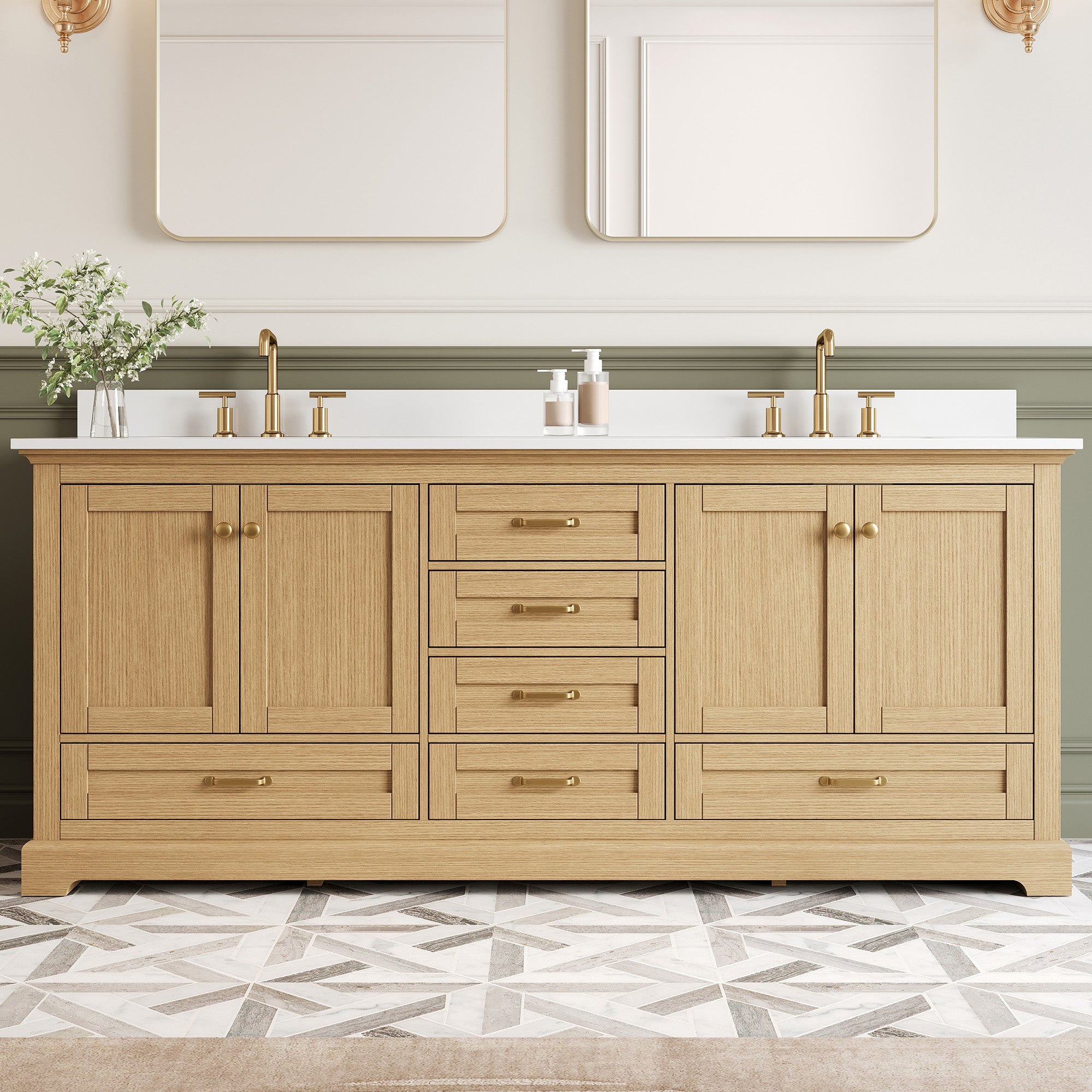
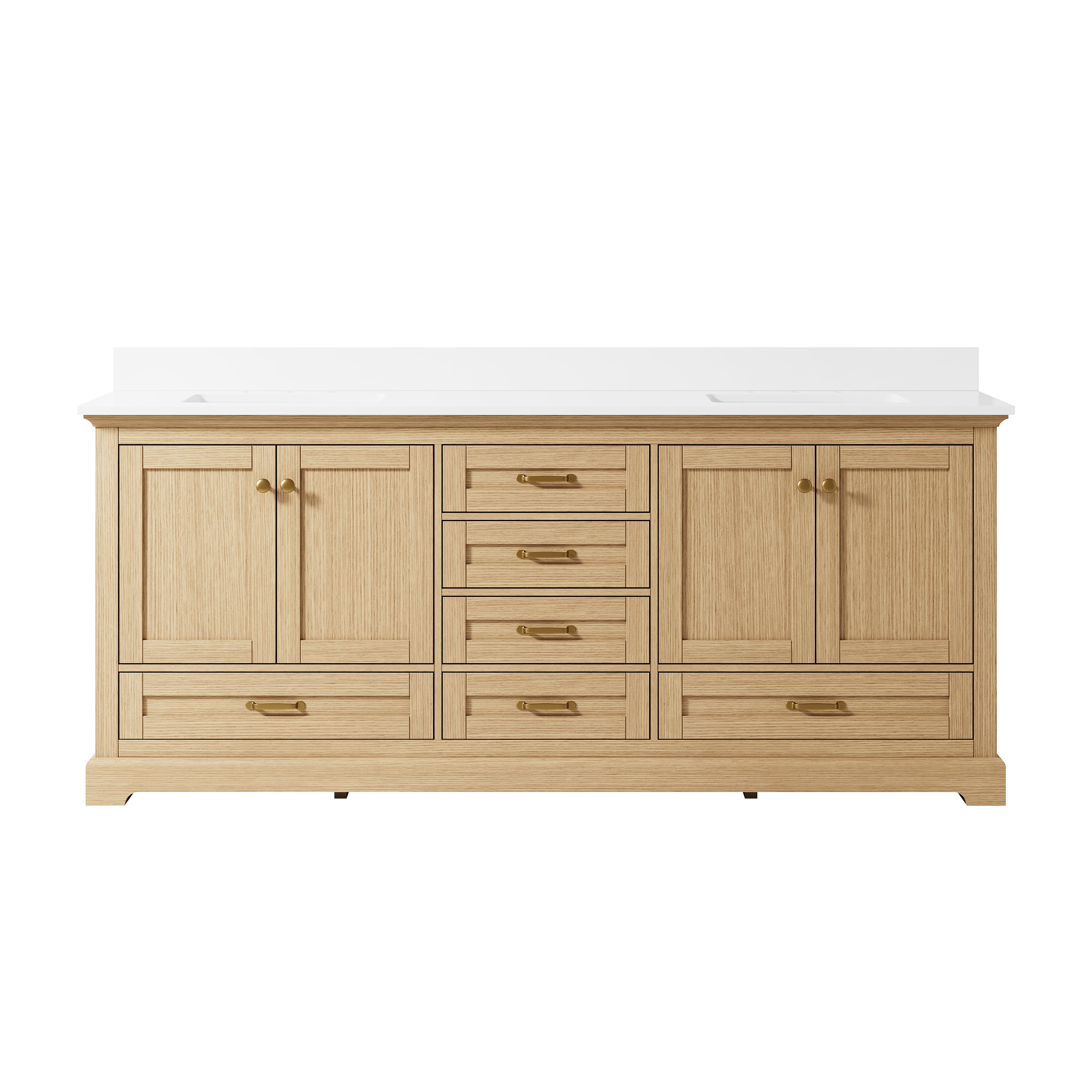
Wood just knocked white paint off its throne. Houzz’s latest report shows wood finishes grabbing 26% of the market, leaving white behind at 22%. Maple and white oak are tied at 27% each when it comes to solid wood. Why the sudden shift? A light wood vanity solves a very specific set of problems that dark cabinets create. And it pulls this off without forcing the entire room into one rigid design box. People are tired of the sterile, all-white bathroom. They want warmth, but they aren't willing to sacrifice brightness.
The Secret to a Spacious Bathroom: Visual Weight
It all comes down to visual mass. Picture a standard 72-inch vanity. Painted black or espresso, it sits in the room like a giant boulder. Your eye gets stuck on it. Swap that dark paint for a pale oak and the whole shape softens. The wood grain gives your eye a texture to read. It stops reading as a flat, heavy wall and starts reading as an actual piece of furniture.
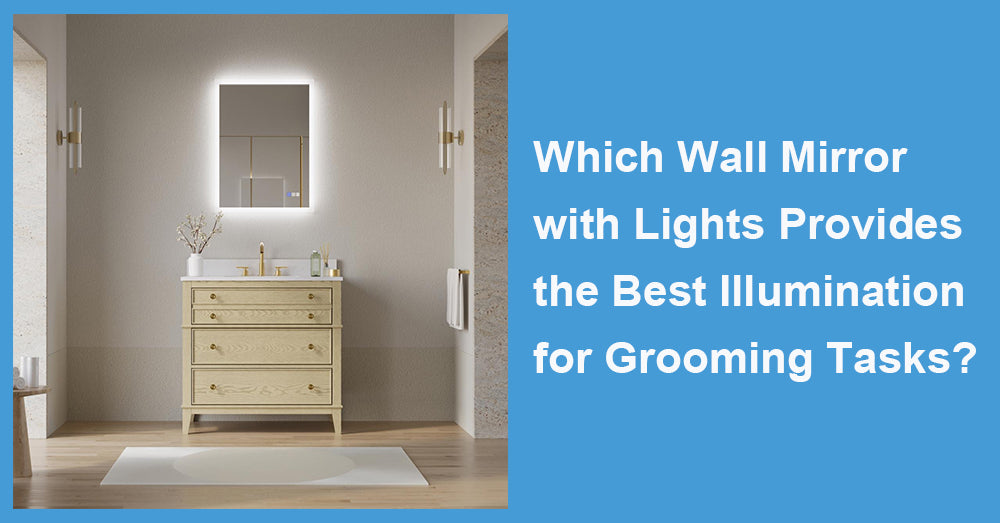
Lighting plays a huge role here too. Dark cabinets absorb the light from your sconces and overhead fixtures. A pale wood finish reflects it. If you have a bathroom with zero natural light, a light oak vanity acts like a mirror for the room's illumination, bouncing the glow back into the space.
Storage numbers back this up. Houzz data shows vanities over 72 inches now account for 21% of all upgrades. People want space for their stuff. But a massive dark box in a small bathroom feels oppressive. A light finish lets you have all that drawer space without it taking over the room. The same principle applies when you mount it on the wall. A floating cabinet keeps the floor visible.
Floating Installations: What Contractors Actually Deal With
Floating pushes the illusion even further. Take a recent remodel in Portland. The bathroom was only 85 square feet. The designer used a rift-cut white oak vanity, hung it 14 inches off the floor, and let the tile run right underneath. "Hovering" is the exact word the designer used. When you can see the floor beneath the cabinet, a tight room instantly grows.
But hanging a heavy vanity isn't just an aesthetic choice; it’s a structural one. You cannot just screw a loaded vanity into drywall. The contractor has to open the wall and install heavy-duty blocking or a steel French cleat system directly into the studs. If the installation crew doesn't do this, the cabinet will tear out of the wall the first time someone leans on the sink.
Style Adaptability: Why It Fits Everywhere
Style-wise, the material works practically everywhere. Japandi? The grain is your only texture. Traditional? A warm honey oak holds up next to marble without looking like a cheap fake. Modern? Flat slab fronts cut the coldness of giant tile. The wood doesn't fight the room. It just absorbs whatever style you throw at it.
The Hidden Trap: Construction and Core Materials
Here is where buyers get fooled. "Light wood" is a color, not a structural guarantee. Solid white oak handles moisture fine. Quarter-sawn is even better—the cut keeps the wood from warping and splitting the seams around your sink. But watch out for cheap veneers. A good plywood core is acceptable. MDF or particleboard? Those are absolute sponges.
Water will always find the weak spot. It’s usually the edges. If the factory didn't seal the edge-banding around the drawer fronts perfectly, water gets in. The particleboard swells up, and the veneer peels off. You can't fix that. You rip the whole thing out and start over. A white oak face over particleboard is a fake, and plumbers see them fail all the time.
Don't just look at the front door. Open the drawers. Feel the hardware. Are the interior seams sealed? Are the drawer glides metal or cheap plastic? If a metal hinge starts to rust in a steamy bathroom, that rust will bleed directly into the light wood grain and leave a permanent stain. Three-quarters of homeowners tell Houzz they want a vanity that lasts a lifetime. The only way to actually get that is to inspect the hidden parts.

Finish, Care, and the Reality of Maintenance
Finish matters just as much as the wood species. Matte looks great right now because it doesn't look like plastic. But matte still needs a protective topcoat. A hand-rubbed oil or a low-VOC clear coat over a sealed core works well. A bare surface just lets water sit directly on the grain.
Maintenance is simple, but you have to do it. Wipe up the puddles around the faucet. Use a damp microfiber cloth and wring it out thoroughly. Skip the ammonia and bleach sprays entirely. They will degrade the finish faster than the humidity ever will. Also, watch out for hair dye and dark makeup. Light wood is unforgiving. If you spill something, clean it immediately. And check the caulk around the sink once a year. If it cracks, water gets down into the cabinet.
If this is a rental property, or if you have kids who flood the counter and never wipe it up, skip wood entirely. Get a glazed ceramic or a high-quality laminate. Wood needs a basic level of care. A household that treats the bathroom as a wet room will keep a wood vanity looking good for decades.
Resale Value and Final Thoughts
For an owner-occupied home, though? It's hard to beat. You get deep storage without the visual weight. It warms up a sterile white-and-stone bathroom without adding another cold, hard surface. Real estate agents will tell you that natural finishes are always a buyer favorite because they make spaces feel bigger. The versatility is real. But only if you nail the species, the core, and the finish. Miss one of those three, and it’s just a cheap look.













Leave a comment
This site is protected by hCaptcha and the hCaptcha Privacy Policy and Terms of Service apply.