






















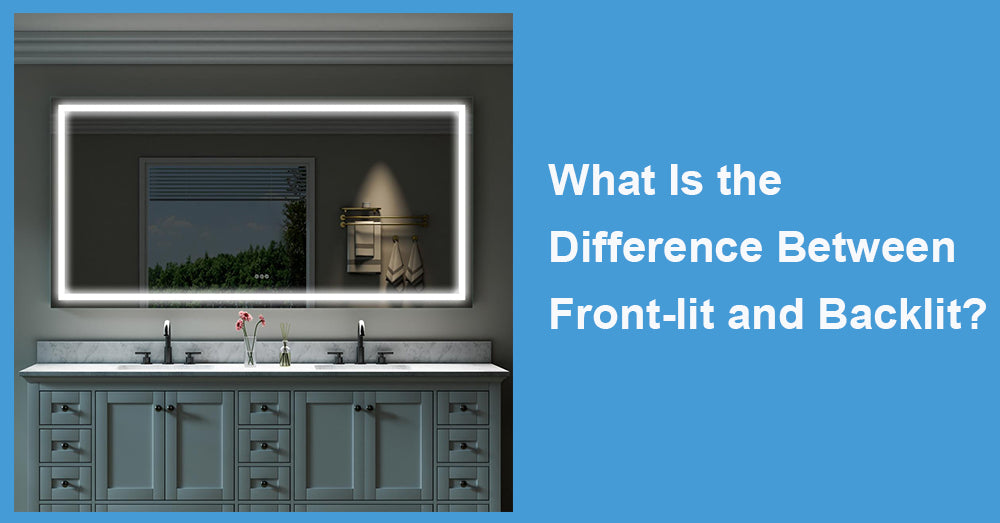
If you are shopping for a modern bathroom mirror with integrated LEDs, the biggest design choice is usually front-lit vs. backlit. They can look similar in photos, but they behave very differently in real life. The short version is this: front-lit mirrors are designed to light your face for tasks, while backlit mirrors are designed to light the wall and create ambiance. Some mirrors combine both, and that hybrid approach is often the easiest way to get “spa lighting” and practical grooming light at the same time.
This guide explains how each style works, what the light feels like, which specs matter, and how to choose based on your daily routine.
1. How the Light Is Delivered
Front-lit mirrors
A front-lit mirror sends light forward toward you. The LEDs are typically placed behind a frosted or etched section of the mirror face so the light appears as a bright ring, perimeter band, or lighted panel. The goal is to create direct, face-level illumination.
Practical effect:
· Brighter face lighting.
· Fewer shadows compared with overhead-only lighting.
· More “makeup and shaving friendly” light, especially when it is well diffused.
Backlit mirrors
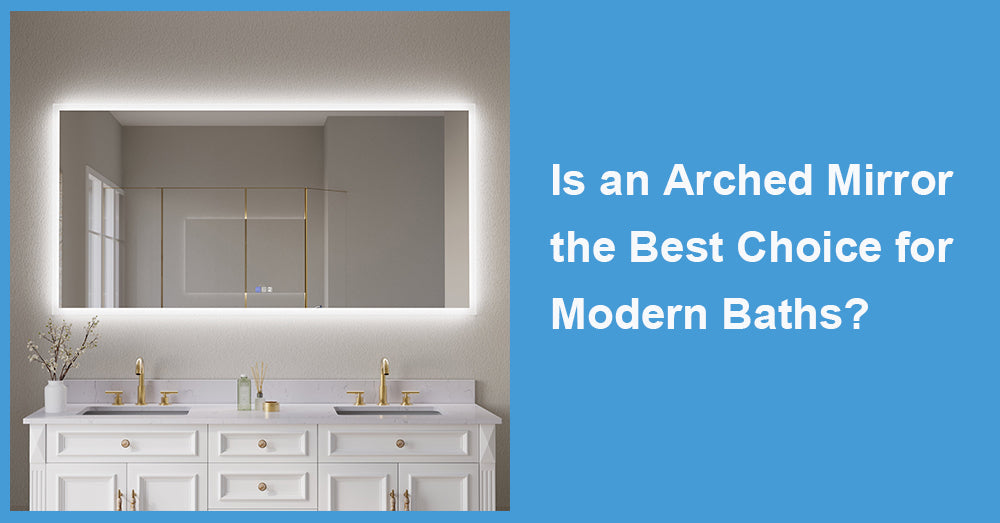
A backlit mirror places the LEDs behind the mirror, aimed toward the wall. The light spreads outward from behind the glass and reflects off the wall, creating a halo or wall-wash effect.
Practical effect:
· Softer ambience and a floating look.
· Less direct illumination on the face unless the room already has strong vanity lighting.
· A more relaxed, “hotel-like” atmosphere.
This difference is widely summarized in mirror-buying guides: backlit is typically described as mood lighting and a halo effect, while front-lit is described as stronger, more practical face lighting. (Source: LED Reflection, “Backlit vs Frontlit LED Mirrors.”)
2. Which One Looks Brighter in Use?
Many people assume backlit mirrors will feel brighter because the halo looks dramatic. In practice, front-lit often feels brighter where it matters (your face), because the light is aimed toward you.
If your main goal is grooming, consider that light levels are commonly discussed in foot-candles. Multiple compilations referencing the IES Lighting Handbook list bathrooms around 20–50 foot-candles depending on the situation and task. (Source: Waypoint Lighting, “IES Recommended Light Levels” PDF. Source: Modern.Place, “IES Recommended Lighting Levels.”) Front-lit mirrors are more likely to help you reach comfortable face-level task lighting within that kind of range, especially when paired with good ambient lighting.
Backlit mirrors, on the other hand, can make the room feel brighter overall by washing the wall, but your face can still look underlit if there are no sconces or strong overhead lights.
3. Shadow Control: The Real Day-to-Day Difference
A good mirror lighting setup reduces shadows under the eyes, nose, and chin. That is why many people love front-lit mirrors for makeup and shaving.
· Front-lit: better at minimizing facial shadows because light comes from near the mirror plane and points forward.
· Backlit: can still leave facial shadows because the light is indirect and primarily illuminates the wall, not your face.
If you have ever tried to apply makeup under a single ceiling light, you have seen the problem: overhead-only lighting often creates unflattering shadows. Front-lit designs reduce that issue. Backlit designs improve atmosphere but may not solve it.
4. Glare and Comfort: When “Brighter” Feels Worse
Front-lit mirrors can be incredibly useful, but poorly designed ones can feel harsh. The difference is usually diffusion and dimming.
· If the frosted band is too narrow or the LEDs are too exposed, you may see hot spots.
· If there is no dimming, the mirror can feel “too intense” early in the morning.
Backlit mirrors are usually more comfortable by default because the wall wash is softer and less direct. But if backlit is your only vanity light, you might compensate by increasing brightness elsewhere, which can create glare from shiny tile or glossy paint.
A practical rule:
· Choose front-lit when you prioritize tasks.
· Choose backlit when you prioritize comfort and mood.
· Choose a hybrid when you want both without compromise.
5. Color Quality: CRI Matters for Both, Especially for Makeup
Brightness alone is not enough. If color rendering is poor, skin tone looks off and makeup shades can be misleading. CRI is one of the easiest indicators to compare.
A simple educational reference describes CRI this way: CRI is measured 0–100, incandescent and halogen are near 100, and 90+ is often considered “excellent.” (Source: Westinghouse Lighting, “CRI - Color Rendering Index.”) For grooming, many buyers treat CRI 90+ as a practical target.
If a mirror listing does not mention CRI at all, that is not automatically a deal-breaker, but it is a signal that the brand may not be prioritizing color quality. If you care about makeup accuracy, prioritize mirrors that publish CRI and provide consistent color temperature control.
6. Energy and Efficiency: What LEDs Change (and What They Don’t)
Front-lit vs. backlit is primarily a light-direction and distribution choice, not an energy choice. Both use LED strips and both can be efficient. What matters is that you evaluate brightness in lumens or performance labels rather than watts.
The U.S. Department of Energy encourages buyers to read lighting labels and choose based on brightness and color for the intended use, noting LED performance improvements and the importance of selecting the right brightness and color. (Source: U.S. Department of Energy, “LED Lighting.”)
Practical takeaway:
· Do not compare mirrors by watts alone.
· Compare by delivered brightness, diffusion quality, and whether the mirror light is meant to be task lighting or accent lighting.
7. Choosing the Right Type for Your Bathroom
Choose front-lit if:
· Makeup, shaving, skincare, or contact lenses are daily routines.
· Your bathroom has limited other vanity lighting.
· You want clearer face illumination with fewer shadows.
· You value function over pure ambience.
Choose backlit if:
· You already have good task lighting (sconces or strong overhead lighting).
· You want a softer, spa-like atmosphere.
· You want the wall to feel brighter and the mirror to “float.”
· You dislike direct light in the morning and prefer gentler illumination.
Choose a hybrid (front-lit + backlit) if:
· You want both practical face lighting and a halo effect.
· Multiple people use the vanity and needs differ.
· You want flexible lighting scenes: bright for grooming, soft for nighttime.
Many mirror guides explicitly recommend a combined approach when you want both ambience and task lighting. (Source: LED Reflection, “Backlit vs Frontlit LED Mirrors.”)
8. A Quick Real-World Test Before You Commit
If you can evaluate a mirror in person, use this simple checklist:
1. Stand at normal distance and look for shadows under the eyes and chin.
2. Check whether the light looks even or has visible hot spots.
3. If you wear makeup, compare your face under the mirror light and near a window.
4. Verify dimming works smoothly and does not flicker.
5. Look for CRI information and color temperature options if shade accuracy matters.
If shopping online, prioritize listings that clearly state:
· Front-lit, backlit, or both.
· Dimming and color temperature range.
· CRI rating, ideally 90+.
· Mirror size and the actual lighted area coverage.

Conclusion
Front-lit and backlit mirrors are not interchangeable. Front-lit mirrors aim light toward your face and are usually the better choice for grooming tasks. Backlit mirrors aim light toward the wall and are usually the better choice for ambience and a softer feel. If you want the best of both worlds, a combined front-lit and backlit mirror can deliver practical makeup-friendly illumination and a calm halo effect, especially when paired with dimming and good color rendering.









































Leave a comment
This site is protected by hCaptcha and the hCaptcha Privacy Policy and Terms of Service apply.