






















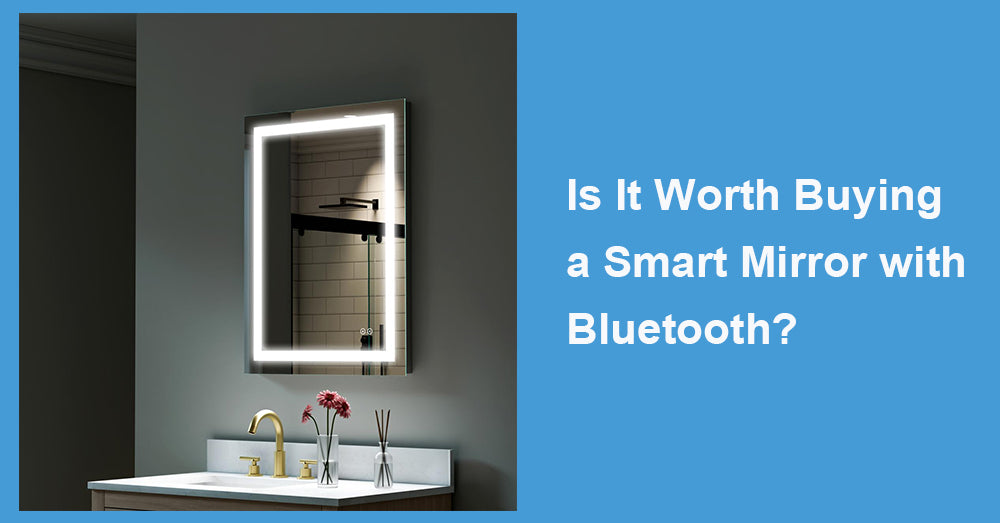
A smart bathroom mirror with Bluetooth can be worth it, but only for a specific kind of user and setup. If you want light, defog, and a simple audio layer for podcasts or music while you get ready, it can be a tidy all-in-one upgrade. If you expect “room-filling” sound, perfect call quality, or long-term tech features that keep up with phones and apps for years, you may be happier (and spend less) with a standard LED mirror plus a separate waterproof speaker.
This article breaks down the real benefits, the common disappointments, and the data-driven factors that decide whether Bluetooth-in-mirror is a smart buy or a gimmick.
1. What You Actually Get with Bluetooth Mirrors
Most Bluetooth mirrors bundle some combination of:
· LED lighting (often dimmable and sometimes tunable white)
· Anti-fog pad or heated zone
· Bluetooth speaker(s) hidden behind the mirror
· Touch controls, sometimes with clock or temperature display
The value is convenience and reduced countertop clutter. Instead of placing a speaker near water, you keep audio integrated and hands-free. That matters because many people already use voice and Bluetooth audio daily. One Edison Research report notes 35% of people own smart speakers and 57% use voice commands of some type daily, showing that hands-free audio control is already a mainstream habit for many households. (Source: Edison Research and NPR, Smart Audio Report 2022 summary page.)
2. The Biggest Question: Is the Audio Good Enough?
The reality of mirror speakers
Mirror speakers are usually small and mounted behind glass. Glass is reflective and hard, and bathrooms are full of reflective surfaces like tile, stone, and mirrors. This can make audio sound brighter or harsher, and it can reduce clarity at low volumes. Bluetooth mirror audio is often “good enough” for casual listening, but not a substitute for a dedicated speaker if you care about bass, stereo separation, or detailed sound.
Latency: why video can feel slightly off
Bluetooth audio can introduce noticeable delay depending on the codec and device chain. Audio-Technica summarizes that SBC latency is commonly around 200–300 ms, while aptX can be around 120 ms in some implementations. (Source: Audio-Technica, “The differences between Bluetooth wireless codecs.”)
For music and podcasts, latency usually does not matter. For videos, live workouts, or gaming, it can.
Practical takeaway: If your bathroom routine is mostly music and podcasts, Bluetooth mirror audio is typically fine. If you watch videos while getting ready, a separate device with better latency handling may be more satisfying.
3. The Hidden Value: Clean Setup in a Wet Zone
A major reason to buy Bluetooth in a mirror is safety and simplicity. A countertop speaker near sinks and sprays is exposed to splashes and humidity. With a mirror, the electronics are usually sealed and positioned away from direct water contact.
If you do consider a separate speaker, water resistance ratings help compare options. IP ratings are standardized under IEC 60529 and are intended to be comparable between devices when properly tested. (Source: RTINGS, “What are IP ratings?”) That standardization is useful, but it also highlights the point: a mirror is inherently wall-mounted and out of the splash zone, which reduces risk without needing a separate “waterproof” product.
Humidity still matters, though. Electronics can tolerate high humidity better than many people assume, but condensation events accelerate corrosion and electrochemical migration far more quickly than humidity alone. (Source: Conformal Coating UK, “Humidity vs Condensation in Electronics.”) In other words, mirrors that manage sealing and internal moisture exposure tend to age better than devices sitting on wet countertops.
4. Privacy and “Always-On” Concerns
Not all smart mirrors are the same. A Bluetooth mirror that simply plays audio is very different from a mirror with Wi-Fi, apps, cameras, or microphones. The more sensors and connectivity it has, the more you should think about privacy and data security. The FTC’s privacy and data security updates emphasize ongoing enforcement and risk as consumer data collection expands across modern connected products. (Source: U.S. Federal Trade Commission, Privacy and Data Security Update for 2023 press release.)
Practical filter: If you want low risk, choose a mirror that is Bluetooth-only and does not require an app account, cloud login, or microphone. If you want voice assistant features, treat it like any smart device: understand what data it collects, how it updates, and whether you can disable microphones.
5. Longevity: Will the “Smart” Part Age Well?
LED mirrors often last a long time, but the “smart” components can be the limiting factor, especially drivers, control boards, and Bluetooth modules. LEDs tend to dim gradually rather than fail suddenly, and reputable efficiency guidance highlights that LEDs last much longer than incandescent lighting. (Source: U.S. Department of Energy, LED Lighting overview.)
The smart features, however, depend on:
· heat management behind the mirror
· moisture exposure over years
· availability of replacement drivers or parts
· whether the controls are proprietary
If you buy a Bluetooth mirror, treat the warranty and parts availability as part of the value calculation. A longer warranty that clearly covers the driver and electronics is often a better signal than extra features.
6. When a Bluetooth Smart Mirror Is Worth It
A Bluetooth mirror is usually worth it if:
· You already listen to podcasts or music daily while getting ready
· You want a cleaner bathroom with fewer devices on counters
· You prefer a simple system: light, defog, audio in one place
· You are satisfied with “background audio,” not audiophile performance
· You choose a model with strong warranty coverage for electronics
It can also be worth it in smaller bathrooms where countertop space is limited and where placing a separate speaker creates clutter.
7. When You Should Skip It
You may want to skip Bluetooth-in-mirror if:
· You want strong bass, high volume, or true stereo imaging
· You frequently watch videos and care about lip sync
· You want minimal electronics in a humid space
· You are concerned about privacy and the product includes Wi-Fi, mics, or apps
· You prefer upgrade flexibility (speaker tech changes faster than mirrors)
In these cases, a standard LED mirror plus a separate water-resistant speaker can be the better long-term setup.
8. A Fast Buying Checklist
Before you buy, check these points:
· Audio expectation: podcasts and background music vs high-fidelity listening
· Controls: can you control volume and track easily with wet hands?
· Fog plan: does it include anti-fog, and is the heated area sized for the mirror?
· Warranty: length and what electronics are covered
· Connectivity scope: Bluetooth-only vs Wi-Fi/app/mic features
· Installation: power requirements and switch location (especially if you want the defogger on a timer)

Conclusion
Is it worth buying a smart mirror with Bluetooth? It depends on what you want it to replace. If you want an uncluttered vanity, easy daily audio, and a neat “one surface does it all” experience, Bluetooth mirrors can be a satisfying upgrade. If you care deeply about sound quality, want perfect video sync, or prefer to keep tech modular and replaceable, you will often get better results with a quality LED mirror plus a separate water-resistant speaker.








































Leave a comment
This site is protected by hCaptcha and the hCaptcha Privacy Policy and Terms of Service apply.