






















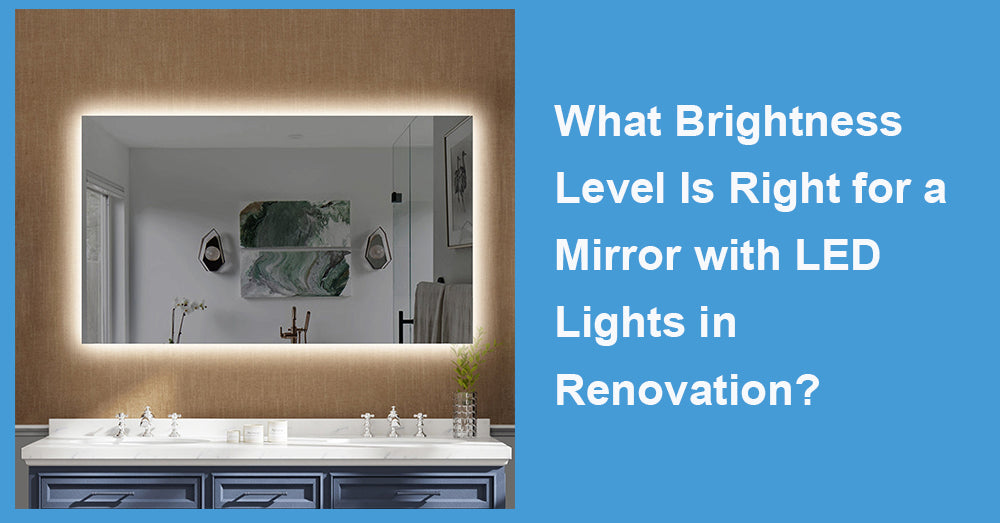
In the wave of modern home renovations, mirror with led lights are becoming the "standard upgrade" for bathroom spaces. Compared to traditional mirrors, these products not only provide more even lighting but also offer comprehensive advancements in functionality, aesthetics, and innovative experiences. Yet a frequently overlooked issue is now capturing the attention of both the industry and consumers: What brightness level is truly optimal for an LED mirror? Excessively bright light can cause glare, impairing visual judgment during makeup application or shaving. Conversely, insufficient brightness makes tasks in front of the mirror difficult, undermining the very purpose of LED design.
"Appropriate brightness" is emerging as a new competitive focus in the LED mirror market.
LED Mirrors: The Rise of a New Bathroom Design Favorite
1. The Shift from Functionality to Aesthetics
Once merely tools for daily grooming, bathroom mirrors have evolved into key visual focal points in space design.
In contemporary decor trends, mirrors with LED lighting serve not only as illumination but also as decorative elements with a tech-savvy edge.
2. Market Data Confirms the Trend
Data from multiple home retail platforms indicates that LED mirror sales in 2024 have surged by over 65% compared to two years ago.
Styles featuring touch-sensitive dimming, anti-fog functionality, and smart color adjustment have become popular choices for mid- to high-end bathroom renovations.
3. Evolving Consumer Demands
Bathroom expectations have shifted from mere "clean functionality" to "comfort and aesthetics."
Users now seek soft ambient lighting, clean lines, and premium sensory experiences within compact spaces.
The rise of LED mirrors embodies this aesthetic upgrade—combining light control with design aesthetics, they have become the "visual focal point" in modern home decor.
Human-Centered Lighting: Designed for True Skin Tone and Visual Comfort
From a designer's perspective, LED mirror brightness is not just about intensity but also light quality.
Many traditional fixtures suffer from poor color rendering, often making skin appear dull and unnatural in the mirror.
High-end LED mirrors typically employ LED chips with a Color Rendering Index (CRI) above 90, accurately reproducing skin tones and makeup effects.
This is especially crucial for users who prioritize refined living.
An interior lighting consultant explains:
"Lighting in front of a mirror should be as clear as natural daylight, yet not cause eye strain. It's about achieving a balance of 'visual comfort,' not merely pursuing brightness."
Additionally, the direction of light distribution is equally critical. Traditional "top-down lighting" often casts facial shadows, whereas modern LED mirrors typically employ surround or backlighting designs to achieve seamless illumination without blind spots, enhancing the user experience.

Technological Advancements: From Fixed Brightness to Smart Dimming
In recent years, the LED mirror market has undergone a "smart revolution."
Dimming and color temperature adjustment have become standard features, while touch, sensor, and voice control technologies are increasingly prevalent.
Current mainstream brightness adjustment methods include:
l Touch Dimming: Users adjust brightness and color temperature by lightly touching or long-pressing the control panel.
l Infrared Sensor Switch: Automatically illuminates when proximity is detected and turns off when distance increases, enhancing convenience.
l Innovative Synchronization System: Some products integrate with smart home ecosystems, enabling scheduled on/off functions and brightness memory settings.
In the future, AI-powered sensing systems may even automatically adjust brightness in response to ambient light changes, creating a consistently comfortable lighting environment for users.
Lighting Strategies for Different Spaces
Not all bathrooms suit the same brightness standard.
Designers typically customize lighting levels based on space size, wall color, and user demographics in actual projects.
Small Bathrooms
Opt for LED mirrors with 1000–1200 lumens paired with light-colored walls to enhance spatial openness.
Medium to Large Bathrooms
Opt for dimmable models around 1800 lumens with warm/cool light switching to balance functionality and ambiance.
Multi-Functional Family Spaces (e.g., Master Bath + Vanity Area)
Select products with multi-level dimming and a high color rendering index, particularly suited for female users.
Additionally, brightness should complement the bathroom's main lighting.
Mirror lighting illuminates the face, while overhead fixtures provide overall ambient brightness. Harmonious coordination between the two delivers optimal visual comfort.
Market Trends: Smart Technology Meets Human-Centered Design
As home renovation spending upgrades, LED mirrors are evolving from mere "decorative accessories" to "smart appliances."
Industry experts predict mirror cabinets with intelligent dimming, sensor-activated defogging, and waterproof designs will dominate the market within three years.
Simultaneously, consumer priorities are shifting:
From singular aesthetic design toward functional experience, health-conscious lighting, and eco-friendly energy efficiency.
New-generation LED mirrors widely adopt energy-saving chips, reducing power consumption by approximately 30%–50% compared to traditional fixtures, with lifespans exceeding 50,000 hours.
Consumer Perspective: Brightness Defines Experience
Multiple user surveys reveal that over 80% of consumers cite **" adjustable brightness."
For female users, especially, the brightness and color temperature of mirror lighting directly impact makeup application and skin tone accuracy.
One user who renovated their bathroom shared:
"Before, I applied makeup under regular lights only to find the colors looked completely off when I stepped outside. After switching to a dimmable LED mirror, the light feels closer to natural light, making my skin tone appear more true to life."
Another user highlighted how the nighttime soft-light mode offers a new experience:
" No need to turn on the main light—the soft mirror light is sufficient. It saves energy and creates a more relaxing bathroom atmosphere."
This feedback reaffirms a key insight—Brightness adjustment isn't just a technical feature; it's a critical factor influencing user well-being.
Conclusion: The Right Brightness Adds Warmth to Life
Technologically, a mirror with LED lights is more than just a lighting fixture;
In daily life, it elevates the quality of living through everyday experiences.
The proper brightness not only lets you see details clearly in the mirror but also lets you feel the "warmth of light" during morning routines and evening relaxation.
In the future, LED mirrors will continue to blend design and technology, becoming an indispensable star in modern bathrooms.











































Leave a comment
This site is protected by hCaptcha and the hCaptcha Privacy Policy and Terms of Service apply.