






















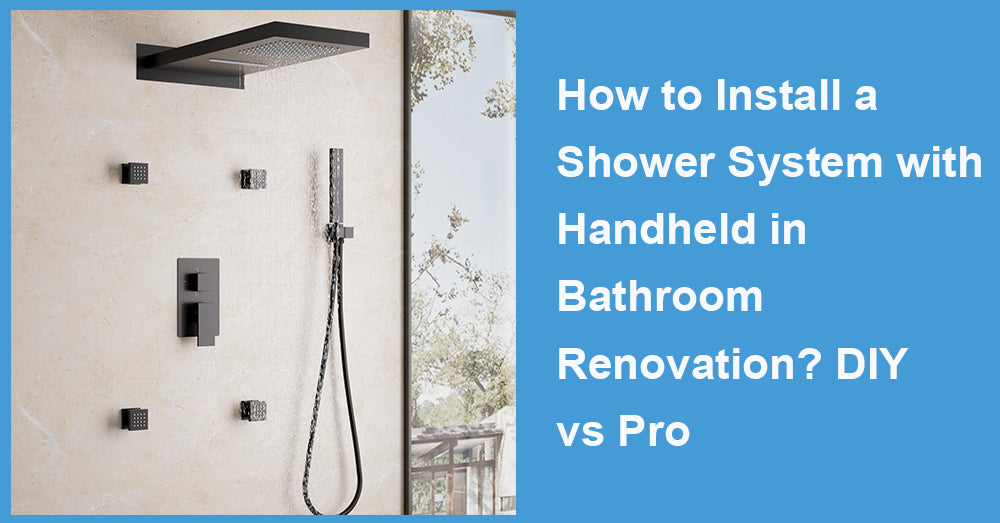
In modern bathroom design, the shower system with a handheld shower head is becoming increasingly popular. It not only provides a flexible shower experience, but also combines multiple functions such as water conservation, massage, and aesthetics. However, during the installation process, homeowners often face a dilemma of choosing between DIY installation and hiring professionals to complete it.
This article will analyze in depth how to install a handheld showerhead system in bathroom decoration from six aspects: pre-installation preparation, tool and material selection, installation steps, common problems, safety and maintenance, and comparison of DIY and professional installation advantages and disadvantages, to help you make wise decisions.
1. Preparation before installation: Planning and measurement are key
Planning and measurement are crucial before hands-on installation. Whether DIY or hiring professionals, it is necessary to ensure that the shower system matches the existing bathroom pipelines.
Determine installation location
Handheld showerheads require a water pipe connection and are usually installed in the center of the wall or near the shower area for easy use.
The height of the wall should take into account the height of family members and avoid holding the showerhead too high or too low.
Measure pipeline distance
Ensure that the distance between the hot and cold water pipelines meets the requirements of the shower system. If the pipeline position is not ideal, it may be necessary to rearrange the pipe or add extension fittings.
Confirm the material of the wall.
Different wall materials (tiles, gypsum board, and concrete) have different requirements for drilling and fixing methods.
Ceramic tile walls require the use of professional drills to avoid cracking; Concrete walls need to be equipped with expansion bolts.
Adequate pre-planning can reduce obstacles encountered during construction while ensuring the stability and durability of the shower system after installation.
2. Tool and material selection: Ensure smooth installation
The tools and materials required for installing a handheld showerhead system vary greatly depending on DIY or professional installation.
Common tools include:
Pipe pliers, wrenches, and screwdrivers
Level ruler and tape measure
Drilling machine and tile drill bit (if needed to drill holes in tiles)
Sealing glue and raw material tape
In terms of materials:
Handheld showerhead and holder
Main valve body of shower system
Hot and cold water connection pipe
Pipe fittings and joints
For DIY installers, it is recommended to choose a shower kit with detailed instructions and complete accessories to reduce the risk of misoperation. Professional installers usually carry a full set of tools and spare parts for higher installation efficiency.
3. Installation steps: from basics to details
Whether it is DIY or professional installation, the correct steps can ensure the stability and service life of the shower system. The following is the standard installation process:
Close the primary water source
Before starting the installation, be sure to close the main water valve to avoid water leakage during the construction process.
Install the main valve body.
Reserve space inside the wall according to the measurement location, then fix the mixing valve body. Use a level ruler to ensure the body is level.
When embedding into the wall, attention should be paid to the waterproof layer to prevent water leakage in the later stage.
Connect hot and cold water pipelines.
Use raw tape or sealant to ensure the interface is sealed and prevent leakage.
During the DIY process, you can first simulate connections on external fittings to ensure accurate length and angle.
Fixed bracket and handheld showerhead
After drilling holes in the wall, install a bracket and hang the handheld showerhead from it.
Pay attention to the height, angle, and stability of the bracket to ensure comfortable use.
test system
Connect the water source, test the flow rate of hot and cold water, and the function of the handheld showerhead separately, and check for any water leakage or looseness.
Every step requires patience and meticulousness, especially waterproof treatment and interface sealing, which are directly related to future safety and reliability.
4. Common problems and solutions
During the installation of the handheld showerhead system, the following issues may be encountered:
Insufficient water pressure
It may be due to excessively long pipelines or insufficient water heater pressure. It can be improved by adjusting the main valve or booster pump.
Water leakage or dripping
Due to poor interface sealing, DIY installers should promptly check whether the raw material tape is wrapped correctly and securely. Professional installers will use sealant or Teflon tape to strengthen it.
Unstable bracket
The wall material is different, and the fixing method needs to choose suitable expansion bolts or screws.
The angle of the handheld showerhead is not suitable
Optional bracket with rotation function for easy adjustment of shower direction.
Correct installation details can help reduce difficulties during use and enhance the overall shower experience.
5. Security and Maintenance
The safety of shower systems not only involves construction, but also involves later use and maintenance:
Anti-slip and anti-scald design
Choosing a shower system with a thermostatic valve or anti-scald function can avoid the risk of burns.
Regularly inspect interfaces and hoses.
Handheld showerhead hoses are prone to aging or leakage, and it is recommended to check and replace worn parts annually.
Clean the nozzle
Regularly soak the nozzle in white vinegar to prevent scale blockage and maintain smooth water flow.
Good maintenance habits can extend the lifespan of shower systems while ensuring safe use.

6. Comparison between DIY and Professional Installation
The advantages of DIY installation
Low cost, no need to pay additional labor fees;
Flexible control of construction pace, adjustable according to individual needs;
Suitable for users with specific decorating experience and a solid foundation in tools.
The risks of DIY installation
Improper operation may result in water leakage, damage to walls or fittings.
Improper construction of circuits and waterproofing may pose safety hazards.
Later maintenance may be troublesome, and if any problems arise, they will need to be disassembled and reassembled.
The advantages of professional installation
Experienced, fast installation speed, and minor errors;
Provide standardized waterproofing and pipeline connections to reduce safety risks.
Some brands offer installation warranties to ensure after-sales service.
Disadvantages of professional installation
High cost, requiring payment of labor costs;
The installation time is limited by the construction schedule, resulting in slightly less flexibility.
Suggestion:
If you have basic decoration skills, complete tools, and a simple installation location, DIY is a feasible choice.
If the bathroom pipeline is complex or equipped with a constant temperature/multifunctional system, hiring professional personnel is more secure.
Conclusion: Choosing a reasonable installation method to make the shower experience more comfortable
A shower system with a handheld showerhead not only enhances bathroom functionality but also improves the bathing experience, making it an essential upgrade in modern bathroom decoration.
Mastering pre-installation planning, tool and material preparation, correct installation steps, and safety maintenance methods is key to ensuring long-term stable use of shower systems.
DIY and professional installation have their own advantages and disadvantages, and when choosing, one should consider one's own experience, budget, and bathroom complexity.
In small bathrooms or bathrooms with limited space, a properly arranged, scientifically installed, and regularly maintained handheld showerhead system can not only provide a comfortable bathing experience but also improve the overall decoration quality, making the bathroom a delightful living space.











































Leave a comment
This site is protected by hCaptcha and the hCaptcha Privacy Policy and Terms of Service apply.