






















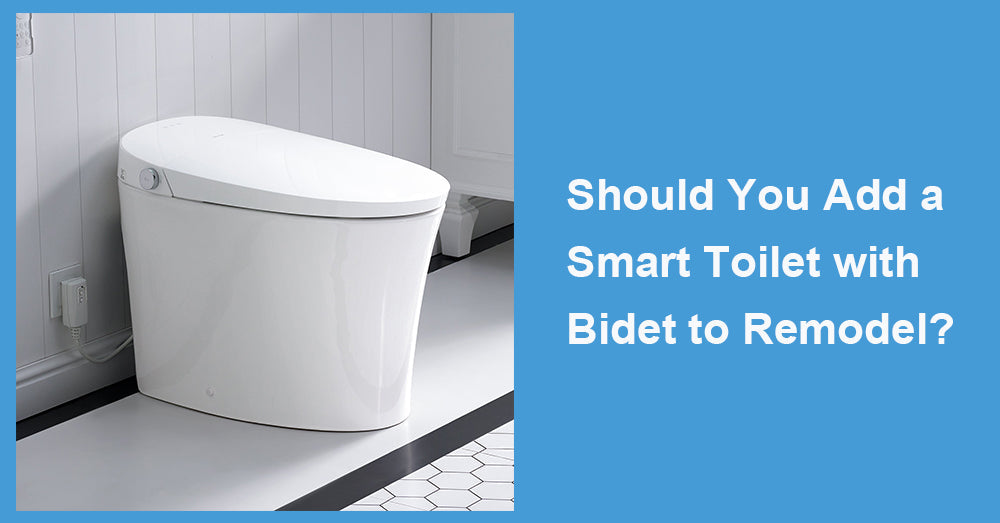
If you're renovating your bathroom, budget and choices often boil down to one question: Which upgrades truly enhance your experience? Among the many "high-end-looking" options, the smart toilet with bidet is the most hesitation-inducing—it's pricey, feature-rich, and installation-dependent. Yet it might just be the upgrade you use daily after renovation, one that feels increasingly worthwhile over time.
This article will help you decide whether to add a smart toilet with a bidet to your renovation list by examining practical usage, household needs, installation requirements, budget-to-benefit ratio, and common pitfalls to avoid.
What "pain points" does a smart toilet with a bidet actually solve?
Many assume smart toilets are just "toilets with a spray nozzle." But the features that truly deliver lasting satisfaction typically include:
Enhanced Cleanliness & Comfort:
Sitz bath cleansing surpasses paper wiping for thoroughness, offering particular benefits for sensitive skin, hemorrhoids, postpartum recovery, and mobility-impaired seniors. For many households, this represents the core "experience upgrade."
Daily Convenience:
Features like auto-flush, auto-lid open/close, night lights, odor elimination, and self-cleaning nozzles eliminate minor hassles. The benefits are especially noticeable for nighttime bathroom visits, children learning to use the toilet, or those who prefer to "touch as little as possible" in public restrooms.
Winter Comfort:
Heated seats, warm water cleansing, and warm air drying are features you'll never want to go without once you try them. This is particularly evident in northern regions or during cold winter months.
Healthier Household Habits:
For families with hygiene-conscious members or children developing toilet habits, a smart toilet with a bidet transforms bathroom experiences into "cleaner, fresher, and less awkward" routines.

Which Households Benefit Most?
You may not "need" a smart toilet, but these households typically "never regret installing one":
Households with elderly members: Slower mobility and difficulty bending make thorough cleaning and safety paramount
Families with new mothers: Gentle cleansing is especially crucial during postpartum recovery
Individuals with sensitive skin or hemorrhoids: Noticeably enhanced comfort
Households with children: Night lights, auto-flush, and hygiene management simplify care.
Quality-of-life enthusiasts: Those who view the bathroom as a "daily relaxation space."
Perennially cold regions: Heated seats + warm water cleansing offer a transformative experience.
Conversely, if you're doing a "light remodel," have a very tight budget, or your bathroom isn't suitable for electrical/plumbing modifications, consider an "upgraded bidet seat" as a transitional solution.
Installation Requirements You Must Verify First (Avoid Buying Only to Discover It Won't Fit)
Successful installation of a smart toilet with a bidet hinges on three factors: electricity, space, and plumbing/drain specifications.
(1) Is there an outlet? Is its location suitable?
Most smart toilets require power, typically 110V (US) or the standard voltage for your region.
Ideal scenario: An outlet with GFCI protection/splash-proof design (or compliant with local codes) is located next to the toilet.
Reality check: Many older bathrooms lack pre-installed outlets, requiring an electrician to run new wiring or add an outlet.
Recommendation: Adding outlets during renovation is most cost-effective and aesthetically pleasing; retrofitting after completion is cumbersome and may damage tiles.
Is there sufficient space on both sides of the toilet?
Smart toilets are generally wider and longer than standard models. Exercise caution if your bathroom is compact, walls are close on both sides, or the door swing may hit the toilet.
When measuring dimensions, check not only the drain hole spacing but also the clearance on both sides, front clearance, and the door swing path.
(3) Does the drain hole spacing/connection match?
Common drain hole specifications vary by region (e.g., 12 inches, 10 inches). You must confirm your home's drain outlet specifications match the product's requirements. Otherwise, adapters or relocation may be necessary.
Is installing a smart toilet with a bidet worth it? Focus on "usage frequency" rather than "number of features."
Many renovation decisions get hijacked by "cost-effectiveness." But bathroom upgrades are better judged by one standard: How many times a day will you use it?
Smart toilets fall under "high-frequency experience upgrades."
You could splurge on a high-end bathtub used twice yearly, or allocate that budget to a daily-use toilet. For most households, the value of a smart toilet with a bidet lies in:
Daily, repeated use (by the entire family)
Long-term accumulation of comfort and hygiene improvements
Ongoing support for seniors, pregnant/postpartum individuals, and sensitive users
Amplified sense of well-being during winter months
If your home has only one bathroom, this upgrade offers greater value; if you have multiple bathrooms, prioritize installing it in the master bathroom.
Buying a full smart toilet vs. installing a bidet seat first: How to choose?
Option A: Replace with a full smart toilet with a bidet
Suitable for: Those undergoing major renovations, planning electrical upgrades, or seeking an integrated experience
Pros: More unified appearance, complete functionality, better stability, and a more "integrated" experience
Note: Higher cost, stricter requirements for dimensions and installation conditions
Option B: Install a bidet seat (smart toilet seat cover) first
Suitable for: Those on a tight budget, renting, or unwilling to undertake major electrical/plumbing modifications
Pros: Lower cost, faster installation, serves as a "trial experience."
Note: Less streamlined appearance than integrated units; limited functionality (e.g., auto-lid, foot-activated flush)
If you're undecided, start with a bidet seat cover; but if you're committed to long-term use during renovation, opting for a smart toilet with a bidet often saves the hassle of future upgrades.
Key Parameters for Selecting a Smart Toilet with Bidet (Don't Just Focus on "Features")
Many products boast extensive features, but focus on these core metrics:
Cleaning Experience: Water temperature range, nozzle material, self-cleaning nozzle, adjustable spray pressure levels
Comfort Features: Consistent seat heating, effective warm air drying, soft night light
Hygiene & Odor Control: Effective deodorization method, antibacterial seat/nozzle material specifications
Flush System: Water-saving capability, ability to flush during power outages (some support manual/emergency modes)
Noise Control: Flush and drying noise levels (critical for small apartments at night)
After-Sales & Accessories: Ease of replacing filters, nozzles, remote controls, seat covers, etc., and clear after-sales support
Dimensions & Toilet Bowl Compatibility: Don't skip this step—measure before buying
Key Advice:
Don't pay for "gimmicky features." Prioritize your budget for cleaning performance, reliability, and safety-compliant electrical design.
7) Common Pitfalls to Avoid
Misconception 1: More features = better
More features mean more potential points of failure. Prioritize reliability and usability over "impressive specs on paper."
Misconception 2: Focusing only on appearance, not dimensions
Bathrooms are "millimeter-level spaces," especially compact ones. Poor sizing directly impacts usability.
Misconception 3: Ignoring power sources and standards
Temporary power strips, poorly placed outlets, or a lack of waterproofing/leak protection are hazards. Get it right during renovation.
Misconception 4: Comparing only price, not after-sales service
Smart products inevitably require maintenance over time. After-sales support, spare parts availability, and warranty terms are crucial.
Conclusion: Should you install a smart toilet with a bidet during renovation?
If you meet any two of the following criteria, installation is highly recommended:
• Currently undergoing structural renovation, allowing for pre-wiring/outlet installation
• Household members with high hygiene/comfort requirements (elderly, pregnant/postpartum, sensitive individuals)
Your region experiences cold winters with frequent nighttime bathroom visits.
The bathroom is a high-frequency use space (primary/only bathroom)
You're willing to invest in "daily perceptible improvements."
If the budget is tight or conditions are uncertain, start with a bidet seat. Upgrade to a full unit after confirming the experience meets your needs.









































Leave a comment
This site is protected by hCaptcha and the hCaptcha Privacy Policy and Terms of Service apply.