






















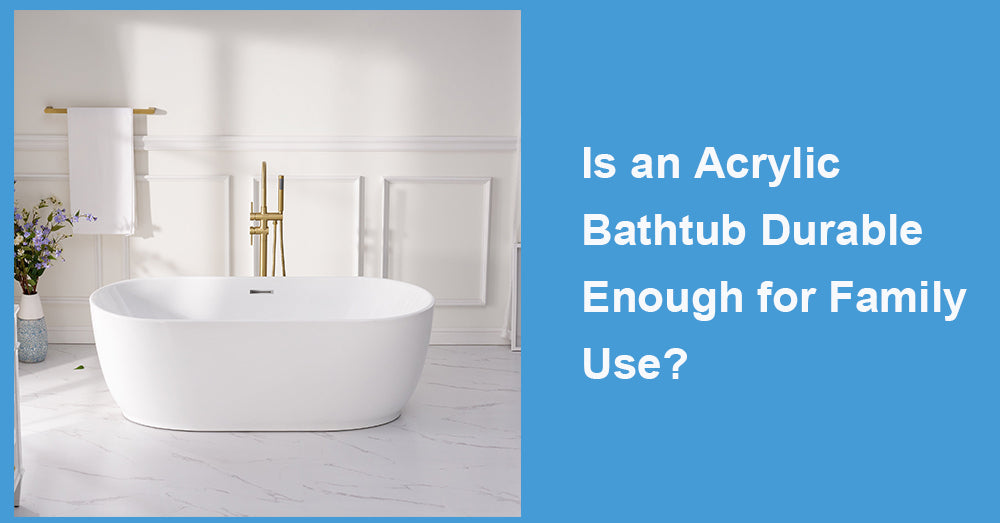
Many families agonize over this during renovations: Are acrylic bathtub durable enough? Will they crack if a child jumps in, turn yellow after a few years, be difficult to clean, or scratch easily? Let's get straight to the point: Choosing an acrylic bathtub with the right specifications and construction can easily meet the long-term needs of most households. The key lies not in the “material name,” but in “material thickness + reinforcement method + installation foundation + daily maintenance.”
To put it plainly: acrylic bathtubs aren't inherently flimsy—it's the “huge variation in quality” that matters. Durability hinges on whether the back reinforcement is solid, the bottom support is adequate, the tub's overall rigidity is sufficient, and whether it was installed level with even weight distribution. Household use involves long-term water weight, impact from children splashing, hot water temperature fluctuations, and exposure to cleaning agents. Therefore, the real focus shouldn't be on whether it's “called acrylic,” but whether this specific acrylic bathtub's structure can withstand frequent daily use.
Why acrylic bathtubs appear “lightweight” doesn't equate to “poor durability”
The main body of an acrylic bathtub is typically formed by heating acrylic sheets, reinforced with backing support (commonly fiberglass/resin or composite). While lighter than cast iron or quartz stone tubs, this “lightness” often translates to:
Reduced load on floor slabs (especially for second-floor or older homes)
Easier installation and handling, lower renovation costs
A softer surface feel and better heat retention (less “chilly” at the same water temperature)
True durability hinges on three factors: the surface wear layer + the strength of the backing support + the overall rigidity of the tub structure. This explains why acrylic bathtubs can vary significantly in price and lifespan despite sharing the same name.
What does “durability” mean for household use?
In home settings, “durability” typically encompasses four aspects:
Impact resistance: Withstands children playing, dropped toys, and occasional bumps without cracking.
Deformation resistance: Maintains shape under full water weight, human weight, and long-term use without noticeable sagging or squeaking.
Scratch resistance and repairability: Fine scratches from routine cleaning, fingernails, pets, or bath stool friction are manageable and can be polished out.
Aging and yellowing resistance: Resists yellowing or dulling under prolonged exposure to hot water, cleaning agents, and sunlight.
On these four points, a quality acrylic bathtub typically offers “adequate performance at a good value”—provided you know how to choose.

Focus on these 4 “hard metrics” during selection to immediately distinguish durability differences
(1) Acrylic sheet thickness and surface quality
Thicker sheets are less prone to “softness under pressure and edge cracking.” While you may not measure with a ruler, assess through brand specifications, cross-section descriptions, weight feel, and reputation. Excessively light, thin, or abnormally low-priced options often compromise durability.
(2) Back Reinforcement: Fiberglass/Resin Layers & Structural Support
Durable acrylic bathtubs feature robust back reinforcement and even load distribution. Key considerations:
* Multi-layer reinforcement (not just a thin layer)
* Structural support or full-bottom reinforcement (more stable than “point support”)
Whether it includes a matching base frame/legs and a secure drain assembly
(3) Testing the tub's “overall rigidity”: Pressing and tapping (more intuitive in person)
Press the tub walls and bottom with your hand. If it feels noticeably “springy” or soft, or if you can press down a large area, it may be more prone to deformation or developing squeaks over time. Tap it and listen for sound—a hollow-sounding tub often lacks sufficient support.
(4) Installation foundation: Floor leveling and load-bearing surface
Many attribute issues to bathtub quality, but installation is often the root cause: uneven floors, uneven load distribution, or suspended bases accelerate cracking and deformation. For long-lasting home use, installation accounts for half the battle: proper leveling, secure fixation, thorough sealing, and adequate drainage slope are essential.
How long can an acrylic bathtub last in a home setting?
Under normal use and proper installation, a high-quality acrylic bathtub typically provides reliable service for many years. Key factors affecting its lifespan include:
* Regular use of harsh, corrosive cleaners (strong acids/alkalis, bleach-based formulas)
Whether it's exposed to prolonged sunlight (near windows without shade)
Whether it's frequently struck by hard objects or cleaned with metal brushes
Whether it was installed with insufficient support or a suspended base
In other words: Durability isn't determined by “how many people use it,” but by “usage intensity + structural integrity and installation.”
Will it scratch? What if it gets scratched?
Acrylic surfaces are indeed more prone to fine scratches than porcelain enamel or cast iron, but its advantages are:
- Scratches are often inconspicuous (especially on white and matte finishes)
- Minor scratches can be gradually repaired using specialized polishing wax or fine-grit sandpaper
- Localized repairs are typically less costly than extensive fixes on other materials
Home recommendations: Clean with sponges or soft cloths; avoid steel wool. Choose soft-rubber bath toys. Use non-slip mats for pet bathing but wash regularly to prevent mold.
“Durability Selection Checklist” for Home Users
If you want an acrylic bathtub better suited for home use—especially households with children—prioritize:
Models with clear reinforcement and full-bottom support (solid bases offer greater stability)
Thick-edged designs with firm walls that resist flexing
Surfaces with easy-clean finishes and superior stain resistance (reduces stubborn mineral buildup)
Reliable drain components with clear after-sales support (high-frequency household use makes accessories critical)
Installation by experienced professionals to ensure leveling and even weight distribution
Conclusion: Is It Worth Choosing for Home Use?
If you seek “superior durability that lasts decades without shifting,” cast iron or premium composite materials certainly excel—but they come with higher costs, weight, and installation demands. For most households, choosing an acrylic bathtub with the right structure and installation strikes an excellent balance of durability, comfort, and value: it offers good heat retention, is easy to maintain, can be repaired if lightly scratched, and fully meets daily bathing needs for the whole family.









































Leave a comment
This site is protected by hCaptcha and the hCaptcha Privacy Policy and Terms of Service apply.