




















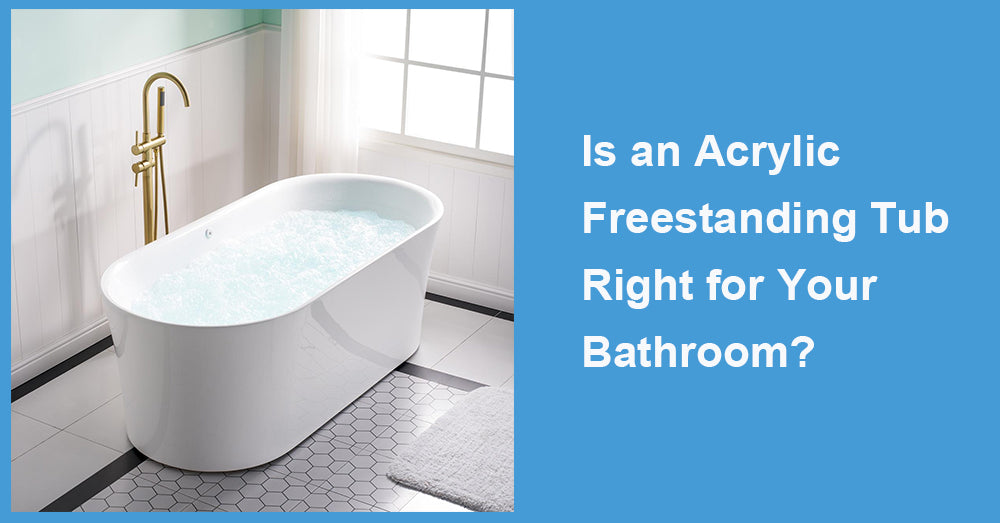
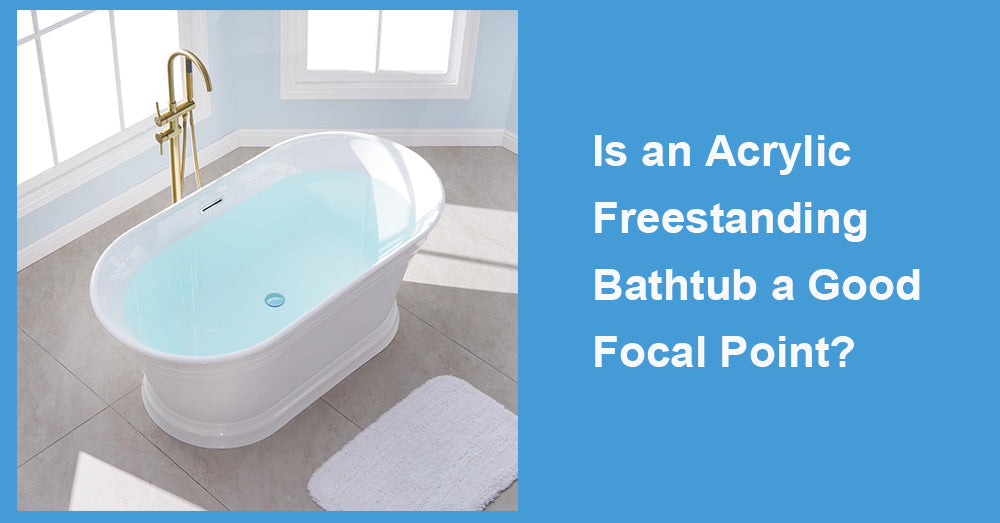
In recent years, acrylic freestanding tub have gradually shifted from a "design symbol" to a more rational, popular functional choice in bathroom upgrade discussions. Compared to embedded or wall-mounted bathtubs, freestanding bathtubs offer greater degrees of freedom in spatial expression, flow layout, and user experience. At the same time, acrylic materials provide a relatively balanced combination of weight, insulation, and manufacturing costs. From an industry perspective, whether this type of bathtub is genuinely suitable for your bathroom does not depend on its popularity, but on the degree of alignment between spatial conditions, structural load-bearing capacity, frequency of use, and long-term maintenance expectations.
1. The spatial scale is the first step in determining the feasibility of a standalone bathtub
In actual renovation projects, more than half of the bathtub installation problems are not due to product defects, but rather due to insufficient space assessment in the early stage. Although independent bathtubs are visually more "free", they have stricter requirements for flow, safety spacing, and drainage layout.
At present, the external length of mainstream acrylic freestanding bathtubs is concentrated between 55-71 inches, with 59-63 inches being the most common range; the width is usually between 27-32 inches, and the height is usually 22-24 inches. Industry advice is to reserve at least 24 inches of activity space on both sides of the bathtub, and the width of the front passage should not be less than 36 inches, to ensure safe access and convenient daily cleaning. When the bathroom's clear width is less than 60 inches, a freestanding bathtub can compress other functional areas, significantly reducing space efficiency.
2. Industry positioning of acrylic material in an independent bathtub system
In the existing independent bathtub material system, acrylic is at the core of "highly adaptable materials". Industry data shows that in new construction and renovation projects, acrylic material use in freestanding bathtubs has reached nearly two-thirds.
Compared with cast iron, artificial stone, or composite stone, the most significant advantage of acrylic is weight control. The self-weight of a standard-sized acrylic freestanding bathtub is usually 80-110 pounds, while cast iron bathtubs of the exact specification often exceed 300 pounds. This difference directly affects the evaluation of floor load-bearing capacity, transportation difficulty, and construction period. In the renovation of multi-story residential buildings or old houses, lightweighting often becomes the decisive factor.
In terms of structural design, high-quality acrylic bathtubs usually use multi-layer composite technology: the surface molding thickness is about 3-4 mm, and the back is reinforced with glass fiber and resin layers to meet industry standards for overall rigidity. Under full water and load conditions, the bottom deflection is usually controlled to within 1/16 inch, which meets long-term usage requirements.
3. Realistic performance of insulation ability and tactile experience
One of the core indicators of bathtub comfort is the ability to maintain water temperature. Industry tests have shown that under the same environmental conditions, the water temperature drop in acrylic bathtubs within 30 minutes is usually 3-4 °F, while thin steel bathtubs often exceed 7 °F, and cast iron bathtubs are controlled within 2-3 °F. Although acrylic is slightly inferior to cast iron, it is clearly superior to metal thin-walled bathtubs.
On the tactile level, the initial surface temperature difference of acrylic is relatively small, and it will not produce a significant cold feeling when entering water, which is particularly important during low-temperature seasons. Meanwhile, its high-gloss polished surface effectively reduces the adhesion of scale and soap deposits, making daily cleaning relatively easy.
4. Size selection and ergonomic matching relationship
The size selection for a freestanding bathtub is not necessarily better; it should be based on the user's height and sitting habits. The commonly used industry advice is:
When the user's height is below 65 inches, it is recommended that the bathtub length be 55-60 inches; for heights in the range of 65-70 inches, it is recommended that the length be 60-66 inches; if it exceeds 70 inches, the 67-71 inch specification can be considered.
The effective lying length inside is usually 6-10 inches shorter than the external length, and the water depth (to the overflow outlet) is concentrated in the range of 13-16 inches. Research has shown that when the water depth is below 12 inches, the proportion of trunk immersion is insufficient, and the relaxation effect significantly decreases; if it exceeds 17 inches, it poses a challenge to standing up safely. Therefore, moderate water depth has become the current mainstream design orientation.
5. The impact of installation structure on stability and later use
Although the freestanding bathtub is visually detached from the wall, it still heavily relies on the bottom support system at the structural level. Currently, acrylic bathtubs mostly use a single load-bearing bottom plate combined with 4-6 adjustable support legs, with a designed load-bearing capacity typically in the range of 800-1000 lb, which can cover the extreme working conditions of full water and double use.
In terms of drainage structure, central drainage and tail drainage are two mainstream solutions. Central drainage is more conducive to dual use and symmetrical layout, while tail drainage is easier to match with existing pipelines when arranged against walls. Industry data shows that in renovation projects, about 60% of users ultimately choose a central drainage structure to reduce the complexity of pipe changes.

6. Long-term performance of durability and maintenance costs
The most common question about acrylic is whether it ages. According to industry lifespan testing data, high-quality acrylic bathtubs typically retain surface gloss for 10-15 years under normal household use conditions. The key to determining the lifespan is not the material name, but the molding thickness and composite reinforcement process.
At the maintenance level, acrylic is highly adaptable to cleaning agents, but products containing abrasive particles or strong solvents should be avoided. Minor scratches can be repaired by polishing, an advantage that stone bathtubs struggle to achieve. From the perspective of a complete lifecycle cost assessment, the comprehensive maintenance cost of acrylic freestanding bathtubs is usually about 30% lower than that of composite stone bathtubs.
7. Proportion of form and spatial design logic
In terms of styling, the hot-forming process of acrylic offers a high degree of freedom. The most popular ratios in the industry currently are approximately 2.1:1 for length-to-width and 0.75:1 for height-to-width. These ratios strike a good balance between visual stability and internal space.
In terms of spatial arrangement, a freestanding bathtub is more suitable for combining with natural lighting, large-scale white space, and clear, dry, and wet zones. Design experience has shown that when the blank area around the bathtub is less than 30% of the overall bathroom area, the spatial focal value will decrease significantly, even disrupting the overall proportion.
8. Which scenarios are more suitable for choosing acrylic freestanding bathtubs
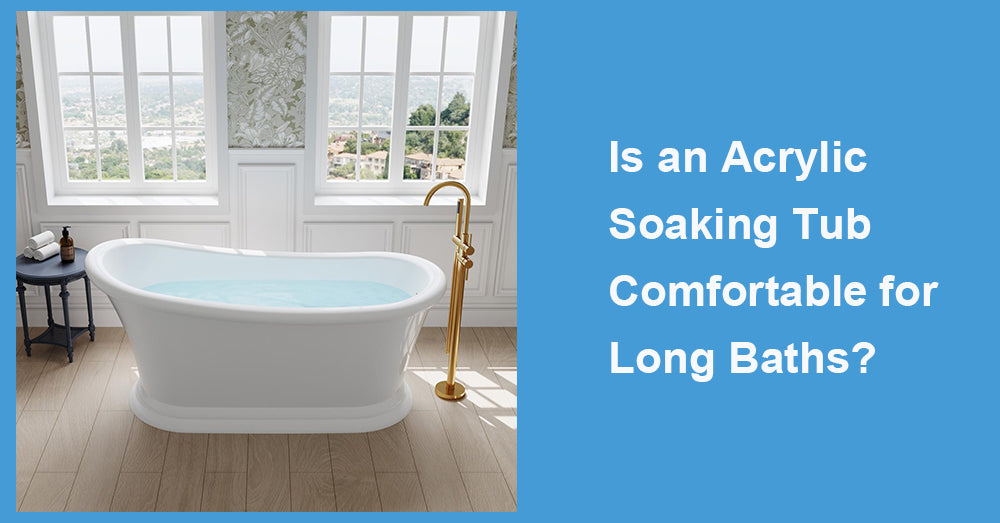
Based on industry practice, acrylic freestanding bathtubs are particularly suitable for the following scenarios: renovation projects with limited structural load-bearing capacity upstairs; families that pursue style expression but have a relatively rational budget; and those seeking a long-term living space that balances insulation and maintenance convenience.
In high-frequency commercial environments or long-term high-load scenarios with multiple people, cast iron or composite stone still has certain advantages in stability and ultimate durability.
9. Rational conclusion: The key lies in system matching rather than material labeling
From an industry perspective, acrylic freestanding bathtubs are not the "most high-end choice" but a highly balanced solution constrained by current residential conditions, construction environments, and aesthetic trends. Its actual value lies not in the material name, but in whether it forms a benign match with your spatial scale, structural conditions, frequency of use, and maintenance expectations.
In the rational logic of bathroom renovation, the most suitable bathtub is never the one with the highest price, but the one that best fits the long-term user experience.






























Leave a comment
This site is protected by hCaptcha and the hCaptcha Privacy Policy and Terms of Service apply.