
















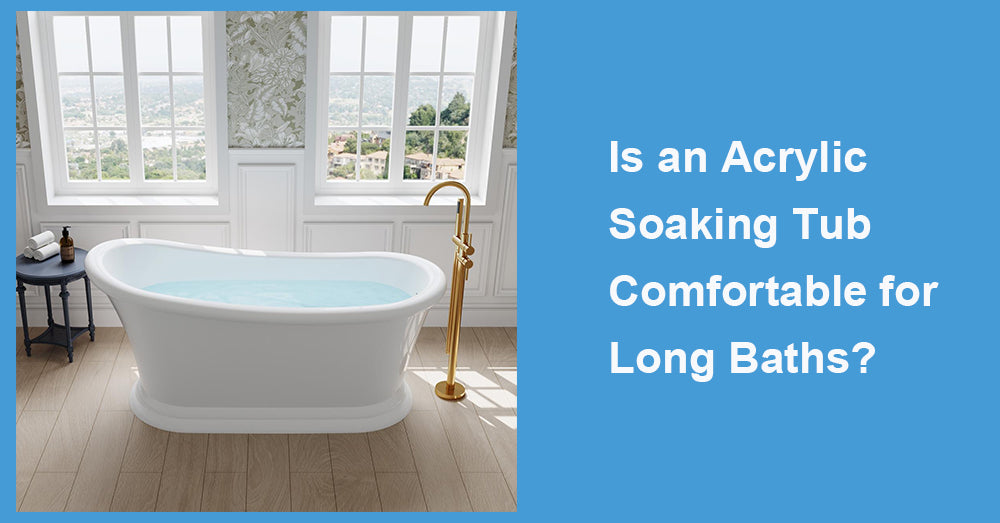
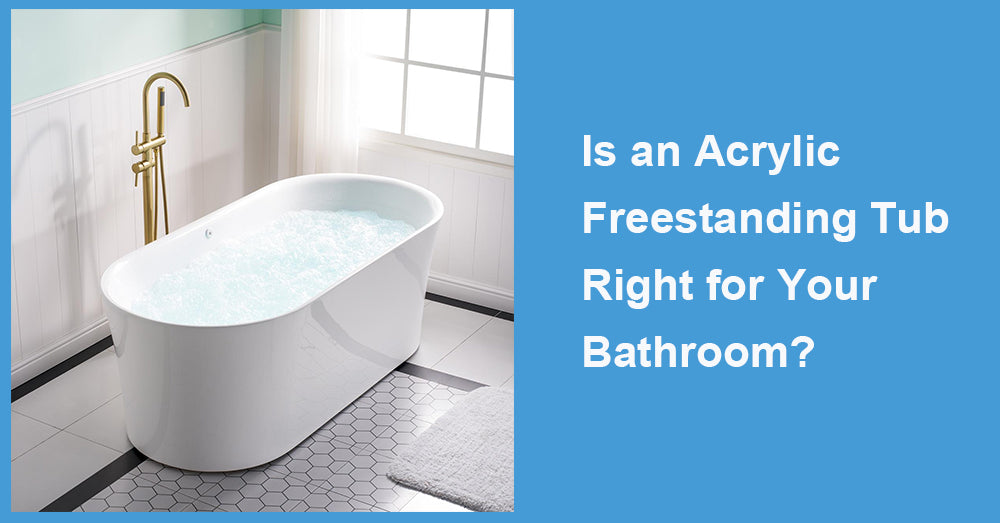
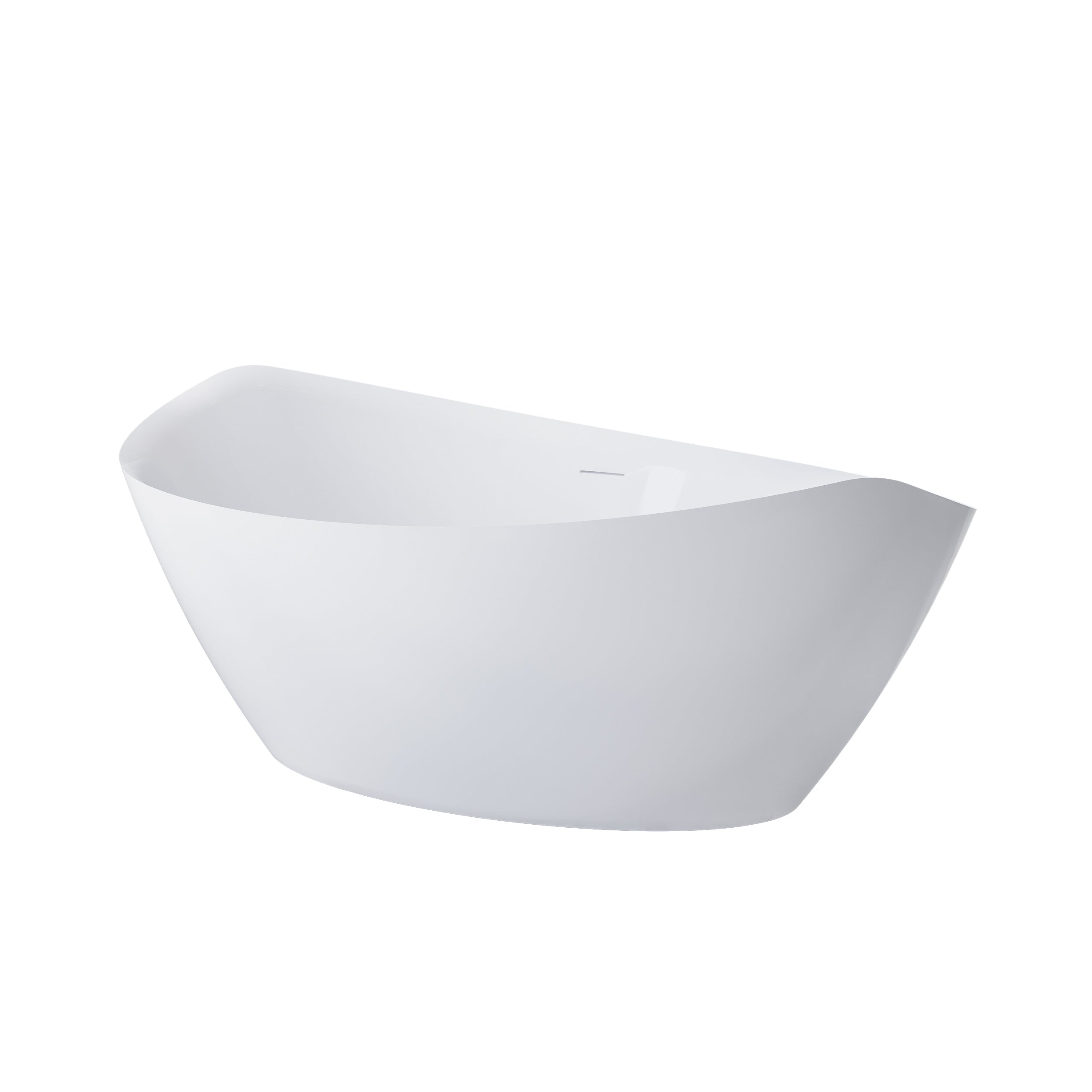
In the pursuit of relaxing experiences and physical and mental recovery in home bathroom design, the acrylic soaking tub is gradually becoming a core configuration in "long-term bath" scenarios. Compared to ordinary sitz baths or functional massage bathtubs, soaking bathtubs emphasize a relaxation posture for the body, stable water temperature, and long-term comfort. From an industry perspective, whether acrylic soaking bathtubs are genuinely suitable for long-term bathing cannot be judged solely based on "light material" and "affordable price", but requires a systematic evaluation from multiple dimensions, such as ergonomic structure, insulation performance, cylinder size, surface feel, and long-term experience stability.
1. The Real Requirements of Long-term Bathing on Bathtubs
In relaxing bathing scenarios, the usage time is usually concentrated between 20 and 40 minutes, and some deep relaxation users may even extend it to more than 60 minutes.
Unlike short-term baths, long-term baths impose stricter comprehensive requirements on bathtubs:
Maintaining a natural posture can sustain relaxation for a long time.
Stable support for the back and waist, less prone to soreness and swelling.
There is no significant compression in the contact area between the shoulders, neck, and legs.
Slow decay of water temperature, avoid frequent hot-water replenishment.
Industry ergonomics research has shown that when the semi-reclining posture lasts for more than 30 minutes, the angle of the backrest and the curvature of the curved surface will directly affect the distribution of spinal pressure. A reasonable soaking bathtub usually controls the backrest angle between 110° and 125°, keeping the lumbar spine and back muscles in a low-load state.
2. The tactile advantages and initial bathing experience of acrylic material
The relatively low thermal conductivity of acrylic material is one of its essential advantages in the field of soaking bathtubs.
In the initial stage of water injection, the surface of acrylic will not rapidly cool down, nor will it absorb surface heat as quickly as metal or stone.
Industry test data show that under the same water-temperature conditions, the initial tactile temperature of the acrylic surface is, on average, about 8-10 °F higher than that of cast iron.
In everyday soaking, bathtubs 60-67 inches long, this gentle touch is particularly noticeable in the contact areas between the shoulders, thighs, and waist, making it easier to enter a relaxed state during bathing.
This is particularly important for people planning a long bath, as the first 10 minutes often set the tone for the rest of the tub.
3. Thermal insulation ability: a key indicator determining whether to soak for a long time or not
The biggest challenge of taking a long bath is maintaining the water temperature.
Modern high-quality acrylic soaking bathtubs usually adopt a multi-layer composite structure, with glass fiber or resin reinforcement layers added to the bottom and side walls of the tank, and some models also add insulation filling layers.
Industry experiments have shown that under the same initial water temperature conditions, the average temperature drop in composite structure acrylic bathtubs within 30 minutes is about 20%-25% lower than that of cast iron bathtubs.
In a 60-72-inch freestanding soaking bathtub, this difference can extend the comfortable soaking time by about 8-12 minutes.
For users who want a bath to last for more than 40 minutes, acrylic materials have significant practical advantages in terms of "temperature maintenance ability".
4. The influence of cylinder depth and internal space on immersive experience
Whether a soaking bathtub is suitable for long-term use largely depends on the adequate soaking depth and the ratio of internal space.
The industry standard for internal water depth is 14-18 inches, so the water level covers the main muscle groups below the chest.
In the 66-72 inch length specification, the ideal internal structure often has:
Adequate width to support shoulders and back, but not excessively expanded.
Smooth the bottom curve to avoid concentrated force on the buttocks.
Central drainage or double backrest layout enhances posture flexibility.
Industry surveys show that when bathtubs are filled to an adequate water depth of 16 inches or more, users' "immersion rating" is significantly higher than for shallow bathtubs, which directly affects long-term soaking satisfaction.
5. Ergonomic curve: the true determination of "comfortable soaking"
The most common discomfort from prolonged bathing is not water cooling but rather soreness in the lower back, neck, or knees.
High-quality acrylic soaking bathtubs usually adopt a multi-stage curved design:
Micro curvature of the back area conforms to the spinal curve.
Natural lifting of the shoulder and neck area reduces neck suspension.
Extend the leg area to avoid knee pressure on the cylinder wall.
Industry tests have shown that after 45 minutes for continuous soaking in a bathtub with ergonomic curves, the fatigue index of the lower back muscles is significantly lower than with a flat inner liner.
In medium-length bathtubs of 60-67 inches, this curved design is often more effective in improving long-term comfort than simply increasing the water depth.
6. Structural stability and long-term psychological security
During prolonged bathing, the body will adjust its posture multiple times.
The stability of the cylinder body and the bottom support directly affect the psychological sense of security and relaxation level.
High-quality acrylic soaking bathtubs are usually equipped with:
Multi-point bottom load-bearing structure.
Continuous bottom support plate.
Anti-slip bottom texture.
Industry data show that in systems with uniform bottom support, users' "shake perception score" is significantly reduced, helping maintain a sustained relaxation state during prolonged bathing.
This is particularly important for elderly users and long-term bath enthusiasts.
7. Surface skin affinity and long-term stability of use
Acrylic surfaces have high skin affinity, do not cause obvious cold irritation, and do not peel off after aging like glazed surfaces.
Meanwhile, its overall color layer structure makes it less prone to significant color differences after slight wear.
Industry surveys show that in soaking bathtubs that have been used for more than 8-10 years, the "surface comfort retention rate" of acrylic products is significantly higher than that of enamel bathtubs.
This means its long-term experience stability is good, making it suitable for families who frequently take long baths.
8. Which usage scenarios are more suitable for choosing acrylic soaking bathtubs
From a comprehensive experience perspective, acrylic soaking bathtubs are particularly suitable for the following scenarios:
Family users who take multiple baths per week.
People who pursue relaxation and recovery rather than intense massage stimulation.
Small and medium-sized bathrooms require control over weight and installation complexity.
Upstairs space, residential buildings that are sensitive to structural load-bearing capacity.
Under these conditions, acrylic materials often offer an ideal balance of comfort, insulation, and ease of installation.

9. Conclusion: Is an acrylic soaking bathtub really suitable for long-term bathing
From the perspectives of tactile temperature, thermal insulation performance, immersion depth, ergonomic curve, structural stability, and long-term skin-friendly performance, modern high-quality acrylic immersion bathtubs are well equipped to support a long-term bathing experience.
It is not the heaviest or most expensive option. Still, its moderate thermal conductivity, sound insulation, flexible shape, and stable structure make the acrylic soaping tube a highly balanced solution for "long-term relaxation baths".
The true determinant of whether to soak for a long time and comfortably is never the material name, but rather:
Whether the curve is reasonable, the depth is appropriate, the support is stable, and the water temperature is long-lasting.













Leave a comment
This site is protected by hCaptcha and the hCaptcha Privacy Policy and Terms of Service apply.