
















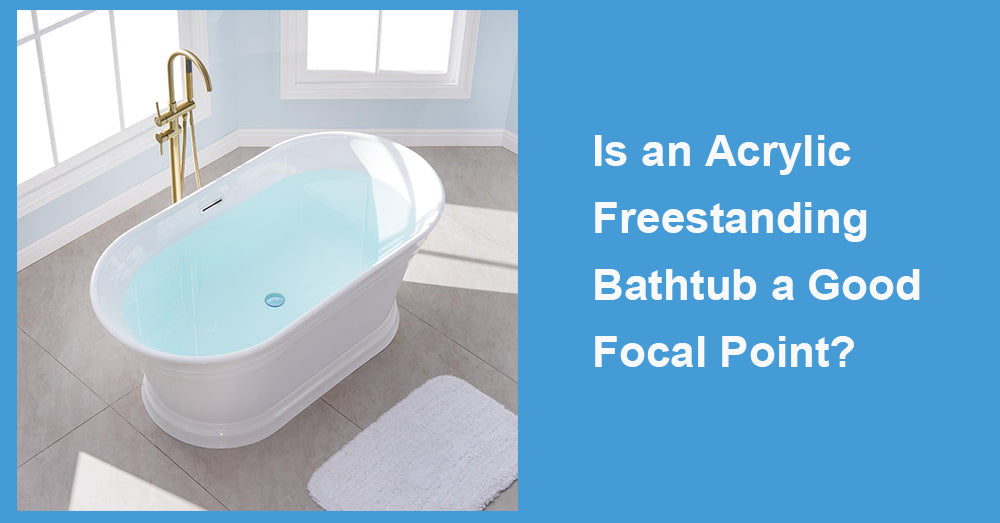
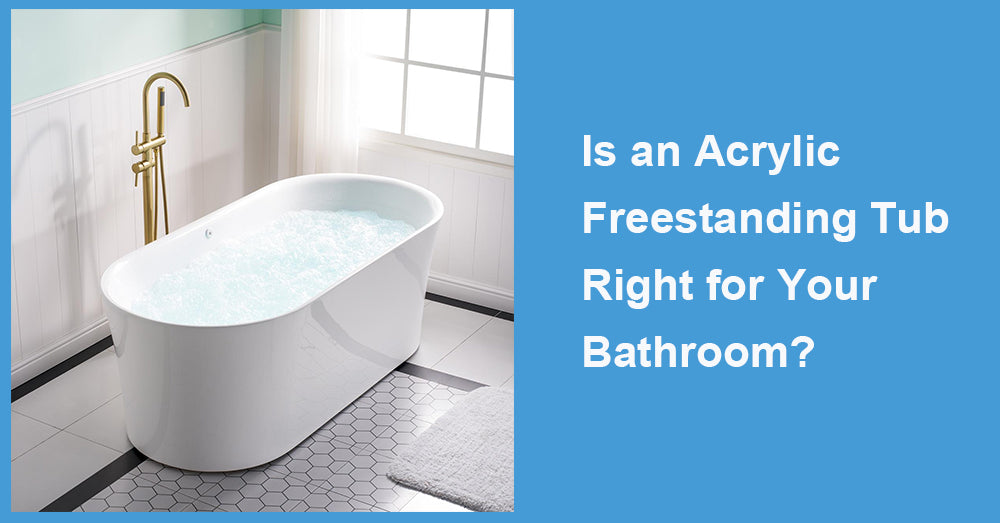
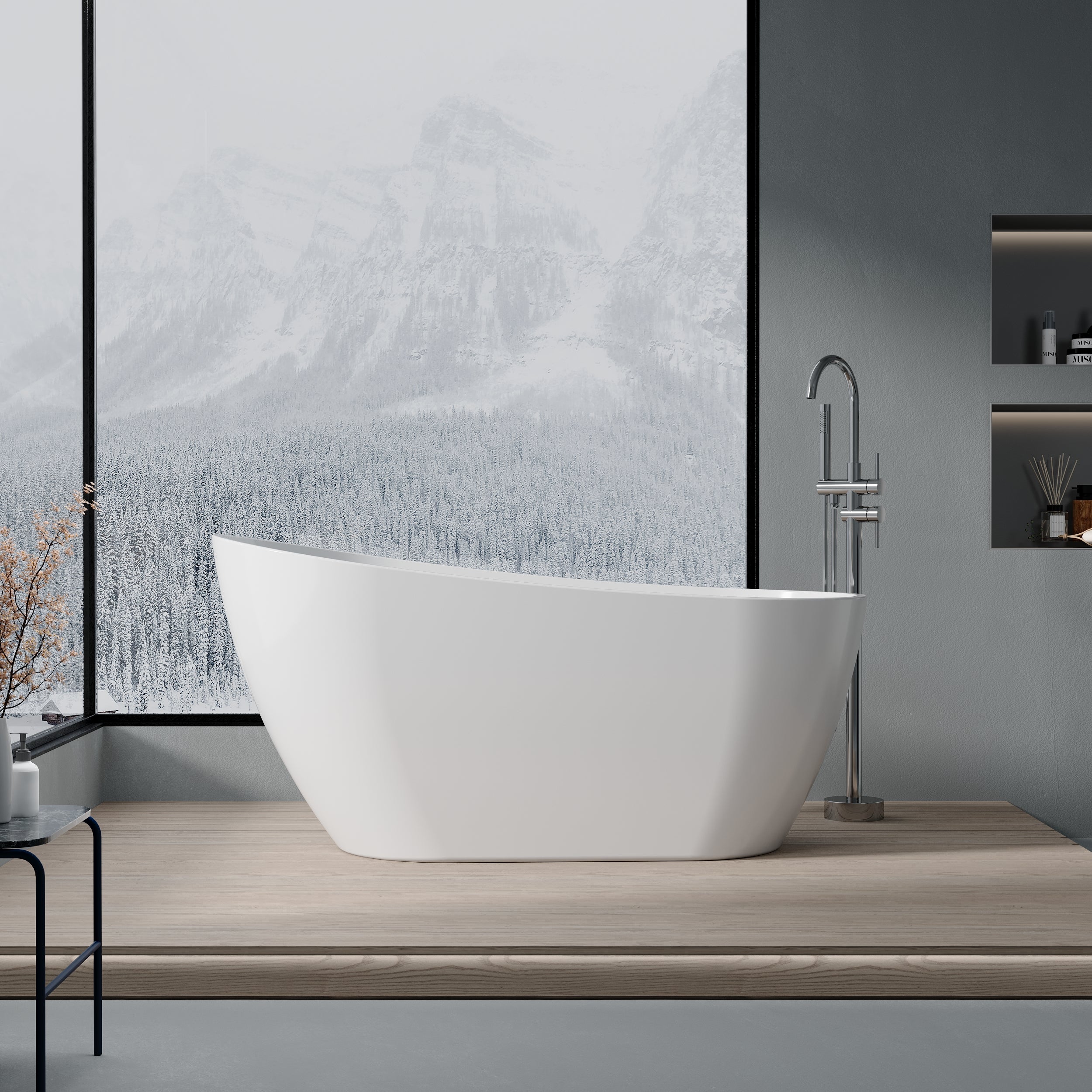
In contemporary bathroom design, acrylic freestanding bathhouses have gradually evolved from simple bathing appliances into the visual core of spatial composition. Compared to embedded or wall-mounted bathtubs, freestanding bathtubs themselves have a stronger sense of presence, and the addition of acrylic material creates a rational balance between weight control, styling freedom, and cost structure for this "visual focus". From an industry perspective, is an acrylic freestanding bathtub really suitable as a focal configuration for bathrooms? This issue is not only about aesthetics but also involves a series of systematic judgments, such as spatial proportions, structural load-bearing capacity, usage logic, and long-term maintenance.
1. Why has the "focal bathtub" become a core design trend in recent years
In past bathroom designs, functional areas were often divided around the shower or washbasin, with the bathtub playing a more auxiliary role. In recent years, with the expansion of the main bathroom area and the maturation of the dry and wet partition logic, bathtubs have gradually been pushed to the core of spatial composition.
Industry research data shows that in high-end and mid to high-end residential renovation projects, about 48% of design schemes use independent bathtubs as the primary visual nodes to enhance spatial axis and hierarchy. Among them, the frequency of freely placed bathtubs has more than doubled in the past decade. This change is not simply an aesthetic trend but stems from improvements in layout capabilities and the maturity of structural construction techniques.
2. The industry position of acrylic material in the "focal bathtub."
Acrylic plays a vital role in the bathtub material system, serving as a spatial focal point. Compared to cast iron, composite stone, or natural stone, the advantage of acrylic lies not in its sense of weight, but in its ability to express its shape and adapt to its structure.
Industry statistics show that in recent years, the proportion of acrylic material used in independent bathtub projects has approached 60%, far higher than for stone and cast iron. The core reason lies in the controllability of weight and construction risks. A standard-sized acrylic freestanding bathtub typically weighs 80-110 pounds, while a cast iron product of the same size often weighs over 300 pounds. For the main bathroom space located upstairs, this difference directly determines whether additional structural reinforcement is needed.
At the same time, the hot-forming process of acrylic provides greater freedom in curve proportions, edge thickness, and overall shape, which is particularly important for "focal type" components.
3. As the visual center, there are stricter requirements for size and proportion
When the bathtub is set as the focal point of the space, its size will directly affect the overall proportions. Industry experience shows that the most common focal type bathtubs are concentrated in the length range of 60-67 inches, with a width of 28-32 inches and a height of approximately 22-24 inches.
In terms of spatial relationships, designers usually follow the following principles: the outer contour length of the bathtub should not exceed 65% of the length of the wall where it is located, at least 24 inches of visual space should be left on each side, and the width of the main channel in front should not be less than 40 inches. If the bathtub is too large or too close to the wall boundary, its "focus" attribute will be weakened, creating a sense of oppression.
Research shows that when the aspect ratio of the bathtub to the space is controlled within the range of 1:2 to 1:2.5, its visual stability and centrality are most ideal.
4. The degree of freedom in design determines the focal expression
In the design logic of focal components, shape is often more decisive than material. One of the most significant advantages of acrylic is its high styling flexibility.
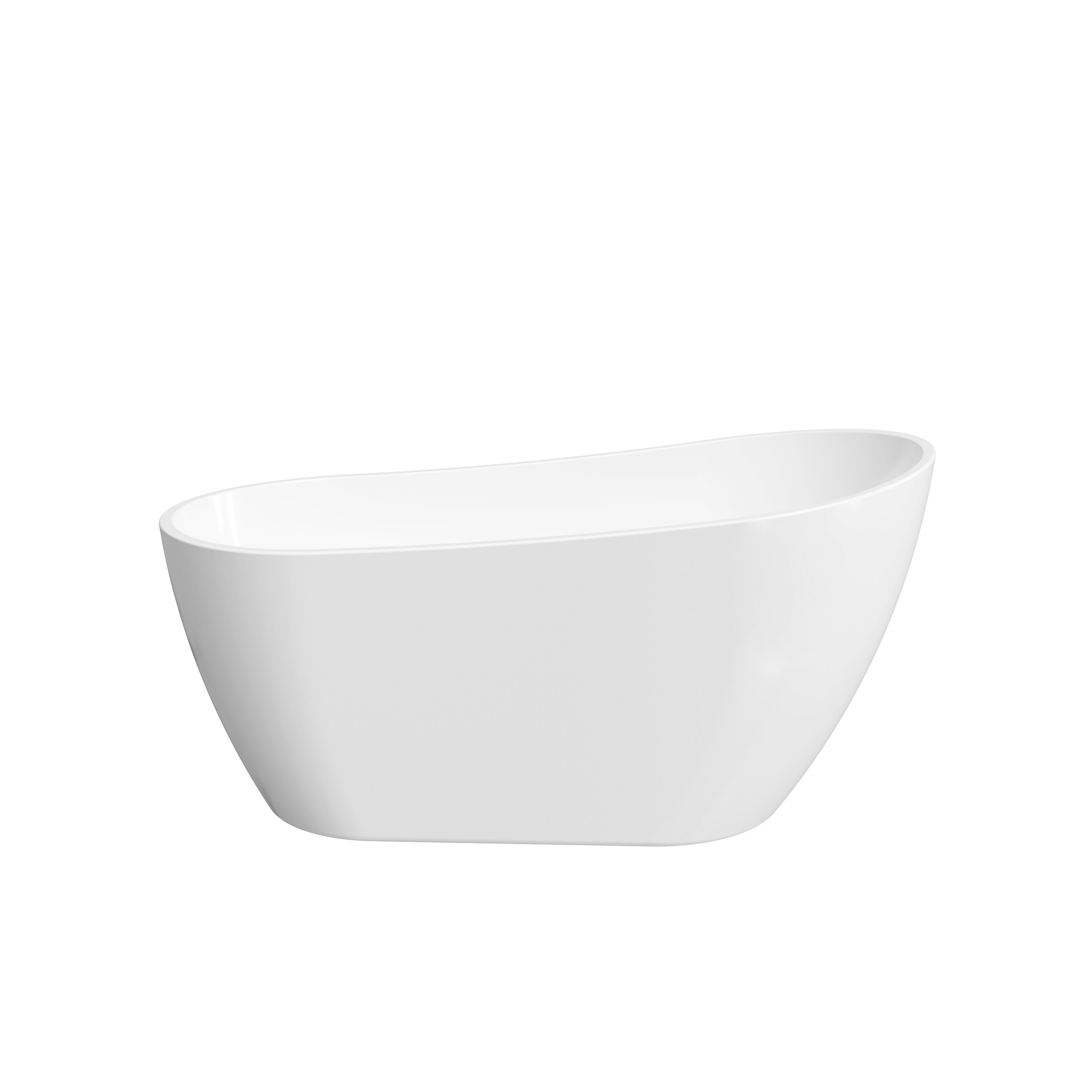
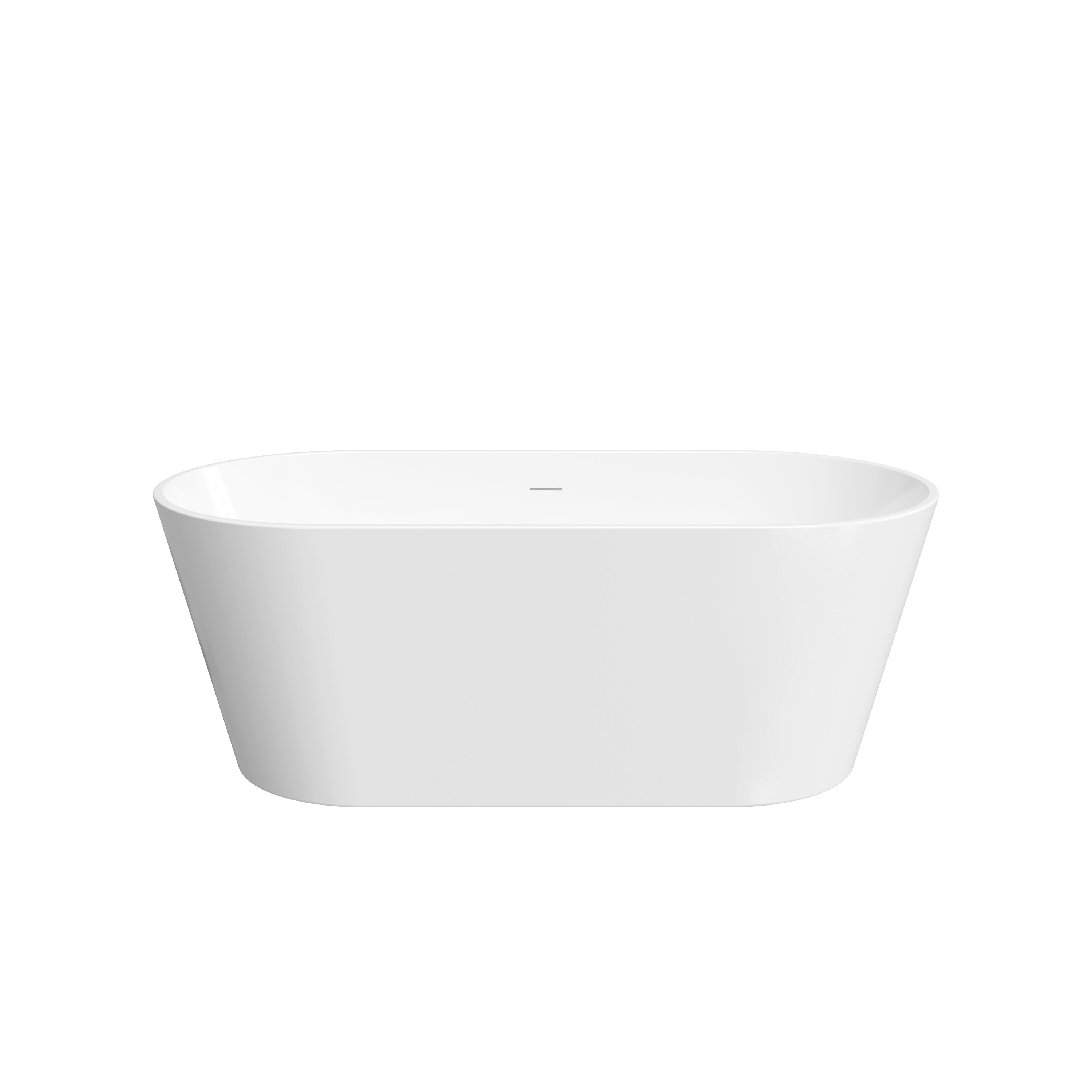
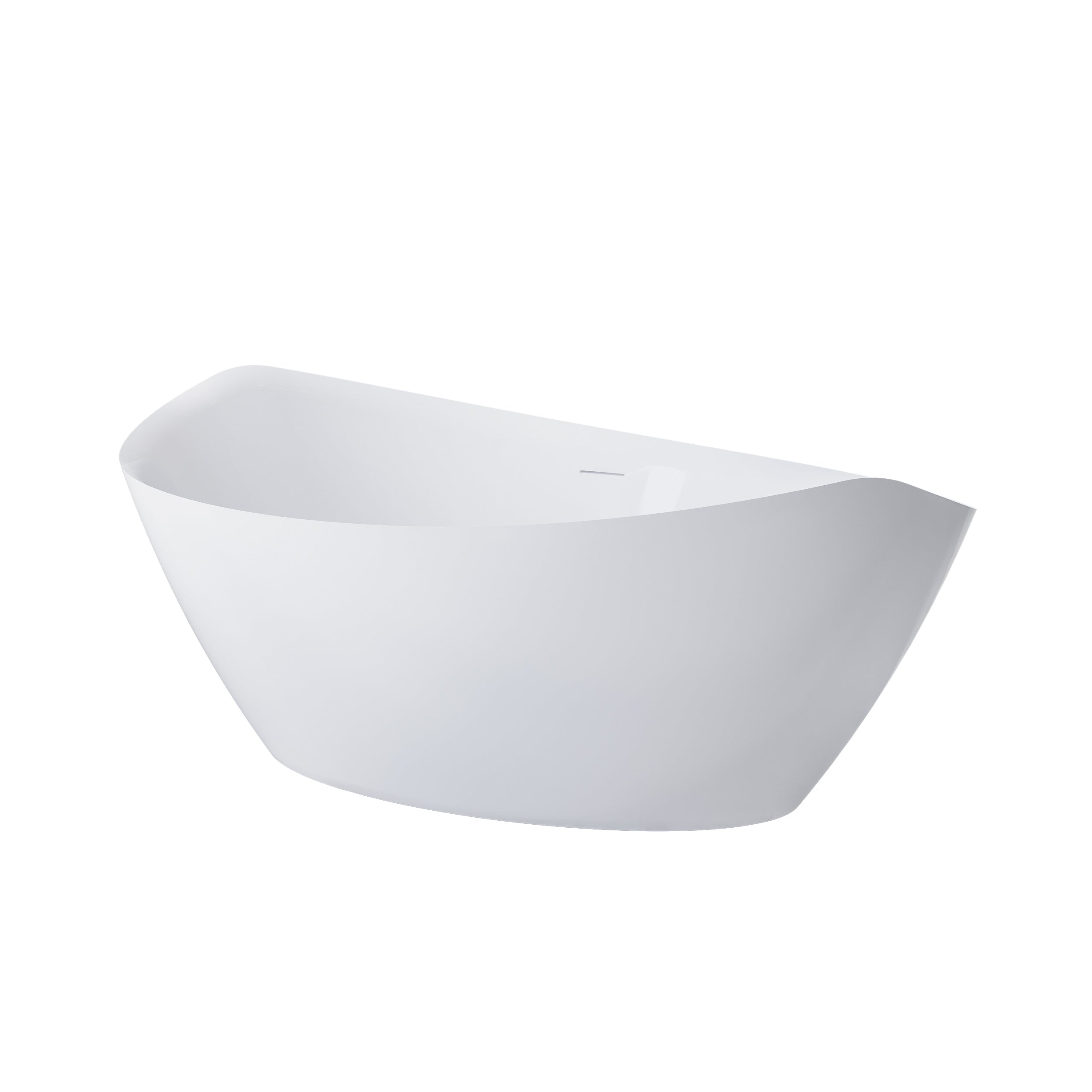
The most common focal shapes currently include classic ellipses, ship-shaped curves, symmetrical geometries, and lightweight edge shapes. Among them, the most popular ratio in the industry is "aspect ratio of about 2.1:1, aspect ratio of about 0.75:1", which achieve a good balance between visual stability and internal space.
Compared with the thick stone frame, acrylic can achieve a thinner edge treatment, making the bathtub contour lighter, which is particularly advantageous in large blank spaces.
5. The decisive influence of the relationship between light, position, and background on the focal effect
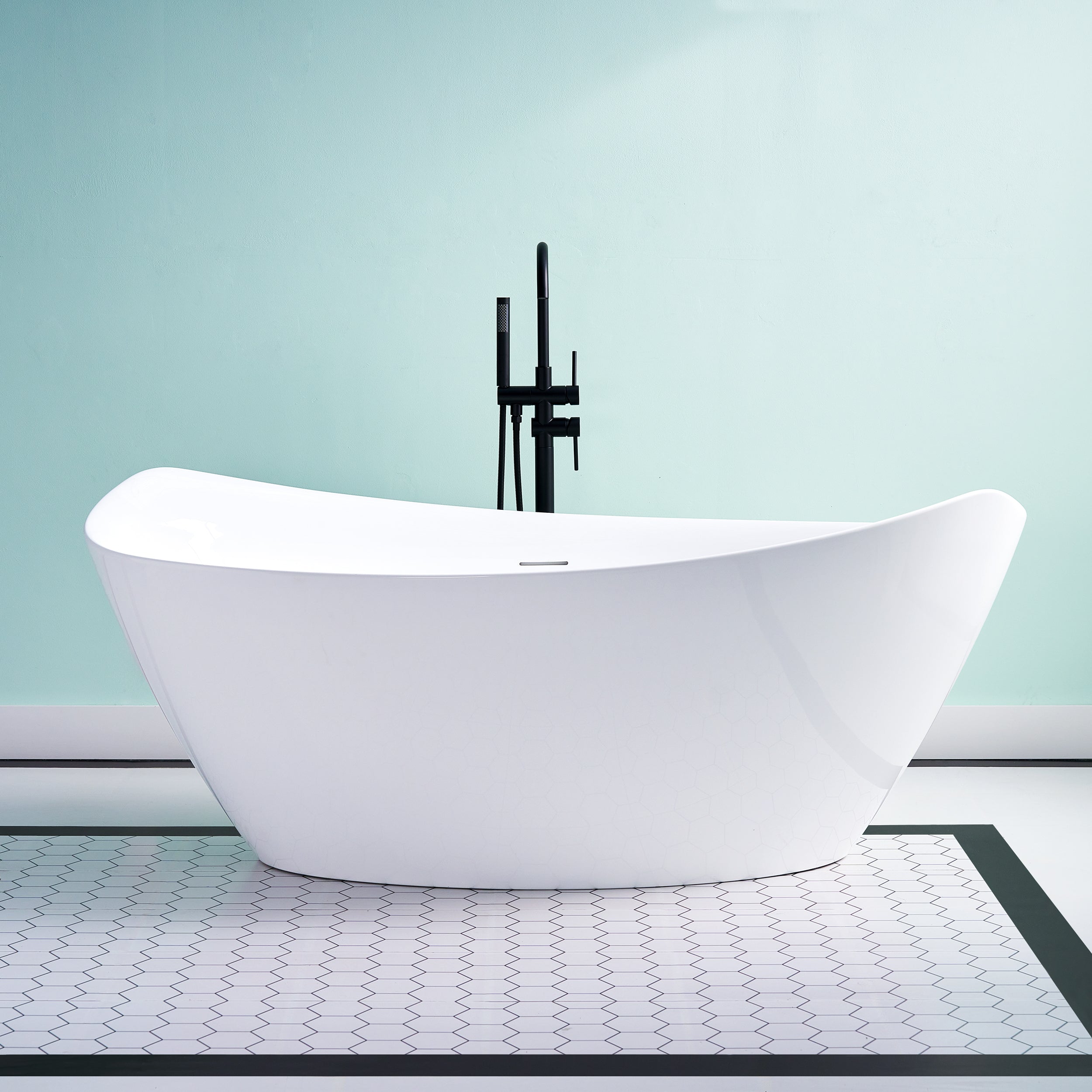
The focus is not only determined by the product itself, but also by its relationship with the environment. In practical projects, the most common focal positions for freestanding bathtubs include the window axis, the spatial end view, and the junction of the dry and wet zones.
Design practice has shown that the visual focusing effect is ideal when the bathtub axis coincides with the main entrance line of sight, and the background blank area is at least 70% of the wall height. If the background is too complex or there are too many decorative elements, the focus effect will be significantly weakened.
In terms of lighting, natural side or top diffuse light can significantly enhance the three-dimensional effect of the bathtub contour. Industry tests have shown that under flexible illumination conditions of 300-400 lux, acrylic surfaces exhibit the highest reflection uniformity and are less prone to producing high-gloss spots.
6. The structural stability and long-term appearance of the focal bathtub
When the bathtub becomes the visual core of the space, its stability and long-term form maintenance are crucial. High-quality acrylic bathtubs usually adopt a multi-layer composite reinforcement structure, with a single load-bearing bottom plate and 4-6 adjustable support feet at the bottom. The designed load-bearing capacity is generally 800-1000 lb.
In long-term use, the industry standard for maximum allowable bottom deflection is usually set at 1/16 inch. Exceeding this range may cause changes in the contour lines, thereby affecting the visual effect. Therefore, in focused applications, the requirements for product grade and installation process are significantly higher than those for ordinary functional configurations.

7. The Influence of Durability and Surface Condition on "Focus Value."
As the visual center, the long-term stability of the bathtub surface directly determines whether it can continue to serve as the "focal point". Industry lifespan testing shows that high-quality acrylic bathtubs typically maintain their surface gloss for 10-15 years under normal household use conditions.
Compared to stone products, acrylic surfaces can be restored to their appearance by polishing after minor scratches appear, which is particularly important in the application of focal components. From a long-term maintenance cost perspective, the comprehensive maintenance investment for an acrylic focal bathtub is about 30% lower than for natural stone.
8. Which space types are most suitable for using a "focal acrylic independent bathtub"
Based on industry practical experience, the following types of spaces are most suitable for using acrylic freestanding bathtubs as the visual core: spaces with master bedroom bathroom covers exceeding 120-150 square feet; a rectangular bathroom space with a clear axis and end view relationship; a design scheme that emphasizes natural lighting and blank composition.
In compact bathrooms, multifunctional shared spaces, or environments with limited floor height, forcibly setting a focal bathtub often disrupts the balance of proportions and reduces the overall quality of the space.
9. Rational conclusion: Focus value comes from system design, not the material itself
From an industry perspective, acrylic freestanding bathtubs have the potential to become a focal component in bathrooms. Still, their success or failure depends not on material labels but on systematic matching of size ratios, spatial locations, lighting relationships, structural stability, and long-term maintenance.
In rational design logic, the truly excellent focus is never the most expensive component, but the one that best fits the spatial structure and long-term user experience. When the shape, proportion, and environment form a stable collaborative relationship, the acrylic freestanding bathtub can become the most valuable visual center in the bathroom.












Leave a comment
This site is protected by hCaptcha and the hCaptcha Privacy Policy and Terms of Service apply.