
















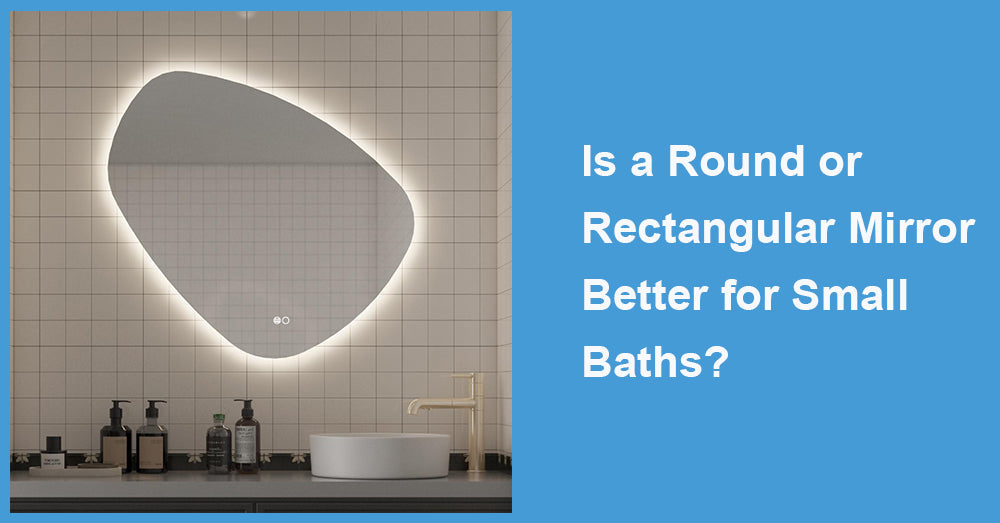
Choosing a bathroom mirror for a small bath is one of those decisions that looks purely aesthetic until you live with it every day. In a compact room, mirror shape affects more than style: it changes how much you can see while grooming, how bright the space feels, and whether the wall looks calm or cluttered. The “better” choice depends on your layout, vanity width, lighting plan, and how you use the space. This guide compares round and rectangular mirrors using practical measurements and research-backed design principles, so you can choose confidently.
1. What Counts as a “Small Bath” (and Why Shape Matters More There)
Many common “small full bath” layouts cluster around roughly 35–40 sq ft, often described as 5' x 7' or 5' x 8'. (Source: Planner 5D average bathroom size guide; Source: HOROW small bathroom layout guide.) In rooms this size, every visual element competes for attention: vanity edges, tile lines, shower glass, doors, and hardware. A mirror becomes a major focal point because it sits at eye level and reflects light.
That’s why shape matters. In a large bath, you can treat the mirror like art. In a small bath, the mirror is both a tool and a space amplifier, and the wrong shape can make the room feel tighter or less functional.
2. The Most Important Difference: Usable Reflection Area
If you strip away style and look only at function, rectangular mirrors usually win for one reason: they deliver more usable reflection area aligned with how people stand at a vanity.
Rectangular mirrors: efficient coverage
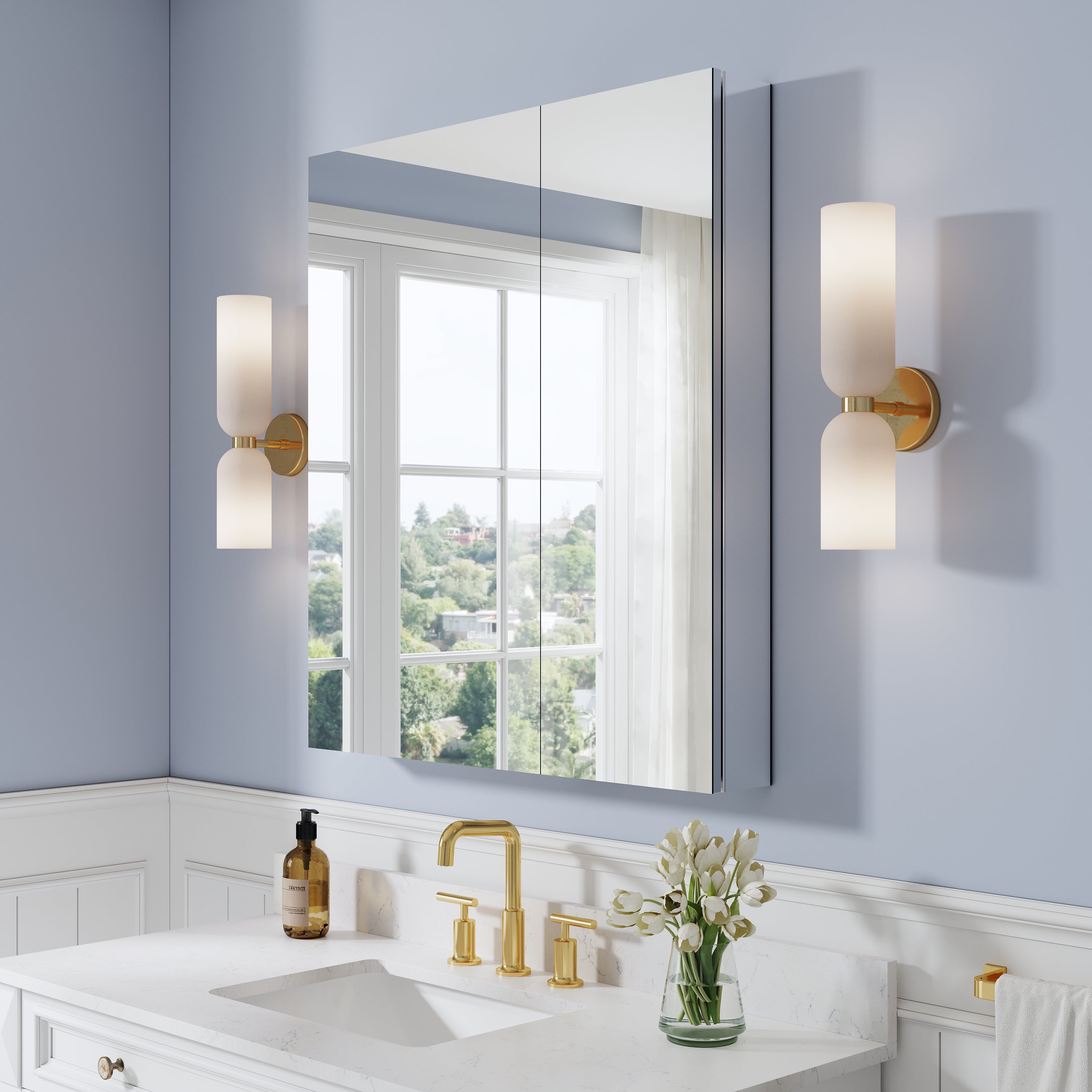
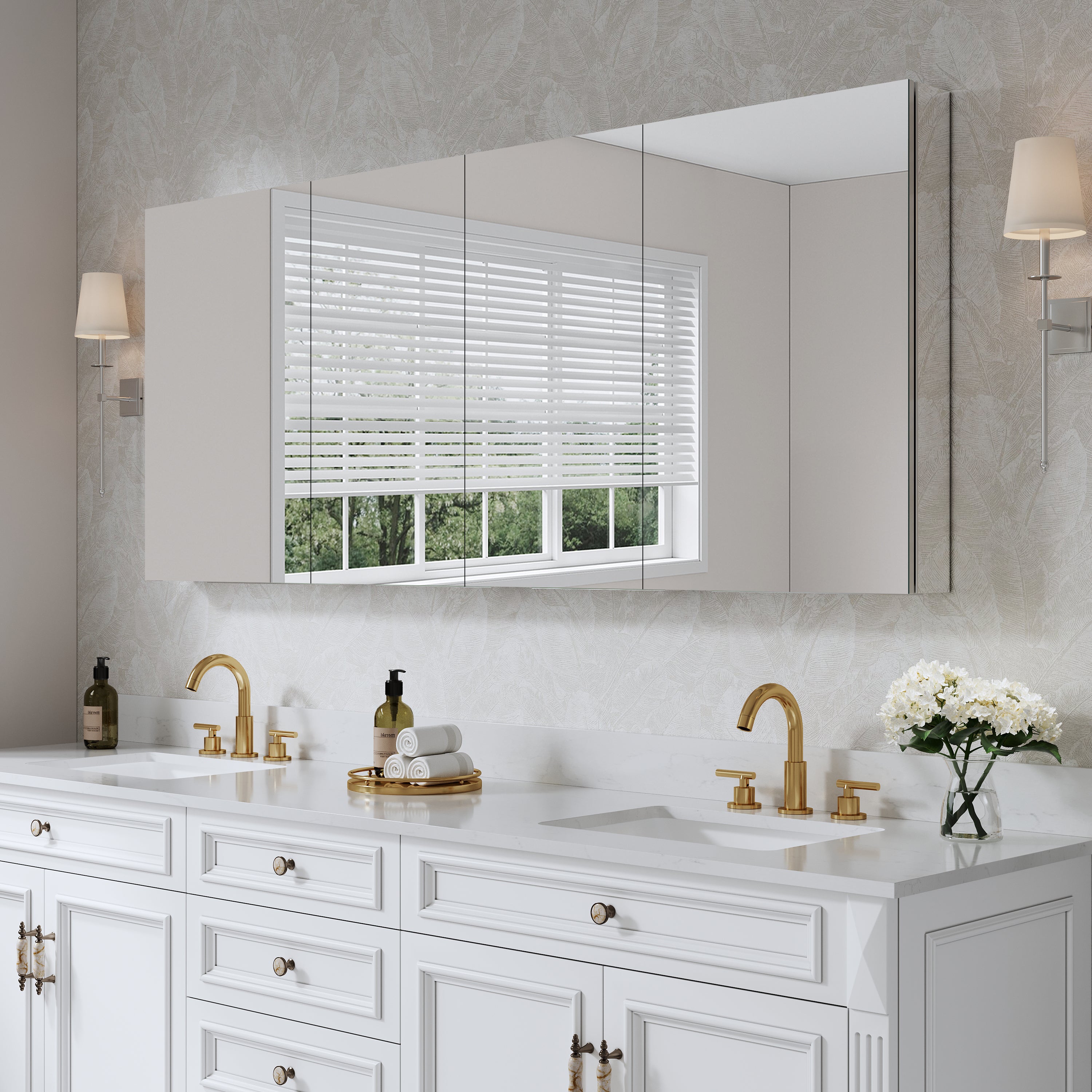
Rectangular mirrors maximize the reflective area above a sink and across a vanity. If two people share the space, or if you want full face-and-shoulders visibility, rectangles are simply efficient.
A widely used sizing guideline is to choose a mirror that spans about 70%–90% of the vanity width for balanced proportions. (Source: Edward Martin mirror sizing guidance.) This rule is easier to follow with rectangles because widths are straightforward and match vanity geometry.
Round mirrors: less width coverage at the edges
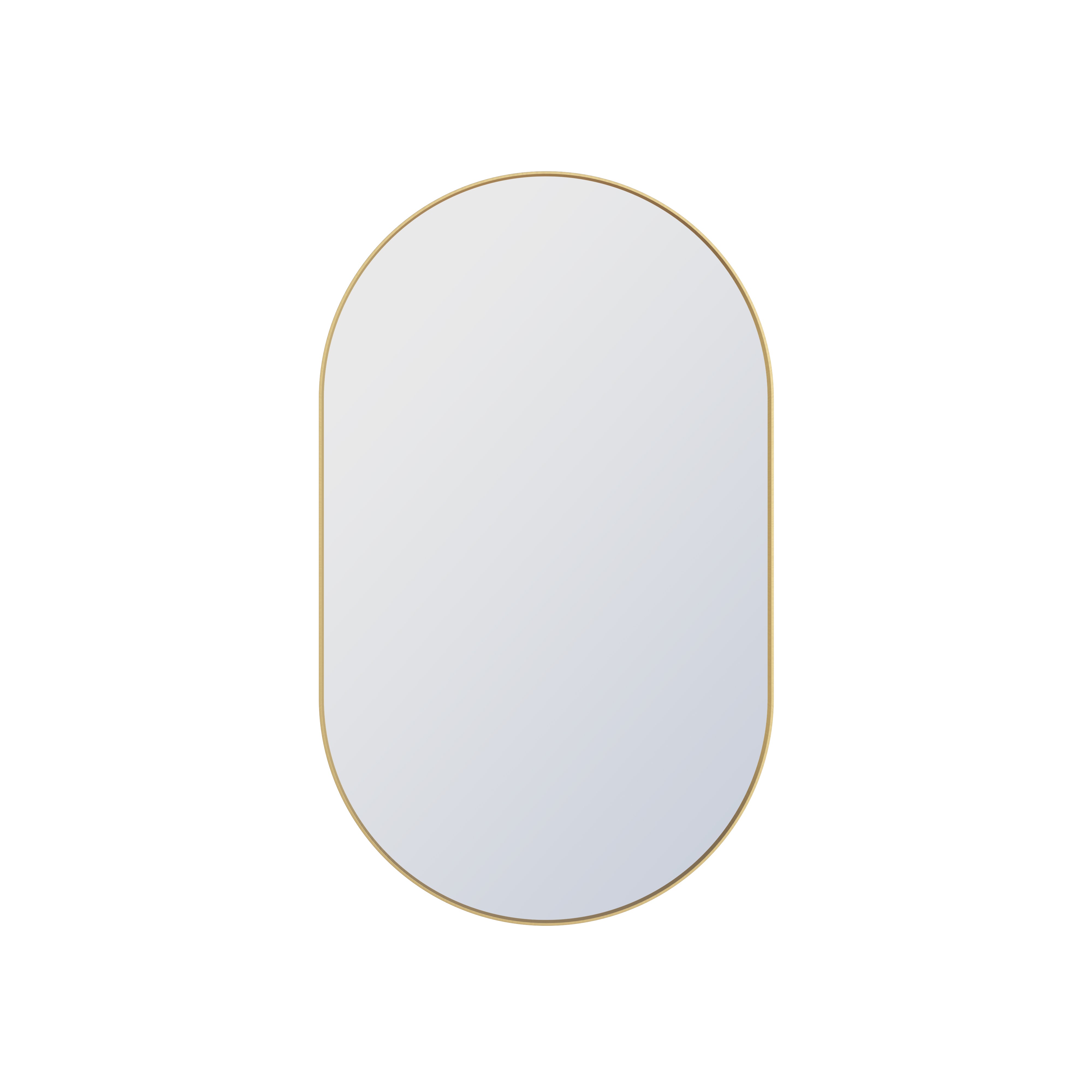
A round mirror can look great, but a circle loses useful reflection near the left and right edges compared to a rectangle of similar overall width. In practical terms, that can mean less visibility for hair styling, shaving lines, or makeup symmetry unless you size up.
Bottom line on coverage:
· If grooming function is the top priority, rectangular is usually the safer default.
· If you love round, plan to size up or pair it with better lighting.
3. How Shape Changes the “Feel” of a Small Room
Small baths often contain a lot of straight lines: tile grids, countertop edges, cabinet doors, shower frames, and door trim. Adding another strong rectangle can make the room feel more rigid, even when it is perfectly functional.
Curves reduce visual hardness (and there is research behind it)
Research in psychological science found that people tend to prefer curved contours over sharp-angled contours, associating curves with greater visual pleasantness. (Source: Bar and Neta, “Humans Prefer Curved Visual Objects,” Psychological Science, 2006, indexed by PubMed.) This doesn’t mean a round mirror will “make your bathroom bigger,” but it helps explain why curved shapes often feel calmer and less boxy in tight spaces.
Rectangles look crisp and architectural
Rectangular mirrors reinforce structure. In a small bath, this can look clean and intentional, especially when the rest of the design is minimal. But if your room already feels visually busy, another rectangle can amplify that busyness.
Bottom line on mood:
· Round mirrors soften and relax a compact space.
· Rectangular mirrors sharpen and organize a compact space.
4. The Vanity Width Rule: Where Rectangular Usually Wins
In small baths, vanities are often 24"–36". If you want the mirror to look proportional and support daily use, the common 70%–90% vanity-width guideline is extremely practical. (Source: Edward Martin mirror sizing guidance.)
Rectangular mirrors make it easy to land in that proportional range without awkward gaps. Round mirrors can still work, but the circle’s edge geometry can make the mirror look smaller than it measures, especially on wider vanities.
A practical approach:
· For a 24" vanity, a round mirror around 20"–24" can look balanced, but you may want strong lighting.
· For a 30"–36" vanity, rectangular mirrors often feel more “made for the space” unless you intentionally choose an oversized round mirror.
5. Lighting: Shape Choice Should Follow Your Light Plan
A mirror can only reflect what the lighting provides. In small baths, lighting problems show up fast: harsh shadows, dim corners, and glare.
A commonly cited lighting range for bathroom tasks is roughly 20–50 foot-candles depending on the activity and setting. (Source: IES recommended lighting levels compilation published by Modern.Place, referencing the IES Lighting Handbook.) More light is not always better; what matters is evenness and face-friendly direction.
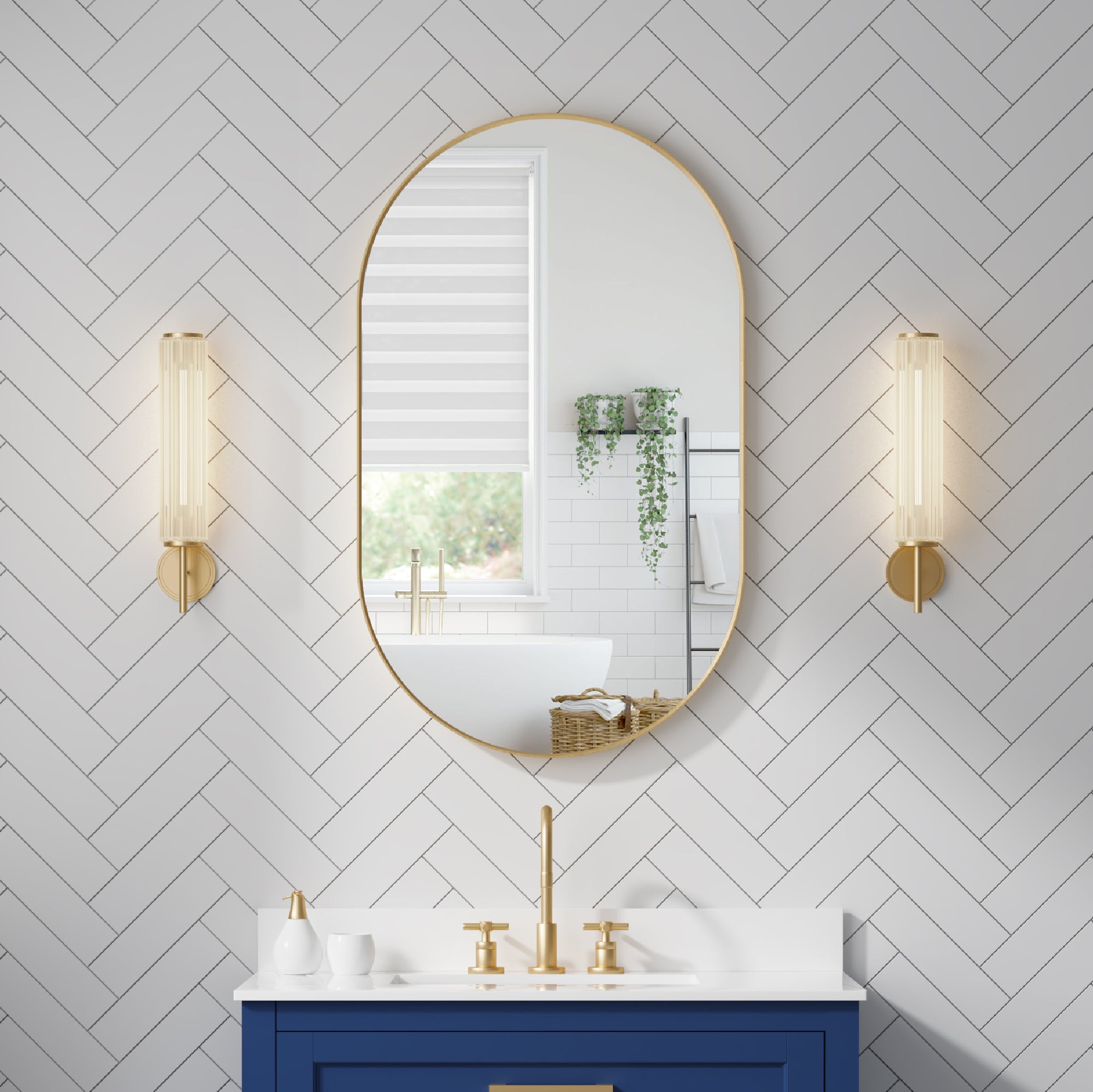
Round mirror + side sconces = strong combination
A round mirror paired with two side sconces often looks high-end and solves the “not enough edge coverage” problem because the light is balanced across the face. If you choose a round mirror, good side lighting becomes more important.
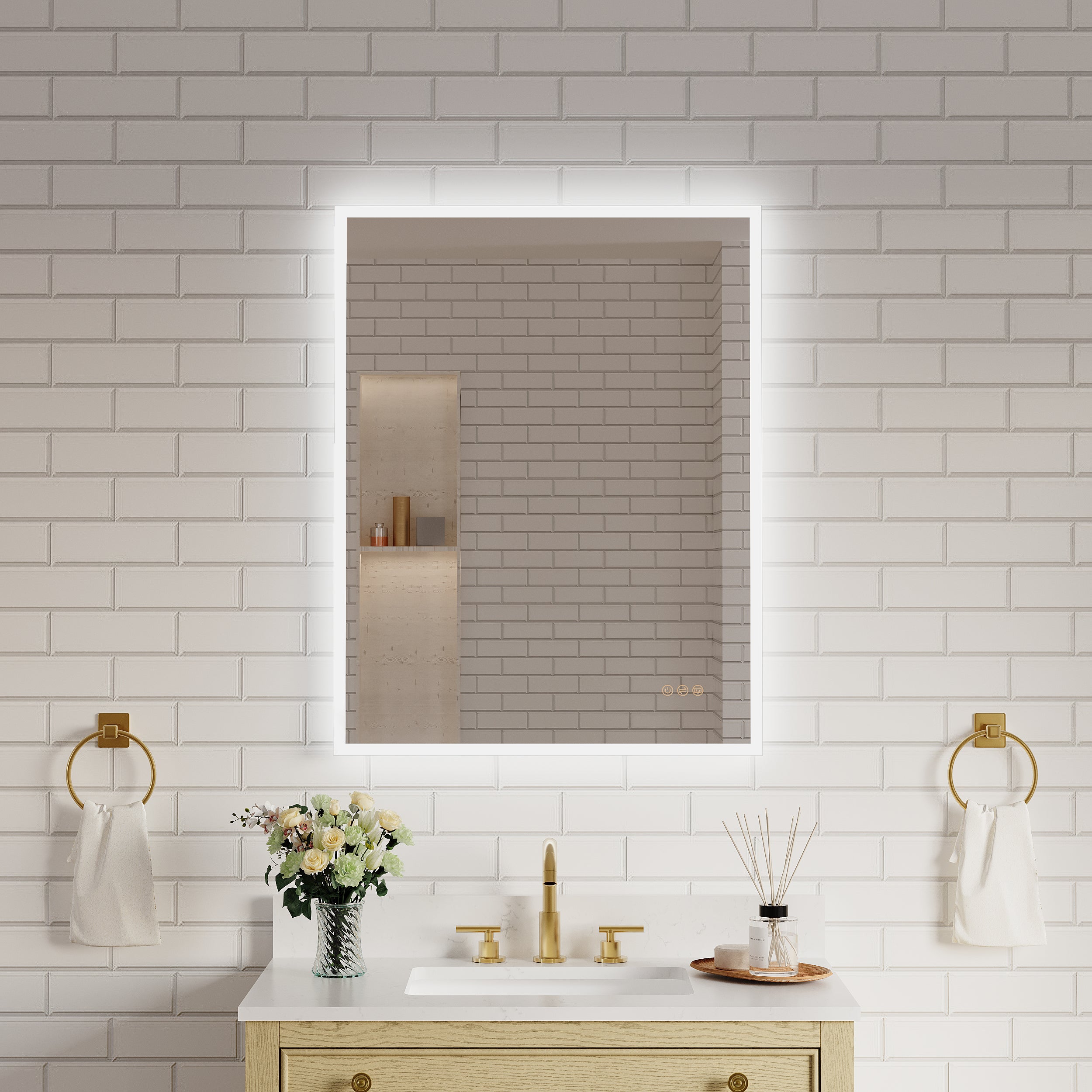
Rectangular mirror + integrated lighting or sconces = maximum function
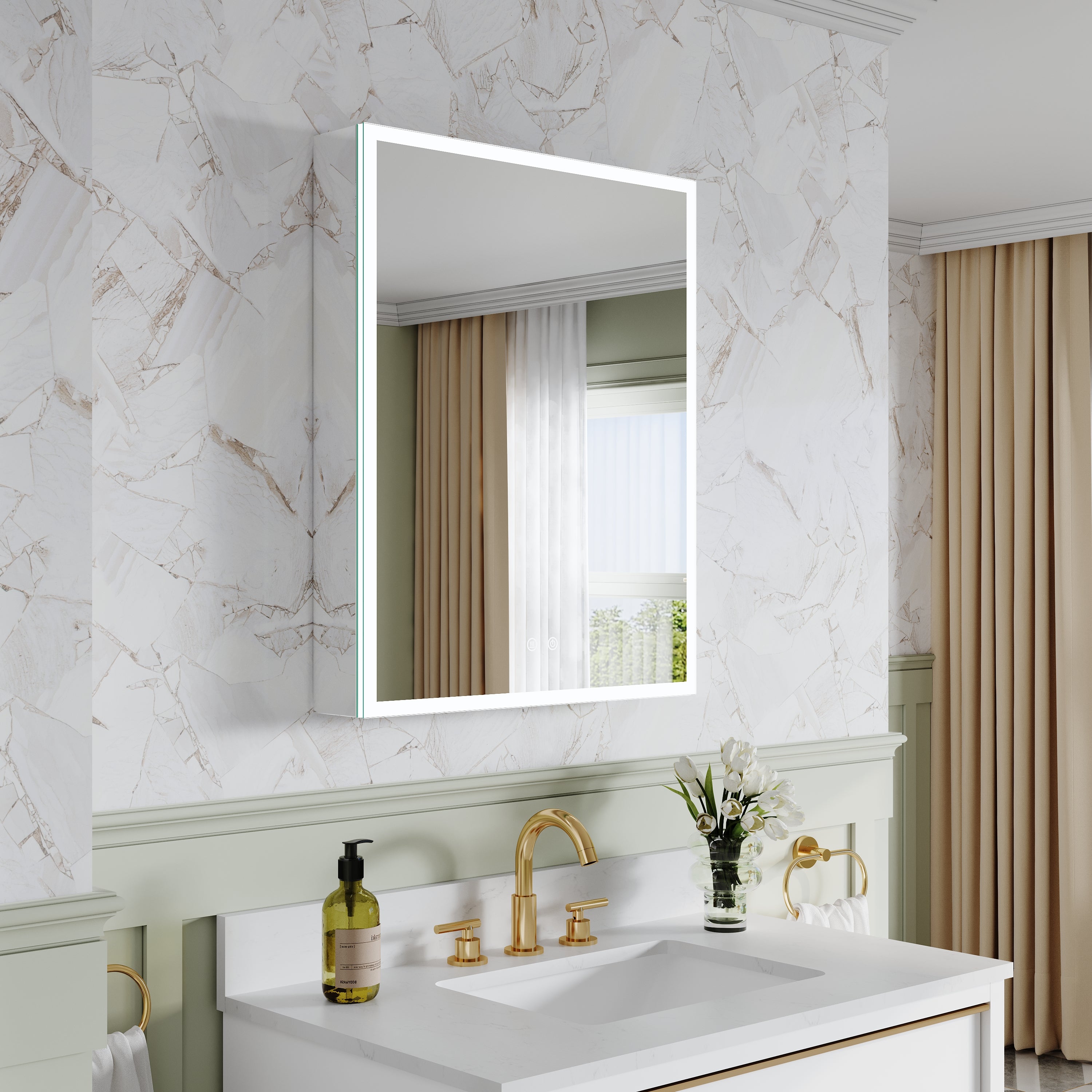
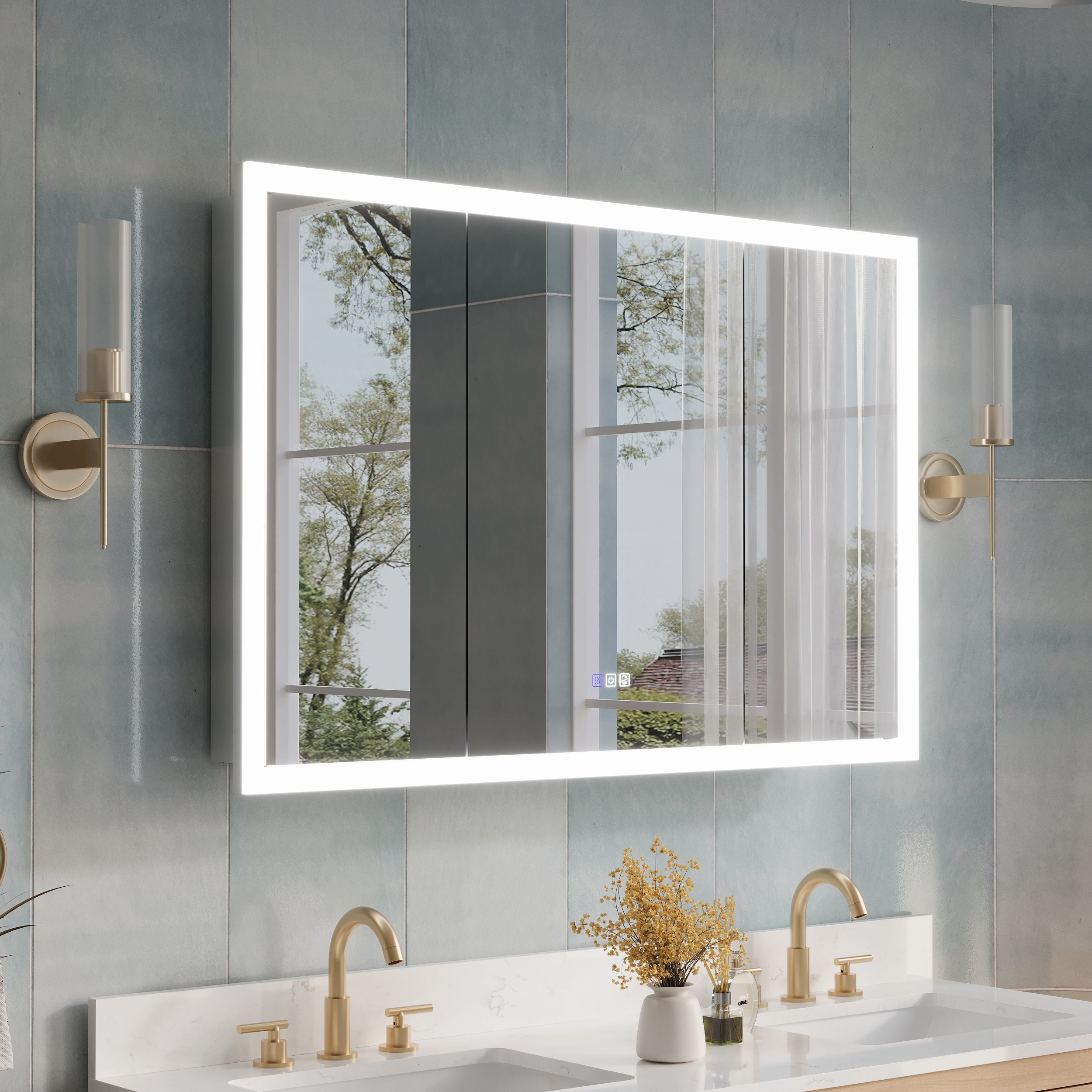
Rectangular mirrors pair easily with vertical sconces or integrated lighting designs because the mirror edges align with fixture placement. If your priority is daily grooming precision, this combination is hard to beat.
6. Cleaning and Practicality: Small Baths Punish High Maintenance
In a small bath, you are closer to the mirror, you touch it more, and you notice spots more. Shape impacts cleaning slightly:
· Round mirrors often have fewer corners, which can feel visually cleaner and sometimes easier to wipe without catching edges.
· Rectangular mirrors can be just as easy to clean, but thick frames and detailed corners can collect residue.
In either case, minimal frames or slim profiles typically reduce “visual clutter,” which matters more in tight rooms.
7. A Simple Decision Guide (Choose in 60 Seconds)
Pick rectangular if:
· You want maximum usable reflection area for grooming.
· Your vanity is wider (30"–36") and you want easy proportional sizing.
· Your style is modern, transitional, or classic with clean lines.
· You prefer predictable pairing with sconces or integrated lighting.
Pick round if:
· Your bath feels boxy and you want to soften the look.
· You have a narrow vanity (around 24") or you plan to size the mirror up.
· You want the mirror to feel like a design feature, not just a utility.
· You will support it with strong, face-friendly lighting.
Choose either shape, but go larger, if:
· You want the room to feel brighter and more open. Larger mirrors reflect more of what the room already has: light, contrast, and sightlines. In a small bath, that reflection effect is more noticeable than the difference between round vs. rectangular alone.
8. The “Best of Both” Answer for Many Small Baths
If you want the most reliable outcome with minimal risk:
· Choose a rectangular mirror sized to about 70%–90% of vanity width for proportion and coverage. (Source: Edward Martin mirror sizing guidance.)
· Use lighting that supports real tasks, aiming for a practical illuminance range rather than guessing. (Source: IES recommended lighting levels compilation published by Modern.Place.)
If your small bath feels overly rigid or “all lines,” a round mirror can be the smarter aesthetic move, especially when paired with two sconces to keep grooming visibility strong. Research suggests curved shapes are often perceived as more pleasant, which aligns with why round mirrors can feel calmer in tight spaces. (Source: Bar and Neta, Psychological Science, 2006.)

Conclusion
For small baths, rectangular mirrors tend to be the safest functional choice because they maximize usable reflection area and fit vanity proportions easily. Round mirrors can be better when you want to soften a boxy space and create a calmer visual rhythm, but they work best when you size them appropriately and support them with good lighting. If you decide based on your vanity width, your daily routine, and your lighting plan, you will end up with a mirror that looks intentional and feels right every morning.













Leave a comment
This site is protected by hCaptcha and the hCaptcha Privacy Policy and Terms of Service apply.