






















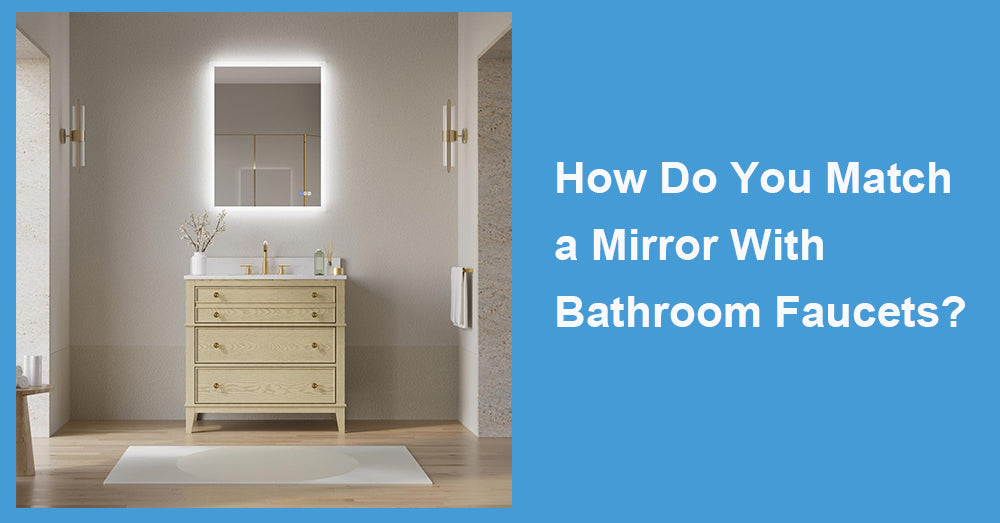
As bathroom upgrades become more prevalent, the bathroom mirror is being treated less like a finishing touch and more like a “system partner” to the faucet and vanity lighting. That shift is showing up in project budgets, too: the Joint Center for Housing Studies at Harvard estimates that annual homeowner spending on improvements will reach about $518 billion by the end of 2026, even as growth slows later in the year.
1. Why this pairing is suddenly a bigger deal
Industry research shows that remodelers rarely change just one component of the vanity. In Houzz’s 2025 bathroom trends study, faucets are the most commonly upgraded feature (87%), followed closely by lighting fixtures (82%). When the faucet, lighting, and mirror change together, “match the mirror later” becomes risky, because the mirror’s shape, finish, and placement determine how the faucet appears in reflection and how the whole zone reads from the doorway.
The same Houzz research also points to what people are optimizing for: cleanliness is the most frequently cited factor (74%), along with the calmness of organized storage (59%) and the comfort of a spacious shower (65%). That “clean, easy, calm” priority is exactly where mirror-and-faucet coordination starts paying off.
2. Start with performance: water output, fog control, and light quality
A good match begins with specs, not style boards. On the faucet side, EPA WaterSense guidance is clear: WaterSense-labeled bathroom faucets and accessories use no more than 1.5 gallons per minute, which can reduce flow by 30% or more compared with the 2.2 gpm standard—without sacrificing performance. EPA also notes that swapping old faucets and aerators for WaterSense-labeled models can save the average family about 700 gallons of water per year.
On the mirror side, the “performance add-ons” are becoming mainstream. In the 2024 Houzz bathroom trends study, 59% of renovating homeowners upgrade their mirrors; among upgraded mirror features, LED lighting leads (21%) and anti-fog systems are close behind (20%). If you choose a low-flow faucet but ignore fog and lighting, the daily experience still feels “unfinished.” If you pair WaterSense flow with a mirror that resists fog and provides consistent task lighting, the vanity zone becomes a complete upgrade rather than a mix of parts.
3. Use proportion rules that designers and retailers keep repeating
Once the functional requirements are set, use proportion to avoid the most common “looks off” mistakes. A widely used guideline is to size the mirror to the vanity width: Kohler’s buying guide recommends measuring the vanity first and choosing a mirror that is the same width or narrower to keep the wall balanced.
Then check faucet geometry in real inches, not guesses. Home Depot’s measuring guidance suggests a spout reach between 4 and 8 inches works well for most bathroom sinks, with the goal that water flows toward the drain and the spout covers an appropriate portion of the basin. That measurement matters visually: the mirror is a reflective backdrop, so if the spout looks too short or too long relative to the sink centerline, the mirror doubles the awkwardness.
Finally, keep accessibility and mounting heights in mind early. ADA design standards specify that when a mirror is located above a lavatory or countertop, the bottom edge of the reflecting surface should be no higher than 40 inches above the finished floor. Even when a project is not formally regulated, many builders use these dimensions as a practical benchmark because they improve usability for more people.
4. Match finishes by “sheen + undertone,” not by name alone
Finish matching is where many projects look expensive—or accidentally cheap. The mistake is assuming “chrome” or “nickel” is a single look. In practice, two knobs matter most:
Sheen (polished vs brushed). A polished faucet throws sharp highlights; a brushed faucet reads softer and hides water spots better. If your mirror has a thin metal frame with strong specular reflection, a brushed faucet can keep the vanity zone from looking overly shiny. If the mirror is frameless or matte-framed, a polished faucet can add deliberate contrast.
Undertone (cool vs warm). Nickel and chrome usually lean cooler; gold/brass tones lean warmer. The mirror often reflects wall color and light temperature, so undertone mismatches can make fixtures look “different brands” even when they are similar on paper.

5. Let the data guide which mirror features matter most right now
If you’re deciding where to spend, the usage data helps. In 2024, most mirror upgraders still install one mirror (59%), but two mirrors (37%) is a strong second choice—driven by double vanities and shared primary bathrooms. That means matching becomes about repeatability: two identical faucets under two identical mirrors look intentional; two similar-but-not-quite mirrors make the faucet finish differences more noticeable.
For storage-heavy setups, upgraded medicine cabinets also signal where expectations are heading: Houzz reports hidden outlets (23%) and anti-fog systems (14%) among the leading features. When a mirror includes power or defogging, the faucet becomes part of a higher-function “station.” Hence, buyers tend to expect the faucet to look equally premium and be equally easy to maintain.
6. The industry takeaway: pick the “system,” then lock the look
Across trend reporting, the direction is consistent: more attention to wellness, better lighting layers, and surfaces that stay cleaner with less effort. NKBA’s bath trends research highlights intentional lighting and a growing focus on minimal upkeep as key themes shaping product choices over the next few years.
So the most reliable process is simple: confirm faucet specs (flow and reach), choose the mirror for fog and light performance, size it to the vanity in inches, and finalize finish coordination only then. When the mirror and faucet are selected as a single system, the vanity zone looks more cohesive, feels more comfortable daily, and aligns with what today’s remodel data shows people value most: cleanability, calmness, and practical performance.









































Leave a comment
This site is protected by hCaptcha and the hCaptcha Privacy Policy and Terms of Service apply.