


















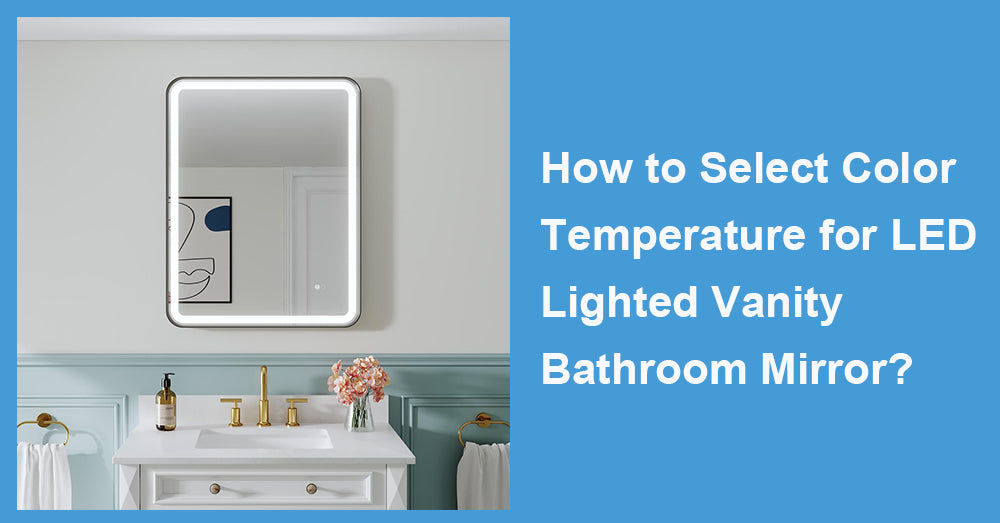
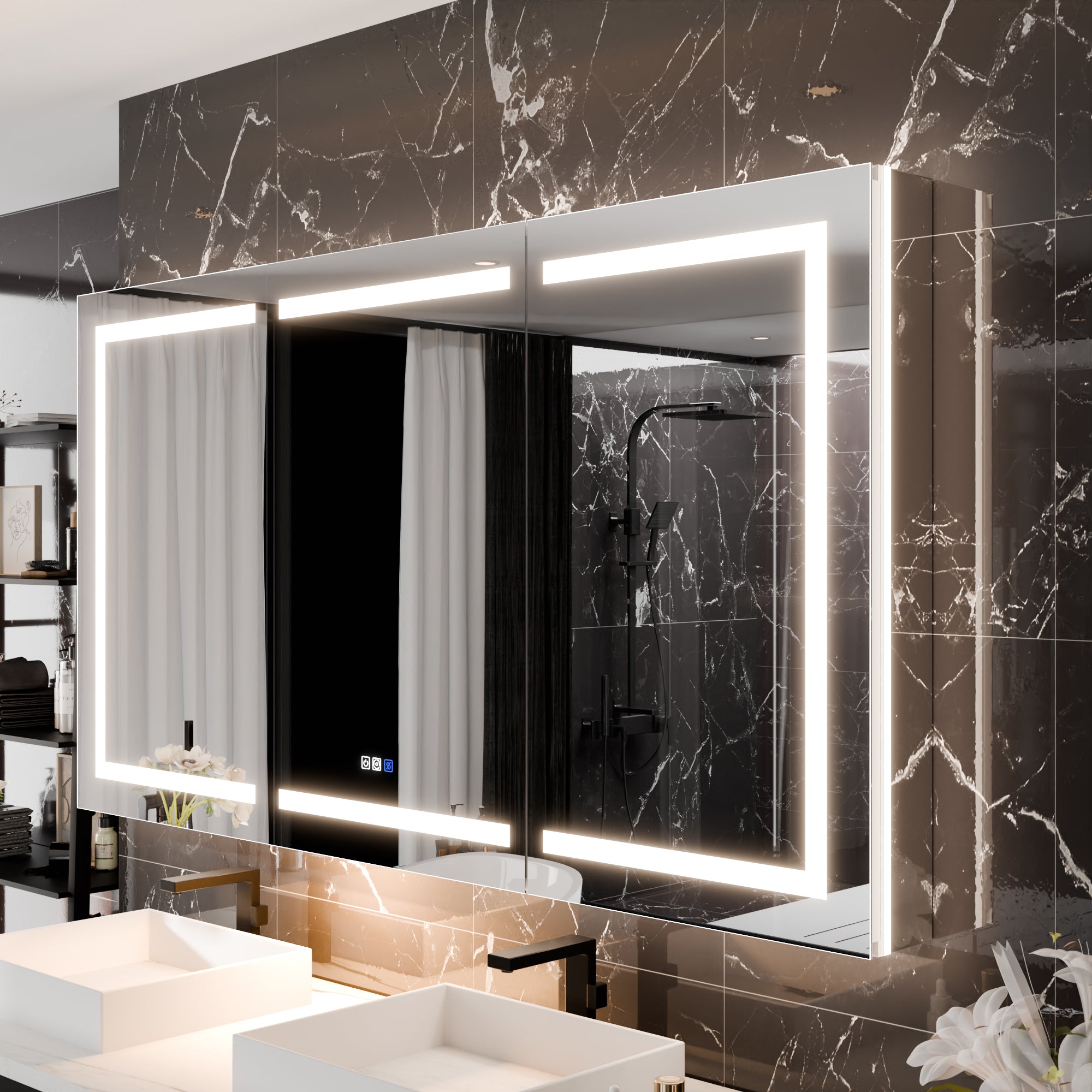
In the bathroom decoration and renovation market, the led lighted vanity bathroom mirror has been upgraded from an "optional configuration" to a "high-frequency must-have". Compared to ordinary mirrors, illuminated mirrors not only enhance the spatial texture but also directly affect the experience of high-precision daily activities such as makeup, shaving, and skincare. Among numerous parameters, color temperature is one of the most easily overlooked but crucial selection factors for consumers.
This article will systematically analyze how to choose the appropriate color temperature for LED bathroom vanity mirrors, considering industry trends, user usage scenarios, mainstream color temperature ranges, and professional recommendations.

1. What is LED color temperature? How do consumers understand
Color temperature is usually expressed in Kelvin (K) and describes the heating and cooling properties of light.
Low color temperature (2700K-3000K): Warm yellow light
Neutral color temperature (3500K-4100K): Natural white light
High color temperature (5000K-6500K): cool white light/daylight color
In the lighting industry, color temperature has been widely used in residential, commercial, and medical spaces. The US Department of Energy (DOE) and the Illuminating Engineering Society of North America (IES) both recommend that bathrooms are spaces that balance functionality and comfort, and lighting color temperature should avoid extremes.
2. The three mainstream color temperature choices for bathroom vanity mirrors
l 3000K-3500K: Warm and comfortable type (with a living atmosphere)
Target audience
Family users who value the atmosphere
Master Bathroom
Consumers who prefer hotel-style and spa-style bathroom design
Advantage
Soft lighting reduces eye fatigue during morning and evening use.
Create a relaxed and warm sense of space.
More 'modifying' for skin blemishes
Limitation
The authenticity of fine makeup and shaving is slightly lower.
Not fully meeting the professional beauty lighting needs
In the market, 3000K LED mirrors are commonly used in high-end residential and apartment decoration projects, emphasizing comfort over ultimate functionality.
l 4000K: Natural balance type (most popular in the market)
Target audience
Most household users
Daily makeup, skincare, and shaving
Apartments, townhouses, renovation projects
industry position
In the North American bathroom lighting market, 4000K is considered the "golden color temperature".
Advantage
Approaching sunlight, the skin tone is restored to its true color.
Not yellowish or glaring
Balancing functionality and comfort
Many building materials retailers, such as the Home Improvement channel, default to 4000K in their LED bathroom mirror models to meet the widest range of consumer needs.
l 5000K-6000K: High brightness professional type (function-oriented)
Target audience
Professional makeup needs
Medical, gym, hotel, public bathroom
Users who pursue 'clarity first'
Advantage
High brightness, high contrast
The most straightforward presentation of details
Helps with precise shaving and fine makeup
Precautions
Long-term use may cause visual fatigue.
It can come across as cold and uninviting in home interiors.
In the market, color temperatures above 5000K are mostly used for commercial projects or functional spaces, with a relatively small proportion in home bathrooms.
3. Adjustable color temperature LED vanity mirror: a new trend in the market
In recent years, Tunable White LED vanity mirrors have become increasingly popular, gradually shifting from high-end optional features to mainstream configurations. Compared to single-color-temperature mirrors, adjustable-color-temperature products can switch light effects freely to suit different usage scenarios, which better aligns with the real needs of home users.
The most common adjustable color temperature range on the market is 3000K-6000K, which usually covers three modes: warm light, natural light, and cool white. Warm light is suitable for use at night, creating a relaxing atmosphere; Natural light is closer to the effect of sunlight and is suitable for daily skincare and makeup; Cold white light has high brightness and clear details, suitable for fine makeup and shaving. The "one mirror for multiple uses" characteristic is the core reason adjustable color-temperature LED dressing mirrors are popular.
In terms of operation, most products use touch buttons or long-press adjustment controls, allowing users to easily adjust color temperature and brightness. Some models also have a memory function, automatically saving the last usage settings. With the popularization of smart home concepts, some high-end products are increasingly supporting more intelligent control methods, further improving user convenience.
From an industry perspective, adjustable color temperature not only improves the user experience but also creates a higher premium space for brands. In the bathroom lighting market, "adjustable color temperature" has become one of the important selling points that affect consumers' purchasing decisions.
4. Four suggestions from industry experts when choosing color temperature
Experts in the lighting and bathroom industry generally suggest that consumers should prioritize the actual usage scenario when choosing the color temperature of LED bathroom vanity mirrors, rather than simply pursuing brightness or cool white effects. Although the color temperature is too high and clear, it can easily cause visual fatigue in a home environment.
Secondly, the color temperature should be consistent with the bathroom's overall lighting system, including ceiling lights, wall lights, and ambient lights, to avoid significant color differences among light sources and affect the spatial appearance.
Thirdly, experts emphasize the importance of focusing on the Color Rendering Index (CRI). In the mid- to high-end market, a CRI of at least 90 has become an essential standard for bathroom mirror quality, helping realistically restore skin tone and makeup details.
Finally, safety and reliability are equally crucial. It is recommended to choose products that have passed UL or ETL certification and feature a moisture-resistant design to ensure long-term, stable use in humid bathroom environments.
5. Industry Conclusion: Color Temperature Selection is Influencing Purchasing Decisions
In the bathroom mirror industry, LED color temperature has evolved from a "technical parameter" to a key selling point that affects user experience and conversion rate.
Whether it's the mainstream choice of 4000K or the trend solution of adjustable color temperature, understanding consumers' real usage needs is becoming an important breakthrough for brand differentiation.
For bathroom brands and independent sellers who are expanding into the North American market, clearly labeling color temperature ranges, application scenarios, and advantages on product pages will directly enhance professionalism and trust.
































Leave a comment
This site is protected by hCaptcha and the hCaptcha Privacy Policy and Terms of Service apply.