






















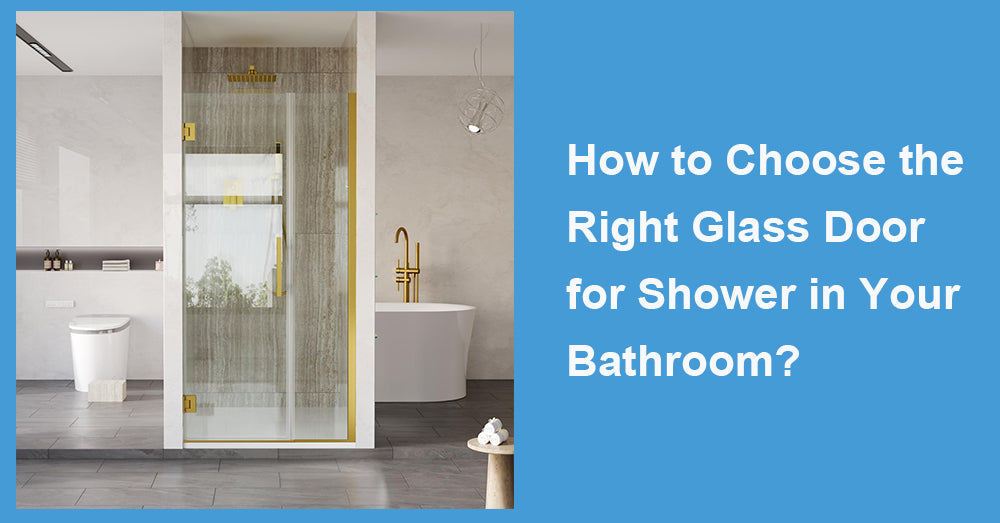
Choosing the right glass door for shower setups has become a bigger decision than it used to be, largely because showers are evolving from “basic wet areas” into the visual center of many bathroom remodels. Industry surveys show shower-focused upgrades remain common: in one recent Houzz report, nearly 2 in 5 renovating homeowners (39%) increased the size of the shower, making it one of the most frequent project choices. When the shower footprint and sightlines matter more, the door is no longer a small accessory; it is a functional and design-critical component that affects safety, cleaning effort, accessibility, and long-term satisfaction.
1. Start With the Layout and Traffic Flow
Before selecting any style, map how people move through the bathroom. The “right” door is the one that opens without fighting the toilet, vanity, towel bars, or a tight walkway.
· Hinged or pivot doors need clearance to swing. As a practical rule, plan for roughly 24 inches of clear space where the door swings, and confirm it will not collide with fixtures.
· Sliding doors (bypass) save swing clearance and often work best for tighter rooms or tub-shower combos, but they reduce access width compared with fully opening hinged doors.
· Neo-angle and corner entries can solve awkward layouts, but measurement accuracy becomes even more important because angles amplify out-of-plumb walls.
If you are renovating and not changing the bathroom size, door selection matters even more. Houzz reports that most renovating homeowners do not expand the bathroom footprint, so the shower door often has to “work with what exists,” not with an idealized plan.
2. Choose the Door Type That Matches Your Daily Routine
Each door type comes with a trade-off you will feel every day.
· Frameless hinged: clean look, wide opening, fewer crevices to trap grime, but needs solid wall blocking and quality hardware.
· Semi-frameless: a balance of structure and a lighter look, usually more forgiving on imperfect walls.
· Framed: durable, often budget-friendly, and can better tolerate uneven conditions, but frames create more edges where soap residue can build up.
· Sliding: great for space-saving and family baths; expect slightly more track cleaning.
· Bi-fold: useful when space is extremely limited, and you need a larger entry than a slider can offer.
Design trends help explain why frameless and minimal-profile doors keep gaining attention. NKBA trend coverage notes that larger showers continue to outpace tubs for many homeowners, pushing showers to be more open and feature-driven. An open-looking door supports that direction, but function should still lead.
3. Get the Measurements Right, Especially Width and Height
Most shower door problems stem from measurement errors. Measure finished surfaces (tile installed, curb complete), and measure more than once.
· Width: take measurements at the top, middle, and bottom because walls are rarely perfectly plumb. Many door systems have limited adjustment, so you need to know the true “out-of-square” condition.
· Height: common glass heights include 72, 76, 78, and 80 inches. Taller glass reduces drafts and splash but may require better ventilation planning.
· Threshold and curb details: curbless and low-threshold showers require stronger water-control strategies (sweeps, seals, slope, and careful placement).
If your shower footprint is changing, keep an eye on broader remodeling patterns. Houzz’s 2024 bathroom trends coverage noted that “increasing the shower size” dropped year over year (from 51% to 41%), suggesting more projects are optimizing performance within existing constraints rather than endlessly expanding. That makes a correct fit and water management even more essential.

4. Pick the Right Glass Type and Thickness for Your Priorities
Most shower doors use safety glazing, typically tempered glass or laminated safety glass. The thickness you choose affects feel and stability.
· 1/4 inch (6 mm): lighter and often used in framed systems; can feel less substantial in large panels.
· 3/8 inch (10 mm): a common choice for frameless; feels heavier, more premium, and can reduce flex.
· 1/2 inch (12 mm): very substantial and often used for higher-end frameless installs; hardware and wall support must match.
If you want easier cleaning, consider glass with a factory-applied protective coating that reduces mineral spotting and soap film adhesion. It will not eliminate cleaning, but it can reduce the effort and frequency.
5. Make Safety and Compliance Non-Negotiable
Shower doors are not the place to compromise on safety. In many jurisdictions, shower glazing must meet safety glazing performance requirements, and products are typically labeled accordingly. The federal safety standard for architectural glazing (16 CFR Part 1201) recognizes conformance with ANSI Z97.1 safety glazing specifications and testing.
What to do in practice:
· Look for permanent markings on the glass (often etched) indicating the safety standard or certification mark.
· Confirm the product uses tempered safety glass (or another approved safety glazing type) suitable for doors and enclosures.
· Do not treat “thicker” as automatically “safer.” Safety performance comes from the glazing type and testing, not just thickness.
6. Match Hardware and Structure to the Door Style
A frameless door is only as good as its hinges, clamps, and wall support.
· For hinged/pivot frameless doors, confirm that wall framing support (solid blocking) is planned, especially on tile walls.
· For sliding doors, check roller quality, anti-jump features, and whether the track design will be easy to clean.
· Choose finishes that resist corrosion in high-humidity environments, and confirm replacement parts are available.
Hardware quality matters because it directly affects door alignment over time, smoothness of closing, and leak control.
7. Plan for Water Containment and Ventilation
A beautiful door that leaks is bad. Water containment is a system, not a single feature.
· Door sweeps and seals: ensure the enclosure includes bottom sweeps and side seals suited to your configuration.
· Threshold design: low thresholds look clean, but they require a steeper slope and a better seal strategy.
· Ventilation: more glass can mean more steam staying inside; good airflow reduces fogging, mildew, and mineral build-up.
If you are investing in a remodel, remember that bathroom spending has been rising. Houzz reported the median spend on all bathroom remodels increased from $13,500 in 2022 to $15,000 in 2023. Choosing a door that reduces maintenance headaches can be a smarter “value per day” decision than a purely aesthetic upgrade.
8. Use Trends as a Guide, Not a Rule
It helps to understand why glass shower doors are so prominent right now: homes are frequently built with multiple full bathrooms, and showers are increasingly designed as focal points. NAHB, citing Survey of Construction data, reported that in 2023, 64.7% of new single-family homes had two full bathrooms and 23.8% had three full bathrooms. More bathrooms mean more shower spaces to design, build, maintain, and modernize, which naturally pushes better enclosure solutions into the spotlight.
The best choice is the one that fits your space, your cleaning tolerance, your safety requirements, and your daily habits. If you want, please tell me your opening width (in inches), preferred door type (hinged or sliding), and whether it’s curbless, and I’ll recommend a configuration that’s most likely to install cleanly and stay leak-resistant.









































Leave a comment
This site is protected by hCaptcha and the hCaptcha Privacy Policy and Terms of Service apply.