

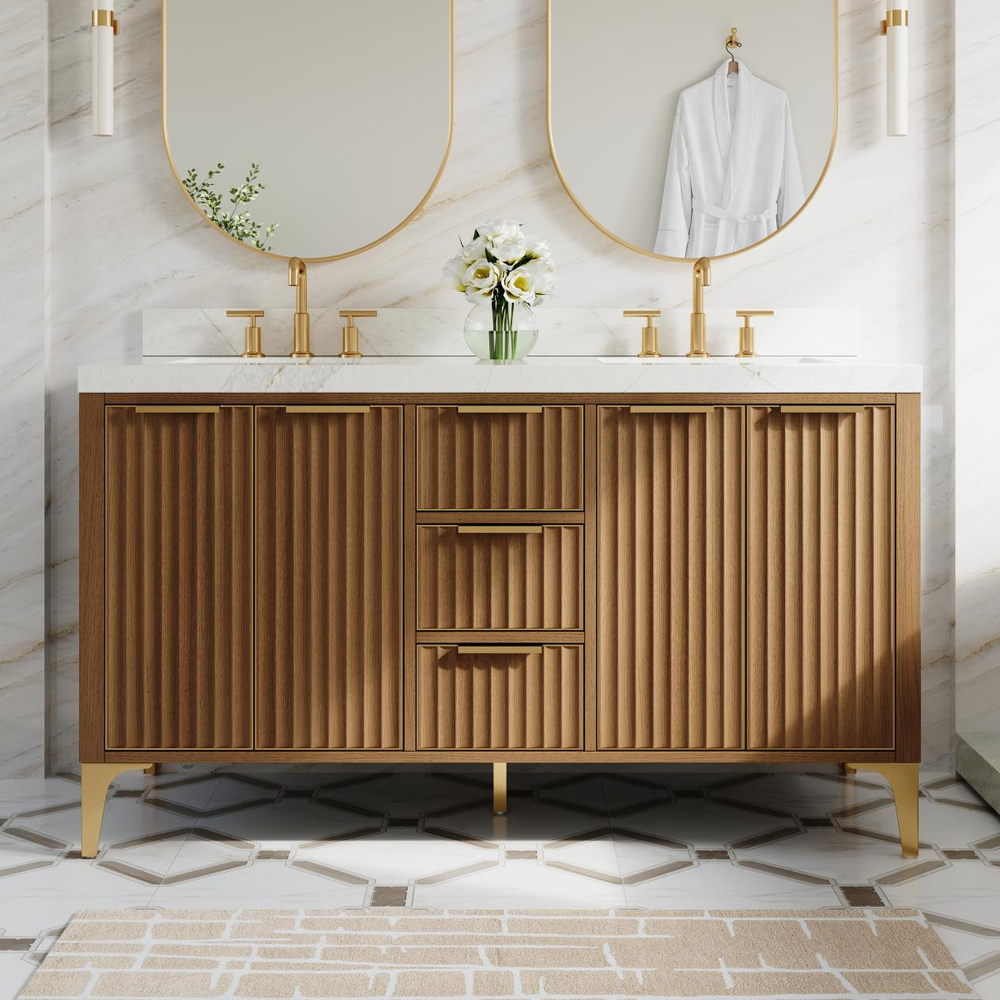







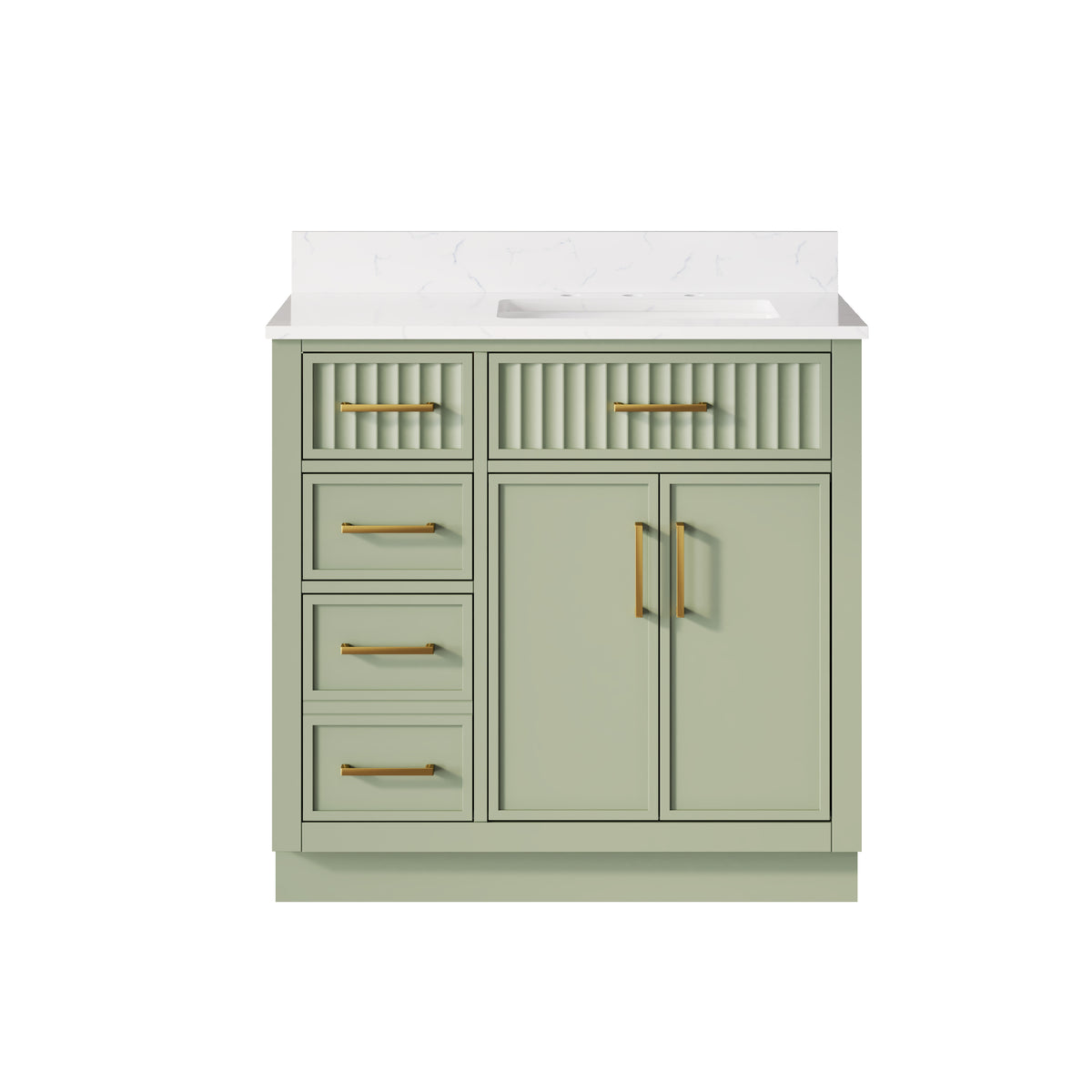
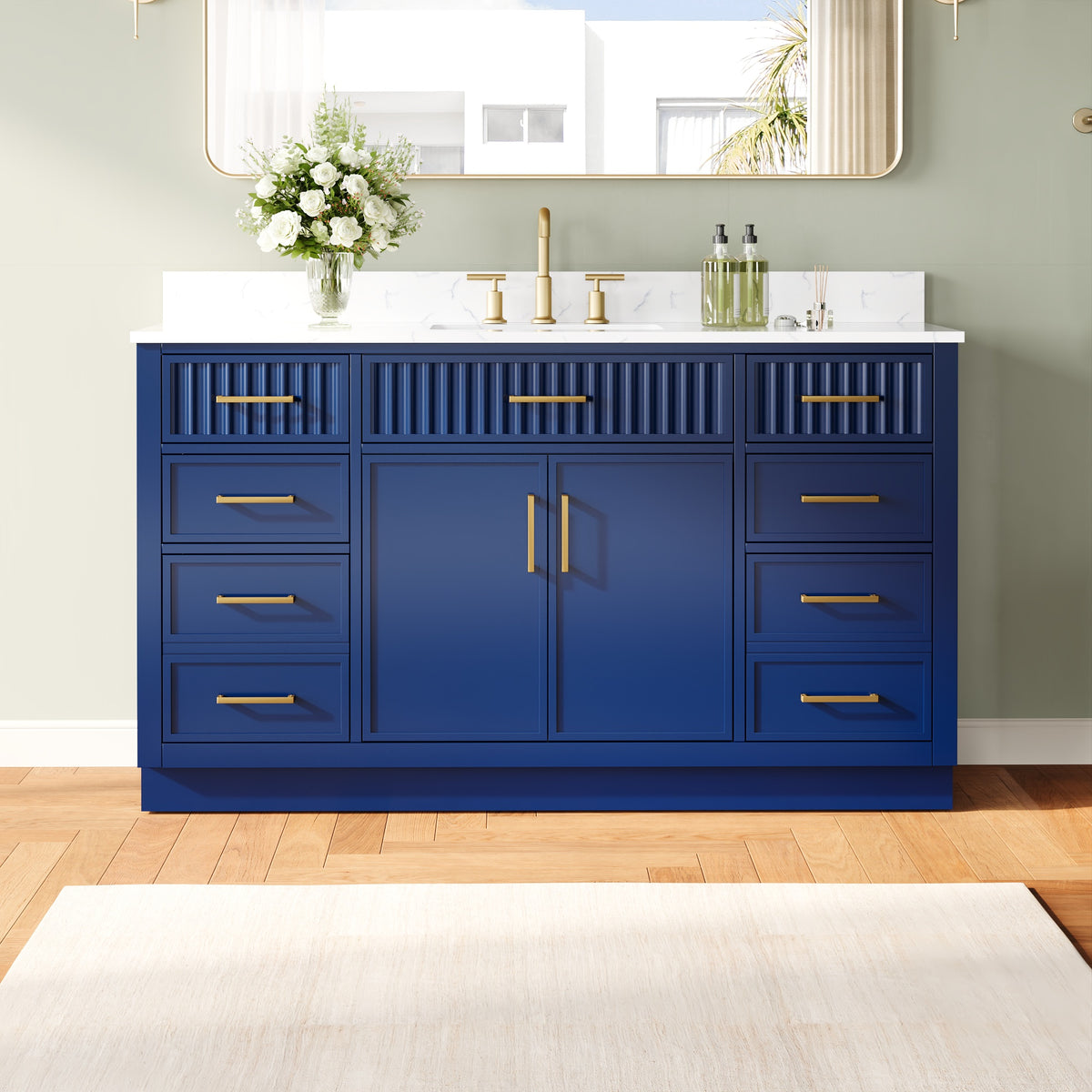
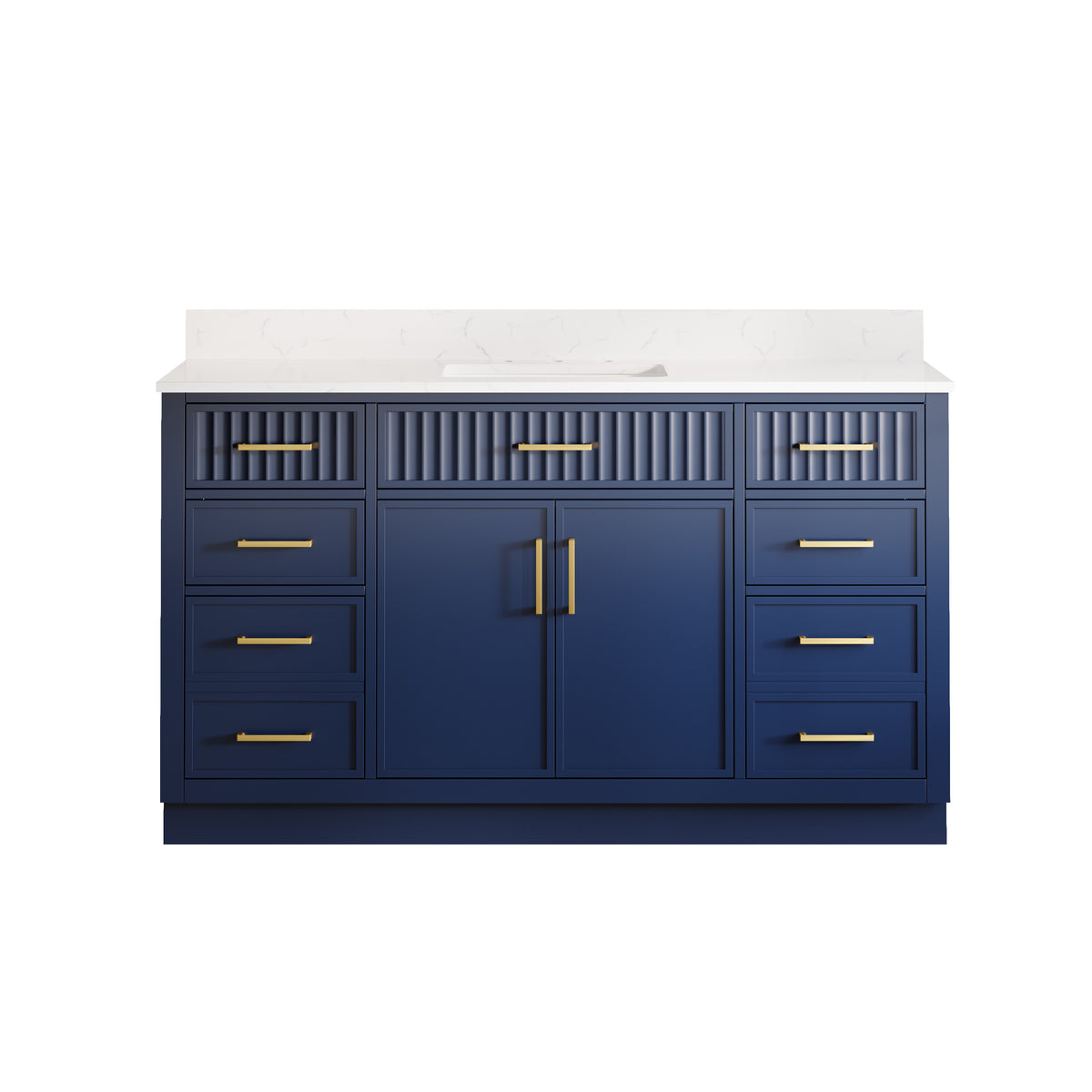
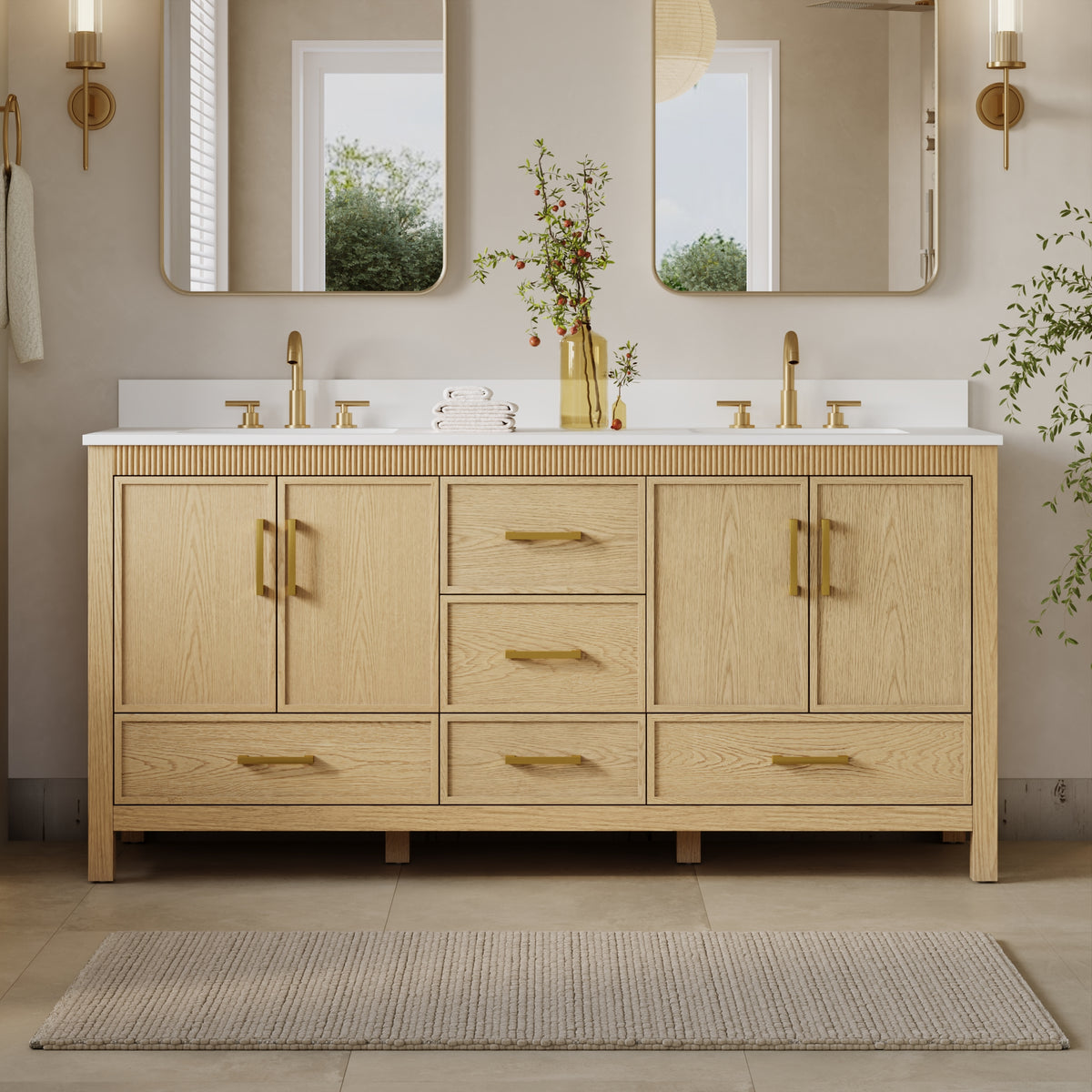
Bathroom noise is rarely discussed until it becomes a problem. A door that slams shut at 6 a.m. wakes up whoever is still asleep. A drawer that bangs closed every time you reach for a towel sends a sharp crack through the house. These sounds seem minor in isolation, but they add up, especially in a room you use multiple times a day. A wood bathroom vanity equipped with soft-close hardware addresses this issue at the mechanical level. The noise reduction is not a side effect or a marketing claim. It is the direct result of a small hydraulic component that changes how the door and drawer meet the cabinet frame. Understanding how that component works, and why wood amplifies the benefit, explains why so many homeowners consider soft-close a non-negotiable feature.
The Mechanics Behind the Silence
Soft-close hardware works through a dampener, a tiny mechanism built into the hinge or drawer slide that acts like a shock absorber. The most common design uses a hydraulic cylinder. As the door or drawer swings shut, fluid is forced through a narrow passage inside the cylinder, creating resistance that slows the final movement . This dampener only engages in the last few inches or the final 10 to 15 degrees of travel, so the door feels completely normal when you are opening it or pushing it shut. The resistance kicks in at the end, catching the momentum before impact.
The alternative design uses a spring dampener rather than hydraulic fluid. Both achieve the same result: the door or drawer decelerates smoothly and settles into the closed position without a bang. The difference between a soft-close door and a standard one is not the force you apply. It is what happens after you let go.
Putting a Number on the Noise Reduction
Vague claims about “quieter operation” are common in product listings, but hard data is more useful. A cost-versus-value analysis of soft-close hardware measured the decibel difference directly. Standard cabinet doors and drawers produce sound levels in the range of 62 to 68 decibels when closed. Soft-close mechanisms bring that down to 42 to 48 decibels . That is a reduction of roughly 15 to 22 decibels.
To put that in perspective, a 20-decibel drop is significant. The decibel scale is logarithmic, so a reduction of that size represents a substantial decrease in perceived loudness. A standard door slam that registers at 65 decibels is comparable to normal conversation or a running dishwasher. A soft-close close at 45 decibels sits closer to the level of a quiet library or soft background music. In a small bathroom with hard surfaces, where sound reflects and amplifies, that difference is immediately noticeable.
Why Wood Makes the Difference More Pronounced
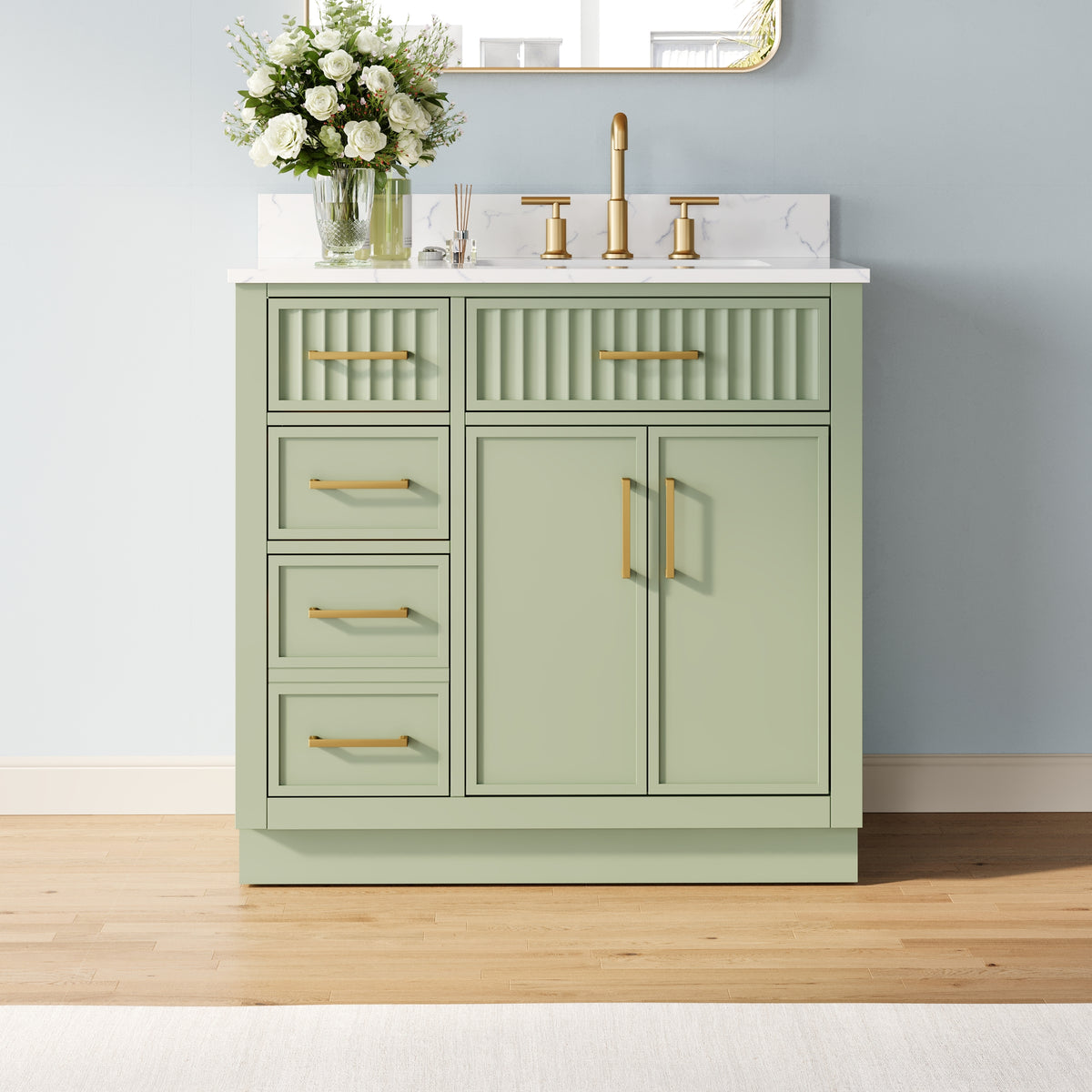
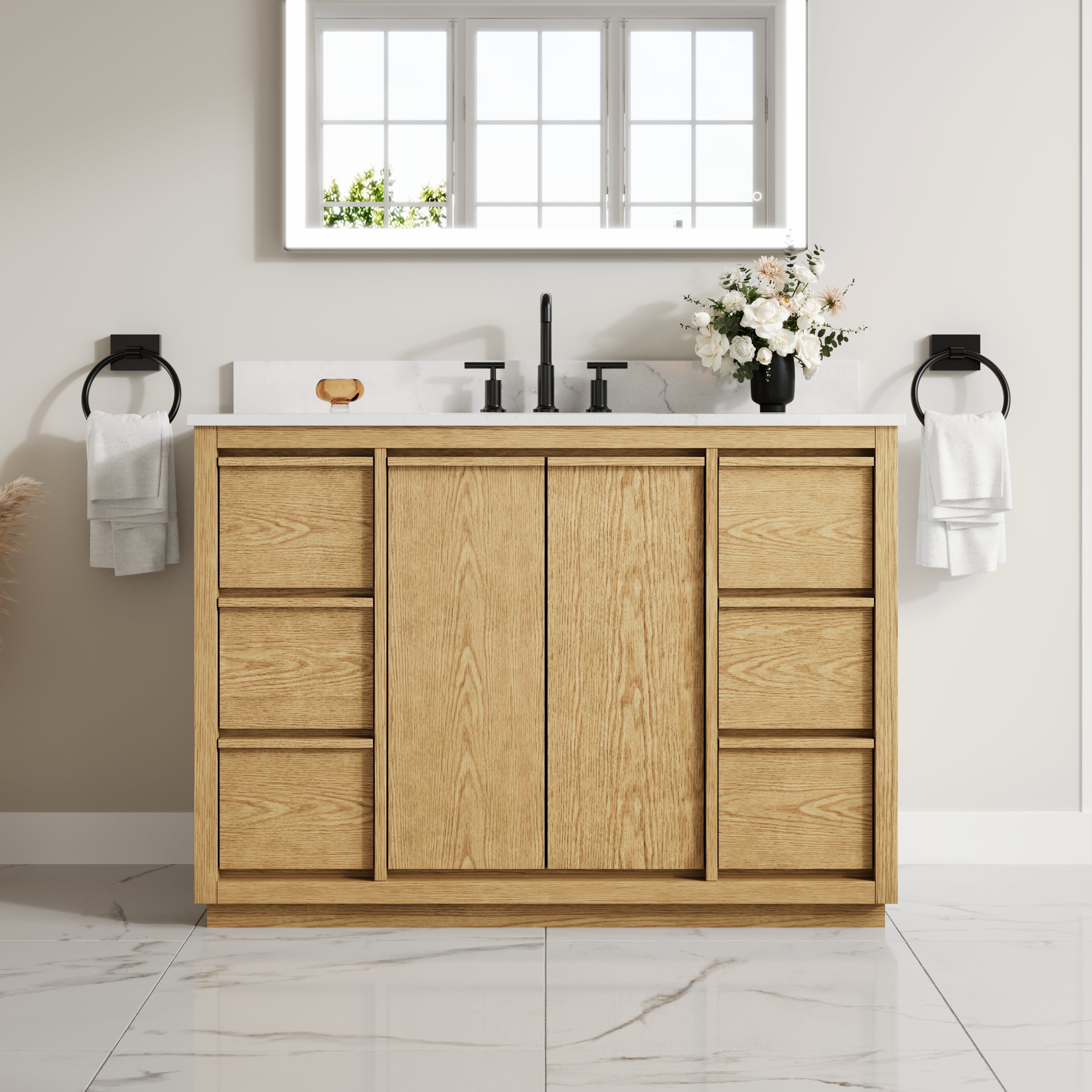
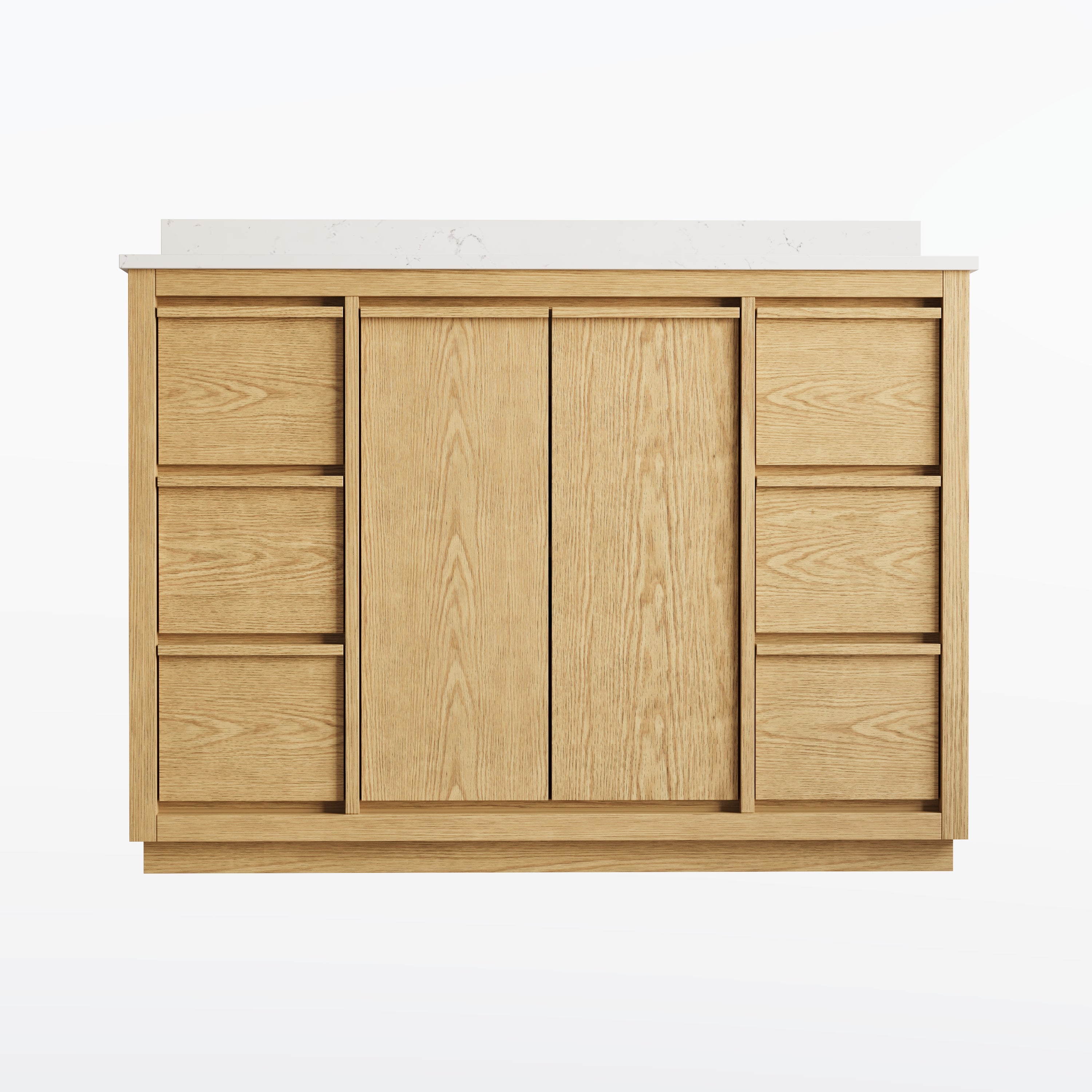
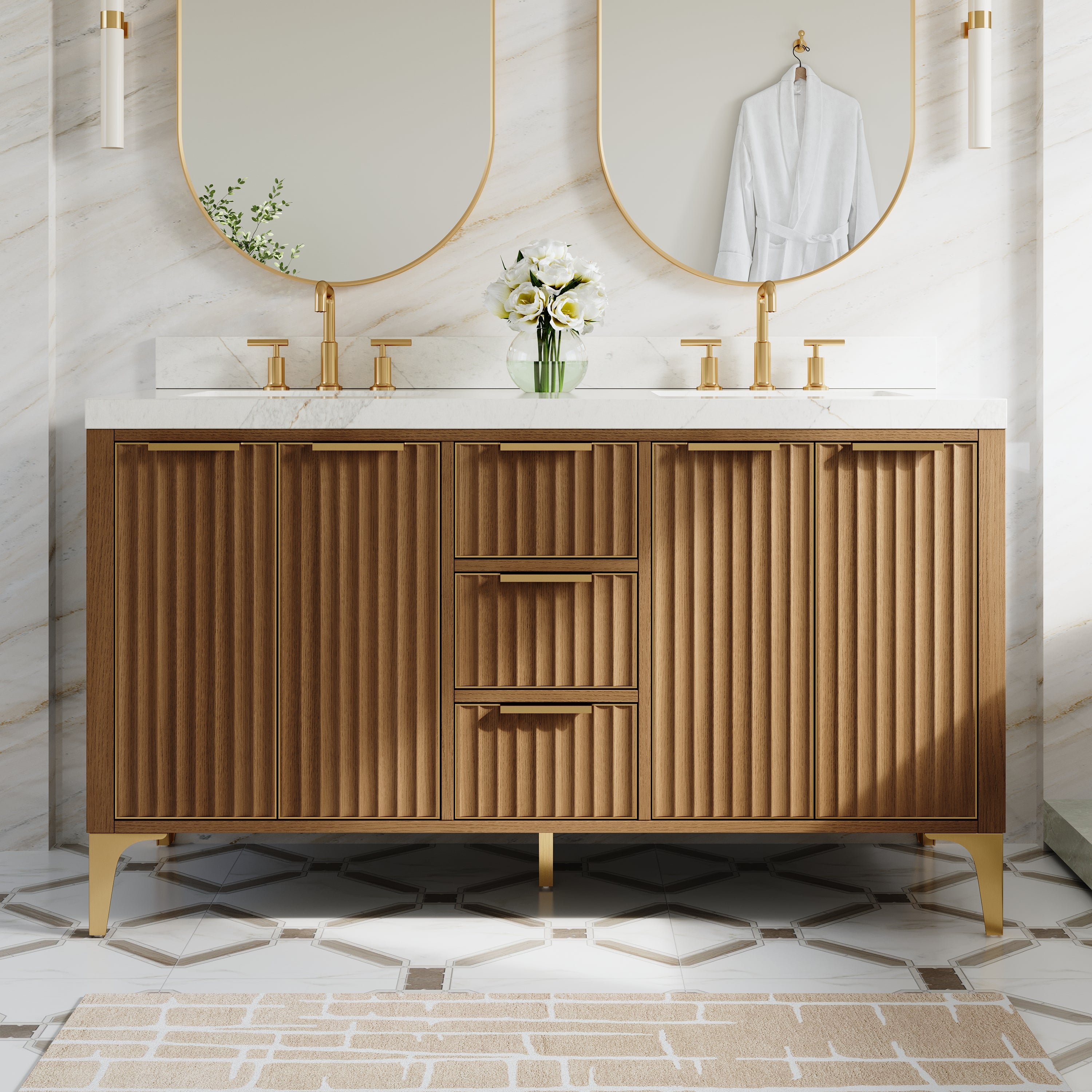
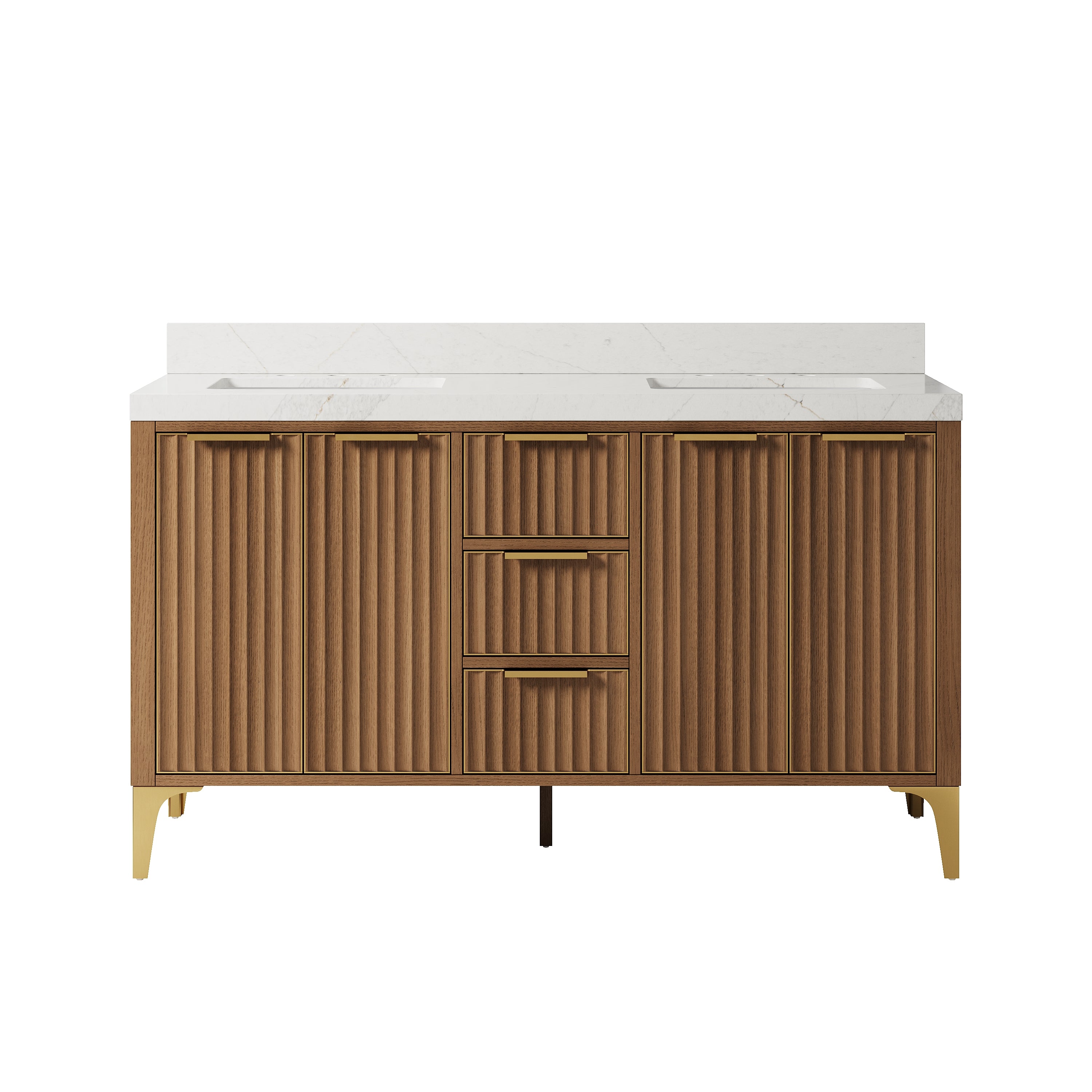
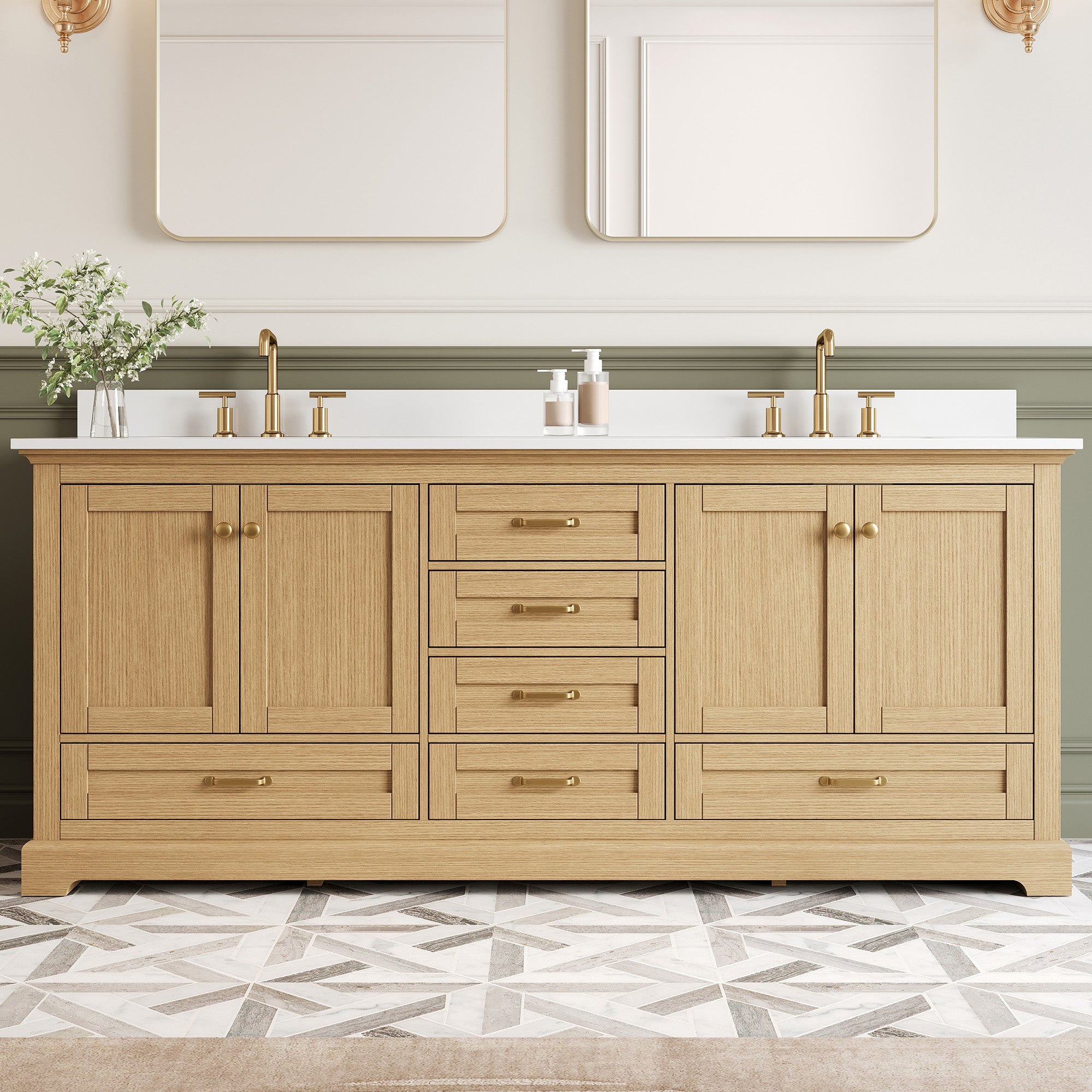
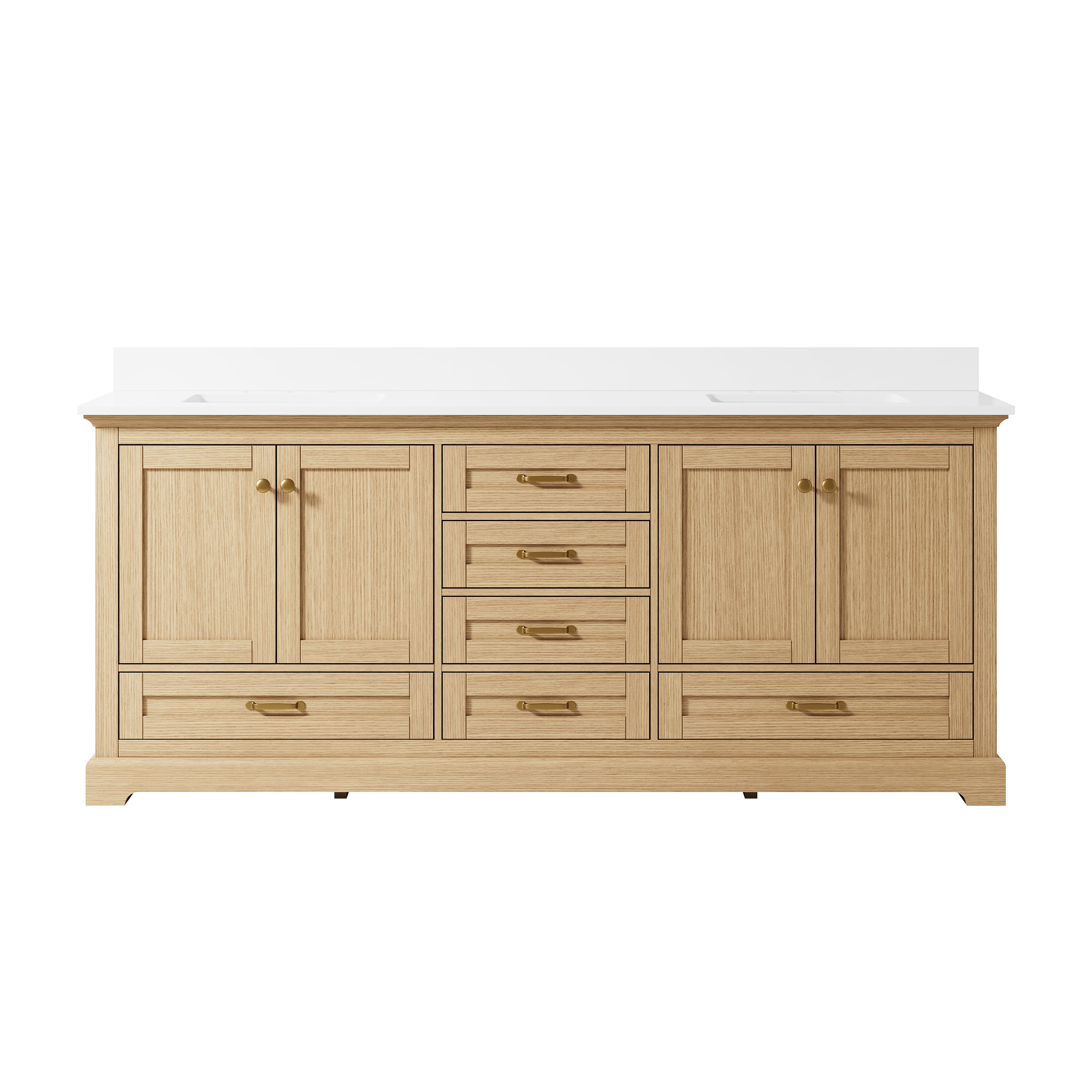
Soft-close hardware benefits any cabinet, but it matters more on a wood bathroom vanity than on a lightweight composite unit. Heavier solid-wood doors generate more impact force when they close under their own weight. A standard hinge on a solid wood door produces a louder, more jarring slam than the same hinge on a hollow-core door . That greater impact force is exactly what the dampener is designed to absorb. The heavier the door, the more dramatic the contrast between a standard close and a soft close.
Wood also transmits sound differently than metal or composite materials. A solid wood cabinet body resonates with the impact of a slamming door, and that resonance carries through the room. Soft-close hardware eliminates the impact at its source, so the wood never has a chance to amplify it. Product listings for wood vanities consistently highlight this pairing, noting that soft-close hinges and slides create “whisper-quiet” operation and eliminate the slamming noises that disrupt a peaceful bathroom atmosphere .
The Hidden Benefit: Less Wear on the Cabinet
Noise reduction is the most obvious benefit of soft-close hardware, but it is not the only one. Every hard close puts stress on the cabinet structure. The hinges, the screws holding them in place, and the frame itself all absorb repeated impact over time. Designers and manufacturers point out that this accumulated stress leads to loose hinges, misaligned doors, and uneven drawer operation . A soft-close mechanism removes that impact entirely. The door decelerates rather than stops abruptly, so the hardware and the wood experience far less force.
For a bathroom vanity, which operates in a humid environment where wood is already under stress from moisture fluctuations, reducing mechanical wear is a meaningful advantage. The soft-close feature is not just about comfort. It is about longevity.
What to Look For in a Soft-Close Wood Vanity

Not all soft-close hardware performs equally. The quality of the dampener and the hinge body determines how long the mechanism will function smoothly before it needs adjustment or replacement.
Look for hinges with steel bodies and adjustable dampening screws. The adjustment feature is useful because the closing speed can be tuned to the weight of the door . A heavier solid wood door may need more damping force than a lighter one. Drawer slides should be rated for the weight they will carry. A bathroom vanity drawer loaded with towels or heavy bottles needs slides that can handle the load without straining the soft-close catch.
Three-directional adjustment screws on the hinges are another feature worth prioritizing. Bathroom walls are not always perfectly plumb, and the ability to shift the door up, down, left, right, and in or out after installation makes a significant difference in how smoothly the door closes and how well the soft-close mechanism engages .
The Bottom Line
A soft-close wood bathroom vanity reduces noise through a hydraulic dampener that catches the door or drawer in the final inches of travel, preventing the impact that creates sound. The measured difference is 15 to 22 decibels, which in a small, reflective bathroom translates to a noticeably quieter experience every time you open a drawer or close a door. The heavier construction of a wood vanity makes the benefit more pronounced, because there is more momentum for the dampener to manage. And beyond the quiet, the hardware protects the cabinet from the cumulative wear of daily use. It is a small mechanical detail that changes the feel of the entire room.




















Leave a comment
This site is protected by hCaptcha and the hCaptcha Privacy Policy and Terms of Service apply.